pastorjohnb

Thoughts and musings on faith and our mighty God!


Leave a comment

Faithful Love

Reading: Psalm 118:1-2 and 19-24

Psalm 118:22 – “The stone rejected by the builders is now the main foundation stone!”
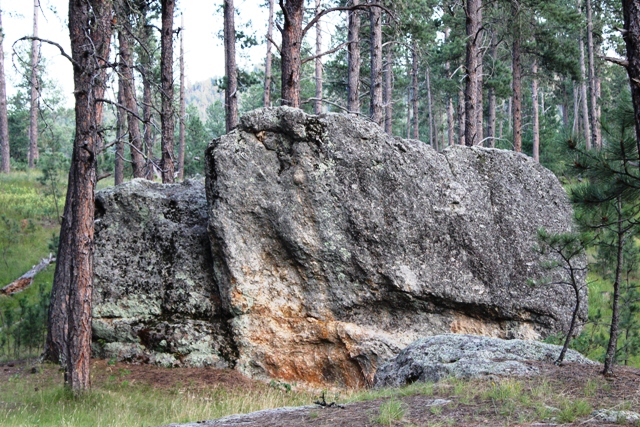
Psalm 118 is a song of praise that celebrates God’s deliverance. Originally used as a song that was sung after the Passover meal, it celebrated Israel’s exodus from slavery in Egypt. These words, however, also carry a broader meaning. This song extolling God’s love and goodness can be applicable at other times.

Verses 1 and 2 would’ve been used call-response style. The leader would declare verse 1: “Give thanks to the Lord, because he is good, because his faithful love lasts forever.” The gathered people would respond: “God’s faithful love lasts forever!” What a great reminder as one begins to offer a response to the Lord.

Skipping to verses 19-24, the scene shifts to the temple entrance. The writer asks for the gate to be opened. The response reminds the people that only the righteous may enter the Lord’s gate. Qualifying and entering the temple, the psalmist thanks God for answering his or her prayers. This prayer is about restoring Israel. In verse 22 we read, “The stone rejected by the builders is now the main foundation stone!” Restoring what was once held in slavery and oppression, Israel is once again God’s people, living in the Promised Land. Israel rejoices in and celebrates this time of salvation.

These verses also connect to Jesus. On this Holy Saturday we can rejoice and celebrate that the one who was rejected and killed by Israel’s religious leaders has become the cornerstone. In and through his death we’ve been freed from our slavery to sin. Tomorrow we celebrate the salvation given to us through his resurrection. Thanks be to the God whose faithful love lasts forever and ever!

Prayer: Lord God, we celebrate and rejoice in your great love for us. Walk with us and draw us into your righteousness. Lift our voices in praise and our lives in faithful witness to your saving grace. Amen.


Leave a comment

Rooted

Reading: Psalm 52

Verses 8-9: “I trust in God’s unfailing love… in your name I will hope, for your name is good”.

As is the case with many Psalms, Psalm 52 is a response to a historical event. Before becoming king, David was viewed by King Saul as an enemy. Saul tried to kill David and pursued David and his supporters, forcing them to flee into the wilderness. On one occasion in the wilderness, David went to see a priest. The priest, Ahimelech, gave David and his men bread and gave David a sword. When Saul heard about this, he ordered the killing of Ahimelech and all his family… Over 85 were killed. Verses 1-7 are David’s reaction to this tragedy.

We may have or feel a similar reaction to the events we hear about in our world. Each day there are stories of murder and violence, of irrational behavior with tragic ramifications. These events lead us to see the perpetrators as evil and as deserving of God’s justice. It is not uncommon to want to see them “snatched” up and brought to “everlasting ruin”. While we may feel much of what David felt toward Saul, we too must do as David did: turn to God and rest in him.

In verses 8-9 David returns to his bedrock. He writes, “I trust in God’s unfailing love… in your name I will hope, for your name is good”. No matter what goes on in the world around him and no matter what happens to him, David knows his roots are sunk deep in God. David knows that God’s love is unfailing. God is his portion for ever and ever. God is David’s guide and protector. For all of this, David praises God. At the end of each day, David’s hope remains rooted in God because God is good.

When we, like David, observe or even experience violence or some other tragic event, may we too keep rooted in God, trusting in his goodness and love. May it be so.

Prayer: Lord God, the world is full of hurt and pain and violence. So much of it is senseless. Help me, like David, to remain fully rooted in you, trusting in you alone. Amen.


Leave a comment

Reading: Matthew 21: 33-41

Verse 40: When the owner of the vineyard comes, what will he do with those tenants?

Jesus is teaching in the temple courts.  He is in Jerusalem and each day people gather around Him to hear His interpretation of the scriptures and to hear the stories He likes to tell.  Others are there to listen for a way to trap Him or to catch Jesus in a blasphemy.  He is aware of both aspects of the crowd.

This day Jesus tells the story of the landowner who plants a vineyard and builds a wine press and watchtower.  Then he rents the vineyard out and goes on a journey.  Harvest time comes and he sends for his share of the crop.  But the tenants beat and stone and kill those who were sent.  The landowner sends a bigger group, but the results are the same.  AND then the tenants do it again when he sends his very own son to collect.  Then Jesus asks them a question: “When the owner of the vineyard comes, what will he do with those tenants”?  The answer seems obvious.

At this point, most everyone in the crowd has the same answer.  Most of us would give the same answer too.  But Jesus’ stories always seem to have an edge or twist to them.  There are probably a few in the crowd besides His twelve disciples who are wary – they know there is more to the story.  But for now, for today, the story ends here.

When we consider the story, are we thinking we are more like the owner, like those sent, or like the tenants?  At times we certainly think we are the owner.  We look at our life and our possessions and our talents and think they are all ours.  At times we can see ourselves as those who are sent.  We try and share the good news but are rejected and/or abused.  And at times we are the tenants – living for self, disregarding all else.

Jesus is also framing larger questions too.  The first is who really owns the ‘vineyard’?  The second is who is the son that is finally sent to re-establish the correct relationship between owner and tenants?  And the third is, what is our response to the one who is sent?  From these perspectives, the story takes on new meaning and depth.  From here we must consider how we see and relate to God, how we see and relate to Jesus, and what role we are or should be playing in the vineyard.