pastorjohnb

Thoughts and musings on faith and our mighty God!


Leave a comment

Invite God In

Reading: Psalm 22: 1-15

Verse 11: “Do not be far from me, for trouble is near and there is no one to help.”

This week’s Psalm of lament covers the spectrum of emotions and prayers that we experience in times of tragedy or suffering. David begins with feeling forsaken by God. Often when we experience the pain or grief pressing in on us we feel all alone. It does not feel like God is anywhere close by. This can deepen our grief or pain. Our response is usually like David’s – we cry out to God. We cry out because we do not think God is doing what God has promised to do. Our loving, compassionate, caring God does not seem very loving or compassionate or caring. Yet we can recall how God has acted in the stories in the Bible and in our experiences of faith in the trial. So we cry out for God to intervene on our behalf. We cry out but still feel alone in the darkness. These periods can tempt us to question our faith, to doubt God, to disconnect from our brothers and sisters in the family of God, to become angry that God is not being God.

After a prolonged period in the valley, one begins to feel as David feels in verses fifteen and sixteen. Our strength is dried up. One lays in “the dust of death.” One feels totally wrung out. This place leads us to honest, heartfelt, even desperate prayer. Like David we can earnestly pray, “Do not be far from me, for trouble is near and there is no one to help.” At the bottom of the valley we totally surrender to God. Divine intervention is our only option and we cry out to the Lord our God. Doing so we invite God into our suffering and pain – not necessarily to end it but to be present to us in it. We invite God to see our pain, our hurting, to sit with us in and through it. Opening ourselves to God’s abiding presence, God joins us in our darkness. It is not a pleasant or comfortable place to be. But when God is invited in we are not alone anymore. Thanks be to God for hearing our prayers and for simply being present to us in our lives and in our trials.

Prayer: Lord God, we know your truths in our minds. We’ve read the stories, we’ve walked in faith. We have experienced your saving grace and your generous love. In these teetering moments lead us to surrender to you, inviting your abiding presence into our time of need. Amen.


1 Comment

Trusting and Leaning into God

Reading: Job 23: 1-9 and 16-17

Verses 3-4: “If only I knew where to find God… I would state my case before God.”

Photo credit: Yusuf Evli

As we jump forward this week to chapter 23, much has happened in the twenty plus chapters. This section centers on the conversations between Job and his three friends. Running throughout is the understanding that Job must have sinned to cause all this hardship to befall him and his family. Job counters this common ancient line of thought with his responses. He is sure of his innocence. He is blameless. Job longs for an audience with God. He thinks that then God will really hear his case and will respond to Job as God should. At least as Job thinks God should respond to his unjust suffering. Job too is operating from this ancient mindset. He just thinks there has maybe been some mistake made in the heavenly realms.

Job knows that God is all-powerful. Job knows that God alone can give and take away. Job knows that God is loving and that God can make things ‘right’ for this faithful servant. But in the depth of his suffering, in the bottom of the valley, it seems that God is absent. Adding to this feeling are his friends. Friends are supposed to support and encourage one another. These friends end up doing the opposite in the end. God is supposed to hear the cries of the oppressed, of those experiencing injustice. Yet God seems to be nowhere to be found. Job states, “If only I knew where to find God… I would state my case before God.” Job still believes in God’s love and justice, in God’s power and might. He just longs to know God’s presence, to have a chance to speak with God.

Things aren’t lining up. They aren’t making sense for Job. What he thinks he knows about God is not matching his present reality. At times we all end up here. At times we all want to express our bitter complaints to God, sure that God will make all things right. And some of the time we end up where Job is – asking where God is. This is a tipping point of faith. Our head knows things our heart isn’t feeling. We may be tempted to walk away from God. We might even do so for a short season. We may feel as Job did: that God has “made my heart faint.” And when we’re there – as we all will be – may we remember Job’s response: “I am not silenced by the darkness.” Trusting and leaning into God, may we walk in faith, praying to our God who is faithful and true.

Prayer: Lord God, it can be hard to keep praying when the darkness persists. It can feel so hopeless and lonely in the bottom of the valley. Help us to remember the truths: you are faithful, you are true, you are steadfast, you are loving and good. Trusting in you, draw us to our knees, assured of your presence. Leaning into you, draw us into your purposes for our lives. Empower us to prayerfully walk in faith, clinging to you at all times. Amen.


Leave a comment

Not Ashamed

Reading: Hebrews 2: 5-12

Verse 10: “It was fitting that God… should make the author of our salvation perfect through suffering.”

Photo credit: Abram Mourad Blokpoel

In today’s section of Hebrews we are reminded of the supremacy of Jesus. Jesus was “crowned with glory and honor” as God “put everything under his feet”. All in this world is within Jesus’ reach. All in this world is within his control. All in this world is invited into his love. Many choose to confess Jesus Christ as Lord and Savior, becoming a follower, a disciple. But some do not choose Jesus. This is why we read “yet at present we do not see everything subject to him” in verse eight. Faith in Jesus Christ is a personal choice.

During his time on earth Jesus was subject to God. It too was a choice that he made. Jesus could have taken power for himself. He could have accepted Satan’s offer to rule all the kingdoms of the earth. Jesus could have kept all of his friends safe and protected. But he went with Mary and Martha outside of Lazarus’s tomb. Jesus was well acquainted with the sufferings and trials of this life. He felt pain and grief, loneliness and rejection. In verse ten we read, “It was fitting that God… should make the author of our salvation perfect through suffering.” To be our Savior, Jesus needed to know our suffering. To give us victory over sin and death, Jesus had to give his perfect life. Willingly doing so he provided the way for the sinful and imperfect to be made perfect and holy. In many churches and places of worship we will remember and celebrate this gift in the sacrament of communion.

Knowing the trials and sufferings of this life, Jesus knows our struggles, our challenges, our temptations. He understands us and how hard this world can be. Because he can relate to this, Jesus is “not ashamed to call us brothers and sisters.” Jesus welcomes and invites all into the family of God. This day may our grateful response be to help others hear the invitation.

Prayer: Lord God, you love even me. You love us all. In love you gave your Son for me, for us. Guide me to give back to you in humble service this day and every day. Amen.


Leave a comment

Sharing His Glory

Reading: Hebrews 1: 1-4

Verse 3: “The Son is the radiance of God’s glory and the exact representation of God’s being.”

Photo credit: Jake Thacker

The opening verses to Hebrews are a great connection from the faith of the Jews to faith in Jesus Christ. There is a connecting of the dots. Many who came to faith in Jesus Christ as Lord and Savior had been faithful people of God their whole lives. They came from a faith tradition centered on the one true God that stretches back for thousands of years. Scattered throughout their long history are prophets sent by God, sent to speak God’s word to the people of God.

The author of Hebrews connects this long prophetic line to Jesus Christ, God’s Son. Through the teaching, witness, and example set by Jesus, God spoke to the people. Jesus was the fuller revelation of God. The prophets spoke the words that God gave them. They were usually good models of the faith. But they were finite; they were human. In verse three we read, “The Son is the radiance of God’s glory and the exact representation of God’s being.” Jesus shone God’s glory to the world. In all he said and did, Jesus pointed people to God’s love, mercy, grace… In this way Jesus was God incarnate, God in the flesh, God with us. At the end of his time revealing how we are to live out God’s love, mercy, grace… in the world, Jesus then offered himself to save us. Jesus “provided purification for sins” by shedding his blood, giving his own life to defeat, once for all, the power of sin. Then, rising and returning to heaven, he took his rightful place at God’s right hand. One day Jesus will return, establishing his kingdom here on earth.

In the interim Jesus sent and sends the Holy Spirit, his indwelling presence in all who believe. Living inside each who profess Jesus as Lord and Savior, the Spirit guides, leads, encourages, comforts, sustains, and strengthens us as we walk in Jesus’ footsteps, sharing his glory. Doing so, others meet the Son living in us and we each grow closer to the Way that leads to eternal life. Thanks be to God!

Prayer: Lord God, Immanuel, Christ with us – through the ages you have spoken to your people through those you have sent. Each has revealed your call upon your people. In the time in the flesh you gave us the clearest picture of pure love lived out. Then you gifted us with the Holy Spirit to help us walk out this pure love in the world. Thank you, thank you, thank you, awesome God. Amen.


Leave a comment

Imagine

Reading: Mark 10: 13-16

Verse 15: “Anyone who will not receive the kingdom of God like a little child will never enter it.”

As our passage opens, people are trying to bring their children to Jesus and the disciples are stopping them. The disciples must have thought the children unworthy of Jesus’ time or that his time could be better spent with more pressing needs. We read that Jesus was “indignant” with what they are doing. Jesus is upset by the inferior treatment that the children are receiving. He corrects the disciples’ behavior with these words: “Let the little children come to me… for the kingdom of God belongs to such as these.” Why does the kingdom of God belong to “such as these?”

Children are innocent – they don’t see color or know prejudice or stereotypes. Children are pure – they haven’t learned to be selfish and they want to get along with everyone. Children are vulnerable – they need feel a sense of belonging and to feel loved. Children are dependent – they rely on others to care for them, to protect them, to guide them. What if we entered our relationship with God from this perspective? What if we came into worship, into times of prayer, into times of study and meditation without biases and judgment, with a longing to belong and to feel loved, and with a willingness to be guided by the Holy Spirit? Imagine how different our life of faith would be! In verse fifteen we read, “Anyone who will not receive the kingdom of God like a little child will never enter it.” Is our worship, our prayer life, our other times with God as rich and powerful when we enter with our expectations and our other adult baggage? It is not.

As we approach God and the kingdom work that God places before us today, may we do so with an innocence and a realization of our deep need for God in our lives. Doing so we will be held and blessed by Jesus.

Prayer: Lord God, what a beautiful way to think about our approach to faith. To really enter into time with you as a child would – needy for your attention, presence, guidance, love… Help me to simply come to you, open to all you have to offer. Amen.


Leave a comment

Imagine

Reading: Mark 10: 13-16

Verse 15: “Anyone who will not receive the kingdom of God like a little child will never enter it.”

As our passage opens, people are trying to bring their children to Jesus and the disciples are stopping them. The disciples must have thought the children unworthy of Jesus’ time or that his time could be better spent with more pressing needs. We read that Jesus was “indignant” with what they are doing. Jesus is upset by the inferior treatment that the children are receiving. He corrects the disciples’ behavior with these words: “Let the little children come to me… for the kingdom of God belongs to such as these.” Why does the kingdom of God belong to “such as these?”

Children are innocent – they don’t see color or know prejudice or stereotypes. Children are pure – they haven’t learned to be selfish and they want to get along with everyone. Children are vulnerable – they need feel a sense of belonging and to feel loved. Children are dependent – they rely on others to care for them, to protect them, to guide them. What if we entered our relationship with God from this perspective? What if we came into worship, into times of prayer, into times of study and meditation without biases and judgment, with a longing to belong and to feel loved, and with a willingness to be guided by the Holy Spirit? Imagine how different our life of faith would be! In verse fifteen we read, “Anyone who will not receive the kingdom of God like a little child will never enter it.” Is our worship, our prayer life, our other times with God as rich and powerful when we enter with our expectations and our other adult baggage? It is not.

As we approach God and the kingdom work that God places before us today, may we do so with an innocence and a realization of our deep need for God in our lives. Doing so we will be held and blessed by Jesus.

Prayer: Lord God, what a beautiful way to think about our approach to faith. To really enter into time with you as a child would – needy for your attention, presence, guidance, love… Help me to simply come to you, open to all you have to offer. Amen.


Leave a comment

Hard Heart… or Heart for God?

Reading: Mark 10: 1-12

Verse 5: “It was because your hearts were hard…”

Photo credit: Kelly Sikkema

Today’s passage in Mark is typical of the ‘conversations’ that the religious leaders had with Jesus. Today’s conversation focuses on the topic of divorce. This was a topic widely debated and interpreted since the time of Moses. Jesus quotes from the beginning times, in Genesis, lifting marriage to a lifelong covenant as the two “become one flesh.” In Deuteronomy 24:1 the Law allows for a man to write a certificate of divorce if his wife “becomes displeasing to him because he finds something indecent about her.” At the time, this usually applied to cases of sexual immorality. However, in Deuteronomy 22 the universal punishment for all consensual sex outside of marriage is stoning to death for both parties. If these laws were followed, then divorce caused by sexual immorality would be unnecessary. The muddy waters around the topic of divorce have made it fertile ground for interpretation and debate. For example, in the Mishnah section of the Talmud, a book containing authoritative interpretation of the Law, one rabbi writes that divorce is permissable only for sexual immorality and another rabbi writes that divorce is permissable for something as trivial as burning supper. So for Jesus, there is no 100% right answer.

Jesus answers their question by reminding the religious leaders of God’s intent for marriage. It is to be a relationship where “two become one flesh” as they are united by God. The lifelong commitment is emphasized by Jesus as he says, “what God has joined together, let man not separate.” This is God’s intent for all marriages. In a perfect world every marriage would be ‘happy ever after.’ But we live in an imperfect world, often falling short of the glory of God. Human will has forever fought the will of God. As the ancient Israelites pressured Moses about really, really having to live out God’s intent for marriage, Moses permitted divorce. Jesus points out that it was “because your hearts were hard” that Moses refined the Law. The desires of mankind affected how God’s law was understood and then lived out. The hardening of hearts continues to affect how we as individuals, as communities of faith, and as a society in general live out God’s will for our lives.

Divorce or sexual immorality are far from the only arenas in which humanity says over and over, ‘God, do we really, really have to do this or live just that way?’ Our hard, selfish hearts often lead us to question the will and ways of God. In our passage Jesus is inviting his audience then and us today to better understand and live into the heart of God instead of into our fleshy hearts. God’s heart is a heart first guided by love, but is also backed up with mercy, grace, compassion, empathy, generosity, forgiveness, humility, kindness, gentleness, patience, self-control… May our hearts be filled with these things of God, bringing God the praise and glory. May it be so.

Prayer: Lord God, Jesus boiled down the Law to two central commands – to love you with all that we are and to love neighbor as self. When we truly live these out, all else falls in line. May we not be people who split hairs over this and that. Instead may we love as generously and universally as you love. Amen.


Leave a comment

Poured Out Prayers

Reading: Psalm 26

Verses 1-2: “Vindicate me, O Lord … I have trusted in the Lord without wavering. Test me, O Lord, and try me, examine my heart and my mind.”

Photo credit: Alex Woods

Today’s Psalm is one of lament, one of anguish, one of crying out to the Lord. We do not know the exact trial or time of suffering that David is going through, but we can feel his emotions and feelings. There is a sense of injustice or unfairness to these words. They are the sincere and honest words of a prayer poured out from the heart.

Reflecting on our readings from the past two days, these are certainly words that Job could have prayed. He was an “upright and blameless” man that endured tragedies that tested his faith. These are words that we have prayed (or will pray) too. Whenever we feel unjustly treated we too have prayed for vindication. Our sense of fairness is offended and we want God to fix it. We too have (or will) remind God of our unwavering faithfulness. It just doesn’t seem right for that thing to be happening to someone so faithful. And as a way to plead our case, to prove that we are worthy and deserving of God intervening on our behalf, we invite (or will invite) God to examine our heart, our mind, our faith. Surely the examination will reveal our worthiness to receive God’s action on our behalf.

Wouldn’t it be wonderful if we were truly upright and blameless, if our hearts could really withstand a millisecond of God’s inspection? We do live holy and devout lives for portions of time. David, Job, Elijah, Moses, Peter, John – all the ‘greats’ of the Bible – they all had their failures, their times when sin reared its ugly head. Only one person lived a perfect and sinless life. While upright and blameless is the goal as we follow Jesus, it is not anything we can achieve 100% of the time. In the same way, our prayers cannot be perfect. But they can be like David’s is today in Psalm 26: honest, sincere, heartfelt, desiring of God and God’s action in our lives. Our prayers, our desires, the hopes of our hearts – may we pour them out to the Lord our God, the one who loves to hear the children praying.

Prayer: Lord God, thank you for this honest look at prayer. It’s good to be reminded that you just love the conversation with us. It doesn’t have to be all beautiful and polished. That’s ok. But you want it as we feel it, as we honestly pour it out to you. Stammering, stumbling, halting, run-ons – none of that matters to you. Thank you for desiring and hearing our prayers just as they are, no matter what. Amen.


Leave a comment

Faithful One

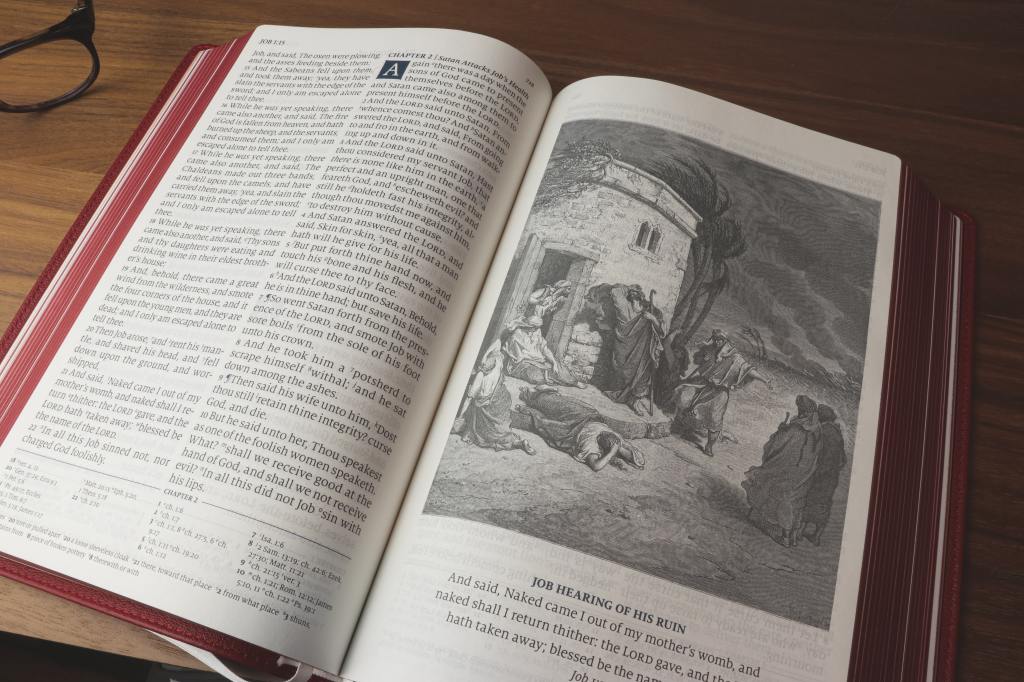
Reading: Job 2:1-10

Verse 5: “Stretch out your hand and strike his flesh and bones, and he will surely curse you to your face.”

Photo credit: Stormseeker

In today’s passage from Job the angels again gather before God. God inquires again of the accuser concerning Job. Even through massive losses and the associated grief, Job “still maintains his integrity.” Job still holds onto his faith in the God who gives and takes away. He has gotten through the first test. Satan notes that “a man will give all he has for his own life.” The accuser is pushing harder against God and Job’s faith, saying, “Stretch out your hand and strike his flesh and bones, and he will surely curse you to your face.”

God allows Satan to afflict Job’s body. A mourning and destitute Job is soon covered in painful sores head to toe. Instead of cursing God, though, he turns to the ash pile. Here he can pour out his grief for the deaths of his children. Yes, losing one’s livelihood is difficult, but losing one’s child is deeply personal and painful. For Job it is times ten. They were his “flesh and bone.” In verse nine Job’s wife enters the picture. She too has been piled upon by grief. She too has been deeply pained. Echoing God’s words in verse three she asks if he is still maintaining his integrity. Is he still upright and blameless? Or is he just putting up a good front? This additional affliction to Job is more than she can take. She just wants it all to be over with, telling her husband to “curse God and die.” The wife is at a place many of us come to. One more grief that has been added to a pile of grief feels like more than we can take. We begin to crumble. Our faith begins to quake. Although she is probably not ready to hear it at this moment, Job speaks truth to her.

In response, Job calls attention to her faltering faith and then asks, “Shall we accept good from God, and not trouble?” This mirrors his understanding of a God who both gives and takes away. It reflects his faith that God is in control. Job has been holding onto his faith and invites his wife to do the same. In the midst of trials it is good to remember the ways that God has been steadfast and true in the past. We remind ourselves of God’s love to buoy our faith up so that we can lean into our faith. When we too find ourselves afflicted or grieved or hard pressed, may we too remember God’s faithfulness and love. Doing so, our faith will be strengthened as we once again trust into God. In the trial, may it be so for you and for me.

Prayer: God, thank you for the reminder today to lean into you, the faithful one, when life becomes hard. Through my past experiences when you have walked by my side, whisper your love into my heart again and again. All praise and glory to you, faithful one! Amen.


Leave a comment

Faith Over Fear, Trust Over Anger

Reading: Job 1:1

Verse 1: “Job… was blameless and upright; he feared God and shunned evil.”

Photo credit: Humble Lamb

Today we begin a brief tour through the book of Job. Over these next four weeks the lectionary touches on four sections of Job, inviting us into his story. As we will see, Job’s story is our story too. We all experience hardship, the testing or questioning of our faith, the realization of God’s power and might, and restoration and contentment through our relationship with the Almighty. Job is not an easy read – yet it invites us into a deeper faith in our loving, covenant God.

The prologue I opening section begins with these words: “Job… was blameless and upright; he feared God and shunned evil.” Job was a person that we all want to be. As followers of Jesus Christ we all want to be blameless and we all want to live an upright life. As we consider these desires we must also acknowledge the reality of failing to always be these things. Job feared God – had a holy reverence for the Lord – and he shunned evil. Job worshipped God and did his best to avoid the evils of this world. We spend time each week worshipping God and we avoid those places and people that can lead to evil taking root and giving birth to sin in our lives. In these ways and others that we will find as we progress through these readings, we will come to see Job as an example of faith.

Job was also blessed – ten children, thousands of animals, many servants. He was watchful over his children and their behavior. In the remainder of chapter one Job faces his first test of faith. God allows Satan, the accuser, to test Job’s faith by affecting everything but Job’s life. All the animals are carried off or burned and then all of his children die in a violent wind. Job worships God, acknowledging God as the giver and taker and as the one worthy of his praise. He chooses not to blame God. Job chooses faith over fear, trust over anger. May we so grow in our faith that we can do the same when hardship and suffering visit our lives.

Prayer: Lord God, build up my faith day by day, establishing a firm foundation to stand upon when the trials and difficulties arise. Lead me to lean into you when I find myself in the valleys. Amen.