pastorjohnb

Thoughts and musings on faith and our mighty God!


Leave a comment

Trust and Honor the Lord

Reading: Malachi 1-2

Malachi 2:8 – “But you have turned from the path. You have caused many to stumble… You have corrupted the covenant of Levi.”

Photo credit: Daniel Hooper

Throughout Malachi we hear a call to holiness. The people’s holiness should be reflected in all areas of their lives: in worship practices, in service, in marriage, in interactions with one another. Unfortunately, God’s people are far from holy. So Malachi calls for repentance, for changed hearts.

Chapter 1 begins with the people questioning God’s love for them. They are struggling along while neighbor Edom is doing well. God reminds them that God chose Jacob, not Esau. In turn, God asks them, “Where is my honor?” The priests despise God, accepting blind, lame, and sick animals for the sacrifices. God takes no delight in this and goes so far as to suggest closing the temple doors. “Nevertheless” God says, God’s name will be honored among the nations. Just not at home. God will curse those who bring impure offerings when there are healthy males in the flock. This conversation with God makes me wonder: when do we bring impure or less than our best as offerings to the Lord our God?

Chapter 2 begins by addressing the priests. God threatens a curse on them. Then maybe the covenant with Levi will be honored. To live within the covenant is life and peace. There would be true instruction on their lips. If only. God declares, “But you have turned from the path. You have caused many to stumble… You have corrupted the covenant of Levi.” We too are called to hold one another accountable, to help one another to walk daily in faith. How are we doing with this calling or charge?

Turning to the people, God asks, “Isn’t there one father?” God is reminding them that they’re one family. God then asks why they all cheat each another. God uses their marriages to foreign wives as an example. The men are breaking the covenant with their wives. God tells them to cover the altar with “tears, weeping, and groaning” – signs of repentance. This chapter closes with a declaration that God is tired of the people’s words. The people are questioning God’s goodness and justice. This is something that we continue to do. May we instead choose to trust and Honor the Lord our God.

Prayer: Lord God, you continue to call us today to holiness in all of life. You desire pure hearts that seek to be your light and love, your grace and kindness in the world. When temptations arise, when we become half-hearted, send your Holy Spirit to revive us, to strengthen our faith. Empower us to walk your path. Amen.

Leave a comment

Pure and Upright

Reading: Proverbs 19 and 20

‭Proverbs 19:20 – “Listen to advice and accept instruction, so you might grow wise in the future.”

To choose to ignore wisdom is to choose to be a fool. Folly first of all corrupts the heart against God. That can lead a foolish son to be a “disaster to his father” and a “contentious wife” to feel like a “constant dripping.” Fools jump right into fights and they mock justice. Fools and liars will not escape. They will perish. Therefore the sage says, “Listen to advice and accept instruction, so you might grow wise in the future.” Here one finds true life, contentment, and peace.

We seek and we enjoy these gifts. That is some of the reason that we plan. This is good to do but we are also reminded “the Lord’s purpose will succeed.” This is why we must never stop listening to wisdom and why we must never refuse discipline. When we do stop, we wander. The walk of faith is long and slow and steady. Advice for our walk comes from “the deep waters of the heart.” It requires long, slow, and steady care. With understanding we can draw from these waters, gaining wisdom and finding true life.

Listening closely and drawing deeply from wisdom allows us to apply it to our lives and to our living. Doing so we learn to restrain our anger and to walk away from senseless fights and to ignore an offense. We come to value wise speech as “the most precious jewel.” We grow to be gracious to the poor. We wait upon the Lord’s salvation. We learn to walk with integrity and honor. We, like our children, are known by our words and by our conduct. May we be pure and Upright, bringing glory and splendor to God.

Prayer: Lord God, today we see that all of who and what we are really matters. Guide us to walk as you call us to walk, clinging to wisdom and understanding and discipline, walking in your way. Keep our ears and hearts open to your guidance and your correction. Use our deeds and words to make your will and way known. Amen.


Leave a comment

The Path of God and Salvation

Readings: Psalms 50-53

‭Psalm 50:3 – “Our God is coming; he won’t keep quiet. A devouring fire is before him.”

Today’s first two Psalms focus on divine judgment and forgiveness. The second two focus on wickedness and unbelief. Asaph begins with God’s voice and presence. He warns: “Our God is coming; he won’t keep quiet. A devouring fire is before him.” The fire devours evil and it devours the sin in our lives. In Israel’s life one sin is going through the motions. God desires that their sacrifices come from the heart, not from the routine. The Psalm closes by addressing the behavior of the wicked. They hate both discipline and God’s word. They are given a choice: choose the correct path of God’s salvation or “I’ll rip you to pieces.” This is their choice. We too face this choice: life or death?

David chooses the path of salvation in Psalm 51. He has walked about as far from God as one can: lust, adultery, murder. In the opening verses he begs for God to wash him of his sin. He admits his guilt and asks God to purify him, to allow him to “hear joy and celebration again.” David asks God to “create a clean heart… a faithful spirit” within him. From this place of brokenness and contrition David will once again praise the Lord. It is a good and honest and right place to go. It is part of choosing the path of salvation.

Psalms 52 and 53 paint evil for what it is: bragging, deceptive, destructive, corrupt, selfish. It comes from both the words of the tongue and from the deeds of the hands. Evil words and deeds result in shame and in being uprooted by God. This sounds bad. Really bad. Yet at times we do make the choice to sin. When we do, may we remember David’s acts of confession and repentance and may we offer his words of prayer: “wash me… whiter than snow.” Then God’s love and mercy will purify us once again. May it be so.

Prayer: Lord God, the right path is clear. The poor choices are obvious. Yet we stray and sin and fall. Lord, remember your great love, that which is far greater than our sin. Restore us as we confess and repent. Consume the sin in our hearts, leaving us with clean hearts and hands. Amen.


Leave a comment

Just the Beginning

Readings: 2nd Samuel 11, 2nd Samuel 12, 2nd Samuel 13, 2nd Samuel 14

2nd Samuel 11:1 – “In the spring, when kings go off to war, David sent Joab.”

Today begins the downward spiral of David’s reign. It sure begins simply enough. Instead of leading the troops on the annual springtime conquest, David stays behind. David sees Bathsheba as she bathes. Long story short, he sleeps with her and she becomes pregnant. In an attempted cover up, David brings Uriah to town. Given two opportunities to go and sleep with his wife, Uriah does the right thing. He is sent back to the battle front carrying his own death sentence.

God sends Nathan to confront David. He tells a simple story that is really the story of rich David and poor Uriah. David is very angry. Nathan responds, “You are that man!” David recognizes his sin and God forgives him. But the child will die. Soon Solomon is born. David goes out to lead in finishing off the Ammonites.

The next step downward involves two of his sons – Amnon and Absalom. Amnon is in “love” with Absalom’s sister Tamar. Using deceit Amnon arranged an opportunity to rape Tamar. Disgraced, she ends up back in Absalom’s house. Revenge is plotted and executed. Absalom flees to a foreign land.

Joab, a wise man, orchestrates Absalom’s return. These two are cut from the same cloth. Similar to how Nathan drew David in, Joab uses a woman to draw David in. This story also turns and in the end, Absalom is restored to David’s presence. But this is just the beginning of the stories of violence, revenge, and murder. The sword will not leave David’s house.

Prayer: Lord God, today we see how power can corrupt, can be twisted, and can be used for evil. When we are tempted to use our power in these ways, reign us back in. Remind us of the righteousness that you call us to. Bring us to the path that you want us to walk. Amen.


Leave a comment

The Lord is our Refuge

Reading: Psalm 14

Verse 3: “All have turned aside… There is no one who does good, not even one.”

Photo credit: Nick Fewings

The psalmist looks at the world and sees many who live as if there was no God. They are “corrupt” and “vile.” God looks down from heaven and struggles to find any who truly seek God. In verses 3 we read, “All have turned aside… There is no one who does good, not even one.” In our minds we may be tempted to add, ‘All but me.’ Yet that line – “there is no one who does good, not even one” – it is also in verse 1. The repetition draws us to consider our place in this phrase. David’s“no one” includes us.

Our society is driven to achieve success and popularity and power over. Those who have these things exert a great amount of influence and control, especially over those without. While we may not be directly responsible for systems and laws that benefit those at the top, we often benefit too. And then we become reluctant to speak against unjust systems and corrupt ways. We want for ourselves and forget about those on the margins. For example, many of our churches received and were forgiven large PPP loans. Yet some who sit in those same pews complain about the forgiveness of relatively small student loan debt.

In verses 5 and 6 we read, “God is present in the company of the righteous… the Lord is their [the poor] refuge.” When we strive for justice and seek to end or fix systems that favor those with much, then we are working to build God’s kingdom, not our own. We may suffer a bit along the way. Yet just as God is a refuge to the poor, God will be our refuge too. Thanks be to God.

Prayer: Lord God, give me the courage to see the ways that I benefit from or participate in unjust systems and practices. Give me the courage to stand for what is right, being willing to count the cost of discipleship. Amen.


Leave a comment

Champion the Cause

Reading: Jeremiah 1:4-10

Verse 10: “I have appointed you over nations and kingdoms to uproot and tear down, to destroy and overthrow, to build and plant.”

Photo credit: Wylly Suhendra

Jeremiah was called by God to speak God’s word to the world. His voice did not just go out to the people of God. He also spoke to those who were negatively impacting the children of God. God called Jeremiah to speak against the corruption and injustices of Judah. God appointed Jeremiah “over nations and kingdoms to uproot and tear down, to destroy and overthrow, to build and plant.” This is a sweeping appointment.

Jeremiah was charged with uprooting and tearing down, with destroying and overthrowing. He was tasked with rooting out the causes of corruption and injustice and with tearing down the systems that perpetuated these evils. Jeremiah was led to destroy the sins that led to selfishness and to overthrow the systems of power that disenfranchised much of the population. God is clearly on the side of the poor and powerless. God sent Jeremiah to be God’s voice, championing their cause.

As I think about Jeremiah’s charge and our world today, I can’t but help think that God continues to call us to speak against the people and systems that are corrupt and against the acts of injustice and oppression that these create. God remains on the side of the poor and powerless, of the voiceless and marginalized. As in Jeremiah’s day there are plenty of self-centered and prideful leaders who are seeking to perpetuate and even create unjust systems that keep power in their hands. The ideals that were there at the founding of our nation – servant leadership, striving for the common good, equality and justice for all – seem to have been forgotten. Hand in hand, in many ways, we have forgotten our call to care for those without voice or power.

Just thinking about the small kingdom in which you dwell, what needs to be rooted out, what needs torn down? Is it corruption or is it racism or sexism or some other -ism? What needs destroyed or overthrown? Is it a lack of access to education or health care? Is it leaders focused on self and on gathering power and wealth? How can you and I champion the cause if our nation and of those who are powerless and voiceless?

Prayer: Lord God, heal our land. Let the healing begin with me. Let the planting and building up of what was of old – equality, justice, the common good, humble service – begin anew in our land. Give me eyes to see the systems that work against your vision for our world. Empower me to work against these sinful behaviors and against these harmful -isms. Heal our land, O Lord. Amen.


Leave a comment

Just a Few Words

Reading: James 3: 1-6

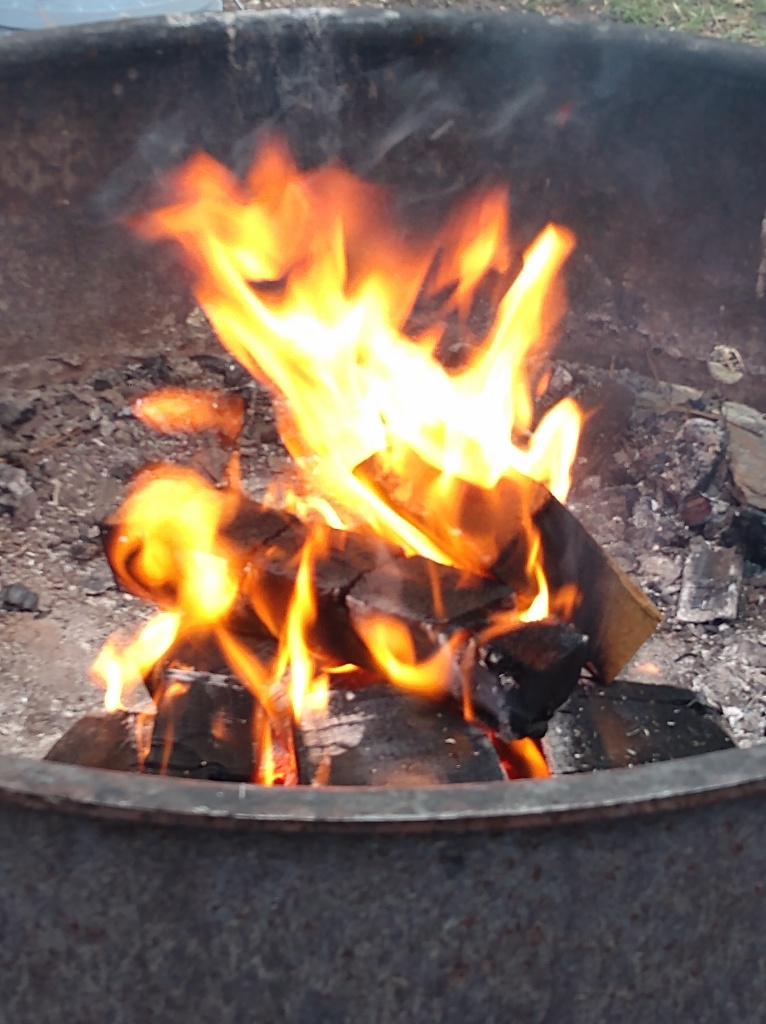
Verse 6: “The tongue is also a fire, a world of evil among the parts of the body.”

Photo credit: Devin Avery

Turning to James 3 today we begin the section called “Taming the Tongue” in my Bible. Using great metaphors, James illustrates the power of our words. Today’s passage uses some strong words to communicate the importance of what we allow or do not allow to come from our mouths.

James begins by speaking to the leaders and potential leaders in the churches. He warns that those in leadership “will be judged more strictly.” Is James referring to judgment by God or by men? I believe that James is thinking of both in this passage. Those with a platform from which to speak really need to be aware of the impact of their words. Going on James points out “we all stumble in many ways.” Yes, we are all far from perfect.

Using the metaphors of a small bit controlling a large animal like a horse and the tiny rudder that steers a large ship driven by strong winds, James helps us to understand that the small tongue in our mouths can have huge impacts when we make even small boasts. He parallels this to a small spark that sets a whole forest on fire. In verse six James writes, “The tongue is also a fire, a world of evil among the parts of the body.” The tongue does have potential to do much harm. All of us can quickly think of times when we have been hurt or stung by another’s words. We can just as readily recall many instances when our words have done the same to others. The tongue can certainly be “a world of evil.” We all need to exercise great care with our words.

James closes this part of our passage for this week with the recognition that our tongue can “corrupt the whole person”. Just a few words can affect how we see another person or can impact how we are seen and understood. The damage quickly done can be very hard to undo. With all of this in mind, may we harken back to the call to be quick to listen and slow to speak, seeking to better tame our tongue. May it be so for you and for me.

Prayer: Lord God, give me a patient tongue. In those moments when I am tempted to speak quick or harsh words, slow me down. Guard the thoughts of my heart and shield me from the temptations of the evil one. May the Holy Spirit be my filter each day. Amen.


Leave a comment

Just a Few Words

Reading: James 3: 1-6

Verse 6: “The tongue is also a fire, a world of evil among the parts of the body.”

Photo credit: Devin Avery

Turning to James 3 today we begin the section called “Taming the Tongue” in my Bible. Using great metaphors, James illustrates the power of our words. Today’s passage uses some strong words to communicate the importance of what we allow or do not allow to come from our mouths.

James begins by speaking to the leaders and potential leaders in the churches. He warns that those in leadership “will be judged more strictly.” Is James referring to judgment by God or by men? I believe that James is thinking of both in this passage. Those with a platform from which to speak really need to be aware of the impact of their words. Going on James points out “we all stumble in many ways.” Yes, we are all far from perfect.

Using the metaphors of a small bit controlling a large animal like a horse and the tiny rudder that steers a large ship driven by strong winds, James helps us to understand that the small tongue in our mouths can have huge impacts when we make even small boasts. He parallels this to a small spark that sets a whole forest on fire. In verse six James writes, “The tongue is also a fire, a world of evil among the parts of the body.” The tongue does have potential to do much harm. All of us can quickly think of times when we have been hurt or stung by another’s words. We can just as readily recall many instances when our words have done the same to others. The tongue can certainly be “a world of evil.” We all need to exercise great care with our words.

James closes this part of our passage for this week with the recognition that our tongue can “corrupt the whole person”. Just a few words can affect how we see another person or can impact how we are seen and understood. The damage quickly done can be very hard to undo. With all of this in mind, may we harken back to the call to be quick to listen and slow to speak, seeking to better tame our tongue. May it be so for you and for me.

Prayer: Lord God, give me a patient tongue. In those moments when I am tempted to speak quick or harsh words, slow me down. Guard the thoughts of my heart and shield me from the temptations of the evil one. May the Holy Spirit be my filter each day. Amen.


Leave a comment

Just a Few Words

Reading: James 3: 1-6

Verse 6: “The tongue is also a fire, a world of evil among the parts of the body.”

Photo credit: Devin Avery

Turning to James 3 today we begin the section called “Taming the Tongue” in my Bible. Using great metaphors, James illustrates the power of our words. Today’s passage uses some strong words to communicate the importance of what we allow or do not allow to come from our mouths.

James begins by speaking to the leaders and potential leaders in the churches. He warns that those in leadership “will be judged more strictly.” Is James referring to judgment by God or by men? I believe that James is thinking of both in this passage. Those with a platform from which to speak really need to be aware of the impact of their words. Going on James points out “we all stumble in many ways.” Yes, we are all far from perfect.

Using the metaphors of a small bit controlling a large animal like a horse and the tiny rudder that steers a large ship driven by strong winds, James helps us to understand that the small tongue in our mouths can have huge impacts when we make even small boasts. He parallels this to a small spark that sets a whole forest on fire. In verse six James writes, “The tongue is also a fire, a world of evil among the parts of the body.” The tongue does have potential to do much harm. All of us can quickly think of times when we have been hurt or stung by another’s words. We can just as readily recall many instances when our words have done the same to others. The tongue can certainly be “a world of evil.” We all need to exercise great care with our words.

James closes this part of our passage for this week with the recognition that our tongue can “corrupt the whole person”. Just a few words can affect how we see another person or can impact how we are seen and understood. The damage quickly done can be very hard to undo. With all of this in mind, may we harken back to the call to be quick to listen and slow to speak, seeking to better tame our tongue. May it be so for you and for me.

Prayer: Lord God, give me a patient tongue. In those moments when I am tempted to speak quick or harsh words, slow me down. Guard the thoughts of my heart and shield me from the temptations of the evil one. May the Holy Spirit be my filter each day. Amen.


Leave a comment

Good and Evil

Reading: Psalm 14

Verse 5: “God is present in the company of the righteous”.

Photo credit: Tech Nick

Today’s Psalm is attributed to David. It speaks of the evil and corruption in the world. They seem to be in control. Yet over and throughout it all is God. Connecting to yesterday’s passage from 2nd Samuel 11, could David be reflecting upon his own behavior as he writes these words? In his secret heart could he be hoping that God is with Bathsheba?

The Psalm opens recognizing that the fool says, “There is no God”. The fool says I can do whatever I want – I am god! The fool is corrupt and vile. Didn’t someone ask if that wasn’t Uriah’s wife? In verse four David acknowledges that evildoers “devour” God’s people “as men eat bread”. Sexual appetites can certainly devour others like common food. A most powerful man can have his way and then dismiss his victim like she was a common peasant.

And yet David knows in his heart of hearts that God is bigger than the evil of the world and the evil inside of him. In verses five and six he writes, “God is present in the company of the righteous” and “the Lord is their refuge”. Even though evil has been done, David hopes that God is present to and comforting Bathsheba. Yes, the Lord draws near to all who are abused and oppressed, to all who endure injustice and violence.

The part of David still connected to God can still long for salvation to come to Israel. He can still long for a better world even though his ‘secret’ actions work against it. I too have been here before – doing wrong in the present yet still hoping for God to make me right in the end. Even then God is our ever present refuge. Thanks be to God.

Prayer: Lord, I must admit that I, like David, am never too far from sin. The fleshy part of me is ever seeking glory or power or possessions. Yet the divine within me is always drawn to you. Thank you for the Spirit within. Raise up that voice in my heart, O Lord. Amen.