pastorjohnb

Thoughts and musings on faith and our mighty God!


Leave a comment

Eyes of Compassion

Reading: Ruth 3: 1-5

Verse 1: “My daughter, should I not try to find a home for you, where you will be provided for?”
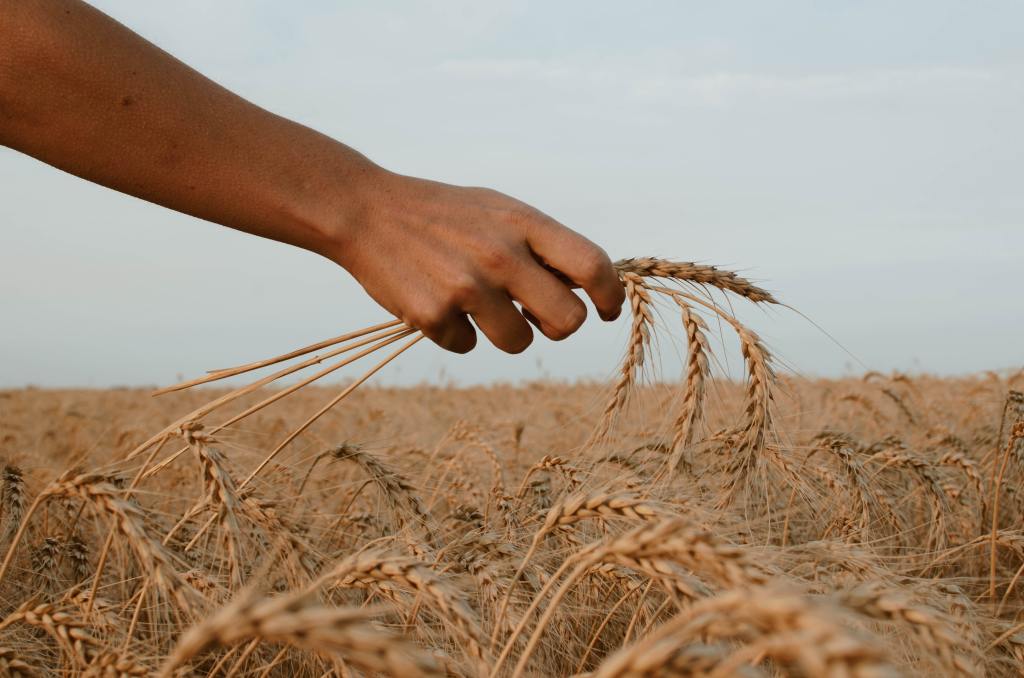
Photo credit: Paz Arando

As the story of Naomi and Ruth continues to unfold they find a relative or kinsman named Boaz who has begun to watch out for them in small ways. He instructs his workers to intentionally leave some extra grain for Ruth to gather. He invites Ruth to stay with his workers, giving her some protection. She is able to gather an abundant amount of barley. When Naomi finds out why she has so much she notes Boaz’s kindness and generosity. As our passage begins, “one day” Naomi says to Ruth, “My daughter, should I not try to find a home for you, where you will be provided for?”

Naomi and Ruth were both widows without any male heirs. In Israel widows were among the most vulnerable of all in that society. They are both well aware of the fragility and danger of their situation. To be without, to live hoping to find enough to eat each day – this is a really hard way to exist. Because of the kindness, generosity, and protection that Boaz has shown to Ruth and to Naomi through Ruth, Naomi believes that he may be the one to provide a home for Ruth and for herself through Ruth.

The need that Naomi and Ruth feel to be safe, secure, provided for are needs we all feel. To know we have food, shelter, clothing… are common needs for us all. If we’ve ever lacked for safety or a sense of well-being we can relate to or identify with Naomi and Ruth. Today, in all of our communities, there are people who lack the basics, who do not feel safe, who do not feel cared for. Do we, like Boaz, take notice of the needs right there before our eyes? We know what it feels like to be in need. Do we allow this to open our eyes and heart to the needs around us? Do we, like this kinsman Boaz, find little ways to show kindness and love to those on the edges of society? As we see the world today, may we see it with eyes of compassion and love, seeking to insure that all feel safe and that all experience well-being. May it be so for you and for me.

Prayer: Lord God, help me to recognize the places and ways that I can meet needs, that I can help another feel safe and cared for. Guide me to see with eyes of love and compassion as I seek to be a kinsman to all people. Amen.



Leave a comment

Eternal Salvation

Reading: Isaiah 25: 6-9

Verse 9: “This is the Lord, we trusted in him; let us rejoice and be glad in his salvation.”

Photo credit: Timo Volz

Today is All Saint’s Day so we depart from the lectionary readings for this week to read from Isaiah 25. This church holiday expresses thanks for the saints who have come before. Some churches celebrated this holiday yesterday and some will celebrate this upcoming Sunday as we remember those who impacted our lives of faith.

Our verses from Isaiah speak of a coming day. These words speak of the day when we will all be in the presence of God. For some of us that will be the moment after we draw our last breath here in earth. For some it will be when the clouds roll back and Jesus returns in glory. On that day we will join the Lord at “a feast of rich food for all people’s.” On that day the Lord will “destroy the shroud” – the shroud of death, the shroud of sin, the shroud of hate and evil, the shroud of division… All that separates us from God and from one another will be no more as God “wipes away the tears” and “removes the disgrace” of all the faithful.

For those who have gone on to glory, they have experienced the truth of verse nine. From the other side of the veil they have come to know that “This is the Lord, we trusted in him; let us rejoice and be glad in his salvation.” Standing in the glory of the Lord they have had their trust fulfilled. They have begun to rejoice in their eternal salvation. God’s mercy, grace, and love have carried them through this life and on into the glorious presence of the Lord.

Yes, there is a sadness to All Saint’s Day as we are reminded of our human loss. There is also a great joy as we celebrate those who have attained their eternal rest and as we look forward to feasting at the heavenly banquet and praising the Lord for our eternal salvation. Thanks be to God for the mercy, grace, and love that sees us through this life and on into glory.

Prayer: Lord God, thank you for each saint who has helped shape and form my faith. Thank you for those who have poured faith into my heart. Use me to pour faith into the lives of others each day. Amen.


Leave a comment

Eternal Salvation

Reading: Isaiah 25: 6-9

Verse 9: “This is the Lord, we trusted in him; let us rejoice and be glad in his salvation.”

Photo credit: Timo Volz

Today is All Saint’s Day so we depart from the lectionary readings for this week to read from Isaiah 25. This church holiday expresses thanks for the saints who have come before. Some churches celebrated this holiday yesterday and some will celebrate this upcoming Sunday as we remember those who impacted our lives of faith.

Our verses from Isaiah speak of a coming day. These words speak of the day when we will all be in the presence of God. For some of us that will be the moment after we draw our last breath here in earth. For some it will be when the clouds roll back and Jesus returns in glory. On that day we will join the Lord at “a feast of rich food for all people’s.” On that day the Lord will “destroy the shroud” – the shroud of death, the shroud of sin, the shroud of hate and evil, the shroud of division… All that separates us from God and from one another will be no more as God “wipes away the tears” and “removes the disgrace” of all the faithful.

For those who have gone on to glory, they have experienced the truth of verse nine. From the other side of the veil they have come to know that “This is the Lord, we trusted in him; let us rejoice and be glad in his salvation.” Standing in the glory of the Lord they have had their trust fulfilled. They have begun to rejoice in their eternal salvation. God’s mercy, grace, and love have carried them through this life and on into the glorious presence of the Lord.

Yes, there is a sadness to All Saint’s Day as we are reminded of our human loss. There is also a great joy as we celebrate those who have attained their eternal rest and as we look forward to feasting at the heavenly banquet and praising the Lord for our eternal salvation. Thanks be to God for the mercy, grace, and love that sees us through this life and on into glory.

Prayer: Lord God, thank you for each saint who has helped shape and form my faith. Thank you for those who have poured faith into my heart. Use me to pour faith into the lives of others each day. Amen.


Leave a comment

Not Far

Reading: Mark 12: 28-34

Verse 34: “You are not far from the kingdom of God.”

As the religious quiz Jesus and he debates with them a scribe (or teacher or lawyer – depending on your translation) comes and listens to the banter. He is impressed with Jesus’ answers so he asks his own question: “Of all the commandments, which is the most important?” He is not seeking to argue or banter with Jesus. He simply wants to know this wise man’s answer.

Jesus responds with the two great commandments – love God with all your heart, soul, mind, and strength AND love your neighbor as yourself. Any nominally faithful Jew would know these commands very well. They were the foundation of a daily prayer said in the morning and in the evening. We could relate this to our connection to this prayer: Our father, who art in heaven… Just those few words and we are off, speaking in the familiar rhythmic pattern. Like many of the religious of Jesus’ day, do we simply say the words, going through the motions, blah-blah-blah?

The scribe says to Jesus, “Well said, teacher.” He acknowledges the correctness of Jesus’ answer. Then he pushed beyond the religious politeness and adds that following these two commands are “more important than all burnt offerings and sacrifices.” Whoa! That would be like your pastor saying that feeding your hungry neighbor is more important than bringing food to the pantry or that helping with that single mom’s electric bill is more important than writing that check to the church or that being present to the coworker that just lost his dad is more important than being in church that particular Sunday morning. There is a huge difference between knowing the two great commandments (or the Lord’s Prayer) and really living them out. Because the scribe moved beyond appearing religious, to the place of recognizing that faith must really be lived out, Jesus tells him, “You are not far from the kingdom of God.” May it be so for you and for me.

Prayer: Lord God, make the words of my mouth and the prayers of my lips just the beginning of my faith. Do not allow these words to be the end or the goal. Actually use me to show my faith in the ways I express my love of you and of all my neighbors. May I be faith lived out. Amen.


2 Comments

Heart Turned to God

Reading: Psalm 146: 5-10

Verse 8: “The Lord sets prisoners free; the Lord gives sight to the blind.”

Photo credit: Freestocks

The second half of our Psalm for this week encourages us to put our hope and trust in the Lord. The psalmist is drawing the attention of the Israelites to the Lord God. Throughout much of their history Israel has either been off in exile or has been surrounded by other tribes or nations. All around them have been people worshipping “gods” – Baal, Molech, Dagon, Asherah… The Israelites often needed reminders to stay faithful to the one true God.

Reading these ancient texts we can be tempted to look down upon the people who worshipped these gods carved out of wood or stone. We like to think we’re better than that. Yet we too need to be reminded often not to worship the gods of mOneY, sPoRts, poPuLarIty, pOWer, SeLf… These gods that consume lived all around us can be powerful influences on our lives if we do not remain steadfast in our faith. All of these gods gain strength when we turn our eyes and heart inward.

In verse eight we read, “The Lord sets prisoners free; the Lord gives sight to the blind.” These false gods are like prison – one chases and chases after more and never quite finds enough. Peace, contentment, joy… remain elusive. In the Psalm we read of what consumes God’s heart: the oppressed and hungry, those bowed down, the alien and the fatherless and the widow. To love these as God loves them not only aligns us with God’s heart, it also de-aligns us from self and from the ways of the world. When we truly love the least of these we break our own attachments to money, power, popularity… Seeing these as a means to better the lives of others, we develop humble servant’s hearts. With hearts turned to God we are set free and are able to see as God sees and to love as God loves. With hearts turned towards God we too can sing, “Praise the Lord, and my soul. Praise the Lord.”

Prayer: Lord, use me each day as a conduit of your love. Transform my heart to be more like yours each day. With your love, may I be a humble servant in your kingdom. Amen.


Leave a comment

Always There

Reading: Psalm 146: 1-4

Verse 2: “I will praise the Lord all my life; I will sing praises to my God as long as I live.”

Psalm 146 is a song of praise to the Lord. It rejoices in God’s presence in the lives of the faithful. It celebrates the ways that God has been present in times of need and with those who are on the margins. In our faith journey we have experienced God’s presence throughout the highs and lows and during all that falls in between these extremes.

In verse two we read, “I will praise the Lord all my life; I will sing praises to my God as long as I live.” There is a commitment to praising God in all things and at all times. No matter what life is bringing, the psalmist chooses to praise the Lord. There is also a warning in these verses for today. In verse three we are reminded, “Do not put your trust in princes” – or in any other earthly thing for that matter. Rulers die and return to dust. Possessions and wealth only get us so far. Beauty and popularity fade. The plans that we make “come to nothing” when our lives end here on earth. This world, this life with all its trappings, is only temporary.

With an eye on the eternal, the psalmist calls us to “Praise the Lord. Praise the Lord, o my soul.” We do so because we are assured of God’s victory over sin and death. We do so because we are assured of our place in God’s kingdom, both now and into forevermore. We do so because we are assured of God’s constant and abiding presence. Yes, today and every day may we praise the Lord!

Prayer: Lord God, when I turn to you, you are always there. When I’ve wandered and make my way back to you, you are always there. When I struggle and cry out to you, you are always there. In the stars or sunrise or thunder, I am reminded that you are always there. In the middle of the routine of everyday life, in the smallest of ways, you remind me that you are always there. Thank you Lord for your presence in my life. Amen.


Leave a comment

“Home” to God

Reading: Ruth 1: 1-6

Verse 6: “When she heard in Moab that the Lord had come to the aid of God’s people… Naomi prepared to return home.

Photo credit: Milo Weiler

Today we get the back story of what we studied yesterday – Ruth claiming Naomi, her people, and her God. We learn that it was a famine in Judah that led Naomi, her husband, and two sons to move to Moab. They settled there and made a life for themselves. The father dies and the two sons marry Moabite women, becoming further connected to this foreign land. Even though now a widow, Naomi is still surrounded by her sons and new daughters-in-law. After ten years both sons die. In verse six we again read, “When she heard in Moab that the Lord had come to the aid of God’s people… Naomi prepared to return home.

When we move someplace new we settle in, make new friends, find a church home. We become connected and form relationships. For many of us, though, there is a sense that “home” is still back there somewhere. Maybe that place is where we were born and grew up. Maybe that place is where we raised our children. I think this is what Naomi felt about Bethlehem in Judah. They had moved to find food. We move to find employment, to live where our new spouse lives, to go to college…

After these three losses Naomi hears that God has provided once again for Judah. Naomi and her two daughters-in-law prepare to move to Judah. It is a reset for Naomi. She can leave behind this place associated with grief and death. We too can want to leave these places of hurt to return home, to where we feel loved and cared for and connected. Judah is also the place that God dwells – for Naomi and the people of this time. To return to Judah is also to connect with God. We too do this in our times of suffering and loss. We connect to God and to God’s people, finding comfort and care in the family of God. We too come “home” to God.

Prayer: God, your door is always open. Your love always calls out to us. Home is a place we find shelter from the storms of life. Thank you for friends and family that also love on us in our times of need. Thank you for your open arms that always embrace us. Amen.


Leave a comment

Trust in God

Reading: Ruth 1: 7-18

Verse 16: “Where you go, I will go… Your people will be my people and your God my God.”

Photo credit: Einar Storsul

In our passage for today Naomi decides to return home to Judah. She has lost her husband and her two sons. Going back home is the logical step. Just as the journey is beginning she tells her two daughters-in-law, “Go back, each of you…” They are young and may be able to find husbands in their homeland of Moab. That would be better than three widows all going to Judah.

Initially Orpah and Ruth decide to stick with Naomi. Again she urges her daughters-in-law to stay in Moab, to be where their people are. Orpah sees the logic and kisses Naomi goodbye. Ruth is again urged to do as her sister-in-law has done: “Go back with her.” It makes sense for a widow to stay with her family, to remain where people love and will care for her. To go to a foreign land, as a complete stranger, as a widow – it doesn’t make much sense.

We, like Orpah, prefer the comfortable, the safe, the known. We like our routines and we tend to like to preserve the status quo. For most of us change is unsettling and disconcerting. When faced with a hard decision, like Orpah and Ruth were, we usually choose the easier way, the path of least resistance. What led Ruth to decide as she did? Ruth states, “Where you go, I will go… Your people will be my people and your God my God.”

Out of a deep sense of love Ruth commits to journey with Naomi. Even though the future is uncertain, she commits to Naomi. And she commits to God. Being around Naomi for at least ten years, Ruth has observed Naomi’s faith. At this points Ruth commits to Naomi and to God. Ruth trusts in God as they begin their journey. In those difficult moments in our lives, may we do the same.

Prayer: Lord God, you call me to trust in you, to walk in faith. In those moments, when it feels uncomfortable or unsure, speak clearly into my heart so I may know the way to go. Amen.


Leave a comment

Set Free to Serve

Reading: Hebrews 9: 11-14

Verse 14: “How much more, then, will the blood of Christ… cleanse our conscience from acts that lead to death, so that we may serve the living God.”

Drilling down a little deeper into the passage that we began to work with yesterday, today we focus in on the new covenant. In the Old Testament sacrificial system the blood or ashes of sacrificed animals made the people ceremonially clean. Through these sacrifices the people were made outwardly clean and could return to communal life. The life of the animal paid the atoning price for their sin. But the guilt and the shame and the regret remained; the forgiveness was never complete. The sin remained a mark on them. Yes, it was ceremonially covered by the blood or ashes of the animal, but the blemish remained.

In verse fourteen we read about the difference made in the new covenant. Here we read, “How much more, then, will the blood of Christ… cleanse our conscience from acts that lead to death, so that we may serve the living God.” This unblemished, perfect sacrifice chose to die in our place, taking upon himself the sins of the world. Jesus’ blood, poured out in perfect sacrifice, washes away our sin and the guilt, shame, regret, doubt, fear… connected to our sin. Through the new covenant we are not only forgiven but we are made new. Our sins are no more according to God. Our sins are washed away; no blemish or mark or spot remains. We are made new again, holy and perfect in God’s sight. At least for a time we stand as the image of Christ himself.

The new covenant allows us to go forward to “serve the living God.” We are freed to go out as Christ in the world, offering his words of wholeness, healing, and restoration to others. This gift of mercy and grace and forgiveness and redemption is not ours to simply sit on or to cherish for ourselves. This great gift is ours to share, to proclaim to the world. Christ has set us free! May we share this good news today!!

Prayer: Loving and living God, consuming fire, cleanse the sun from my life. Draw me into your deep grace and fill me with it so that I can bring grace out into the world. As I have been reconciled, use me to reconcile others to you and to one another. Amen.


Leave a comment

Jesus Opened the Way

Reading: Hebrews 9: 11-14

Verse 12: “He entered the Most Holy Place once for all with his own blood, having obtained eternal redemption.”

In our passage from Hebrews we read more about our great high priest. In this week’s passage the author continues to develop this theme and role that Jesus plays. The priesthood and sacrificial system were central to the faith of the Hebrews. Ever since the time of Aaron, Moses’ brother, the priest was the connection point to God and the sacrificial system was the means to forgiveness of sins. At the time of this writing, the author was demonstrating how all of this changed because of Jesus’ sacrifice.

For the Jews the temple was the center of their faith. God’s presence resided in the Holy of Holies. Only the high priest could enter this space and only once per year. The high priest would enter on the Day of Atonement to sprinkle blood on the ark of the covenant. The blood from the sacrifice would ‘pay’ for the sins of the people. Year after year the high priest would enter the Most Holy Place to atone for sins. All of this changed for the Jews through the sacrifice of Jesus on the cross. In verse twelve we read, “He entered the Most Holy Place once for all with his own blood, having obtained eternal redemption.” As Jesus breathed his last on the cross the curtain was torn in two, opening access to the Most Holy Place. Jesus’ blood replaced the blood of the ram “once for all.”

Jesus opened the way to God. We no longer need a priest to offer sacrifices for our sin or for the sins of the people. We can go directly to God any time and any place. We can enter God’s holy presence, offering repentance as we confess our sins. Pledging a more holy walk with God, we are confident that the blood of Jesus washes away our sin. The redemption that Jesus offers is eternal, unending, forever. We can claim freedom from our sin through the sacrifice of Christ over and over and over. Thanks be to God for the grace that is freely offered through Jesus Christ our Lord.

Prayer: Lord God, thank you for what you gave up for me, for us. Thank you for the sacrifice of your perfect Son for our sins, for my sins. It is such a wonderful gift to be able to come to you 24/7. You are always there for us all. What an amazing gift of love! Amen.