pastorjohnb

Thoughts and musings on faith and our mighty God!


Leave a comment

In Moses’ Place

Reading: Exodus 17:4-7

Verse 4: “What should I do with this people? They are getting ready to stone me.”

Photo credit: Clay Banks

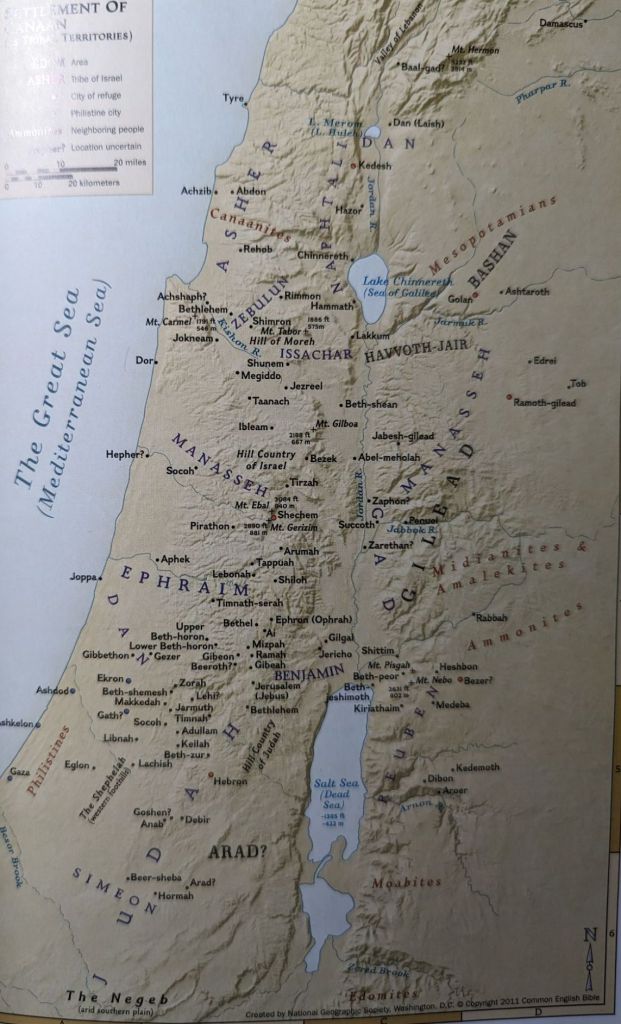
Continuing in Exodus 17 we see that the Israelites continue their grumbling. They ask Moses if he really led them into the wilderness just to die of thirst. Did they really think that this was the plan? They are frustrated. Step after step has required going to God for some kind of intervention. And that step requires working through Moses. The people aren’t the only ones frustrated – and afraid and unsure. Moses cries out to God, saying, “What should I do with this people? They are getting ready to stone me.”

God responds but doesn’t directly address any of the frustration. There isn’t any reaction to the grumbling, quarreling, or crying out. God simply meets the need, this time for water. In doing so God also provides reassurance and evidence that God is with Moses, the chosen leader, and that God is with the Israelites. With elders along in witness roles, Moses strikes the rock at Horeb with his staff, providing water for all to drink. In this action, God gives answer to the question, “Is the Lord among us or not?”

At times we find ourselves in the place of Moses, responsible for making a decision or for taking action. Many will be looking to us. Our choice will affect others – maybe many others. In these places may we follow Moses’ example: go to God, gather trusted leaders, lead as God directs. Following these steps we too will show that, yes, God is among us.

Prayer: Lord God, lead and guide me in the decisions, actions, and choices that come before me. Draw me first to you, seeking your wisdom and direction, wanting to know your will and way. Bring around me good and trustworthy leaders, people who also have a heart for you. Together lead us forward in faith. Amen.


Leave a comment

Without These Things

Reading: Exodus 17:1-3

Verse 2: “So they quarreled with Moses and said, ‘Give us water to drink.’”

Photo credit: Mukund Nair

As the Israelites wilderness journey continues they come to a place with no water. You’d think that after witnessing the 10 plagued – oh the Passover! – and the parting of the sea – oh the Egyptian army! – after all this you’d think they knew a God who could provide water. But wait – God did that at Marah and again at Elim. And… God provided manna and quail when they ran out of food and became hungry. After all of this, you’d think they’d trust God and Moses at least a little bit. But have you ever lived in scarcity?

The Israelites are living with a scarcity mindset. They have no crops, no place to call home, no money in the bank. They are relying on God and Moses for absolutely everything. It’s a lot of faith and trust to hold in just one source. When you’re wondering if you’ll ever eat again, when you’re worried about where you’ll sleep that night, when you are dying of thirst – it’s hard to see anything but that one thing. Logic often goes out the window. Faith and trust usually aren’t far behind. So the people quarrel with Moses (and they test God), demanding, “Give us water to drink.” In such moments of want and desperation it can be hard to see or to believe that God has a plan.

For the Israelites, their relationship with God runs through Moses. He is their one intermediary. We have a personal relationship with God. We have the constant indwelling presence of the Holy Spirit. We can turn to the Bible and remind ourselves of God’s love and promises. Imagine trying to live out your faith without any of these things. That’s where the Israelites were. That’s where people without faith are today.

Prayer: Lord God, I cannot imagine life without you. You’ve provided so many ways to connect, to lean in, to hold on. Thank you. And, Lord, take my gratitude and turn it into fuel to lead others into a saving relationship with you, into faith and trust and hope. Use me today to build your kingdom here on earth. Amen.


Leave a comment

Which Son?

Reading: Matthew 21:28-32

Verse 28: “What do you think? There was a man who had two sons…”

As we continue in Matthew 21, Jesus tells a parable that addresses yesterday’s question from the chief priests. They wanted to know where Jesus got his authority from. Jesus trapped them with his question about John the Baptist’s authority. They refused to answer the question aloud, revealing that they were their own authority, not God.

Jesus asks them another question: “What do you think?” He then lays out a scenario in which the first son initially refuses the father’s request but later honors it. The second son does just the opposite. When asked which son obeyed, the chief priests quickly identify the first son. Jesus then unpacks this little parable, informing the chief priests that “the tax collectors and the prostitutes are entering the kingdom of God ahead of you.”

The tax collectors and prostitutes initially said no to God the Father. But when they heard John the Baptist’s message, they repented and entered a right relationship with God. The chief priests and other religious leaders at first said “yes” to God but are now far from actually living as God wants them to live. They are now like the second son.

The question for us today is this: Are we the first son or the second son? We’ve declared ourselves Christians. Are we obediently following Christ, seeking to faithfully live out his example? Or are we really still our own authority?

Prayer: Lord God, I want to be like the first son. I really do. I want to put my sin and disobedience behind me. But self, the lure of power and control, the sin of pride – they are always right there, vying for authority. Lord, strengthen me for each day. By the power of your Holy Spirit living inside of me, raise up my faith and empower me to choose you over all else. Guide me to walk faithfully in all of my steps. Amen.


Leave a comment

Authority

Reading: Matthew 21:23-27

Verse 23: “By what authority are you doing these things? And who gave you this authority?”

Photo credit: Shane Rounce

Jesus’ ministry is nearing its climax. The Palm Sunday celebration happened just the day before. Jesus has just turned tables over in the temple, accusing them of turning it into a “den of robbers.” The tension between Jesus and the religious authorities is skyrocketing. As he is teaching in the temple courts they approach him and ask, “By what authority are you doing these things? And who gave you this authority?”

They are the religious authorities. They are the ones in charge. They are the keepers of the Law. Have you ever had a boss or a supervisor who was like this? Yes, they had the title and maybe even the office but they lacked real power and authority. Real decisions and real leadership came from someplace else. The religious leaders sense that Jesus has both in volumes. He demonstrates this with the simple question that he asks.

Turning the question to John the Baptist’s authority, Jesus exposes the religious leaders lack of faith. They have tons of religion, yes. They can quote scripture and they follow all the rules, but they have little faith and almost no personal relationship with God. That’s the things John had and it’s the thing that all of the prophets had. Just as it was with John and with all of the other past prophets, so it is with Jesus. They didn’t understand that power comes from a personal relationship with God. They didn’t get that this is what leads and guides, fuels and drives a life lived for and with the Lord. This is the source of Jesus’ authority. May it be so for you and for me as we seek to live out the love of God in our lives.

Prayer: Lord God, grow our relationship day by day, deepening our connection and my sense of your will and way. May I know you more personally and more intimately, just as you know me. Fill me with your Spirit’s presentation and power. Use me as your servant today. Amen.


Leave a comment

Honest, Generous, Righteous

Reading: Matthew 20:1-16

Verse 4: “You also go and work in my vineyard, and I will pay you whatever is right.”

Returning to the parable today we first recognize that the scenario played out in the market was very familiar to Jesus’ audience. Men hanging around hoping to be hired for seasonal work was the norm. Having people to fill this role was a necessity in their agrarian culture, much as it is today in that sector of our economy.

For those hired earliest, they agree with the owner on the usual daily wage. One denarius was the coin used to pay a Roman soldier and it was enough to feed a family of four for a few days. These day laborers would hope to work 2-3 days a week to provide for their families.

The owner offers a different deal to the rest of the workers. They accept his offer to pay them “whatever is right.” Although it turns out well for these workers, there is some trust required in this open-ended offer. Right is objective. One denarius is not. These workers choose to entrust their lives to the character or reputation of the vineyard owner. He is honest and generous and righteous. This sounds like someone that I’d like to work for. How about you?

Prayer: Lord God, thank you for being kind and generous and righteous with us. You do not demand a strict adherence to an agreed-upon set of rules. As it was impossible to keep the list in Jesus’ day, so too is it in our time. So thank you for your grace and mercy too. Amen.


Leave a comment

Chosen

Reading: Matthew 20:1-16

Verse 1: “The kingdom of heaven is like a landowner who went out early in the morning to hire workers for his vineyard.”

Photo credit: Summertrain

Today and tomorrow we will study the parable about workers in the vineyard. The main character and the focus should be on the landowner. We can be tempted to make it about the vineyard workers because they are us. It’s really about God though.

The landowner is up and out and about early in the day. At 6 am he is already at the gathering place for day laborers. A plan is in place. It was set long before 6 am. The parable does not say if some of those present were hired or if all that were there at 6 am were hired. Since we’re talking about God here, I bet all that were there were hired. God welcomes one and all who seek to be of service in the kingdom of God.

As the story unfolds, the landowner returns again and again and again, still seeking to include more folks in the work. Each time he not only promises work, but he offers fair treatment too. God even returns at the last hour, looking for a few more folks to include in this kingdom work.

In the parable, being chosen is great news. Your family will eat that day. In this life, being chosen is great news too. Life here and the life to come just became incredibly better. In response may we rejoice today over our place in the kingdom of God. And may we not stop there. May we be invitational too, encouraging others to enter a place where they will be loved and provided for. As we have received, may we share with others.

Prayer: Lord God, thank you for calling me into the labor of your kingdom. Thank you for your generous love and care. Use me to call others into the life that you offer to all of us, no matter where we are, no matter when we come to you. Amen.


Leave a comment

A Manner Worthy

Reading: Philippians 1:27-30

Verse 27: “Conduct yourselves in a manner worthy of the gospel of Christ.”

In the second half of our Epistle text, Paul encourages the Philippians and us to represent Christ and one another well. He begins by challenging us all to “conduct yourselves in a manner worthy of the gospel of Christ.” What does it mean to live a life that is “worthy” of Jesus and the gospel? In a general sense it means to live as Christ lived – obedient to God; generous with love, mercy, grace, and forgiveness; and, overflowing with humility and care for the needy.

Paul focuses on 3 more ways in today’s passage. First he calls us all to “stand firm in one spirit.” The unity of spirit was very important in Paul’s day. These early Christians were living in a pagan world as members of a small minority group. Sticking together in body and in spirit was essential to survival. The same is true today for us.

Paul then tells us not to be afraid of those who oppose us. These ‘opponents’ were many in Paul’s day (he was in prison, right?) and there are no less today. To have confidence in our eternal God battles the fear of these temporal threats. Lastly Paul encourages the Philippians and us to step into what has been “granted” to us as a privilege – to suffer for and with Christ. Nothing without cost is worth much. If we are not suffering a bit for our faith, then we aren’t fully conducting ourselves in a manner worthy of Jesus Christ. If we are blending in and living like the world around us, let us return to the actual gospels for a refresher on the life of Jesus.

Prayer: Lord God, help me to be a person of peace and unity. Use me to build connection and community – two things at the heart of faith. Remove any fears that I have and empower me to be bold in my faith. And as John Wesley said, put me to doing, put me to suffering. May it all be for your glory. Amen.


Leave a comment

Convinced

Reading: Philippians 1:21-26

Verse 25: “Convinced of this… I will continue with all of you for your progress and joy in the faith.”

Paul writes to the Philippian church from prison. Being in a place like that can lead one to take stock of one’s life. Earlier in this chapter he notes that his current imprisonment has “really advanced the gospel.” He sees God’s plan at work and he embraces his role in that plan – even if he finds himself in chains. Picture that as we read and consider these words today.

Our text opens with Paul writing, “to live is Christ and to die is gain.” In prison, his life hangs in a delicate balance. He has been and is being used to advance the gospel. He also knows that to die is to gain heaven and to be in his beloved Christ’s presence once again. Paul is torn between the two. Going to be with Jesus “is better by far.” To remain on earth, however, “is more necessary for you.” Have you ever felt this tug of war in your soul?

Understanding his place in God’s plan, Paul writes, “Convinced of this… I will continue with all of you for your progress and joy in the faith.” He chooses God’s will over his own will. The needs of this church (and probably other new churches and Christians) takes priority over Paul’s desire to see Jesus Christ in eternal glory. The connective tissues of community and the call to serve God and one another is what convinces Paul of this commitment. Like Paul, we too have a role to play in God’s plan to advance the gospel. May we too be convinced of and committed to our role as we seek to build the kingdom of God in this time and place.

Prayer: Lord God, help me to better sense the call, as Paul so clearly did. Lead me to know your plans more assuredly and to step into them more fully. Use me day by day to build up your kingdom here on this earth, O Lord. Amen.


Leave a comment

God at Work

Reading: Psalm 105:1-6 and 37-45

Verses 5 and 45: “Remember the wonders God has done… that they might keep God’s precepts and observe God’s laws.”

Our passage from Psalm 105 can be quickly summed up in these words from verses 5 and 45. It is about remembering and praising God for all that God has done. In turn, this leads us and strengthens us in our walk of faith. In the Psalm are examples of all that God has done. We too could and should make such a list that details our faith journey.

The psalmist fills the opening verses with responses to God’s work in the lives of the Israelites: “give thanks… make known… sing… tell… glory… rejoice… look… seek.” Each is done or offered with an attitude of gratitude and with thanksgiving filling the heart. These are all ways that we too can offer our praise and thanksgiving to God.

Verses 37-45 (and the rest of the Psalm) are all about remembering the specific actions of God on behalf of the people of God. In our verses today the psalmist celebrates the actions of God during the exodus from slavery. God showed up and showed out again and again. The challenge today is to reflect on your faith life and then to write down a handful of times that God showed up and showed out in your life. It can be a simple list that you write down and then lift up in prayer. It can be on a timeline that you praise your way through. It can be a poem or a song that you put together, read or sung as an act of prayer and praise. Taking the time to be intentional about remembering and thanking God reinforces our faith and it strengthens us to keep God’s precepts and observe God’s laws.” May it be so!

Prayer: Lord God, fill my heart with gratitude as I remember all that you have done in my life. Each step, each stage – a drawing in deeper into our relationship. Each moment, each season – a place of learning and growth in my faith. Please continue to work in my life, O Lord. And in turn may I serve you in this world. Amen.


1 Comment

Three P’s

Reading: Exodus 16:6-15

Verses 6-7: “In the evening you will know that it was the Lord who brought you out of Egypt, and in the morning you will see the glory of the Lord.”

Continuing on in Exodus 16 we see 3 traits of God on display. Two are obvious and one is found “between the lines.” In verses 6-7 we read about one: God as provider. Because the people are hungry and are unable to provide for themselves, God brought quail at night and manna in the morning. God is our provider too. Sometimes food is what we need. Sometimes it is peace or joy or strength or the opening of a door or guidance for a next step.

The second trait is found in both the manna and in the cloud. God’s presence is found in the glory in the cloud and in the thin flakes that appear on the desert floor. In their doubt and in their want, God’s presence fills these voids. God is present to us too. Maybe it is in worship. Maybe it is on a walk. Maybe it is when you bow your head in prayer. Or maybe it’s in those moments of great need when you feel God’s arms and love surrounding you.

The third trait is God’s patience. The testing and the grumbling are already frequent, just days into this journey. It’s like your child asking “Are we there yet?” before you’re out of the driveway. Moses even makes it clear that the Israelites are really grumbling “against God.” It doesn’t seem to bother God. At all. God knows the big picture, the master plan. And God knows us too. God created us. God is not done with the Israelites and God is not done with you or with me. Although we also grumble… and doubt and question and worry and… God is ever so patient. Hallelujah!

Prayer: Lord God, you are indeed provider, presence, and patience. We need each in large volume. You give and give and give out of your great love for us. May our response be to live there out with one another. Amen.