pastorjohnb

Thoughts and musings on faith and our mighty God!


Leave a comment

Cycles

Readings: Judges 1, Judges 2, Judges 3:1-6

Judges 2:18 – “So the LORD would raise up leaders for them, and the LORD would be with the leader, and he would rescue Israel.”

Today we turn to the book of Judges. This book falls in between Moses and Joshua and the beginning of the monarchy with Saul and then David. The Israelites are living in the Promised Land. Judges opens with the Israelites asking who will go up to fight the Canaanites. There are still a lot of non-Israelites living in the land. Judah, along with Simeon, fight and have success. But soon we read about the Kenites who went up to live with the Amalekites and again and again we read “didn’t drive out.”

Chapter 1 ends with decreases in success and outright failure against the inhabitants of the land. Chapter 2 opens with the Lord’s messenger calling out the people’s disobedience. The messenger declares that God will not drive them out so that they and their gods “will be a trap for you.” We then have a flashback to the time of Joshua. This serves as a lean in to the reality that the next generation, this current generation, did not know the Lord. This generation worships Baal and other local gods. Defeat and distress soon follow.

In verse 18 we read, “So the LORD would raise up leaders for them, and the LORD would be with the leader, and he would rescue Israel.” God responds to their cries. In the next verse, however, we read, “When the leader died they would once again act in ways that weren’t as good as their ancestors.” God would become angry and the cycle would begin anew. After a list of the nations God left as “a test for Israel” we read, “The Israelites intermarried with them and served their gods.” So it will be in Judges. And so it is in our lives.

Prayer: Lord God, help us to see the cycles that we too repeat. In seeing, help us to learn and grow in our faith so that we can lessen sin’s grip on our lives. Strengthen and encourage us, O God, empowering us with your Holy Spirit. Amen.
Leave a comment

As for Me and My House…

Readings: Joshua 18, Joshua 19, Joshua 20, Joshua 21, Joshua 22, Joshua 23, Joshua 24

Joshua 24:15 – “But my family and I will serve the LORD.”

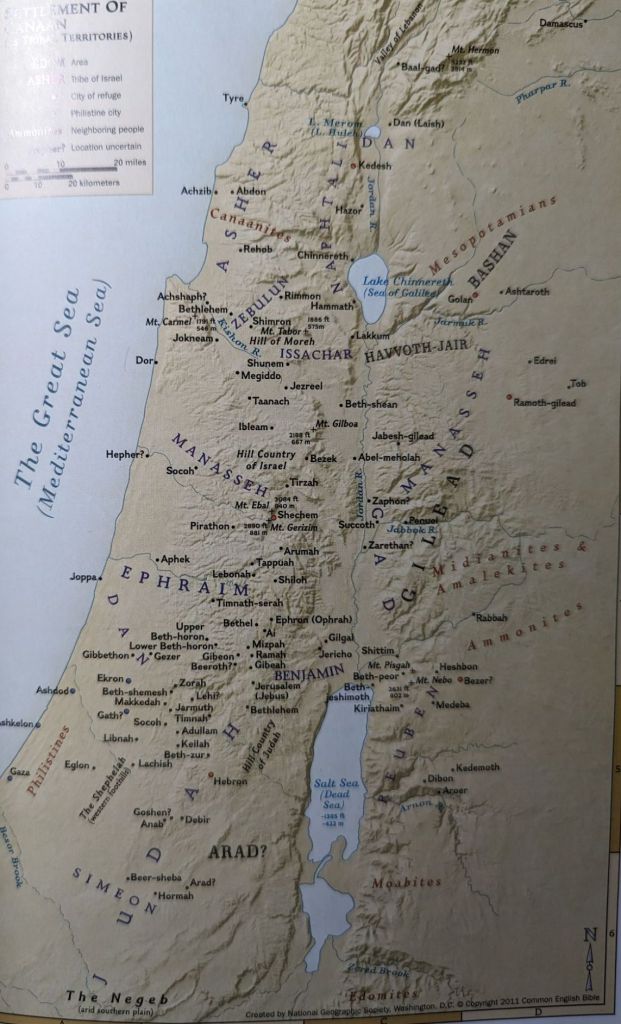
Today’s seven chapters close out the story about inheriting the Promised Land. It begins with a way to divide up the remaining land west of the Jordan. Lots are cast and land is allotted to the tribes of Benjamin, Simeon, Zebulun, Issachar, Asher, Nephtali, and Dan. Joshua also receives a legacy. Then, in chapters 20 and 21, the Levites are given cities and their surrounding pastureland. These 48 cities are spread out amongst the twelve tribes and they include the six refuge cities. God is preparing here for a day yet to come. God is good.

Now that the land legacies have been given and now that peace has come, Joshua summons the Reubenites, Gadites, and the half tribe of Manasseh. He thanks them for their faithful service and sends them home with a charge to be obedient and faithful to the Lord. At the Jordan these tribes build an altar as a witness to their belonging to the people of Israel west of the Jordan. It is a standing reminder.

Chapter 23 holds Joshua’s final words of warning. He first reminds the Israelites of all that God has done and then implores them to be faithful and obedient. Joshua warns them about mixing with the locals. They will be “a snare and a trap.” Joshua warns Israel that they will “vanish quickly” if they violate the covenant.

Chapter 24 closes Joshua’s story. He begins with a great review that takes Israel from Abram to this very moment. Joshua challenges Israel to decide “whom you will serve.” Joshua declares that he and his house will serve the Lord. So too will the people of Israel. May it be so for you and for me and for our households.

Prayer: Lord God, the story of another great leader and a meaningful period in Israel’s history comes to a close. Yet the choice at the end of Joshua remains our choice today. It’s a choice we make every day. So each day, O Lord our God, empower us to choose you. Amen.


Leave a comment

Thorns…

Readings: Joshua 12, Joshua 13, Joshua 14, Joshua 15, Joshua 16, Joshua 17

Joshua 16:10 – “But they didn’t remove the…”

Our reading today begins with a summary of the kings defeated by Moses and by Joshua. Moses’ efforts have a lot more detail. This follows the pattern found in Deuteronomy. Joshua’s efforts are simply a list of 31 names. In chapter 13 we learn that Joshua is old and “much of the land remains to be taken over.” There are many pockets of Canaanite tribes remaining here and there. The land east of the Jordan is then allocated to the tribes of Reuben and Gad and to half of the tribe of Manasseh.

Chapter 14 begins the process of assigning land west of the Jordan. Joshua, Eleazar, and tribal leaders assign a “legacy” to the remaining 9 1/2 tribes by lot. Caleb comes forward and requests the land that Moses promised him 45 years ago. Zelophehad’s daughters are later given a legacy, fulfilling another of Moses’ promises.

Judah, Ephraim, and the other half tribe of Manasseh are assigned legacies, determined by lot. It is interesting that Judah’s legacy is thoroughly detailed – it includes the names of 94 individual cities. Ephraim and Manasseh’s legacies are briefly described. No cities are even mentioned. At the end of chapter 17, Ephraim and Manasseh question the size of their inheritance. Permission is granted to expand by clearing forest, claiming more land for themselves.

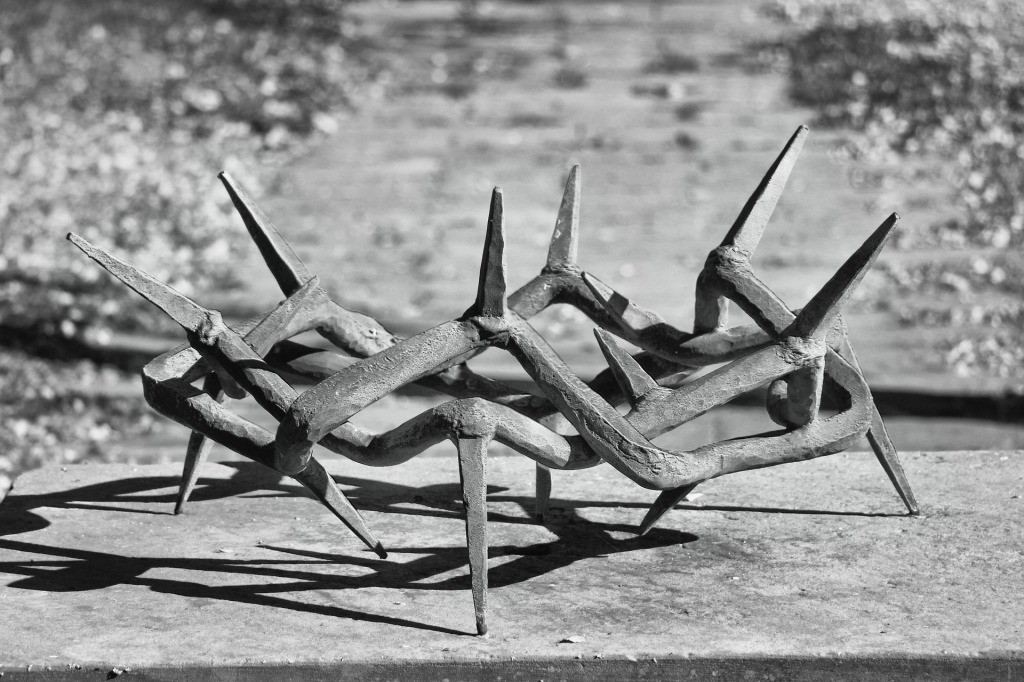
Again and again in today’s readings we come across some version of “But they didn’t remove the…” Israel allows many Canaanite tribes to live amongst them in the Promised Land. These will become “thorns in your side” (Numbers 33:55.) When we too leave footholds in our hearts for the things of this world, they can and often do become thorns in our lives.

Prayer: Lord God, we see continued order and purpose as you allocate legacies or inheritances to Israel. You still lead and guide us in these ways of order and purpose. We also see little disobediences today – things that will lead to trouble for Israel. Help us to see these dangers in our lives too. Lead and guide and empower us in the conquest of these potential traps and dangers. Amen.


Leave a comment

Don’t Be Afraid

Readings: Joshua 7, Joshua 8, Joshua 9, Joshua 10, Joshua 11

Joshua 10:8 – “Don’t be afraid of them. I have given them into your power. Not a single one of them can stand up against you.”

In today’s readings we see the results of obedience and of disobedience. In chapter 7 the sin of one affects the many. But Achan’s is not the only disobedience. Israel goes up against Ai without consulting God. Because of a resounding defeat, Israel’s hearts “melted.” Joshua and the elders turn to God. God says, “Get up!” Following God’s guidance, Achan is found out and punished. God then directs the battle against Ai, leading to victory. In verse 24 we read what will become a familiar refrain: “without mercy.” Joshua and Israel then bring offerings. The commandments are written in the large stones and then recited to the people.

In chapter 9 the Gibeonites trick Israel into a treaty. Again God is not consulted. This leaves Israel stuck: break their oath or break a command of God? An alliance of five kings (or was it God?) provides a solution. They attack the Gibeonites, trying to recapture a strategic location. God tells Joshua, “Don’t be afraid of them. I have given them into your power. Not a single one of them can stand up against you.” Israel is victorious. Again and again we read “wiped out”“no survivors” in the battle accounts.

Joshua then turns his attention to the north. In chapter 11 the northern kings join together against Israel. Their army is “as numerous as the sands in the seashore.” Again God says to Joshua, “Don’t be afraid…” And again Israel wins victory after victory. Lastly the Anakim are removed from the Promised Land. At the end of chapter 11, after what was really a lengthy military campaign, we read, “Then the land had a rest from war.”

As we read these words that speak again and again of violence, we need to keep in mind that these words are not 100% literal. Canaanites remain in the land. Their military power is broken but their power of influence is far from “wiped out.” The Canaanites will continue to dwell amongst Israel, leading to intermarriage, idolatry, and future conflicts.

Prayer: Lord God, we see today how obedience leads to good. Disobedience does not end well. We see both on the personal and communal levels. We will see how the influences of the world, if allowed to dwell in our hearts, will lead to disobedience. As people and as communities of faith, draw us to obedience and to relationship with you. Amen.


Leave a comment

This Happened So That…

Readings: Joshua 4, Joshua 5, Joshua 6

Joshua 4:24 – “This happened so that all the earth’s peoples might know that the LORD’s power is great and that you may always revere the LORD.”

Photo credit: David Clode

After Israel crosses over, 12 stones are gathered from where the priests carrying the ark stood. Joshua then sets up 12 other stones right there as a memorial marker. As the priests and ark exit the riverbed, the water starts to flow again. Soldiers from the tribes of Reuben and Gad, plus the half tribe of Manasseh go before Israel in battle formation. Joshua then sets up the 12 stones at Gilgal. When children ask about the stones, parents will tell the story of the miraculous crossing. This crossing has instilled fear in the hearts of the Amorite and Canaanite kings.

Joshua, following God’s command, then circumcises all the males. Those born in the desert had not yet been marked as belonging to the Lord. Israel then celebrates the Passover. In these two rituals they are reclaiming their identity as the holy people of God. Readied as a nation, Joshua next meets the commander of God’s heavenly armies. Sandals come off, bookending Moses’ “holy ground” moment with God. Instructions are given for the battle of Jericho. Israel’s army and the ark will march around the city once for six days. On the seventh day they will march around Jericho seven times. All of this is done in silence. After the seventh circling on the seventh day, the trumpets will sound and the people will shout… and the walls will come tumbling down. This strategy is to test Israel’s faith and trust and obedience to God.

All goes as planned and Jericho falls. The gold, silver, bronze, and iron are holy to the Lord and are to go into the temple treasury. All else – save Rahab and her family – all else is wiped out “without mercy.” Joshua pronounces a curse on anyone who rebuilds Jericho. What great victory the Lord has brought to Israel! Like the crossing, there is the same “why” – “This happened so that all the earth’s peoples might know that the LORD’s power is great and that you may always revere the LORD.”

Prayer: Lord God, what moments of faith and obedience, what experiences of your power and might! What faith and identity building times these were for Israel. Lord, help us to claim these as part of our faith story too. And, God, help us to claim and to see and to keep our own faith moments in our hearts. May these faith encounters build up and encourage who we are in you. And, like Israel, guide us to tell these stories of faith, encouraging others who are on the journey with us. Amen.


Leave a comment

Wonderful Things

Readings: Joshua 1, Joshua 2, Joshua 3

Joshua 3:5 – “Make yourselves holy! Tomorrow the LORD will do wonderful things among you.”

Photo credit: John Towner

The book of Joshua begins with God’s direction and encouragement. Israel is to get ready to cross the Jordan. God encourages Joshua, telling him “no one will be able to stand up against you.” God encourages him to be “brave and strong.” And then God tells him to obey all of the Law, to recite it always. Why? “Then you will accomplish…” Faith and obedience will be required.

Joshua reaffirms the Transjordan tribes’ commitment to lead into the Promised Land and into battle. They pledge their support to Joshua and his leadership. Spies are sent into the land. They end up at a prostitute’s house. The king of Jericho hears about it and tells Rahab to send out the spies. Instead she lies, sending the king’s men on a wild good chase. Rahab then acknowledges the people’s fear of Israel and expresses her faith in Israel’s God. She seeks and receives assurance that she and her family will be spared. Rahab lowers the spies to safety. A red cord in the window will be a sign for death to pass over her home – like the red blood in Egypt. Rahab demonstrates the faith, initiative, and resolve needed to conquer the Promised Land.

In chapter 3 the Jordan is crossed. The river is at flood stage. Yet as the priests carrying the ark step into the river, dry ground is created. The people cross over, witnessing the “wonderful things” that Joshua has promised to a holy people. God goes before and the people follow. God makes a way once again. As we step forward as God leads, may we also trust fully in our God who always goes before.

Prayer: Lord God, in today’s readings there is a new sense of trust, of faith, of confidence in you. Joshua embodies this and it translates into the people’s lives. Use us today as you used Joshua – as pillars of faith and trust in your power and might. May these things seep into the lives of those we encounter today. Amen.


Leave a comment

Filled with Wisdom and Spirit

Readings: Deuteronomy 31, Deuteronomy 32, Deuteronomy 33, Deuteronomy 34

Deuteronomy 31:6 – “Be strong! Be fearless! Don’t be afraid and don’t be scared by your enemies, because the LORD your God is the one who marches with you.”

Today, on the 50th day of our plan to read through the Bible in a year, we close out the book of Deuteronomy. This is the close of the Torah, or the Law. Moses has been the central character and the driving force. We have been walking with Moses since day 16. That’s just over 200 pages in my Bible!

In chapter 31 Moses announces his death. Joshua is commissioned to lead next. The words above, spoken over and to Joshua, will guide his life and his leadership. Moses then stipulates that the Instructions (the Law) must be kept by the covenant chest and must be read every seven years so that all Israel will hear it and learn it. God then foretells the downfall of Israel. This couldn’t have been a surprise to Moses – he’s walked long with this stubborn and rebellious people.

God then commissions Moses to speak a poem to all of Israel. It is a witness against them, a warning to be remembered, taught, and heeded. Poetry is the format – it is both memorable and memorizable. Memory is key to obedience. The poem is part history, part promise of God’s mercy and compassion.

Moses then speaks from his own heart as he offers a blessing to Israel. In chapter 33 Moses gives blessings to almost all of the tribes and to all of Israel. The blessings are material and militaristic with some about faithfulness and God’s continued presence. This feels like a fitting end to Moses instruction of Israel.

Moses then climbs the mountain and sees the whole land that Israel will possess. Although still healthy and vigorous, Moses dies and is buried by God. The people mourn. Joshua is filled with Moses’ wisdom and spirit. He is ready to lead. To close, a poignant note from John Wesley’s commentary on Moses’ death: “God’s servants must die, that they may rest from their labors, receive their recompense, and make room for others.” So it is in the great cloud of witness and in the kingdom of God.

Prayer: Lord God, what a life of faith Moses led. He was not perfect but he was an exemplary model of faith and trust. May we too walk faithfully, teaching by word and example, raising others up, passing along the faith. Amen.


Leave a comment

Choose God, Find Life

Readings: Deuteronomy 26, Deuteronomy 27, Deuteronomy 28, Deuteronomy 29, Deuteronomy 30

Deuteronomy 30:19-20 – “Now choose life… by loving the LORD your God, by obeying his voice, and by clinging to him.”

Chapter 26 begins by establishing a solemn oath to be taken when entering the Promised Land. The oath recalls the past and celebrates all that God has done. It reminds them of the important role that they will play upon entering Canaan – to obey God’s word. If Israel lives this way they will be God’s “treasured people.”

Moses instructs the people to set up giant stones and to write the Law upon them once they cross the Jordan. There is then a blessing-cursing ceremony in which Moses reviews a sampling of the Law. Failure to keep these brings curses. This is then followed by “future blessings.” If Israel carefully keeps all of God’s commandments, blessing will come in many ways. The other nations of the world will be in awe of Israel.

Next comes a long section on the curses that will come if Israel does not obey God. Death and destruction, plague and oppression and death, exile – it will be horrific. Much of this will come to pass. Chapter 29 halts this bad narrative and invites the people into a covenant relationship with God. The good and the bad have been laid out. Chapter 30 returns to reality. The sin cycle will be fully lived out. The curses will befall Israel. But… when you turn back to God, you will be restored. Israel will be gathered back up.

Our reading closes with words of encouragement. To obey – it’s not too difficult. These words, this God – “in your mouth and in your heart.” Life and death, blessing and curse, they have been set before Israel – and before us.“Now choose life… by loving the LORD your God, by obeying his voice, and by clinging to him.” May it be so.

Prayer: Lord God, you lay out the reality before us – life with you versus life without you. It is not a promise, though, of everything being good if we’re obedient. The promise is your presence. There we do find good in all things, even in the defeats and exiles. Thank you for being our constant God. Amen.


Leave a comment

Complete and Correct

Readings: Deuteronomy 21, Deuteronomy 22, Deuteronomy 23, Deuteronomy 24, Deuteronomy 25

Deuteronomy 24:13b – “They will bless you, and you will be considered righteous before the LORD your God.”

While today’s readings might feel like a fire hose of disjointed and maybe unrelated laws and case studies, one can make sense of these passages by looking at them within the framework of unpacking the Ten Commandments. Today’s passages deal with commandments 6-9, laws that deal with how we are to live in right relationship with one another. This focus laid over all of these laws gives us structure to understand and even apply many to our lives and culture today.

Chapter 21 and most of 22 unpack the law “do not kill.” Chapter 21 begins with a process to remove blood guilt for unsolved murders. We then shift to foreign wives, oldest sons, and parents. These laws work against “killing” reputations and the rights of the firstborn. Chapter 22 deals mostly with caring for property and reputations. Helping others and defending a woman’s virginity are ways to love instead of harm.

22:23 through 23:18 deal with adultery – against one another and also against God. The topics range from literal adultery to who and what can (and can’t) be in God’s presence. There is even a protection in here about slaves who escape from cruel masters. Abuse, in this sense, is a form of adultery. The focus then shifts to “do not steal.” This section greatly expands this commandment way beyond simply taking something off the shelf at the store. Interest and oaths and pawning and kidnapping are included here as ways that we can steal from one another.

Beginning in 24:8 we turn to #9: “do not testify falsely.” Loans and worker pay and harvesting are regulated to protect the poor and the vulnerable. In this section we find a verse that in spirit arches over all that we read today: “They will bless you, and you will be considered righteous before the LORD your God.” This section closes with rules for honest business dealings. Weights and measures must be “complete and correct.” This is a wonderful way to look at how we should love our neighbors too. May it be so.

Prayer: Lord God, today we work through unpacking such simple commands – do not kill, steal… and see that these simple commands affect so much of life. To love neighbor is a vast and wide ranging charge. Guide us each day to place the other before self. Lead us to live as humble servants of your great love. Amen.


Leave a comment

Theological Concerns

Readings: Deuteronomy 17, Deuteronomy 18, Deuteronomy 19, Deuteronomy 20

Deuteronomy 18:15 – “The LORD your God will raise up a prophet like me from your community… He’s the one you must listen to.”

Chapter 17 deals with a variety of topics: capital punishment, legal disputes, and future kings. In capital punishment cases, multiple witnesses are necessary. If these cases or other legal disputes are too hard, they are to be brought to the priests and judges in the city God will choose. These decisions must be followed exactly. Then God gives guidelines for future kings. They will be different from other earthly kings – not too many horses or wives. And they will personally make a copy of the Law that they must read daily. God’s theological concern is for a theocracy.

Chapter 18 ensures that the basic needs of the Levites are cared for. It lays out what portions of what offerings belong to the priests. This chapter concludes with God’s concern about future religious leaders. God says, “The LORD your God will raise up a prophet like me from your community… He’s the one you must listen to.” Of all the voices that can speak into people’s lives, God’s prophet is the one that they need to listen to.

As we turn to chapters 19 and 20 the underlying focus shifts to the sixth of the Ten Commandments: do not kill. Chapter 19 focuses mostly on the cities of refuge. Three are to be established in the Promised Land. They are places for those who “kill a neighbor accidentally.” These cuties will prevent the shedding of more innocent blood. The end of the chapter, “life for life, eye for eye…” also limits revenge. The punishment must fit the crime.

Chapter 20 deals with a theological concern too – the command not to kill during times of war. The chapter begins with the priest’s role to remind the troops that God goes before them and that God will fight for them. Then it defines the official’s role next. Permissions are given to leave the battle front. Then we get two sets of guidelines for war in the Promised Land and for war outside the Promised Land. Close to home, no peace terms are offered, and all living things are killed. This is all about the theological threat of idolatry. “The ban” removes even the possibility of influences that could lead to the sin of idolatry.

Prayer: Lord God, there are many ways that we can honor those who are older and those in power. They all involve justice, integrity, and obedience to you. Guide us in these situations and also teach us how to be people in these places. We see that these same principles apply to our living in community. Lead us here too. Amen.