pastorjohnb

Thoughts and musings on faith and our mighty God!


Leave a comment

Effort Matters

Reading: Ecclesiastes 9-12

‭Ecclesiastes 10:10 – “If an ax is dull and one doesn’t sharpen it first, then one must exert more force.”

Photo credit: Falaq Lazuardi

As we conclude Ecclesiastes today we begin with the remainder that the deeds of the righteous and wise are in God’s hands. Even so, death awaits us all. Chapter 12 alludes to our general decline as we age. The sun and light grow dark, people become afraid, and then “the human goes to the eternal abode.” The Teacher recognizes that there is a finality to this life.

But during our lives, the advice is to eat joyfully, to drink happily, to have oil for our heads, and to enjoy our “dearly loved spouse.” Even though all of our days are pointless, it is our part to play. So whenever we can, we should do these things with “all your might.”

The Teacher also recognizes that much is out of our control. The swift don’t always win the race. “Accidents can happen to anyone,” says the sage. When tragedy suddenly befalls us, we are like “fish caught in a net.”

Even so, we are encouraged to take pleasure in all of our years. Yes, there will be dark days. Yes, one day we’ll be called into account by God. And, yes, our deeds matter. The lazy – the cloud and wind watchers – won’t sow or harvest. Effort matters. In 10:10 we read, “If an ax is dull and one doesn’t sharpen it first, then one must exert more force.” Seek wisdom and knowledge and skill. Life will be better. Maybe, says the Teacher.

Ecclesiastes closes with a reminder to worship God and to obey the commands. It is what everyone must do, because, remember, judgment is coming. May it be so for you and for me.

Prayer: Lord God, in the grand scope of life, lead us day by day to enjoy life and all it has to offer. Put joy into the work of our hands and obedience into our hearts of faith. Amen.

Leave a comment

Gifts of God’s Hands

Reading: Ecclesiastes 1:1-2:26

‭Ecclesiastes 2:11 – “When I surveyed all that my hands had done… I realized that it was pointless — a chasing after wind.”

As we begin Ecclesiastes we come to see a different picture of the world. This book presents the world as it is – unvarnished – and it gives us permission to name how frail and fragile life really is. Ecclesiastes asks the hard questions and challenges us to go deeper in our understanding of faith, life, and God.

Ecclesiastes 1 begins by declaring that everything is “perfectly pointless.” This sets the tone for most of today’s reading. One generation comes, another goes. Words are tiring, the eye is never satisfied, the ear isn’t ever filled up. What happens will happen. There is nothing new under the sun. Same old, same old.

The Teacher shared how he investigated and explored the world, gaining great wisdom and knowledge. Madness and folly came along too. This all felt like chasing the wind too. So he turned to wine, to great projects, to gathering servants, vineyards, herds, gold and silver. He refused himself no pleasure. And after all of this he states, “When I surveyed all that my hands had done… I realized that it was pointless — a chasing after wind.”

Then the Teacher recognizes that wisdom is more beneficial than folly. So if one has a choice… But he also realizes that the same fate happens to both. This leads to despair. All that he has accomplished and gathered will go to an heir. Will he be wise or foolish?

Our text today closes with hope. The Teacher acknowledges, “There’s nothing better for human beings than to eat, drink, and experience pleasure in their hard work.” Focus on the moment, enjoy the small things. These are gifts from the hand of God. May it be so for you and for me.

Prayer: Lord God, yes, life can be hard and frustrating and challenging. Yes, it can feel pointless. Sometimes the treadmill never stops. Yet you remain. In you we can find satisfaction and even pleasure. In you, all we need is provided. Walk with us today, O God. Amen.


Leave a comment

Truth and Contentment

Reading: Proverbs 30

‭Proverbs 30:5 – “All God’s words are tried and true; a shield for those who take refuge in him.”

Today’s words of wisdom come from Agur, an otherwise unknown man. He was likely not an Israelite. Massa is connected to Assyria. In the first few verses he admits that he had no knowledge of God. He was tired and exhausted. Questions about creation drew him towards God. Finding God, he can now declare, “All God’s words are tried and true; a shield for those who take refuge in him.” Agur recognizes God’s power and might. This is a first step in gaining wisdom and understanding.

Agur has two requests of God. First, may he be a man of truth. He asks God to keep fraud and lies far away. Second, he seeks contentment. He doesn’t want to be rich or poor. “Give me just the food I need.” We reflect this idea in the Lord’s Prayer: “Give us this day our daily bread.” Truth and contentment are two core pieces of our faith.

This is then contrasted with foolish behavior. Fools curse mother and father, they are arrogant and greedy – ready to devour the poor and needy. Agur then writes of power that are never satisfied, perhaps analogies for the greed and lust of the fool. The grave and the barren womb always long to be filled. The desert and fire consumes all before them. In the next verses he recognizes things large and small that amaze him. He finds pleasure in God’s creation. Is this not an extension of truth and contentment?

Agur closes by calling out to the foolish and arrogant. He invites them to cover their mouths, ceasing their evil words and behaviors. May we too guard our words, offering good words, silencing the evil.

Prayer: Lord God, open our eyes to your presence and guidance in our lives. Bring for a contentment in you and a trust in your word. Fill our hearts and mouths with your truths. Lead us to walk in the way that leads to life eternal. Amen.


Leave a comment

Humbly Walk

Reading: Proverbs 16

‭Proverbs 15:3 – “The LORD’s eyes are everywhere, keeping watch on evil and good people.”

In verses 28 we read that a righteous heart thinks before answering while the wicked heart blurts out evil. Our words really matter. The sage also shared that the sensitive answers turn back wrath while offensive words stir up anger. Similarly, patient people calm strife while hotheads stir up conflict. Our words affect others. Let our words be carefully considered.

When our words are wholesome, they bring others life. When we speak with wisdom we spread knowledge. But with unwholesome speech there is no knowledge. This kind of speech breaks the spirit – and the heart. Our words affect others. Let us speak words of truth and love, hope and wisdom.

If we are wise and careful with our words then we reveal a close walk with God. God loves those who pursue righteousness and whose words are pure (in alignment with God’s will and way.) God detests those who lay evil plans and who walk the path of wickedness. Speaking of the consequences the sage writes, “God snatched the arrogant one’s house” while watching over and preserving the widow’s home… May our actions and words be pure.

The sages also touch on the “why” concerning the pursuit of righteousness. We’re reminded that having “a little” while fearing the Lord is better than “great reward” with turmoil. We’re reminded that to “eat greens” surrounded by love is far better than “a plump calf” surrounded by hate. There is much to be said for peace, contentment, simple joys. Today’s readings closes with this gem: “The fear of the Lord is wise instruction, and humility comes with respect.” May we humbly Walk before the Lord who is worthy of our respect and of our love and of our obedience. May it be so.

Prayer: Lord God, as our words really matter, guide our words. Help us to speak words that build up, that encourage, that spread love and life and faith. Fill our hearts, Lord, with your presence, for there we find joy, hope, love, contentment, and peace. Yes, God, may it be so. Amen.


Leave a comment

Wisdom’s Path

Readings: Proverbs 8 and 9

‭Proverbs 8:4 – “I cry out to you, people; my voice goes out to all of humanity.”

As we turn to chapter 8 we learn of wisdom’s authority and foundation. Wisdom cries out to “all of humanity.” All people are meant to live according to her ways. All people are to learn to fear the Lord. Kings and rulers govern by wisdom. Her “fruit is better than gold.” She walks the path of righteousness and justice, providing for those who love her. The prideful and the arrogant? There is no place for them on the path of wisdom.

Beginning in verse 22 we learn of the origin of wisdom: “The Lord created me at the beginning.” Before anything else was – before the watery depths were formed, before the mountains, earth, or fields were formed – God brought forth wisdom. She was God’s architect. She was part of the creative process. Therefore she smiles upon and delights in the human race. She invites us to listen, to find in her life and favor from God.

Chapter 9 compares Wisdom and Woman Folly. Wisdom sets the table, prepares the meal, and invites the naive to come and eat. At her table the naive learn to abandon their simple ways. They learn to live and walk in the way of understanding. Walking this way, one gains knowledge of “the holy one.” Woman Folly offers the same invitation. But dining at her table leads to “the depths of the grave.” This sharply contrasts with choosing wisdom. Wisdom’s path leads to the heights of joy and hope, of peace and contentment. May we choose this path.

Prayer: Lord God, how we love your ways! You are the source of all that we need, of all that is good and just and right. Teach us to delight in you just as you delight in us. Shine your light on our path, strengthen our walk. Amen.


Leave a comment

Inner Strength

Readings: Psalms 137-140

‭Psalm 138:3 – “On the day I cried out, you answered me. You encouraged me with inner strength.”

Psalms 137 and 138 offer lament and then raise up thanks and trust. These two represent much of what we find in the Psalms and in all of life – highs and lows. In Psalm 137 the psalmist laments a hard experience in exile. Their “tormentors” wanted them to sing a joyful song. How could they sing joyfully in exile? The response, instead, is a plea for Babylon’s (and Edom’s) downfall. In Psalm 138 we see a better choice. The psalmist turns towards Jerusalem and the temple. Here we read, “On the day I cried out, you answered me. You encouraged me with inner strength.” God is faithful. God hears and responds. The Psalm closes with this plea to God: “don’t let go.”

Psalm 139 expresses a deep connection with God. The psalmist recognizes that God knows them inside out. This is at first overwhelming, “too much for me.” There is nowhere the psalmist could go to avoid this overwhelming knowing. Even darkness would be no relief. In verse 13 there is a shift. The psalmist realizes that God knit them together and that God has good plans for them. After a brief dive into hating evil and seeking their destruction, the psalmist returns to self, inviting God to know him or her even more.

Psalm 140 is a plea for protection. For those who plot evil,“spider poison is on their lips.” The psalmist cries out to God for help, hoping for evil’s downfall. In the end, the psalmist knows deep down in his or her heart, “those who do right will live in your presence.” Through all of the highs and lows, for all in between, may this too be our daily choice: to live right, to be in God’s presence.

Prayer: Lord God, through all of life’s ebbs and flows, you are there. Walk with us daily, keeping us from evil and defending us when it arises in our lives. Grow in us a trust in you as our knowledge of you grows in us. Grant us an inner strength in the trials and sufferings, a strength that clings to you. Amen.


Leave a comment

Temple Completion

Readings: 2nd Chronicles 1, 2nd Chronicles 2, 2nd Chronicles 3, 2nd Chronicles 4, 2nd Chronicles 5:1

‭2 Chronicles 1:1 – “Solomon, David’s son, was securely established over his kingdom because the LORD his God was with him.”

2nd Chronicles begins in a great place – Solomon is “securely established” as the king of Israel. He gathers all Israel and offers a great sacrifice at Gibeon. God appears that night in a dream, inviting Solomon to ask for whatever he wants. It is wisdom and knowledge to lead well. God grants this request as well as promising wealth and fame – the two things other kings would’ve asked for. Solomon acquires a vast number of horses and chariots, evidence of his wealth.

Chapter 2 through 5:1 covers the building of the temple. Solomon secures a needed craftsman as well as lumber from Hiram of Tyre in exchange for wheat, barley, wine, and oil. A huge immigrant work force is gathered and construction begins. The temple is built on the former site of Ornan’s threshing floor. The main temple is built, followed by the porch and the holy place. All is covered in gold, gems, carvings, and embroidery. Winged creatures are made for the holy place. The curtain and two columns are made. The altar, Sea, lampstands, tables, and bowls are made. Lastly, all of the small pieces are made: tongs, wick trimmers, censers…

Now that the temple and all of its equipment is completed, Solomon brings the gold, silver, and other objects that David has dedicated to God to the temple treasuries. All is set to dedicate the temple to the Lord.

Prayer: Lord God, what great detail. What great care. These are echoes of the detail and care that went into the construction of the tabernacle. God, help us to give such great detail and care to the building of our faith. And, Lord, may our lives reflect the magnificent beauty of your love. Amen.


Leave a comment

Humble Servants

Reading: Matthew 23:1-12

Verse 3b: “But do not do what they do, for they do not practice what they preach.”

In our gospel text Jesus is assessing the state of religion in his day. As we begin with the text we first note that Jesus respects the religious leaders position and authority. They “sit in Moses’ seat” and he encourages the people to “do everything they tell you.” The religious leaders knowledge of the Law or Torah and their teachings from it are solid from Jesus’ perspective. Today you can walk into most churches and you’ll find clergy who know the Bible well and share its truths from the pulpit.

Beginning in the second half of verse 3 Jesus addresses the many issues beyond good theology and solid exposition. Here he warns: “But do not do what they do, for they do not practice what they preach.” It is easy, for example, to preach about loving your neighbor. It is a whole other thing though to actually go outside the church to do this well or to really love the stranger who wanders through the doors. To truly live out the gospel of Jesus Christ is a “heavy load.” Much is required of us for faithful living. It is not easy or without great effort and occasional suffering. It is about being a selfless servant.

This seems to be the religious leaders’ second struggle. They love to be honored and seen and fawned over. They love their titles and places of honor. Starting in verse 8 Jesus addresses this too. He clearly states that there is only one Master, one Father, one Messiah. God is God. We are not. We are brothers and sisters in the faith, humble servants seeking to bring glory and honor to God alone. As we seek to live out our faith today may we be open to the Spirit in us and to Christ still among us in the world. May it be so.

Prayer: Lord God, let us recognize that the greatest commandment is to love. As we root ourselves in our love for you and in your love for us, fill us with your grace, your mercy, your presence. Open our eyes to what you call us to as your children – loving the least, saving the lost, clothing the naked, feeding the hungry, welcoming in the stranger… Lead us to heal this world as we go out as your heart, hands, and feet. Amen.


Leave a comment

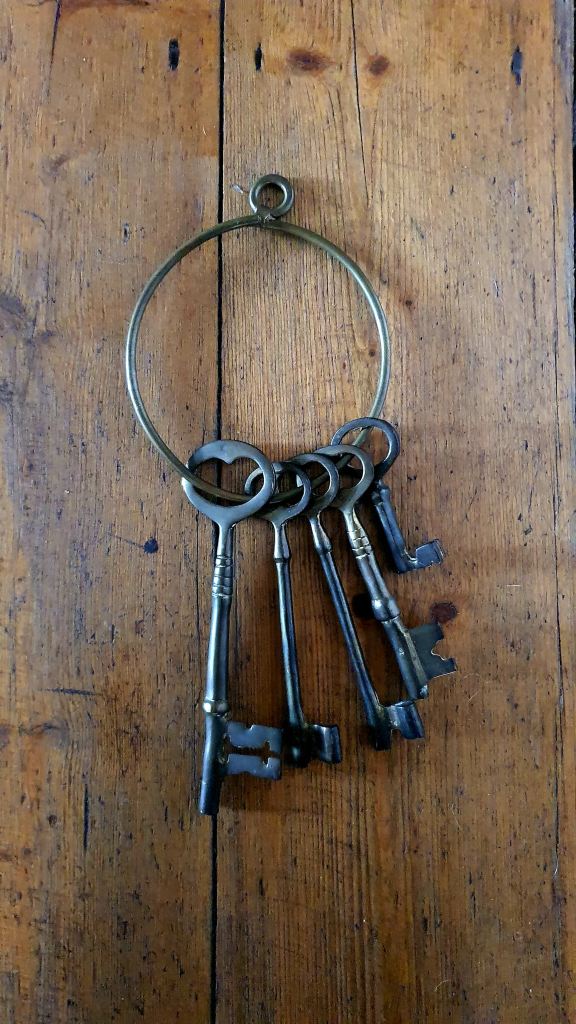
Keys

Reading: Matthew 16:13-20

Verse 19: “I’ll give you the keys of the kingdom of heaven.”

Photo credit: Nerene Grobler

Jesus pauses to get a pulse on how things are going. He asks the disciples who people say he is. The response provides a pretty impressive list of prophets. Jesus has a good amount of respect from the general population. Then he turns to the 12, to his inner circle, to the ones who have been with him practically 24/7 for almost 3 years. He says, “What about you? Who do you say I am?” This is a personal question.

Simon answers first, declaring Jesus the Christ, the Messiah, the Son of God. Jesus recognizes that the Spirit has given him this answer and because of this he says that Peter is blessed. Continuing Jesus renames Simon to Peter, which translates “rock.” He then identifies Peter as the one upon whom Jesus will build his church. Peter will be the leader of the early church.

And then Jesus says, “I’ll give you the keys of the kingdom of heaven.” Keys represent access to knowledge. Peter – and all others who come to call on Jesus as Messiah and Lord – will receive all the knowledge necessary to bind or set free from bondage those struggling with or trapped in sin. Just as the Spirit revealed Jesus’ true identity to Peter, so too will the Holy Spirit reveal the words and actions needed to bring others to Christ, the one who sets us free from our sins. With a holy confidence may we witness to this good news!

Prayer: Lord God, thank you for all who have poured into me, building up my faith and my knowledge of you. Thank you for those that continue to do so, including the Holy Spirit. Continue to fill me. Continue to use me to share the good news with a world in need of Jesus Christ. Amen.


Leave a comment

Born of the Spirit

Reading: John 3:1-10

Verse 3: “Very truly I tell you, no one can see the kingdom of God unless they are born again.”

In our passage for today and tomorrow, Nicodemus comes to Jesus “at night.” He is a Pharisee, an expert in the Law. All of who and what Nicodemus is comes from his knowledge of the Law and from his strict adherence to the Law. Nicodemus’ religion is all in his head. It is all through his own efforts that he is ‘holy.’ Yet he is drawn to Jesus. Jesus too was an expert in the Law, just in a much different way. Jesus was an expert at living out the heart of the Law.

The conversation begins with a polite compliment: “Rabbi, we know…” We? Jesus and the Pharisees are at odds with each other. The “we” likely refers to a very small group within the Pharisees who do actually believe what Nicodemus says. As if answering the question that Nicodemus was afraid to ask, Jesus says, “Very truly I tell you, no one can see the kingdom of God unless they are born again.” Caught totally off guard, Nicodemus attempts a joke. Jesus does not laugh. He presses on. In Jesus’ way of saying it’s not about strictly following all of the rules, he tells Nicodemus, “No one enters the kingdom of God unless he [or she] is born of the water and the Spirit.” Yes, we are all born from the water of the womb. This is what gives us life – here on earth. (And maybe Jesus is referring to John’s baptism – which the Pharisees looked down their noses at.)

Jesus is saying to Nicodemus and to all people that we must also experience a second birth, a spiritual birth, if we want to be a part of God’s kingdom – both here and one day in eternity. To experience this new life one must be “born again” – born of the Holy Spirit. Accepting Jesus as the Messiah, as our Lord and Savior, this invites the gift of the Holy Spirit to come into our heart. Jesus compares this Spirit to the wind. One doesn’t know where the wind comes from and one does not know where it might blow you. There is unknown and there is a lack of control. For a man of great knowledge and of strict control, this must’ve been a very scary thought. It is for most of us.

Prayer: O God, indeed your Spirit leads and guides in ways we don’t often understand. So we try and reign it in. We try and limit it. Free me from my fears and doubts. Enable me to be more in tune, more in step with the Spirit of Christ alive in me. Amen.