pastorjohnb

Thoughts and musings on faith and our mighty God!


Leave a comment

In Love and in Grace

Readings: Genesis 6, Genesis 7, Genesis 8, Genesis 9:1-17

Genesis 6:9b: “Noah was a moral and exemplary man; he walked with God.”
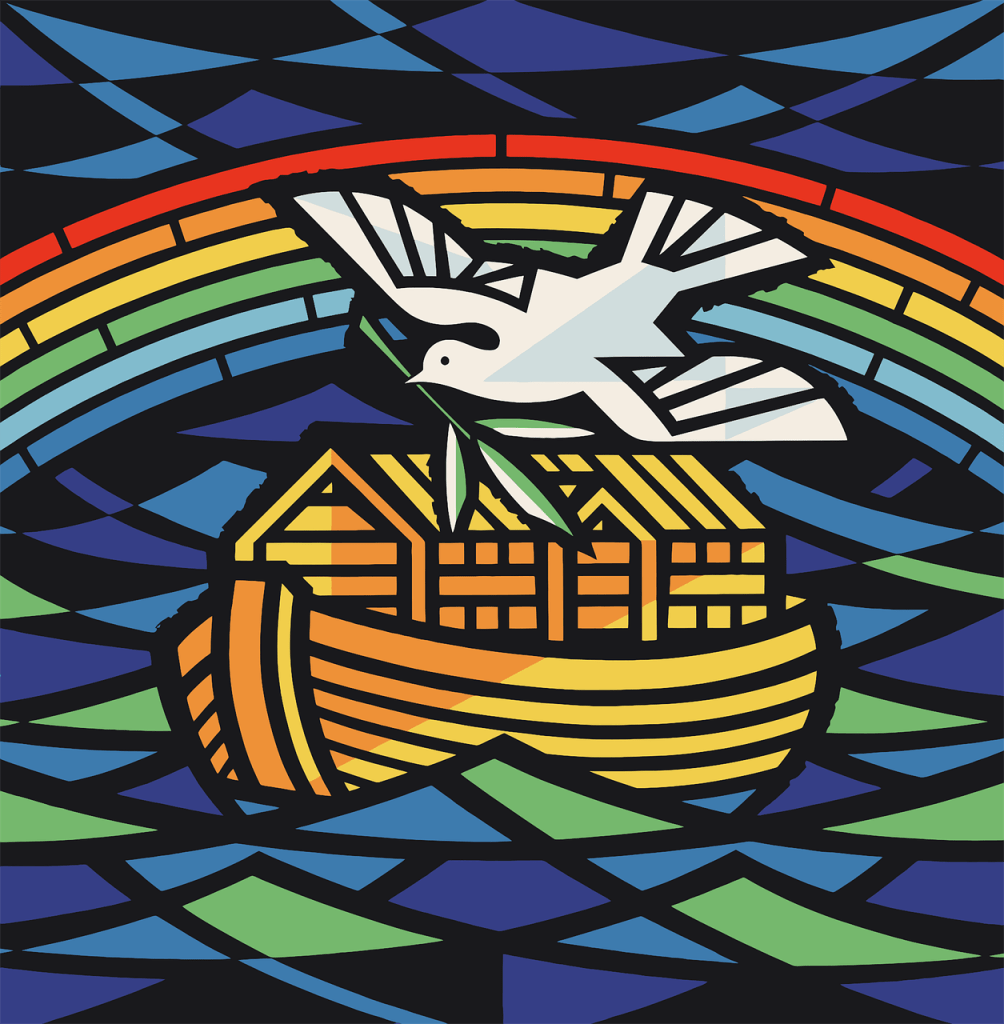
Today’s readings center on the great flood. God sees that humanity has become “thoroughly evil.” Every thought was “completely evil.” The world was so bad that God even regrets making human beings. This situation leaves God “heartbroken.” Things are almost as bad as they can get. Almost. There is Noah. In Genesis 6:9b we read, “Noah was a moral and exemplary man; he walked with God.” At least there is Noah. At least there is one person that is worth saving.

Today our world is not perfect. It is far from it. Noah was an Old Testament example of piety. I wonder, as God looks down on the earth today, who are the Noahs? Specifically, are you and I modern day examples of an exemplary relationship with God?

In obedience to God, Noah builds an ark and gathers up his family and the animals – a pair of some, seven pairs of others. This gathering up insures not just Noah’s salvation, but the salvation of all of creation. God then shuts the hatch and the rains come down and the “springs of the deep sea” open up. In 7:22 we read, “Everything on dry land with life’s breath in its nostrils died.” The loss of all life is catastrophic, horrific, complete.

Eventually the waters recede. Noah sends out a dove to test the earth’s readiness for life. The third time the dove does not return. God tells Noah to exit the ark. Noah’s first acts on dry land are to build an altar and then to offer a sacrifice to God. This pleases God and moves God to make a covenant. There will never be another flood “to destroy the earth.” God placed “his bow” in the sky – it will be a frequent reminder to God of God’s commitment to stay in relationship with humanity. This is a gift that we rejoice in yet today.

Prayer: Lord God, what a horrible place the world became. Humanity broke your heart. Things deteriorated to the point that your justice required action. Thanks be to you, O God, that we had Noah – an example of faithful living. In your love you provided a way for the world to continue. In your grace you committed to us and to creation forever. Thank you, God. Amen.


Leave a comment

Above All, Love

Reading: Exodus 20: 1-17

Verse 8: “Remember the Sabbath and keep it holy”.

Photo credit: Aaron Burden

Our passage today is familiar to many people. When one says “the Ten Commandments” almost everyone has an idea of what you’re talking about and some people can name a few of them. The first part of the Ten Commandments is about our relationship with God and the last part is about our relationships with one another. The first three help us to remember who and what God is as we seek to honor and worship God. The last six define boundaries or morals for how we are to live with and treat each other.

I have always included the fourth commandment with the first three when considering the structure and organization of the Ten Commandments. This morning I read about the idea that #4 connects or “bridges” the other commandments. Simply put the fourth is: “Remember the Sabbath and keep it holy”. For most Jews the Sabbath would be Saturday. Its Sunday for most Christians. Other days can be the Sabbath too. Mine tends to be Friday. I’ve always understood this commandment to be about taking time to connect to God and to give our bodies and souls a day of rest and renewal. It is all this, yes. But this commandment also limits our drive to overwork and it counters our fleshy tendency to set priorities according to the world’s norms instead of God’s. It protects those we might otherwise exploit for our own gain. It reminds us that we are not in control of everything. It joins us with our brothers and sisters in turning towards the Lord our God.

Taken as a whole the Ten Commandments are rooted in love. The Ten are about loving God, loving others, and loving self. On this Sabbath day, may we love well.

Prayer: Dear God, above all else may I love today. May my love for you and for the other be complete and full today. In turn, guide me to love myself too. Amen.


Leave a comment

Drawing In

Reading: John 4: 5-26

Verse 9: “You are a Jew and I am a Samaritan woman. How can you ask me for a drink”?

The conversation in today’s passage is refreshing. Two people who do not previously know each other have an open and honest conversation. Wouldn’t it be nice if people who know each other could have at least this open and honest of a conversation? Let’s see how that may be possible.

The conversation we read in John 4 is honest and allows space for the other to speak and be heard. The woman is coming to the well alone in the sixth hour, which would be noon for us. All the other women came as a group in the early morning, in the cool of the day. As they came, drew water, and returned to the village they would have talked and caught up with one another. The woman at the well is alone and is isolated in her own community. After Jesus asks her for a drink, she replies, “You are a Jew and I am a Samaritan woman. How can you ask me for a drink”? Jesus is attempting to cross a few barriers here in order to enter into a conversation. She points out both the Jew-Samaritan and the male-female barriers. He continues the conversation, crossing the barrier of isolation. Jesus chooses to engage someone that most others ignore or avoid. In spite of the initial barriers that she tries to put up, Jesus continues to try and connect with her. Jesus offers her the “living water” and she reminds him that Jacob drank from this well and gave it to the Samaritans. The Samaritan connection to Jacob is their claim to equality with the Jews. She is testing Jesus – will he bite and allow the conversation to be derailed? No, he continues to offer her the water that leads to eternal life. You see, the gift of eternal life is much more important than any earthly defined barrier or difference. How can we model this belief in our efforts to share Jesus with others?

In verses sixteen through eighteen Jesus identifies the thing that keeps her on the fringes of society, outside of community. He does name it but there is no judgment, no taking of moral high ground. She falls back into the Jew-Samaritan barrier in verse twenty, but again Jesus persists, opening her eyes to see how God is working to break down worship and religious barriers, revealing a time when all believers will worship together in spirit and truth. Jesus is again leaning into the eternal. The woman at the well is beginning to sense what Jesus offers, connecting to the day when the Messiah will come. The conversation ends for now with Jesus claiming, “I am he”. Drawn in, the woman will soon draw others in.

This is the pattern of discipleship – sharing faith in Jesus with one person at a time. May we practice this model today.

Prayer: Father God, lead me past any barriers my earthly eyes may see at first. Open my heart and mind to the guiding of your Holy Spirit as I seek to share Jesus with others today. Amen.


Leave a comment

Imitate Christ

Reading: Hebrews 13: 1-8

Verse 8: “Jesus Christ is the same yesterday and today and forever”.

Today we are first encouraged to love one another. This extends both to our brothers and sisters in Christ and to the strangers among us. We are reminded that we might be entertaining angels when we extend hospitality to a stranger, to those we visit in prison, and to those who are mistreated. True hospitality draws no lines and sees no barriers. It loves both friends and strangers alike.

We are next encouraged to be good people. We do so by honoring our marriages, by keeping sexually moral, and by being content with what we have. Our contentment comes from our relationship with the Lord, which we read about in the quotes from Deuteronomy 31 and Psalm 118. The first emphasizes the fact that God will never leave us or forsake us and the second reminds us that with God as our helper we do not need to be afraid.

Our passage concludes with a reminder of what Hebrews 11 and 12 have been all about: following the examples of those pillars of the faith that have gone before. Here we connect back to Abraham and Isaac and Enoch… with Peter, James, John, Paul, and the other early church leaders. Verse eight concludes with the greatest one to follow, the perfecter of our faith, Jesus Christ. In this verse we read that “Jesus Christ is the same yesterday and today and forever”. Jesus loved all, was without sin, honored the pillars of faith, and gave the gifts of help in this world and an invitation to join him in eternity. The Holy Spirit is our ever present companion that never leaves us and always helps and guides us. Through faith in Christ alone we receive the promise of life eternal. It is the prize for which we run this race.

In verse seven we are encouraged to “imitate their faith”. When we strain forward, running the race like those pillars and especially like Jesus, we will help others to know the good news, to experience healing, to see miracles worked in their lives. In sharing Jesus’ light and love with others, we invite them into a relationship with Jesus Christ too. What greater gift can we offer to our friends and to the strangers in our midst?

Prayer: Dear Lord, you are the perfect example of loving God and loving neighbor. Give me the courage and trust to love you and all I meet today. May your love pour out into their lives today. Amen.