pastorjohnb

Thoughts and musings on faith and our mighty God!


Leave a comment

Closer to God, Closer to One Another

Reading: Exodus 20:7-9

Exodus 20:7 – “Do not use the Lord your God’s name as if it were of no significance.”

Photo credit: Aaron Burden

Turning to the third and fourth commandment today, we begin with this: “Do not use the Lord your God’s name as if it were of no significance.” The more familiar translation warns us against using God’s name “in vain.” Along these lines, we can use God’s name in an inappropriate way when we hit our thumb with a hammer or when someone cuts us off in traffic. A similar misuse can slip right out when we’re really angry or frustrated. I like today’s translation because it also reminds me that I can also use God’s name in other ways that are not honoring to God. For example, a phrase like “I swear to God” falls into this category.

But the greatest and most significant way that we misuse the name of God is when we put our name in the place of God’s name. When I assume that I am in control or when I am sure that I know what is right, I’m taking a place that is not mine to take. When I judge or think others are less than or are unworthy, I am going where I should not go. When and how do you act like God or take a role that is God’s to fill?

The fourth commandment helps us in this struggle. (And in our struggles with 1, 2, and 5-10!) Number four instructs us to set a day aside for God. The Sabbath is to be a day of rest and worship, of reflection and renewal. Setting aside a day for God provides time for thanksgiving and for introspection. The weekly practice of evaluating our walk with God and with one another is a vital tool for growing in our relationships with God and with one another. Whether it is Sunday or another day, may we use our holy day to draw closer to God and, in turn, closer to one another.

Prayer: Lord God, thank you for the reminder of who you are and of who we are not. As we remember, may our humility grow and may our selfishness decrease. Turn us to you on a regular basis, speaking into our heart by the power of the Holy Spirit. Through the Spirit’s power, encourage us and convict us, lift us up and refine us. In all of these ways, may our lives then bring you all the glory. Amen.

Leave a comment

Intended and Designed

Readings: Genesis 1:26-31 and 2:1-4

Genesis 1:27 – “God created humanity in God’s own image… male and female God created them.”

Continuing with the first creation story today, we move into God’s three-in-one nature. The words become “let us” and “in our image.” There is cooperation and conversation around this last step of creation in the first story. Like the sea, air, and land creatures, humanity is directed to “be fertile and multiply.” But God adds another role: to take charge of creation. This task must be done as if God we’re doing it. Created in God’s image, we are to care for this world with love, careful thought, and goodness.

After God created humanity, both female and male, in God’s image, God looked at all of creation, not just humanity, and “it was supremely good.” Now that all was as it should be, all parts and components just as God intended and designed them to be, creation was complete and all of it was supremely good. Work finished in “six days,” God rested. Yes, God rested. This too is part of what God intended and designed for all of creation.

Humanity is most like God the rest of the week when we rest and make holy one day out of seven. The Sabbath, our day of rest, is made holy by turning away from work and other cares of this world, instead focusing on our relationship with and connection to the Lord God. As we delve into worship, prayer, meditation, and actual, physical rest on our holy day, we are renewed and re-energized – ready to care for one another and the rest of creation as if God were caring for it. May it be so for you and for me.

Prayer: Lord God, help us to be better image-bearers. In the creation story we see you giving again and again, creating a world that was supremely good. Lord, lead us, guide us, direct us to be a part of your plan to return our world and all of creation to one that is supremely good once again. Amen.


Leave a comment

The Pain of Death

Reading: Matthew 27:57-66

Matthew 27:61 – “Mary Magdalene and the other Mary were there, sitting in front of the tomb.”

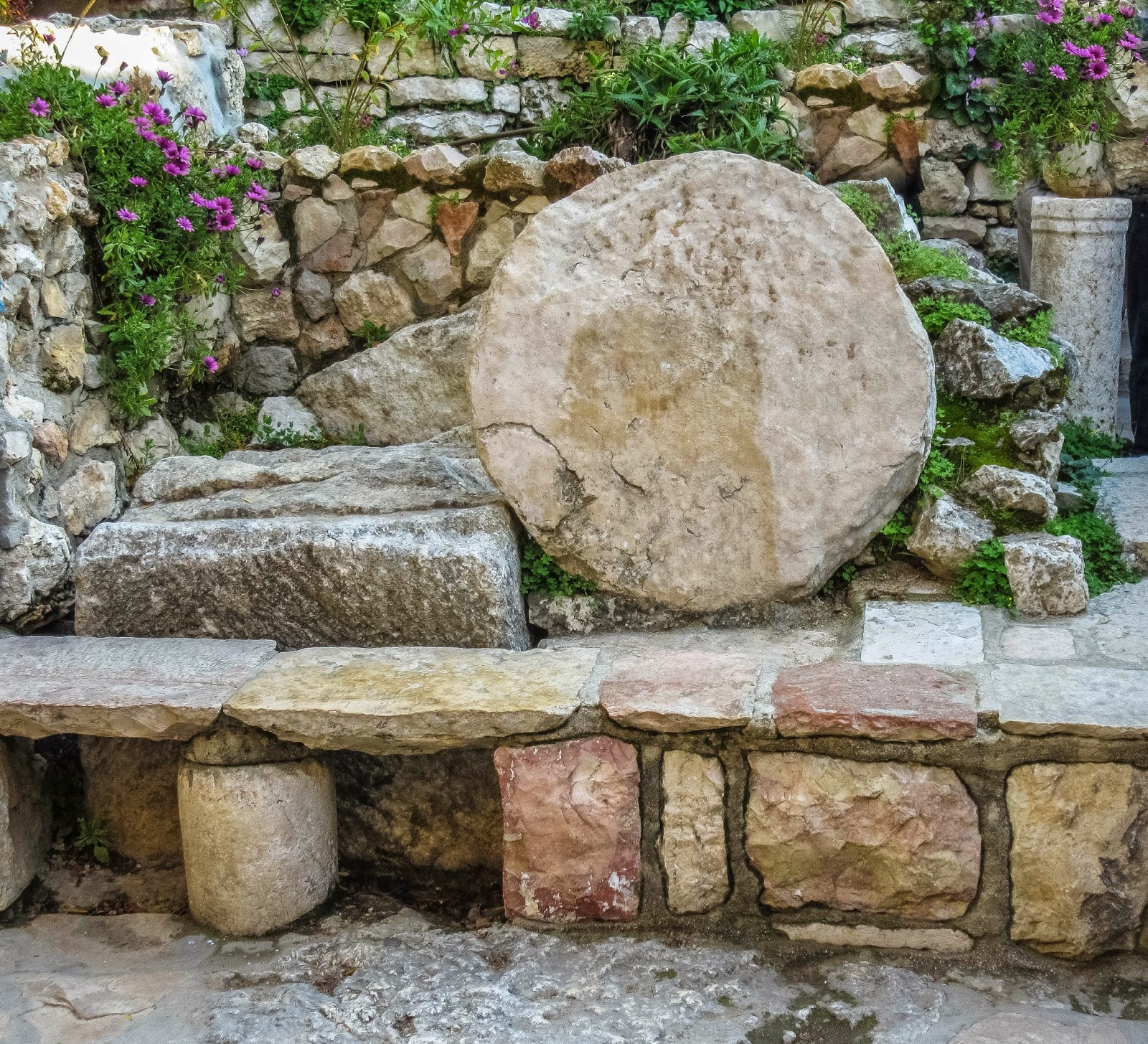
In the story of Jesus, late Friday afternoon ends with Joseph of Arimathea requesting and receiving Jesus’ body. Moving quickly to finish the task before sunset and the start of the Sabbath, he wraps the body in a linen cloth, lays it in his own new tomb, and rolls the stone in place, sealing the tomb. Joseph was not alone: “Mary Magdalene and the other Mary were there, sitting in front of the tomb.”

It is a small crowd for Jesus’ burial. The disciples are nowhere to be found. They were hiding, fearing for their own lives. Only Joseph was willing to risk asking for the body. Only the two Mary’s refuse to leave Jesus. Their love kept all three there. Perhaps these three did not fear the religious authorities. Maybe they were unaware. But the religious leaders still fear Jesus – so much so that a guard is posted at the tomb.

Joseph and the two Mary’s are like many of us in our moments of deep grief. There are things that must be done and we go through the motions. Often people are unaware of the planning steps or even of the funeral as they look back a week later. When the body or ashes are laid in the ground, though, it feels so final. Some linger, though, unable to leave right away. Such is the case with the two Mary’s.

On this Holy Saturday we too are invited to linger, to remain present to the grief, to feel the sting of loss and the hurt of death. We mourn with the disciples, the two Mary’s, and with all others who deeply loved Jesus. We, however, also mourn with hope, because on this side of the resurrection, we know that death does not have the final word. Thanks be to God.

Prayer: Lord God, death is hard, whether expected or unexpected. On this day, help us to feel the pain, the disorientation, the tears of those closest to Jesus. As we’ve been there ourselves, guide us to join them in spirit, present even through the ages. As we feel the loss, O God, remind us too of the joy that comes with the morning. Amen.


Leave a comment

7th Day Practices

Reading: Exodus 24:15-18

Exodus 24:16b – “On the seventh day the Lord called to Moses from the cloud.”

Photo credit: Carolina Jacomin

As we draw near to the day of the Lord, we return to where we began the week, in Exodus 24. God’s “glorious presence” covers the mountain for six days. From down below, the presence of God looks like a “blazing fire.” Perhaps this was above the clouds. Maybe it looked like a lightning storm can when it is moving within the clouds in the sky. Moses spends these six days waiting for God.

In the last part of verse 16 we read, “On the seventh day the Lord called to Moses from the cloud.” On the seventh day God speaks. Moses is then in communion with God for forty days and forty nights. In addition to receiving the Ten Commandments, Moses will receive instructions on the worship of God – on everything from how to build and equip the tabernacle to how to keep and honor the Sabbath.

For Israel, the Sabbath was and is a day set aside to worship the Lord and to rest. For Christians, this seventh day practice falls on Sunday. It is the day we set aside to commune with God, to worship God, and to be renewed in body, mind, and spirit. As we gather tomorrow in worship, may the Lord our God call out to each of us, giving us the words of life. And as we fellowship and spend time in renewing rest, may the Lord our God prepare us to walk as light and love in the world until we gather again on the next day of the Lord.

Prayer: Lord God, draw us into your presence. Help us to hear your call and to respond. Open our ears and hearts to all that you have for us. Guide us to understand your will and way for our lives and for our world. Pour out your blessings on our worship, on our renewal, on our fellowship,and on our daily living. Amen.


Leave a comment

Professing Faith

Reading: John 19:38-42

John 19:42 – “Because it was the Jewish preparation day and the tomb was nearby, they laid Jesus in it.”

Even though the disciples, the 11 men who had spent three years with Jesus, were hiding behind closed doors for fear of the Jewish religious leaders, two men step up in faith. The first is Joseph of Arimathea. He was a man of wealth. He was a member of the Jewish ruling council. He was a man of status and power. Up to this point he was a “secret disciple” of Jesus. In a profession of faith, Joseph goes to Pilate and asks for Jesus’ body.

Nicodemus was also there. He also has wealth, status, power. Nicodemus first met Jesus back in John 3, when he came under cover of night. Then he did not want to risk much, but he was drawn to Jesus. Although he left that conversation likely more confused and conflicted, Jesus must’ve continued to work on Nicodemus’ heart. Here he is now, in the light of day, professing his faith in Jesus as he brings myrrh and aloes to begin to prepare the body for burial. 75 pounds is extravagant – a gift fit for a king.

Beginning the process for a proper Jewish burial, Joseph and Nicodemus wrap the body in linen clothes, along with myrrh and aloes. Time was an issue. Sunset and the start of Sabbath were drawing near. Joseph and Nicodemus laid the body in a nearby tomb, planning to return on Sunday to finish the burial process. Two men, recently declaring their faith in Jesus, did what they could in the moment to honor their Jesus.

Prayer: Lord God, thank you for the brave witness of Joseph and Nicodemus. They risked much as they stepped forward to care for Jesus’ body. Joseph has the platform to gain an audience with Pilate. Nicodemus has much to lose too. May we see in these men an example of faith without fear of the world, of faith filled with trust in you. Lead and guide us, O Lord, to live out loud this kind of faith. Amen.


Leave a comment

Loving Others, Giving of Self

Reading: John 19:25-27 and 33-35

John 19:34 – “One of the soldiers pierced his side with a spear, and immediately blood and water came out.”

Photo credit: Milo Weiler

On the day of Jesus’ death there are a handful of women and “the disciple whom he loved” at the foot of the cross. The women include Jesus’ mother, her sister, Mary the wife of Clopas, and Mary Magdalene. John is there too, the beloved disciple. Looking down from the cross, Jesus employs a Jewish law, entrusting his mother’s care to John. Jesus created not only a new family but also the community of faith. Loving and caring for one another as a family does will be a mark of the early church. It is the mark of Christ-following communities today.

In the second part of our reading the soldiers are making sure that Jesus is dead. The religious leaders were concerned that the killing of an innocent man was completed before sundown – so that they could properly honor God and the Sabbath. In verse 34 we read, “One of the soldiers pierced his side with a spear, and immediately blood and water came out.” John, a gospel rich in symbolism and meaning, keeps Jesus’ legs unbroken, an unblemished lamb slaughtered for our sins. The water and blood that flow – like the living water of Jesus Christ that we experience in baptism and throughout our journeys of faith. The blood, like the blood poured out for many, cleansing us of our sin.

Today, as we remember the palm parade, joyously celebrating the Messiah, the one who came in the name of the Lord, let us also remember this Jesus in the cross, the one who died as he lived: loving others, giving of self.

Prayer: Lord God, thank you for the faithful witness of John, for his presence in these moments and so many others in Jesus’ life. He testifies to the truth and shares his Jesus with others. May we do the same, O God. Amen.


Leave a comment

Radical and Unconditional

Readings: Isaiah 56:1-8 and Matthew 21:12-16

Isaiah 56:6-7 – “Everyone who keeps the Sabbath… who hold fast to my covenant: I will bring them to my holy mountain, and bring them joy in my house of prayer.”

Photo credit: Jon Tyson

Beginning with Isaiah 56 we feel the connection that God desires to have with all people who act justly and do what is right. To those who keep the Sabbath and honor the covenant, God’s salvation is “coming soon.” God’s prophet includes two groups that are normally excluded from the temple: immigrants and eunuchs. In verses 6 and 7 we read, “Everyone who keeps the Sabbath… who hold fast to my covenant: I will bring them to my holy mountain, and bring them joy in my house of prayer.” In New Testament language we would say there is no Jew or Gentile, no slave or free, no rich or poor… All people – all – who are devoted to God’s ways are welcome in God’s “house of prayer,” the temple. These were radical words to the closed-circle Jews of Isaiah’s day.

Turning to Matthew 21 we see another prophet doing and saying radical things. Entering God’s house, Jesus forces out the people changing money into temple coins and the folks selling animals for sacrifice. Quoting from our Isaiah 56 passage and Jeremiah 7:11, Jesus denounces these profiteering practices. Cleared of these “crooks,” the blind, the lame, and the children enter the temple. Jesus makes space for these normally excluded groups, mirroring the spirit of Isaiah 56. He heals the blind and the lame and rejoices over the children. The religious leaders are angry about all of this. Their closed circle has been broken wide open by the radical and unconditional love of God present in Jesus. May this breaking open of the circle and of our hearts also be our regular practice as we seek to follow Jesus’ example.

Prayer: Lord God, it is a beautiful thing when you reclaim and include those often excluded and unwelcome by the religious of the world. You create each and every one of us in your image. You weave each of us together in the womb with intention and purpose. From our first breath you long to walk in relationship with each of us. Lord, as you walk with us, fill us with your radical and unconditional love. Filled with this great love, may our regular habit be to include and welcome all people into your house and into your family. Amen.


Leave a comment

A Regular Practice

Reading: Isaiah 56:1, 3-5, 7-8

Isaiah 56:1 – “Act justly and do what is righteous because my salvation is coming soon.”

The opening of Isaiah 56 is about keeping the Sabbath. The idea of Sabbath originates in the creation story. After creating the heavens, the earth, and everything in and on them, God rested. When God began to formalize who and what God’s people would be, the practice of Sabbath was included in the Ten Commandments. During the time in exile and the period that followed, the keeping of the Sabbath was especially important. It set the Jews apart from the rest of the world. To be Sabbath-keepers remains counter-cultural.

In today’s reading Isaiah is reminding Israel that Sabbath is not just for the Jews. The idea of including immigrants and servants has been a part of Sabbath ever since Moses received what we identify as Exodus 20:8-11. Animals and the earth itself are part of Sabbath rest. Isaiah includes the eunuchs and other outcasts in his words that declare that God’s family and home are places of welcome and inclusion for all people who honor the covenant, who live according to God’s will and ways.

As I reflect on these words today I am struck by how wide open God’s heart is for all who seek to walk as a child of God. I’m also becoming aware that Sabbath is aimed at creating a just world. Rest is part of God’s design for all things – people and all of creation. This concept of rest and shalom, of blessing and renewal also reveals the wideness of God’s love for all people and for all of creation. It is in these times of not doing that we can foster our relationships with God and with one another. This investment of time builds connection and it builds community. May Sabbath be a regular practice for you and for me as we seek to build God’s kingdom here and now.

Prayer: Lord God, thank you for the gift of Sabbath. This time set apart has the power to deepen our love for you and our love for each other. Open us to the wideness of your heart and your love as we practice this discipline. Lead and guide us in this regular practice, O God, so that holiness and justice, and peace and righteousness abound in our lives and in our world. Amen.


Leave a comment

Commands

Reading: Exodus 20:1-17

Exodus 20:3 – “You must have no other gods before me.”

Entering the history of Israel, they have been freed from slavery in Egypt for three months. In this time they have tested both God and Moses. They have witnessed amazing miracles as expressions of God’s love for them. The mass of humanity is now at Mount Sinai, where they prepare themselves to receive God’s covenant. On the mountain Moses receives these ten commands from God. Obedience to these commands should be Israel’s response to God’s saving grace.

The first four commands center on our relationship with God. It is from this relationship that all other relationships flow. We shall not have any other god and we shall not make or worship idols. We shall not misuse God’s name. And we shall keep the Sabbath holy. These commands shape our relationship with God and they remind us of God’s proper place in that relationship.

The next six commands come in pretty rapid succession. These commands define our relationships with one another. The first deals with our family, our primary relationship: honor father and mother. The next five expand the circle to the wider world: do not kill, commit adultery, steal, lie, or covet. These seem simple and straightforward. Yet within each command is a degree of interpretation and application. Jesus will flesh out some of these commands in the New Testament.

These commands can be simplified. Jesus summed them up as love God, love neighbor. John Wesley used three simple rules to govern his life. As we can do with the 10 Commandments or with any rule, we can try to limit what it means to love or we can try to limit who our neighbor is. The simple answer is “all.” Love God with all that we are and with all that we do, say, think, and act. Love all people as Christ loved us. May it be so.

Prayer: Lord God, center us first in our relationship with you. May we love you in all possible ways, bringing you all the glory, honor, and praise. From there, Lord, move us on to generously and genuinely love all people. Open our hearts to the width and depth and breadth of your love for us, revealed in Jesus Christ. Then move us to pour that love out into the world. Amen.


Leave a comment

Supremely Good

Reading: Genesis 1:24-2:4a

Genesis 1:26 – “Let us make humanity in our image to resemble us so that they may take care of the fish…”

Today we conclude the first creation story, reading about days six and seven. These time frames separate acts of creation. They may or may not be 24 hour periods. The sixth “day” begins with God speaking into existence the “livestock, crawling things, and wildlife.” God again saw that this was good.

Next God says, “Let us make humanity in our image to resemble us so that they may take care of the fish…” Note that the language is different. The words “us, make, our, image” imply a collaborative effort. Most theologians read this team effort as involving Father, Son, and Holy Spirit. There is also an implication that humanity does not merely come from the other parts of creation like the earth growing plant life. One cannot read these words and not understand that humanity is to care for this earth as God does and would. We are to do so because we are not merely made from the elements of this earth. We also carry some of the divine within ourselves.

At the end of this period God looks at the creation and declares that it is “supremely good.” From the chaos and disorder at the beginning to the completed, ordered, purposeful world, it is now supremely good. The world was as it was intended to be. And then God rested. God set aside a day, making it holy. It was a day without work. Later this will become known as the Sabbath – a day to rest, renew, and recharge physically, a day to reconnect with God. This too is part of God’s goodness, order, and purpose. Thanks be to God.

Prayer: Lord God, in the story, the process is finished. Day 8 begins our tenure as caretakers or stewards of this world and all that is in it. Lord, help humanity to reclaim our role, especially in the ways that we care for one another. May we see and treat all of humanity as brothers and sisters also created in your divine image. Amen.