pastorjohnb

Thoughts and musings on faith and our mighty God!


Leave a comment

Our Chosen Walk

Reading: Genesis 37:1-4

Genesis 37:4 – “When his brothers saw that their father loved him more than any of his brothers, they hated him and couldn’t even talk nicely to him.”

Returning to the opening verses of our Genesis 37 passage, we focus today on the larger picture. Overall, the Old Testament is the story of God’s chosen people – the descendants of Abraham, the Israelites, the Jews. Within this story, Joseph is like many others: the chosen among the chosen. Others also suffered at times because of their chosen status: Moses, David, Elijah… Whether an individual or the nation, at times each could relate to verse 4: “When his brothers saw that their father loved him more than any of his brothers, they hated him and couldn’t even talk nicely to him.” When the people grumbled against Moses, when Saul hunted David like an animal, when Elijah fled into the wilderness, when Edom attacked Israel, when Joseph was sold into slavery or was thrown into prison – the chosen suffered on God’s behalf.

This story line continued into the New Testament. The Christians were singled out, harassed, stoned, beheaded, crucified. It begins in the story with John the Baptist losing his life. Then Jesus suffers the cross. Stephen was the first of many followers to die for their faith in Jesus. This story line has continued down through the ages. The chosen people of God, whether Jew or Christian, are still persecuted, targeted, and even killed for their faith. To be the Father’s favorite can be a hard path to walk – individually and as a nation.

We are invited to walk this path. We’ve chosen to be called a Christian, to live a life of following Jesus’ words and example, picking up a cross at times. Now and then, we will be hated by the world and by people living in the ways of the world. In these moments, may the Holy Spirit give us the strength, faith, and hope to walk in Jesus’ footsteps.

Prayer: Lord God, “chosen” has always carried a weight with it – whether in faith or in athletics or politics or family. In our chosen walk of faith, O Lord, be close to us in the difficult moments, when that weight becomes a cost. And when we need it, please shoulder some of that weight. Amen.


Leave a comment

The Covenant Keeper

Reading: Psalm 105:7-11 and 45

Psalm 105:8 – “God remembers his covenant forever, the word he commanded to a thousand generations.”

As we turn to Psalm 105 today and tomorrow, the focus is the covenant God made first with Abraham. This covenant was reiterated with Isaac and Jacob and has been passed on “to a thousand generations.” The covenant that God made with Abraham was not just about him. Abraham was a part of the covenant, yes, but the focus from day one has been the people of God.

God’s justice is the foundation of the covenant. At its core, God’s justice calls us to just living. This calls us to live in a right relationship with God, with one another, and with all of creation. Living this way, we represent the covenant: God is our God and we are God’s people. The idea of covenant has been around a long time, likely even before Abraham. It is not unique to Israel. In all cases, at its core, covenant is meant to be a forever commitment.

This week’s Disciplines writer, Rev. Dr. Donna Giver-Johnson, notes that the word translated “to cut” is the root word of our word “covenant.” In ancient times, the two parties entering a covenant would cut an animal in half. They would then walk between the halves, symbolizing their offer to be slain like the animal if they did not keep the covenant. The writer of Psalm 105 echoes this deep level of commitment using phrases like “solemn pledge” and “binding law.”

In Genesis 15, in a vision that came just after establishing the covenant with Abraham, God passed between a cut animal, demonstrating God’s commitment to this covenant with God’s people. This established the fact that the keeping of the covenant is dependent on God alone, not on us. At just the necessary moment, God sent Jesus, the bringer and giver of grace. It is through God’s grace that we now live under the covenant. For this grace, we say, thanks be to God!

Prayer: Lord God, thank you for being the covenant keeper. On our own we’d only be covenant breakers. Only through your love and strength can we begin to walk in covenant relationship with you and with one another. And only through your grace and mercy can we return to covenant relationship when we fall short or fail. Thank you, Lord, for walking with us. Amen.


Leave a comment

People of God?

Reading: Genesis 21:15-21

Genesis 21:18 – “Get up, pick up the boy, and take him by the hand because I will make of him a great nation.”

Photo credit: Wylly Suhendra

As we move along in the story Abraham and Sarah, the focus shifts to Hagar and Ishmael – to and God. For Abraham and Sarah, seeing Hagar and Ishmael walk away, heading out into the desert to die, to them that was the end of the story. But for Hagar and Ishmael, the story gets worse. Soon they are out of water – the death knell in the desert. Hagar places Ishmael under a shrub and walks away a short distance – far enough not to hear his cries. She cannot bear to watch her son suffer and die. Hagar weeps and cries out too.

Sitting alone in the desert, waiting to die, Hagar felt unseen and unheard. Most of us experience feeling unseen and/or unheard at times. Maybe it is because of our age or our gender or our newness to a situation. Or maybe it is because we are like Hagar in this moment – alone, powerless, vulnerable. It is at this moment that the God who sees becomes the God who hears. Their cries have fallen upon God’s ears. In response, God’s messenger encourages Hagar and tells her, “Get up, pick up the boy, and take him by the hand because I will make of him a great nation.” God will watch over, protect, make a way, and one day prosper Hagar and Ishmael.

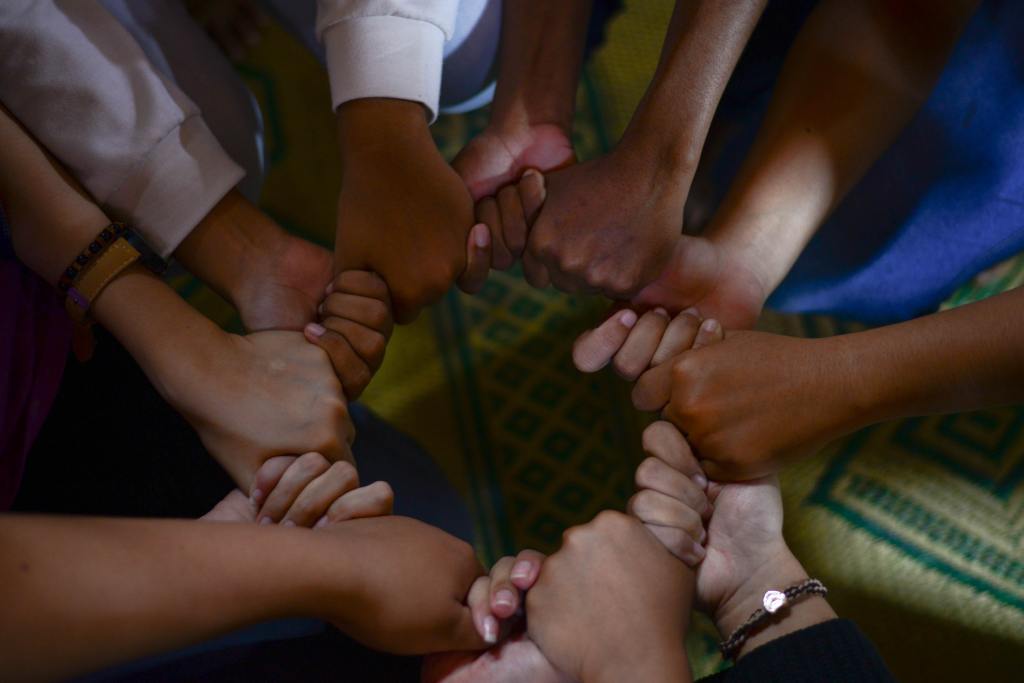
Today there are people and people groups who live in the place that Hagar was – alone, powerless, vulnerable. As I ponder our call to see, hear, and respond, I think of the tragedy that recently unfolded in Minneapolis. Innocents were arrested, detained, and held for long periods. Community groups were afraid to leave their homes or to send their children to school. And I think of how the people of God led the way, rallying around, supporting, and standing for the targeted. While the scale of abuse and oppression may not be as visibly present in our communities today, there are certainly people who are alone, powerless, and vulnerable. How will we as the people of God respond?

Prayer: Lord God, open our eyes to see the Hagars and Ishmeals among us. Seeing, open our hearts to respond – coming alongside, standing against injustice, risking self for others. Forming community, use us to welcome in the lonely, to give voice to the powerless, to provide safety and resources for the vulnerable. In and through your love and power, made present by the people of God, may all people flourish. Amen.


Leave a comment

Even Then

Reading: Hosea 1:7-11

Hosea 1:10 – “In the place where it was said to them, ‘You are not my people,’ it will be said to them, ‘Children of the living God.'”

Hosea is a prophet to the northern kingdom , to Israel. He is the only such prophet with a book in the Bible. As Hosea speaks God’s word, Israel is in its last days. Their pride and idolatry are the causes of the coming downfall. Judah, the southern kingdom, isn’t too far behind. But Judah is currently more faithful than Israel.

While God’s compassion for Israel is gone, the prophet tells them, “I will have compassion on the house of Judah.” To relate this, it would be like living in the North during the Civil War and hearing God say, ‘I will bless the South.’ God goes on, through Hosea, to tell Israel that God will save Judah. The sweeping tidal wave called Babylon will only pour in over Israel.

We then read that Hosea’s wife Gomer will have a third child. This one is named “Not My People.” And God declares, “I am not your God.” While this sounds really bad, and it is, this is not the end of the story. In verse 10, God through Hosea says, “In the place where it was said to them, ‘You are not my people,’ it will be said to them, ‘Children of the living God.'” And not only that! Israel and Judah will be reunited under “one head.” God’s plan has a beautiful conclusion, just as our story does. But for now Israel has some difficult refining to go through. Such is the case for us at times too.

Prayer: Lord God, there are and will be times when we wander down a wayward road. There are times when we must make you want to walk away from us. Who could blame you? But even then, even then O God, you love us through the darkness, calling us back to the light. You offer the grace that leads to mercy and forgiveness. What a wonderful God you are. Thank you. Amen.


Leave a comment

Good, Holy, and Just

Reading: Revelation 22:1-5

Revelation 22:2 – “On each side of the river is the tree of life.”

Photo credit: Marek Piwnicki

As John’s vision continues the angel shows him “the river of life-giving water.” This river flows out from the throne of God and the Lamb, its life-giving power drawn directly from the Lord our God. The river flows down the middle of the main street and “On each side of the river is the tree of life.” The water and the tree – accessible to all people, just as God and Jesus are accessible to all people.

The tree of life, once in the Garden of Eden, now in the holy city, the new Jerusalem. The tree now provides food for all people as well as healing for all of the nations. The provision is in abundance and the healing is complete. There will be no hunger, want, or need. There will be no sin, no disease, no evil. All of this and more is implied as John writes, “There will no longer be any curse.” All pain, sorrow, envy, pride… gone!

In the new heaven and earth all will worship the Lord our God. All people will “see his face” and will be identified as belonging to the family of God. This too will be a return to the days in Eden when humanity walked and talked with God. God’s face will shine upon all people and together “they will rule forever and always.” The stewardship of creation, begun in Genesis, will be made complete and perfect in the new creation. All will be good and holy and just. Thanks be to God!

Prayer: Lord God, it is beautiful to see how your intent for the world will come to fruition. All that has been in decay and in states of separation will be made new again and will be united fully with you. Worshipping you alone, all people will be filled with your light and love. As we await this glorious day, O God, remind us to pray and work here and now, daily seeking to build this beautiful kingdom here on earth. Amen.


Leave a comment

A Spiritual Kingdom

Readings: Ezekiel 37:22-23 and Matthew 11:2-6

Ezekiel 37:23 – “They will be my people, and I will be their God.”

Photo credit: Jon Tyson

The prophet Ezekiel speaks God’s word to those living with him in exile in Babylon. Both Israel and Judah were conquered and many people were relocated to this foreign land. It was hard to maintain their faith in this pagan place. Living in oppression in captivity, these words would spark hope in a hopeless people. God speaks of bringing them home, reuniting them as one people under one king. In this new reality the people of God will no longer pursue idols or other things that lead them into rebellion against God. They will be cleansed. God declares, “They will be my people, and I will be their God.”

In Matthew 11:2 John the Baptist is in prison, arrested for speaking out against Herod’s immoral behavior. As news of Jesus’ work spreads, John sends his disciples to Jesus. They ask him, “Are you the one who is to come, or should we look for another?” Jesus responds with a report about what he’s been up to. The blind see and the crippled walk. The deaf hear and the dead are raised. The poor hear the good news. These words are from Isaiah 35 and 61. These words of God spoken through the prophet Isaiah speak of a day when God would restore Israel.

The religious leaders and most of the people of Jesus’ day longed for a mighty Messiah to free them from Rome’s oppression. They read the words from Ezekiel 37 with this longing in mind. Slight problem. They forgot the context of these verses. These words follow and are connected to the vision of the dry bones – God’s vision for restoring Israel’s dry and dead faith. These words speak of a Messiah who will restore Israel’s faith, not their political might. Digging deeper, we see that Jesus’ kingdom is a spiritual kingdom, not an earthly kingdom.

Prayer: Lord God, sometimes we too want you to be what we think we need. Because of our situation or circumstance we want you to be this or that. Help us, instead, to see with eyes focused on your kingdom, on your will and way. Guide us to know your heart, for there we find out who you truly are. Knowing you intimately and personally, you are our God and we are your people. From this place of connection, use us to be your good news for the world. Amen.


Leave a comment

Commands

Reading: Exodus 20:1-17

Exodus 20:3 – “You must have no other gods before me.”

Entering the history of Israel, they have been freed from slavery in Egypt for three months. In this time they have tested both God and Moses. They have witnessed amazing miracles as expressions of God’s love for them. The mass of humanity is now at Mount Sinai, where they prepare themselves to receive God’s covenant. On the mountain Moses receives these ten commands from God. Obedience to these commands should be Israel’s response to God’s saving grace.

The first four commands center on our relationship with God. It is from this relationship that all other relationships flow. We shall not have any other god and we shall not make or worship idols. We shall not misuse God’s name. And we shall keep the Sabbath holy. These commands shape our relationship with God and they remind us of God’s proper place in that relationship.

The next six commands come in pretty rapid succession. These commands define our relationships with one another. The first deals with our family, our primary relationship: honor father and mother. The next five expand the circle to the wider world: do not kill, commit adultery, steal, lie, or covet. These seem simple and straightforward. Yet within each command is a degree of interpretation and application. Jesus will flesh out some of these commands in the New Testament.

These commands can be simplified. Jesus summed them up as love God, love neighbor. John Wesley used three simple rules to govern his life. As we can do with the 10 Commandments or with any rule, we can try to limit what it means to love or we can try to limit who our neighbor is. The simple answer is “all.” Love God with all that we are and with all that we do, say, think, and act. Love all people as Christ loved us. May it be so.

Prayer: Lord God, center us first in our relationship with you. May we love you in all possible ways, bringing you all the glory, honor, and praise. From there, Lord, move us on to generously and genuinely love all people. Open our hearts to the width and depth and breadth of your love for us, revealed in Jesus Christ. Then move us to pour that love out into the world. Amen.


Leave a comment

For All People

Reading: 1st Timothy 2:1-4

1st Timothy 2:1 – “First of all, then, I ask that requests, prayers, petitions, and thanksgiving be made for all people.”

As we begin 1st Timothy 2, Paul encourages Timothy (and us) to offer prayers for everyone – “for all people.” Paul assumes that Timothy will pray for the regulars: family, friends, people he knows who need specific prayers. This is likely familiar territory. Maybe you, like me, have a standard list of people and situations that you pray for every day plus a few that are in your prayer list for a time or a season.

Paul next singles out praying for “kings and everyone who is in authority.” Why would Paul do this? Well, look no further than our current reality. In Timothy’s day it was the Roman authorities and the Jewish religious leaders who were persecuting the church. What prayers might Timothy lift for those in authority? What prayers might help lift that are in alignment with God’s will and heart? May our godly thoughts on these questions guide our prayers for our leaders.

In verses 3 and 4 Paul gives Timothy (and us) the “why.” Paul reminds us that it is “right” and that it “pleases” God when we offer prayers for all people, especially for those that are hard for us to pray for. It is our charge. First and foremost, it should be so because God desires for “all people to be saved” and to come to “a knowledge of the truth” – to understand and know God’s will and heart for themselves. Second, to pray hard prayers, that changes and empowers our hearts too. As our prayers become better aligned with God’s desires, our world will better reflect God’s kingdom here on earth. May our prayers work towards this goal and hope.

Prayer: Lord God, open our hearts wide, enabling us to pray as you call us to pray. And, Lord, open wide the hearts of our leaders, filling them with what fills your heart: mercy, grace, compassion, love. Guide all of our leaders to be leaders for and of all people, working for the good of all people. Amen.


Leave a comment

The Day of the Lord

Reading: Isaiah 25:6-9

Isaiah 25:9 – “Let’s be glad and rejoice in his [God’s] salvation.

Photo credit: Fuu J

In Isaiah 25 the prophet celebrates the salvation that God will bring. In verses 1-5 Isaiah speaks of God saving Israel from their enemies. Isaiah then celebrates how God has been (and will be) a refuge for all in need. In verses 6-9, our passage for today, the prophet envisions the day when God will bring this age to a close. Isaiah sets the scene “on this mountain,” referring to Zion, God’s holy mountain. On Zion the Lord will prepare “a rich feast” for all peoples. It will feature “choice wines” and “select foods.” It will be the feast of all feasts. Almost all readers or hearers in the ancient world would likely envision the best wedding banquet they’d ever been to – times ten!

Isaiah next writes of God swallowing up “the veil that is veiling all people.” It is unclear what this veil is. Is it the veil that casts evil over humanity’s eyes? Is it the veil that keeps people from fully seeing God? Whatever the case, all people will see clearly, seeing as God fully intends us to see.

In verse 8 Isaiah tells us that death will also be swallowed up. Eternal life will reign. Tears and people’s “disgrace” (sin) will be removed. This day will be a day of celebration and thanksgiving. All people will exult the God who saves. The joyful people will declare, “Let’s be glad and rejoice in his salvation.” What a day that will be! We wait with eager anticipation for the coming day of the Lord!

Prayer: Lord God, we see into your plans today. We see the prophet’s vision for the day when you make all things new. Many have stepped into this vision and more will likely enter their rest before the final day comes. We give thanks for your faithfulness. Fill us with the same faith, allowing us to live out your light and love as we await the day of our eternal salvation. Amen.


Leave a comment

A Heart for All People

Reading: 1st Timothy 2:1-6a

1st Timothy 2:2 – “Pray… so that we can live quiet and peaceful lives in complete godliness and dignity.”

This past week we read passages that spoke of the timeless and eternal truths of God and our faith. We also read some challenging passages that were written for a time and place different from our own. Hopefully both added to our understanding of the Bible, strengthening our relationship with God as well. Today Paul writes to Timothy about another essential practice of our faith.

Paul begins by asking Timothy to pray for all people. Paul understands that God’s call is to all people – so that they can be saved. Understanding that Jesus died to bring eternal life to all people is key to understanding who and what God is. God is generous in love, wide in mercy, deep in grace. Paul encourages Timothy and us to pray for those in authority. In his day, these would be the ones persecuting and harassing the church. This aligns with Jesus’ call to pray for our enemies.

We read the “why” concerning prayer in the last part of verse 2: “So that we can live quiet and peaceful lives in complete godliness and dignity.” Praying brings a peace and a calm to us. It changes our hearts, not just the hearts we’re praying for or about. This changed hearts is reflected in our lives and in our interactions with those we’re praying for and about. We better reflect the godliness and dignity Paul speaks of. These things, in turn, reveal God and Jesus to others – again, those God wants to be saved. May we be people of deep and sincere prayers, changing hearts, beginning with ours.

Prayer: Lord God, open our hearts to your great love, mercy, and grace. May these be the foundation of our prayers and, therefore, our lives. Help us to have your heart for all people. Amen.