pastorjohnb

Thoughts and musings on faith and our mighty God!


Leave a comment

People of God?

Reading: Genesis 21:15-21

Genesis 21:18 – “Get up, pick up the boy, and take him by the hand because I will make of him a great nation.”

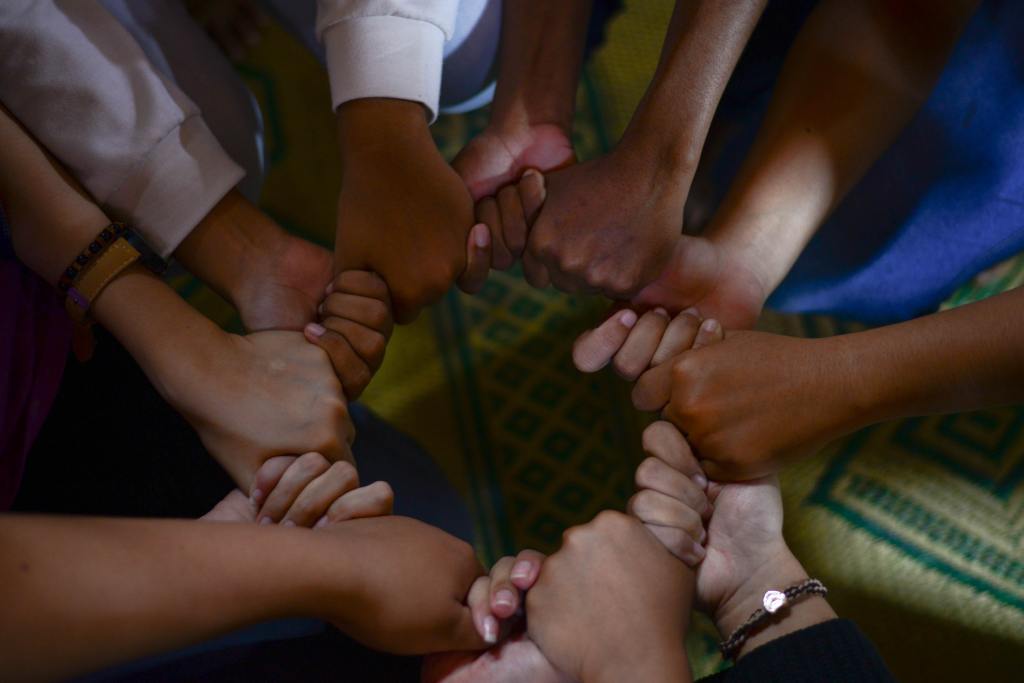
Photo credit: Wylly Suhendra

As we move along in the story Abraham and Sarah, the focus shifts to Hagar and Ishmael – to and God. For Abraham and Sarah, seeing Hagar and Ishmael walk away, heading out into the desert to die, to them that was the end of the story. But for Hagar and Ishmael, the story gets worse. Soon they are out of water – the death knell in the desert. Hagar places Ishmael under a shrub and walks away a short distance – far enough not to hear his cries. She cannot bear to watch her son suffer and die. Hagar weeps and cries out too.

Sitting alone in the desert, waiting to die, Hagar felt unseen and unheard. Most of us experience feeling unseen and/or unheard at times. Maybe it is because of our age or our gender or our newness to a situation. Or maybe it is because we are like Hagar in this moment – alone, powerless, vulnerable. It is at this moment that the God who sees becomes the God who hears. Their cries have fallen upon God’s ears. In response, God’s messenger encourages Hagar and tells her, “Get up, pick up the boy, and take him by the hand because I will make of him a great nation.” God will watch over, protect, make a way, and one day prosper Hagar and Ishmael.

Today there are people and people groups who live in the place that Hagar was – alone, powerless, vulnerable. As I ponder our call to see, hear, and respond, I think of the tragedy that recently unfolded in Minneapolis. Innocents were arrested, detained, and held for long periods. Community groups were afraid to leave their homes or to send their children to school. And I think of how the people of God led the way, rallying around, supporting, and standing for the targeted. While the scale of abuse and oppression may not be as visibly present in our communities today, there are certainly people who are alone, powerless, and vulnerable. How will we as the people of God respond?

Prayer: Lord God, open our eyes to see the Hagars and Ishmeals among us. Seeing, open our hearts to respond – coming alongside, standing against injustice, risking self for others. Forming community, use us to welcome in the lonely, to give voice to the powerless, to provide safety and resources for the vulnerable. In and through your love and power, made present by the people of God, may all people flourish. Amen.


Leave a comment

Many Hagars and Ishmeals

Reading: Genesis 21:8-14

Genesis 21:14a – “Abraham… took some bread and a flask of water, and gave it to Hagar. He put the boy in her shoulder sling and sent her away.”

Continuing in chapter 21 this week, Isaac has grown out of infancy. He is no longer nursing. No longer dependent upon just Sarah, Abraham throws a big party to celebrate. Abraham’s other son, Ishmael, is about 14 years old. Sarah sees him enjoying himself at the party and she makes a decision: he must go. Ishmael will not share in her son’s inheritance. While we might be shocked by her decision, it has been a long time in the making.

Soon after Ishmael was born, tension and strife arose between Sarah and Hagar. Sarah became jealous and envious. So, using her power over Hagar, Sarah severely mistreated Hagar. It was so bad, Hagar ran away. But God saw Hagar and her suffering. The Lord guided her back into Abraham’s household. Hagar continued to experience and endure harsh treatment from Sarah. Similar things happen today in situations where a person or group has power over others. Immigrants are mistreated by employers. The working poor are taken advantage of by payday lenders, greedy landlords, and others eager to exploit them. Non-whites are targets of unjust systems, profiling, and discrimination. Yes, there are many Hagars and Ishmeals in our day.

Abraham is greatly upset by Sarah’s decision. God offers assurances and a promise, making Abraham feel better about his role in the abuse. But what about Hagar and Ishmael? In verse 14a we read, “Abraham… took some bread and a flask of water, and gave it to Hagar. He put the boy in her shoulder sling and sent her away.” Bearing and raising his child all these years, enduring abuse from his wife all these years – and this is the result? Ishmael is old enough to understand what is happening too. Abraham has been “Dad” for 14 years, treating Ishmael as an only child, a gift in old age. And now this? Sent into the desert to die?

Let us sit with the emotions of the abused and discarded for a while. We finish the story tomorrow. Feel the feels for a day.

Prayer: Lord God, oh how we feel for Hagar and Ishmael. Fourteen years of feeling less than, always powerless and voiceless. Fourteen years of putting one’s head down, enduring abuse, just getting through. And now this: abandoned, sent away, evicted. God, don’t let the feels be limited to this story. Open our eyes and hearts to the Hagars and Ishmeals in our own communities. And move us beyond seeing. Move us to action. May we be the voice and strength for the voiceless, the powerless, the weak. Amen.


Leave a comment

Hope and Peace

Reading: Romans 5:1-5

Romans 5:1 – “Therefore, since we have been made righteous through his [Jesus’] faithfulness, we have peace with our God through Jesus Christ.”

Our passage today begins with a connecting word: “Therefore…” In Paul’s original letter there was no big “5” nor were there any small numbers marking verses. 4:25 would’ve just flowed into 5:1. In what we call chapter 4, Paul has been writing about how Jesus died for our “mistakes,” meeting the “requirements of righteousness for us.” Through his blood we are forgiven. “Therefore, since we have been made righteous through his [Jesus’] faithfulness, we have peace with our God through Jesus Christ.” Being made right again with God, cleansed and forgiven, we have “peace” with God. We are reconciled back into right relationship with God through Jesus Christ’s faithfulness.

Living in right relationship through faith, we can stand firm and we can hold onto hope. These are essential to our walk of faith. Paul gets to the “why” in verses 3 and 4. “Problems,” as Paul puts it, are simply part of living as imperfect creatures in this broken, sinful world. Sometimes these “troubles” are our own making, sometimes not. We are each just one of a world full of imperfect creatures. But because we have hope and because we can stand firm in Jesus Christ, we can “see” beyond our present troubles and problems. We know that the world does not have the last word.

Through the Holy Spirit, which pours the love of God into our hearts, we can endure the hard times. This endurance builds up our Christian character, which, in turn, reinforces our hope. What enables us to go through this refining and growing process again and again? The loving presence of God in Spirit that covers us in God’s peace. For this presence and the peace and hope that it brings to our hearts and minds, we say thanks be to God!

Prayer: Lord God, it is hard to imagine living this life without you. Some do, but without hope and peace, the struggles and trials of this world would overwhelm us. Therefore we thank you first for Jesus’ sacrifice, which allows us to be in your presence. It is your Spirit presence that gives us the love, hope, and peace that guides us through the struggles and trials. Thank you for this loving presence, the fuel for our faith and hope. Amen.


Leave a comment

Moments to Share

Reading: John 20:19-29

John 20:27 – “Put your finger here. Look at my hands. Put your hand into my side.”

Photo credit: Priscilla du Preez

We return today to the story of Jesus’ first two visits to the disciples. The incredible story of Jesus’ first visit is met with great skepticism about what “supposedly” happened. Didymus wants proof. He wants to see and touch to believe that it really is Jesus. We will meet people like this. Yes, cute Bible stories and even some good moral lessons, but…

If you think back over your journey of faith, what were the moments that made your faith real? The stories in the Bible are powerful and provide us with a foundation. In this way they are part of what John Wesley called “prevenient grace” – that grace of God that draws you towards God before you believe. Moments from worship, conversations in Sunday school or youth group, a nugget from a sermon – more of that prevenient grace.

All of these things pull us towards God, deeper into the story, closer to a saving relationship. But those moments in the balcony or at the graveside or in the ER or… the tangible touches of God, the moments when we’ve figuratively been close enough to touch the nail scars, these are our moments. These touches become our stories. These personal stories of when God draws near are the stories that can make Jesus more real for others. They still must have their own moments, but our stories can be part of God’s prevenient grace at work in other’s lives. What are your stories? How will you share them with others?

Prayer: Lord God, remind us of the times when you drew near, when we could feel and almost touch you. Deepen our memories of these encounters so that they become part of the stories that we tell. And as we tell them, work in others to draw them closer to you and to a relationship that will change their lives. Amen.


Leave a comment

Happy Are We

Reading: John 20:24-31

John 20:29b – “Happy are those who don’t see and yet believe.”

As the risen Jesus comes and visits the disciples who are hiding from the religious leaders, one is missing. When the missing one rejoins the group, they are buzzing about the Lord’s visit. They’d heard news of Mary’s encounter that first morning in the garden, but… And now Jesus had come to them too! Offering peace and showing them the physical scars, Jesus then breathed on them the Holy Spirit, sending them out to be his continued presence in the world. This all seemed too much for the missing disciple to believe.

Have you ever found yourself in a similar place? You’ve heard the story of something amazing or outlandish or “unbelievable” and you tell your friend(s) something like, “I’ll believe it when I see it.” In your mind you cannot really believe that someone has been resurrected from the dead, nevermind someone you know personally.

Just over a week later, the disciples are still in that same room, still secluding themselves from the world. Talk about disbelief! Jesus appears to them again. He addresses Thomas, the one who was missing eight days ago. Seeing with his own eyes, Thomas declares, “My Lord and my God!” To this profession Jesus says, “Happy are those who don’t see and yet believe.” Indeed, happy are we.

It is very unlikely that in our day someone will see the physically resurrected Jesus, being invited to touch the scars. But it can still be very possible for someone to be touched by Jesus. As you and I seek to love and care for others, as we comfort and encourage others, may people see and experience the risen Christ, living in each of us.

Prayer: Lord God, just as each of us were once like Thomas, not quite willing to believe based on the stories we’d read or on the testimonies we’d heard, lead and guide us as we seek to help others to know our Jesus. Through the ways that we love one another and the world, may others come to a saving faith in Jesus Christ, Savior to all. Amen.


Leave a comment

Seeing into the Heart

Reading: 1st Samuel 16:1-13

1st Samuel 16:7b – “God doesn’t look at things like humans do. Humans see only what is visible to the eyes, but the Lord sees into the heart.”

Photo credit: Shane Rounce

In our Old Testament reading we go with Samuel to Bethlehem. God is sending the prophet there to anoint Israel’s next king. Saul is still king, but God is no longer pleased with Saul. It’s dangerous to anoint the next king while the current king is ruling. God is with Samuel, though. Following God’s instructions, Samuel arrives at Jesse’s house. Jesse’s line will bring Israel its next king.

Eliab, the oldest son, stands front and center. Looking at him, Samuel thinks he’s the one. Eliab’s appearance and stature must’ve impressed Samuel. But God informs Samuel, “God doesn’t look at things like humans do. Humans see only what is visible to the eyes, but the Lord sees into the heart.” Ah, the heart – that is what truly matters. Samuel gets it. It is Samuel that passes over the next six sons. None have the heart to be a great king. So he asks if there are any more sons. The one out tending the sheep is brought in – the youngest. God says, “That’s the one.” David is anointed as Israel’s next king. The Spirit of the Lord comes upon him.

Considering the lesson in today’s passage, we must first ask ourselves: Who do we overlook? To get at the root of it, we must also ask: Who do we judge by appearance or reputation or position? From this place of reflection, we must next ask: To really accept and practice God’s invitation to see into the heart, what needs to change in us? And, lastly, again reflecting on our own heart, we must ask: Who is missing in our churches, on our leadership teams, at our fellowship tables that should be there for our communities of faith to truly reflected our neighborhoods and the kingdom of God?

Prayer: Lord God, the Eliab’s of this world are easy to see – they usually make sure of it. The David’s are harder to see. The right heart, the one humbly doing what needs done – they are the ones we often have to look for. So, Lord, open our eyes and guide our hearts to see these servants. Then, Lord, remove our preconceived notions and ideas. Send us out into the fields and streets and marketplaces, seeking to include all people in our communities of faith and in your beloved kingdom. Amen.


Leave a comment

Jesus Offers, Invites

Reading: Matthew 11:2-6

Matthew 11:3 – “Are you the one who is to come, or should we look for another?”

By the time Matthew’s gospel reaches chapter 11, Jesus has given the Sermon on the Mount, has healed many people, has calmed a literal storm, has gathered the twelve disciples, and has begun training them to carry on his ministry of healing and wholeness. During this time, John the Baptist’s ministry has diminished and he now finds himself in prison, having angered King Herod. Searching for hope, John sends his own disciples to ask Jesus, “Are you the one who is to come, or should we look for another?” From his prison cell, it must not feel like the kingdom of God is what he’d hoped it would be.

Presenting evidence of what the kingdom of God looks like here on earth, Jesus mostly quotes from Isaiah 35 and 61, adding a few of his own words too. Jesus is reminding John of how the Old Testament prophets described the Messiah and his kingdom. Healing and wholeness, fullness of life, deep relationships and community, humble service – this is God’s plan for this created world. It is to be as Jesus taught, “on earth as it is in heaven.”

The evidence that Jesus gives are both our inheritance and our marching orders. Jesus offers to open our eyes so we can see as he sees, just as he invites us to do the same for others. He walks with us when we cannot walk alone and he asks us to do the same with one another. Jesus cleanses us of our “diseases” and he speaks truth into our hard hearts. He brings life to what was once “dead” and he restores relationships. All of these, in turn, Jesus invites us to do for the world. As we find healing and wholeness through Jesus Christ, may we work to bring these to our world in need. May it be so.

Prayer: Lord God, open our hearts and minds to receive all that you offer. Being filled with your love, guidance, presence, healing, and hope, turn us out into the world, pouring ourselves out for the healing and wholeness of all creation. Use us to manifest your kingdom here on earth. Amen.


Leave a comment

Willing Participants

Reading: Isaiah 65:17-19

Isaiah 65:18b – “I’m creating Jerusalem as a joy and her people as a source of gladness.”

As we turn to Isaiah 65 today and tomorrow we turn to a new period in Israel’s history. It is now post-exile. The people of God have returned to Jerusalem, and like in much of Israel, there is hard work to be done. Almost everything must be rebuilt, replanted, or remade. Before much progress is made, the people have turned away again, allowing greed and the worship of idols to take over their doing and being. Isaiah speaks into this reality. But instead of harsh words or condemnation, he speaks words of hope that give an invitation into God’s preferred future.

God is planning to create something new – “a new heaven and a new earth.” God invites the people of God into this new creation, into a time of hope. The things of the past – the sins and bad memories – they will be no more. God declares, “I’m creating Jerusalem as a joy and her people as a source of gladness.” In this new creation God will find joy and gladness too as the Israelites once again become the people of God. In contrast to much of Israel’s recent past, there will be no weeping or crying in this new heaven and earth.

While God is eager to create anew, Israel still must choose to be a willing participant. As God continues to desire to transform this world and our lives into something new, we too must be willing participants. If this is our desire, then we must first be aware of how and when and where God is at work. Once aware we must then choose to willingly enter into that work, whether in the world or within ourselves. May we be willing participants in God’s transformation projects.

Prayer: Lord God, you are ever at work seeking to make our world and your people more loving, more gracious, more just. Open our eyes and hearts to this work, encouraging us by your Spirit to be your voice and your hands and feet in the creation of a new heaven and earth in this time and place. Amen.


Leave a comment

No One Sees

Reading: 1st Samuel 1:3-8

1st Samuel 1:8 – “Why won’t you eat? Why are you so sad? Aren’t I worth more than ten sons to you?”

This week we delve into our call to see the small, the overlooked, the marginalized. We will wrestle with how we respond to their cries. This often puts us at odds with those in power and with our culture.

All of these topics are present in our 1st Samuel 1 reading. In the text, Hannah is the central figure. She is the one who only receives one part of the offering “because the Lord had kept her from conceiving.” In this agricultural society, children were necessary for a family’s survival. This also factored in later in life. Without children in old age, one would potentially not have anyone to care or provide for them. To be unable to bear children was a cultural shame and a great risk.

Hannah is frequently reminded of all of this by Peninnah, Elkanah’s other wife, the one with many children. This cruelty was especially unavoidable at the festival in Shiloh. All were together in limited space. Elkanah sees Hannah crying and says to her, “Why won’t you eat? Why are you so sad? Aren’t I worth more than ten sons to you?” The focus of his questions are really on himself and his self-worth, not on Hannah. He sees her but doesn’t really see her. No one really sees Hannah. Who do you know that is like this?

Prayer: Lord God, we too can look past the one hurting right in front of us. We too can make it about how their pain or suffering is effecting us or our lives. In these times, Lord, slow us down, divest us of self, guide us to be present to the person and make us responsive to their needs. Amen.


Leave a comment

Today

Reading: Luke 23:32-43

Luke 23:41 – “But this man has done nothing wrong.”

Photo credit: Thanti Nguyen

Most of Luke’s account of Jesus’ crucifixion takes place in our reading for today. In some ways Jesus is treated like a common criminal. He is crucified between two. His charge is placed above his head: “This is the king of the Jews.” Like the crucifixion itself, the posting of the charge was also a deterrent.

Almost everyone present mocks or insults Jesus. The religious leaders mock the one who saved others. If he really was who he said he was then he’d save himself. The soldiers mock his kingship. If he really was a king, he’d surely be able to save himself. One of the criminals being crucified insults Jesus for not saving himself – and his fellow criminals. All of these people understand “save” in a different, more limited context. The immediate situation is all they are thinking about. Perhaps that is part of the reason Jesus prays at the outset, “Father, forgive them, for they don’t know what they’re doing.”

The second criminal sees beyond this moment on the cross. He rebukes the other criminal, admits that they are “tightly condemned,” and states, “But this man has done nothing wrong.” Grasping who Jesus truly is, this man asks Jesus to remember him “when you come into your kingdom.” This repentant man is told, “Today you will be with me in paradise.” Today. Not some distant, future date. Today. The same is true for us. When we ask Jesus to remember us, he is present with us today. The kingdom of God is here and now. Jesus is with us here and now. Thanks be to God.

Prayer: Lord God, help us to see and to live into your kingdom here on earth. Open our hearts to feel your presence. Open our eyes to see you with and among us. And, Lord, use us to build your kingdom here on earth as we seek to be love and light to the world. Amen.