pastorjohnb

Thoughts and musings on faith and our mighty God!


Leave a comment

Know His Voice

Reading: John 10:1-6

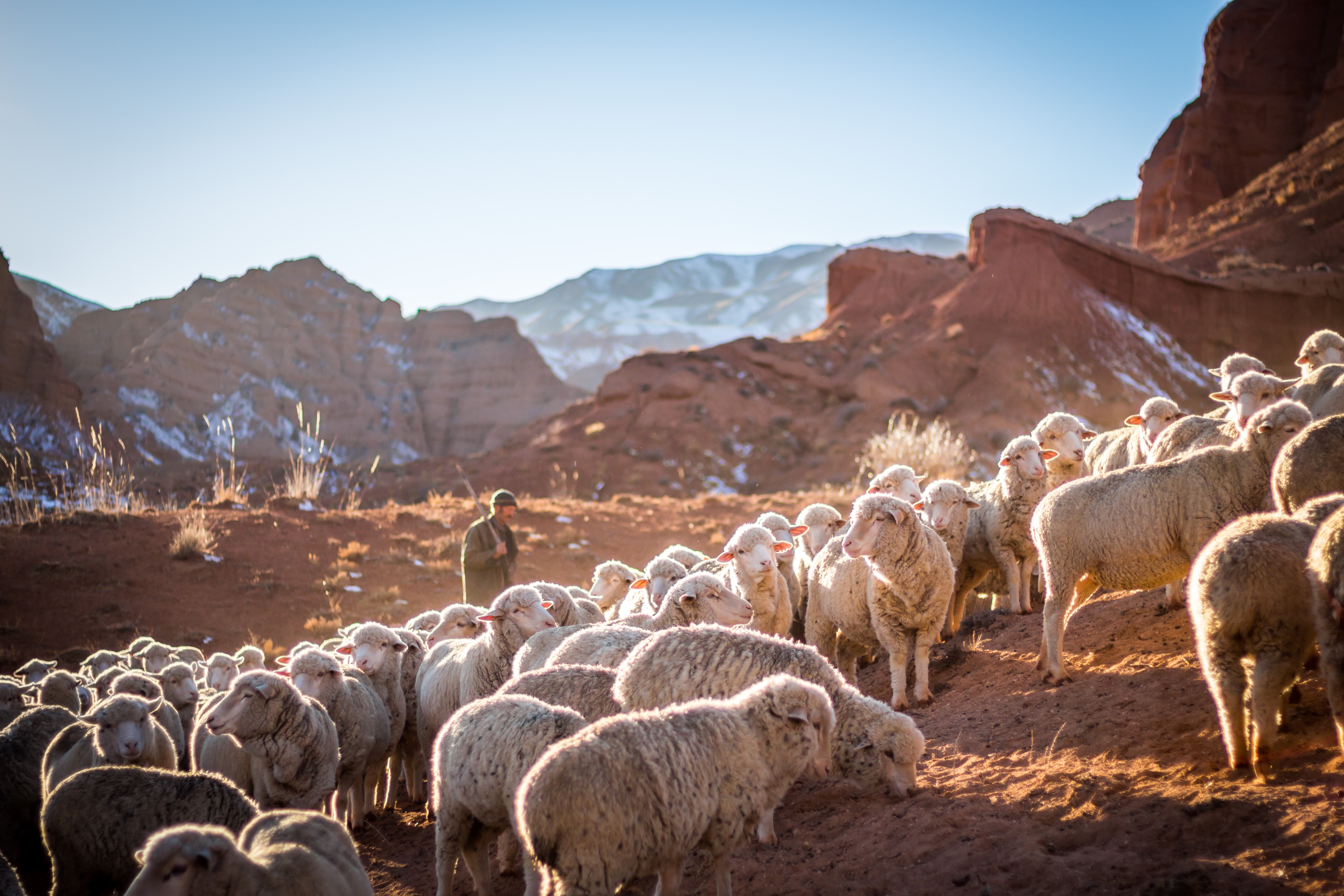
John 10:4 – “Whenever he has gathered all of his sheep, he goes before them and they follow him, because they know his voice.”

Photo credit: Hans Heiner Buhr

Today and tomorrow we delve into John 10. Here we find yet another of Jesus’ teachings that are counter-cultural. In the Old Testament, writers spoke of shepherds and of God as shepherd in positive and encouraging ways. By Jesus’ day something had changed. When Jesus spoke these words, shepherds existed on the edges of society. It was a job at the very bottom of the ladder. They were ceremonially unclean because of their occupation, so they were looked down upon, excluded, avoided. Jesus claims this role for himself. Sit with that for a second.

John 10 begins with Jesus establishing the idea of a gate. It is the only true way into the sheepfold. Today it is easy to call oneself a Christian. But many do not enter through the gate. They make their own way, their own walls, their own gate. They do not know the voice of the true shepherd. If they did, they would not act and speak as they do. No, there is only gate that opens the path to one way, one truth, and one life.

Kristin and I are wrapping up our time in Laragh, a small Irish village. There are sheep on the property. When we walk over to the fields with the goats or the donkey, they come to see us. But when we walk near the field that the sheep are in, they run away. They do not know our voices. Protective mommas call out to curious babies, warning them, keeping them safe. Jesus tells us that his sheep know his voice.

In verse 4 we read, “Whenever he has gathered all of his sheep, he goes before them and they follow him, because they know his voice.” We are living in the middle of this verse. Jesus has begun to gather those who know his voice. He now leads us in Spirit, going before us, inviting us to follow, calling us to walk in his ways. Those that know Jesus’ voice walk in the way of love, grace, mercy, and peace. May it be so for you and for me this day and every day.

Prayer: Lord God, there are so many voices today. Each claims truth. Each promises the way to “life.” But there is only one voice that matters for this life and for the life to come. Thank you for opening the gates of our hearts to your son, Jesus. By the power of your Holy Spirit, keep us faithful to the way of Jesus. Help us to always hear his voice above the din of this world. Lead us to follow always in the footsteps of our good shepherd. Amen.

Leave a comment

Always There

Reading: Psalm 23:1-4

Psalm 23:1 and 4 – “The Lord is my shepherd… you are with me.”

Today and tomorrow we turn to the most well-known Psalm. David’s words are similar to the Lord’s Prayer in this way: someone starts saying the words and it is easy to join in. In verses 1-3 David writes about God as shepherd. He begins with a declaration: “The Lord is my shepherd.” When I read these words, it is the word “is” that gets the emphasis. What follows happens because God IS our shepherd. We don’t lack anything that we need. We find rest and we find nurture beside still waters and in grassy meadows. God keeps us alive and guides us along the “proper paths” – all to glorify and bring honor to God. Within the shepherd metaphor is an implication: when we listen to and when we follow the shepherd and his voice, it is then that we dwell most intimately in God’s presence. This idea connects to the past two day’s focus: the daily practice of our spiritual disciplines. Study, prayer, fellowship, and worship atune us to God’s voice and align us with God’s will and way.

In verse 4 there is a shift. The “he” of verses 1-3 becomes “you” and “your.” David shifts from telling about God and starts talking to God. He shifts from the every day of life to the moment of need. When David finds himself in the “darkest valley” there is no fear. In the moment when it is easiest and most likely to feel fear, David declares that there is no fear because “you are with me.” David trusts God. He believes that God’s “rod” and God’s “staff” will protect him. The rod, the offensive tool, will protect us against attacks from without. The staff, the defensive tool, will defend us from attacks from within, when we are the ones who have or are tempted to wander into darkness. In all ways, God is with us and will protect us. O Lord, thank you.

Prayer: Lord God, thank you for being with us in the day to day of life, providing our daily bread and our moments of rest. Thank you for your word that guides and for your Spirit that directs and convicts and restores. And thank you, O God, for your presence in the hard moments of life – no matter what. However we find ourselves in the dark valley, you are always there. Yes, Lord, thank you. Amen.


Leave a comment

Like a Shepherd with Sheep

Reading: Psalm 23:1-3

Psalm 23:3 – “He [God] guides me in proper paths, for the sake of his good name.”

Psalm 23 is a psalm of trust in God’s love and care. This very well-known passage brings comfort in times of grief or doubt. It offers reassurance in times of worry and stress. It reminds us of God’s good plans and provision in times of need. We begin today with the first few verses, which lean into the metaphor of God as our shepherd.

Verse 1 reminds us that because God is a good shepherd, we lack nothing. This is NOT to say that God gives us everything we want. It is to say that God provides what we need. There is a wide gulf between want and need. We struggle with this difference when greed, envy, selfishness, and more raise their ugly heads. We very much need God’s power and presence to lead us through these inner battles.

In struggles such as these, our God guides us to times and places where we find rest, peace, and stillness. Here we encounter God’s presence. In these moments we are renewed and encouraged. We are prepared and equipped to move forward. Perhaps most importantly, in these moments we are assured that God’s love, care, provision, and protection go with us as a shepherd with sheep.

We read, “He [God] guides me in proper paths, for the sake of his good name” in verse 3. To walk in “proper paths” is to walk with the will and way of God guiding our steps, our words, our actions, our decisions… Walking this way, we witness to God’s presence in our lives. Doing so, we invite others to walk alongside the good shepherd too. In all ways, may our lives bring glory to the Lord our God.

Prayer: Lord God, life is not always easy. It gets harder, though, when we try and go it alone. Break our taught reliance on self. Lead and guide us to trust in you. Give us feet willing to walk the path that you set out for us. Walking this path, use us as light and love, drawing others into a relationship with you. Amen.


Leave a comment

Restore Us!

Reading: Psalm 80:1-7

Psalm 80:7 – “Restore us, God of heavenly forces! Make your face shine so that we can be saved!”

Psalm 80 is a prayer for restoration after a national tragedy. The prayer begins with Asaph calling out to the “shepherd of Israel.” The psalmist uses this familiar shepherd-sheep metaphor to bring up images of protection and provision, of guidance and direction. In verse 2 we read, “Wake up your power! Save us!” This is a plea for God to once again be Israel’s shepherd and king. The need is reiterated in the next verse where Asaph seeks the restoration of Israel through God’s presence with them.

Verses 4-6 contain a familiar refrain. The psalmist asks the questions that we ask during tragedies and prolonged periods of trial and suffering. “How long…?” The tears have flowed and flowed. The neighbors continue to act as enemies. Why us, O God? When will this end, Lord God? We ask these questions, we cry these tears, we feel this anger and maybe even rage. All point to our deep need for God’s power and presence.

Verse 7 cries out again, “Restore us, God of heavenly forces! Make your face shine so that we can be saved!” This cry invites not only God but also the heavenly beings at God’s disposal to respond, to save, to rescue and restore Israel. God’s face shining is a revelation of God’s presence with the people. It is a reminder of light to guide the way, of love to dry the tears, of grace to heal the anger and rage. Yes, O God, may your face shine upon us!

Prayer: Lord God, when tragedy strikes, when unexpected loss occurs, when painful relationships linger on, draw near to us. Guide us, comfort us, ease our pain, soothe our anger. Walk with us in the valley, lifting us and encouraging us with your presence and power. Restore us, O God! Amen.


Leave a comment

A Good Shepherd

Reading: Ezekiel 34:11-12 and 20-31

Ezekiel 34:27 – “They will be safe on their fertile land, and they will know that I am the Lord when I break the bars of their yoke.”

Photo credit: Ronnie Khan

Chapter 34 begins with the denouncement of Israel’s current leaders. What was the case before exile has continued in exile. God through Ezekiel pronounces doom on these poor leaders for living in luxury while ignoring the weak, the sick, the injured, the strays, the lost. There are many injustices so the flock scattered and then became prey. God promises to hold these bad shepherds accountable.

Beginning in verse 11, God offers the remedy. Here God proclaims: “I myself will search for my flock and seek them out… I will rescue them…” God will gather the scattered and care for the weak, the sick, the injured… As we continue in our reading we see that God will judge between the “fat and lean” sheep – between those living in luxury and those who struggle to survive.

God promises restoration, a new era. A David-like ruler will be appointed and a new covenant of peace will be established. Rains of blessing will pour down. Oppression and injustice will be no more. In verse 27 we read, “They will be safe on their fertile land, and they will know that I am the Lord when I break the bars of their yoke.” Without the yoke of oppression and injustice, there will be peace. There will be no famine; there will be no disgrace.

While the bad shepherds ignored these words of judgment, these words would offer great hope to the weak, the sick, the injured… to those living on the margins and edges. These words feel very relevant today. As injustices scatter people, as oppression sits heavy on others, as callous acts increase hunger, the people of God long for a good shepherd – not just for ourselves but also for the least of these among us. God’s children long for the rains of blessing and for a time of peace and grace. O God, may it be so.

Prayer: Lord God, you’ve always, always, always had a heart for the weak, the sick, the injured… You’ve always, always, always called for the faithful to join you in your care for the least of these. Lord, bridge the huge gulf between our reality and your preferred future. Use us to be a part of that bridge, each in our own ways caring for the weak, the sick, the injured… for the scattered and the oppressed. Amen.


Leave a comment

Shepherd of the Flock

Reading: John 10:11-16

John 10:14 – “I am the good shepherd. I know my own sheep and they know me.”

Photo credit: Patrick Schneider

In the agrarian society of Jesus’ day, he often spoke in ways that connected to this reality. Sheep in particular are a common subject in Jesus’ teachings. He comes by this naturally. In tomorrow’s reading God identifies as “the good shepherd” too!

For the most part, Jesus attracted a crowd from the lower levels of society. “Blue collar” folks and people who lived on the edges were drawn to Jesus. His normal audience would be familiar with his shepherd imagery. Jesus states two times in this passage that he is the “good shepherd.” In the first instance, he declares that he will “lay down his life for the sheep.” He will not run away because the sheep truly matter to him. He will face the cross.

The second time, Jesus says, I am the good shepherd. I know my own sheep and they know me.” Here Jesus is speaking into the intimacy between shepherds and their sheep. Sheep learn the voice of their shepherd(s) and will only follow the voice(s) they know. Jesus sets the example in the ways that he follows God’s voice. He calls his sheep to do the same. Jesus then reiterates the fact that he will give his life for the sheep. In this spirit we too are called to sacrifice for others.

Jesus then extends the circle to include those who are not yet following him. Here Jesus is referring to both Jews and Gentiles, which really is another way of saying “all people.” Jesus longs to be known by all people, to shepherd them in his love. One day, may this be so, O Lord.

Prayer: Lord God, you lead us beside still waters and into green pastures. You provide rest and you offer sustenance. You protect us and you guide us. When we wander, you find us and bring us back home. You gave everything for us and continue to do about anything to keep us in the flock and to add to the flock. Thank you, Jesus. Amen.


Leave a comment

Living as Immigrants and Strangers

Reading: 1st Peter 1-2

1st Peter 1:3 – “On account of his vast mercy, he has given us a new birth… born anew into a living hope through the resurrection of Jesus Christ.”

Written by the apostle Peter, 1st Peter was originally written to house churches scattered across the Roman empire. They were experiencing conflict and persecution because their faith often ran counter to the norms of the culture. Peter encourages the believers to persevere, even in their suffering. Luke Christ, through this they too will accomplish their mission to witness to God’s love and mercy.

Peter begins his letter with a wonderful statement of faith: “On account of his vast mercy, he has given us a new birth… born anew into a living hope through the resurrection of Jesus Christ.” This living hope is our inheritance, “kept safe in heaven.” He calls these in diaspora to rejoice in this hope, even if distressed now by these trials. Their “genuine faith” in the one they’ve never seen yet love and trust will result in their “praise, glory, and honor” one day. Instead of being conformed to their former desires, Peter declares, “You must be Holy in every aspect of your lives, just as the one who called you is holy.” Be like Jesus, the one who liberated you by his blood.

Peter calls the faithful to “set yourselves apart” because they’ve been given this new birth. According to John Wesley, this new birth was “the commitment to a daily journey of intentional, painful, and sacrificial work of character formation.” This echoes Christ’s call to die to self – again and again and again… This results in believers becoming “living stones… a royal priesthood.” Built upon the capstone that others stumble over, believers have become “God’s possession.” As such, living as “immigrants and strangers,” Peter urges them to avoid worldly desires and to live faithfully, even in suffering. Endure in faith, just like Christ. Be healed by his wounds and walk with “the shepherd and guardian of your lives.” May it be so.

Prayer: Lord God, thank you for your love and mercy, that which calls us to your living hope, Jesus Christ. In the highs and lows, in the trials and in the joys, build up in us a genuine faith and an endurance that yields fruit for your kingdom. Empower us to be conformed into the image and example of Christ. Equip us to walk faithfully, inviting others to join us on the journey to salvation. Amen.


Leave a comment

Life to the Full

Reading: John 10 and 11

John 10:10 – “The thief comes only to steal, kill, and destroy. I came so that they could have life – indeed, so that they could have life to the fullest.”

In today’s reading we really see the division created by Jesus’ words and ministry. It is first revealed in the healing of the blind man. The “light of the world” ends the man’s darkness, restoring his sight. There is division amongst those who now see him. Some say it is the blind man and others say it just looks like him. This question is answered as the man is brought to the Jewish leaders. Calling in his parents, they testify that he is their son who was born blind. They say they don’t know how he sees. Even though he has already told them, the leaders ask again. He asks them, “Do you want to be his disciples too?” They insult him. In response he reminds them that God doesn’t listen to sinners but to those who are devout and do God’s will. The man is expelled from the synagogue.

The story transitions next to spiritual blindness. Jesus centers this teaching on the shepherding metaphor. The shepherd enters through the gate, the sheep know his voice, he leads them out. Jesus declares, “I am the gate.” Others come to “steal, destroy, and kill.” The good shepherd, Jesus, came so that they could have life – indeed, so that they could have life to the fullest.” Life to the fullest. What an image! What a reality for those who believe in Jesus as Lord and Savior.

The metaphor continues with Jesus telling the Pharisees that he will “lay down his life for the sheep.” Unlike the hired hands now listening to the story, Jesus cares about the sheep – and about the sheep not if this pen too! More division reveals itself as they argue about Jesus having a demon. Others ask, how then could he heal this man?

As chapter 11 closes, Jesus tells the “Jewish opposition” that the signs he does should testify to his being one with the Father. He invites them to see this, to believe in him. But they are ready to stone him. As Jesus’ time has not yet come, he escapes, going out to Bethany to minister there.

Prayer: Lord God, reading these stories we so clearly see that Jesus is the Christ, the Messiah, the Savior of the world. Yet when we step away, going out into that world, we can become blind to needs, to our own sin, to injustice. Lord, help us to live with eyes wide open, living and enjoying the fullness of life that you give to all who believe. Amen.


Leave a comment

Edges

Reading: Luke 2

Luke 2:46-47 – “He was sitting among the teachers, listening to them and putting questions to them. Everyone who heard him was amazed by his understanding and his answers.”

Luke 2 holds the stories of Jesus’ birth and childhood. We read of journeys, mangers, angels, and shepherds. We read of Simeon and Anna. And we read of young Jesus is the temple.

Luke begins chapter two with Caesar declaring a tax census. Mary and Joseph travel to Bethlehem. While there, Mary gives birth, wraps Jesus snuggly, and lays him in a manger. An angel appears to shepherds and announces “good news… wonderful, joyous news for all people.” The shepherds go and see Jesus, share their story, and return to the fields praising God.

Jesus’ birth rituals are then completed: circumcision, naming, ritual cleansing, presentation to God, and an offering is given. Simeon and Anna recognize Jesus. Simeon declares Jesus “salvation… revelation to the Gentiles… glory to Israel.” He also warns of the hard realities of Jesus’ ministry. Anna praises Jesus as “the redemption of Israel.”

We then fast-forward 12 years. The family went to Jerusalem to celebrate the Passover. Traveling home, Mary and Joseph discover Jesus is missing. They return to Jerusalem and search for three days. Finally they find him in the temple. We read, “He was sitting among the teachers, listening to them and putting questions to them. Everyone who heard him was amazed by his understanding and his answers.” After being scolded by Mary, Jesus basically says, ‘Where else would I be?’ The Spirit is upon Jesus and he finds favor with God and with people. May the Spirit be upon you and me!

Prayer: Lord God, thank you for the beautiful stories of Jesus. They read almost like a novel. Yet within the stories are edges. There is no room in a home for Mary, Joseph, and Jesus. You go to the low of the low to announce the wonderful news. In Simeon and Anna you recall the deep longing, the prolonged waiting for the Christ. You are a God of the edges. Your son Jesus is a Savior for the edges. May we be people that minister on the edges. Amen.


Leave a comment

The Lord Will Reign

Reading: Zechariah 10-15

Zechariah 13:1 – “On that day, a fountain will open to cleanse the sin and impurity of David’s house.”

In the last chapters of Zechariah, Judah and Jerusalem are lifted up and are torn down. They experience defeat and victory – both through the Lord. Zechariah refers twice to a king who has been seen as Jesus since the earliest days of the church. In the end, God is present in the new Jerusalem. All nations come to worship and give glory to God.

As our reading begins, God invites the people to ask God for rain. Instead they turn to idols as their shepherd(s) lead them astray. God will punish “the goats.” Judah will then be strong because God is with them. Strengthened, they will walk in the name of the Lord. But this faith doesn’t remain long. Two staffs – Delight and Harmony – are made and then are broken. The covenant is ended and the alliance between Judah and Israel is over. A bad shepherd won’t care well for the flock and will be doomed by God.

In chapter 12 God again defends and restores Judah. They again become strong in the Lord. God promises to pour out a spirit of grace and mercy. But then the people will “look to me concerning the one whom they pierced.” There will be mourning throughout the land. In 13:1 we read, “On that day, a fountain will open to cleanse the sin and impurity of David’s house.” Later in chapter 13: Zechariah returns to what the church reads as Jesus. They will strike the shepherd and the sheep will scatter. There will be a purifying fire (persecution) that will refine the faithful. God will look upon these and say, “They are my people.”

In the last chapter we read of Jerusalem falling and half going into exile. Then God, along with the “holy ones,” fights for them, bringing them home. Running water will flow from this new Jerusalem. It will be secure. Nations will come to pay homage to God. The Lord will reign forever. This is the end of the story we know too. Thanks be to God.

Prayer: Lord God, although sin and disobedience separated you from Judah and Israel – as it does us at times – you remain unconditionally committed to loving your children. I am grateful for your faithfulness, mercy, and grace through all of our failures. You are so worthy of our praise. Use us this day to bring glory and honor to your name. Amen.