pastorjohnb

Thoughts and musings on faith and our mighty God!


Leave a comment

So That All Will Know

Reading: Luke 19:39-40

Verse 40: “I tell you, if they keep quiet, the stones will cry out.”

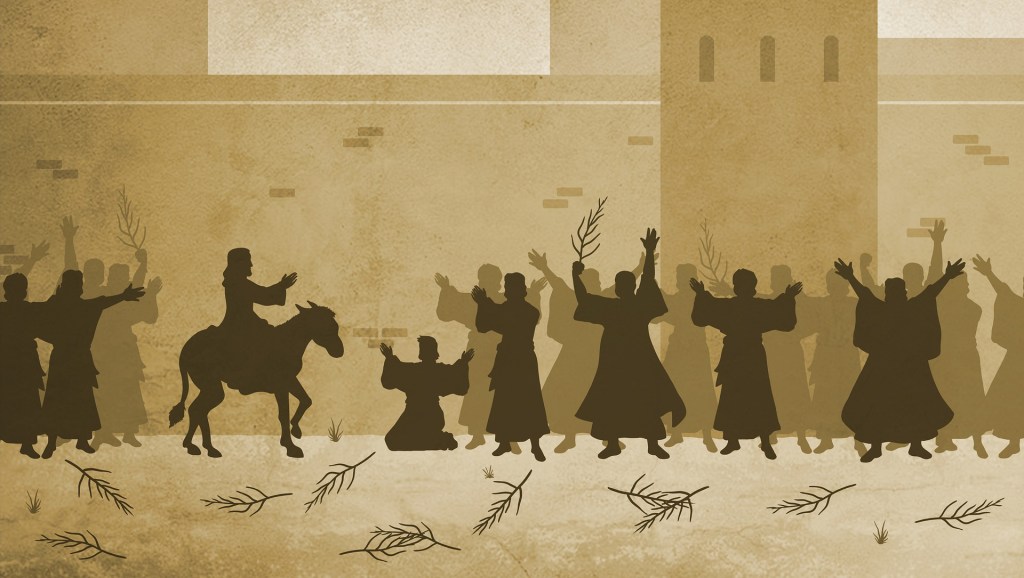
As the palm parade comes close to Jerusalem the crowd is singing and celebrating. Jesus rides on a colt as the people wave palm branches and rejoice in the one “who comes in the name of the Lord.” But not all celebrate. Some Pharisees say to Jesus, “Teacher, rebuke your disciples!” They do not see Jesus as a king or savior or Messiah. For a number of reasons, they just want Jesus to quiet the crowd.

Jesus’ response is this: “I tell you, if they keep quiet, the stones will cry out.” If the crowd were to suddenly grow silent, stones – creation itself – would take up the message. Later in the week, as his followers go silent and into hiding as Jesus goes to the cross, creation does speak. In the darkness that falls at mid-day creation mourns for Jesus. In the earth shaking creation shudders at the last breath of their incarnate creator. As the temple curtain is torn in two creation celebrates the new and open relationship between God and humanity.

On the first palm Sunday long ago, the people celebrate Jesus as the one who would save them. They raise their voices so that others will know that Jesus Christ is Lord. We will remember and celebrate the day in our churches. We will sing songs and wave palm branches. We will hear a message and be sent forth to live out our faith. And then what? Will we dance and sing this week, witnessing to our Lord and Savior so that all who walk along with us will know and be blessed by the prince of peace? Or will the “stones” have to cry out?

Prayer: Lord God, as we walk through Holy Week may I witness each day to your love, bringing you all the glory. May all I meet meet your Son, Jesus Christ. Amen.


Leave a comment

Open and Free to All

Reading: Luke 22:14-28

Verse 17: “Take this and divide it among you.”

In our reading today we find Jesus sharing in the first communion with his disciples. Peter and John has been sent ahead to secure the room and to gather the elements to celebrate the Passover. Like it was with the two sent to find the colt, Peter and John “found things just as Jesus had told them.” This is another example of the divinity of Christ.

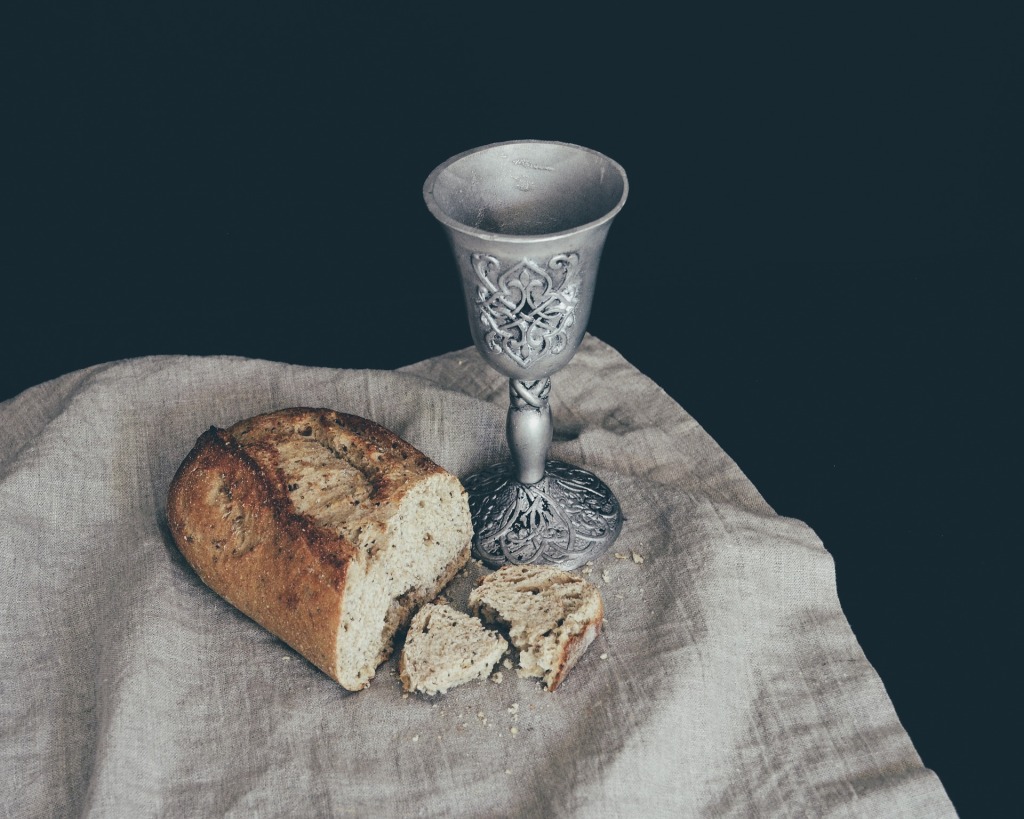
As they gather Jesus tells them that he has “eagerly desired” to share in this meal one more time before he suffers. During the meal Jesus takes a cup and says, “Take this and divide it among you.” All partake in the sharing of this cup. All will partake in the bread and cup of this first communion. Jesus did not send Judas on some phony errand so that he wasn’t around. Jesus demonstrates in verse 21 that he knew Judas would betray him. Yet he included Judas in communion.

What does this simple act tell us about how we understand and practice communion? First, it tells us that communion is for those who have sinned. So it is for all of us. One mustn’t come to the table already made right with God. One comes seeking to be made right with God. Jesus is telling Judas that he is welcome at the table, even though he has already agreed to betray Jesus. So our second lesson is that we too should invite all to the table of grace. The table is open and free to all people, from the purest saint to the most deeply stained sinner. All are invited to be made new again at the table of grace. Thanks be to God.

Prayer: Lord God, I rejoice in your love that makes me new again every time I kneel at your table of grace. Lead me to invite all to the table of grace so that all may know your love. Amen.


Leave a comment

The Mind, The Attitude of Christ

Reading: Philippians 2:5-11

Verse 5: “Your attitude should be the same as that of Christ Jesus.”

Our passage today opens with quite a challenge! Other translations challenge us to have the mind of Christ. What a life we’d live if we always practiced the attitude or mind of Jesus Christ.

In the passage Paul explains what it requires to meet this challenge: emptying self and then being a servant, being humble, and being obedient to God. I don’t know what’s harder – the emptying or the being. I do know that to truly be these things one must be willing to empty or die to self. This act of surrendering our will and way to God is the necessary first step to true servanthood and humility and obedience. We can be partly these things without surrender, but always in a lesser way because we will still keep self in mind.

In our world so much value is placed on possessions, titles, status, and so on. Living in this world, it is hard to let go of these things. That’s why faith is so counter-cultural. To serve others usually asks us to give away and to be generous with what God has blessed us with. To be humble is to relinquish place and to think more of the other, to see and live into our interconnectedness and interdependence. To be obedient is to listen to God’s voice – both in the scriptures and as spoken by the Holy Spirit. To listen implies that we hear and follow what is said.

To live in this radical, counter-cultural way is to exult the name of Jesus. When we die to self we take on the mind of Christ. When we live as humble servants, obedient to God, we practice the attitude of Christ. Doing so, we bow down to and confess Jesus Christ as Lord and Savior. Doing so, we invite others to do the same. May it be so.

Prayer: Lord God, lead me to kneel at your throne and to pour out self, surrendering to you. Prune away all within that holds be back; nurture and grow those parts that witness to your will and way. Thank you, Lord. Amen.


Leave a comment

Ever Trust

Reading: Psalm 31:9-16

Verses 14-16: “But I trust in you, O Lord… My times are in your hands… save me in your unfailing love.”

In Psalm 31 David comes to God in a time of great distress, sorrow, and grief. It is a place most of us have been, so we can relate to David’s emotions. Some of us are there now, so we can feel David’s emotions. At times life causes our strength to fail and our bodies to grow weak. Our emotions exert a toll on our bodies. And maybe, like David, you too experienced or are experiencing a loss of friends during your time of suffering.

We walk through experiences of distress, sorrow, grief, loss, change over and over as we live our lives. Doing so we grow and we are equipped by God to walk with others as they experience these things. Just as we all remember this person or that person who was there for us, offering compassion or presence or support during our trial or suffering, we too can be that person for others.

Our passage today concludes with these words from verses 14-16: “But I trust in you, O Lord… My times are in your hands… save me in your unfailing love.” David first trusts in God. God is good and kind and loving. Trust in God. He then acknowledges that his time is in God’s hands. No one else is in control. No one. Acknowledging this truth releases it all to God. After asking God’s face to shine upon his (to be present to him), David asks for God to act in his unfailing love. This circles back around to trusting God and to acknowledging that God alone is in control. As we experience difficult times and as we choose to walk with others in difficult times, may we ever trust in our sovereign, all-powerful, loving God.

Prayer: Lord God, in your great love you guide us and you walk with us. All you have for us is for and by your purposes and plans. Help me to ever trust in your love, today and every day. Amen.


Leave a comment

Come and Follow

Reading: Isaiah 50:4-9a

Verse 7: “Because the sovereign Lord helps me, I will not be disgraced.”

Photo credit: Jan Huber

In today’s passage from Isaiah we meet the “suffering servant.” These words apply to the author, Isaiah. Like yesterday’s Psalm 118, we can also read these words and hear and interpret and apply them to Jesus Christ. He was also a suffering servant. Today we are also invited to own these words, to take this mantle upon ourselves.

In verse 4 Isaiah writes, “The sovereign Lord has given me an instructed tongue, to know the word that sustains the weary.” God spoke to Isaiah, guiding his life and his words. God has given us the Bible. God has backed that up with the Holy Spirit. God offers us instruction and guidance. God gives us words to follow and words to speak to the weary, the exiled, the downtrodden, the hurting. Will we know and speak the word God gives us?

In verse 7 we read, “Because the sovereign Lord helps me, I will not be disgraced.” First, note that it does not say “will not suffer.” The will and way of God is always good and right and holy. Because of this we will not be disgraced when we live and speak in alignment with God’s will and way. But because the will and way of the world is opposed to God’s will and way, we will face suffering and maybe persecution. Jesus invites us to walk the road he walked. In our divided and controversy filled would, leading with love and offering humble service can draw other’s ire.

Lastly, in verse 9 we read, “It is the sovereign Lord who helps me. Who is he that condemns me?” We can answer this question one of two ways. The easy way is to say, “No one!” If God is for us, who can be against us, right? Well, yes. But…

Is this how Jesus would answer the question? I believe that Jesus would say that he (or she) that condemns us is the one that we should love even more. They are the one we should seek to serve in even more meaningful ways. Jesus’ road was the road of the suffering servant – it was not an easy road. We are invited to come and follow Jesus. May we choose to walk the road of love and service, no matter the cost.

Prayer: Lord God, set my feet upon the path that Jesus walked. Instruct me by your word, guide and empower me by your Holy Spirit. Amen.


Leave a comment

Constant and Ongoing

Reading: Psalm 118:1-2 and 19-29

Verse 26: “Blessed is he [or she] who comes in the name of the Lord.”

Our Psalm this week is often associated with Jesus and with the day we know as Palm Sunday. This ancient song speaks of a godly king who comes triumphally through the city gates. Good and righteous kings are viewed as gifts from a good and loving God. The ideas of God as salvation and strength run throughout the entire Psalm. For example, in verse 14 we read, “The Lord is my strength and my song; he has become my salvation.”

Generations after the Psalm was penned, first century believers took up these themes and declared Jesus as their king, Savior, Messiah. Claiming Jesus as Lord, they waved palm branches and sang for joy, declaring, “Blessed is he who comes in the name of the Lord.” There was joy and hope abounding in the people of the parade. The beginning and ending verses of the Psalm are the same, emphasizing this truth, this joy, this hope: “Give thanks to the Lord, for he is good; his love endures forever.” All of this resounded in the person of Jesus as he rode into Jerusalem that day on a colt.

Salvation is based on God’s goodness and love alone. It is a free gift that we cannot earn, that we do not even deserve. Yet it is freely given. It is sometimes seen as a ticket to or as a guarantee of heaven. While this is correct to a degree, it is woefully short of all that salvation is intended to be. For those who “accept Jesus” and then push the cruise control button, they may one day have a rude realization. Salvation, as expressed and lived by Jesus, is an ongoing and constant reality. The divine seeks to make all things new not just at the end of this age but every day in the present. Like the people along the palm parade route, like Zacchaeus who found that salvation had come to his house that day, like all others who encounter Jesus, they experienced and lived salvation day by day. Their lives were blessed by this constant and ongoing reality. Reread verse 26 with this framework in mind: “Blessed is he [or she] who comes in the name of the Lord.” This day and every day may you and I be active livers of our salvation, being blessed and giving thanks to the Lord in all we say and do, for God is good.

Prayer: Lord God, you are so good and loving. Thank you for the gift of Jesus Christ and for the salvation he offers. May these be gifts that I live out and pour out each day. Amen.


Leave a comment

Recognizing the Lord

Reading: Luke 19:28-38

Verse 38: “Blessed is the king who comes in the name of the Lord.”

We begin and end this week with a passage from Luke 19. Next Sunday we will celebrate Palm Sunday – Jesus’ triumphal entry into Jerusalem. That event begins what is known as “Holy Week.” It is Jesus’ last days on earth. It culminates with his death on Good Friday. Then the story is gloriously climaxed on Easter Sunday as Jesus Christ is resurrected. This week we begin with the palm parade.

In the opening 7 verses of our passage we see the divine at work. Jesus sends two disciples to fetch a colt from a stranger. He tells them where to go and where to find the colt. He tells them that they’ll be asked about what they’re doing and he tells them what to say in response. Pause for a minute. Think about these verses, about this story. How would this impact your faith and your relationship with Jesus if you were one of the two disciples?

When the owners hear why someone is taking their colt – “The Lord needs it” – they allow it to happen. What would lead them to do this? Perhaps they had encountered or experienced Jesus. Maybe he had healed or taught in their village. Maybe they were friends with Lazarus. Or maybe the Holy Spirit led them to allow the colt to be led away. Jesus mounts the colt and people begin to spread their cloaks on the ground, forming a crude royal carpet.

As Jesus and his disciples near Jerusalem, as they head down from the Mount of Olives, the “crowd of disciples” begins to celebrate. We can assume this crowd contained both new and old disciples – ones who have long followed Jesus and some who are drawn to him now. The crowd shouts, “Blessed is the king who comes in the name of the Lord.” They recognize Jesus as king. They proclaim him “Lord” and rejoice in the peace he will bring. Recognizing Jesus as Lord changes everything. How will you and I live into this truth this week?

Prayer: Lord God, guide me to live with Jesus Christ as my Lord and Savior this day and this week. By my faith, by my witness, by my example, may others be drawn to the Prince of Peace, to the Lord of Lords. Amen.


Leave a comment

Faithful and Loving, Kind and Good

Reading: Psalm 126

Verse 4: “Restore our fortunes, O Lord.”

Photo credit: Emma Gossett

We close this week by turning to Psalm 126 once again. It is a reminder of God’s love and care for those who love God. It is a story of God’s faithfulness.

There are times in our lives when we feel like the captives in the Psalm. Life has brought tragedy or some other difficulty upon us and we feel overwhelmed and under supported. When I have lost a loved one, when I have been forced into an unwanted change, when I have been at odds with others in an organization – these are times when I felt like I needed to cry out, “Restore my fortunes, O Lord”! I am sure you have felt like shouting this many times in your life too.

As I look back on each of these journeys through the valley I can see how God was faithful to me. There are instances when God sent someone to offer healing or restoring words. There are memories of unexpected kindness and grace, of God’s presence bringing me peace and assurance. Looking back you too can recall how God was with you in the valley.

As we slowly emerged from the valley, we too came to a place where our tears became joy and where our weeping became songs. Our God is faithful and loving, kind and good. As we worship the Lord our God today, may we offer our praise to the Lord of life. May it be so!

Prayer: Lord God, thank you for your compassion and your presence in my life. You are ever faithful to me, O God. May my joyful response bring you all the glory. Amen.


Leave a comment

To Linger

Reading: John 12:7-8

Verse 8: “You will always have the poor among you, but you will not always have me.”

Photo credit: Aron Visuals

In the first half of this week’s passage from John 12 Mary anoints Jesus’ feet and Judas protests this “wasteful” act. The beautiful gift that Mary offered filled the room with fragrance. The sweet aroma would be carried with Mary for many days after she wiped his feet with her hair. I think this was intentional. That fragrance will linger with her; it will still be present five days later as she stands with others at the foot of Jesus’ cross.

Jesus defends her, saying, “Leave her alone.” He explains that she was helping to prepare his body for burial. Clearly Mary understands more than most of the disciples at this point. Jesus talk of rejection and death and rising after three days has spoken into Mary’s heart. Then Jesus goes on to say, “You will always have the poor among you, but you will not always have me.” Jesus is not telling the disciples or us to quit caring for the poor – in any way. He is saying that in this moment, Mary has once again chosen the better thing. (See Luke 10:38-43.) Yes, it is good and would be right to use the money to care for the poor. But in this moment, at this time, this act of faith and love is more important.

We can face similar decisions at times. We too can face some critique or questioning. One quick, small example. I stand outside and welcome people to church, often holding the door open as we shake hands. A woman sometimes arrives just as church is about to begin. With her oxygen tank and walker, it takes a bit of time to get into the church. Sometimes she has food or other items for the food pantry too. My watch buzzed me two minutes before church starts. We run a one minute countdown timer on the screens in the sanctuary. Some days I linger outside. When I enter the sanctuary on these days, some look at the clock or their watches. I’m good with that.

Lord God, remind me always of the one. Remind me again and again that things like our human construct of time aren’t always ultra important. Do the same with all else that can hamper our relationship with you and with one another. Amen.


Leave a comment

Focus

Reading: Philippians 3:10-14

Verses 10-11: “I want to know Christ and the power of his resurrection… to attain to the resurrection from the dead.”

Continuing on in Philippians 3, Paul looks back on his credentials and considers them “loss for the sake of Christ.” He sees those titles and roles as “rubbish” compared to “the surpassing greatness of knowing Christ Jesus as my Lord.” Paul has focused his life on his relationship with Jesus. Paul has learned that what he used to think was righteous – following every letter of the Law and persecuting those who did not – wasn’t really righteousness. Through his relationship with Jesus he has discovered true righteousness – one that “comes through faith.” It is found in the heart, not in the head. It is found in grace and mercy and love, not in how one follows the rules.

At times our identity or how we identify others can limit how we see, treat, love, minister to others. If we allow our identity to limit us in these areas, we become less effective than we could be for Christ. If, for example, I place “pastor” ahead of “Christ-follower” in how I see myself, then I will be less effective for the gospel. In a similar way, if I look at certain people and see them as unworthy of my time and love, creating in me an unwillingness to serve or minister to them, then I have become much less effective. If I do not first and foremost see others as a beloved child of God, then I have become a stumbling block.

This is where Paul was when functioning as a “Hebrew of Hebrews… as legalistic… blameless.” Recognizing Christ as Lord and Savior, Paul instead poured himself out, giving up all earthly credentials. In verses 10 and 11 he writes this of his new focus: “I want to know Christ and the power of his resurrection… to attain to the resurrection from the dead.” Christ has become his all in all. The passage closes with Paul’s “why”. He desires to continue“straining” toward the goal. He strives to “press on” to one day take hold of the “prize for which God has called me heavenward.” The “prize” for Paul and for all who follow Christ is to attain eternal life. Accordingly, may all we do and say be focused on this goal – both for ourselves and for all who do not yet know Jesus Christ as Lord and Savior.

Prayer: Lord God, keep my eyes on the prize. Doing so, use me well in my day to day service to you and to others. In and through me may all see and hear of your love and of the call to life eternal. Amen.