pastorjohnb

Thoughts and musings on faith and our mighty God!


Leave a comment

Live Amongst Us

Reading: Ezekiel 38-43

Ezekiel 38:23 – “I will display my greatness, show my holiness, and make myself known in the sight of many nations.”
Chapters 38-39 deal with Gog, a representation of the evil empires. Coming from the north, Gog could represent Nebuchadnezzar. Gog gathers many nations to his side. This mighty army comes to Israel, intent on conquering and looting God’s children. God’s anger is aroused and God unleashes nature on them, followed by turning their swords upon one another. God calls on the birds and animals of prey to feast on the horde’s bodies. So vast was the army, it took Israel seven years to bury the bodies. In the end God promises to pour out “my Spirit” upon Israel. With this Spirit within them, God will never again hide God’s face.

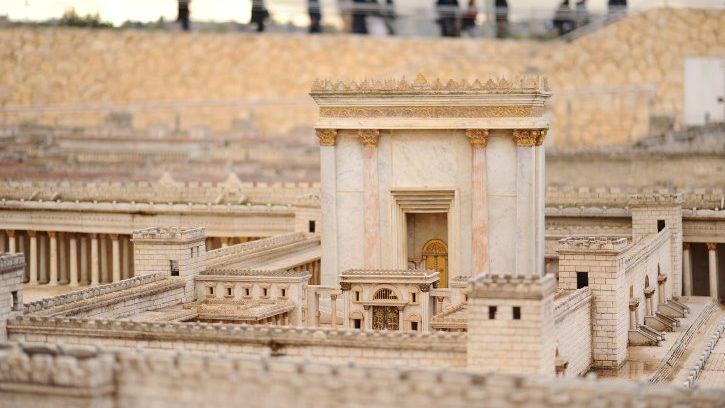
Chapters 40-42 contain the first part of Ezekiel’s temple vision. He is told to pay close attention so he can tell all to Israel. The temple described has some commonalities with Solomon’s temple, but much is different. While a temple will be rebuilt, this temple is never realized in the Bible. Ezekiel’s temple compound is 750 feet by 750 feet. It has three gates, courtyards, chambers, holy places and equipment. The Zadokite clan is set apart as the only Levites to “draw near” to God – to offer sacrifices on the altar. The temple is adorned with winged creatures and palm trees. There are holy chambers, places to store holy things.

The temple is at the center of God’s restoration of Israel, both physically and spiritually. It is a part of the sanctifying process, making Israel into the holy people of God. For Ezekiel and his audience, the temple represented God’s presence with the people. These words and vision bring hope and encouragement to the people living in exile. God longed to live amongst the people of God. God still longs to live amongst us today. May it be so.

Prayer: Lord God, your power and might extend over all things: over Gog and his allies, over today’s idols and temptations, over our selfish hearts. Ezekiel’s temple vision reflects your power and might. But it is still just a building. Just as your presence will fill this visionary temple, fill our hearts with your indwelling spirit, transforming our lives and our hearts. Amen.



Leave a comment

A Holy Sabbath

Reading: Isaiah 56-59

Isaiah 58:2 – “They seek me day after day… like a nation that acted righteously, that didn’t abandon their God.”

Today and tomorrow we read Third Isaiah. As is the case throughout all of Isaiah, the focus remains on justice and righteousness. In today’s readings these key faith practices center on keeping the Sabbath holy. This holy day, kept once a week, had the power to keep the Israelites connected to God in a way that would be reflected out into how they lived their lives the rest of the week. The Sabbath retains this power yet today.

Chapter 56 begins with an invitation to keep the Sabbath. The invite goes even to those “outsiders” – to the eunuchs and to the immigrants. These too will join others who keep the Sabbath holy, coming one day to God’s holy mountain. This open, honest, and welcoming invitation stands in stark contrast to the condemnation offered around Israel’s unholy Sabbath practices: “They seek me day after day… like a nation that acted righteously, that didn’t abandon their God.”

Isaiah turns next to a condemnation of the leaders. They have “monstrous appetites” and “every last one [is] greedy for profit.” These lead to the displeasing Sabbath fast described at the start of chapter 58. The leaders oppress their workers (probably making them work on the Sabbath) and they quarrel and brawl on the holy day. God asks, “Is this what you call a fast, a day acceptable to the Lord?” Umm… no.

This behavior alienates them from God. It obscures their vision. Because it is inwardly focused, it blinds them to the injustice and oppression that they are practicing. Chapter 59 details this as well as adding that God will intervene, one day choosing to redeem Israel.

In chapter 58:6-14 Isaiah lays out the Sabbath fast that pleases the Lord our God. It is a day to remove yokes and to stand against oppression. It is a day to care for the hungry, the homeless, the naked. To practice justice and righteousness – that is keeping the Sabbath holy. Then, the Lord says, “Your light will shine in the darkness” and then “you will take delight in the Lord.” May it be so for you and for me.

Prayer: Lord God, we see once again the choice to be made: justice and righteousness or injustice and oppression. You clearly call us to choose justice and righteousness. This begins with how we treat the Sabbath, a day to be set aside for you, not for self. It is a day to reflect your love and concern for all people. Lord, lead and guide us to be holy Sabbath-keepers. And may the evidence of this sacred practice flow out through our daily lives, shining light into darkness. Amen.


Leave a comment

What a Glorious Day

Reading: Isaiah 32-35

‭Isaiah 33:22 – “The LORD is our judge… our leader… our king — he will deliver us.”

Isaiah lifts up the image of a faithful king in chapter 32. This portrait is centered on justice and righteousness. The blind will see, the deaf will hear. When the “Spirit from on high” is poured out, the fruit of righteousness will be peace, calm, and security. Tucked in between these times will be a time of hardship. Isaiah warns the carefree because they will struggle greatly during this difficult time.

Chapter 33 goes back and forth. Assyria will be destroyed. God is our strength and salvation. Jerusalem cries out, the covenant is broken, no one cares for humanity. The Lord arises and stands tall, declaring, “Know my strength!” The devouring fire brings terror to the sinners. A righteous and truthful one will lead. In this hope-filled portion we read, “The LORD is our judge… our leader… our king — he will deliver us.”

Our last two chapters, 34 and 35, are likely from another time and author. Chapter 34 calls for vengeance against Edom. This nation helped Babylon sack Jerusalem in 587 BCE. Edom will experience “a year of payback for Zion’s cause.” Edom clearly falls on the wrong side of God’s “measuring line.” In chapter 35 we find a vision consistent with Second Isaiah. Here we read of the desert coming to bloom and of God’s glory and splendor. The weak and unsteady will have strength and support. The blind, deaf, lame, and mute will be made whole. The righteous will walk “The Holy Way” as they stream home to Zion, ransomed from exile. What a glorious day!

Prayer: Lord God, how we long for leadership marked by justice and righteousness, for a world filled with peace and security, with wholeness for all. We long for you to rise up, to lay low the wicked and the evildoers. We long to walk your holy highway, ransomed from our sin, drawing close to your glorious presence. May it be so, O Lord. Amen.


Leave a comment

With Longing

Reading: Isaiah 24-27

‭Isaiah 25:8 – “He will swallow up death forever. The LORD God will wipe tears from every face.”

Today’s reading contains themes not found elsewhere in Isaiah 1-39. These chapters are often called “Isaiah’s Apocalypse.” Most scholars believe this section was written at least a century after the rest of First Isaiah.

Chapter 24 prophesies a destruction that will be total and complete. All peoples and even the earth will be no more. On that day, “all joy has reached its dusk; happiness is exiled from the earth.” This brings to mind the final days of this present earth as described in Revelation. The kings of this earth will be gathered, shut in a prison to be punished. We’re just missing the word ‘forever’ here.

Chapters 25 and 26 mostly celebrates God’s final salvation. Isaiah exults God for the “wonderful things” that God has done. God will “swallow up” the veil that separated and will “swallow up death forever. The LORD God will wipe tears from every face.” These ‘end times’ themes and understandings appear here and in Daniel 12 – nowhere else in the Old Testament. The idea that “corpses will rise” and that “those who dwell in the dust” will one day shout for joy will not be accepted or even really developed until New Testament times.

These cosmic and end times themes continue in chapter 27. God defeats the cosmic forces of chaos. The image of the vineyard/garden returns. Jacob will “take root” and Israel will “bloom and sprout.” God will gather up the chosen people “one by one.” Those who were “lost” will come and “bow to the Lord at his holy mountain.” One day there will be a new heaven and earth. In 26:9 Isaiah writes, “My spirit within me watches for you.” With the same longing, may it be so for you and me as we await the coming of the Lord Jesus Christ.

Prayer: Lord God, we long for the day when you forever swallow up death. We await the moment that the trumpet blasts and you make all things new. Walk with us day by day as we seek to bring your kingdom more and more to this earth. Amen.


Leave a comment

On That Day…

Reading: Isaiah 8-11

‭Isaiah 11:10 – “On that day, the root of Jesse will stand as a signal to the peoples. The nations will seek him out, and his dwelling will be glorious.”

Photo credit: Nathan Dumlao

Chapter 8 begins with a prophecy about the downfall of Aram and Israel. It will come before Isaiah’s newborn son can speak. Assyria is on the rise. They will destroy Aram and Israel. They will sweep into Judah, getting all the way to Jerusalem. But they won’t conquer it. God tells Isaiah not to fear. Wait on the Lord. Yes, distress will come, but God is with us. The people will rejoice as God shatters the yoke, lifting their burden. And one day a great light will come. A child will be born. He will establish justice and righteousness forever. One day…

The Assyrians fall mightily upon Israel. This is meant to be a word of warning to Judah. To those who have deprived the needy of their rights and who have robbed the poor, God asks, “Where will you stash your wealth?” One day they too will become prisoners. But at present, it is Assyria who went too far. Because of the king’s pride and arrogance the word of warning became an assault on Judah. The Assyrians swept in, right up to Jerusalem, “the neck.” God will punish the Assyrians. God asks, “Will the ax glorify itself over the one who chops with it?” The hand guiding Assyria’s success will turn on it. The Assyrians army is destroyed with “terrible power.” They limp home, thoroughly defeated.

Chapter 11 brings more words of hope. It is similar to 9:2-7. While Isaiah and later readers hoped for a David-like king in their time, for centuries Christians have read these words as words that foretold Jesus. A shoot, a king, will come from Jesse’s line. The Spirit of God will be upon him. The Spirit will give him wisdom, strength, knowledge, and a fear of the Lord. He will be a champion for the poor and the suffering. What a contrast to the leaders described at the start of chapter 10! Peace and harmony will abound. The nations and the survivors will stream to this king on the holy mountain. “On that day, the root of Jesse will stand as a signal to the peoples. The nations will seek him out, and his dwelling will be glorious.” Thanks be to God.

Prayer: Lord God, thank you for continuing to shape and form us to be your people, to make us into who you created us to be. As you choose to use the powers and things of this world to refine and remake us, help us to see your hand of love guiding it all. Lead us to trust in your ways. Help us to faithfully walk the path illuminated by the light shining in the darkness. Amen.


Leave a comment

God Is Our Hope

Reading: Isaiah 1-4

‭Isaiah 3:8-9 – “Yes, Jerusalem has stumbled and Judah has fallen… like Sodom, they display their sins in public.”

Today we begin with the prophets. Isaiah kicks off almost six weeks with the five “major” prophets. The original Isaiah ministered in the southern kingdom of Judah during the reigns of Ahaz and Hezekiah. Chapters 1-39, known as First Isaiah, were written around 700 BCE. Second and Third Isaiah pick up around 545 BCE. Today, in chapters 1-4, we find both judgment and hope. This balance is typical of the whole book of Isaiah.

Chapter 1 begins by detailing Judah’s sin and disobedience. They have turned their backs against God. They have endured beatings yet remain unfaithful. There are frequent references to Sodom and Gomorrah, two cities utterly destroyed by God because of their great sin. God is also disgusted by their sacrifices – just going through the motions! In verses 16-17 Judah is invited to change her ways, to do good instead. To do so will bring blessing. To continue walking in disobedience will bring sword and fire.

Chapter 2 begins with a hopeful vision of their possible future. This picks up again in chapter 4. Zion will be lifted up high and war will be no more. Zion will be called holy. Instruction will flow from her and nations will stream to her.

In between this hope we find the sins of Judah. The land is “filled with idols.” Pride and arrogance is rampant, especially amongst the leaders. A day is coming, says Isaiah, when all will suffer as the poor and needy currently are. God asks, “How dare you crush my people and grind the faces of the poor?” Sadly, this behavior continues today. Yet hope also persists. God is still in control. There is still a plan. God is our hope.

Prayer: Lord God, the battle continues on: obedience or disobedience, good or evil? In our lives we so need you. The powers and temptations of this world remain great. Idols and the lures of wealth and power ever pull at us. God, strengthen us with your Spirit. Hold us in your love. Amen.


Leave a comment

A Holy Covenant

Reading: Song of Songs 1-4

‭Song of Songs 4:12 – “An enclosed garden is my sister, my bride; an enclosed pool, a sealed spring.”

Today and tomorrow we read Song of Songs. On one level it is a song that celebrates the love of two people. On another level, it is an expression of the ideal love between God and humanity/Israel/the church – depending on your time reference. As we are in the Christian world, we will focus on the relationship between God (the man) and the church (the woman), both corporate and individual.

Chapter 1 expresses longing. The woman longs for the man’s kisses. The man brings her in and wants to exult and rejoice over her. God longs for our love. God longs to exult and rejoice over our faithfulness. The woman longs to be with him. He says to “follow the tracks of the herds.” We long for community and relationship with God. God says to follow the instructions, read my Word. They rejoice in one another’s beauty. We were created in the image of God. This is at the core of all of our relationships.

In chapter 2 the woman sees her live as an apple tree among the wild trees. We are invited to live holy lives, to be set apart from the world. She needs sustaining, weary from expressing her love. We too need God in many ways. God provides for us in numerous ways. He draws near and looks in on his love. He waits. God too longs to see us, to fear our voice. She declares that they belong to one another. Ideally we say this to God. God says, “I am the Lord your God… You are mine.”

Chapter 3 is a searching and a finding, a process that we repeat often with God. Once there, we find it beautiful too. Chapter 4 celebrates the beauty of the woman. The church is beautiful too when love and grace flow down and out into the world, reflecting God’s love and grace given to us. The man calls his love an “enclosed garden.” This implies a closed relationship, a holy covenant love. May it be so for you and for me in our relationship with God.

Prayer: Lord God, how lovely and beautiful you are! You are steadfast and true, coming to us again and again with a love that never fails, with a grace that never runs out. Lead and guide us to love you and one another in these same ways. Amen.


1 Comment

Seek Wisdom Like Silver

Readings: Proverbs 1 and 2

‭Proverbs 2:10-11 – “Wisdom will enter your mind, and knowledge will fill you with delight. Discretion will guard you; understanding will protect you.”

As we delve into Proverbs we begin with the “why.” The purpose of Proverbs is to teach us wisdom and discipline. The advice contained herein can make the naive mature, the young knowledgeable. Ultimately wisdom leads to the fear of the Lord. This isn’t a fear of spiders or heights. It is a holy reverence for God, a deep respect and awareness of God’s might.

Lady wisdom begins speaking in 1:20. She is a personification of God’s wisdom, an old-school version of the Holy Spirit perhaps. Lady wisdom calls out to the naive, to the mockers, to the fools. But they reject and ignore her. They will not receive her spirit. So she’ll laugh at them when disaster and distress and oppression come. Tis, after all, “the fruit of their way.” But those who do listen and who do obey, they “will dwell securely.”

In chapter 2 Solomon speaks to his son. This could be to an actual son, it might just be to all “sons.” Solomon’s wisdom along with lady wisdom’s – these are to be sought like silver. This is because if one lives with integrity, God will bless you with “ability.” If one is blameless, God will be your shield. In verses 10-11 we read, “Wisdom will enter your mind, and knowledge will fill you with delight. Discretion will guard you; understanding will protect you.” Wisdom will rescue one from evil. It will rescue one from the “mysterious woman” too – the woman who has forgotten her covenants with God and with her husband. Her path leads to death. Those who walk with integrity, they will “dwell in the land.”

Prayer: Lord God, pour out your wisdom upon us. Open our hearts and minds as we delve into your word. Guide us to store away those nuggets that will lead us to walk your path. Guard us from evil. Keep the tempter far away. Amen!


Leave a comment

Faithful to the Call

Readings: Nehemiah 11, Nehemiah 12, Nehemiah 13

Nehemiah 13:22 – “Remember this also in my favor, my God, and spare me according to the greatness of your mercy.”

Photo credit: Patrick Schneider

Chapter 11 begins with repopulating Jerusalem. Lots are cast in each town and 1 in 10 move into Jerusalem. Almost 3,000 move into David’s city. Chapter 12 begins with a list of the leaders of the priests and Levites who returned under Zerubbabel. Then all of Israel gathers to dedicate the wall. Priests, singers, and people from all over gather for the celebration. All are purified – including the people and the wall. Two groups March around the city in each direction, joining together at the temple. There were great sacrifices and joyous worship that day!

In chapter 13 Nehemiah returns to King Artaxerxes for a period. Eventually he returns to Jerusalem. He finds several things that need correcting. Old habits have returned. People are intermarrying again. Some of the children cannot speak the language of Judah – and therefore cannot participate in worship. This divisive practice is ended once again. The shares for the priests are being neglected, forcing some back to their fields. This too is corrected. People are working and buying and selling on the Sabbath. For many the day is no longer holy. Nehemiah puts a forceful stop to this too.

Several times today we read something along the lines of our key verse. Nehemiah is not universally beloved. Leading a people who are prone to sin and are easily influenced by the ways of those around them is hard. Many chafe at correction, rebuke, and being made to follow the rules. Yet Nehemiah was faithful to the call that God has placed upon his life. May it be so for us all.

Prayer: Lord God, help us to be a people who remember your will and way. Lead us to resist temptations and empower us to stay true to you alone. Move us to respect and support those who seek to lead us to walk in faith, lifting them to you in prayer. Amen.


Leave a comment

More and More God’s People

Readings: Nehemiah 8, Nehemiah 9, Nehemiah 10

Nehemiah 9:33 – “You have been just in all that has happened to us; you have acted faithfully, and we have done wrong.”

The people gather to have Ezra read the instruction scroll to them. Men, women, and children old enough to understand gathered. There is a real sense that this represents the whole community. Ezra reads for about six hours and then the Levites go out amongst the people to explain the reading. The people begin to weep. But Nehemiah, Ezra, and the Levites tell them not to weep – this day is holy. It is a day of great celebration.

The next day they gather again. Ezra reads about the Feast of Booths. The people make booths, remembering Israel’s time in the wilderness. This hasn’t been celebrated since the days of Joshua. Ezra reads for seven days. The Levites interpret. On the eighth day they put on “funeral clothes” and they fast. They confess their sins and the past sins of Israel. Then they worship God.

Most of chapter 9 is a beautiful retelling of the highlights of Israel’s history. The Levites go from creation to Abram and the covenant to the plagues… and right up to their own time. The cycle of sin, punishment, crying out occurs several times. Each time is followed by God’s mercy, patience, and faithfulness. Verse 33 is a great summary statement: “You have been just in all that has happened to us; you have acted faithfully, and we have done wrong.”

All of Israel then makes a written and sealed agreement – a covenant – to be faithful and obedient to God. They will be holy and set apart. They will honor the Sabbath and they will support the temple. The direction is set. Israel will be God’s people once again.

Prayer: Lord God, thank you for this beautiful picture of a faithful and committed family of God. Your word penetrated hearts and transformed them. As we read and study your word may we too be transformed. Make us more and more into who and what you want us to be. Amen.