pastorjohnb

Thoughts and musings on faith and our mighty God!


Leave a comment

Trust in God, Wait with Hope

Reading: Habakkuk 1-3

Habakkuk 3:2 – “LORD, I have heard your reputation. I have seen your work. Over time, revive it. Over time, make it known.”

Habakkuk has a chat with God. The chat revolves around why God allows the righteous to suffer while the wicked prosper. Habakkuk struggles to understand how a good God could allow such evil to exist. We continue to wrestle with these struggles today.

The book begins with a question: “Lord, how long will I call for help and you will not listen?” This is a question we’ve all raised. Habakkuk cries out about the violence and injustice. God responds, “I’m about to rouse the Chaldeans.” Babylon will sweep in, taking “captives like sand.” Habakkuk questions how God could choose to use this evil empire, the one that sacrifices to its own strength. He declares that he will “take my post” as he waits for God to respond.

God responds with a vision. Habakkuk is to clearly write it down on tablets. This vision is for an appointed time. While they will wait for it, God declares, “For it is surely coming; it will not be late.” God tells Habakkuk that the righteous will live honestly. The arrogant – the ones who are never satisfied – they will fall. The ones who plundered will be plundered. Doom is coming to all who trust in idols. The Lord is holy. At the appointed time, the earth will be silent before the Lord.

Habakkuk then goes to the Lord in prayer. He begins, “LORD, I have heard your reputation. I have seen your work. Over time, revive it. Over time, make it known.” He trusts that God will one day “tread the nations,” defeating wickedness. Habakkuk trusts into God’s vision for the future. Right now the fig doesn’t blossom. Right now the pens and stalls are empty. But right now, Habakkuk declares, “I will rejoice in the Lord… my deliverance… my strength.” He chooses to trust in God. He chooses to wait with hope. May we choose to do the same when we are suffering, when we are in the struggle. God is loving. God is faithful.

Prayer: Lord God, when we are struggling with the evil in the world, when we are questioning your activity or inactivity in the world, lead us to use Habakkuk as our guide. May we lay our lament before you. May we trust in you to respond. May we choose a bold faith, one that trusts and hopes in you alone. Amen.


Leave a comment

That Line

Reading: Nahum 1-3

Nahum 1:12-13 – “I won’t afflict you further, Zion. Now I will break off his yoke from you and tear off your chains.”

Photo credit: Nadine Shaabana

Nahum walks a fine line. The historical content of the book covers Assyria’s fall. The capital city, Nineveh, is the focus. In Jonah we saw a mighty God who was rich in mercy. In Nahum we read of a mighty God who pours out divine wrath on the Assyrians. In the long game, God will not tolerate any form of human pride or the existence of injustice. Here is where we get near that line. It can be tempting to rejoice in the downfall of an enemy. Is this not another form of pride?

Nahum describes God as “jealous… vengeful… strong in wrath… very patient… great in power.” The prophet declares that the world and all who dwell on it cannot stand before God’s indignation and fury. And he declares that God is “good, a haven in a day of distress.” In this spirit, Nahum assures God’s people. Though in exile now, God says, “I won’t afflict you further, Zion. Now I will break off his yoke from you and tear off your chains.” Hope is just around the corner.

From 1:14 through the end of the book, Nahum describes the great fall of Nineveh. God is against the city. The enemy’s sword will devour just as Assyria once devoured others. Assyria will become a spectacle. God declares there is “no remedy… your wound is grievous.” At the end we again come to the line. Nahum shares that all who had suffered under Assyria’s cruelty will “clap their hands over you.” To be relieved, even happy, when the yoke is broken,when the bully gets his or her due, – nearing the line. To be joyful and to celebrate someone’s utter destruction? Where did that line go?

Prayer: Lord God, we can sense your power and might today. We can feel your sense of justice and righteousness. You alone are the judge and the giver of just consequences. Help us to hold these things in holy awe. Curb in us the human tendency to find joy in another’s defeat. Keep us in our own lane. Focus us on our walk with you. Amen.


Leave a comment

Receive Your Reward

Daniel 12:1 – “At that time, every one of your people who is found written in the scroll will be rescued.”

Today we read Daniel’s visions. These difficult and challenging words carry both a historical meaning and they speak into future times as well. In the historical sense, these words deal largely with Antiochus IV, a Greek king who heavily persecuted the Israelites. His reign brought the first known attempt by a political ruler to wipe out a religion. The historical time frame is 176-164 BCE. These words come much later than Daniel 1-6, set around 400 BCE.

Daniel’s first vision is of four beasts. These kingdoms will rise and fall. All will impact God’s people. But in the end, “the holy ones of the Most High will receive the kingship.” In the end, God will triumph. The fourth, the most evil, represents Antiochus. The 3 1/2 years lines up with his actual reign, as do the wars fought with the “southern king” – Egypt.

Daniel’s second vision of the ram and he-goat are about Persia/Media and the Greeks/Alexander the Great. As strong and powerful and dominant as Alexander will be, his kingdom is divided into four smaller, weaker kingdoms. This vision is followed by Daniel’s prayer in chapter 9. His humble words of confession and repentance move heaven. Gabriel is sent. He affirms Daniel as “greatly treasured” but also confirms the persecution soon to come upon God’s faithful.

Chapter 10 offers insight into another battlefront – the heavenly conflict. Michael helped in the battle against Persia’s powers so that the messenger could get to Daniel. Chapter 11 is some review – the battles between Antiochus and Ptolemy III of Egypt. It is about the persecution the people of God will face too. They are assured that this too will end.

Chapter 12 closes the book of Daniel with words of hope, with words of resurrection and rescue. The messenger speaks of the faithful who “will shine like the stars forever and ever.” In the end, Daniel is also encouraged. He’s told that he “will rest and will stand to receive your reward.” He too will be a part of this glorious eternity. May we also persevere through the challenges, remaining humbly faithful, trusting in God’s power to rescue and redeem.

Prayer: Lord God, as we read these words that the people of God lived through, we too are reminded of the lasting nature of evil. Antiochus wasn’t the first or the last to persecute the faithful. More came. More are yet to come. Lord, lead us to walk in faith, humbling turning to you, the only one with the power to save and rescue. Amen.


Leave a comment

May Blessings Flow

Reading: Ezekiel 53-48

Ezekiel 47:9 – “Wherever the river flows, every living thing that moves will thrive.”

Photo credit: Kazuend

The majority of today’s reading focuses on God’s presence re-entering the new temple and on the ordering of all aspects of worship and temple life. God’s glory fills the temple, leading Ezekiel to fall in worship. God then instructs him to listen carefully and to write down these new instructions. The central focus is on holy versus unholy or clean versus unclean. Building and purifying the altar, proper worship on the Sabbath and during the two festivals (used to be three), honoring the east gate, setting aside sacred spaces, regular offerings – all were aimed at maintaining the holy. To keep and hold these spiritual practices in the highest ways would work against a return to the “detestable practices” of old, to the unholy.

In chapter 47 there is a river that flows from the temple, out the east gate – the gate that God’s holiness entered through. The trickle grows to a vast river that brings life and abundance to the people of God. As God’s presence is brought out into the world, blessings flow with it. This remains true today.

Ezekiel closes by defining Israel’s borders and by allotting land to the tribes. These boundaries connect back to what God originally laid out for Moses back in Numbers 35. Land is allotted, beginning in the north, to Dan, Asher, Naphtali, Manasseh, Ephraim, Reuben, and Judah. Next comes the Holy portion, with the temple at its center. The city and Prince are allotted land here in this central section. Moving to the south, land is allotted to Benjamin, Simeon, Issachar, Zebulun, and Gad. Benjamin and Judah remain central, just flipped from their pre-exile locations. Similarly, the tribes furthest out are the children of the maidservants. Each tribe received an equal portion of the land. This time the Levites are included. The twelve city gates are named after the original sons of Jacob. Joseph’s sons are combined to make space for Levi. God’s new kingdom envisioned here will one day be established here on earth. We await the day!

Prayer: Lord God, what a vision for what will be at the end of this present age. You will be the center, the focus, the life source. Yes, we do await the day. Yet, as we wait, Lord God, use us to draw this world closer to this vision. Use us as the life-giving river that flows out into the world, bringing blessings and abundance into people’s lives. Amen.


Leave a comment

Live Amongst Us

Reading: Ezekiel 38-43

Ezekiel 38:23 – “I will display my greatness, show my holiness, and make myself known in the sight of many nations.”

Chapters 38-39 deal with Gog, a representation of the evil empires. Coming from the north, Gog could represent Nebuchadnezzar. Gog gathers many nations to his side. This mighty army comes to Israel, intent on conquering and looting God’s children. God’s anger is aroused and God unleashes nature on them, followed by turning their swords upon one another. God calls on the birds and animals of prey to feast on the horde’s bodies. So vast was the army, it took Israel seven years to bury the bodies. In the end God promises to pour out “my Spirit” upon Israel. With this Spirit within them, God will never again hide God’s face.

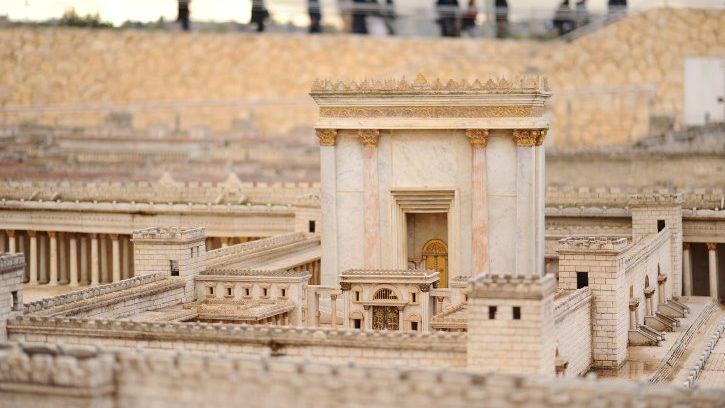
Chapters 40-42 contain the first part of Ezekiel’s temple vision. He is told to pay close attention so he can tell all to Israel. The temple described has some commonalities with Solomon’s temple, but much is different. While a temple will be rebuilt, this temple is never realized in the Bible. Ezekiel’s temple compound is 750 feet by 750 feet. It has three gates, courtyards, chambers, holy places and equipment. The Zadokite clan is set apart as the only Levites to “draw near” to God – to offer sacrifices on the altar. The temple is adorned with winged creatures and palm trees. There are holy chambers, places to store holy things.

The temple is at the center of God’s restoration of Israel, both physically and spiritually. It is a part of the sanctifying process, making Israel into the holy people of God. For Ezekiel and his audience, the temple represented God’s presence with the people. These words and vision bring hope and encouragement to the people living in exile. God longed to live amongst the people of God. God still longs to live amongst us today. May it be so.

Prayer: Lord God, your power and might extend over all things: over Gog and his allies, over today’s idols and temptations, over our selfish hearts. Ezekiel’s temple vision reflects your power and might. But it is still just a building. Just as your presence will fill this visionary temple, fill our hearts with your indwelling spirit, transforming our lives and our hearts. Amen.


Leave a comment

A Holy Sabbath

Reading: Isaiah 56-59

Isaiah 58:2 – “They seek me day after day… like a nation that acted righteously, that didn’t abandon their God.”

Today and tomorrow we read Third Isaiah. As is the case throughout all of Isaiah, the focus remains on justice and righteousness. In today’s readings these key faith practices center on keeping the Sabbath holy. This holy day, kept once a week, had the power to keep the Israelites connected to God in a way that would be reflected out into how they lived their lives the rest of the week. The Sabbath retains this power yet today.

Chapter 56 begins with an invitation to keep the Sabbath. The invite goes even to those “outsiders” – to the eunuchs and to the immigrants. These too will join others who keep the Sabbath holy, coming one day to God’s holy mountain. This open, honest, and welcoming invitation stands in stark contrast to the condemnation offered around Israel’s unholy Sabbath practices: “They seek me day after day… like a nation that acted righteously, that didn’t abandon their God.”

Isaiah turns next to a condemnation of the leaders. They have “monstrous appetites” and “every last one [is] greedy for profit.” These lead to the displeasing Sabbath fast described at the start of chapter 58. The leaders oppress their workers (probably making them work on the Sabbath) and they quarrel and brawl on the holy day. God asks, “Is this what you call a fast, a day acceptable to the Lord?” Umm… no.

This behavior alienates them from God. It obscures their vision. Because it is inwardly focused, it blinds them to the injustice and oppression that they are practicing. Chapter 59 details this as well as adding that God will intervene, one day choosing to redeem Israel.

In chapter 58:6-14 Isaiah lays out the Sabbath fast that pleases the Lord our God. It is a day to remove yokes and to stand against oppression. It is a day to care for the hungry, the homeless, the naked. To practice justice and righteousness – that is keeping the Sabbath holy. Then, the Lord says, “Your light will shine in the darkness” and then “you will take delight in the Lord.” May it be so for you and for me.

Prayer: Lord God, we see once again the choice to be made: justice and righteousness or injustice and oppression. You clearly call us to choose justice and righteousness. This begins with how we treat the Sabbath, a day to be set aside for you, not for self. It is a day to reflect your love and concern for all people. Lord, lead and guide us to be holy Sabbath-keepers. And may the evidence of this sacred practice flow out through our daily lives, shining light into darkness. Amen.


Leave a comment

What a Glorious Day

Reading: Isaiah 32-35

‭Isaiah 33:22 – “The LORD is our judge… our leader… our king — he will deliver us.”

Isaiah lifts up the image of a faithful king in chapter 32. This portrait is centered on justice and righteousness. The blind will see, the deaf will hear. When the “Spirit from on high” is poured out, the fruit of righteousness will be peace, calm, and security. Tucked in between these times will be a time of hardship. Isaiah warns the carefree because they will struggle greatly during this difficult time.

Chapter 33 goes back and forth. Assyria will be destroyed. God is our strength and salvation. Jerusalem cries out, the covenant is broken, no one cares for humanity. The Lord arises and stands tall, declaring, “Know my strength!” The devouring fire brings terror to the sinners. A righteous and truthful one will lead. In this hope-filled portion we read, “The LORD is our judge… our leader… our king — he will deliver us.”

Our last two chapters, 34 and 35, are likely from another time and author. Chapter 34 calls for vengeance against Edom. This nation helped Babylon sack Jerusalem in 587 BCE. Edom will experience “a year of payback for Zion’s cause.” Edom clearly falls on the wrong side of God’s “measuring line.” In chapter 35 we find a vision consistent with Second Isaiah. Here we read of the desert coming to bloom and of God’s glory and splendor. The weak and unsteady will have strength and support. The blind, deaf, lame, and mute will be made whole. The righteous will walk “The Holy Way” as they stream home to Zion, ransomed from exile. What a glorious day!

Prayer: Lord God, how we long for leadership marked by justice and righteousness, for a world filled with peace and security, with wholeness for all. We long for you to rise up, to lay low the wicked and the evildoers. We long to walk your holy highway, ransomed from our sin, drawing close to your glorious presence. May it be so, O Lord. Amen.


Leave a comment

With Longing

Reading: Isaiah 24-27

‭Isaiah 25:8 – “He will swallow up death forever. The LORD God will wipe tears from every face.”

Today’s reading contains themes not found elsewhere in Isaiah 1-39. These chapters are often called “Isaiah’s Apocalypse.” Most scholars believe this section was written at least a century after the rest of First Isaiah.

Chapter 24 prophesies a destruction that will be total and complete. All peoples and even the earth will be no more. On that day, “all joy has reached its dusk; happiness is exiled from the earth.” This brings to mind the final days of this present earth as described in Revelation. The kings of this earth will be gathered, shut in a prison to be punished. We’re just missing the word ‘forever’ here.

Chapters 25 and 26 mostly celebrates God’s final salvation. Isaiah exults God for the “wonderful things” that God has done. God will “swallow up” the veil that separated and will “swallow up death forever. The LORD God will wipe tears from every face.” These ‘end times’ themes and understandings appear here and in Daniel 12 – nowhere else in the Old Testament. The idea that “corpses will rise” and that “those who dwell in the dust” will one day shout for joy will not be accepted or even really developed until New Testament times.

These cosmic and end times themes continue in chapter 27. God defeats the cosmic forces of chaos. The image of the vineyard/garden returns. Jacob will “take root” and Israel will “bloom and sprout.” God will gather up the chosen people “one by one.” Those who were “lost” will come and “bow to the Lord at his holy mountain.” One day there will be a new heaven and earth. In 26:9 Isaiah writes, “My spirit within me watches for you.” With the same longing, may it be so for you and me as we await the coming of the Lord Jesus Christ.

Prayer: Lord God, we long for the day when you forever swallow up death. We await the moment that the trumpet blasts and you make all things new. Walk with us day by day as we seek to bring your kingdom more and more to this earth. Amen.


Leave a comment

On That Day…

Reading: Isaiah 8-11

‭Isaiah 11:10 – “On that day, the root of Jesse will stand as a signal to the peoples. The nations will seek him out, and his dwelling will be glorious.”

Photo credit: Nathan Dumlao

Chapter 8 begins with a prophecy about the downfall of Aram and Israel. It will come before Isaiah’s newborn son can speak. Assyria is on the rise. They will destroy Aram and Israel. They will sweep into Judah, getting all the way to Jerusalem. But they won’t conquer it. God tells Isaiah not to fear. Wait on the Lord. Yes, distress will come, but God is with us. The people will rejoice as God shatters the yoke, lifting their burden. And one day a great light will come. A child will be born. He will establish justice and righteousness forever. One day…

The Assyrians fall mightily upon Israel. This is meant to be a word of warning to Judah. To those who have deprived the needy of their rights and who have robbed the poor, God asks, “Where will you stash your wealth?” One day they too will become prisoners. But at present, it is Assyria who went too far. Because of the king’s pride and arrogance the word of warning became an assault on Judah. The Assyrians swept in, right up to Jerusalem, “the neck.” God will punish the Assyrians. God asks, “Will the ax glorify itself over the one who chops with it?” The hand guiding Assyria’s success will turn on it. The Assyrians army is destroyed with “terrible power.” They limp home, thoroughly defeated.

Chapter 11 brings more words of hope. It is similar to 9:2-7. While Isaiah and later readers hoped for a David-like king in their time, for centuries Christians have read these words as words that foretold Jesus. A shoot, a king, will come from Jesse’s line. The Spirit of God will be upon him. The Spirit will give him wisdom, strength, knowledge, and a fear of the Lord. He will be a champion for the poor and the suffering. What a contrast to the leaders described at the start of chapter 10! Peace and harmony will abound. The nations and the survivors will stream to this king on the holy mountain. “On that day, the root of Jesse will stand as a signal to the peoples. The nations will seek him out, and his dwelling will be glorious.” Thanks be to God.

Prayer: Lord God, thank you for continuing to shape and form us to be your people, to make us into who you created us to be. As you choose to use the powers and things of this world to refine and remake us, help us to see your hand of love guiding it all. Lead us to trust in your ways. Help us to faithfully walk the path illuminated by the light shining in the darkness. Amen.


Leave a comment

God Is Our Hope

Reading: Isaiah 1-4

‭Isaiah 3:8-9 – “Yes, Jerusalem has stumbled and Judah has fallen… like Sodom, they display their sins in public.”

Today we begin with the prophets. Isaiah kicks off almost six weeks with the five “major” prophets. The original Isaiah ministered in the southern kingdom of Judah during the reigns of Ahaz and Hezekiah. Chapters 1-39, known as First Isaiah, were written around 700 BCE. Second and Third Isaiah pick up around 545 BCE. Today, in chapters 1-4, we find both judgment and hope. This balance is typical of the whole book of Isaiah.

Chapter 1 begins by detailing Judah’s sin and disobedience. They have turned their backs against God. They have endured beatings yet remain unfaithful. There are frequent references to Sodom and Gomorrah, two cities utterly destroyed by God because of their great sin. God is also disgusted by their sacrifices – just going through the motions! In verses 16-17 Judah is invited to change her ways, to do good instead. To do so will bring blessing. To continue walking in disobedience will bring sword and fire.

Chapter 2 begins with a hopeful vision of their possible future. This picks up again in chapter 4. Zion will be lifted up high and war will be no more. Zion will be called holy. Instruction will flow from her and nations will stream to her.

In between this hope we find the sins of Judah. The land is “filled with idols.” Pride and arrogance is rampant, especially amongst the leaders. A day is coming, says Isaiah, when all will suffer as the poor and needy currently are. God asks, “How dare you crush my people and grind the faces of the poor?” Sadly, this behavior continues today. Yet hope also persists. God is still in control. There is still a plan. God is our hope.

Prayer: Lord God, the battle continues on: obedience or disobedience, good or evil? In our lives we so need you. The powers and temptations of this world remain great. Idols and the lures of wealth and power ever pull at us. God, strengthen us with your Spirit. Hold us in your love. Amen.