pastorjohnb

Thoughts and musings on faith and our mighty God!


Leave a comment

Present

Reading: 1st Thessalonians 5:16-24

Verses 16-18: “Rejoice always, pray without ceasing, give thanks in all circumstances.”

Light and dark

The nine verses that come to us today at the end of Paul’s first letter to the Thessalonians are jam-packed. Originally, of course, there were not verses in the letter. They were simply sentences that followed one after another. And these eight sentences have a lot in them! It was as if Paul had lots left to say but only had a little room left on the back side of his last piece of parchment.

In the first sentence, or in verses 16-18, Paul offers these words: “Rejoice always, pray without ceasing, give thanks in all circumstances.” Yes, this is God’s will for our lives. Each phrase could easily be a couple of paragraphs. And Paul, above all people, should know that life can be really hard. There are many times when joy is hard to find, when prayer feels like a non-option, when gratitude is just not happening. But Paul is not asking us to be joyful or whatever for the hardship… He is reminding us that we can be joyful, prayerful, and even grateful in the hardship… because God is with us in the hardship… We do not go through life on our own. God is always present.

Being present is the thought that carries on through the letter’s closing. To keep the Spirit’s fire, to hold to the scriptures, to hold everything up to God’s light, to do good and not evil – these are the ways that we remain present to and with the God who is ever present to us. Paul closes with the outcomes of a deeply personal and intimate relationship with God: we will be sanctified (made holy) and we will live righteous lives. Yes, God is faithful. May we be too!

Prayer: Lord God, thank you for the reminder today that you are always with us. In the good, in the bad – in all of it – you are with us. Immanuel, help us to stay connected, dependent, and committed to our relationship with you. There is no other way. Amen.


Leave a comment

Building Faith

Reading: Psalm 126:1-3

Verse 3: “Yes, the LORD has done great things for us, and we are overjoyed.”

Today the psalmist writes of a faith practice that we too must include in our faith practices. The psalmist looks back on a difficult time that God has rescued them from. The Israelites had been in exile in Babylon for a long time. Finally God heard their cries and rescued them. In today’s Psalm the writer recalls that when “the Lord brought back the captives,” suddenly their future was bright and filled with hope. The people dreamed dreams and they celebrated life back in Palestine. The Israelites were “filled with laughter” and there was joy upon their tongues.

Can you recall a time when God rescued you or when God restored you in some other way? Did you stop and laugh as God’s actions filled you with joy? It is so important to recognize and to remember those times when God has turned our sadness into joy, our hardship into blessing. These interactions and moments are important to celebrate in the here and now. And they are important to recall the next time we are in a struggle. They build up our faith and trust in God. They prepare us to turn first to God in moments or seasons of trial and hardship.

As the psalmist looks back on what God has done there is a recognition that other nations have noticed. There is a recognition of God’s power and might. Then our section for today closes with these words: “Yes, the LORD has done great things for us, and we are overjoyed.” May it be so for you and for me as well.

Prayer: Lord God, you are faithful and steadfast to us, the sheep of your pasture. You watch over us and guide us; you provide for us and you nourish us. And in times of trouble, you rescue us. Your love never fails. Thank you, most faithful and loving God. Amen.


Leave a comment

Giving Thanks

Reading: Psalm 100:1-3

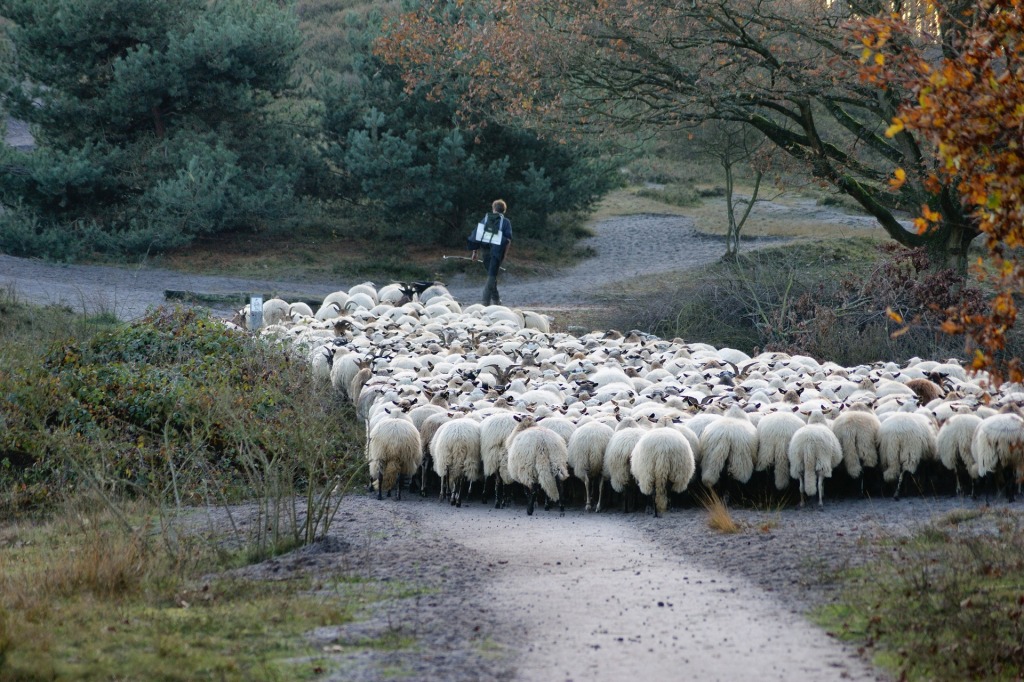
Verse 3b: “It is God who made us, and we are God’s; we are God’s people, the sheep of God’s pasture.”

Psalm 100 is subtitled “A Psalm. For Giving Thanks.” in my home Bible. It is a fitting passage for today and tomorrow, for collectively offering our thanks for God’s blessings and presence in our lives and in our world. The psalmist begins by encouraging us to “shout for joy” and to “worship the Lord with gladness.” This is an encouragement that we need often.

We need to be reminded because life often happens in ways that can derail our joy and that can dampen our gratitude. Those unexpected twists and unwanted turns can leave us anything but thankful. It is precisely in these times that we need the words of Psalm 100 – especially verse 3.

Verse 3 begins with a reminder and a call: “Know that the Lord is God.” In all and through all and over all, God is God. God does not cause our hardship or difficult situation or unwanted change – these are part of life – but God does desire to be with us in all of life. By making the intentional choice to walk with God, we make our journey lighter, our road less rocky, our valley less challenging… because we are not alone.

The verse continues with these words: “It is God who made us, and we are God’s; we are God’s people, the sheep of God’s pasture.” This verse speaks of the deep connection and foundational relationship that we have with God. We are God’s and God is ours. We are the sheep of God’s pasture. God is our good and loving shepherd. In all and through all and over all, God is with us and we are with God. Thanks be to God!

Prayer: Lord God, I rejoice in your love for us, your family. With joy and with thanksgiving I praise you for your presence in all of life. You chose us before our lives even began. You desire to walk with us every day. May we choose you always. Amen.


Leave a comment

Words of Teaching and Instruction

Reading: Psalm 78:1-4

Verses 2-3: “I will utter dark sayings from of old, things that we have heard and known, that our ancestors have told us.”

Telling a story, have you ever omitted parts or embellished parts to either gloss over something “bad” or to make a particular point? In telling stories it can be tempting to amend them to suit our purposes. We might even tell an altered version to this person or group of people if it best suits our agenda. There are, of course, inherent dangers in modifying our stories. These dangers magnify when we begin altering our communal history. Psalm 78 was written to be used in worship as a teaching tool. Today’s passage sets the stage for the rest of the Psalm. In the body of the Psalm, Asaph tells the whole story of God’s redemptive work. He includes the reasons for why God had to redeem again and again: the people were often unfaithful and disobedient to God’s leading and guiding.

It can be difficult or hard to “tell the whole truth and nothing but the truth.” As individuals, as churches, as denominations, as communities, as states and nations, we can shy away from the practice of honest truth-telling. Asaph writes, “I will utter dark sayings from of old, things that we have heard and known, that our ancestors have told us.” In the rest of the Psalm he does indeed tell all – the good, the bad, the beautiful, the ugly. Each of these aspects of our stories and of our histories has something to offer both to us and to future generations. We learn from our mistakes; we build upon our successes.

As we offer words of teaching and instruction to our children (and to one another), may we “tell the next generation” of the “deeds of the Lord” in honest and full detail, empowering them for the best future possible. In this way, they too will come to know “the powers and wonders” of God for themselves.

Prayer: Lord God, my past is scattered with bad decisions, failures, hurtful words and actions – both in my life and in the churches that I’ve been a part of. Some were my own doing, some were not. All of these have shaped and formed me into who I am in you. There are hard lessons and some painful moments. All were instructive; all led to growth and maturity. Guide me to use these experiences to mentor and to guide others, to shape a better future. Amen.


Leave a comment

Paying It Back

Reading: Matthew 22:15-22

Verse 20: “Whose image is this? And whose inscription?”

Today we return to the teaching about paying taxes. In our time together yesterday we considered how we ourselves bear and reflect the image of God. The question we ended with was: How do we give to God what is God’s? This question asks us to wrestle with how or what we give back to God, drawing from the time, talents, and resources that God has given to us. Our response to this question either deepens or lessens our relationship with God. But it also affects our relationships with one another. That is our focus today.

To hear and understand that we are created in and bear the image of God leads us to the realization that this is true for others too. It is true for our parents, for our spouses and significant others, for our children… It is also true for that difficult neighbor, for that busybody coworker, for that stranger on the street corner… Often it is harder to treat those such as these the same way we would treat our family or close friends.

Yet the reality is that these too bear the image of God. They too were woven together in the womb by God’s hands. So when we next encounter that neighbor or coworker or stranger or… we will once again have a choice. We can treat them as the world does – ignoring, fighting back, getting even. Or we can treat them as God treats us. We can take the blessings of love, kindness, humility… and pay them back to God by paying them forward to that neighbor, coworker, stranger… May it be so.

Prayer: Lord God, when I encounter the other, may I first see you in them. Through that lens, help me to be generous and welcoming, compassionate and caring. And, then Lord, help me to see me – the old me. Through this lens, help me to then offer the love and grace poured out so abundantly in my life. Amen.


Leave a comment

Stepping Forward

Reading: Exodus 14:19-31

Verse 22: “The Israelites went through the sea on dry ground, with a wall of water on their right and on their left.”

In our time with this passage yesterday we focused on God’s role in the story. Today we shift to the Israelites. This focus allows us to enter the story too.

The Israelites have been slaves in Egypt for 400 years. Many generations have come and gone since Joseph brought his family there to survive a famine. Slavery in Egypt is all they now know. It is a hard life, but it is home, and there is routine. It is the only home and life that any have ever known. Now they find themselves out in the desert, trapped. Have you ever felt like you were in a similar situation, trapped?

Their leader, Moses, stretches out his hand and parts the sea. The water walls up, a path in the middle forms. In our difficult situations, God can open a door or show us a path to walk. To move forward, to find peace, to begin anew – it requires a step of faith. Those walls of water – standing tall against every fiber of logic – those are what the Israelites must walk through. Imagine what that would be like!

When we are called to move forward, it often feels like this. Like it was with the Israelites, these difficult steps are taking us to someplace new, to a place that is unknown and unfamiliar. And like the Israelites, may we step forward in faith and trust, knowing that the Lord our God goes with us, leading us forward in love.

Prayer: Lord God, thank you for always being there, for joining me where I am at. Thank you for coming alongside me, helping and guiding me to move forward. Thank you for the strength and courage. Thank you for the faith and trust. Continue to be our God of provision and of love. Amen.


Leave a comment

Wait with Hope

Reading: Psalm 130

Verse 5: “I wait for the Lord, my whole being waits, and in his word I put my hope.”

Photo credit: Nathan Dumlao

The psalmist cries out to God. From the depths of pain the writer asks God to be attentive. The psalmist longs for the mercy and forgiveness that he or she knows is always available from the Lord. In these opening verses we get a sense of urgency, almost of desperation. In this way, the psalmist would fit right in with our modern world. We get a little testy if we have to wait too long in the drive-through line. We are ready to zip off a terse email if our package isn’t delivered in the first hour or two of the scheduled delivery day. And, no, it doesn’t matter if there is a blizzard happening.

When we find ourselves in the place the psalmist is in – in a place of deep regret or in a place of pain or sorrow – then the waiting is actually hard. When we find ourselves in a place that is truly a place of angst or profound distress, we do want God to respond quickly. In these difficult places, it is so hard to wait. So may we read these words with resolve: “I wait for the Lord, my whole being waits, and in his word I put my hope.” For reinforcement, the psalmist repeats the next line. When we are struggling to wait on the Lord, when we feel like we might not make it to another day, we too stand watch, waiting for the sun to appear, signaling the start of a new day.

So what part of God’s word is the source of our hope? In the closing verses we are reminded. The Lord offers us “unfailing love.” This is a no-matter-what love. It is always ours. The second promise is like the first: we are given “full redemption” through the cross of Jesus Christ. We can be made new again each time we turn to Christ. Yes, waiting is hard. But we know the rest of the story. The Lord triumphs over all. So as we wait, may we do so in hope and in love, covered by the promise of redemption. May it be so for us all.

Prayer: Lord God, thank you for your deep and abiding love for us, a love beyond measure. Thank you for your promise of love with no limits. It is a love that always seeks, always washes us clean, always redeems. What love you have for us. In and through that love, grant us the grace to wait upon you, our Lord and Savior. Amen.


Leave a comment

Living Abundantly

Reading: Joel 2:23-27

Verse 27: “Then you will know that I am in Israel, that I am the Lord your God, and that there is no other.”

Photo credit: Zac Harris

When was the last time that you really messed up? When was the last time that a poor decision or a sinful action created separation or distance between you and God or another that you love? If you are like me, you don’t have to think very far back to come up with a time that you were selfish or spiteful or sinful in some other way. Thinking back reminds us: we don’t want to go there again. That is verse 25 in today’s passage. Amidst the good news of how God will restore Israel is a reminder of why that’s necessary. “The years the locusts have eaten” reminds Israel of the time spent in exile, separated from God. We too can have seasons or even years when life is difficult because we have chosen to live outside of relationship with God.

Most of the verses in today’s reading – before and after verse 25 – speak of the abundant life that God offers. In verses 23-24 Joel speaks of the abundant rains that God will bless the people and the land with – rains that will yield grain and wine and oil. This will lead the people to praise God, to rejoice in the wonders that God has worked among them. Israel can be glad and can rejoice when life is good, when they are blessed with abundant provision. Just as we at times mess up and experience hardship in life and in our relationship with God and/or with others we love, so too have we experienced living abundantly within God’s love and provision. We too have lived verse 27: “Then you will know that I am in Israel, that I am the Lord your God, and that there is no other.” Thanks be to God.

Prayer: Lord God, my walk is not always hand in hand with you. Sometimes I let go and head off on my own path. This often leads to a time in the wilderness, filled with locusts and worse. When I begin to venture away, call me back quickly, restore me to abundant life. Amen.


Leave a comment

Walking with Us

Reading: 1 Kings 19:1-6

Verse 4: “It is enough; now, O Lord, take away my life.”

There are times in our lives when we come to a crossroads. The path that we have been walking feels like it has become more difficult than we can bear. We come to a point where we question if we can go on. In today’s passage, Elijah came to such a point.

He is coming off a pinnacle moment in his ministry. In miraculous fashion Elijah has just defeated the prophets of Baal – a foreign god. The people realized that God as “indeed God.” In response, they put all of the prophets of Baal to the sword. Next Elijah prays and a really long drought is ended. All is well!

But there is one problem. Jezebel, the king’s wife, is a follower of Baal. She sends word to Elijah: you’re next. Victory turns to fear and Elijah flees. This is a crossroads moment for Elijah. Fear takes over and he flees into the wilderness. After a day’s journey, he questions why he is running. Elijah says to God, “It is enough; now, O Lord, take away my life.” He doesn’t want to fight anymore. He just wants it to be over.

Perhaps you’ve had similar moments. A few years ago I had one. A small segment of the church basically said they wanted a new pastor. My first thought was much like Elijah’s – “Fine, I’m out of here.’

In our passage Elijah is despondent. He lies down, hoping it will soon be over. An angel awakens him and gives him sustenance for the journey. God is not done with Elijah yet. In the days and weeks after that difficult and hurtful meeting, God sent me sustenance. Many people offered words of affirmation, support, encouragement. God wasn’t done with me either.

God has a way of coming alongside us, of walking with us. In the midst of trial or hardship God has our back. God calls us to walk faithfully, trusting in where God is leading us. May this be so for you.

Prayer: Lord God, you never give up on us. Your Spirit is a steady and sure guide, leading us to walk in faith no matter what may come. Thank you for this love that never fails, for this love that builds trust. Amen.


Leave a comment

Ever Trust

Reading: Psalm 31:9-16

Verses 14-16: “But I trust in you, O Lord… My times are in your hands… save me in your unfailing love.”

In Psalm 31 David comes to God in a time of great distress, sorrow, and grief. It is a place most of us have been, so we can relate to David’s emotions. Some of us are there now, so we can feel David’s emotions. At times life causes our strength to fail and our bodies to grow weak. Our emotions exert a toll on our bodies. And maybe, like David, you too experienced or are experiencing a loss of friends during your time of suffering.

We walk through experiences of distress, sorrow, grief, loss, change over and over as we live our lives. Doing so we grow and we are equipped by God to walk with others as they experience these things. Just as we all remember this person or that person who was there for us, offering compassion or presence or support during our trial or suffering, we too can be that person for others.

Our passage today concludes with these words from verses 14-16: “But I trust in you, O Lord… My times are in your hands… save me in your unfailing love.” David first trusts in God. God is good and kind and loving. Trust in God. He then acknowledges that his time is in God’s hands. No one else is in control. No one. Acknowledging this truth releases it all to God. After asking God’s face to shine upon his (to be present to him), David asks for God to act in his unfailing love. This circles back around to trusting God and to acknowledging that God alone is in control. As we experience difficult times and as we choose to walk with others in difficult times, may we ever trust in our sovereign, all-powerful, loving God.

Prayer: Lord God, in your great love you guide us and you walk with us. All you have for us is for and by your purposes and plans. Help me to ever trust in your love, today and every day. Amen.