pastorjohnb

Thoughts and musings on faith and our mighty God!


Leave a comment

When We Choose

Reading: Obadiah

Verse 15 – “As you have done, so it will be done to you.”

Obadiah condemns Edom for its attitude and for its behavior. The nation of Edom is proud. It rejoices when its ‘neighbor’ is defeated. They choose to then join in the plundering and violence. Edom kills those who escaped Babylon’s swords and they sell the refugees as slaves. There is much for God to condemn and judge concerning Edom and their choices.

There is a long history between Edom and Judah/Israel. These peoples are descended from Jacob and Esau. In real life there was great tension between these twin brothers. That tension persisted down through time. Perhaps today we’d say there is ‘bad blood’ between these two nations. Today, when one side or the other suffers or falls or experiences some defeat, there is often rejoicing on the other side. When long held animosity and tension lie just beneath the surface, that can flow out and lead to things like Edom did to Judah.

This same reality, this same scenario also scales down. We see it between the police and inner city residents. We see it between gangs who compete to thrive upon people’s weaknesses. We see it between neighbors and family members who refuse to even speak to one another. We see the tension there, just beneath the surface, always there. Then, at times, it rises up, it erupts, it shows its ugliness. Such was the case with Edom when Judah fell to the mighty Babylonians.

God declares to Edom, “As you have done, so it will be done to you.” About 750 years later a relative of God’s would share this same sentiment. He encouraged those who saw each other as less than to choose love over hate, empathy over apathy, compassion over condemnation, welcome instead of exclusion. Funny thing is this: when we choose love, empathy, compassion, welcome, grace, forgiveness… it is also said: “As you have done, so it will be done to you.” May it be so.

Prayer: Lord God, it can be hard to choose not to celebrate when a rival loses, to not rejoice when an ‘enemy’ falls. It can even be tempting to join in, to pile on, to release those old, bad feelings. These are the ways of the world. This is not your way. As your children and as your examples in this world, use us to choose the better way, to speak and act and think in ways that reveal your heart for all people. Amen.


Leave a comment

God’s Guiding Presence

Readings: Genesis 31, Genesis 32, Genesis 33, Genesis 34, Genesis 35, Genesis 36

Genesis 32:28 – “Your name won’t be Jacob any longer, but Israel, because you struggled with God and with men and won.”

Today’s readings begin with Jacob leaving Haran. God directs this move and watches over it. As Laban catches up to the escaping Jacob, God intervenes on his behalf. This leads to a “symmetrical covenant.” Laban and Jacob part ways peacefully and with God’s blessing. As his journey continues, Jacob prepares to and is prepared to meet Esau, the brother he stole from and deceived.

Jacob first sends messengers to Esau, who comes out to meet Jacob with 400 men. This terrifies Jacob. He splits all that he has into two camps. Then he prays a “reminder” prayer to God. He reminds both God and himself of the covenant promises made to Abraham and to Isaac and to himself. He then sends a very large gift of livestock to Esau, seeking to pacify him. That night Jacob wrestles with God. He is renamed “Israel” and he receives God’s blessing.

In the morning Jacob arranged his family strategically – servants then Leah then Rachel, each with their children. But then he goes in front to meet Esau. He bows low 7 times as Esau is approaching. Esau runs to greet him. It is an emotional and joyful reunion. Jacob sees the face of God in his brother’s grace.

In chapter 34 a terrible thing happens to Dinah – she is raped and humiliated by a local prince. Her brothers exact revenge, killing every male and looting everything in the town. They use deception to set it all up. They are Jacob’s sons. But now Jacob fears revenge too, so the family moves on. God protects them as they go. In the process God reiterates the name change as well as the covenant. Sadly, Rachel dies giving birth to Benjamin. Isaac dies too and is buried with his ancestors by Jacob and Esau together. Our reading closes with Esau’s genealogy.

Reflecting on today’s six chapters I am struck by God’s presence guiding Jacob’s life. Many things happen that remind me that God is with us no matter what – when we are faithful, when we are less than faithful. God is steadfast and true.

Prayer: Lord God, thank you for your hand ever guiding Jacob. Thank you for your hand that desires to guide us. As you work in our lives, shape and form us as you did Jacob – more and more into one who knew and loved you. Amen.


1 Comment

A Twisted Tale!

Readings: Genesis 25:19-34, Genesis 26, Genesis 27, Genesis 28:1-9

Genesis 27:27: “So he came close and kissed him. When Isaac smelled the scent of his clothes, he blessed him.”

Continuing with the rest of chapter 25 today, Jacob and Esau are about to be born. The violent fighting in the womb leads Rebekah to seek the Lord. God reveals to her two truths: the twins will be two nations and the older will serve the younger. This revelation drives the story going forward. Esau loves the outdoors, Jacob the indoors. Esau is loved by Isaac, Jacob by Rebekah. As the chapter ends, the heel-grabber takes advantage of Esau’s hunger, stealing the birthright for some stew. Esau is short-sighted. Jacob is calculating.

In chapter 26 a famine forces a move. Once in Gerar, Isaac lies about Rebekah: “She’s my sister.” Same lie, one generation later. King Abimelech discovers the rouse and prevents any curses. God blessed Isaac and the Philistines get very jealous, forcing Isaac to move away. There’s some fighting over wells but finally Isaac finds space and good water – signs of God’s blessing. Abimelech realizes this and comes and makes a treaty with Isaac.

Isaac has grown old as chapter 27 begins. As death nears, it is time to bless Esau, the oldest and his favorite. Going against cultural norms, Isaac invites only Esau to the blessing. But Rebekah overhears and schemes to steal the blessing for Jacob. Or is she just trying to make sure God’s revelation comes true…? The planning and execution are thorough – food, animal skins, clothing. It all works only after Isaac smells “Esau.” In verse 27 we read, “So he came close and kissed him. When Isaac smelled the scent of his clothes, he blessed him.” Afterwards, both Esau and Isaac are furious. Esau plots to murder Jacob. In response, Rebekah tricks Isaac into sending Jacob away to find a wife from their kin. In spite, Esau married yet another Canaanite woman, this time it is Ishmael’s daughter.

What a twisted tale we weave! Lies, deception, theft, anger, revenge. Or… is it all just God’s plan working itself out?… Before we dismiss these evil actions, let us realize that we too can go down these roads (or make similar evil choices.) As was the case long ago, in the midst of poor choices and evil actions God can and will work to accomplish God’s plans. For this unending grace and love that we too experience, we say thanks be to God!

Prayer: Lord God, as it was with our ancestors, so it is with us. These evil traits displayed long ago are certainly alive and well in our world and even in our lives. Lord, first help us to see this in ourselves. Then bend us towards the good. Give us the patience to trust into your plans. Grant us the courage to be grace and love when others are unkind to or are deceitful with us. Lead us in the way that we should go. Amen.


Leave a comment

The Clear Leading of God

Reading: Genesis 25:29-34

Verse 30: “Quick, let me have some of that red stew! I’m famished!”

As we continue the story of Esau and Jacob, Esau comes home from an apparently very long hunting trip. While he was away, Jacob has been busy too, working on this wonderful red lentil stew. At a place close to desperation Esau says, “Quick, let me have some of that red stew! I’m famished!” Maybe Jacob has been waiting for this chance, perhaps scheming for it ever since coming out of the womb. At this moment Jacob asks the famished Esau to trade his birthright for some stew. A desperate Esau agrees and satisfies his deep hunger.

We often read this passage and think that Jacob tricks his older brother or that he is deceitful in his scheming. But what if God was the one at work? What if the Spirit prompted Jacob to ask and Esau to answer as they did? What if this is another example of God’s penchant for raising the lowly over the powerful?

A birthright is a generations old tradition and practice that often insured the continuation of a family line by giving the oldest – the one who was usually the most experienced and most mature – the control of the family property, heritage, and legacy. It had operated this way for centuries and it has continued to operate through this day. Yet in this instance God has alternative plans. God’s ways are not always our ways. God’s plans are usually far greater than we could have ever imagined or taken them. So, in those moments, may we too lean into the clear leading of God, even when it is outside of what we think the norm.

Prayer: Lord God, open my heart to where and how you want to lead. Humble me so that I can easily get out of the way of whatever you are up to. Grant me the courage to step in to play a role as the Spirit leads. Amen.


Leave a comment

Ever at Work

Reading: Genesis 25:19-28

Verse 23: “Two nations are in your womb… the older will serve the younger.”

Similar to the story of Abraham and Sarah, Isaac and Rebekah find themselves without children. Rebekah is barren and unable to bring any children into their lives. Sitting on his dad’s knee Isaac must have surely heard the promise of God making Abraham and Sarah into a great nation. And yet no children for Isaac and Rebekah. So Isaac prays to the Lord and God answers. Rebekah becomes pregnant, bearing twins. Almost from the get-go, these twins “jostled each other,” even in the womb. Rebekah asks why. God responds, “Two nations are in your womb… the older will serve the younger.” This also parallels the Ishmael-Isaac story found in Genesis 21.

God is at work in this situation too. Esau, the older, is born hairy and red, a “man of the open country.” Esau is tough and rugged, a skilled hunter. Isaac, the father, favors Esau. Jacob comes out second, already grasping at Esau’s firstborn status. Jacob is an indoorsy kind of person. Rebekah, the mother, takes a liking to him.

The rivalry and favoritism will play out tomorrow in the readings in the weeks to come. Both are evidence of God’s guiding hand, even at work in spite of human decisions and actions. Through the twists and turns and in the hard-to-believe moments, God remains at work, orchestrating, redirecting, leading and guiding, even wrestling. This love of God remains at work, in the world and in our lives. Thanks be to God.

Prayer: Lord God, you hear our cries and you answer our prayers. You lead and guide, you direct and redirect when necessary. Thank you for a love that never gives up on us, even when we don’t walk according to your plan. Thank you for that grace. Amen.


Leave a comment

Wrestling with God

Reading: Genesis 32: 22-31

Verse 24: “So Jacob was left all alone, and a man wrestled with him till daybreak”.

As today’s passage begins Jacob is almost back home. He fled twenty years ago after stealing the birthright from his twin brother Esau. In the twenty years away Jacob lived in his ancestral homeland. Now he returns to Canaan with two wives and eleven sons plus many servants and large herds of livestock. Jacob is a successful man. Yet he fears the reunion with Esau. Earlier in chapter 32 he learns that Esau is coming to meet him with 400 men. Ever the schemer, Jacob devises a plan. He will give Esau a large gift of three herds, each with the message, “your servant Jacob is coming”. Jacob is seeking to “pacify” his brother Esau before actually seeing him face to face.

On the eve of the meeting Jacob sends all he has on across the stream and he remains alone on the far side. Part of Jacob is still trying to wheel and deal his way through life. But just part of him. A part also knows God. Earlier in chapter 32 Jacob also turns to God in prayer. He thanks God for blessings so far and he asks God to save him from Esau. Jacob invites God into his situation. Sometimes that is the best step we can take too. Whether our situation is something we created or if it is part of life, we too are best served by inviting God into our situation. Often the invitation is accompanied by a self-realization that our hand played a role in getting us to the point we are at. This was the case for Jacob. Like it usually is with us, this was a crossroads, a turning point, for Jacob. God accepts the invitation.

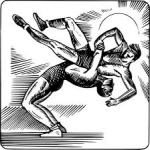
God shows up and wrestles with Jacob all night long. The length and physicality of the battle are symbolic of the change working itself out in Jacob. They wrestle all night long. At daybreak the man representing God asks Jacob to let him go. But Jacob will not simply let go. He asks first for a blessing. Jacob has come to the point of surrender to God. His life and faith will be different going forward. Each time that we wrestle with God, may it be the same for each of us.

Prayer: God of power and might, you are amazing – omnipotent and omnipresent. And yet I, at times, dare to walk against your will, against your ways. Grab hold of me too and wrestle with my heart and soul. Lead me to a quick surrender and a swift return to following you closely. May it always be so. Amen.


Leave a comment

A Birthright

Reading: Genesis 25: 19-34

Verse 31: “Jacob replied, ‘First sell me your birthright'”.

Today’s passage centers around twins – Esau and Jacob. At birth only seconds separate the moment they come out of the womb. Esau emerges first, with Jacob immediately following him, grasping his brother’s heel. The image of brothers wrestling as they enter the world is an extension of what they did in the womb and is a foreshadowing of their future relationship. Esau grows up to become a man of nature, of the outdoors, a hunter, a doer. Jacob grows up as a home body, a man of the inside, a cook, a thinker. Because they are so different they never really know or understand one another.

Because Esau entered the world first, he gains the birthright. He will be entitled to a larger share of Abraham’s land, animals, servants, slaves, and all other forms of wealth. He gains the power to one day be the primary decision maker. But Esau is a man unto himself. He hunts and spends most of his time alone. As he comes in famished after a long hunt, he desires food. Now. Jacob has food to offer his older brother, but at a price. He says to Esau, “First sell me your birthright'”. Esau quickly complies. The doer just wants to eat. He does so and leaves quickly. Jacob the thinker, the schemer, has probably thought this scenario through a thousand different ways. He is eager to take advantage of Esau.

This story of birthrights may feel a bit foreign in our modern era. Being the firstborn can carry some advantages, but they are nothing like they were in the ancient world. By Jesus’ day, for example, we know that the eldest son would receive a double portion. That would now be 2/3 for Jacob and 1/3 for Esau. Gaining the birthright was a huge advantage in life.

As people of faith we see our most important birthright as “child of God”. Through faith in Jesus Christ we are brought into the family as brothers and sisters, as coheirs with Christ. The reward of this birthright far outweighs any earthly birthright we may receive. But this birthright also carries a weight. As fellow brothers and sisters in and with Christ, we see all people as equal inheritors of God’s love. As such, our role is to be equal sharers of that love. Christ came for one and for all. He died for one and for all. May we see and treat one another – all one anothers – as equals, as dearly beloved children of God.

Prayer: Lord God, as I reflect and write this morning my mind returns to a song from Sunday. We sung that we are “no longer slaves” but are “a child of God”. As I celebrate that today, may I share it with others as well. Amen.