pastorjohnb

Thoughts and musings on faith and our mighty God!


Leave a comment

When Will They Learn?

Readings: Numbers 11, Numbers 12, Numbers 13, Numbers 14

Numbers 14:8 – “If the LORD is pleased with us, he’ll bring us into this land and give it to us.”

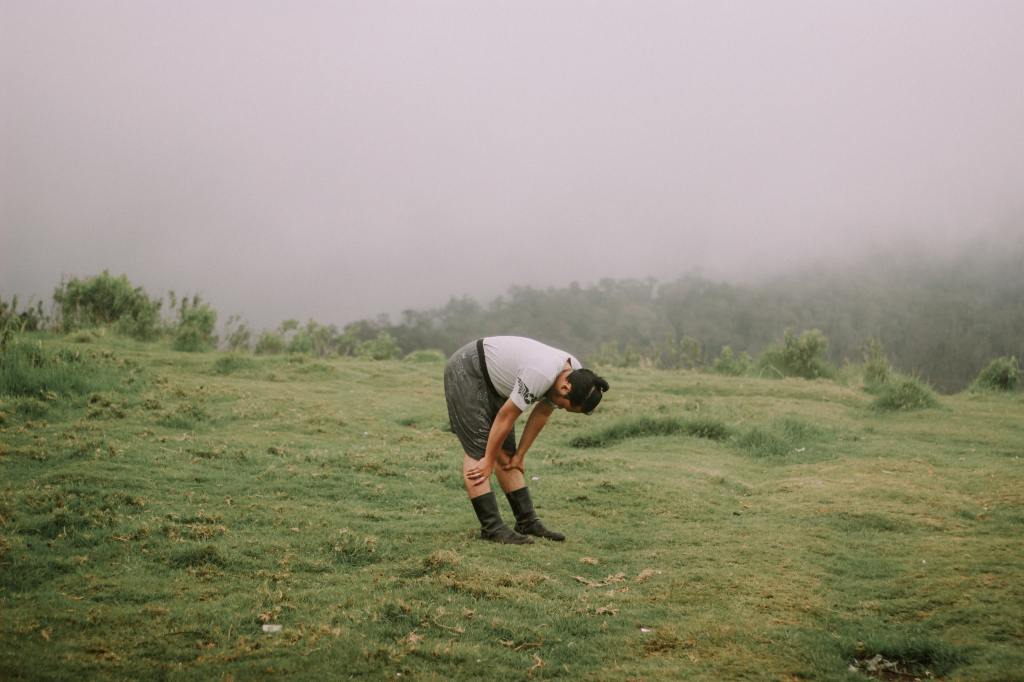
Photo credit: Anne Nygard

Chapters 11-14 are a great summary of the Israelites time in the wilderness. It has it all: complaint and grumbling, anger and punishment, faith and doubt, trust and fear, intercession and forgiveness, victory and defeat.

Our reading begins with a little grumbling. God’s fire burns against this unnamed complaint, burning the edges of camp – a sign of warning. Some “riffraff” ignore the warning. They allow their craving for meat to lead to grumbling and a longing for those “better days” in Egypt. Moses is frustrated and overwhelmed. God responds by giving him leaders to help bear the weight of leadership. And God brings waves and waves of quail. God will be so abundant that “it will come out of your nostrils and nauseate you.” God’s anger then burns against the riffraff. They are buried there in the desert.

The complaining turns personal as Aaron and Miriam question Moses’ leadership. They are jealous. They claim a connection to God that only Moses has. Miriam is struck with a skin disease. Aaron begs for Moses to intercede. Miriam must bear the shame of their sin for seven days. After her isolation period she is healed and returns to camp.

Chapters 13 and 14 cover the exploration of the Promised Land and the people’s lack of faith and trust. The spies return with huge grapes and stories of huge people and fortified cities. Caleb tries to rally the people. Rumors ensue and soon the people are discouraged. The people once again long for Egypt – or at least to die in the desert instead of by the sword. Joshua then speaks, trying to rally their faith. He says, “If the LORD is pleased with us, he’ll bring us into this land and give it to us.” That is a really big “if.” The people want to stone Joshua and Caleb.

God’s anger burns hot as God decides to start over with just Moses. Moses intercedes again and God’s anger relents. But there will be a consequence: those 20+ will indeed die in the desert. They will wander for 40 years – one year for each day of exploration. Bitter mourning follows this news. And yet a group decides to enter the Promised Land anyway. Moses warns them. They are struck down by the people of Canaan.

Prayer: Lord God, how clear are the results of faith versus fear, of obedience versus disobedience. I start to think, when will they learn?! And then I realize that we’re still learning, that I’m still learning. Thank you, Lord, for your unending love and for your enduring faithfulness. You give mercy and grace that we and I don’t deserve. Yet it flows generously and abundantly. Thank you, God. Amen.


Leave a comment

Necessary Steps to Take Steps

Readings: Numbers 1, Numbers 2, Numbers 3, Numbers 4

Numbers 1:2-3 and 46 – “Take a census… of every male 20 years old and above… All those enlisted were 603,550.”

Today is day 34 of our Bible Year reading project. Today we begin Numbers, the fourth book of the Bible. Leaving Mount Sinai in chapter 10, their journey will continue. As God leads, guides, and provides, Israel is shaped more and more into a kingdom of priests. At times they will step forward as a faithful nation. Much of the time they will allow fear to lead to disobedience. The generation that walked out of Egypt will pass and the next generation enters the Promised Land under Joshua’s leadership. Along the way God walks with this holy nation.

Numbers begins with a census. All males 20+ are counted. The men eligible for military service totals 603,550. The Levites are not included in this census. They are assigned to the tent of meeting. God orders the camp – three tribes will camp on each side of the tent of meeting. Then the Levites are counted and assigned places to camp. They form a buffer zone around the tent of meeting. There are 22,000 Levite males age one month and older. A tally of the oldest males is made for all the Israelites. This equals 22,273. The extra 273 are redeemed to their families by paying 5 shekels each.

Lastly, duties are assigned to the 3 Levite clans. The Kohathites are responsible for carrying the Holy items – the chest, table, lamp stand, altar… The Gershonites are responsible for carrying the coverings and the Merarites are responsible for the frames, poles, bars, bases… Only Aaron and his sons can touch the holy items. These are packed and covered in cloth and then in fine leather. In all, there are 8,580 Levite males age 30-50 responsible for taking down, setting up, and transporting the tent of meeting and all of its equipment.

These laws and counts and organization are necessary steps for the holy nation to step forward towards the Promised Land. Again today we are reminded that God is a God of order and detail. There is a plan. And, always, everything is done “as the Lord commanded Moses.” Obedience is necessary too. Likewise, may we too do all that the Lord commands us to do.

Prayer: Lord God, what efforts are made to organize this holy nation of Israel. These are practical things necessary for your people to move forward. Lead and guide us today, Lord, so that we too can move into the world to take the good news of Jesus Christ to all people. Amen.


Leave a comment

Relationship

Readings: Exodus 19, Exodus 20, Exodus 21

Exodus 20:1 – “I am the Lord your God.”

Photo credit: Robert Linder

As the Israelites travel on in the wilderness they arrive at Mount Sinai. Moses goes up the mountain and God speaks to him. Through Moses, God invites the people into relationship – obey me and stay true to the covenant. To accept means that Israel will become “my most precious possession… a kingdom of priests, a holy nation.” The people accept the invitation, paving the way for the giving of the Law. In order to be ready to receive God’s law, the people prepare themselves, becoming ritually clean.

God descends on the mountain, filling the people with fear. They are warned to stay off of the mountain while God is present. Then Aaron joins Moses as they go up the mountain. In chapter 20 God begins to give Moses the Law. It begins with the Ten Commandments. These well-known verses begin with this foundational statement: “I am the Lord your God.” The “I am” echoes who and what God is. This was God’s name that Moses brought with him when he first went to Egypt.

The first four commandments are about us living in right relationship with God – no other gods or idols, no using God’s name carelessly, honor the Sabbath to covenant with God. The last six deal with our relationship with one another. They cover how to treat each other. An interesting side note – the last one, the one dealing with coveting, is the only one against inward thoughts. One can look at the last as a summary too. Coveting leads to the actions covered in commandments five through nine.

Today’s readings close with instructions that apply these relationship rules to some specific situations: slavery and animals. While many of these do not apply to us anymore, there is value in understanding their spirit. John Wesley’s simple rules “do no harm” and “do good” convey this same spirit. They are about treating and loving each other as God loves and treats us. May this be the spirit that we live by.

Prayer: Lord God, thank you for taking the time to define, to explain, to invite us into faithful living with you, our covenant God. Fill us with your Spirit and empower us to live as your witness to love, grace, and mercy. Amen.


Leave a comment

Obedience and Faith

Readings: Exodus 1, Exodus 2, Exodus 3, and Exodus 4

Genesis 2:24-25 – “God heard their cry… God remembered his covenant… God looked at the Israelites, and God understood.”

Today we begin the story of the Exodus! It is the story of God’s deliverance from oppression and it is the story of the formation of God’s people. The story begins with the fulfillment of part of the covenant – Abraham’s descendants become numerous. Seventy quickly grows to be thousands upon thousands. Pharaoh fears them then enslaves the Hebrews. Growth continues. Faith is demonstrated by Shiphrah and Puah, thwarting plan A. Plan B is to drown all Hebrew baby boys in the Nile River. Moses is born and goes into the Nile – in a tarred basket. Providence has him rescued by Pharaoh’s daughter. He grows up largely as an Egyptian.

Turning to adulthood, Moses defends a slave, killing an Egyptian. Moses then flees to Midian where his rescue of some shepherdesses connects him to Jethro and family. Moses marries, settles down. The Israelites cry out. At the end of chapter 2 we read, “God heard their cry… God remembered his covenant… God looked at the Israelites, and God understood.”

Out tending the flock on Mount Horeb/Sinai, Moses is drawn to a burning bush. It is holy ground – God is present. God asks Moses to rescue the Hebrews. Moses has lots of excuses. Sound familiar?! The excuses: Who am I? Who are you? How will they know you sent me? But I can’t talk well! Can’t you just send someone else?! Only the last one angers God. Yet God relents and sends a long Aaron to help. Pharaoh’s stubbornness is foreshadowed, as is the final plague.

Obediently, Moses goes. Yet obedience must be complete. On the way, God appears and tries to kill “him.” Is Moses or his son Gershom? Either way this is about circumcision – the symbolic act that identities the Israelites as God’s people. Zipporah reads the scene correctly and she acts quickly. The chapter closes with Moses and Aaron’s initial meeting with the Hebrew elders. They believe and then they worship the Lord their God.

Prayer: Lord God, oh how we are like Moses! Raised in two worlds – yours and this place we call home. We too can be confused about who and whose we are. And when you come to us, we can make excuses with the best of them. Yet, in love you lead and guide us. You desire relationship. You are not a tyrant. You invite us to be co-creators with you, loving and caring for your intended world. Thank you for the invitation. May we respond with both obedience and faith. Amen.


Leave a comment

Abiding Faith

Readings: Genesis 46, Genesis 47, Genesis 48, Genesis 49, Genesis 50

Genesis 50:24 – “God will certainly take care of you and bring you out of this land to the land he promised to Abraham, to Isaac, and to Jacob.”

Photo credit: Niko Photos

Today we conclude the book of Genesis. In these 15 days we’ve covered the first half of the early story of God’s people. As chapter 46 begins Israel and his entire household move to Egypt, settling in Goshen, “the land’s best location.” There is a joyous reunion with Joseph and a sincere and respectful welcome from Pharaoh. This reflects the place of honor that Joseph has risen to in Egypt.

The famine worsens. The people have given all of their silver for grain. The next year they give their livestock and in the next year they give their land. All now belongs to Pharaoh. Joseph gives the people seed to plant the land. 1/5 of the crops will go to Pharaoh. The people will keep and live off the remaining 4/5.

Chapter 48 begins with Israel blessing Joseph’s sons, Ephraim and Manasseh. He makes them equal to all of his other sons – Reuben, Simeon, Levi… Israel also blessed Ephraim over Manasseh. Ephraim will be greater. Joseph is also blessed. Israel gives him an extra portion of the promised land. Then, in the next chapter, the “blessings” continue. Judah, the fourth son, is elevated to the place of firstborn son. Reuben, Simeon, and Levi’s misdeeds have disqualified them. Judah will be the leader and the line that produces kings. The chapter closes with Israel expressing his wish to be buried with his ancestors.

The final chapter in Genesis begins with the grand burial of Israel in the cave that Abraham had bought from the Hittites. His death triggers a fear in Joseph’s brothers. So they concoct a lie, trying to protect themselves. Joseph assures them of his love and care. But even moreso, he reminds them of God’s hand guiding it all. Joseph also reminds them of the covenant promise made “to Abraham, to Isaac, and to Jacob.” Joseph expresses his wish to be buried in Canaan, in the Promised Land, before he dies, closing out the book of Genesis . What great faith Joseph expressed in God. May our lives reflect this abiding Faith too.

Prayer: Lord God, this part of the story ends yet points forward to the covenant promises. Throughout we see a deep faith in your plan. That plan and pointing yields the next stages in the Israelites’ journey. May our deep faith in you lead us on our continuing journey of faith as well. Amen.


Leave a comment

God’s Guiding Presence

Readings: Genesis 31, Genesis 32, Genesis 33, Genesis 34, Genesis 35, Genesis 36

Genesis 32:28 – “Your name won’t be Jacob any longer, but Israel, because you struggled with God and with men and won.”

Today’s readings begin with Jacob leaving Haran. God directs this move and watches over it. As Laban catches up to the escaping Jacob, God intervenes on his behalf. This leads to a “symmetrical covenant.” Laban and Jacob part ways peacefully and with God’s blessing. As his journey continues, Jacob prepares to and is prepared to meet Esau, the brother he stole from and deceived.

Jacob first sends messengers to Esau, who comes out to meet Jacob with 400 men. This terrifies Jacob. He splits all that he has into two camps. Then he prays a “reminder” prayer to God. He reminds both God and himself of the covenant promises made to Abraham and to Isaac and to himself. He then sends a very large gift of livestock to Esau, seeking to pacify him. That night Jacob wrestles with God. He is renamed “Israel” and he receives God’s blessing.

In the morning Jacob arranged his family strategically – servants then Leah then Rachel, each with their children. But then he goes in front to meet Esau. He bows low 7 times as Esau is approaching. Esau runs to greet him. It is an emotional and joyful reunion. Jacob sees the face of God in his brother’s grace.

In chapter 34 a terrible thing happens to Dinah – she is raped and humiliated by a local prince. Her brothers exact revenge, killing every male and looting everything in the town. They use deception to set it all up. They are Jacob’s sons. But now Jacob fears revenge too, so the family moves on. God protects them as they go. In the process God reiterates the name change as well as the covenant. Sadly, Rachel dies giving birth to Benjamin. Isaac dies too and is buried with his ancestors by Jacob and Esau together. Our reading closes with Esau’s genealogy.

Reflecting on today’s six chapters I am struck by God’s presence guiding Jacob’s life. Many things happen that remind me that God is with us no matter what – when we are faithful, when we are less than faithful. God is steadfast and true.

Prayer: Lord God, thank you for your hand ever guiding Jacob. Thank you for your hand that desires to guide us. As you work in our lives, shape and form us as you did Jacob – more and more into one who knew and loved you. Amen.


Leave a comment

Who Do You Know?

Reading: John 1:1-14

Verse 12: “Yet to all who did receive him, to those who believed in his name, he gave the right to become children of God.”

Photo credit: Nathan Lemon

Today’s reading is one of my favorites in the Bible. It is poetic and flowing and beautiful. It speaks of Jesus’ forever nature, of his light, and of his invitation into the kingdom of God. I find and feel great hope in these words and in the way that they open the circle of God’s love to all people.

Hope and light and love and welcome are often in short supply in our world. The power systems that drive materialism and greed and many other -isms are systems built on fear and darkness and hate and exclusion. They are designed to hold onto power while keeping others powerless. To varying degrees we are all affected by these systems. And those on the fringes are disproportionately affected.

While Jesus came to be hope and light and love and welcome, he also came to build the church. In verse 12 we read, “Yet to all who did receive him, to those who believed in his name, he gave the right to become children of God.” As children of God, as brothers and sisters in Christ, we bear his hope and light and love and welcome to the world. We are called to bring hope to the despairing, to shine light on the darkness, to love those deemed unlovable and unworthy, to welcome the powerless, the lonely, the marginalized, the outcasts… These are the responsibilities of being a child of God, of living as a brother or sister of Christ Jesus.

Now, let’s take a moment to get personal. Who do you know that is currently despairing? Who do you know that is struggling with some darkness? Who do you know that thinks they are unworthy of love? Who do you know that is powerless or is isolated by the systems of this world? And most importantly, how will you be hope or light or love or welcome to that specific person?

Prayer: Lord God, open our eyes and hearts to the needs of those we know. Once we see the needs, Lord, move us to action, to loving as Jesus loved, to serving as he served, to sacrificing as he sacrificed. Use us today to build your kingdom here and now. Amen.


Leave a comment

Serve the Lord

Reading: Joshua 24:1-3a and 14-15

Verse 14a: “Now fear the Lord and serve him with all faithfulness.”

Photo credit: Einar Storsul

Having crossed the Jordan and entered into the Promised Land, Joshua gathers the leaders and the people together. They present themselves before God. It is time to decide how to move forward. As Joshua begins to speak he reminds them of their roots: of how God took Abraham and brought him to Canaan and of how God made them into a great nation. It is good to remember our roots, our foundations. Whether through a day like All-Saints’ Day or through a family gathering, whether through Sunday worship or a coffee house conversation, it is important to remember who and whose we are. That is what Joshua is doing with the Israelites. This conversation continues in verses 4-13.

Joshua reminds Israel of who and whose they have been so that he can call them to who and whose they should be moving forward. Telling stories and remembering the past is often how we decide our next steps as we consider our lives and our faith journey. It is at this point that Joshua issues this challenge: Now fear the Lord and serve him with all faithfulness.” Revere and respect the Lord. Be faithful to God alone. As he continues, Joshua challenges them to “throw away” the gods that they’ve added along the way. The call to ‘throw away’ these false gods underscores how useless they are. At the core of this challenge, in essence, is a call back to one God and to loving God with all of one’s heart, soul, mind, and strength. “One” and “all” are the key conditions here.

This challenge, this call – it is as relevant today as it was the day Joshua spoke it. It is easy to pick up false gods as we journey through life. Early on we’re taught that success, competition, beauty… are things to seek. Soon enough we’re taught that wealth, status, power… are things to seek. Pride, ego, lust, jealousy… come along with these things we chase. These false gods present a challenge to having one God and they become barriers to loving God with all that we are. Against these gods we must take a stand. In the last verse of today’s passage Joshua declares, “As for me and my household, we will serve the Lord.” May it be so for you and for me.

Prayer: Lord God, oh how many gods the world lifts up over you! The world values so much that runs counter to or becomes a barrier to fully loving you with all that we are. Turn my heart, my mind, my will, and my desires to you alone, O God. There I will have all that I need. Amen.


Leave a comment

What Is Required?

Reading: 1st Thessalonians 4:13-18

Verse 17b: “And so we will be with the Lord forever.”

Today’s words from Paul connect really well with the themes and ideas around All-Saints’ Day. In Revelation 7 the vision of heaven and all its glory brought hope to the believers suffering in John’s time. These words offer hope to all believers. The Thessalonians aren’t quite there yet. The vision detailed in Revelation probably hasn’t reached them. They are concerned with the souls of those who have died (“fallen asleep”) before Jesus returned. The common belief was that Jesus was coming back any day, soon. They fear that these souls might miss out or forever be trapped in limbo.

Paul begins to address their fears and concerns by assuring them that because Jesus died and rose again that one day all who believe in him will one day rise with him. Paul further assures them using Jesus’ own teachings. He reminds them that Jesus taught that when he returns “the dead in Christ will rise first.” Those who have fallen asleep will indeed join Jesus in glory. Paul then turns to those who are alive, reminding them that Jesus taught that those who are still alive “will be caught up together with them.” All who call on Jesus as Lord and Savior “will be with the Lord forever.” What words of hope and encouragement Paul shared with the Thessalonians and with us!

The underlying question that bubbles up here for me is this: What is required of me so that I am one day a part of this heavenly gathering? I first turn to Micah 6:8. These words are my daily prayer of commitment to God. Each day I strive to act justly, to love mercy and kindness, and to walk humbly with the Lord. These words and actions focus and frame my day. What words and practices guide you to living in a way that brings honor and glory to God?

Prayer: Lord, justice, mercy, kindness, and humility – they are a good start but I know that this is not all that is required of me. By the power of your Holy Spirit fill me with your love and compassion, with your grace and forgiveness. Show me the way to daily serve you and neighbor. Amen.


Leave a comment

Home

Reading: Psalm 107:1-7

Verse 6: “They cried out to the Lord in their trouble, and he delivered them from their distress.”

Psalm 107 opens with a call to give thanks to God because God is good and loving. And because God “redeemed [them] from the hand of the foe.” God most recently rescued them from exile and gathered the people of God back to Israel. Yes, this is a great reason to bring praise and thanksgiving to God. When has God redeemed or rescued you most recently from a time of exile or wilderness wandering? Pause and offer God a moment of praise and thanksgiving for God’s goodness and love.

Moving into verses 4-5 the psalmist details some of their struggles. The people wandered without a home. During the Exodus wilderness time and during the exile in Babylon, the people were without a true home. They were lost spiritually too, often quarreling with and questioning God. The sense of being without a home raises up insecurities and fears, leading often to an increase in feelings of hopelessness and despair. In the struggle it can feel like our life is ebbing away. This all can, in turn, lead us to a hunger and thirst for God’s presence in our lives. Pause and reflect on a time when you felt this way. When did you feel without a faith home, without an assurance of God’s presence in your life?

In verse 6 we read, “They cried out to the Lord in their trouble, and he delivered them from their distress.” In their exile or wilderness or struggle, they got to the point of crying out to God. We too will reach that point. Our efforts have failed. Like it was with Israel, God will come in and deliver us too. God will help us back onto the “straight way,” rebuilding our relationship with and our trust and faith in God, bringing us back home. God is good and loving. Thanks be to God!

Prayer: Lord God, you are faithful and true, loving and forgiving. Time and time again I have cried out to you. Time and time again you are right there, becoming present to me in the exile or wilderness, walking with me through the struggle. I beg you to continue to walk with me as I desire to walk with you. Amen.