pastorjohnb

Thoughts and musings on faith and our mighty God!


Leave a comment

God Has Spoken

Reading: Ezekiel 1-5

Ezekiel 3:4 and 7 – “Human one, go! Go to the house of Israel and speak my words to them… they will refuse to listen to you because they refuse to listen to me.”

The book of Ezekiel begins with the prophet in exile. He was brought to Babylon in the first wave of exiles, five years before the fall of Jerusalem. On his 30th birthday he is called by God to speak God’s word to these hardheaded and hard-hearted people. If not for exile, Ezekiel would’ve begun his formal duty as a priest in the temple on this day. He sees a vision – four magnificent creatures, each with four spinning wheels. Above them is a dome with a throne. On the throne is the glory of God. Ezekiel can feel God’s power and might in this scene.

God commissions Ezekiel to be the prophet to Israel, saying, “Human one, go! Go to the house of Israel and speak my words to them… they will refuse to listen to you because they refuse to listen to me.” God prepared Ezekiel, hardening his face so that he can speak to these rebellious people. God appoints Ezekiel as a lookout. His duty is to warn the people – no more, no less. Obedience falls on them. Or punishment for disobedience. God declares to Ezekiel that the prophet will speak when God speaks and will be silent when God is silent.

Chapters 4 and 5 describe Jerusalem’s fate using “sign acts.” These vivid visuals have a strong impact, amplifying his message. First, Ezekiel depicts the coming siege on Jerusalem. He then lies on his left side for 390 days then on his right side for 40 days – one day for each year of Israel’s and Judah’s rebellion, respectively. Ezekiel then makes bread from scraps. He eats and drinks a small ration of bread and water each day, representing the famine that will befall Jerusalem. The prophet then shaved his head and beard and divides the hair into thirds. He burns the first third. One third of Jerusalem will die by famine and plague. Ezekiel cuts up the next third. One third will die by the sword. Lastly, he scatters one third to the wind. The last third of Jerusalem will be taken into exile. The few strands in his pocket represent the very small remnant that will be left behind. When all of this literally happens to Judah, then God’s “anger will be complete.” Then Israel and Judah will know that God has spoken.

Prayer: Lord God, what a call and what a way to show your people what is about to happen to Jerusalem and Judah. These images raise up a level of awe and fear of you. It is good to recognize your power and might and justice. Help us to see the signs and to hear the words of warning and correction that you speak into our lives today. Soften our too often hard hearts and pry open our too regularly closed ears. Amen.


Leave a comment

Consequences of Choices

Reading: Jeremiah 39-45

Jeremiah 40:2-3 – “The LORD your God declared that a great disaster would overtake this place. Now the LORD has made it happen.”

Our reading begins with the fall of Jerusalem. After a siege that lasts about a year and a half, the Babylonians conquer the city. Zedekiah tries to escape but is caught. His officials and children are slaughtered before him. He is then blinded and taken into exile. The palace and houses are burned down. The walls come down. All but the poorest (and a few who are in hiding) are taken into exile.

Jeremiah is rescued. He is known by Nebuchadnezzar. He sends the captain of the special guard to find Jeremiah. Once he does, he says to Jeremiah: “The LORD your God declared that a great disaster would overtake this place. Now the LORD has made it happen.” Jeremiah is respected by the Babylonians. He’s given the choice to stay or to go. He chooses to stay, living under the care of Gedaliah, the Babylonian appointee. Most of the Judeans left in the land rally around him. Johanan, an army officer, warns Gedaliah of a plot. He ignores this warning – to his own peril. Ishmael and his men murder Gedaliah and flee with some prisoners.

Johanan hears of the murder and he rescues the captives. Ishmael and eight men escape to Ammon. Johanan and the remaining Judeans fear what Babylon will do in response to Gedaliah’s murder. They ask Jeremiah to inquire of the Lord: should we stay or go? After ten days, God tells them to stay put. God will build them up and will protect them from the king of Babylon. They are warned: refuse to listen, go to Egypt, and the war they fear and the famine they dread will strike them in Egypt. They accuse Jeremiah of lying. Baruch put him up to it!

Jeremiah warns them of the consequences of their choice to go to Egypt. He reminds them of their past sins and of the consequences of those sins. Jeremiah and Baruch are hauled off to Egypt. Once there, Jeremiah builds a stone platform in front of Pharaoh’s palace, declaring that Nebuchadnezzar will place his throne there. The people remain stubborn and disobedient. The hand of death is coming.

Prayer: Lord God, how can your people run to you, asking for guidance, only to turn against your response. But wait. We do that too. We allow fear and insecurity to drive our decisions now and then. Lord, build up our faith, guiding us to listen to your guidance, choosing life over death. Amen.


Leave a comment

Truth and Contentment

Reading: Proverbs 30

‭Proverbs 30:5 – “All God’s words are tried and true; a shield for those who take refuge in him.”

Today’s words of wisdom come from Agur, an otherwise unknown man. He was likely not an Israelite. Massa is connected to Assyria. In the first few verses he admits that he had no knowledge of God. He was tired and exhausted. Questions about creation drew him towards God. Finding God, he can now declare, “All God’s words are tried and true; a shield for those who take refuge in him.” Agur recognizes God’s power and might. This is a first step in gaining wisdom and understanding.

Agur has two requests of God. First, may he be a man of truth. He asks God to keep fraud and lies far away. Second, he seeks contentment. He doesn’t want to be rich or poor. “Give me just the food I need.” We reflect this idea in the Lord’s Prayer: “Give us this day our daily bread.” Truth and contentment are two core pieces of our faith.

This is then contrasted with foolish behavior. Fools curse mother and father, they are arrogant and greedy – ready to devour the poor and needy. Agur then writes of power that are never satisfied, perhaps analogies for the greed and lust of the fool. The grave and the barren womb always long to be filled. The desert and fire consumes all before them. In the next verses he recognizes things large and small that amaze him. He finds pleasure in God’s creation. Is this not an extension of truth and contentment?

Agur closes by calling out to the foolish and arrogant. He invites them to cover their mouths, ceasing their evil words and behaviors. May we too guard our words, offering good words, silencing the evil.

Prayer: Lord God, open our eyes to your presence and guidance in our lives. Bring for a contentment in you and a trust in your word. Fill our hearts and mouths with your truths. Lead us to walk in the way that leads to life eternal. Amen.


Leave a comment

Righteousness, Honesty

Reading: Proverbs 24

‭Proverbs 24:3 – “By wisdom a house is built; by understanding it is established.”

Today the sages speak of not engaging the wicked, of not envying those who do evil. Their hearts are “focused on violence” and their lips “speak trouble.” The sages tell us not to get mad or to seek revenge against such as these. The wisdom writers note that the lazy person’s field is full of thorns and weeds. This just leads to poverty. By contrast, the wise will get their “outside work” done so that they can build a home. Here one finds hope and a future.

To build a good future, to add to our hope, we are encouraged to eat wisdom like people eat honey. Honey was a somewhat rare delicacy. Treat wisdom this way, says the sage. To eat wisdom is to secure a future with hope. Along these lines we’re reminded to fear the Lord (and the king.) Therefore, don’t associate with the rebellious. And rescue those headed for death.

We again hear the call today to honesty and to righteousness. Yes, the righteous will fall. But they’ll get up again and again. “Seven” is symbolic for ‘many times.’ The wicked, however, will fall into trouble. We’re warned against rejoicing over this. To do so would displease God. We’re also reminded today that our words should always be honest, showing no partiality, offering no false witness. Speaking in these ways could be hard. Yet just as the Holy Spirit at times speaks hard but true words into our hearts so too must we do this for others. Done in love, it is a gift.

Prayer: Lord God, lead us today to walk the path of righteousness and to speak the words of truth. Guard us from being wicked or evil or lazy. Lead us to joyfully engage the work that you have for us. Amen.


Leave a comment

A Healthy Fear

Reading: Proverbs 14

‭Proverbs 14:22 – “Don’t those who plan evil go astray? Those who plan good receive loyalty and faithfulness.”

Today’s key verse summarizes the overarching idea of Proverbs. The goal of Solomon and other sages who contributed to this book was to teach naive young men how to walk faithfully with God. To ignore this wisdom is to turn away from God, to “go astray,” to choose death.

The naive have and will always exist. Therefore Proverbs will be ever relevant. The naive think they know it all but can also fall prey to believing anything. Their sphere of thinking is fairly small, usually centered on self. Common sense is in short supply. All of this can lead to lurching forward in awkward ways. The inward focus can lead to things like “despising” those with needs. With wisdom and maturity brings a thoughtfulness to one’s steps, words, and actions. One begins to see beyond self. Care and concern for others becomes a new reality.

As one gains wisdom and maturity, one also begins to understand the heart. Wisdom brings an understanding of our own heart and of the hearts of others. One grasps and grapples with joy and sorrow, happiness and distress. Empathy develops. We read, “Wisdom resides in an understanding heart.” One moves from considering to prioritizing other over self.

Wisdom eventually leads to a revrent fear of the Lord. This guides one’s choices, words, actions. One chooses integrity over the “crooked path.” One develops a strong confidence and trust in God’s care for us and for our families. Wisdom and a healthy fear of the Lord draws us close to the “fountain of life.” There we are guided to seek a continual walk in God’s will and way. May this be our path and our choice.

Prayer: Lord God, on this journey of life we mature in many ways: physically, emotionally, relationally, vocationally, spiritually. All tend to come with age and experience. We can be a part of the process or we can just go with the flow of life. As your disciples, guide us to engage the process, to invest in our lives, especially in our faith. Rooted deeply in you we find strength, compassion, empathy, love. In you we find meaning and purpose. Draw us deeper and deeper into you, fountain of life. Amen.


1 Comment

Seek Wisdom Like Silver

Readings: Proverbs 1 and 2

‭Proverbs 2:10-11 – “Wisdom will enter your mind, and knowledge will fill you with delight. Discretion will guard you; understanding will protect you.”

As we delve into Proverbs we begin with the “why.” The purpose of Proverbs is to teach us wisdom and discipline. The advice contained herein can make the naive mature, the young knowledgeable. Ultimately wisdom leads to the fear of the Lord. This isn’t a fear of spiders or heights. It is a holy reverence for God, a deep respect and awareness of God’s might.

Lady wisdom begins speaking in 1:20. She is a personification of God’s wisdom, an old-school version of the Holy Spirit perhaps. Lady wisdom calls out to the naive, to the mockers, to the fools. But they reject and ignore her. They will not receive her spirit. So she’ll laugh at them when disaster and distress and oppression come. Tis, after all, “the fruit of their way.” But those who do listen and who do obey, they “will dwell securely.”

In chapter 2 Solomon speaks to his son. This could be to an actual son, it might just be to all “sons.” Solomon’s wisdom along with lady wisdom’s – these are to be sought like silver. This is because if one lives with integrity, God will bless you with “ability.” If one is blameless, God will be your shield. In verses 10-11 we read, “Wisdom will enter your mind, and knowledge will fill you with delight. Discretion will guard you; understanding will protect you.” Wisdom will rescue one from evil. It will rescue one from the “mysterious woman” too – the woman who has forgotten her covenants with God and with her husband. Her path leads to death. Those who walk with integrity, they will “dwell in the land.”

Prayer: Lord God, pour out your wisdom upon us. Open our hearts and minds as we delve into your word. Guide us to store away those nuggets that will lead us to walk your path. Guard us from evil. Keep the tempter far away. Amen!


Leave a comment

For Me. For Us. For You.

Readings: Psalms 113-118

‭Psalm 118:6 – “The LORD is for me — I won’t be afraid. What can anyone do to me?”

Today’s six Psalms are known as the “Egyptian Hallelujah.” These words of praise were recited each year at the Passover meal. Psalms 113 and 114 were recited before the meal. These Psalms celebrate God’s actions on behalf of the poor and needy and on behalf of Israel during the exodus. Psalm 113 exalts the God who lifts up the poor, who raises the needy, who brings the barren woman the joy of motherhood. These words echo “Hannah’s Song” from 1st Samuel 2 where God acted on behalf of the faithful. Psalm 114 remembers the parting of the sea and river, the bringing of water from the rocks – more signs of God’s faithful love.

After eating the Passover meal, Psalms 115 through 118 would be recited. Although lost in translation, Psalms 115 and 118 were originally written and spoken as call-and-response liturgy. Psalm 115 lifts up God’s power and might, contrasting God with worthless idols who “have mouths, but they can’t speak.” God is Israel’s “strength and shield.” 115 closes with blessings to all. Psalm 116 is a celebration of an individual’s rescue, reminding Israel that God is a personal God too. Because of God’s deliverance the individual will “lift up the cup of salvation… will keep the promises” made to God. Psalm 117 lifts up God’s strong love.

The Hallelujah closes with Psalm 118. The setting is an individual coming to the temple to give thanks to God. This Psalm calls Israel, the priests, and all who honor the Lord to declare, “God’s faithful love lasts forever!” Because of their experience with this in the exodus, the psalmist writes, “The LORD is for me — I won’t be afraid. What can anyone do to me?” God was faithful. God is faithful. God will be faithful. What is to fear?

Verses 22 and 27 are often connected to Jesus – the stone rejected, the light that shined, the offering led to the new altar, the cross. These are echoes found in the ever expanding story of God’s love, reflections on the final Passover lamb.

Prayer: Lord God, today’s words celebrate your presence with your people. Just as you rescued and delivered, just as you provided and made a way, do so for us in our lives too, O God. We seek to walk in your strong and faithful love, a love that lasts forever. Thank you, Lord, for your love. Amen.


Leave a comment

An Extension

Readings: Psalms 108-112

‭Psalm 111:3 – “God’s deeds are majestic and glorious. God’s righteousness stands forever.”

Psalms 108 and 109 seek God’s presence in the struggles against enemies. Psalm 108 begins with praise to God. The psalmist’s “unwavering heart” will make music for all people, proclaiming God’s faithful love. The Psalm celebrates God choosing Gilead, Manasseh… and rejecting Moab, Edom… Yet the writer turns in verse 11, asking the familiar question: Where are you, God? The psalmist asks for God’s help because “human help is worthless.” Psalm 109 seeks God’s help too – just on a personal level. Verses 6-19 detail the “hateful words” spoken by the enemies. From a place of weakness the psalmist begs God to shame and disgrace his or her enemies.

Psalm 110 speaks of kingship. It invites God’s presence with the king, allowing the “mighty scepter” to reach far. The psalmist calls to mind God’s “solemn pledge” to establish the kings. The Psalm closes with a reminder that God’s justice will reign.

Psalms 111 and 112 are similar. They praise God’s work and the workings of a righteous life. There is a parallel here. In Psalm 111 the psalmist praises God’s works as magnificent, majestic, and glorious. God’s righteousness, mercy, and compassion are celebrated. God’s handiwork is honesty and justice. God brings redemption. It closes proverbially: “Fear of the Lord is where wisdom begins.” Psalm 112 echoes these traits of God. The people of God are to be an extension of God. We are to be righteous and generous, merciful and compassionate. In the end, then, we too will see our enemies’ defeat. Death and pain and oppression and struggle will be no more. Thanks be to God.

Prayer: Lord God, your presence is what we need. Whether beset by enemies or praising your glorious reign, we need your presence. On the stormy days and on the days of joy and peace, be present to us, O God. Guide us to walk and live faithfully, shining your love onto and into the world. Amen.


Leave a comment

God’s Unfolding Love

Readings: Psalms 54-56

‭Psalm 56:3-4 – “Whenever I’m afraid, I put my trust in you… I trust in God; I won’t be afraid. What can mere flesh do to me?”

Our three Psalms today focus on rescue from enemies. In Psalm 54 it is the proud who have come up against the psalmist. In Psalm 55 it is first in the words of the wicked and then of a friend that has brought “fear and trembling” upon the psalmist. And Psalm 56 there are “so many enemies” that bring misery upon the life of the psalmist. In all three Psalms we find requests to “bring disaster,” to “let death devastate my enemies,” and to bring them down “in wrath.”

At times we feel attacked. It can be with words and/or actions. We can feel our hearts pounding. We can wish to “fly away and rest.” We’ve experienced a friend turning on us. It hurts – bad. We can connect to the emotions running through these passages. As the attack or abuse continues and continues, we too can near the prayers that are rained down on the psalmist’s “enemies.” We can want God to wipe them out so that our hurt goes away. Or… we can punch back, hitting them harder, seeking to end the situation by our own hand or words.

In these Psalms we see again and again a trust in God. It wavers at times, as evidenced in the key verse above. Fear is the antidote to trust and vice versa. Fear can play all kinds of games – buckling our trust, leading us to wish ill on our enemies, tempting us towards revenge. Today, though, my thoughts are drawn to the gospels. My heart is drawn to words that speak of loving our enemies, of blessing those who curse us. As the story of God’s love continues to unfold and as it is more deeply revealed in Jesus Christ, may our faith and trust grow as we really live into the psalmist’s reality check: “What can mere flesh do to me?”

Prayer: Lord God, as we read and work our way through your word, help us to keep in mind the overarching story of your love for all of humankind. May this big story and its revelation in Jesus counter our human tendencies towards hate, revenge, and other forms of evil. Help us not to fear but to instead trust in your bigger, better plan for our lives and for your world. Amen.


Leave a comment

The First Steps

Readings: Psalms 25-28

‭Psalm 25:10 – “All the LORD’s paths are loving and faithful for those who keep his covenant and laws.”

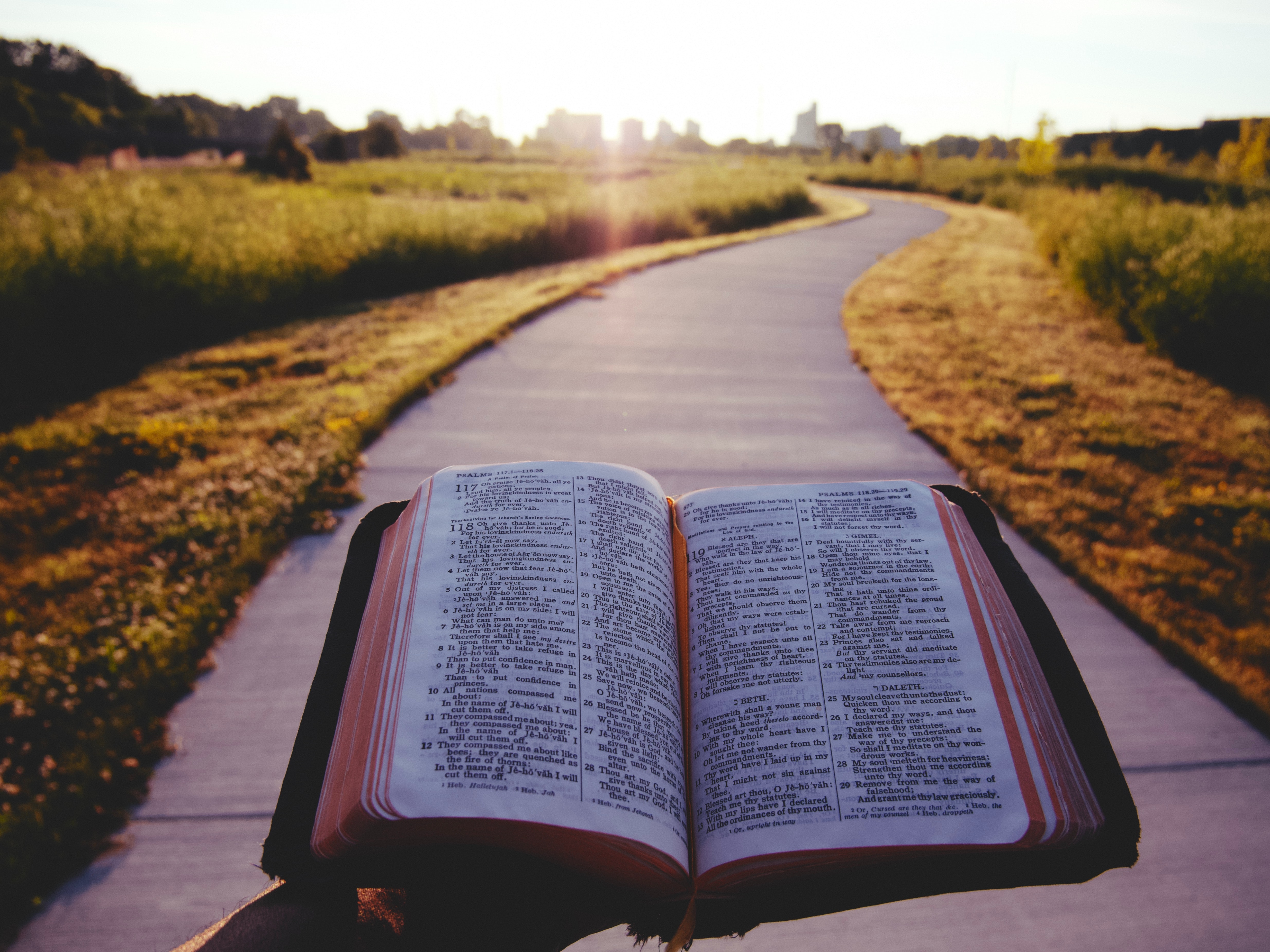
Photo credit: David Brook Martin

Psalm 25 is a prayer for forgiveness and protection. The psalmist’s declaration of trust is followed by a request to prevent any shame from coming their way. The psalmist edges up to asking God for forgiveness – don’t remember my sins. Verse 10 sums up the psalmist’s belief and what they hold to be true: “All the LORD’s paths are loving and faithful for those who keep his covenant and laws.” If one is faithful, one experiences God’s love. That is the hope. Closing the Psalm, because he or she looks to the Lord, well then, God should forgive their sin and end their suffering. Save me God – because I seek you.

The next Psalm declares the author’s innocence. There are echoes of the book of Job in Psalm 26. Give me justice, God, because I have integrity. Examine me, God, because I’m innocent. I don’t spend time with the wicked. No, I love being in your presence, God. So save me! As was the case with Job, we too feel injustice when good people suffer – especially when it is us.

Psalm 27 is a song of hope during suffering. There is a trust in God’s light and salvation. It is a trust that counters fear. Again the psalmist seeks to be in God’s presence. There God will shelter us, will hide us, and will set our feet high upon a solid rock, above the storms of life. The Psalm closes with a “sure faith” that he or she will experience God’s goodness. In our storms, may this be our hope and our trust.

We close today’s readings with a petition that God would hear and respond. Psalm 28 begins by saying “don’t refuse to hear me” because “you are my rock.” Today I read this and other parts of these Psalms as transactional. I too can treat God that way at times. Returning to the text, a request is made to give the wicked what they deserve. This too would bring relief to the psalmist. The Psalm closes with a declaration of hope, trust, and rejoicing.

Throughout these four Psalms there is a common theme. We must be faithful to and connected to God if we desire for God to hear and respond to our prayers. While this is true, it pre-supposes a relationship as the first step. I am also struck today by the lack of introspection, confession, and repentance. These are essential elements – steps – for a healthy relationship with God. May we take these first steps today. It is where our relationship with God begins anew each day. May it be so.

Prayer: Lord God, you’ve created us in your image, designed us to live in a relationship with you. We can sense this connection, this call. But we are not always faithful. We stray and we fall short. Have patience. Build our trust and faith. Guide our steps. Order them according to your heart. Bless us as we seek to walk daily with you. Amen.