pastorjohnb

Thoughts and musings on faith and our mighty God!


Leave a comment

Sure and Strong

Reading: Psalm 42:1-8

Psalm 42:8 – “By day the Lord commands his faithful love; by night his song is with me.”

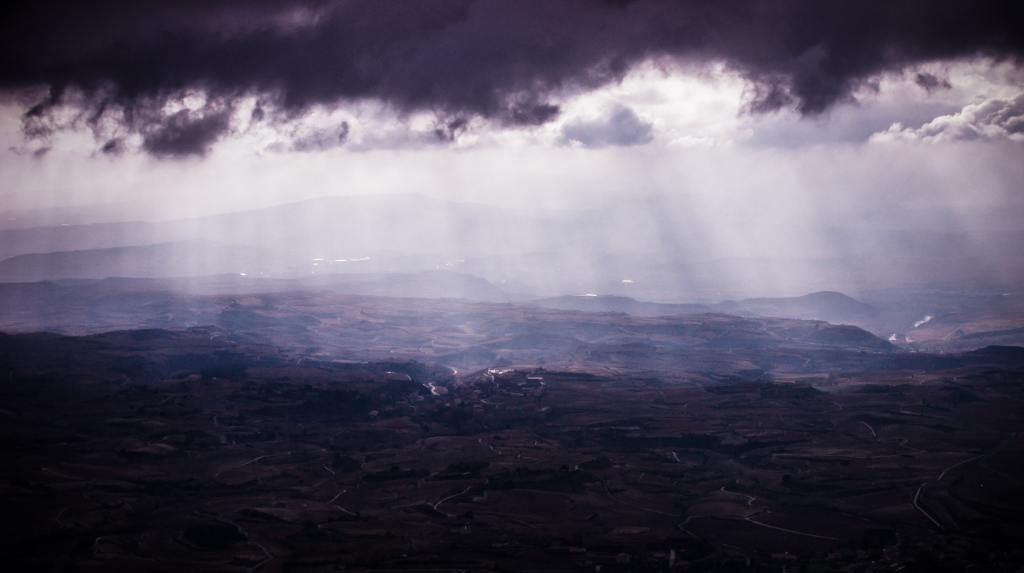
Photo credit: Pablo Heimplatz

Psalm 42 is a song of lament. It is attributed to the Korahites, the clan from the tribe of Levi assigned to lead temple worship. As the song begins, the psalmist expresses a deep thirst for God. The thirst is so deep it has become a craving. A thirst this deep is expressed only here and one place in Joel. As tears have become his or her only food, there is a great longing to be in God’s presence once again.

In verses 4-6 there is a hope that flickers as the psalmist recalls times in God’s presence. Even as they “bare my soul” the writer recalls being in God’s temple, worshipping with joy and thanksgiving at one of the great festivals. Counting on experiencing this again, the psalmist declares, “Hope in God!… my saving presence.” In our moments of feeling separated from God may we too recall times when God was a sure and strong presence in our lives.

Verse 7 is an interesting verse. How we read it depends on perspective. If we read with the first few words of verse 6 then it feels Noah-like, as he sank into the depths of the sea. However, if we read it with the rest of verse 6 and with verse 8 then it feels like it is God’s faithful love washing over the psalmist, wave after wave. I choose the second reading. It then leads to the declaration: “By day the Lord commands his faithful love; by night his song is with me.” God is present even in the hard and difficult of life. Thanks be to God!

Prayer: Lord God, thank you for the reminder of your constant presence in our lives. In the moments when we feel like the psalmist – down, alone, anxious – bring to our minds those other moments, times when your presence and love were sure and strong in our lives. Lift our spirits up into your power, fill our hearts with your song. Amen.


Leave a comment

Nevertheless

Reading: Ezekiel 12-16

Ezekiel 14:6 – “The LORD God proclaims: Come back! Turn away from your idols and from all your detestable practices. Turn away!”

Our reading begins with Ezekiel modeling the exile in a sign act. With people watching, he packs a bag and tunnels through the wall. Bag in tow, he heads out into the dark. Exile is coming. A few will survive to tell of their detestable practices. God then instructs Ezekiel to eat while trembling, to drink anxiously. During the siege, this will be Judah’s reality.

Some people question God’s timing. God says there will be no delay. The foolish prophets who proclaim peace and that God will be their wall – their lies will be exposed. The prophetesses who are misleading and entrapping people – God will rescue their victims. The focus then turns to those who are worshipping idols. God declares that if they come to God or to Ezekiel for prayers or for guidance, God will send them back to their idols. Yet God longs for Judah to repent. God says, The LORD God proclaims: Come back! Turn away from your idols and from all your detestable practices. Turn away!”

Noah, Daniel, and Job figuratively enter the story in chapter 14. They alone would be saved if wild animals or war or plague or famine were sent by God. These icons of the faith and virtue couldn’t even save their sons or daughters. They could save only themselves. God declares that all four tragedies are coming. Few will survive. Jerusalem is then compared to a vine. It is useful only for burning.

Chapter 16 details Jerusalem’s “detestable practices.” God recalls saving her when she was abandoned and naked. God fed and clothed and cared for her. She grew up and became very beautiful. She then prostituted herself with “all comers” – Egypt then Assyria then Babylon. Jerusalem was worse than Samaria and Sodom – so detestable that they looked righteous by comparison. Yet, in verse 60, we read, “Nevertheless…” God will one day reestablish the covenant. God will forgive their sins. Judah will then know that the Lord is God.

Prayer: Lord God, it was important for Judah to let go of false hope and to hear a call to repentance. It is important for us to be reminded that you are the only hope – our only hope, the only giver of mercy. We too will face judgment. Lead us to walk in covenant relationship with you, O Lord. Amen.


Leave a comment

Center Stage

Readings: Genesis 9:18-39, Genesis 10, Genesis 11

Genesis 11:4 – “Come, let’s build for ourselves a city and a tower with its top in the sky, and let’s make a name for ourselves.”

Continuing in chapter 9 today we see that sin hasn’t left the world with the flood. Noah grows grapes and makes wine. He gets drunk then naked. Ham sees his father naked and instead of covering him up, he tells Shem and Japheth about it. They do the right thing and later receive Noah’s blessings. Ham, by contrast, is cursed because he did not honor his father.

Chapter 10 details the most of the descendants of Shem, Ham, and Japheth. They are listed a variety of ways – names, families, languages, lands, nations. This creates a kind of early ethnic map of the ancient world. Shem’s genealogy is found again in chapter 11. But it diverges in verse 18 as it follows Peleg’s branch of the family tree. This branch ends with Abram and family in the land of Haran. Sarai and her barrenness is also mentioned. This is a sharp contrast to the long list of children and descendants found in chapters 10-11.

In the middle of these genealogical lists we find the story of the Tower of Babel. In this story we see that the human tendency towards pride and arrogance survived the flood. At Shinar the people begin to scheme, saying to one another, Come, let’s build for ourselves a city and a tower with its top in the sky, and let’s make a name for ourselves.” They want to build a tower that reaches to heaven. It could be to connect with God or it could be to be like God. It’s likely the second as they also desire to be famous, to be recognized for their skill. As a means to counter this pride and sin, God confuses or jumbles their languages and then dispersing this prideful bunch all over the earth.

When we try to take center stage for ourselves, how does this affect our relationship with God and with one another? How does God normally respond?

Prayer: Lord God, in my thoughts, my words, my actions, may I honor you and bring all the glory to you. When I’m tempted to bring the focus to me, remind my heart of you, my audience of one. Amen.


Leave a comment

In Love and in Grace

Readings: Genesis 6, Genesis 7, Genesis 8, Genesis 9:1-17

Genesis 6:9b: “Noah was a moral and exemplary man; he walked with God.”

Today’s readings center on the great flood. God sees that humanity has become “thoroughly evil.” Every thought was “completely evil.” The world was so bad that God even regrets making human beings. This situation leaves God “heartbroken.” Things are almost as bad as they can get. Almost. There is Noah. In Genesis 6:9b we read, “Noah was a moral and exemplary man; he walked with God.” At least there is Noah. At least there is one person that is worth saving.

Today our world is not perfect. It is far from it. Noah was an Old Testament example of piety. I wonder, as God looks down on the earth today, who are the Noahs? Specifically, are you and I modern day examples of an exemplary relationship with God?

In obedience to God, Noah builds an ark and gathers up his family and the animals – a pair of some, seven pairs of others. This gathering up insures not just Noah’s salvation, but the salvation of all of creation. God then shuts the hatch and the rains come down and the “springs of the deep sea” open up. In 7:22 we read, “Everything on dry land with life’s breath in its nostrils died.” The loss of all life is catastrophic, horrific, complete.

Eventually the waters recede. Noah sends out a dove to test the earth’s readiness for life. The third time the dove does not return. God tells Noah to exit the ark. Noah’s first acts on dry land are to build an altar and then to offer a sacrifice to God. This pleases God and moves God to make a covenant. There will never be another flood “to destroy the earth.” God placed “his bow” in the sky – it will be a frequent reminder to God of God’s commitment to stay in relationship with humanity. This is a gift that we rejoice in yet today.

Prayer: Lord God, what a horrible place the world became. Humanity broke your heart. Things deteriorated to the point that your justice required action. Thanks be to you, O God, that we had Noah – an example of faithful living. In your love you provided a way for the world to continue. In your grace you committed to us and to creation forever. Thank you, God. Amen.


Leave a comment

God with Us

Reading: Genesis 4, Genesis 5

Genesis 4:10: “The Lord said, ‘What have you done? Listen! Your brother’s blood cries out to me from the ground.'”

Chapter 4 contains the story of Cain and Abel – Adam and Eve’s first two sons. Living outside of the garden because of their parents’ sin, Abel works as a shepherd and Cain as a farmer. These two brothers bring an offering to God. Cain brings some of his crops and Abel brings the firstborn, including their fat portions. God sees Abel’s offering as “favorable,” angering Cain. At times we all come to this place that Cain came to – realizing that our offering to God was less than what it could or should have been. Maybe it was a half-hearted effort with that neighbor. Maybe we came to worship with a really poor attitude. When the realization comes that we fell short, we too can get angry. It’s always harder to look within.

Even though God warns Cain – “sin will be waiting at your door ready to strike” – Cain still allows his anger to smolder, leading him to murder Abel. God knows yet asks, “What have you done? Listen! Your brother’s blood cries out to me from the ground.” God is not searching for the answer but for remorse and repentance. None is found. Cain even doubles down, denying any knowledge of what has happened to Abel. As a result, Cain is moved further from community. He is to be a wandering nomad. Punishment at least brings a hint of remorse. Even here, God’s grace remains present. Isolated, alone, vulnerable, God marks Cain with a sign, protecting him from harm. Like Cain, as bad as we can become, God remains with us.

Chapter 5 brings a list of descendants. Many are just names. They lived a long time before the flood – 930, 912, 962… All but Enoch died. He was “taken up,” presumably because he walked faithfully with God. As sin continues to grow, this rapidly becomes less common. The list of singular descendants branches out at Noah. Each of his three sons will have a role in the ongoing story of God.

Prayer: Lord God, thank you for always being with us, even in our sin. Thank you for not giving up on us and for always trying to work us towards your good plans. Please forgive us when we go astray, pursuing other things. Thank you for your love and grace. Amen.


1 Comment

Remember Your Baptism

Reading: 1st Peter 3: 18-22

Verse 21: “This water symbolizes baptism that now saves you also… the pledge of a good conscience toward God”.

Today’s reading connects Jesus’ saving act on the cross to our baptism and to Noah’s experience in the great flood. Peter begins by reminding us that Christ died for us all – “the righteous for the unrighteous” – so that we could be in right relationship with God. Peter reminds us that not only did Jesus pay the atonement or price for our sins, but through the resurrection Jesus also opened the way to eternal life for all who believe in him as Lord and Savior.

In the middle of our passage Peter speaks of Noah and family, those who were “saved through the water”. Baptism is often associated with the washing away of our sins. Jewish rituals of purification involved water in the cleansing process. In Noah’s experience, the water was also the saving agent. The sinful world perished in the flood but through the waters God saved Noah, his family, and all the living creatures. Peter reminds us that “this water symbolizes baptism that now saves you also”. Through baptism we are brought into the family of God, into the community of faith. We are marked or claimed by God. Baptism becomes or leads to “the pledge of a good conscience toward God” – whether made by parents and sponsors or by the person being baptized. The pledge is to live a life worthy of Christ, the one who died for us. This life is revealed through our participation in the community of faith and through the ways we share our faith with the world by our witness, our prayers, our worship, our actions, our service…

The “good conscience” that Peter speaks of is the indwelling presence of the Holy Spirit. This is a promised gift from Jesus that is connected to baptism. In the early church and in some denominations today, the believer’s baptism is the standard practice. The Holy Spirit comes into that person’s life after they confess Jesus as Lord and as they are baptized into the faith. For those traditions that practice infant baptism, the child is marked with the seal of the Holy Spirit. Usually during confirmation (or a similar process) the young adult professes their own faith in Jesus Christ. This confession marks the point of entry for the indwelling presence of the Holy Spirit.

On this first Friday of Lent may we each remember our baptism and may we rejoice in our place in the family of God.

Prayer: Lord, thank you for claiming me as an infant and then waiting patiently for me to decide to follow Jesus. The gift of the Holy Spirit empowers and enables me to follow day by day. Thank you for this gift. Amen.


Leave a comment

Covenant God

Reading: Genesis 9: 8-17

Verse 9: “I now establish my covenant with you and with your descendants after you”.

Photo credit: Iker Urteaga

Noah is the central character in our passage but he is far from alone. Noah and family have been on the ark with every other living animal, bird, reptile, insect… for almost a whole year. Imagine being confined to a fairly small space for that long! In reality, though, the current pandemic has felt like that for many. For Noah and crew, the waters finally receed and God calls them out of the ark with the imperative to “be fruitful and increase in number”. The earth must be populated again. New life must return. As they exit the ark, God says, “I now establish my covenant with you and with your descendants after you”. Never again will the whole earth be destroyed by water. A rainbow will remind God and humanity of the covenant.

If the pandemic has not felt like being locked in an ark for you, we all have had other trials and experiences where we wondered if we’d make it through, where we questioned if we’d survive the storm, where we’ve longed to finally catch our breath… As I’m sure Noah and family did from time to time, we have asked why God would allow this terrible thing to happen. This is a questioning born from grief or pain. After these emotions have passed we realize again that death and disease and illness and natural disasters are all part of life. None of these things are God punishing us or the world. At times maybe you, like me, briefly wondered this about COVID. It can sometimes feel that way. At the time of this writing, 2.43 million have died worldwide, with almost half a million of those deaths in the US. This disease has reminded us that we are powerless in many ways and that we can’t totally control everything. In the midst of the loss and grief we have also been reminded again and again of the hope, joy, strength, peace, assurance… that we find in our faith and in our covenant God.

Just as it did for Noah and family, the world as we once knew it has changed forever. We are in a place we never imagined we’d be. Just as the people of Noah’s day said ‘the rain will stop soon’, so too do we think this cannot last forever. We approach a year living in a pandemic. All of us have lost someone or have been impacted by this powerful disease. Yet Noah’s truths remain for us: God is more powerful than any earthly thing and that God is our covenant God. We too need to remember that God is more powerful than anything, even death. God promises to be our God in this life and in the life to come. Thanks be to God.

Prayer: Lord, you are all-powerful and everlasting. You are in total control and you are limitless. Yet you know my name and even the limited number of hairs on my head. You love me. You call me child. Thank you for wanting to be in a personal relationship with even me. Amen.


Leave a comment

Ever Ready

Reading: Matthew 24: 36-44

Verse 44: “You must be ready because the Son of Man will come at an hour when you do not expect him”.

Advent is the season when we prepare to celebrate the birth of Jesus Christ. We read the familiar stories and build up the excitement for Christmas Eve. Along the way we are reminded of how the Christ brings peace, hope, joy, and love into our lives and into the world. It is a season of anticipation and excitement. Today’s passage is subtitled “The Day and Hour Unknown” in my Bible. Yet in our Advent world and on our little calendars the day is clearly marked – December 25!

Today’s passage flashes forward to the end of the story. We jump to the time when the risen Lord will return to rule the new heaven and earth. This day and hour are unknown. Jesus’ advice is to be ready. Noah is the example that Jesus points to. Noah is a good example for us yet today. The world tends to stay busy – weddings and celebrations, enjoying life. There is little time to give to faith. A little time each day and an hour or two a week? Seems a bit much, doesn’t it? Not for Noah. As the world went on around him he faithfully did God’s work. Even when the world ridiculed him for doing something that made no sense to them, Noah stayed the course.

It can be easy for us to get distracted. The holiday season feels especially busy. Guarding our time with God, growing in our faith, can be harder this time of year. Christmas is all about Jesus so it seems counterintuitive to say this but it is the reality. Yes, it is good to gather with family and friends, to celebrate the season. But our focus must remain on Jesus.

As we move through December and celebrate the Savior of the world, may we remain focused on our larger task – being prepared to meet Christ. Whether it is in the manger, face to face, or coming on the clouds, may we eagerly anticipate the coming of our Lord.

Prayer: Father God, in this season of Advent may I be ever ready to meet you. May I seek you in quiet study, in worship, in gathering with others, and in the face of the stranger. Amen.