pastorjohnb

Thoughts and musings on faith and our mighty God!


Leave a comment

Building God’s Dwelling

Readings: Exodus 35, Exodus 36, Exodus 37, Exodus 38, Exodus 39, Exodus 40

Exodus 40:33-34 – “When Moses had finished all the work, the cloud covered the meeting tent and the LORD’s glorious presence filled the dwelling.”

Photo credit: Kyle Johnson

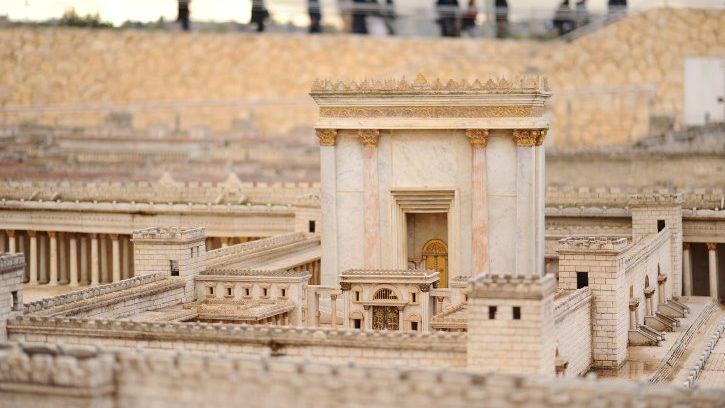
Today’s six chapters cover the construction of the tabernacle. To accomplish this monumental task God and Moses call for a free will offering. So great is the generosity of the people that Moses finally has to say, “Stop!” In total the people brought 2,200 pounds of gold, 7,500 pounds of silver, and 5,300 pounds of copper/bronze – not to mention the cloth, yarn, gemstones, wood, spices… The census was taken. 603,500 men give their half shekel to the sanctuary of God.

Leaders are appointed and the work begins. Men and women contribute. It is a community effort. This project is like a lot of church projects. Generous hearts and willing hands are needed. As it was then so it is now: the people are the heart and soul of the community of faith. The work is done exactly as the Lord has commanded in Exodus 25-31. Every detail is done exactly as the Lord desired. What an example of obedience and attention to detail. In this way it reflects the creation story.

The work is done and the tabernacle is erected. Everything finds its place and the priests are blessed. Moses blesses the people for their work just as God blessed creation when that task was completed. In verses 33-34 of chapter 40 we read, “When Moses had finished all the work, the cloud covered the meeting tent and the LORD’s glorious presence filled the dwelling.” Exactly one year after Israel was delivered from Egypt, the tabernacle is finished and God’s presence comes to dwell among the people. This is the fullest expression of God’s presence in the Old Testament. It expresses God’s desire to be with all people. This desire continues today. Thanks be to God.

Prayer: Lord God, you were present in and through this magnificent process. You opened hearts and hands to give and serve. Through this your glory was revealed. Continue to be present in and through us, O God. Continue to open our hearts and hands in service to you, O Lord Almighty. In and through us may your glory be revealed! Amen.


Leave a comment

Our Covenant God

Readings: Exodus 22, Exodus 23, Exodus 24

Exodus 24:7 – “They responded, ‘Everything that the LORD has said we will do, and we will obey.’”

Photo credit: Paul Pastourmatzis

The first part of today’s reading contains more of the instructions found in the covenant scroll. The first instructions cover the proper use and treatment of other’s stuff. We are still called to live by the ideals found here. If I break a tool I’m borrowing, for example, then I buy a new one and return that to the lender. Then the instructions shift to personal responsibilities, to how we are to treat and care for and interact with each other. Several verses touch on how to treat the immigrant, widow, and orphan – the vulnerable and powerless. We are to treat them well. God extends doing the right thing even to our enemies. Taken as a whole, these instructions reveal “God’s subtle yet steady work of grace.”

The Israelites are then reminded to observe three yearly festivals. The first is from the Passover – God’s great rescue of Israel. The other two center on the harvest and on giving God thanks for God’s provision. Then the text leads us into the provision of the Promised Land. A conflict in the text struck me today – “wipe out… completely destroy” and “I’ll drive them out… little by little.” There is a faith concern: mixing in with the locals will threaten Israel’s fidelity to God. And there is a practical concern: the Israelite population will not be large enough yet to properly care for the whole Promised Land.

These instructions are written into the covenant scroll and read to the people. It is sealed with burned offerings and with blood. The people declare, “Everything that the LORD has said we will do, and we will obey.” Moses and the elders are then brought into God’s presence. They worship and celebrate their covenant God. They see God and they do not die. Then Moses goes up the mountain to receive the stone tablets and many more instructions. Moses will be with God for a long time – 40 days and nights. He leaves Aaron and Hur in charge.

Prayer: Lord God, thank you for the grace and love that flows throughout your instructions. You remind us to care for the vulnerable and to treat even our enemies with love and grace. May we read these words and also declare our intent to walk in your ways as we seek to witness to your love and grace in the world. Amen.


Leave a comment

Questions

Readings: Exodus 15:22-27, Exodus 16, Exodus 17, Exodus 18

Exodus 16:8 – “Who are we? Your complaints aren’t against us but against the LORD.”

Coming fresh off of the amazing rescue at the sea, today we become familiar with an oft-repeated pattern in the wilderness. The Hebrews are lacking in something so they argue/complain/grumble against Moses. Moses, often in frustration, turns to God and God provides food, water, protection… We often see a version of this played out in our lives, just without Moses as the middle man. We go straight to God with our grumbles, complaints, charges…

At Marah the water is bitter. God makes it sweet. Those hardships or challenges that become blessings? We experience these too, don’t we? Then, in the Sin Desert, hunger sets in. They long for the meat and bread of slavery. Ever look back in the good old days? God provides meat and bread. These come with instructions. These begin to establish the Sabbath. It was not possible in Egypt. As slaves of another they worked 7 days a week. We have a choice. Do we allow ourselves to be controlled by work…? Or do we honor God and ourselves in sabbath rest?

After preserving some manna for future generations, the Israelites travel on to Rephidim. No water. They accuse Moses (read: God) of bringing them out into the desert to die of thirst. Moses hits the rock at Horeb with his staff -> water comes out! Then Amalek comes to fight them. Joshua leads the troops into battle as Moses, Aaron, and Hur go up the mountain. The staff, now held aloft, continues to represent God’s presence. Aaron and Hur help Moses and God gives Israel victory. This leads into Jethro’s visit and suggestion. He sees Moses is too busy. He won’t last like this. Following his wise father-in-law’s advice, Moses appoints judges, sharing the load. God shared the load in battle. Moses shared the load with others. Which kind of sharing is harder for you? What did you learn today about sharing?

Prayer: Lord God, it is a little scary to see how little we’ve changed since Moses’ time. We get caught in nostalgia, we lose faith quickly, we question your love. Today I thank you so much for your enduring patience through the generations and for your great patience with me. Teach me to turn quicker to you and to hold onto your hand longer and more steadily. Amen.


Leave a comment

Promises Offered

Readings: Exodus 5, Exodus 6, Exodus 7:1-13

Exodus 7:3 – “I’ll make Pharaoh stubborn, and I’ll perform many of my signs and amazing acts.”

Photo credit: Rainier Ridao

On our second day in Exodus and our 17th day in the Bible Year project we read of the groundwork necessary for the plagues and for Israel being set free. In chapter 5 God sends Moses and Aaron to Pharaoh for the first time. They request a few days off for the slaves so that they can go and worship the Lord. Pharaoh refuses, saying, “I don’t know this Lord.” He will soon! Pharaoh responds by increasing their workload. The Israelites will now have to gather their own straw – and still make the same number of bricks! Their oppression increases. We can experience something like this at times. We look to God yet the night seems to get darker.

The Israelite supervisors come to Moses and Aaron and ask why they’ve made the Hebrews a “stink” to Pharaoh. They are upset. Moses goes to God, saying, “You’ve done absolutely nothing.” God takes it in and again reiterates the promises offered: rescue, great power, the Promised Land. But the Hebrews won’t hear it. They are too exhausted. Moses is discouraged. Yet God continues to speak to Moses and Aaron. God remains sure and true, keeping to and understanding the plan that Moses and the Hebrews cannot yet see. This reality is something that we need to hold to at times as well: God is in charge and God knows the plan.

Next we get the genealogy of Moses and Aaron. This establishes them as Levites. This clan will be set aside by God to be the priests in the tabernacle and, later, in the temple. Chapter 7 begins with more reassurance: “I’ll make Pharaoh stubborn, and I’ll perform many of my signs and amazing acts.” These words prepare Moses and Aaron for what will unfold in the next six chapters. Moses and Aaron then go to Pharaoh to give a demonstration of God’s power. The “magic tricks” end with Aaron’s rod/snake eating all the others. Case closed. God has the power. Pharaoh remains stubborn. These themes continue tomorrow as God’s plan of rescue unfolds!

Prayer: Lord God, when we feel hard pressed, when the night seems to get darker, remind us again of your constant presence and of the plans that you have for our good. In the moment, reassure us and give us the strength to both continue the walk and to hold tight to your hand. Amen.


Leave a comment

God’s Guiding Presence

Readings: Genesis 31, Genesis 32, Genesis 33, Genesis 34, Genesis 35, Genesis 36

Genesis 32:28 – “Your name won’t be Jacob any longer, but Israel, because you struggled with God and with men and won.”

Today’s readings begin with Jacob leaving Haran. God directs this move and watches over it. As Laban catches up to the escaping Jacob, God intervenes on his behalf. This leads to a “symmetrical covenant.” Laban and Jacob part ways peacefully and with God’s blessing. As his journey continues, Jacob prepares to and is prepared to meet Esau, the brother he stole from and deceived.

Jacob first sends messengers to Esau, who comes out to meet Jacob with 400 men. This terrifies Jacob. He splits all that he has into two camps. Then he prays a “reminder” prayer to God. He reminds both God and himself of the covenant promises made to Abraham and to Isaac and to himself. He then sends a very large gift of livestock to Esau, seeking to pacify him. That night Jacob wrestles with God. He is renamed “Israel” and he receives God’s blessing.

In the morning Jacob arranged his family strategically – servants then Leah then Rachel, each with their children. But then he goes in front to meet Esau. He bows low 7 times as Esau is approaching. Esau runs to greet him. It is an emotional and joyful reunion. Jacob sees the face of God in his brother’s grace.

In chapter 34 a terrible thing happens to Dinah – she is raped and humiliated by a local prince. Her brothers exact revenge, killing every male and looting everything in the town. They use deception to set it all up. They are Jacob’s sons. But now Jacob fears revenge too, so the family moves on. God protects them as they go. In the process God reiterates the name change as well as the covenant. Sadly, Rachel dies giving birth to Benjamin. Isaac dies too and is buried with his ancestors by Jacob and Esau together. Our reading closes with Esau’s genealogy.

Reflecting on today’s six chapters I am struck by God’s presence guiding Jacob’s life. Many things happen that remind me that God is with us no matter what – when we are faithful, when we are less than faithful. God is steadfast and true.

Prayer: Lord God, thank you for your hand ever guiding Jacob. Thank you for your hand that desires to guide us. As you work in our lives, shape and form us as you did Jacob – more and more into one who knew and loved you. Amen.


Leave a comment

In All of Life

Reading: Psalm 98

Verse 1: “Sing to the Lord a new song, for he has done marvelous things.”

Photo credit: Rainier Ridao

Psalm 98 is a song of praise and worship. The psalmist lifts up salvation and God’s righteousness and faithfulness as reasons to sing praises to the Lord. In our lives, we certainly can offer lots of praise and thanksgiving to God when we are experiencing these and other blessings in our lives. In the good days it is easy and natural to praise God and to lift our worship heavenward.

It is not always easy, though, to praise the Lord. When we experience unwanted change or loss, when we receive that sobering diagnosis, when we feel isolated or lonely – it can be hard to find joy and to have praise on our lips. Today I am reminded that worship or praise doesn’t always have to be loud or joyous or exuberant. It can be prayerful or quiet or meditative. It can be centered on our understanding that as a child of God, God loves us and has plans to prosper us and wants to bring good into our lives.

Yes, I am sure that God enjoys listening in on a good old hymn or a communal prayer. But our faith is also personal and intimate. A quiet moment, a heartfelt prayer, a stillness simply resting in God’s presence – these too are deeply pleasing to God. In and through all things, we know that God is in control. Praise and worship is sometimes simply reflecting this truth back to God. May our praise and worship reflect this in all of life.

Prayer: Lord God, in the days of sunshine and beauty, in the days of darkness and despair, in the days of intermittent clouds and the everyday of life – may I ever praise and worship your holy name. You are my constant in all of life. For that I can always rejoice. Amen.


Leave a comment

Heirs in Christ

Reading: Galatians 4:4-7

Verse 7: “So you are no longer a slave, but God’s child; and since you are God’s child, God has made you also an heir.”

Paul connects into the story of Christmas as he writes, “When the time had fully come, God sent his Son.” When God’s timing said that now is the time, Jesus entered into the world. Paul reminds his audience that Jesus was born a Jew – “born under law” – who came to redeem his fellow Jews. I wonder if when Paul penned verses like these, if he thought of his former life as Saul and rejoiced in the redeeming work that Jesus had done in his own life. Paul writes of that which he knows firsthand.

Paul notes that when we are redeemed we “receive adoption to sonship.” This leads to each of us receiving the indwelling presence of the Holy Spirit, which reminds us again and again of our family connection to God the Father. Another ‘right’ comes in verse 7: “So you are no longer a slave, but God’s child; and since you are God’s child, God has made you also an heir.” Through our redemption we become brothers and sisters in Christ, heirs with and in Christ. To be a brother or sister is to be a part of the family. But to be an heir – what does that mean?

To be an heir means we receive an inheritance. Parts of our inheritance are things like salvation and eternal life. Parts are the peace, love, hope, joy, grace… that we receive and live in every day. And… we also inherit the living example of Jesus Christ. This part of our inheritance calls us to expand the family – to “make disciples of all peoples” is how Jesus put it. We are called to live as Jesus lived, bringing light and love into the world. We are called to do as Jesus did, standing with and caring for the hurting, the suffering, the outcasts. Living in these ways of Jesus, our lives will invite others to seek to be a part of this wonderful family of God. May it be so.

Prayer: Lord God, we rejoice over being a part of your family. We celebrate and offer thanksgiving for all that this means in our lives. Let us not be content here, Lord. Guide us out into the world, living as Christ’s brothers and sisters, so that others can be welcomed home. Amen.


Leave a comment

The Thin Space

Reading: Luke 2:1-20

Verse 19: “Mary treasured up all these things and pondered them in her heart.”

Photo credit: Kelly Sikkema

We begin this day where many of us will end the day – in Luke 2, verses 1-20. In his gospel to the Gentiles, Luke offers the best known telling of Jesus’ birth story. Luke’s gospel was aimed at those outside of the Jewish circles of faith. Perhaps that is why his telling resonates so well with so many. To recount how the “good news of great joy” came first to the shepherds – to those very near to the bottom of the socio-economic ladder – is to remind us all that the good news of Jesus Christ is indeed for all people.

The Upper Room Disciplines devotional for today reminded me of a very similar experience with what author Richard Morgan calls a “thin space.” This is the liminal space where heaven and earth touch and we enter the presence of the holy. We also were caroling in a care facility when a woman who had sat still and silently the whole time came to life and began singing Silent Night in German as we sang in English. The tune and words touched a deep place in her mind and soul. It was a sacred and holy moment to be a part of as we entered that thin space.

Towards the end of today’s passage we read, “Mary treasured up all these things and pondered them in her heart.” After a long journey and first-time labor, after receiving this holy story from the shepherds, Mary soaked it all in. She entered that thin space and seeped in God’s presence. This is my hope and prayer for all who will be drawn to worship and to celebrate the birth of the Savior. As each enters into worship, may each find a sacred space to enter into. There, may they each be touched by God so that the dear Christ child may enter into their hearts this night.

Prayer: Lord God, open the hearts of all who will come today to sing carols and to hear the story. May the words and songs draw them into the thin space where heaven touches their hearts. Amen.


Leave a comment

The Thin Space

Reading: Luke 2:1-20

Verse 19: “Mary treasured up all these things and pondered them in her heart.”

Photo credit: Kelly Sikkema

We begin this day where many of us will end the day – in Luke 2, verses 1-20. In his gospel to the Gentiles, Luke offers the best known telling of Jesus’ birth story. Luke’s gospel was aimed at those outside of the Jewish circles of faith. Perhaps that is why his telling resonates so well with so many. To recount how the “good news of great joy” came first to the shepherds – to those very near to the bottom of the socio-economic ladder – is to remind us all that the good news of Jesus Christ is indeed for all people.

The Upper Room Disciplines devotional for today reminded me of a very similar experience with what author Richard Morgan calls a “thin space.” This is the liminal space where heaven and earth touch and we enter the presence of the holy. We also were caroling in a care facility when a woman who had sat still and silently the whole time came to life and began singing Silent Night in German as we sang in English. The tune and words touched a deep place in her mind and soul. It was a sacred and holy moment to be a part of as we entered that thin space.

Towards the end of today’s passage we read, “Mary treasured up all these things and pondered them in her heart.” After a long journey and first-time labor, after receiving this holy story from the shepherds, Mary soaked it all in. She entered that thin space and seeped in God’s presence. This is my hope and prayer for all who will be drawn to worship and to celebrate the birth of the Savior. As each enters into worship, may each find a sacred space to enter into. There, may they each be touched by God so that the dear Christ child may enter into their hearts this night.

Prayer: Lord God, open the hearts of all who will come today to sing carols and to hear the story. May the words and songs draw them into the thin space where heaven touches their hearts. Amen.


Leave a comment

The Thin Space

Reading: Luke 2:1-20

Verse 19: “Mary treasured up all these things and pondered them in her heart.”

Photo credit: Kelly Sikkema

We begin this day where many of us will end the day – in Luke 2, verses 1-20. In his gospel to the Gentiles, Luke offers the best known telling of Jesus’ birth story. Luke’s gospel was aimed at those outside of the Jewish circles of faith. Perhaps that is why his telling resonates so well with so many. To recount how the “good news of great joy” came first to the shepherds – to those very near to the bottom of the socio-economic ladder – is to remind us all that the good news of Jesus Christ is indeed for all people.

The Upper Room Disciplines devotional for today reminded me of a very similar experience with what author Richard Morgan calls a “thin space.” This is the liminal space where heaven and earth touch and we enter the presence of the holy. We also were caroling in a care facility when a woman who had sat still and silently the whole time came to life and began singing Silent Night in German as we sang in English. The tune and words touched a deep place in her mind and soul. It was a sacred and holy moment to be a part of as we entered that thin space.

Towards the end of today’s passage we read, “Mary treasured up all these things and pondered them in her heart.” After a long journey and first-time labor, after receiving this holy story from the shepherds, Mary soaked it all in. She entered that thin space and seeped in God’s presence. This is my hope and prayer for all who will be drawn to worship and to celebrate the birth of the Savior. As each enters into worship, may each find a sacred space to enter into. There, may they each be touched by God so that the dear Christ child may enter into their hearts this night.

Prayer: Lord God, open the hearts of all who will come today to sing carols and to hear the story. May the words and songs draw them into the thin space where heaven touches their hearts. Amen.