pastorjohnb

Thoughts and musings on faith and our mighty God!


Leave a comment

Praise Be to God!

Reading: Psalm 148

Psalm 148:13 – “Let all of these praise the Lord’s name, because only God’s name is high over all.”

Psalm 148 is a song of praise to God. The word “praise” appears 11 times in these 14 verses. This call to praise goes out to all parts of our world. In verses 1-6 the psalmist invites the heavens to praise God. The sun, moon, and stars are called to praise God because they were each created at God’s command, set in place “always and forever.”

Verses 7-10 call on the created world to praise God. From sea monsters to hail and snow, to mountains and hills, to animals wild and tame – all are invited to praise the Lord. These too are the work of God’s hands. We are the focus of verses 11-12. The psalmist calls “every single person,” whether young or old, to praise God. We too are the beloved work of God’s powerful and mighty hands. Like the stars and the trees, we would not exist if not for God forming each of us in the womb.

Psalm 148 closes with a universal plea: “Let all of these praise the Lord’s name, because only God’s name is high over all.” Our creator is reigning on high. God’s majesty is over all the earth! For all that we are and for the one who formed us and walks with us today, we shout with all of creation, thanks be to God!

Prayer: Lord God, thank you for your creative power and work that is evidenced by all of creation. Looking within and without we can see your fingerprints on all things. That divine touch continues to shape and form us, to lead and guide us. Thank you, Lord. Amen.


Leave a comment

A Profound Sense of Gratitude

Reading: Deuteronomy 26:1-11

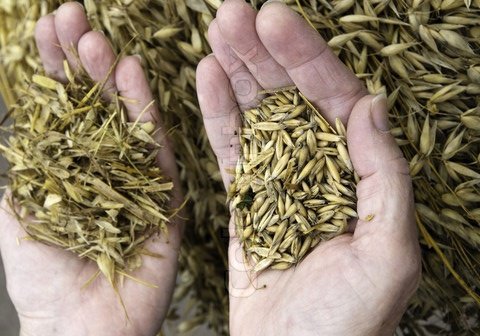
Deuteronomy 26:10a – “I am bringing the early produce of the fertile ground that you, Lord, have given me.”

Our first readings this week focus in on giving thanks to God. In our Deuteronomy reading, the Israelites have just come out of many years of bondage and oppression in Egypt. They’ve most recently spent 40 years wandering in the wilderness, testing God and learning from their sinful mistakes. The Israelites have now been prepared to enter the Promised Land. As God has done for the years in Egypt and in the wilderness, God will continue to provide for God’s people as they enter into their inheritance.

As an expression of gratitude and dependence, each Israelite is to take some of the “first fruit” of the land and to bring it as a sacrifice to God. “First” implies not only earliest but also best or chief. God is calling for all of this from the people, giving to God before anything else. The solemn statement in verses 5 through 10a is a reminder of all that God has done since the time of Jacob. This reflection would raise up in Israel a profound sense of gratitude and an awareness that all that they have comes from God.

The reflection ends with these words: “I am bringing the early produce of the fertile ground that you, Lord, have given me.” For the Israelites this was their actual first fruits. What could we substitute into “I am bringing ____ that you, Lord, have given me.” What “crop” or talent or wealth or time could give to God with a profound sense of gratitude? How would being aware of this offering as a returning of something that really already belongs to God increase our thanksgiving? Take a few moments to ponder what you could give and then commit to offering these things with thanksgiving in your heart.

Prayer: Lord God, you are the giver of all things – material, spiritual, physical, relational, communal. Shape our hearts to be grateful for all that we have. Form us into people who generously return some of these blessings to you, O God, for the building of your kingdom in this time and place. Amen.


Leave a comment

Holding Fast

Reading: Luke 21:12-19

Luke 21:19 – “By holding fast, you will gain your lives.”

Photo credit: Shane Rounce

Shifting to the second half of this week’s gospel reading, Jesus gets real with the disciples. While these words still have meaning for us today, imagine how differently these words would be heard by readers meeting in secret, praying to avoid these things yet reassured by their Jesus’ words of hope and promise. Think about how these words would be heard in the Sudan, where a small group of Christians were recently arrested during a funeral.

As our passage begins, Jesus declares that “they” will arrest and harass believers, imprisoning some so that they can stand trial. “They” will be the Romans and the Jewish religious leaders. While chances of arrest are low in our nation, harassment and even mild persecution can come our way if we speak up for the vulnerable and the marginalized. People find themselves in these positions because of unjust systems that were created and are perpetuated by those who benefit from them: those in power and those with wealth.

In our time, Jesus’ advice about how to handle oneself if harassed, persecuted, arrested… feels counterintuitive to us. He advises his disciples not to “prepare a defense.” Instead Jesus calls us to faith and trust. He will give us “words and wisdom” so that in this opportunity to witness, “they” will be speechless. God will be glorified. Jesus also shares that these opportunities will not be easy to endure. Some will lose physical life. Yet hear the promise: “By holding fast, you will gain your lives.” Those with the power and means to kill the body (or to abuse or persecute or harass or marginalize) cannot kill the soul. We are God’s and God is with us. Thanks be to God.

Prayer: Lord God, give us the courage to stand tall and to be courageous in our faith. Grant us the assurance that you will give us the words to speak for and to defend the vulnerable and the marginalized and the powerless and the downtrodden. Placing self between such as these and those with power, we have an opportunity to transform the world and to change its unjust systems. Use us to shape a more just world. Make us willing to count and to pay the cost, all for your praise and glory. Amen.


Leave a comment

Saul’s and Cyrus’s

Reading: Isaiah 45:1-7

Isaiah 45:4 – “For the sake of my servant Jacob and Israel my chosen, I called you by name.”

As I read today’s passage, I wondered: How many other Saul’s were there? We know about Saul because of his conversion experience and subsequent missionary work that spread faith in Christ far and wide. But how many other overly zealous Pharisees did God use to drive the church outward from Jerusalem?

In today’s text God speaks to Cyrus, the pagan king of Persia. God speaks to Cyrus near the end of God’s people’s time in exile. Israel had first been defeated and dispersed throughout the Babylonian empire. Judah fell to and we’re dispersed into the Persian empire. Cyrus is the third Persian king during Judah’s exile. In verse 1 God addresses Cyrus as “his anointed.” This word translates to “Messiah” in Hebrew and to “Christ” in Greek. God then tells Cyrus that God will “go before you” and will “level mountains” (kingdoms) and will give him “hidden treasures of great riches.” God will greatly bless Cyrus in many ways. But, why? Why not raise up another Moses-type figure?

God’s first purpose is “so you will know that I am the Lord.” Cyrus won’t necessarily come to believe in God but through this experience will certainly know God’s power and presence. The second purpose is revealed in verse 4: “For the sake of my servant Jacob and Israel my chosen, I called you by name.” In about 539 BCE Cyrus will defeat Babylon and issue the edict that allows the Jews to return home and to rebuild Jerusalem, the temple… Cyrus and the world will know “that there is nothing apart from me.” All is under God’s control. Thanks be to God.

Prayer: Lord God, you alone truly rule over all the earth. No one and nothing is outside of your power and presence. Today I thank you for the Saul’s and Cyrus’s – known and unknown to me – that you have used to shape and form me and my faith. Amen.


Leave a comment

A Simple Choice

Reading: Matthew 7:24-27

Matthew 7:25 (or 27) – “The rain fell, the floods came, and the wind blew and beat against that house.”

We all live in a broken world where evil, illness and disease, violence, death, and all the -isms cause hardship, trial, and suffering. Add to this our proclivity to sin, which only increases the challenge of living faithfully in this broken world. These things are true for all people: Christ followers, Muslims, atheists, agnostics…

For Jesus, in today’s passage, there are two choices with two distinct outcomes. One can choose to hear and put into practice his words and example, or one can hear and choose not to allow his words to shape and guide one’s life. It is a simple choice: obey or disobey.

And there is an outcome of effect of one’s choice. In our broken world, “The rain fell, the floods came, and the wind blew and beat against that house.” Sin, evil, sickness, prejudice, injustice, pride… will rain down on our lives. The guilt, the stress, the shame, the suffering, the doubt – they will flood into our heart, mind, soul, and body. They will beat against our faith or against our psyche, depending on the choice we made to trust self or to trust God.

Those who choose to hear and obey are the “wise” who chose life and faith. These lives are “firmly set on bedrock.” Jesus is our bedrock, our firm foundation. Those who choose the ways of the world are the “fools.” They are building on sand. It is a simple choice: God or self? Our choices determines if we can withstand the storms of life. May we choose to build our lives upon Jesus Christ, our rock.

Prayer: Lord God, the way of the world is wise and easy and it leads to destruction. Your way is narrow and hard but it leads to abundant life. Surrounded by the voices and other influences of the world, it is hard to stay on your path. The storms of life only increase this challenge. Lord, be near us in all things, at all times. Amen.


Leave a comment

Equipped

Reading: Romans 15:14-20

Romans 15:14 – “You yourselves are full of goodness, filled with knowledge, and are able to teach one another.”

Photo credit: Shane

At the start of chapter 15 Paul encourages the people in the church in Rome to be patient with and to build up one another. He encourages them to have the attitude of Christ and to welcome others as Jesus did. Paul wants to see their hope and joy overflow into the world through the power of the Holy Spirit. As we turn to verse 14, Paul is reminding the church that it is not just the pastor’s job to grow the church and the faith of those in the church and wider community.

In verse 14 we read, “You yourselves are full of goodness, filled with knowledge, and are able to teach one another.” They have been shaped and formed into people that are equipped to minister to one another and to the world. They are ready to shape and form one another and any new disciples. He is reminding them “of what you already knew.” If they are to call themselves “Christians” then they need to model Christ. They too are to witness to their faith in God just as Jesus did. Paul has also set for them an example of what good ministry looks like. Bringing others to faith and growing their faith has happened “by what I’ve said and what I’ve done.” Paul has both encouraged and challenged the church, both built them up and called them out. And now the Roman church has been equipped to do the same. These words apply to us as well. As followers of Jesus Christ we have been equipped to help others know Jesus and to help one another grow in our faith.

Modeling Jesus with our words and actions is easy sometimes. Sharing joy and hope and love is not hard. The challenge comes when we are called to speak or act in situations where injustice or sin or some other wrong is taking place. To lift God’s will and way to the forefront and to challenge others to walk in this way can be hard and it can be costly. To fail to speak or to act will cause harm. Trusting in God, in the example of Jesus, and in the guidance of the Spirit, may we choose sacrifice and service to others.

Prayer: Lord God, there are times when it is easy to be a faithful witness in word or in deed. Encourage us to do so! And we also find ourselves in times and places when the Holy Spirit calls us to hold others accountable to who and what you call us all to be. Encourage and empower us to love you and neighbor even when it is hard and risky. All to your glory! Amen.


Leave a comment

Necessary Steps to Take Steps

Readings: Numbers 1, Numbers 2, Numbers 3, Numbers 4

Numbers 1:2-3 and 46 – “Take a census… of every male 20 years old and above… All those enlisted were 603,550.”

Today is day 34 of our Bible Year reading project. Today we begin Numbers, the fourth book of the Bible. Leaving Mount Sinai in chapter 10, their journey will continue. As God leads, guides, and provides, Israel is shaped more and more into a kingdom of priests. At times they will step forward as a faithful nation. Much of the time they will allow fear to lead to disobedience. The generation that walked out of Egypt will pass and the next generation enters the Promised Land under Joshua’s leadership. Along the way God walks with this holy nation.

Numbers begins with a census. All males 20+ are counted. The men eligible for military service totals 603,550. The Levites are not included in this census. They are assigned to the tent of meeting. God orders the camp – three tribes will camp on each side of the tent of meeting. Then the Levites are counted and assigned places to camp. They form a buffer zone around the tent of meeting. There are 22,000 Levite males age one month and older. A tally of the oldest males is made for all the Israelites. This equals 22,273. The extra 273 are redeemed to their families by paying 5 shekels each.

Lastly, duties are assigned to the 3 Levite clans. The Kohathites are responsible for carrying the Holy items – the chest, table, lamp stand, altar… The Gershonites are responsible for carrying the coverings and the Merarites are responsible for the frames, poles, bars, bases… Only Aaron and his sons can touch the holy items. These are packed and covered in cloth and then in fine leather. In all, there are 8,580 Levite males age 30-50 responsible for taking down, setting up, and transporting the tent of meeting and all of its equipment.

These laws and counts and organization are necessary steps for the holy nation to step forward towards the Promised Land. Again today we are reminded that God is a God of order and detail. There is a plan. And, always, everything is done “as the Lord commanded Moses.” Obedience is necessary too. Likewise, may we too do all that the Lord commands us to do.

Prayer: Lord God, what efforts are made to organize this holy nation of Israel. These are practical things necessary for your people to move forward. Lead and guide us today, Lord, so that we too can move into the world to take the good news of Jesus Christ to all people. Amen.


Leave a comment

Plans

Readings: Exodus 25, Exodus 26, Exodus 27

‭Exodus‬ ‭25:40… – “See to it that you make them according to the blueprint for them that you were shown on the mountain.”

Today’s readings shift into the building of the tabernacle. The great detail and planning remind us once again that God is good and ordered and creative. All of these details and specifications and vision for the tabernacle were given to Moses by God when he was on the mountaintop. Over and over we read, “See to it that you make them according to the blueprint for them that you were shown on the mountain.” God has a plan and calls Moses and then Israelites to follow the plan exactly. As I pondered application for today’s readings, it came to me: our lives are much like the construction of the tabernacle. God has given us a detailed plan. We read three chapters from it today. Within that plan, in the gospels God even gives us a perfect example of what following the plan exactly looks like. And to boot God gifts us with the Holy Spirit, the indwelling presence of Jesus Christ that leads and guides us.

There is great detail in the plans and in the execution of the plan. We find exact dimensions. We find specific colors and designs. We see specific metals used for specific spaces and purposes. We see talents and gifts put to use to execute God’s plan for the tabernacle. As I read through these chapters I imagined each step and what each item looked like. I envisioned the final product. As Moses received these instructions on the mountain I bet he tried to see each item and the final product as God laid out the plan. This thought draws me back to the Holy Spirit – that indwelling presence that knows God’s plans for our lives and works and prays and works to shape and guide and lead and make us into who and what God created us to be. I wonder: In what ways are we contributing to the Holy Spirit’s efforts in our lives?

What also struck me today was the people’s commitment. Every single thing they used for the tabernacle came from them. Every single thing. In the same way, the church (not the building but the church) relies on each of us to be a part of bringing God’s light and love into the world. What are you bringing?

Prayer: Lord God, we see a wonderful and detailed plan for the tabernacle. You have the same kind of plan for our lives and for our churches. Move us to active involvement in the completion of these plans. Amen.


Leave a comment

Act(s) of Salvation

Readings: Exodus 7:14-25, Exodus 8, Exodus 9, Exodus 10, Exodus 11, Exodus 12:1-30

Exodus 12:14 – “This day will be a day of remembering for you. You will observe it as a festival to the LORD… for all time.”

Photo credit: RebeccaB Designs

As the plagues begin, the Lord turns the Nile to blood and then brings frogs upon all the land. Pharaoh’s religious experts duplicate these acts of God. Pharaoh is stubborn, refusing to let the Israelites go to worship God. Next comes the plague of lice. The experts are unable to do this. They tell Pharaoh, “This is something only God could do!” Pharaoh remains stubborn. Next comes a swarm of insects. Pharaoh says he’ll let Israel go worship but changes his mind after God removes the insects.

Chapter 9 brings the plague of sores and blisters. This time we read that God made Pharaoh stubborn. The animals that die are only the ones belonging to the Egyptians. This plague begins to build to a climax in chapter 12. Hail then pounds the land next – but not in Goshen. Pharaoh admits his sin and asks for prayer, saying he’ll let them go. Moses will make it stop but also states that he knows Pharaoh and his officials do not take God seriously. Again Pharaoh gets stubborn, refusing to let Israel go.

The plague of locust and the plague of darkness come in chapter 10. Again God differentiates between Egypt and Israel. Again Pharaoh almost budges but then turns stubborn. The chapter closes with Pharaoh threatening Moses. We see a shift in chapter 11. God gives very specific instructions to the Israelites. This prioritizes reenactment and remembering over the actual event. The Passover is about shaping and forming each generation to come. This is why God says, “This day will be a day of remembering for you. You will observe it as a festival to the LORD… for all time.” The lamb, its slaughter, the blood, the meal – it will be reenacted each year to remember and to be shaped by this act of salvation. This festival remains the high point of the Jewish religious year. For us, it connects to the blood of the Lamb that spread on the cross, again a mighty act of salvation for the people of God. For this event that we reenact every year, for this act of grace that shapes and forms us, we too say thanks be to God.

Prayer: Lord God, thank you for the gifts of salvation – for both the one in Egypt and for the one on Calvary. Thank you for the love that will stop at nothing to rescue, save, and redeem us. Amen.


Leave a comment

Drawn Back

Reading: Isaiah 64:1-9

Verse 8: “Yet you, Lord, are our Father. We are the clay, you are the potter; we are all the work of your hand.”

Photo credit: Rainier Ridao

In ‭Isaiah‬ ‭64, God seems absent to Isaiah and to the people of God. The prophet longs for God to “rend the heavens and come down.” Isaiah longs for the people of God to once again know the God who “acts on behalf of those who wait for him.” When God has been known and then feels absent or withdrawn, one feels that. Life seems abnormal. We’ve all experienced this.

Isaiah recalls that God has indeed “come to help those who gladly do right.” When one lives faithfully and obediently, God is definitely active and present in one’s life. When we are aligned with God’s will and ways, it feels like we are walking closely with God. We too have experienced this.

Continuing on, Isaiah recognizes that the people have remained in their sin. They are “unclean” and right now “no one calls on God’s name.” They are out of alignment with God. They are not even seeking God. It is no wonder that God feels distant and disconnected. We too have experienced this.

Turning to verse 8, we find hope. Isaiah holds to a sure truth: God is present and just waiting to act. God does not abandon us ever. Speaking with hope and confidence Isaiah says, “Yet you, Lord, are our Father. We are the clay, you are the potter; we are all the work of your hand.” God is yet there, ready and willing to shape and form the people back into who God created them to be. The prophet asks God to look upon them once again. Isaiah longs for restoration and reconnection. God is faithful. The people will be drawn back to God. We have experienced this too. Thanks be to God.

Prayer: Lord God, when life leads me to question your presence or your love, when my choices or actions create a feeling of separation – draw me back to you. May the Holy Spirit call out my name; may my faith be rekindled, drawing me back to the only source of true life. Amen.