pastorjohnb

Thoughts and musings on faith and our mighty God!


Leave a comment

Live Amongst Us

Reading: Ezekiel 38-43

Ezekiel 38:23 – “I will display my greatness, show my holiness, and make myself known in the sight of many nations.”
Chapters 38-39 deal with Gog, a representation of the evil empires. Coming from the north, Gog could represent Nebuchadnezzar. Gog gathers many nations to his side. This mighty army comes to Israel, intent on conquering and looting God’s children. God’s anger is aroused and God unleashes nature on them, followed by turning their swords upon one another. God calls on the birds and animals of prey to feast on the horde’s bodies. So vast was the army, it took Israel seven years to bury the bodies. In the end God promises to pour out “my Spirit” upon Israel. With this Spirit within them, God will never again hide God’s face.

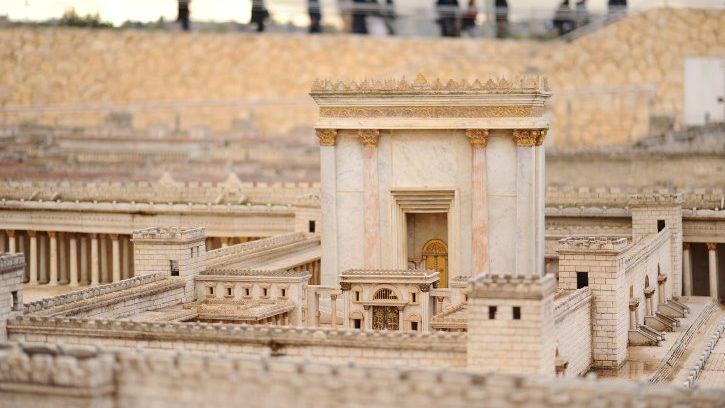
Chapters 40-42 contain the first part of Ezekiel’s temple vision. He is told to pay close attention so he can tell all to Israel. The temple described has some commonalities with Solomon’s temple, but much is different. While a temple will be rebuilt, this temple is never realized in the Bible. Ezekiel’s temple compound is 750 feet by 750 feet. It has three gates, courtyards, chambers, holy places and equipment. The Zadokite clan is set apart as the only Levites to “draw near” to God – to offer sacrifices on the altar. The temple is adorned with winged creatures and palm trees. There are holy chambers, places to store holy things.

The temple is at the center of God’s restoration of Israel, both physically and spiritually. It is a part of the sanctifying process, making Israel into the holy people of God. For Ezekiel and his audience, the temple represented God’s presence with the people. These words and vision bring hope and encouragement to the people living in exile. God longed to live amongst the people of God. God still longs to live amongst us today. May it be so.

Prayer: Lord God, your power and might extend over all things: over Gog and his allies, over today’s idols and temptations, over our selfish hearts. Ezekiel’s temple vision reflects your power and might. But it is still just a building. Just as your presence will fill this visionary temple, fill our hearts with your indwelling spirit, transforming our lives and our hearts. Amen.


Leave a comment

New Heart, New Spirit

Reading: Ezekiel 33-37

Ezekiel 36:27: “I will give you my spirit so that you may walk according to my regulations and carefully follow my case laws.”

Ezekiel is reminded that he is Israel’s lookout. As such, he is to speak when God speaks to him. That is his responsibility. If he fails to speak, then the people’s blood will be on him. But if he speaks and the people ignore him, their blood is on them. The people question God’s judgment next. They are wasting away because of their sin. God encourages them to turn away from their evil ways. Then they will live. God is simply judging each of them “according to your ways.”

Word from back home comes: “The city has fallen.” Twelve years into Ezekiel’s exile, Jerusalem falls. This leads the people in exile to seek Ezekiel and to hear his words. They listen, yes, but they still refuse to heed his words. God then turns the focus to the “shepherds” – to the leaders. They do not tend to the flock. They care nothing for the weak, sick, lost… They prey on them instead. God will rescue and care for the flock. Eventually a Davidic king will be their new shepherd. In chapter 37 God declares that they will once again be one nation with a new covenant.

Ezekiel then prophesies against Israel’s parasitic neighbors. They plunder and take possession of the land, nursing “an ancient grudge.” God promises to restore Israel’s land itself. The land will be renewed and restored. So too will be the people. In chapter 37 Ezekiel is carries to a valley full of very dry bones. They represent Israel’s faith. God will bring them back to life, one step at a time. God will bring them home and cleanse them. God will give them a new heart and then a new and right spirit. Restored to the land, Israel’s faith will be alive.

Prayer: Lord God, when the lookout comes, be it in your Word, your Spirit, or through another means, give us ears to hear and hearts to follow. Give us good and righteous shepherds to guide us, caring well for our souls. And don’t let us get too dry – keep that breath in our lungs so that we can bring you the glory. Amen.


Leave a comment

Much Lament

Reading: Ezekiel 27-32

Ezekiel 28:18 – “Therefore, I will bring fire from your midst. When it has consumed you, I will turn you into dust on the earth.”

Photo credit: Greg Rakozy

Most of chapters 27 and 28 are a lament for Tyre. Tyre had it all: beauty, trade, allies, wealth, abundance. Until God took it all away. Their prince was arrogant, saying, “I am God, I rule the seas!” God conceded that his wisdom and discernment were great, making him rich and powerful. But the claim, the pride – too much. Because the prince exalted himself, God declared, “Therefore, I will bring fire from your midst. When it has consumed you, I will turn you into dust on the earth.” At the end of chapter 28 we find a prophecy against Sidon. There will be a plague followed by the sword. Into this land, God will gather Israel. There they will build houses, will plant vineyards, and will live in safety.

Chapters 29-32 bring judgment against Egypt. God will set hooks in the great crocodile, flinging it onto open ground. Egypt is condemned as a “flimsy crutch” that splintered or broke in times of need. Because Pharaoh also claimed divinity – he created and owned the Nile, God will make Egypt an utter ruin – the most ruined place anywhere. God will one day regather Egypt, but it will remain lowly. Nebuchadnezzar will conquer Egypt and carry off its wealth – “wages for his army.”

In chapter 31 God compares Egypt to Assyria – the tallest of trees. There was no equal to Assyria in Eden, God’s garden. And yet Assyria fell, going down to the underworld. Assyria’s allies went along too. Elam and Edom and Sidon are there too – laid among the uncircumcised, those slain by the sword. Many arrogant and evil nations will come to a bitter end. Much Lament will be shared.

Prayer: Lord God, open our ears today to these warnings against being arrogant and greedy and selfish. When we get to thinking we’re king of the roost, remind us that we’re not. Humble us, bring us down to where we should be. Guide us to walk in your will and way. Amen.


Leave a comment

Charges and Judgments

Reading: Ezekiel 22-26

Ezekiel 22:30 – “I looked for anyone to repair the wall and stand in the gap for me on behalf of the land… But I couldn’t find anyone.”

Photo credit: Jametlene Reskp

We begin with chapter 22, where God brings charges against Jerusalem and then closes with a lament, revealing the heart of God. The charges are a summary of how Judah broke each of the Ten Commandments. God will scatter them and refine them like silver in the process. The chapter ends with this lament: “I looked for anyone to repair the wall and stand in the gap for me on behalf of the land… But I couldn’t find anyone.”

Chapter 23 contains an allegory of two sisters. It is the story of Israel and Judah, God’s people who prostituted themselves with multiple foreign powers and their idols, one after the other. The younger sister, Judah, proceeded to outdo the older sister, Israel. Instead of learning from her sister’s wayward ways, she amplified them. God turned both sisters lovers against them, pouring out God’s wrath upon them.

There are two parts to chapter 24. In the first part Judah is compared to a corroded pot. It will be heated so hot that its corrosion will be consumed. Judah will not be cleansed until God’s wrath has fully burned. In the second part, Ezekiel’s wife dies as a part of a sign act. God directs him not to mourn in any way. He follows instructions. So thorough will be Judah’s defeat that they too will walk around in stunned silence, unable to even grieve.

Chapters 25 and 26 contain oracles or judgments about Judah’s neighbors: Ammon, Moab, Edom, Philistia, and Tyre. Ammon and Moab took great delight in Judah’s downfall. Edom joyfully took part in Jerusalem’s destruction. The Philistines exacted revenge for past defeats and losses. All but Edom “will know that I am the Lord.” Our reading closes with the judgment of Tyre. They too ridiculed Judah (and God) at her downfall. The people around Tyre will shudder in terror at what befalls Tyre, who will “disappear” as God leads them “down into the pit.” Such will be the fate of all who oppose the Lord our God.

Prayer: Lord God, our innate selfishness is on full display today. We continue to struggle with want and greed, with lust and desires, with idolatry and disobedience. We are not all that different than Oholah and Oholibah, than Moab or Philistia. We too deserve your wrath. We too should be refined like silver. Instead, you brought grace in the form of your son. Today, Lord God, we thank you that we stand on this side of the cross, where love was poured out instead of wrath. Thank you, Lord Jesus. Amen.


Leave a comment

Hope, Yes, Even Then

Ezekiel 20:33 – “As surely as I live, with a strong hand, an outstretched arm, and with wrath poured out, I will be your king!”

Good and evil 1

We begin today with a riddle. The great eagle is Nebuchadnezzar, king of Babylon. He planted Zedekiah, but he rebelled, trying to form an alliance with Egypt. But Pharaoh wouldn’t help. Zedekiah went into exile. In chapter 18 God clarifies the consequences of their sin. Contrary to popular understanding, sins and their consequences are not carried on through the generations. Through a three generation example, God reveals that the righteous will live. The sinful will die. God states in verse 30, “I will judge each of you according to your ways.” The chapter concludes with a plea from God: choose life.

Chapters 19 and 20 lament Israel’s leaders and history, respectively. In chapter 19 poor leadership has resulted in Israel and Judah being planted in the desert – in exile – in a “parched and thirsty land.” God then reviews Israel’s long, long, long history of disobedience. Again and again and again God is ready to “pour out my wrath” on Israel and again and again and again we read that “for my name’s sake” God gives Israel another chance. Whether literally or figuratively it was again and again, “one more lap around the desert” as God tried and tried to bring Israel into a lasting covenant relationship. Finally, in 20:33 we read, “As surely as I live, with a strong hand, an outstretched arm, and with wrath poured out, I will be your king!” There will not be another lap, another “again.” Yet even as disaster looms, God speaks hope. After the doom, God will regather the small remnant. God will “bring you into the covenant bond.”

Chapter 21 describes the disaster soon to come. The guard will strike all – left and right, twice and three times. Reminded of their guilt, they will be laid low. “A ruin, ruin, ruin, I’ll make it!” declares the Lord.

Prayer: Lord God, these words of death and loss and devastation and disobedience can be hard to read. They are hard to wrap our heads around. Yet we also must acknowledge that just as you laid out the way to live, the people chose to walk the other way. We too face the same choice: life or death. Guide us to choose life, to choose to walk in your ways of love and grace, of justice and righteousness. Amen.


Leave a comment

Nevertheless

Reading: Ezekiel 12-16

Ezekiel 14:6 – “The LORD God proclaims: Come back! Turn away from your idols and from all your detestable practices. Turn away!”

Our reading begins with Ezekiel modeling the exile in a sign act. With people watching, he packs a bag and tunnels through the wall. Bag in tow, he heads out into the dark. Exile is coming. A few will survive to tell of their detestable practices. God then instructs Ezekiel to eat while trembling, to drink anxiously. During the siege, this will be Judah’s reality.

Some people question God’s timing. God says there will be no delay. The foolish prophets who proclaim peace and that God will be their wall – their lies will be exposed. The prophetesses who are misleading and entrapping people – God will rescue their victims. The focus then turns to those who are worshipping idols. God declares that if they come to God or to Ezekiel for prayers or for guidance, God will send them back to their idols. Yet God longs for Judah to repent. God says, The LORD God proclaims: Come back! Turn away from your idols and from all your detestable practices. Turn away!”

Noah, Daniel, and Job figuratively enter the story in chapter 14. They alone would be saved if wild animals or war or plague or famine were sent by God. These icons of the faith and virtue couldn’t even save their sons or daughters. They could save only themselves. God declares that all four tragedies are coming. Few will survive. Jerusalem is then compared to a vine. It is useful only for burning.

Chapter 16 details Jerusalem’s “detestable practices.” God recalls saving her when she was abandoned and naked. God fed and clothed and cared for her. She grew up and became very beautiful. She then prostituted herself with “all comers” – Egypt then Assyria then Babylon. Jerusalem was worse than Samaria and Sodom – so detestable that they looked righteous by comparison. Yet, in verse 60, we read, “Nevertheless…” God will one day reestablish the covenant. God will forgive their sins. Judah will then know that the Lord is God.

Prayer: Lord God, it was important for Judah to let go of false hope and to hear a call to repentance. It is important for us to be reminded that you are the only hope – our only hope, the only giver of mercy. We too will face judgment. Lead us to walk in covenant relationship with you, O Lord. Amen.


Leave a comment

Ends with Hope

Reading: Ezekiel 6-11

Ezekiel 11:19a – “I will give them a single heart, and I will put a new spirit in them.”

Chapter 6 addresses the consequences of Judah’s idolatry outside the temple. God will slay most of these idol worshippers. Some will escape and go into exile. God was “crushed” by the people’s “roving hearts.” They will fall by sword, famine, and plague. Chapter 7 continues this story line. God will judge Judah according to her ways. God won’t shed a tear, won’t show any pity. Those outside Jerusalem will die by the sword. Those inside will die by plague and famine. “Violent intruders” will defile the temple. Then Judah “will know that I am the Lord,” declares God.

Chapters 8-11 contain Ezekiel’s “Temple Vision.” God’s glory is in the temple as his virtual tour begins. Ezekiel is shown “terribly detestable practices” – a huge idol, 70 elders worshipping engravings on the wall, women worshipping a Babylonian god, men bowing to the sun. God then calls the “guardians of the city.” One of the six, the one in linen, is sent out to mark the foreheads of the faithful. The others follow along behind, killing all without the mark. They begin in the sanctuary and move outward from there. Ezekiel questions the depth of the violence. God is holding them accountable.

The guardian in linen is then sent out with fire from the temple chariot. He scatters fire about, burning down the city. The chariot rises up and moves to the threshold of the temple. God’s glory is on the chariot throne. There is a final confrontation with some evil and wicked men. God declares that they will die by the sword. And then God offers hope.

The exiles will be gathered back. God says, “I will give them a single heart, and I will put a new spirit in them.” Israel will be obedient. God will be their God. Then the chariot leaves, flying east towards Babylon. The vision ends and Ezekiel tells the exiles all that God has shown him. The story ends with hope. Our story does too. Thanks be to God.

Prayer: Lord God, you are almighty and all-powerful. You are just and righteous. Just as you held Judah accountable, so too do you hold us accountable. So God, create in each of us a single heart, a heart fully aligned with you. Pour your Spirit into our hearts, leading and guiding us to walk faithfully with you. Be our God. Make us into your people. Amen.


Leave a comment

God Has Spoken

Reading: Ezekiel 1-5

Ezekiel 3:4 and 7 – “Human one, go! Go to the house of Israel and speak my words to them… they will refuse to listen to you because they refuse to listen to me.”

The book of Ezekiel begins with the prophet in exile. He was brought to Babylon in the first wave of exiles, five years before the fall of Jerusalem. On his 30th birthday he is called by God to speak God’s word to these hardheaded and hard-hearted people. If not for exile, Ezekiel would’ve begun his formal duty as a priest in the temple on this day. He sees a vision – four magnificent creatures, each with four spinning wheels. Above them is a dome with a throne. On the throne is the glory of God. Ezekiel can feel God’s power and might in this scene.

God commissions Ezekiel to be the prophet to Israel, saying, “Human one, go! Go to the house of Israel and speak my words to them… they will refuse to listen to you because they refuse to listen to me.” God prepared Ezekiel, hardening his face so that he can speak to these rebellious people. God appoints Ezekiel as a lookout. His duty is to warn the people – no more, no less. Obedience falls on them. Or punishment for disobedience. God declares to Ezekiel that the prophet will speak when God speaks and will be silent when God is silent.

Chapters 4 and 5 describe Jerusalem’s fate using “sign acts.” These vivid visuals have a strong impact, amplifying his message. First, Ezekiel depicts the coming siege on Jerusalem. He then lies on his left side for 390 days then on his right side for 40 days – one day for each year of Israel’s and Judah’s rebellion, respectively. Ezekiel then makes bread from scraps. He eats and drinks a small ration of bread and water each day, representing the famine that will befall Jerusalem. The prophet then shaved his head and beard and divides the hair into thirds. He burns the first third. One third of Jerusalem will die by famine and plague. Ezekiel cuts up the next third. One third will die by the sword. Lastly, he scatters one third to the wind. The last third of Jerusalem will be taken into exile. The few strands in his pocket represent the very small remnant that will be left behind. When all of this literally happens to Judah, then God’s “anger will be complete.” Then Israel and Judah will know that God has spoken.

Prayer: Lord God, what a call and what a way to show your people what is about to happen to Jerusalem and Judah. These images raise up a level of awe and fear of you. It is good to recognize your power and might and justice. Help us to see the signs and to hear the words of warning and correction that you speak into our lives today. Soften our too often hard hearts and pry open our too regularly closed ears. Amen.


Leave a comment

Lamenting Suffering

Reading: Lamentations 3-5

Lamentations 3:22 – “Certainly the faithful love of the LORD hasn’t ended; certainly God’s compassion isn’t through!”

Photo credit: Falaq Lazuardi

Today’s key verse summarizes the feel of Lamentations 3-5. There is hope in these words of lament. There is a hope that God isn’t utterly done with Israel. Yes, the author knows the promises of rescue and restoration, but in the depths of the suffering, hope can flicker.

Lamentations 3 is in the first person. It reads as if Jeremiah were reflecting on the hardships and trials of his life as a prophet. He has felt God’s hand against him. He has felt like God “silences my prayer.” These memories of suffering bring bitterness. He muses, “Certainly the faithful love of the LORD hasn’t ended; certainly God’s compassion isn’t through!” Hope arises, though, as he declares, “Great is your faithfulness… The Lord is my portion! Therefore I’ll wait for God.” As the chapter continues, there is an invitation to “examine our ways” and to recognize, “We rebelled.” This is step one to forgiveness.

Chapter 4 reflects on the people’s suffering. The children are thirsty and hungry. The author laments that their fate wasn’t like Sodom’s – quick and final. He laments, death by the sword would be better than death by famine. The false prophets draw some of the blame. There is reality in verse 12: “Our end had definitely come.”

The last chapter is a communal lament. They invite God to notice their disgrace. They recognize that they are burdened by past sins. Their joy is gone. They are “doomed because we have sinned.” Hope surfaces again as the community recalls how God reigns from one generation to the next. With that hope, they offer this request: “Return us, Lord, to yourself. Please let us return!” May it ever be so.

Prayer: Lord God, we too lament when we suffer justly for our sins and for our choices to be of the world. We too long to end these seasons and to return to you, our God and king. In the suffering and trial, refine us as you are working to rescue us. Draw us to you, O Lord, again and again. Amen.


Leave a comment

Warning and Promise, Reality and Hope

Reading: Lamentations 1-2

Lamentations 2:19b – “Pour out your heart before my Lord like water. Lift your hands up to him for the life of your children.”

Photo credit: Shane Rounce

Today and tomorrow we read through Lamentations. These five acrostic poems lament the fall of Jerusalem and the suffering that followed. Jeremiah (and/or others writing in his voice) give a vivid and emotional account of this dark time in Israel’s history. Jews have read this book yearly during the month of Ab as a reminder of the consequences of sin and disobedience to God’s Instruction.

Chapter 1 opens with “Oh no!” This phrase evokes the wailing customary in a Hebrew funeral dirge. Jerusalem is personified as a woman, sitting alone, widowed and enslaved. There is no one to comfort her. She recalls the treasures that filled the palace and temple. She also laments the walls and gates being destroyed. She now feels “naked.” There is also the harsh reality of survival laid bare in these words. Hunger is prevalent. People sit on the ground and moan, fainting from lack of strength. As I envision this scene, my mind goes to places like Gaza and the Ukraine.

Running throughout chapters 1 and 2 is an acknowledgement. Israel and Judah have brought this upon themselves. Their sin, their disobedience, the false prophets – all led to this outcome. The nation who touted God’s presence, power, and might has been laid low by God’s almighty hand. Israel’s enemies rejoice. But even though God “ripped down, showing no compassion” and even though “the comforter who might encourage me is nowhere near,” there remains a faith and a hope in God. The writer encourages Israel and us to, “Pour out your heart before my Lord like water. Lift your hands up to him for the life of your children.” May this be our prayer when we find ourselves in times of suffering and hardship.

Prayer: Lord God, the reality of pain and suffering is right there. The cost of turning from you and walking in the ways of the world is laid bare today. May we read and feel these words, O Lord, as both warning and promise, as both reality and hope. May they work in us to yield faith and obedience to your will and way. Amen.