pastorjohnb

Thoughts and musings on faith and our mighty God!


Leave a comment

The Simple Way of Love

Readings: Matthew 11:16-19 and 25-26

Matthew 11:19b – “Wisdom is proved to be right by her works.”
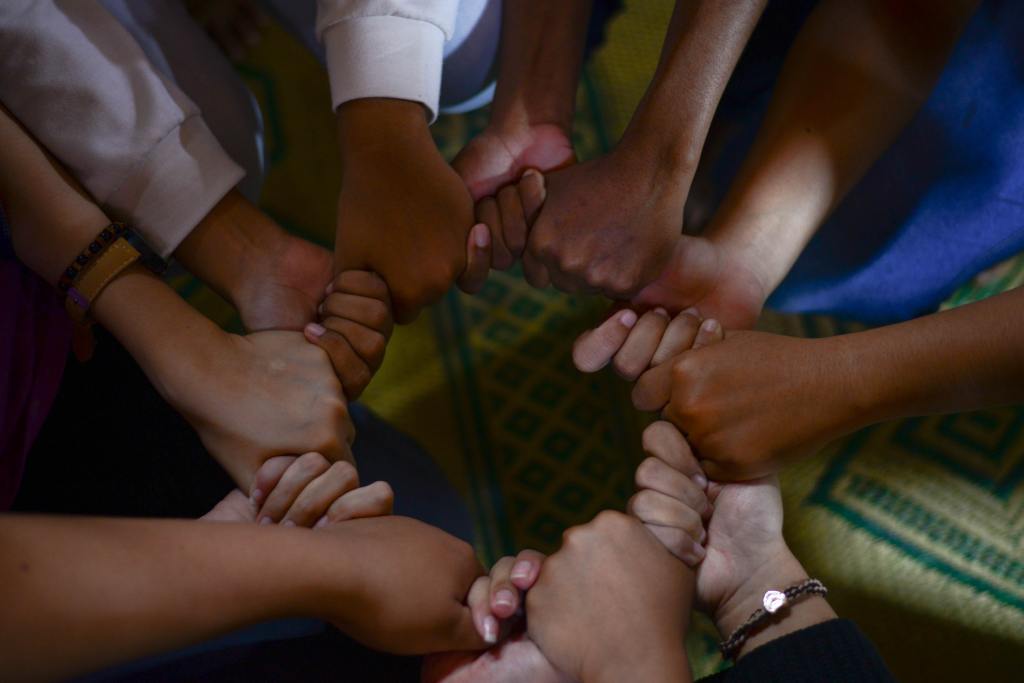
Photo credit: Wylly Suhendra

Two kindergarteners were best friends. Just before Christmas break, one got a buzz cut – to look sharp for family pictures. Over break the other one got a buzz cut – so their teacher couldn’t tell them apart. One boy was Caucasian. The other was African American. We are not born knowing hate, prejudice, sexism, greed…

In the first part of this week’s gospel lesson, Jesus is lamenting how “this generation” misunderstood John the Baptist and even Jesus himself. When he says this, I think he’s looking at the religious leaders. This becomes clear in the second half of today’s reading. John was sober and very serious. He lived an austere life out in the wilderness. Yet the religious leaders said he was possessed by a demon. What demon would call people to repent of their sins?

Jesus, by comparison, was pretty social. Instead of taking up residence in the church, oops – in the wilderness – and waiting for people to come to him, Jesus went to where the people were. He ate and drank with those who needed to know God’s love. That included those looked down upon and shunned by the religious leaders. So they called Jesus “a glutton and a drunk.” To this “opinion,” Jesus replied, “Wisdom is proved to be right by her works.” Wait and see how God works in and through Jesus.

Speaking more directly to those with the power and authority of his day, Jesus thanks God for hiding who he truly is from those thought wise and intelligent. He thanks God, too, that his simple way of love is known by “babies.” There is a story about two kindergarteners…

Prayer: Lord God, the “wisdom” of this world leads us so far from who and what you created us to be. Sadly, sometimes the wisdom of religion also can lead us astray. Living as the world lives, there is little room for the way of love. Focused on self or on protecting an institution, there is no space for “the other.” Lord, like you always did, may we make space both at the table and in our hearts for those who are in need to love, belonging, worth. And, when needed, may we sit at their tables and be present there. Amen.


Leave a comment

May the God of…

Reading: 1st Samuel 1:9-17

1st Samuel 1:16b – “This whole time I’ve been praying out of my great worry and trouble.”

Photo credit: Rainier Ridao

Today’s scene is located in a place of worship in Shiloh. Elkanah, the husband of Hannah and Peninnah, takes his family here once a year to worship and sacrifice to the Lord. Hannah’s life is very hard emotionally. Peninnah would “make fun of her mercilessly” because Hannah was unable to conceive children. Children, especially male children, were highly valued in that culture. If Elkanah died, for example, Hannah’s survival would depend on her offspring. Bearing and raising children was Hannah’s main responsibility in life and she was unable to meet this expectation.

It is with heaviness of heart and soul that Hannah goes to the place of worship. She is “very upset” and she “couldn’t stop crying.” She pours our her heart to God, begging for a son, promising to “give him to the Lord for his entire life.” This willingness to give up a son reveals the depth of her pain and shame over being childless. While our society today doesn’t place the same premium on bearing children, what does bring shame in our culture? If you are without ____, what marginalizes people today?

Eli sees Hannah praying. The priest assumes that she is drunk. She is not. She says to Eli, “This whole time I’ve been praying out of my great worry and trouble.” She has almost assuredly prayer for a child ever since marrying Elkanah. The desperation has risen with each child Peninnah bore to him. Understanding the depth of her pain, sorrow, and shame, Eli blesses her, saying, “May the God of Israel give you what you’ve asked from him.” In our moments of great need, may it be so for us as well.

Prayer: Lord God, sometimes we feel like Hannah. Sometimes we feel marginalized and less than. For some folks, though, that is their “normal.” Lord, open our eyes and awaken our hearts to those who exist on the edges today. With your love and compassion, guide us to draw them into community, into a place where they can find meaning and worth. Through the sharing of our blessings, use us to meet their needs. Amen.


Leave a comment

Labels

Reading: Luke 7:36 to 8:3

Labels are a dangerous thing.  Labels are barriers that can inhibit ministry.  Simon the Pharisee labels people.  The woman is a ‘sinner’.  This means to keep away from her lest she make him unclean as well.  Jesus is a ‘teacher’.  He has some good things to share and maybe a few are even applicable to Simon’s life.  But teachers are human, just like him, so they require no allegiance, no commitment, no special status.  And this ‘teacher’ allows a ‘sinner’ to touch Him, so Jesus is almost a sinner too; certainly He is at least ‘unclean’.

We too like to label.  We like to label people because it allows us to put them in boxes and because it allows us to keep them at a distance.  And like the Pharisee, these labels sometimes allow us to dismiss people from our thoughts like he did with the woman.  She was invisible to him even though she stood crying in his own home, right there in front of him.  How often have we driven or walked past a homeless person with a sign asking for help?  How often have we ignored the unkempt woman sleeping in the back pew during church?  We notice them briefly, apply our label – lazy, drunk, outcast… – and move on.

Jesus said to Simon, “He who is forgiven little lives little”.  For the woman she is forgiven much as Jesus restores her to righteousness.  As a new creation she can now go on to love others as Jesus first loved her.  For Simon, he is unwilling to see past a label so he cannot even begin to offer forgiveness for the judgment of others that he had in his heart.  Therefore he will also live others little.

What allowed Jesus to look past ‘sinner’ and to see the brokenness inside the woman?  What can we do to look past lazy, drunk, outcast… to begin to know what is broken inside of others?  The key is in the reverse of Jesus’ statement to Simon.  May we, as followers of Christ and as witnesses to His love, also offer much love to those in need of healing so that they too can begin to experience His forgiveness and can then begin to find healing for the brokenness in their lives.  May we not stop at the label but step beyond the barriers that keep us from sharing Christ with the world in need.