pastorjohnb

Thoughts and musings on faith and our mighty God!


Leave a comment

God Is So Faithful

Readings: Genesis 24, Genesis 25:1-18

Genesis 25:27: “Bless the LORD, God of my master Abraham, who hasn’t given up his loyalty and his faithfulness to my master.”

Photo credit: Shane Rounce

The bulk of today’s reading covers finding a suitable wife for Isaac. In the culture of the day, that meant finding a wife from within one’s kinship group. This would insure continuity of religious and cultural norms and beliefs. Abram has married from within his kinship group and knew that was essential for his son Isaac too. Living as “temporary immigrants” in a foreign land, Abraham knew how important this would be for Isaac and for his future descendants. What follows is an amazing story of our faithful God at work.

The story begins with the oldest servant swearing an oath to Abraham to try to carry out his wishes for Isaac’s wife. Abraham is sure that God will go before and will guide this process, providing the right wife for Isaac. Arriving at the well outside of Nahor’s city, the servant prays to God for a woman who will give him a drink and then will water his ten camels. Rebekah does exactly that. The servant gazes in awe and wonder as this scene unfolds. He praises God, saying, “Bless the LORD, God of my master Abraham, who hasn’t given up his loyalty and his faithfulness to my master.” Once at the family home, he recounts the whole story. Essentially asking to take Rebekah back home with him to marry Isaac, both dad and brother respond, “This is all the Lord’s doing.” The next day the journey home begins. On arrival, Isaac and Rebekah meet each other and are married.

All set in order, Abraham makes final arrangements. He wills everything to his son Isaac and sends his second wife and their children far away. Abraham dies at 175. Isaac and Ishmael bury their father with Sarah. It is beautiful that both “first sons” are a part of this. Our reading closes with another example of God’s love and faithfulness. Ishmael dies at 137, leaving a line of 12 sons/princes to build his “great nation,” as promised by God to Hagar and Abraham. Our God is so faithful and true. Thanks be to God!

Prayer: Lord God, what a powerful witness to who and what you are! All unfolds exactly as you had it planned and we, like the servant, stand in awe and wonder. From that posture, Lord, may we step forward in faith each day, trusting in you to guide and lead our steps as we seek to do your will. Amen.


Leave a comment

Connection, Belonging, Faith

Readings: Genesis 21, Genesis 22, Genesis 23

Genesis 22:7 – “Isaac said, ‘Here is the fire and the wood, but where is the lamb for the entirely burned offering?’”

Chapter 21 brings a shift in the family dynamics. Sarah gives birth to Isaac. Her laughter of doubt and shame turns to the laughter of joy and celebration. As Isaac grows so too does the tension over the inheritance. This leads to Hagar and Ishmael being sent away. God assures Abraham of their future too, so he is able to send his firstborn son away. Death soon feels near and Hagar and Ishmael cry out to God. Once again God sees her and hears their cries. God promises to make him into a “great nation.” The chapter closes with Abraham making a treaty with Abimelech. This secures water rights for an immigrant living in a foreign land. This reality comes up again in chapter 23.

In chapter 22 God tests Abraham. He is instructed to sacrifice Isaac – his one and only son, again in a place that God will reveal. Showing radical obedience once more, Abraham rises early, chops the wood, and heads out – the fire, the knife, and also Isaac in tow. Leaving the two servants behind, Abraham says to them, “The boy and I will walk up there, worship, and then come back to you.” Carrying the wood himself and seeing the fire, Isaac asks, “But where is the lamb for the entirely burned offering?” Abraham’s response – “God will see to it” – demonstrates his faith. Going so far as to raise the knife over Isaac then demonstrates his trust. God intervenes, providing a ram. Then God reiterates the covenant promise of many, many descendants.

Sarah dies at the beginning of chapter 23. After grieving for her, Abraham goes to the Hittites – the locals – to buy land to bury Sarah. He is at their mercy. Abraham is a temporary immigrant. After some culturally necessary back and forth, he buys land at a very high price. It provides a burial space and it begins a social relationship with the Hittites. To a small degree, they have now become “family.” There is connection and there is belonging, something we all need.

Prayer: Lord God, as the story progresses we see that you do not change. You are faithful, you provide, you are grace. Abraham experiences all of these things again and again as he walks faithfully and obediently with you. Encourage and guide us as we seek to walk this same walk. As we do, Lord, bless us too with your care, your provision, your grace. Amen.


Leave a comment

Abram – A Model Faith

Readings: Genesis 12, Genesis 13, Genesis 14

‭Genesis‬ ‭12:4-5 – “Abram left just as the LORD told him… Abram took his wife Sarai, his nephew Lot, all of their possessions.”

As we begin chapter 12 the stories become more personal. We explore the relationships between God and Abram and between various human characters. The relationship between Abram and God reveals the ideal human relationship with the divine. All of the relationships between the human characters run the gamut from faithful and true to selfish and power-hungry. In many ways these human relationships mirror our relationships today.

Chapter 12 begins with God directing Abram to leave Haran to go to “the land that I will show you.” Abram doesn’t know the destination or the time frame. Yet in verses 4-5 we read, “Abram left just as the LORD told him… Abram took his wife Sarai, his nephew Lot, all of their possessions.” Living out a radical faith and obedience, Abram heads out. Abram leaves everything to follow God’s word. He is the model of faith in the Old Testament and beyond.

But Abram isn’t perfect. That’s another thing that character after character reveals in the Bible. Famine forced Abram and family to Egypt. He lies about who Sarai is to save his own life. She becomes part of Pharaoh’s house. This brings plagues on Pharaoh and his house. Abram is figured out and expelled from Egypt. While living there, however, God has abundantly blessed both Abram and Lot. This becomes a problem when they get back to Canaan. Splitting up is necessary and Abram graciously gives Lot the first choice. He greedily chooses the best land. It is near Sodom, a place of sin and evil.

Lot then becomes a victim of a local war. He and all he has is taken away as plunder. A survivor tells Abram who goes and rescues Lot. On the way home they meet Melchizedek, who blessed them in the name of El Elyon – the God of heaven and earth. Abram returns the blessing by giving the priest a tenth of the plunder.

The question I’m left with today is this: Do my relationships with God and others seek to emulate the relationships modeled by the good and faithful Abram?

Prayer: Lord God, were I to be as obedient and faithful as Abram, how my life and faith would change! When I lean towards being selfish or sinful, bend me back to your will and ways. When you bless me, O God, turn me to others so that I may bless them in turn. Amen.


Leave a comment

God with Us

Reading: Genesis 4, Genesis 5

Genesis 4:10: “The Lord said, ‘What have you done? Listen! Your brother’s blood cries out to me from the ground.'”

Chapter 4 contains the story of Cain and Abel – Adam and Eve’s first two sons. Living outside of the garden because of their parents’ sin, Abel works as a shepherd and Cain as a farmer. These two brothers bring an offering to God. Cain brings some of his crops and Abel brings the firstborn, including their fat portions. God sees Abel’s offering as “favorable,” angering Cain. At times we all come to this place that Cain came to – realizing that our offering to God was less than what it could or should have been. Maybe it was a half-hearted effort with that neighbor. Maybe we came to worship with a really poor attitude. When the realization comes that we fell short, we too can get angry. It’s always harder to look within.

Even though God warns Cain – “sin will be waiting at your door ready to strike” – Cain still allows his anger to smolder, leading him to murder Abel. God knows yet asks, “What have you done? Listen! Your brother’s blood cries out to me from the ground.” God is not searching for the answer but for remorse and repentance. None is found. Cain even doubles down, denying any knowledge of what has happened to Abel. As a result, Cain is moved further from community. He is to be a wandering nomad. Punishment at least brings a hint of remorse. Even here, God’s grace remains present. Isolated, alone, vulnerable, God marks Cain with a sign, protecting him from harm. Like Cain, as bad as we can become, God remains with us.

Chapter 5 brings a list of descendants. Many are just names. They lived a long time before the flood – 930, 912, 962… All but Enoch died. He was “taken up,” presumably because he walked faithfully with God. As sin continues to grow, this rapidly becomes less common. The list of singular descendants branches out at Noah. Each of his three sons will have a role in the ongoing story of God.

Prayer: Lord God, thank you for always being with us, even in our sin. Thank you for not giving up on us and for always trying to work us towards your good plans. Please forgive us when we go astray, pursuing other things. Thank you for your love and grace. Amen.


Leave a comment

In All of Life

Reading: Psalm 98

Verse 1: “Sing to the Lord a new song, for he has done marvelous things.”

Photo credit: Rainier Ridao

Psalm 98 is a song of praise and worship. The psalmist lifts up salvation and God’s righteousness and faithfulness as reasons to sing praises to the Lord. In our lives, we certainly can offer lots of praise and thanksgiving to God when we are experiencing these and other blessings in our lives. In the good days it is easy and natural to praise God and to lift our worship heavenward.

It is not always easy, though, to praise the Lord. When we experience unwanted change or loss, when we receive that sobering diagnosis, when we feel isolated or lonely – it can be hard to find joy and to have praise on our lips. Today I am reminded that worship or praise doesn’t always have to be loud or joyous or exuberant. It can be prayerful or quiet or meditative. It can be centered on our understanding that as a child of God, God loves us and has plans to prosper us and wants to bring good into our lives.

Yes, I am sure that God enjoys listening in on a good old hymn or a communal prayer. But our faith is also personal and intimate. A quiet moment, a heartfelt prayer, a stillness simply resting in God’s presence – these too are deeply pleasing to God. In and through all things, we know that God is in control. Praise and worship is sometimes simply reflecting this truth back to God. May our praise and worship reflect this in all of life.

Prayer: Lord God, in the days of sunshine and beauty, in the days of darkness and despair, in the days of intermittent clouds and the everyday of life – may I ever praise and worship your holy name. You are my constant in all of life. For that I can always rejoice. Amen.


Leave a comment

Present

Reading: 1st Thessalonians 5:16-24

Verses 16-18: “Rejoice always, pray without ceasing, give thanks in all circumstances.”

Light and dark

The nine verses that come to us today at the end of Paul’s first letter to the Thessalonians are jam-packed. Originally, of course, there were not verses in the letter. They were simply sentences that followed one after another. And these eight sentences have a lot in them! It was as if Paul had lots left to say but only had a little room left on the back side of his last piece of parchment.

In the first sentence, or in verses 16-18, Paul offers these words: “Rejoice always, pray without ceasing, give thanks in all circumstances.” Yes, this is God’s will for our lives. Each phrase could easily be a couple of paragraphs. And Paul, above all people, should know that life can be really hard. There are many times when joy is hard to find, when prayer feels like a non-option, when gratitude is just not happening. But Paul is not asking us to be joyful or whatever for the hardship… He is reminding us that we can be joyful, prayerful, and even grateful in the hardship… because God is with us in the hardship… We do not go through life on our own. God is always present.

Being present is the thought that carries on through the letter’s closing. To keep the Spirit’s fire, to hold to the scriptures, to hold everything up to God’s light, to do good and not evil – these are the ways that we remain present to and with the God who is ever present to us. Paul closes with the outcomes of a deeply personal and intimate relationship with God: we will be sanctified (made holy) and we will live righteous lives. Yes, God is faithful. May we be too!

Prayer: Lord God, thank you for the reminder today that you are always with us. In the good, in the bad – in all of it – you are with us. Immanuel, help us to stay connected, dependent, and committed to our relationship with you. There is no other way. Amen.


Leave a comment

Restore Us, O God

Reading: Psalm 126:4-6

Verse 6: “He [or she] who goes out weeping… shall come home with shouts of joy.”

Photo credit: Shane Rounce

Turning to the second half of Psalm 126 today we bump up against reality. Life happened to Israel and it happens to us. At times our humanity and our tendency towards selfishness and sin gets us to a place of exile, either from God or from one another or from both. And sometimes the actions or decisions of others negatively affect us. And… at times we get sick or a natural disaster impacts us or… In all of these circumstances and situations we too can cry out to God, “Restore our fortunes, O Lord!”

In verses 5-6 comes the promise and the hope. The reality of our times of sorrow or grief or sadness is that life goes on. As the Israelites continued to sow, even with tears in their eyes, we too must continue to keep moving. As we become able to, we need to resume living. The promise is that eventually we will “reap with songs of joy.” God will be at work, will walk with us through our sorrow…, and will bring joy back into our lives. It is this hope that enables us to work through our sorrow, grief, sadness…

Through tear-filled eyes and with heavy hearts the Israelites trusted in God to restore them. They knew that God was and is loving, faithful, and steadfast. Their trust rested upon these things. May we too recall the “great things” that God has done in our lives, trusting that “He [or she] who goes out weeping… shall come home with shouts of joy.” May it be so.

Prayer: Lord God, in those moments of doubt and fear, when sadness and grief are about to win the battle, whisper your hope into our hearts. When it is difficult to take that next step, grant us courage and bring us the strength to step forward. When our hearts fill with sadness, wrap us in your love. And when loneliness sets in, send a brother or sister in Christ our way. Walk with us always, O God. Amen.


Leave a comment

Drawn Back

Reading: Isaiah 64:1-9

Verse 8: “Yet you, Lord, are our Father. We are the clay, you are the potter; we are all the work of your hand.”

Photo credit: Rainier Ridao

In ‭Isaiah‬ ‭64, God seems absent to Isaiah and to the people of God. The prophet longs for God to “rend the heavens and come down.” Isaiah longs for the people of God to once again know the God who “acts on behalf of those who wait for him.” When God has been known and then feels absent or withdrawn, one feels that. Life seems abnormal. We’ve all experienced this.

Isaiah recalls that God has indeed “come to help those who gladly do right.” When one lives faithfully and obediently, God is definitely active and present in one’s life. When we are aligned with God’s will and ways, it feels like we are walking closely with God. We too have experienced this.

Continuing on, Isaiah recognizes that the people have remained in their sin. They are “unclean” and right now “no one calls on God’s name.” They are out of alignment with God. They are not even seeking God. It is no wonder that God feels distant and disconnected. We too have experienced this.

Turning to verse 8, we find hope. Isaiah holds to a sure truth: God is present and just waiting to act. God does not abandon us ever. Speaking with hope and confidence Isaiah says, “Yet you, Lord, are our Father. We are the clay, you are the potter; we are all the work of your hand.” God is yet there, ready and willing to shape and form the people back into who God created them to be. The prophet asks God to look upon them once again. Isaiah longs for restoration and reconnection. God is faithful. The people will be drawn back to God. We have experienced this too. Thanks be to God.

Prayer: Lord God, when life leads me to question your presence or your love, when my choices or actions create a feeling of separation – draw me back to you. May the Holy Spirit call out my name; may my faith be rekindled, drawing me back to the only source of true life. Amen.


Leave a comment

God Brings Victory

Reading: Judges 4:4-7

Verse 6: “The Lord, the God of Israel, commands you…”

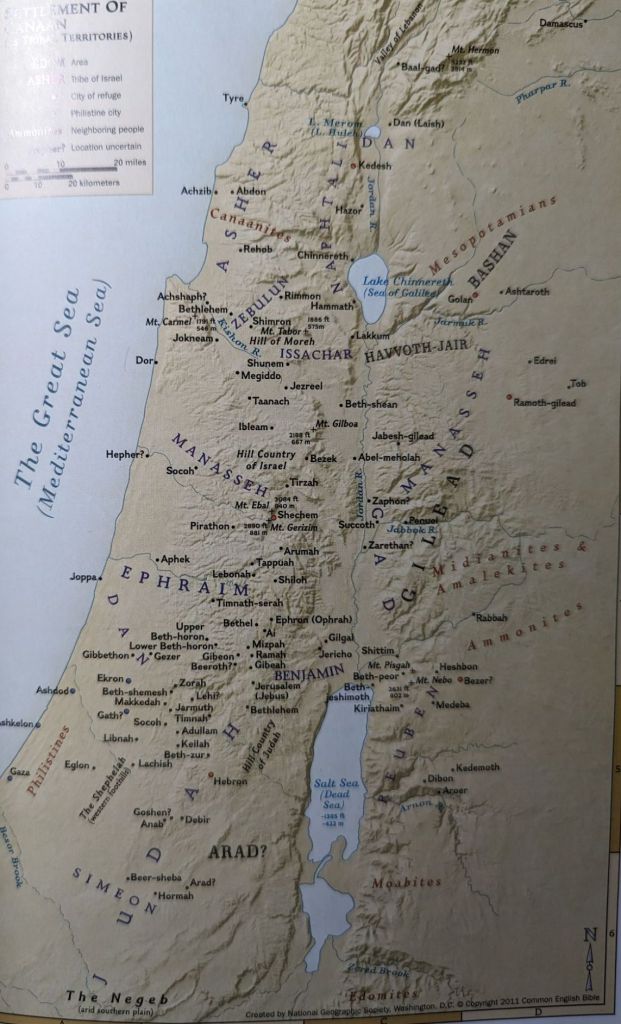
As we continue in Judges 4 we meet Deborah. She is a prophetess from the tribe of Ephraim. In my translation it says that she was “leading” Israel. In the footnote it says some translations say “judging.” That is a bit of a misnomer. Many of the judges functioned as the de facto leader of Israel. Raised up by God, they carried with them God’s authority. Most of the time the judges, Deborah included, functioned as literal judges, settling disputes and offering judgments. But in today’s passage and in the story that unfolds, Deborah becomes much more.

In verse 6 she summons Barak from the neighboring tribe of Naphtali. She begins the conversation with these words: “The Lord, the God of Israel, commands you…” Relaying the very words of God, she instructs him to lead an army against Israel’s oppressor. She punctuates the command with the promise that God will “give him into your hands.” God will be with Barak and will bring Israel victory. If one reads the rest of Judges 4, you will see that the victory does come to Israel – maybe not exactly as we’d imagine but victory for sure.

Deborah heard the voice of God and acted in them in complete faith and trust. In response, God was faithful. God is always faithful to the promises and commands that God gives. In our lives we too hear God – as we read scripture, as prophets and pastors speak, as the Holy Spirit whispers… When we do hear God, do we too step forward faithfully, trusting in victory through the Lord our God?

Prayer: Lord God, when you speak, may I be a willing listener and an obedient follower. When you want to use me, give me the faith to trust and the courage to step forward. And go with me, Lord, ensuring the victory. Amen.


Leave a comment

God Will Show the Way

Reading: Deuteronomy 34:5-12

Verse 9: “Now Joshua son of Nun was filled with the spirit of wisdom because Moses had laid his hands on him.”

Photo credit: Robert Linder

Moses comes down from the mountain, having seen the Promised Land. He died there in Moab. Yet this is not the end of Moses’ impact on Israel. Just as he knew that he was a part of God’s unfolding plan during his lifetime, he also understood that his legacy would be part of the continuing plan. His words and actions have shaped and formed the people. He has mentored Joshua. These efforts will go forward with them into the Promised Land. And in his dying, he modeled faith and obedience. Even though 120 years old, Moses was strong and clear-minded. Moses understood that this too was God’s plan. Moses followed God even into death.

After Moses died, Joshua assumed leadership. He was chosen by God and he was trained and blessed by Moses. In verse 9 we read that he was filled with the spirit of wisdom because Moses had laid his hands on him.” Joshua was clearly the next leader. Israel followed his lead and they listened to his words. Even though “no prophet has risen in Israel like Moses,” the people will follow Joshua. It will not be the same, yet they will follow Joshua.

In our lives we experience change. We spend time in the wilderness, being shaped and formed into who God desires us to be. As we emerge and recognize that things aren’t exactly the same, may we first seek God’s guidance and direction, discerning the way that we should go. As it was with Israel, God will show the way. You might even play the role of Joshua! May it be for us as it was with Israel as they moved towards the Promised Land.

Prayer: Lord God, help us to faithfully and obediently step forward into your future. Remove our longing for the past and our worry about the present and the future. Give us the courage to look beyond self and to loosen our grip on our stuff. Open our eyes to the plans and purposes that you have for us. Lead us to faithfully join you in the plans that you have for us. Amen.