pastorjohnb

Thoughts and musings on faith and our mighty God!


Leave a comment

A Profound Sense of Gratitude

Reading: Deuteronomy 26:1-11

Deuteronomy 26:10a – “I am bringing the early produce of the fertile ground that you, Lord, have given me.”
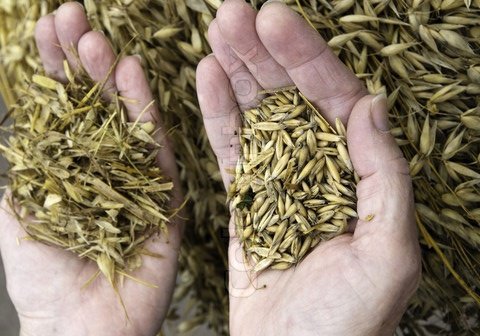
Our first readings this week focus in on giving thanks to God. In our Deuteronomy reading, the Israelites have just come out of many years of bondage and oppression in Egypt. They’ve most recently spent 40 years wandering in the wilderness, testing God and learning from their sinful mistakes. The Israelites have now been prepared to enter the Promised Land. As God has done for the years in Egypt and in the wilderness, God will continue to provide for God’s people as they enter into their inheritance.

As an expression of gratitude and dependence, each Israelite is to take some of the “first fruit” of the land and to bring it as a sacrifice to God. “First” implies not only earliest but also best or chief. God is calling for all of this from the people, giving to God before anything else. The solemn statement in verses 5 through 10a is a reminder of all that God has done since the time of Jacob. This reflection would raise up in Israel a profound sense of gratitude and an awareness that all that they have comes from God.

The reflection ends with these words: “I am bringing the early produce of the fertile ground that you, Lord, have given me.” For the Israelites this was their actual first fruits. What could we substitute into “I am bringing ____ that you, Lord, have given me.” What “crop” or talent or wealth or time could give to God with a profound sense of gratitude? How would being aware of this offering as a returning of something that really already belongs to God increase our thanksgiving? Take a few moments to ponder what you could give and then commit to offering these things with thanksgiving in your heart.

Prayer: Lord God, you are the giver of all things – material, spiritual, physical, relational, communal. Shape our hearts to be grateful for all that we have. Form us into people who generously return some of these blessings to you, O God, for the building of your kingdom in this time and place. Amen.



Leave a comment

The Lord Provides

Reading: Genesis 22:1-8

Genesis 22:8 – “The lamb for the entirely burned offering? God will see to it, my son. The two of them walked on together.”

As a young man Abram heard God’s call to leave his home and family, going to the place that God “will show you.” Once there, God again spoke, promising him very, very numerous descendants in the land God brought him to. After taking the making of an heir into their own hands, God again spoke, renaming and telling Abraham and Sarah that they would indeed have a son – at 99 and 90, respectively.

Isaac is soon born to this very aged couple. With great heartache the heir Abram and Sarai schemed is sent away into the wilderness. And then, about a dozen or so years later, God says to Abraham, “Take your son, your only son whom you love, Isaac… Offer him up as an entirely burned offering.” Say what?!

As we read in verse 3, Abraham is faithful to God. With wood, fire, knife, and Isaac in tow, Abraham sets out for the mountain that God “will show you.” Leaving the servants at the base of that mountain, Abraham says to them, “Stay here with the donkey. The boy and I will walk up there, worship, and then come back to you.” As God has done again and again in his life, Abraham expects God to provide again.

As Abraham and Isaac ascend the mountain, the boys asks, “But where is the lamb for the entirely burned offering?” The wood, the fire, the knife – they’re all here. Where is the lamb? Oh yes, Isaac, the lamb. Abraham says to his son, “God will see to it, my son. The two of them walked on together.” With great faith, Abraham trusts in his God, believing that the Lord will provide. Set up as a test, Abraham’s faith is stronger than this test. May it be so for you and for me when we have the choice to doubt or to trust in the Lord. May it be so.

Prayer: Lord God, you are the God that provides. You were there for Abraham. You will be there for Isaac. You were there for Isaiah when you said, “The LORD will guide you continually and provide for you, even in parched places. He will rescue your bones. You will be like a watered garden, like a spring of water that won’t run dry” (Isaiah 58:11.) You offer us the same promises when we walk forward in faith. Lead and guide us on our walk today, O God. Amen.


Leave a comment

Practice and Model…

Reading: Matthew 6:14-15

Matthew 6:14 – “If you forgive others their sins, your heavenly Father will also forgive you.”

Today’s two short verses come at the end of Jesus teaching the disciples the Lord’s Prayer. This prayer is a prayer that we know by heart. Most of us recite these words each Sunday and at other times as well. Of all that Jesus taught in the Lord’s Prayer, the only part that he felt needed a little emphasis was the part about forgiveness. Did Jesus know that we would struggle with seeking and offering forgiveness?

In verses 14 and 15 Jesus emphasizes our role in being people of forgiveness. There is a feel here that if we are not people who regularly and consistently practice and Model forgiveness, then we will not be forgiven by God for our sins. This understanding does not, however, align with other passages about forgiveness in the scriptures. No other passage contains what feels like “conditions” to be forgiven by God. So then, what is Jesus getting at here in verses 14 and 15?

First, forgiveness is like love, generosity, grace, compassion, comfort… We must practice and model these facets of who and what God is. When we do, we experience God’s forgiveness, love, generosity… in deeper and more transformational ways. Living out a more Christ-like life draws us closer to Christ. Second, as we practice and model forgiveness we begin to grow into the “as far as the east is from the west,” your sin is more, practice of God. Truly understanding God’s unconditional and complete ways of forgiveness leads us to practice and model this kind of forgiveness in our lives and relationships. May it be so for you and for me.

Prayer: Lord God, day by day lead us to develop, to grow into, to truly live out forgiveness in the ways that you do. Being able to let go, not holding onto past hurts, not plotting getting even, it is truly freeing. In this place, we are so closely aligned to you and your heart. Draw us there, closer and closer, O God, encounter by encounter. Thank you. Amen.


Leave a comment

We Are All Called

Reading: Luke 1:42-55

Luke 1:52 – “He [God] has pulled the powerful down from their thrones and lifted up the lowly.”

Photo credit: Fuu J

Our passage today begins as Elizabeth welcomes Mary into her home. She “blurted out” a greeting, so moved was she by what is stirring inside of her. Moved by the child she carries and by the Spirit, Elizabeth celebrates God’s blessings upon Mary. She ponders aloud why she is honored to be visited by the one carrying the Lord in her womb. Elizabeth rejoices that Mary said “yes” to God’s invitation to bear the Savior of the world.

In verses 46-55 we find what is often called the “Magnificat.” This Latin word translates “magnify” and that is what Mary does in her praise song to God. Mary rejoices over finding God’s favor, in being lifted from low to high. She also rejoices in the opposite reality that is also part of God’s upside-down kingdom, singing, “He [God] has pulled the powerful down from their thrones and lifted up the lowly.” As Mary continues she notes that the hungry are filled and the rich are left empty-handed. With eyes of faith Mary sees that through this unfolding, miraculous birth story, God is coming to Israel, just as promised in the covenants of old.

Both Elizabeth and Mary represent people who heard and felt God’s call upon their lives. Both willingly stepped forward in faith, humbly offering their lives to bring God the glory. While we may not receive an angelic visit (or we might,) God still clearly speaks by the whispers and nudges of the Holy Spirit. We are all called, in one way or another, to humbly offer our lives for God’s glory. May it be so when we’re called.

Prayer: Lord God, draw us deeper into our daily walk with you. Open our souls and our spirits to your story of faith that has been unfolding down through the generations. Engaged in the story, give us a willing heart to step into the story as you call us forward. Enable us to hear the calls and empower us to say “yes.” In all things may our lives bring you the glory and the praise. Amen.


Leave a comment

More Then Enough

Reading: 2nd Kings 2:38-44

2nd Kings 4:43c – “This is what the Lord says, ‘Eat and there will be leftovers.'”

Today we read about God again being faithful, about God again keeping a promise. These two feeding miracles demonstrate God at work in partnership with a faithful believer. As we consider our big prayers and our God opportunities this week, may we trust in this same God who loves and cares for us.

A severe famine has struck the land. In our story Elisha returns to Gilgal, one of three centers where prophets gathered. As the leading prophet in Israel, he also oversaw the centers at Bethel and Jericho. Elisha gives instructions to make stew. Another prophet gathers what he can find, which includes some inedible gourds. In response and in alignment with God’s nudge to feed these prophets, Elisha calls for flour to be added, miraculously making the stew edible.

At this point a man arrives with some bread and grain, likely a first fruits or thank offering. Instead of keeping this for himself, Elisha is moved to use this gift to feed his fellow prophets. The giver questions how this meager offering could feed 100 men. Elisha shares the “how” with him, saying, “This is what the Lord says, ‘Eat and there will be leftovers.'” God has moved Elisha to share his bread. God will see that there is more than enough. Healthy stew is augmented by bread, sent from God.

Over the next few days may we be sensitive to the ways that God nudges us. It might be to share food or it might be to share some other resource. Instead of being selfish or keeping it “for a rainy day” or worrying about our own needs, may we trust the nudge from our God of more than enough.

Prayer: Lord God, open our hearts to be responsive to and generous with that person that you place in our lives. Break our tendencies to hold onto and to store up and up and up. Bend our heart towards your heart of abundant generosity. Use us to be your love and care. Amen.


Leave a comment

A Heart Tuned

Reading: Micah 6:6-8

Micah 6:7 – “Will the Lord be pleased with thousands of rams, with many torrents of oil?”

“What does the Lord require?” That is the title for the section of scripture that we read today. We learned yesterday, from Luke 10, that a good answer is to love your neighbor. It becomes a great answer when we understand that our “neighbor” is anyone in need. Loving God with all that we are was the other part of the legal expert’s “correct” answer to the same basic question. Today we read Micah’s thoughts on this question. The prophet focuses on both sides of the love God, love neighbor concept.

Micah begins with the “religiously correct” answer. Sacrificial offerings were the culturally acceptable response to your God/god, whether you were Hebrew or Moabite or Canaanite. Although Israel’s understanding was not quite as transactional as this process was with pagan gods, there was certainly an element of checking the box at this point in Israel’s history. Their going through the motions disgusted God. That is why Micah, tongue-in-cheek, asks, “Will the Lord be pleased with thousands of rams, with many torrents of oil?” Speaking to the pagan practices and to the point he is making, he next asks, “Well, then, how about my oldest child instead?”

The real answer to the title question comes in verse 8. It is a heart tuned fully to God. That is what is “good.” That is what God “requires.” This is because a heart tuned to God will naturally be a heart tuned to our neighbors. In the last part of verse 8 the prophet reveals what this heart looks like: “to do justice, embrace faithful love, and walk humbly with your God.” To work to make things right, to be faithful in our relationships with God and with one another, to humbly allow God to transform us, day by day, more fully into God’s image. May it be so.

Prayer: Lord God, we are much like the people of Micah’s day. Just tell me when I have to show up for church, just take my offering, just let me check the box. We want the easy. That leaves more for us. Yet you want so much more. Yes, worship and giving are important. But you want our heart, not our things. You want our unconditional love, not our passing attention. Lord, tune our hearts to yours. Lord, teach us what humility and justice and faithful love truly look like. Remind us of Jesus. Amen.


Leave a comment

Not Far?

Reading: Mark 12:28-34

Mark 12:34 – “You aren’t far from the kingdom of heaven.”

Today’s interaction between Jesus and the legal expert comes amidst clashes between Jesus and the temple leaders, the Pharisees, and the Sadducees. These various religious groups are trying to test and trap Jesus with their questions. The legal expert has been present for at least the last interaction with the Sadducees.

Our reading today is a good, practical reminder: not all religious leaders were against Jesus. We tend to cast out the blanket statement that ALL religions leaders were opposed to Jesus. Impressed with Jesus’ answer to the Sadducees, the legal expert asks Jesus’ opinion on the most important commandment. Jesus gives the “correct” answer. Any nominal Jew would give this answer. These commands from Deuteronomy 6 and Leviticus 19 form the core belief in the Jewish faith. Simply put: love God, love neighbor.

The legal expert compliments Jesus’ answer then rephrases these commands using his own words. The words “a full understanding” are an interesting choice. Perhaps this reflects his openness to Jesus and his teachings. Most of the religious leaders rejected the idea that Jesus was God’s son. Perhaps the legal expert is considering if Jesus is indeed the fuller revelation, the deeper understanding, of who and what God is.

This openness continues as the legal expert adds a thought to his paraphrase. He elevates these two commands far above all the sacrifices and offerings required by the Jewish system. Today we might say, “If you check all the boxes but do not love…” Jesus responds beautifully to the legal expert: “You aren’t far from the kingdom of heaven.” May love also be our only guide in all we say, do, and think.

Prayer: Lord God, when we pass by that hungry person and tell ourselves that we went to church on Sunday or when we ignore that nudge to reach out to that elderly neighbor and tell ourselves that we read our Bible that morning or when we harshly judge that struggling single parent and tell ourselves that we’ve been praying for them, Lord have mercy. Lord, have mercy. Amen.


Leave a comment

Not Far

Reading: Mark 10:46-12:34

Mark 12:14 – “Teacher, we know that you’re genuine and you don’t worry about what people think. You don’t show favoritism but teach God’s way as it really is.”

Blind Bartimaeus sits beside the road as Jesus passes by. He shouts, “Jesus, Son of David, show me mercy!” Shushed by the crowd, he shouts louder. Today, who is crying out to Jesus that we are trying to shush? Seeing him as worthy, Jesus heals him. Going on, Jesus enters Jerusalem, triumphally riding on a colt as people shout, “Hosanna”! In Mark, Jesus looks around the temple and goes to Bethany.

On the way back to the temple, Jesus curses a fruitless fig tree – symbolic of the temple. Returning to the temple, Jesus clears it of all connected to their fruitless sacrifices. These rituals are not reflected in changed hearts and lives. Coming back into the city Jesus had encouraged the disciples to have faith in God. He told them, “Whatever you pray and ask for, believe that you will receive it, and it will be so for you.” Faith and belief leads to fruit.

The religious leaders question Jesus’ authority. He traps them in a question about John the Baptist’s authority, revealing their lack of faith in God. Jesus then tells the parable of the tenants, taking full aim at these religious leaders. The vineyard represents Israel and they are the tenants. These tenants abused and/or killed this sent to collect fruit. Soon the son was sent. They kill him, claiming the inheritance. Prophet after prophet and then finally Jesus was sent to Israel. Destruction is promised for these tenants. The stone rejected will become the cornerstone.

After a couple of attempts to trap Jesus using the hot topics of paying taxes, divorce, and resurrection, a legal expert asks Jesus a real question. He recognizes truth in the flattering words spoken earlier: “Teacher, we know that you’re genuine and you don’t worry about what people think. You don’t show favoritism but teach God’s way as it really is.” He deeply appreciates Jesus’ answer about loving God with all our being and loving our neighbors as self. The expert correctly deems these two commands “much more important than all kinds of… offerings and sacrifices.” Yes, faith in God demonstrated through love lived out – these matter more than anything. With a faith like this, we too won’t be far from God’s kingdom.

Prayer: Lord God, you call us to a faith that is alive and active, bearing fruit for your kingdom as we seek to bring your love to bear upon our world. Open our ears to the cries of those in need. Open our hearts to respond as Jesus would’ve. Draw us closer and closer to your kingdom – here and now, one day in your divine presence. Amen.


Leave a comment

God Will Teach Them

Reading: Jeremiah 13-16

Jeremiah 13:11 – “Just as a linen undergarment clings to the body, so I created the people of Israel and Judah to cling to me.”

Photo credit: Kenny Eliason

Our reading today begins with an illustration. Jeremiah buys, wears, and then buries an undergarment in the Euphrates River (in Babylon.) He digs it up and it is ruined, just like the people of God will be. God laments, “Just as a linen undergarment clings to the body, so I created the people of Israel and Judah to cling to me.” Because of their sin and disobedience, God will not have pity or compassion or mercy. They will be “dragged off to exile” and God will “scatter you like straw.”

Drought comes. It initially gets their attention. The people acknowledge their sin but then accuse God of being absent. God responds by telling Jeremiah not to pray for them. And God won’t accept their fast or their offerings. God will send war, famine, and disease. Brief attention is given to the false prophets. Yes, God says, they too will die – and their families. Chapter 14 closes with another attempt by the people. Yes, we’ve sinned. Yes, we’re sinning. But don’t reject us, don’t break your covenant. There is no repentance, no intent to turn from their sins.

God is so upset that God declares that even if Moses and Samuel came and interceded for the people, God still wouldn’t listen. God’s hand is set against Judah. The widows will “outnumber the sand.” In 15:10 Jeremiah laments his treatment. God asks, “Haven’t I taken care of you?” Jeremiah declares his love for God’s word. God offers to take him back – if he is faithful. God then promises to rescue and protect Jeremiah.

In chapter 16 God tells Jeremiah not to marry or to have children. That’s how bad it will be. The people are accused of being worse than their ancestors. Even so, in verses 14 and 15 we find hope. One day God will bring them home. But first they will be paid back double for their sins. God will teach them. “They will understand that I am the Lord,” declares God. Yes they will.

Prayer: Lord God, sin and disobedience break your heart. They create separation between who we are being and who we are meant to be. Teach us too, O Lord, how to walk faithfully and obediently. Guard us from sin. Plant your word in our hearts, enabling us to shine your love out into the world. Amen.


Leave a comment

Sense It

Reading: Isaiah 17-23

‭Isaiah 22:11 – “But you didn’t trust its maker; you didn’t consider the one who planned it long ago.”

Today’s seven chapters hold the remaining oracles against the nations around Judah as well as against Judah itself. Our readings begin with the fall of Damascus and Ephraim. Their attempt at an anti-Assyrian alliance angered God. In response, God will “harvest armfuls at a time.” God then proclaims, “They will be a wasteland because you forgot the God who saves you, and didn’t remember the rock who shelters you.” There is a sadness that we can feel in God’s voice. We can sense it because at times we too create the same sadness.

The oracles against Cush, Egypt, Babylon, Tyre, and even Judah herself follow. The foreign nations will be cut down and pruned, will be naked and barefoot and humiliated, will be defeated and trampled, will be destroyed and prostituted. The consequences for their sin will be great. Judah too will suffer. Judah and its leaders relied on self instead of on God. When God called for prayer and fasting, there was “fun and frivolity.” God declared, “But you didn’t trust its maker; you didn’t consider the one who planned it long ago.” Again, we can sense the sadness in God’s voice. And, yes, it is so because we too fail to trust in God at times.

We also hear words of hope in today’s reading. At the end of chapter 19 Isaiah speaks of God’s blessing on all who “swear loyalty to the Lord.” God will hear their cries and will “send them a Savior and a defender to rescue them.” In response, the faithful will “worship with sacrifices and offerings, making promises to the Lord and fulfilling them.” We can sense the joy for God in this faithfulness. May we too bring this joy to the Lord our God.

Prayer: Lord God, forgive us when we forget your gifts of salvation and shelter. Forgive us when we try to go it on our own, forgetting the one who created and planned our world and our lives. Remind us and draw us once again to our Savior, defender, friend. Thank you, God. Amen.