pastorjohnb

Thoughts and musings on faith and our mighty God!


Leave a comment

Rock of Refuge

Reading: Psalm 71:1-6

Verse 3: “Be my rock of refuge, to which I can always go.”

Psalm 71 speaks of our dependence on and connection to God. My relationship is one that has ebbs and flows. There are times when I am more dependent on God than at other times. These tend to be seasons of doubt and those times walking through the valleys. Pain or grief or suffering drives me towards God, strengthening our connection to one another. This is where the Psalm begins. God is the psalmist’s refuge. The author asks God to rescue and deliver, to hear the pleas and to save him or her. Verse 3 declares, “Be my rock of refuge, to which I can always go.” God is everlasting. We can always turn to our rock, to our refuge.

There are times too when I feel less dependent and therefore less connected. Things at church and in life seem to be going good. It is not that my faith has lessened or changed. God is still present; I just feel less needy. The lack of need for rescue and deliverance lessens the intensity. Yet I know that God is still right there. The everlasting God remains my rock and refuge. If I cry out, I know God is right there.

Verses 5 and 6 explain this trust, this knowledge. What is true for the psalmist is true for many. God has always been our hope. It feels like faith has always been a part of our lives. For as long as we can remember – “from birth” – we have relied upon God. Again, we create or allow ebb and flow, but looking back we see and know a God who is ever steadfast and true, who has always been there. God is our rock of refuge – always. Thanks be to God.

Prayer: Lord God, no matter the degree of my engagement, you are always fully present. In those seasons when I feel like I need you less, you are never away. You are always right there, walking with me. Thank you for your unwavering faithfulness. Amen.


Leave a comment

Only Then

Reading: Psalm 80:1-2 and 8-19

Verse 2: “Awaken your might; come and save us.”

Psalm 80 is a plea to God. The psalmist observes an invasion and the sure defeat of a close neighbor. The wave sweeping across the known world is now knocking on Judah’s doorstep. Judah – the two southern tribes – have watched with horror as Israel – the ten northern tribes – have been destroyed by the mighty Assyrians. This reality is the source of Asaph’s plea: “Awaken your might; come and save us.”

Turning to verse 8, the psalmist reminds God of their history together. God brought them out of Egypt. God cleared the nations and the ground, providing the Promised Land for the Israelites. God protected them and they prospered – growing from the mighty river to the great sea. I’m not sure, though, who Asaph is trying to remind more here: God or Judah? Remember all that God has done for us! Or… God, remember all you’ve done for Judah.

At times we can play this game. At least I do. When difficulty or trial loons, I’ve reminded God of all that God’s done, thinking maybe God will intervene on my behalf. Yet sometimes I need to walk the valley. Sometimes God has some pruning to do. And that begins with surrender.

Judah looks at what has befallen Israel and hopes to avoid a similar fate. Asaph asks God, “Why have you…?” He then quickly shifts to bartering. Verse 17 is the “if you will, God” and verse 18 is the “then we will” parts. This too is familiar ground, isn’t it?

The trouble for Judah is, I believe, they have it backwards. Just as with the plea in verse 2, they expect God to just act. But we must be the first to be faithful, often confessing and repenting our sins, seeking to walk in a right relationship with God. Only then will God hear our prayers.

Prayer: Lord God, guide me in a faithful walk with you day by day. Lead me to always look within and then to root out what I do and say and think that separates me from you. Strengthen me to prepare my heart and soul so that I can stand before you in prayer. Thank you, O Lord. Amen.


Leave a comment

Show and Tell

Reading: Colossians 1:15-23

Verses 19-20: “God was pleased to have all God’s fullness dwell in him, and through him to reconcile all things to God.”

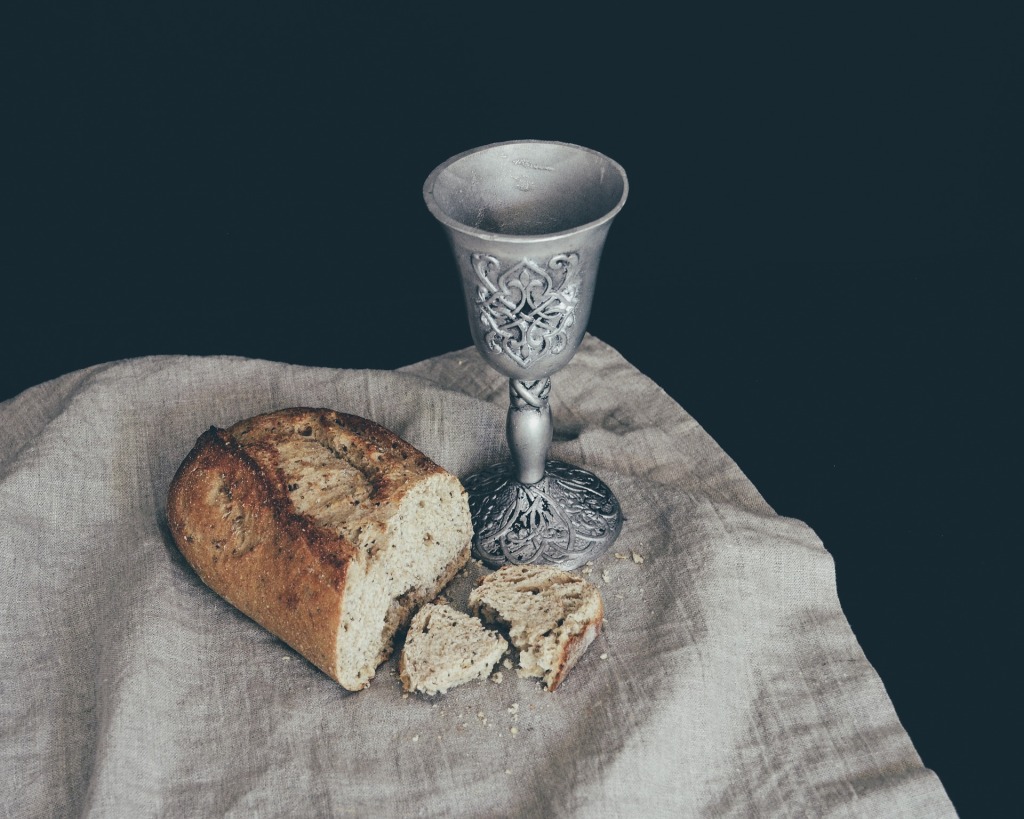
Photo credit: Shane

God is all-powerful and all-knowing. God can do anything. Literally, anything. God is the designer and creator of all things. God’s love is limitless. God’s mercy and grace are unending. God used people like Abraham and Moses to call and guide and shape the ancient people of faith. God sent people like Elijah and Samuel and Amos to continue to share God’s word with the people.

God created and designed Adam and Eve – the first of billions. Almost right from the start we recognize that we are imperfect and sinful. Try as God might – whether speaking directly to people or speaking through the prophets – our hearing and listening and understanding is not always that good. So God added “show” to “tell.” God took on flesh, transitioning from “the firstborn over all creation” to “the firstborn among the dead.” In between Jesus showed us what God’s love looks like when lived out. Jesus revealed that love is fully lived out in service, sacrifice, humility, and grace. Connecting this example to Jesus’ final sacrifice, Paul writes, “God was pleased to have all God’s fullness dwell in him, and through him to reconcile all things to God.” God in Christ was pleased to live once again among humanity so that an example could be set for us. And then God in Christ made “peace through his blood” as Jesus became the atoning sacrifice for all sin. What an all-powerful, loving, merciful revelation of the fullness of God!

Paul encountered the risen Christ and was transformed by his love. He spent the rest of his days proclaiming the good news of Jesus Christ. For those that also call Jesus Lord and Savior, this too is our mission: to show and tell the world about Jesus so that they too can claim “the hope held out in the gospel.” Jesus saves. Through you and me, may the world know this hope.

Prayer: Lord God, what an awesome and wonderful reminder today of the depth and breadth of your love and mercy and grace. You came and lived and died so that we might better understand you and so that we might know the power of your love to save and reconcile. Use me this day to share all of this good news with all I meet. Amen.


Leave a comment

Offering Salvation

Reading: Acts 16:24-34

Verse 26: “All the prison doors flew open, and everybody’s chains came loose.”

The story in Acts continues! Shackled and in the innermost cell in the jail, Paul and Silas turn to praying and singing. What else do you do when you find yourself in a dire situation with little hope? We too at least pray when we find ourselves in dire straights.

As is often the case, God rescues the faithful. Held tight in a man-made stronghold, how does God respond on their behalf? With an action that demonstrates that God is more powerful. An earthquake shakes the place, loosing chains and swinging open doors. See – the things of man are no match for God! Yet the prisoners do not escape. While God is supreme, escape is not the point. God has an even better plan than freeing Paul and Silas. God plans to save a soul and his household.

Sensing what the sound of metal scraping against metal might mean, Paul once again intervenes, calling out to the distressed jailer. Calling for light and rushing into the cell area, the jailer asks, “Sirs, what must I do to be saved?” Moved by their faith that brought them through, the jailer wants to experience that freedom too. Paul and Silas tell him, “Believe in the Lord Jesus Christ, and you will be saved.”

The jailer takes them out and he washes their wounds – an act of repentance or a gesture of love? Or both? He and his household are baptized into Christ. They celebrate by sharing a meal with those who offered them life.

Many in the world are like the jailer – thinking they are in control, believing they have all the power. Until they don’t. In that moment they see no hope, no way out or up. When we cross paths with someone in this place, will we too offer the only answer to this life, Jesus Christ? May our lives sing and exude God’s love and grace and peace and joy, enabling us to also one day offer Christ’s salvation to one in need.

Prayer: Lord God, guide me to live faithfully day by day, revealing a better way than the way of the world. When others notice, may I respond well with the good news of Jesus Christ. Amen.


Leave a comment

All People

Reading: Romans 10:8b-13

Verse 10: “For it is with your heart that you believe and are justified, and it is with your mouth that you confess and are saved.”

In our passage today Paul is proclaiming that all who call on Jesus as Lord and Savior will be saved. That is a bold and sweeping statement. Yet it pales in comparison to the breadth and depth and width of God’s love for us.

Our text for today begins with a recognition that for believers “the word is near you; it is in your mouth and in your hearts.” There is a closeness in our relationship with God. The Spirit, God’s presence, is within us, dwelling in us – ever on our hearts and in our minds. Ever at work in the faith of the believer, the Holy Spirit helps us to grow in our faith, deepening the belief in our heart. Part of this growing process is our justification. This is the process of being made right with God. This process requires our mouth to confess and our minds and hearts to commit to repentance. The words spoken by our lips and lived out by our hearts brings God’s forgiveness and saving mercies upon us. This ongoing and often repeated process is part of our daily walk with God. Thanks be to God for this great love.

While we celebrate the love of God that continues to work in us, drawing us more and more into the likeness of Christ, do we freely extend this love to all others? Do we really believe that God loves “that guy” as much as me? Surely God could not love that grumpy neighbor or that mean boss that much. Certainly there is less love for the prostitutes and drug dealers. Yet in verse 12 we read, “there is no difference between Jew and Greek – the same Lord is Lord of all.” Today Paul would write that there is no difference between Christians and non-Christians – God is the God of all. God’s heart yearns to include all people in God’s family. May our hearts yearn for this as well.

Prayer: Lord God, may my words and actions proclaim that your love reaches out to all people. By my words and actions may I reveal that love to all people, drawing them towards your unconditional love. Amen.


Leave a comment

Such a Love

Reading: Psalm 91:2 and 9-16

Verse 14: “Because he [or she] loves me… I will rescue him [or her]; I will protect him [or her].”

Lent has begun! For some, yesterday at an Ash Wednesday service we began by recognizing our mortality and our sinful nature. There was a commitment asked for: to enter into this holy season of Lent intentionally seeking to be made more like Christ. It is a season of preparation for Easter. The work done in Lent is hard work. It asks us to look within, to see ourselves honestly and to confess and repent of those things that limit our relationship with Jesus Christ. Lent can also be a season of investing in our faith. We can read our Bibles or a devotional on a daily basis. We can participate in acts of service. We can fast on a regular basis. Each of these piety practices has the same goal: to make us more like Christ.

Today’s Psalm – #91 – begins with a recognition of God as our shelter, as our refuge, as our fortress. These images paint a picture of a God in whom we can trust. They also remind us that our God is a God who is present and who watches over us. The second half of our passage begins with these words: “If you make the Most High your dwelling…” The key word, of course, is “if.” While God is ever present, God does not force us into a relationship, into being near to God. Just like a parent or grandparent, God is always right there, watching over, ready to respond when a child cries out for help. A child feels able to cry out because they know they are loved. A child trusts that the parent will respond. The parent responds because they love the child. Love is the key to this and any relationship.

In verse 14 we read, “Because he [or she] loves me… I will rescue him [or her]; I will protect him [or her].” God’s love is unconditional. God will love you and me no matter what. But a relationship is a two-way connection. We must love God for it to be a relationship. Within that relationship, God will rescue us. God will protect us. God will lift us up. God will answer and deliver us. God will forgive and redeem us. These are the promises of God. Thanks be to God for such a love as this!

Prayer: Lord God, entering this season of Lent I am reminded of how great your love is for me and for all of your children. Thank you for the love that rescues and protects, lifts and delivers, forgives and saves. Amen.


Leave a comment

The Power to Save

Reading: 1st Corinthians 15:1-8

Verse 1: “I want to remind you of the gospel… which you received and on which you have taken your stand.”

In today’s passage Paul focuses in on the good news and on the impact it has on lives. Paul begins chapter 15 with these words: “I want to remind you of the gospel… which you received and on which you have taken your stand.” Paul preached the good news and people received or accepted it. The good news is the life and ministry of Jesus Christ. Beginning in verse 3 Paul reminds the church that Jesus died for our sins, was buried, rose on the third day, and then appeared to many people, including Paul. For Paul, these are some of the facts of Jesus’ life. But facts alone are just information.

In verse 2 Paul reminds us of the power of these facts: “By this gospel you are saved.” By dying for our sins Jesus conquered the power of sin, paying the atoning price for our sin with his own blood. By going to the grave Jesus endured what none of us can escape: the end of life as we know it. By rising from the dead Jesus defeated the power of death, opening the way to new and everlasting life. By appearing to many Jesus demonstrated that he still has the power to change and transform lives. Each that the risen Christ appeared to was forever changed – especially Paul.

The good news of Jesus Christ continues to change and transform lives. You are I are living examples of this. Today we are not what we were in the past. Some are even different than they were yesterday – now drawn closer to the image of Christ. Every day 1000s of lives are made new creations in Christ for the first time as they hear and receive the gospel of Jesus Christ. Every day 1000s encounter Christ incarnate in his followers, each receiving seeds of faith containing the good news. The gospel still has the power to change and transform and to save. Thanks be to God.

Prayer: Lord God, thank you for the ways you appear over and over in my life – in prayer and study, in those Holy Spirit whispers and nudges, in worship and other gatherings, in those I meet. As you change and transform me, use me today to share the gospel with all I meet. Amen.


Leave a comment

Save Your People

Reading: Jeremiah 31: 7-9

Verse 7: “O Lord, save your people.”

Photo credit: Pablo Heimplatz

Jeremiah 31 is in the part of the book that details how God will bring the Israelites back from exile. One day God promises to gather them “from the ends of the earth.” As our passage opens, the Lord encourages the people to sing with joy and to make their praises heard, praying, “O Lord, save your people.” Through Jeremiah, God invites the people to praise God and to ask God to save them.

Those encouraged to seek God and to petition God for help expands in verse eight to include “the blind and the lame, expectant mothers and women in labor.” This partial list represents the weak and the vulnerable. When God says that a “great throng” will return it implies that all who are weak or vulnerable – or outcast or marginalized or powerless or voiceless – all will be called back home to the Lord.

Although written nearly 3,000 years ago, these words remind us today of the same truths that undergirded this invitation and these promises: God loves and cares for those who turn to the Lord for help. God has good plans for you and me. Even when we feel like we are in exile or when we feel weak or powerless or alone, God also encourages us to cry out, “O Lord, save your people.” Like with Israel, God will hear us and will respond. God will rescue and redeem us too.

In verse nine we read, “They will come with weeping, they will pray as I bring them back.” These will be tears of joy and prayers of praise as God guides us “besides streams of water” as God provides a “level path” so that we do not stumble. In love God cares for and protects those who seek and love the Lord. Thanks be to God.

Prayer: Lord God, I praise you for all of your love and care. Thank you for always calling out to me in so many ways. Your love and care never fails. You are an amazing God. May all the praises be yours. Amen.


Leave a comment

Greater Still

Reading: Zephaniah 3: 18-20

Verse 19: “I will rescue the lame and gather those who have been scattered.”

Photo credit: Kelly Sikkema

Continuing to point towards the day when the Lord God will restore Judah and Jerusalem, Zephaniah speaks hope to those who are separated from God. The people’s disobedience offended God’s sense of justice. Because of their great sin they were almost unrecognizable to God. Disaster would befall the people. But God’s love was greater still. The God who is mighty to save will one day restore Israel as well as the other nations of the world.

In verse nineteen we read, “I will rescue the lame and gather those who have been scattered.” The army that Zephaniah predicted will come and destroy, leaving behind a small remnant while carrying many off into exile. The remnant was a shell of what was and will struggle to survive. They are the lame that God will rescue. Those carried off will lose connection with God. Living in a foreign land they will be unable to worship in the temple; they will not be able to celebrate the annual holy feasts. They too will become a shell of what once was. These are the scattered that God will gather. Reflecting back upon Zephaniah’s words many years later, the Israelites will see and better understand the need for both God’s justice and God’s love.

At times we too can find hope in these words. At times life will leave us struggling – illness or disease, unwanted change, bad decisions… We can find ourselves in need of rescue. At times we will wander off, straying from our faith. We too can end up far away from God, as if we were living in a foreign land. Once there, we need God to gather us back in. At times these forces can intertwine and build one upon the other. “Life” happens and we begin to doubt or to question God, leading our faith into a place of uncertainty or maybe even separation from God. In this place we need both rescue and gathering. As it was with God’s people of old so it will be with us today. “At that time I will gather you: at that time I will bring you home.” God’s love is greater still. Thanks be to God.

Prayer: Lord God, when I find myself in a place that feels void of your presence, stir up the Holy Spirit in my heart. Remind me of your living presence and of your great love for even me. Thank you for your steadfast love. Amen.


1 Comment

Only Then

Reading: Zephaniah 3: 14-17

Verse 17: “The Lord your God is with you, God is mighty to save.”

Photo credit: Kunj Parekh

We begin this week with the prophet Zephaniah. He spoke the word of God to Judah. Israel was a separate nation at this point. Although Israel had turned back to God under King Josiah’s leadership, Judah remained far from God. They worship idols, they are selfish, they oppress the poor. Through Zephaniah, God pronounces judgment on Judah’s sins.

Although Zephaniah wrote to a disobedient people in about 620 BC, the sins of his day are still alive and well in our time. No longer a Christian nation, there are many idols placed ahead of God. Finding God on many people’s priority list is an exercise in patience. In many ways being selfish is at an all-time high. We have long been a me first, just do it, have it your way nation. These attitudes and approaches to life have infiltrated many of our political and religious institutions. Humble service? And as a nation we have become experts at oppressing the poor. On the surface it looks like help. But throwing money and the most basic of services at people who lack knowledge, skills, and self worth only keeps them stuck in the same oppressive systems. The gap between those with wealth, education, good health care, and influence and those without these things continues to grow.

In verse seventeen we read these words of hope from Zephaniah to the people of Judah: “The Lord your God is with you, God is mighty to save.” These words are every bit as true today as they were the day they were spoken. When we turn to God, when we seek to walk faithfully with our God, then God is with us. When we choose to live a life that is selfless and humble, then God is mighty to save. Love is still the most powerful force in the world. But it is only powerful when it is used. Love must be a verb. When used, love brings healing and wholeness, worth and belonging, mercy and reconciliation. Love must be a verb. Only then will God take delight in us. Only then will God rejoice over us with singing.

Prayer: Lord God, turn our churches and our communities back to you. You alone are mighty to save. You alone empower us to care for the needy, to elevate the poor and downtrodden to places of belonging and worth. Use me today to bring healing and wholeness to the world. Amen.