pastorjohnb

Thoughts and musings on faith and our mighty God!


Leave a comment

This Same God

Reading: Isaiah 51:1-6

Verse 6: “My salvation will last forever, my righteousness will never fail.”

Isaiah 51 reminds reminds me of the “then and now” of our faith. Written to those “who pursue righteousness and who seek the Lord,” it calls them and us to remember the long arc of the relationship between God and God’s people. Looking into today and beyond into eternity, we are also reminded of God’s standing promise: “My salvation will last forever, my righteousness will never fail.”

Isaiah writes these words to the Israelites living with him in exile. Their time in exile has grown long. They are living as strangers in a place far away from all they’ve ever known. It has been a wearying and difficult stay. So Isaiah calls them to remember where they came from and whose they are. He calls them to remember Abraham and Sarah, the ones who received the covenant and who were blessed as God fulfilled the promise. When we find ourselves in a trial or in a season of suffering, it is good to remember the great stories of faith and to be reminded of “the rock” that we too stand upon.

The prophet also speaks of hope and restoration. Isaiah tells the exiles that God looks “with compassion on all her ruins” – both those back home and those that are their lives now. He prophesies that God will transform these dry and barren places and lives into a garden paradise, into a place where there will be “thanksgiving and the sound of singing.” Isaiah tells them that justice and salvation are on the way! This was all probably hard to hear in the darkness and despair of exile. But, wait. Remember, God took one and “blessed him and made him many.” This same God promises to restore Israel. This same God can and will bring us through our trials and sufferings. Thanks be to God.

Prayer: Lord, it is good to remember and to know once again that your promises of salvation and compassion are for all people who call on you and who seek your righteousness. The promises are for us. Thank you, Lord. Amen.


Leave a comment

Generously… Diligently… Cheerfully…

Reading: Romans 12:3-8

Verse 6: “We have different gifts, according to the grace given to each of us.”

Continuing with the line of thinking where Paul called us to be “living sacrifices,” he now offers application in terms of our unity and giftedness. As Paul begins he warns us not to think too highly of ourselves, to “think of yourself with sober judgment.” Although he does not mention it, we must be aware of when we and others slide to the other end of the self-esteem spectrum. Those with little or no self-esteem can wrestle with depression, doubt, isolation… With these in mind we turn to verse 5: “In Christ we who are many form one body, and each member belongs to all the others.” We watch out for one another. We support and care for one another. We love one another.

To help us do this well, God gives us all gifts. These gifts are to be used to benefit others. Because we belong to one another, there is a responsibility to use our gifts well. As individuals, “We have different gifts, according to the grace given to each of us.” Some have the gift of prophesy – to give vision and to explain God’s revelations to us. Other gifts include “serving… teaching… encouraging… giving… leadership… showing mercy.” This is a partial list. If you don’t see your gifts on this list, what are your gifts as you think about that blessing from God?

To close, how are we to use these gifts? “Generously… diligently… cheerfully.” We should be grateful for the graces that God has given to us. In turn we should use these gifts to bless others, leading both us and them to fuller experience the abundant life that we find in community. May it be so for all of us.

Prayer: Lord God, you designed us to live and be in fellowship and community with you and with one another. You gave us each gifts to bless these relationships. Guide us by the power of the Holy Spirit to faithfully use each gift that you’ve given us. May we, through our gifts, bring you all the glory. Amen.


Leave a comment

Transformed Not Conformed

Reading: Romans 12:1-2

Verse 2a: “Do not conform to the pattern of this world, but be transformed by the renewing of your mind.”

Paul shifts gears as we turn to chapter 12. The last 4 verses of chapter 11 are a doxology. This closing prayer of praise to God wraps up the focus of the last few chapters and shifts our thinking to the “how” of living as a believer. Paul begins chapter 12 urging us to “offer your bodies as a living sacrifice.” Paul, as Jesus often did, is using an old word in a new way. To the Jews a sacrifice was the lamb or dove or grain or oil that was brought to the altar in the temple. Often blood was spilled and life was lost. In other sacrifices the offering was poured out or burnt upon the altar. There was a finality to each particular sacrifice.

Paul’s call is to be “living sacrifices.” This is an ongoing giving of self to God and to others. In Jesus’ language it is dying to self again and again in order to truly love God and neighbor. So, how do we place ourselves in a position to do this? We make the intentional choice to live according to God’s will and way. It’s not easy. The world is always tugging at us. For the daily battle, Paul offers this advice: “Do not conform to the pattern of this world, but be transformed by the renewing of your mind.” Winning this battle requires an intentional choice to say “NO” to the ways and norms of the world. Saying “no” to the world allows us to say “YES” to God’s transformation of our minds. This renewing of our mind is an ongoing process. Day by day it shapes us more and more into God’s image. It brings us closer and closer to understanding and then living out God’s “good, pleasing, and perfect will.” May it be so for us all each day.

Prayer: Lord God, we need you so much in this battle to transform ourselves into who and what you call us to be. The voice of the world is so loud and so convincing at times. Elevate the voice of the Spirit over this constant buzz. Hearing the Spirit more clearly, lead us to be transformed more and more into the image and example of Christ. Amen.


Leave a comment

If the Lord Had Not…

Reading: Psalm 124

Verse 1: “If the Lord had not been on our side…”

Photo credit: Greg Rakozy

Scholars believe that David wrote this Psalm in the wake of Israel’s defeat of the Philistines. David had just become king and the enemy gathered the troops to test this new leader. David turned to God for direction. God led Israel’s army to victory. David knew that God had been with them and gave God all the credit for the victory.

In the early stages of faith, this is Satan’s trick too: attack before the new Christian is really established in his or her faith. The evil one attacks us when we are yet immature in those areas that were our weaknesses before we gave ourselves to Christ. Maybe you’re there now. If so, take courage in David’s story. Turn to God and seek direction and strength. On the other hand, if you’ve walked faithfully for a while now, you’ve experienced these attacks and assaults. I ask you: what new believer can you walk beside, modeling how to trust in the Lord?

The Psalm begins with this great line: “If the Lord had not been on our side…” David references attacks and anger and floods and raging waters. While these represent the army gathered against them, they are also metaphors for the trials and tribulations that we face. David recognizes that without God the outcome would’ve likely been different. Is it not the same with our battles within and without? May we trust in God as David did, eventually rejoicing with David as we too declare: “Our help is in the name of the Lord, the Maker of heaven and earth.”

Prayer: Dear God, again and again you see us through. Again and again you keep the waters at bay, you calm the raging waters, you make a way when there seems to be no way. You do not leave us or forsake us ever. Draw us to you again and again – every time the enemy comes near, every time life throws something hard our way. Thank you for your unending love and for your constant presence. We love you Lord! Amen.


Leave a comment

Roles

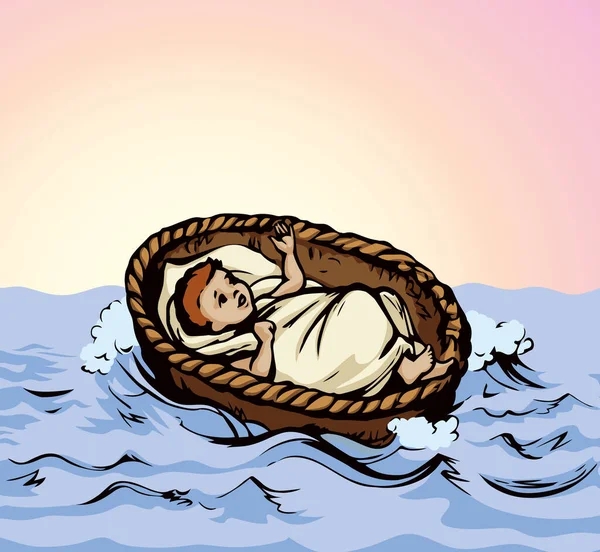
Reading: Exodus 2:1-10

Verse 3: “But when she could hide him no longer, she got a papyrus basket for him and coated it with tar and pitch.”

Today we continue in the exodus story. We are yet many years from Pharaoh letting the people go. In today’s passage, though, God begins to work that plan. A Hebrew baby is born and the mother cannot bring herself to obey Pharaoh’s law that says to kill the baby boy. After 3 months she is led to a plan: “But when she could hide him no longer, she got a papyrus basket for him and coated it with tar and pitch.” The basket is strategically placed in the reeds right by where the Egyptian women bathe. The older sister keeps watch from a distance. As the basket and baby are found, she swoops in to offer to find a Hebrew woman to nurse the baby. Just like that the baby is back at home, where he will remain until weaned. At that time he is given to Pharaoh’s daughter to raise as her own. She names the baby Moses. He will grow up and one day liberate his people from slavery.

The three main women in this story all play important roles. Each follows their hearts and allows love to guide their actions. The prompting of their hearts is God at work. Moses is a pretty big name in the storyline of the Bible. Yes, the three women play a much smaller role in comparison to Moses. But without any of their roles we wouldn’t have a Moses. We all can also play relatively small roles in God’s unfolding plan. Like these three women, what we do and say also impacts the kingdom of God. We too have the power to change lives. Following God’s promptings, may we choose to love as we are led out into the world and into people’s lives.

Prayer: Lord God, guide me today to step into the plans that you have for me. Give me a confidence to go where you lead. Help me to trust into your plans for building a kingdom here on earth. Amen.


Leave a comment

God Will Deliver

Reading: Exodus 1:8-22

Verse 11: “They put slave masters over them to oppress them with forced labor.”

Time in Egypt rolls on. Joseph, his brothers, and all of their generation passes on. A new ruler comes to power. There is no connection to Joseph or his family or his people. All the new leader knows is that the Israelites are growing in number. Fear rises up. The Egyptians enslave the Israelites. In verse 11 we read, “They put slave masters over them to oppress them with forced labor.” But the more they worked them, the more the Israelites grew in number. The labor ramped up and “made their lives bitter.” The Pharaoh then tries to force the midwives to kill the baby boys. God guides them. The Israelites increase in number. A new law is passed as fear continues to rise. Even through this, God will deliver God’s people.

At times we can experience negative attention. It can be because of our faith or simply because of how we act. Both can be seen as a threat to the powers that be or to people we know. Other times our faith calls us to stand up for someone or to call out an injustice. These actions will surely draw fire as well. In these moments, God’s presence remains with us. The Spirit leads and guides us; it gives us courage and the words to speak. In Spirit, God walks with us. If we, like the people of God in Egypt, choose to trust into God’s plan, then the Lord will deliver us again and again. May it be so for us all.

Prayer: Lord, in this life you said we would find trouble. Our faith – when lived out loud in the world – it will draw fire. You promise to always be with us, to never forsake us. You’ve walked a long, long time with your children. Continue to walk with us. Amen.


Leave a comment

Steadfast and Resilient

Reading: Matthew 15:21-28

Verse 22: “Lord, Son of David, have mercy on me!”

Photo credit: Rainier Ridao

Returning to Matthew’s gospel today we move from ‘clean and unclean’ to Jesus’ encounter with the Canaanite woman. She comes to Jesus seeking healing for her daughter. She is demon-possessed. The clean/unclean conversation centered on the condition of our hearts over and above the keeping of the traditions and the Law. In the culture of the day, we must recognize that a devout Jew would avoid engaging with a Gentile, especially with a woman.

This woman comes to Jesus and says, “Lord, Son of David, have mercy on me!” She is acknowledging his power and his lineage. She is acknowledging his ability to do what she asks of him. She is so desperate for this ability to focus on her daughter that she ignores tradition and approaches Jesus. And Jesus ignores her. But she persists – enough that the disciples finally ask Jesus to send her away. They do not ask him to hear or to grant her request – just send her away. Jesus takes two runs at doing just that. Or is Jesus using this encounter as a way to show his disciples and others what a heart filled with faith looks like and can ultimately yield?

Pushing past these barriers and remaining steadfast in her faith in Jesus, she kneels at his feet and eventually receives praise from Jesus for her great faith. Her daughter is healed “that very hour.” This story is a great reminder to keep our faith strong no matter the barriers or obstacles we face, trusting in Jesus Christ, the Son of God. As we are steadfast and resilient in our faith, we too will experience Jesus’ power.

Prayer: Lord God, thank you for the Canaanite woman’s example of great faith. Thank you for her example of brave faith too – a faith that overcame and triumphed. In those times when we feel things are against us, help us to remain faithful and true to you and to our faith. Amen.


Leave a comment

Irrevocable and Forever

Reading: Romans 11:29-32

Verse 29: “God’s gifts and God’s call are irrevocable.”

Photo credit: Shane Rounce

Paul writes today of the unmerited gift of God’s mercy. It is a mercy that has been present since Adam and Eve sinned in the garden. Since that moment humanity has been sinful and fallen. We too stand in this long line of those who have received mercy and its companion, forgiveness. Instead of the punishment that our sin deserves, again and again we receive God’s mercy.

Writing to the church in Rome, Paul reminds them that “God’s gifts and God’s call are irrevocable.” He reminds them that they once were disobedient to God and yet received mercy. And he reminds them that others will be disobedient so that they too can have the opportunity to experience mercy. We, like the church in Rome, need this reminder. We, like the church in Rome, need to remember that all people are worthy of God’s love and therefore of God’s mercy. We, like the church in Rome, can become guardians and gatekeepers, wanting to limit or control who can enter the circle of God’s unmerited mercy.

The mercy of God is available for and is offered to all people. It was for the sinner then, it is for the sinners now, and it will be for all the sinners yet to come. Mercy is an abundant and generous gift, a gift that is irrevocable and forever. Thanks be to God!

Prayer: Lord God, your mercies are new every morning – and every evening and every moment in between. Your mercy makes it possible to walk as a child of grace. Without this gift I’d be lost in my sin. So, thank you for your great love that extends mercy over and over. You are an amazing God! Amen.


Leave a comment

Out of the Heart

Reading: Matthew 15:10-20

Verse 18: “The things that come out of a person’s mouth come from the heart, and these defile them.”

As Jesus calls the crowd to himself he is really unpacking the clash that he just had with the Pharisees. Chapter 15 opens with a question from the Pharisees: “Why do your disciples break the tradition of the elders?” This law-focused religious group is “concerned” that the disciples didn’t wash their hands before eating, making them ceremonially unclean. This is not following the traditions established by the ancient elders of the faith.

Gathering the crowd – which would still have included the Pharisees – Jesus tells them that it is not what goes IN the mouth that defiles. Food simply passed through our digestive system. The stomach… has nothing to do with the condition of our soul. Instead, Jesus teaches, it is what comes OUT of our mouth that can make one unclean. The heart has everything to do with the condition of our soul. When we sin, this is always rooted in what we’ve allowed to come into our heart. That seed of lust or envy or greed or pride or… has grown into a sin and as that makes its way out of our hearts, that is what makes us “unclean” or unfit for entering into God’s presence in worship.

Today we are not immune from forms of legalism. We can surely get caught up on whether or not someone did this ‘thing’ – like going to church every Sunday – rather than being concerned with the condition of their heart – how they are living out God’s love in their lives and in the world. Yes, communal worship is an essential part of a Christian’s faith and life. But sitting in a pew each Sunday does not make one a Christian. It is that good that fills and then flows out of the heart that reveals our connection to, our belief in, and our relationship with Jesus Christ.

Prayer: Lord God, by the power of the Holy Spirit, guard against the evils that I am tempted to allow into my heart. By that same power, lead me to fill my heart with the love and light of Jesus Christ. May this then be what flows out into the lives of all I meet. Amen.


Leave a comment

TBTG

Reading: Romans 11:1-2a: “I ask then: Did God reject his people? By no means! I am an Israelite myself, a descendant of Abraham, from the tribe of Benjamin. God did not reject his people, whom he foreknew.”

Rejection. This is something that we can easily do to one another. Human beings can quickly find all sorts of reasons to reject someone: they were mean to me… they lied to me… they didn’t do what they said they’d do… they are not like me… they see things differently than I do… they believe things that I don’t… The list could go on and on. We’ve both rejected others and we’ve felt the sting of rejection. This is an intimate subject.

A couple of the things on the list above (and probably a few more) have created division between the Jewish Christians and the Gentile Christians in Rome. Paul spent all of chapter 10 discussing Israel’s unbelief. Most of the Jews did not accept Jesus as the Messiah. They rejected him. The issue creating the rift and the question that Paul addresses today is this: Has God, in turn, rejected Israel? “In turn” is often why we reject someone – they don’t like me so I don’t like them!

Paul answers the question emphatically: “By no means!” Thanks be to God, right? Thanks be to God because God has every right to ask all those things listed above about you and me. Regularly. Yet rejection does not follow. Paul writes, God did not reject his people, whom he foreknew.” The key here is “whom God foreknew.” God designed us, knowing we’re imperfect. God created us for relationship with God, knowing we’re prone to sin and failure. Is God “sad” that people reject a relationship with God? For sure! But the door never closes. It is always open. Again we say, thanks be to God.

Prayer: Lord God, I am so grateful for your grace, mercy, love, and forgiveness. Without these I’d have been lost forever years and years ago. Guide my response to be to live and be in this world this way too – seeing everyone as worthy and beloved. Use me as an example of your grace, mercy, love, and forgiveness. Amen.