pastorjohnb

Thoughts and musings on faith and our mighty God!


Leave a comment

Ready, Ready?

Reading: Luke 21:5-11

Luke 21:6 – “As for the things you are admiring, the time is coming when not even one stone will be left upon another.”

As we begin two days in Luke 21, the scene is the temple in Jerusalem. Some people are talking about and admiring the brand new iPhone 17 Pros that were just issued to the Levite priests. Oops. That would be today. In Luke they were admiring the beauty of the temple. It was truly glorious. Speaking into this admiration, Jesus says, “As for the things you are admiring, the time is coming when not even one stone will be left upon another.” This monument to God will be utterly destroyed.

To the Jews, the temple was more than a pretty building. Yes, it would bring great sorrow to see it destroyed. Imagine waking up tomorrow and driving to church, only to find a pile of smoldering ruins. The Jews believed that God literally dwelled in the temple, in the Holy of Holies. Their communal identity was tied to the temple. Stunned by this thought, the people ask Jesus, “When…?” Instead of telling them when, Jesus begins to address how – how to be ready for when this happens. There will first be false prophets. Don’t listen to them. Then there will be signs: wars, earthquakes, famine, epidemics. These too will be signs warning that the end is near.

In our day, we can be just like the people in Luke 21. We can look longingly at another’s stuff – cars, homes, jobs, phones, status, wealth… And we can easily worry when any of our things are threatened by a stock market dip, by a health scare, by potential unemployment, by a change in our benefits… It has been a long, long time since anyone believed that God resided in a building. And it has been a long, long time that the faithful have believed that all we have really belongs to God. Yet we can easily get caught up in longing for the things of this world.

We can choose to live differently. We can focus on the things of God, readying ourselves for that final day. Living with God’s Spirit dwelling within us, holding loosely to the things of this world, we are on our way to being ready, whenever we come to meet Jesus face to face.

Prayer: Lord God, instead of admiring and chasing after the things of this world, may we love and pursue you and your will and way. Draw us to the present yet eternal, to joy and peace, to hope and trust, to love and faith. Amen.


Leave a comment

Present in the People

Reading: Haggai 1:15b-2:5

Haggai 2:5b – “My spirit stands in your midst. Don’t fear.”

Photo credit: Joel Muniz

Fear is an emotion we often feel. When in a dangerous situation, when enemies are all around, when stepping into the unknown – these are but a few of the things that cause fear to rise up in us. The prophet Haggai speaks to a small remnant that has returned from exile in Babylon who is dealing with these three fear-inducing situations. Zerubbabel, the governor, led the remnant back and started to rebuild the temple, but threats from the groups who inhabited the land during exile derailed the building project.

Chapter 1 of Haggai isn’t exactly encouraging. The prophet challenges the people. They are living in nicely built homes while God’s house lies in ruins. Their return has been difficult. For example, they’ve planted crops but are hungry. The harvest has been meager. Haggai informs them that this is because they’ve been neglecting God. This pronouncement induces more fear in the people. But it is a good fear – a healthy respect, a reverent awareness, a motivator.

As the people return to working on the temple, Haggai addresses them in chapter 2. After speaking into their present reality, he speaks words of encouragement, “Be strong,” three times. Through him God encourages them to work, because “I am with you.” Then, in verse 5, God says, “My spirit stands in your midst. Don’t fear.” These words of Haggai remind the people that God is present – building or no building. God is present in the people of God doing the work of God. The same will be true for us. May it be so.

Prayer: Lord God, gathering to worship and to do other churchy things is wonderful. But you clearly call us beyond the walls of our churches. Like Jesus, who spent the vast majority of his time and energy ministering and teaching outside of the temple and synagogues, move us to be your hands and feet out there in the world. Amen.


Leave a comment

A Choice

Reading: Psalm 138:13-18

Psalm 139:16 – “On your scroll every day was written that was being formed for me.”

Returning to Psalm 139 today we read verses 13-18, a most personal and intimate look at our relationship with God – should we choose it. Whether or not one is currently walking with God, these words are true. Each and every one of us, no matter our ethnicity or vocation or gender or place in life or place of birth or anything else, each was “knit together” by God in the womb. Each of us was “marvelously set apart” – each formed and shaped by God in our own unique ways.

As God wove and weaves each human being together, there was or is a plan and a purpose in God’s mind. To this one that gift was given and to that one this talent is given, each to play a role in the building of God’s kingdom. Each of us was and is seen and known by God. Because of this love and knowledge, “on your scroll every day was written that was being formed for me.” Here is where we have a choice. Here is where free will can thwart God’s plan. This is possible because God loves us. We were created this way by God.

The divine within some leads them to be good and kind and merciful and loving in places where Christianity isn’t even known. The human within some leads them to be evil and cruel and oppressive and hateful in places where most folks claim to be “Christian.” The Spirit of God – whether know by this name or as our conscious or as another force – this Spirit speaks into all people’s heart. Again, here we have a choice: to listen and obey or to ignore and deny. No matter one’s choice, though, God remains loving and present. Oh what great love God has for each and every one of us!

Prayer: Lord God, you create us just as you want us to be. You have plans and a purpose for us, just as you want it to be. Open our hearts to hear and follow where you lead and guide, just as you want it to be. Walk with us daily, living out your incomprehensible plans for us, just as you want it to be. Amen.


Leave a comment

Everywhere All the Time

Reading: Revelation 21:10 and 22-27

Revelation 21:24 – “The nations will walk by its light, and the kings of the earth will bring their glory into it.”

Just as we did in Ezekiel, we enter into John’s visionary experience towards the end. John’s vision in Revelation speaks of the culminating work of the risen one, Jesus Christ. His visionary experience is broken down into four encounters guided by the Holy Spirit. In verses 10 of today’s reading, the fourth encounter begins “in a Spirit-inspired trance.” John is taken to a high mountain where he can see “the Holy city, Jerusalem, coming down out of heaven.”

In the verses leading up to verse 22, John describes the beauty and brilliance of the new Jerusalem. Then, in verse 22, there is a departure from Ezekiel’s vision of the new heaven and earth. In Revelation there is no temple. Instead of a physical building, the “temple” is the presence of “the Lord God Almighty and the Lamb.” While we often still try to limit God’s presence to our church buildings, this vision matches the actual reality: God is everywhere all the time.

In the new Jerusalem there is no night or day. God’s glory is the light and Jesus’ light is the lamp. Inside or outside, again, God is everywhere all the time. In verses 24 we read, “The nations will walk by its light, and the kings of the earth will bring their glory into it.” All who have accepted Jesus as Lord and Savior will enter the city whose “gates will never shut,” bringing God all the glory, honor, and praise. In the new city, the faithful will dwell with God. The unclean and vile will be nowhere to be found. These cannot be in God’s holy presence. What a beautiful day this will be when all things are made new in Jesus’ final kingdom!

Prayer: Lord God, yes, what a day it will be! The beauty and brilliance of the new heaven and earth will be spectacular. But they will pale greatly in comparison to your glorious presence. All will walk in your all-encompassing light and love. And all that we say and do will bring you the glory, honor, and praise. What a new day it will be! Amen.


Leave a comment

Building Blocks

Reading: Luke 19

Luke 19:37 – “The whole throng of his disciples began rejoicing. They praised God with a loud voice.”

Photo credit: Markus Spiske

“Zacchaues intercepts Jesus” is how my Bible’s notes describe this first encounter in our reading. Jesus sees him in the tree and invites himself to Zacchaues’ house for dinner. Perhaps in response to the crowd’s grumbling, Zacchaues announces that he will give half his wealth to the poor and will repay four times over anyone he’s cheated. He’ll do this that very day. The notes suggest that Zacchaues is defending himself by presenting his customary practices of generosity.

This story is followed by one about faithful service. Two servants put the master’s wealth to good use. Instead of working hard, another hides what he was given to use. His wealth is taken and given to the one with much. Jesus continues on to Jerusalem.

Jesus enters the city on a colt, his disciples loudly rejoicing and praising Jesus and the peace that he offers. This parade is a counter display to Herod’s annual Passover parade, when he enters the city on a mighty warhorse with an entourage of soldiers. Jesus enters humbly, from the opposite direction, demonstrating the kingship and peace of God. The Pharisees worry about this challenge to Roman authority. Jesus responds that if the crowd were silent, “the stones would cry out.”

Jesus then laments that these stones will be torn apart. Because the Jews refuse his kingdom of peace, they will revolt, only to be completely crushed. Jesus weeps over this. He proceeds to the temple, where he chases out those turning a huge profit instead of meeting the people’s needs. The religious leaders seek a way to kill Jesus while the people are enthralled with his daily teaching in the temple. What a contrast in these two groups.

Prayer: Lord God, thank you for the examples today of generosity and hard work. Both are building blocks of your kingdom. Lead us to use the blessings you’ve given us to build well. Remind us daily of your peace as we build. Remind us daily of who we serve. Amen.


Leave a comment

A Disconnect

Reading: Matthew 21:33-46

Verse 46: “They looked for a way to arrest him, but they were afraid of the crowd because the people held that he was a prophet.”

This week’s gospel lesson is a parable about some tenants who reject, refuse, abuse, and even kill the messengers sent to them. This parable is an extension of Jesus’ answer to the chief priests and elders question: “By what authority are you doing these things?” (Matthew 21:23) In this second response Jesus and the religious leaders take center stage. In the parable the tenants refuse to listen to messenger after messenger. They even refuse to listen to the landowner’s son. They kill him, thinking they can take the inheritance (the vineyard) for themselves. Asking those who have killed the messengers and prophets what should happen to these tenants, the religious leaders answer, “He will bring those wretches to a wretched end.” Trap set, bait taken.

Beginning in verse 42, Jesus unpacks the parable. Quoting from the Old Testament he speaks of a “marvelous thing” that God has done and of the rejection that he, “the capstone,” is currently experiencing. Speaking even more directly, he point blank tells the religious leaders that the kingdom of God (the vineyard) will be taken from them and given to those “who will produce fruit.” The religious leaders are stung by these words and their truth. They do not see the disconnect that has grown between their faith and the way that they live out their religion. Instead, they begin to think about how they can arrest and eventually eliminate the vineyard owner’s son.

Moving to today, I ask: Are we and are our churches producing fruit? We are good, I believe, at tending to our buildings, to our worship services, to our sheep. But are we producing fruit? Are we making new disciples of Jesus Christ? In the parable, the religious leaders wait to arrest Jesus because the people held that he was a prophet.” There is not a disconnect here with the people. There continues to be a crowd out there that holds Jesus as a prophet, as an important part of their lives. And there is a disconnect between their faith and the institutional church. Once again, are we and are our churches being fruitful? Put another way, have we hunkered down inside the walls or are we stepping out into the world, seeking to make disciples of Christ, seeking to form a new connection? Have we, as followers of Jesus Christ and as churches, in essence rejected the model of the one who went out into his world, loving far beyond the walls of the temple and synagogues?

Prayer: Lord, open our eyes and our heart to the commission given by the capstone. Send us our, seeking to engage and make disciples of Jesus Christ. Move us beyond the comfort of our walls, out into the world, out where Jesus found the harvest to be most plentiful. Amen.


Leave a comment

The Power to Transform

Reading: 1st Corinthians 1:10-18

Verse 17: “Christ did not send me to baptize, but to preach the gospel.”

Yesterday we considered Paul’s call to unity in the church. We recognized the costs of bickering and infighting. These behaviors diminish the witness of the church and its members. Paul resisted the temptation to enter the fray, to claim his place. He certainly could have. He had that Damascus road encounter with the risen Christ. He had a deep knowledge of the Jewish faith – he was a Pharisee. Paul had built the church in Corinth from the ground up. His name was known and his letters were read throughout the Christian world. Paul could’ve claimed a place of power and authority for himself.

Many in Paul’s day and many in our day enjoy the limelight. In Paul’s day both rabbis and philosophers sought to gain large groups of followers. Today we ask one another how many friends we have on Facebook or how many followers we have on Twitter… In Paul’s day the powerful attached their names to building projects and social actions. Today we plaster names on everything from buildings to bowl games. These are but two examples of ways people seek recognition and to build popularity and status.

Stepping outside of the popularity contest, Paul states, “Christ did not send me to baptize, but to preach the gospel.” Yes, baptism was important. It was an outward sign of an inward change. But the inward change came through knowing the good news of Jesus Christ. It was Christ’s life and example, magnified on the cross, that has the power to change and transform lives. Paul knew this with all of his heart. He had experienced it himself and poured all of himself into helping others to experience the power of Jesus Christ. May we do the same.

Prayer: Lord God, Christ, through the cross, changed everything. In one radical act of obedience Jesus reset the power imbalance. No longer would darkness reign. Light and love came into the world and gave all for our sake. Use me this day and every day to help people know the one who changed my life. Amen.


Leave a comment

Building

Reading: Haggai 2:1-9

Verse 3: “Who of you is left who saw this house in its former glory?… How does it look to you now?”

In the story of God’s people, some have returned from exile. Under Ezra and Nehemiah the remnant has rebuilt the walls and gates of Jerusalem. Through the prophet Haggai word comes to begin to rebuild the temple that was also destroyed by the Babylonians.

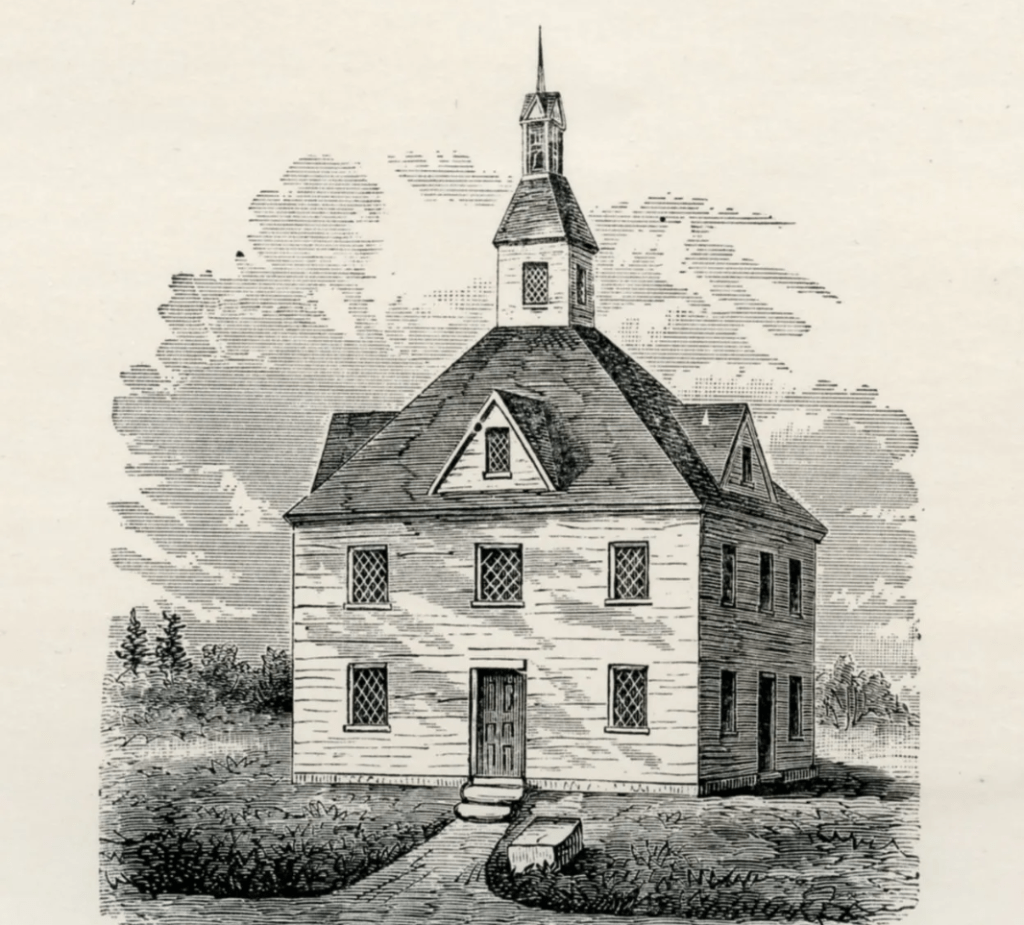
Have you seen pictures or visited any of the grand cathedrals in Europe? Many of these ornate, beautiful, and towering feats took hundreds and hundreds of years to build. And have you ever seen or visited a Puritan or Quaker meeting house? It’s a simple structure with a pitched roof and small steeple. Basic wooden pews fill the sanctuary. When God through Haggai asks, “Who of you is left who saw this house in its former glory?… How does it look to you now?” this is the type of contrast that God is drawing. Soaring cathedral versus simple meeting house, old temple versus the new temple.

But the deeper point in not really about the building. Like the Jews we too can get caught up in that. In verses 4 and 5 God gets to what really matters. Here God says, “Be strong all you people of the land and work. For I am with you… my Spirit remains strong among you. Do not fear.” Enemies and critics all around them, a less than temple taking shape, and God basically says, ‘Don’t worry about all that outside stuff. I am with you. Do not be afraid. The building doesn’t matter. All that noise swirling around outside doesn’t matter. Lean into me, lean into the work I have given you. Trust in me.’

This message is translated to our lives and times by Jesus. We are not tasked with building a physical thing but are tasked with building the kingdom of God. Jesus generally describes our task this way: ‘Go out into the world and make disciples of all peoples. Go and help fill all of those human houses with the glory of God.’ Yes, God is still with us. So may we go forth to build the kingdom of God.

Prayer: Lord God, may my time in your word and in the building equip and encourage me to go out into all the world, seeking to make disciples of Jesus Christ for the transformation of this world. Amen.


Leave a comment

Walking Humbly

Reading: Psalm 138

Verse 6: “Though the Lord is on high he looks upon the lowly, but the proud he knows from afar”.

Photo credit: Ben White

Returning to Psalm 138 today we are reminded that our relationship with God is built primarily upon God’s love and faithfulness. The Psalm opens with praise to God and expresses joy because God hears and answers prayer. Both of these things have led to growth in the psalmist’s faith. Prayer, praise, and thanksgiving are essential parts and building blocks of our faith as well.

Continuing today, we read these words in verse six: “Though the Lord is on high he looks upon the lowly, but the proud he knows from afar”. The psalmist recognizes that God is divine, almighty, above humanity. There is a humility, a lowliness, necessary to truly praise, worship, and thank God for the many ways that he blesses and elevates our lives. To follow David’s pattern, to take time daily to thank God for the ways that he touches our lives daily, specifically and intentionally, keeps us grounded in the reality that without God this would be a very different existence. This practice keeps us humble; it prevents us from thinking more of ourselves and our abilities than we should.

The proud do only know God from afar. Their achievements, whether athletic, financial, social… are their own doing. Time or need for God seems unnecessary. They are their own ‘gods’. How different from David’s words in our Psalm, how different from the example set by Jesus!

The Psalm draws near to a close with a request for God to “fulfill his purpose for me”. This is a prayer that looks beyond self. It is another recognition that we are created to glorify God, not ourselves. The Psalm closes with another reminder of God’s enduring love and with a request to remain connected to God and his plan for our lives. May this be our prayer today as we seek to walk humbly and faithfully with the Lord our God.

Prayer: Lord of all, yes you are on high but your Spirit walks daily with those who love you and look to you for meaning and purpose in this life. Please continue to guide and lead me each day, drawing me deeper and deeper into your love. Amen.


Leave a comment

The Body and Work

Reading: Romans 12: 3-8

Verses 4 and 5: “These members do not all have the same function, so in Christ we who are many form one body”.

In today’s reading Paul gives some guidance on how to be (and not to be) “living sacrifices”. He begins with a warning: “do not think of yourself more highly than you ought”. He is warning against arrogance and pride. When talking about gifts or talents, we can tend towards comparison and competition. For each of the gifts that Paul lists in verses six through eight there are ways to wrongly use each gift. For example, if a leader refuses to listen to others, then his or her pride soon leads to them leading a group of one. Or if God has blessed someone financially or otherwise and their gift is generosity, then giving can become a public display or it can come with strings attached. Both of these examples are getting away from the example set by Jesus.

Before reminding us that we are each uniquely gifted, Paul reminds us that the church is like the human body. He writes these words in verses four and five: “These members do not all have the same function, so in Christ we who are many form one body”. Although unique, as the church we still form one body of believers. He continues in verse five to write, “and each member belongs to all the others”. Imagine if we truly lived this out in our churches and in our own personal faiths! Paul is implying, rightly so, that we are all of equal worth or rank or value – whatever word you prefer. That means the newly confirmed or newly converted member has the same place as the 40-year member, as the pastor, as the lead elder… If the church as a whole lives into this kind of unity within its diversity, God’s power is at work.

In these types of churches each member feels like they matter and that they have something to offer to the whole. If all are valued and seen as bearers of God’s gifts, then all members seek to help others find, develop, and use their gifts. Doing so, the work of kingdom building becomes the work of the whole church. May we all seek to be a part of both sides of this equation: first, offering our gifts and talents as a living sacrifice and, second, helping others to do the same through words of encouragement, support, and love.

Prayer: God, as I consider this new body of Christ to which I belong, help me to lead well and to get to know and understand the gifts and talents of each sheep. Guide me with Holy Spirit discernment to how to best build up the body for your glory. Amen.