pastorjohnb

Thoughts and musings on faith and our mighty God!


Leave a comment

Choose Grace and Generosity

Readings: Psalm 119:110 and Genesis 25:27-34

Genesis 25:30 – “I’m starving! Let me devour some of this red stuff.”

Photo credit: Kate Remmer

Continuing in Genesis 25 today, Jacob and Esau have grown up. They have become their own people. Esau loves the outdoors. Jacob loves the indoors. Esau is more loved by their father. Jacob is more loved by their mother. One day the outdoorsman comes in absolutely famished. The indoorsman is boiling some lentil stew and baking some bread. Esau says to his brother Jacob, I’m starving! Let me devour some of this red stuff.” One is in need. The other has the power to meet that need. This sets up a potential power dynamic.

There are times when many of us find ourselves in a place where we have power over others. It might be the norm in some of our work environments. Or it might be because of a momentary situation, like it was for Jacob and Esau. In both of these situations, we have a decision to make: How will we use our power? Will we run roughshod over others, living by a “my way or the highway” attitude? Will we exploit or otherwise take advantage of the one in need that crosses our path?

In Genesis 25, Jacob uses his brother’s need to his own advantage. Esau’s starvation leads to a willingness to give up something in the future. When we cross paths with people in great need, will we prey on their desperation or will we simply meet a need, no strings attached? Will we step into the trap laid by the evil within us or will we follow our faith as guided by the Spirit? For most folks in places of power, there is more than enough. May we choose grace and generosity each time.

Prayer: Lord God, grace, love, forgiveness, other blessings – you give freely. We too have much to give – these things plus our resources, our time, our energy, our talents… Work in our hearts, O God, guiding us to give as you give, freely and unconditionally. Amen.


Leave a comment

Many Hagars and Ishmeals

Reading: Genesis 21:8-14

Genesis 21:14a – “Abraham… took some bread and a flask of water, and gave it to Hagar. He put the boy in her shoulder sling and sent her away.”

Continuing in chapter 21 this week, Isaac has grown out of infancy. He is no longer nursing. No longer dependent upon just Sarah, Abraham throws a big party to celebrate. Abraham’s other son, Ishmael, is about 14 years old. Sarah sees him enjoying himself at the party and she makes a decision: he must go. Ishmael will not share in her son’s inheritance. While we might be shocked by her decision, it has been a long time in the making.

Soon after Ishmael was born, tension and strife arose between Sarah and Hagar. Sarah became jealous and envious. So, using her power over Hagar, Sarah severely mistreated Hagar. It was so bad, Hagar ran away. But God saw Hagar and her suffering. The Lord guided her back into Abraham’s household. Hagar continued to experience and endure harsh treatment from Sarah. Similar things happen today in situations where a person or group has power over others. Immigrants are mistreated by employers. The working poor are taken advantage of by payday lenders, greedy landlords, and others eager to exploit them. Non-whites are targets of unjust systems, profiling, and discrimination. Yes, there are many Hagars and Ishmeals in our day.

Abraham is greatly upset by Sarah’s decision. God offers assurances and a promise, making Abraham feel better about his role in the abuse. But what about Hagar and Ishmael? In verse 14a we read, “Abraham… took some bread and a flask of water, and gave it to Hagar. He put the boy in her shoulder sling and sent her away.” Bearing and raising his child all these years, enduring abuse from his wife all these years – and this is the result? Ishmael is old enough to understand what is happening too. Abraham has been “Dad” for 14 years, treating Ishmael as an only child, a gift in old age. And now this? Sent into the desert to die?

Let us sit with the emotions of the abused and discarded for a while. We finish the story tomorrow. Feel the feels for a day.

Prayer: Lord God, oh how we feel for Hagar and Ishmael. Fourteen years of feeling less than, always powerless and voiceless. Fourteen years of putting one’s head down, enduring abuse, just getting through. And now this: abandoned, sent away, evicted. God, don’t let the feels be limited to this story. Open our eyes and hearts to the Hagars and Ishmeals in our own communities. And move us beyond seeing. Move us to action. May we be the voice and strength for the voiceless, the powerless, the weak. Amen.


Leave a comment

A Place at the Table

Reading: Matthew 9:11-13

Matthew 9:13 – “Go and learn what this means: ‘I want mercy and not sacrifice.'”

Today we turn back to Matthew’s gospel, revisiting the call of Matthew the tax collector. We recall that tax collectors were thought to be sinners because of their connection to the Romans. Added to this fact, many used this connection to take advantage of their fellow Jews, collecting more than was required, adding to their “sins.” After Jesus ends up at the table in Matthew’s house, surrounded by more tax collectors and other “known sinners,” the Pharisees ask Jesus’ disciples – not Jesus – “Why does your teacher eat with tax collectors and sinners?” In many ways, the Pharisees were gate keepers, determining who could enter the circle, deciding who could remain in the circle. Their understanding, interpretation, and application of a myriad of laws guided these determinations and decisions.

What do you think led them to ask this question? And on a related line of thinking, what makes us accept some into our circles while rejecting others? There is a huge part inside of us that desperately wants to belong, to fit in, to matter. There is also this part inside of us that wants to determine and guard who else can enter our circles. I think both were at play as the Pharisees asked this question of Jesus.

On the surface level, Jesus was making space at the table based on need: these “sinners” needed healing. But the deeper question is this: Who was Jesus identifying as the sinners – the tax collectors… or the Pharisees? Each in their own way needed Jesus’ healing. This makes me wonder, how often do we forget our circle “rules” and invite someone different in that causes looks or even questions from others in our circles? Jesus tells the Pharisees, “Go and learn what this means: ‘I want mercy and not sacrifice.'” Go and reveal God’s love and grace to the world. That is what invites others to the table. Don’t try to require or force sacrifices they’re not ready to make yet. Obedience to God comes through love and faith, not through authority and power over. We were not asked to follow Jesus once we were perfect or even once we checked certain boxes. May we extend that love and grace to others too.

Prayer: Lord God, as we consider the call to love others into a place at the table and then into a relationship with you, remind us of how we got there. We’re all sinners saved by grace. None of us deserved a place at your table, yet here we are. First, thank you. Second, may our response of thanksgiving be to open wide the doors of invitation to all people. Then might they come to know your love and grace too. Amen.

PS – On a related side note/rabbit hole… Do you think Jesus invited himself to Matthew’s table, or was he invited by Matthew?


Leave a comment

Abundant Life

Reading: John 10:7-10

John 10:10b – “I came so that they could have life – indeed, so that they could have life to the fullest.”

Photo credit: Paz Arando

As we turn to the second half of this week’s John 10 passage, Jesus lays out why choosing to listen to his voice, to follow where he leads, and to enter his gate makes all the difference. In verse 8 Jesus reminds his readers that those who came before him were “thieves and outlaws.” The sheep didn’t listen to them because listening didn’t change their lives. In Jesus’ day, Israel was no better off than when Moses gave the Law. There was no power of forgiveness or grace in the cycles of sin and sacrifice present when living under the Law.

As the gate that gives real life, to enter Jesus’ way is to find a forgiveness and grace that removes the guilt and restores us to new life. Freed from the power of sin, we are able to “go out and find pasture.” We are able to live with joy and peace and hope. We are able to receive and to offer forgiveness, mending broken relationships. In these ways, we share our joy and peace and hope with others.

But the “thief” – the ones who live by the ways of this world – they come again and again to “steal, kill, and destroy.” They come to do whatever is needed to elevate self, to accumulate wealth, to exert power over others. This life also leads to a cycle – of wanting more and more. This endless chase leaves one with a life that feels empty, without hope, desperate.

Jesus offers the polar opposite. He proclaims, “I came so that they could have life – indeed, so that they could have life to the fullest.” There is no better life than one given to Christ, surrendered to his grace, dedicated to loving God and neighbor above self. Abundant life in Christ – there is no other way. May this be the life that we choose, each day, into eternity.

Prayer: Lord God, the way of the world can seem attractive: bright, shiny, new, full of pleasures. Your way can seem simple, basic, humble. Your example runs counter to the ways of power over and of glorifying self. Instead, your way seeks to lift others, to give away and share, to walk beside. Guide us to always choose your way of love, finding abundant life, sharing it with others. Amen.


Leave a comment

Kingdom of Love

Reading: John 9:18-41

John 9:41 – “If you were blind you wouldn’t have any sin, but now that you say, ‘We see,’ your sin remains.”

As the story of the healing of the blind man continues, we see the dangers of holding “power over.” The power the religious leaders hold over the man’s parents and many others causes fear and dishonesty. This reminds me of the guilt and shame many churches is used to employ to force obedience. This is still used today in some churches. The use of power over separates, divides, weakens, harms.

Jesus, by contrast, uses power under. He lifts up and welcomes. He seeks to build community and a sense of belonging and worth. In the healing process, Jesus takes the first steps and then empowers the blind man to take the step of faith that brings physical healing to his eyes. And later, after hearing of what happened to the man under the guise of being religiously correct, Jesus seeks the man out. Jesus once again empowers the man to take the step of faith. Jesus places the power to believe, to choose Jesus as Lord in the man’s hands. This restores worth and dignity. It is an invitation into community and relationship. It’s not a command or a guilt trip.

Starting in verse 38, Jesus addresses the religious leaders who seek to hold power over others. Jesus declares that he came to “exercise judgment” by opening blind eyes and by exposing those who think that they see and know the will and way of God. The Pharisees recognize that he is talking about them. Jesus responds, “If you were blind you wouldn’t have any sin, but now that you say, ‘We see,’ your sin remains.” They have seen the healing, the lifting up, the love that fuels the exercise of power under. They choose to hold onto the ways of the world, being blind to the true kingdom of God. They do not choose to see all people as worthy of God’s (and their) love. They do not choose to see all people as ones created in God’s image. My friends, may we choose to live with eyes and hearts wide open to Jesus’ kingdom of love and to the outcomes of practicing power under others – building community, instilling worth and belonging, making space at the table, loving without strings. May it be so.

Prayer: Lord God, we pray today for those who continue to exercise power over others – those in government, in business, and in the church. Change these hearts to be hearts of love, lifting and empowering others. Use us, O God, to help initiate this change. With your power lifting us up, may we bring justice, community, belonging to others and to our world. Through your love, unite us as your children in the blessed community. Amen.


Leave a comment

Mender and Restorer

Reading: Isaiah 58:9b-12

Isaiah 58:12c – “You will be called Mender of Broken Walls and Restorer of Liveable Streets.”

Continuing in Isaiah 58 today, we find some conditional statements: “If you…” These are not givens. They are choices. These are choices that the people of God need to make every day. If you remove the yoke of oppression and injustice… If you stop the finger-pointing, the name-calling, the blame shifting, the spin cycling… If you “open your heart to the hungry,” to the naked, to the lonely, to the abused… If you “provide abundantly” for the afflicted, the abused, the imprisoned, the lonely… “If you…”

If you choose to do all of these things, then “your light will shine in the darkness.” If you choose to do all of these things, then God will “guide you continually and provide for you in parched places.” If you live as God calls you to live all of the time, then the world will change. We cannot live as we are called to live just some of the time. We cannot live as God calls us to live when it’s easy or convenient, when it is personal, when it’s affecting us. The tide of evil is too great for us to pick and choose when we’ll live as God’s people. With this in mind, notice the shift in verse 12. This too is conditional. If we today live as God calls us to live faithfully and steadfastly, then one day “they” will rebuild and restore. Our example of holy living has the power to change the world.

These words of healing and hope are so needed for our broken world. The establishment of a world without brokenness, of a world where peace and justice are the norm – this world will not come through violence or coercion or power over others. The hard work of restoration and repair, of rescue and redemption will come through small acts of love, lived out again and again. These small acts of love will, one by one, change people’s lives and hearts. Standing against an injustice done to a stranger, speaking words of peace on behalf of the threatened, telling truth amidst the spin and false narratives, owning our part when we are complicit, mending a relationship that is broken, sharing a meal with the poverty-stricken, caring for a sick neighbor… These small acts of love are how our light shines in the darkness. May your light shine today.

Prayer: Lord God, there are many broken walls and many unlivable streets in our world today. How these unjust systems and evil practices must grieve your heart! Lord, may they grieve our hearts too. And then, Lord, with compassion and righteousness, use us to be your love and your light in the world, bringing healing and wholeness and peace and justice to our world. Amen.


Leave a comment

All Because of Me

Reading: Matthew 5:10-12

Matthew 5:11 – “Happy are you when people insult you and harass you and speak all kinds of bad and false things about you, all because of me.”

As we read on in the Beatitudes today, Jesus invites us to stand for righteousness. Although standing for what is right and just in the world will bring harassment, insult, lies, slander, and worse, to stand for what is right remains the call of the faithful. Jesus encourages us to “be full of joy and be glad” in these times of standing for what is right and just, “because you have a great reward in heaven.”

How might one find joy and gladness when harassed, insulted…? We find joy and gladness in the midst of suffering evil because we are following Jesus’ words and example. In the scriptures we find this lived out again and again. Today Stephen and Paul come to mind. Stephen was stoned to death for proclaiming Jesus as Lord and Savior. He offered joyful praise and extended mercy to his killers as they hurled the stones. Paul writes again and again of joyfully serving Christ even when in chains, after being beaten… The joy and gladness comes through the presence of the risen Christ in the midst of insult, harassment, falsehoods… “all because of me.”

We see this lived out today as people stand against injustice and harassment and false narratives. We see it today as people stand and speak against the abusive power over being applied in the streets of our nation. We see it in our prayers that express our solidarity with those in harm’s way, those who are joyfully being the presence of Christ, placing themselves against these evils. Lord, be present in Spirit, to lead and to guide, to protect and to strengthen.

Prayer: Lord God, in the times, places, and spaces where insult, harassment, and falsehoods are the reality, strengthen and encourage your people to stand and speak for what is just and right and good. For those not physically present, lead and guide the prayers of your people and all else that can be offered as support and encouragement. Heal our land, O God. Pour out your peace and righteousness. Amen.


Leave a comment

Called Yet Today

Reading: 1st Corinthians 1:26-31

1st Corinthians 1:27-28 – “God chose what the world considers foolish… weak… low-class and low-life…”

Turning to our Epistle again this week, Paul invites the believers in Corinth to remember their old selves. This is a good exercise to practice every once in a while. Take a few moments right now to think back to significant events in your faith journey. This might be a conversion moment, a light bulb experience, a time of support or comfort or strength in a difficult time or season in your life… Take a moment to remember and give thanks to God…

In today’s passage, Paul reminds these believers that they did not generally come from the ranks of the “wise… powerful… upper-class.” This reality began in the incarnation and continued in the call of the disciples – and continues yet today. In verses 27-28 we read, “God chose what the world considers foolish… weak… low-class and low-life…” Through such people, God took what the world saw and sees as wise, strong, important… and reduced all of this to nothing. These worldly titles, accolades, desires – they are really nothing in the kingdom of God. That is why fishermen and tax collectors and prostitutes were called. And it is why mothers and emergency room nurses and pastors and shop keepers and… are called yet today to bring peace and healing to our divided and broken world. It is why God calls you and me.

This work of making earth “as it is in heaven” began with Christ. Then through death, God raised Jesus up, defying the two things that all the power in the world cannot defeat: sin and death. Since then, God has called the faithful to defeat the present evils of this world: hate, violence, division, injustice, poverty, power over… God doesn’t just call. God also equips and prepares. Those moments we recalled at the start of this time, the roiling that you feel in your gut right now – all ways God is equipping and preparing us. God makes us “righteous and holy” and God will “deliver us,” some to bring peace and justice, some to pray and love, and, yes, some even unto death.

Prayer: Lord God, help us to hear your call. Open our ears and eyes to the ways that you call every single one of us to resist evil and to fight for justice. Empower our prayers, our words, our actions – whatever we have to offer to bring about peace and wholeness in our world. Grant us the courage and strength to do your will. Thank you, Lord. Amen.


Leave a comment

The Power of Love

Reading: 1st Corinthians 1:18-25

1st Corinthians 1:23 – “We preach Christ crucified, which is a scandal to Jews and foolishness to Gentiles.”

In this week’s Epistle reading, Paul addresses most people’s struggle with the cross of Jesus Christ. On the logical level, many people then and today struggle with the idea that a man would willingly die for others. On the religious level, many struggle with what happened next – that Jesus rose from the grave, thus ending sin and death’s hold on humanity. To many yet today the cross is scandal at best, foolishness at its worst.

Paul addresses three “crowds” in his writing. The first two are the Jews and the Gentiles. The Jews were looking for a Messiah who would rise up over the Romans, taking back control of Israel. To willingly submit to a horrific death – a scandal. The Gentiles – all non-Jews – were non-religious and therefore sought to use wisdom and logic to understand and make sense of the world around them. The giving and sharing of wisdom would end with death on the cross – foolishness.

These two basic “crowds” exist yet today. There are many who seek to make Jesus into their own image, seeking to control their version of Jesus for their own gain – politically, economically, socially. And there are those who will try and argue away who and what Jesus was and is. Atheists and others will try to “disprove” Jesus, elevating their own wisdom above all else.

Paul also writes of a third “crowd.” This crowd exists today as well. Those who accept Jesus Christ as Lord and Savior and give their lives to follow him see and understand the cross differently. They see the power and wisdom of the cross and of faithful living today as rooted in love. Love led Jesus to the cross to save us and love leads us out into the world so that others may be saved. Led in love, may we go forth, sharing God’s love with all people.

Prayer: Lord God, use us today to change the world. Just as love broke down the power of sin and death, send us out in love to break down the power of injustice, oppression, power over, greed, lust, prejudice… – the evils of our day. Love can defeat them all. So pour us out in love today, O God. Amen.


Leave a comment

We Cry Out

Reading: Psalm 27:1, 4-9

Psalm 27:7 – “Lord, listen to my voice when I cry out – have mercy and answer me.”

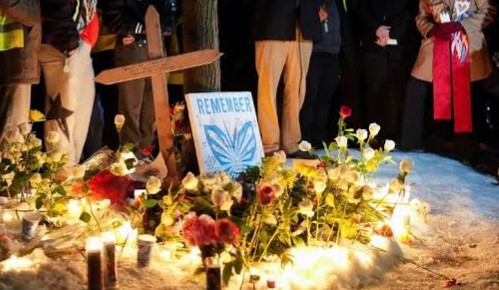
Photo credit: Shane Rounce

These ancient words of David are words we can relate to yet today. Just as David faced evil and people who were against him, today we face these same things. Sadly, this is one of the constants in our world. The desire for power over others and the drive to accumulate more and more has always led to the suffering of others. In verse 1 we are reminded of another constant. God has been and always will be a light in the darkness, salvation in the brokenness, and a fortress in the battle against evil.

In this world of division and violence and oppression we are called to be Christ’s light. This is not always an easy task. Just yesterday the Bishop of the episcopal area in which I serve held a Zoom call to discuss the division, violence, and oppression unfolding in Minneapolis and to talk about our Christian response. The church should be as David describes the temple in verses 4-6. It should be a place of shelter and safety, a rock upon which people can stand. But this is not just about the building. The body of Christ must be these things to the world in the reality of life.

A story was shared yesterday of an elderly man who came to the United States long ago, fleeing the violence of his homeland. He became a citizen and a part of society. This elderly man was pulled out of the shower, taken out into the street in shorts and crocs, with a throw over his shoulders, in sub-zero temperatures, to be questioned. Yes, it feels as if “an enemy encamps against” us. Like David and like many others, we cry out for justice. We cry out for peace. We cry out, “Lord, listen to my voice when I cry out – have mercy and answer me.” Lord, we need you now. O God who saves, be with us now.

Prayer: Lord God, we do cry out – some in our hearts, some in our spirits, some with pen and paper, some in the streets. Whatever your answer to our cries, may we hear and respond. May we say or do or pray or go as we are led. May we be used as you will – as a voice, as a presence, as a supporter… As you work towards justice and peace, O God, lead us to be your co-workers in this fight. Use us to stand with and to watch over and to protect the vulnerable and the suffering. Amen.