pastorjohnb

Thoughts and musings on faith and our mighty God!


Leave a comment

People of God?

Reading: Genesis 21:15-21

Genesis 21:18 – “Get up, pick up the boy, and take him by the hand because I will make of him a great nation.”
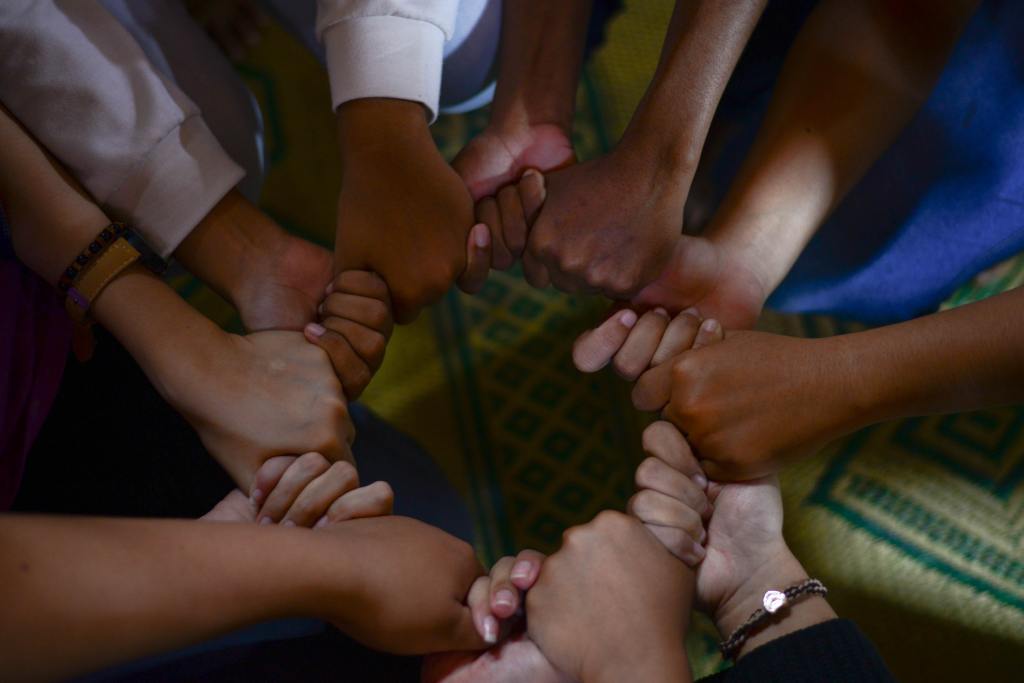
Photo credit: Wylly Suhendra

As we move along in the story Abraham and Sarah, the focus shifts to Hagar and Ishmael – to and God. For Abraham and Sarah, seeing Hagar and Ishmael walk away, heading out into the desert to die, to them that was the end of the story. But for Hagar and Ishmael, the story gets worse. Soon they are out of water – the death knell in the desert. Hagar places Ishmael under a shrub and walks away a short distance – far enough not to hear his cries. She cannot bear to watch her son suffer and die. Hagar weeps and cries out too.

Sitting alone in the desert, waiting to die, Hagar felt unseen and unheard. Most of us experience feeling unseen and/or unheard at times. Maybe it is because of our age or our gender or our newness to a situation. Or maybe it is because we are like Hagar in this moment – alone, powerless, vulnerable. It is at this moment that the God who sees becomes the God who hears. Their cries have fallen upon God’s ears. In response, God’s messenger encourages Hagar and tells her, “Get up, pick up the boy, and take him by the hand because I will make of him a great nation.” God will watch over, protect, make a way, and one day prosper Hagar and Ishmael.

Today there are people and people groups who live in the place that Hagar was – alone, powerless, vulnerable. As I ponder our call to see, hear, and respond, I think of the tragedy that recently unfolded in Minneapolis. Innocents were arrested, detained, and held for long periods. Community groups were afraid to leave their homes or to send their children to school. And I think of how the people of God led the way, rallying around, supporting, and standing for the targeted. While the scale of abuse and oppression may not be as visibly present in our communities today, there are certainly people who are alone, powerless, and vulnerable. How will we as the people of God respond?

Prayer: Lord God, open our eyes to see the Hagars and Ishmeals among us. Seeing, open our hearts to respond – coming alongside, standing against injustice, risking self for others. Forming community, use us to welcome in the lonely, to give voice to the powerless, to provide safety and resources for the vulnerable. In and through your love and power, made present by the people of God, may all people flourish. Amen.


Leave a comment

Many Hagars and Ishmeals

Reading: Genesis 21:8-14

Genesis 21:14a – “Abraham… took some bread and a flask of water, and gave it to Hagar. He put the boy in her shoulder sling and sent her away.”

Continuing in chapter 21 this week, Isaac has grown out of infancy. He is no longer nursing. No longer dependent upon just Sarah, Abraham throws a big party to celebrate. Abraham’s other son, Ishmael, is about 14 years old. Sarah sees him enjoying himself at the party and she makes a decision: he must go. Ishmael will not share in her son’s inheritance. While we might be shocked by her decision, it has been a long time in the making.

Soon after Ishmael was born, tension and strife arose between Sarah and Hagar. Sarah became jealous and envious. So, using her power over Hagar, Sarah severely mistreated Hagar. It was so bad, Hagar ran away. But God saw Hagar and her suffering. The Lord guided her back into Abraham’s household. Hagar continued to experience and endure harsh treatment from Sarah. Similar things happen today in situations where a person or group has power over others. Immigrants are mistreated by employers. The working poor are taken advantage of by payday lenders, greedy landlords, and others eager to exploit them. Non-whites are targets of unjust systems, profiling, and discrimination. Yes, there are many Hagars and Ishmeals in our day.

Abraham is greatly upset by Sarah’s decision. God offers assurances and a promise, making Abraham feel better about his role in the abuse. But what about Hagar and Ishmael? In verse 14a we read, “Abraham… took some bread and a flask of water, and gave it to Hagar. He put the boy in her shoulder sling and sent her away.” Bearing and raising his child all these years, enduring abuse from his wife all these years – and this is the result? Ishmael is old enough to understand what is happening too. Abraham has been “Dad” for 14 years, treating Ishmael as an only child, a gift in old age. And now this? Sent into the desert to die?

Let us sit with the emotions of the abused and discarded for a while. We finish the story tomorrow. Feel the feels for a day.

Prayer: Lord God, oh how we feel for Hagar and Ishmael. Fourteen years of feeling less than, always powerless and voiceless. Fourteen years of putting one’s head down, enduring abuse, just getting through. And now this: abandoned, sent away, evicted. God, don’t let the feels be limited to this story. Open our eyes and hearts to the Hagars and Ishmeals in our own communities. And move us beyond seeing. Move us to action. May we be the voice and strength for the voiceless, the powerless, the weak. Amen.


1 Comment

Covenant Faithfulness

Readings: Genesis 15, Genesis 16, Genesis 17

Genesis 17:7-8 – “I will be your God and your descendants’ God after you. I will give you… the whole land of Canaan.”

Today we begin with God’s promise to Abram of a biological heir. To illustrate the abundance of God’s promise, Abram is invited to look to the stars – “this is how many children you will have.” A sacrifice seals the covenant promise. As fire, God passes through the sacrifice, sealing God’s commitment to the covenant. Within this section God also reiterates and ties in the promise of this land for Abram’s descendants.

In chapter 16 we see Abram and Sarai taking matters into their own hands. It has been about 15 years since God first promised them descendants. Abram sleeps with Hagar, Sarai’s slave girl. Her pregnancy creates a rift in the family. Treated harshly by Sarai, Hagar runs away. God meets her there and promises Ishmael a large family, land… Hagar names God “El Roi” – the God who sees me. She returns to Sarai and Abram with God’s assurances of blessings.

Chapter 17 brings a reaffirmation of the covenant promises. “El Shaddai” – the God of power and might – invites Abram to walk with God. Abram becomes Abraham and Sarai becomes Sarah. This name change signals a new era and status for them. God initiates circumcision on the 8th day of life as a symbol of the covenant, saying, “Your flesh will embody my covenant as an enduring covenant.” That very day Abraham will circumcise his entire household, including himself at 99 years old. God assures Abraham and Sarah that the covenant will be fulfilled through their son Isaac. God tells them that Ishmael will be blessed too, but the covenant will run through Isaac’s descendants.

Reflecting on Abraham’s actions in these chapters, I wonder which Abraham I am most often like. Am I more often like the one who takes things into his own hands? Or am I more often like the one that acts on God’s word right then and now?

Prayer: Lord God, most of the time Abram/Abraham was a great example of faith. Guide me to be so obedient and faithful. At times, though, he stumbled and failed. At times, I do too. As you did with Abraham, continue to walk with me. Amen.


Leave a comment

God Hears and Comes

Reading: Genesis 21:8-18

Verse 17: “What is the matter, Hagar? Do not be afraid.”

Photo credit: Felipe Correia

Today’s Old Testament passage contains one of the uglier episodes in the story of Abraham and Sarah, the father and mother of Judaism. The roots of today’s story are found in the couple taking God’s promises into their own hands, using a slave girl to produce a child. Even then, way back in chapter 16, we can see the pattern of marginalization and abuse already being established. Today’s ugly story is not an isolated event.

In today’s passage we see Sarah tells Abraham to send away or cast off Hagar and Ishmael. A conflicted Abraham does so after God assures him concerning both Isaac’s and Ishmael’s futures. Forced into the wilderness, Hagar and Ishmael are soon out of food and water. Surrendering to the harshness of being cast off and ostracized, Hagar prepares for death. But God intervenes, sending an angel who says, “What is the matter, Hagar? Do not be afraid.” God sees her and responds. God encourages her and again reiterates the promise made in Genesis 16:10.

Most of us have never been used to produce a baby. And most of us have not been cast off by “family.” Most of us have not come face to face with dehydration and starvation as our demise. Yet in a very, very small way we can relate. We’ve all lost relationships. We’ve all felt alone. We’ve all feared death. And, like Hagar and Ishmael, God has met us in these wilderness places. God has said to us: “What is the matter ___? Do not be afraid.” God hears our cries and comes near. Thanks be to God.

Prayer: Lord God, you are our ever-present help in our times of need. Thank you for never marginalizing us or ignoring us or abandoning us. You are always nearby. You always hear and respond. Thank you, O Lord. Amen.


Leave a comment

Hear the Cries

Reading: Genesis 21: 8-15

Verse 17: “What is the matter, Hagar? Do not be afraid”.

Hagar and Ishmael are sent out into the wilderness. They are given a small amount of food and water. Soon these run out. Hagar must have been struggling with this fate – we all would. Why would life have to end like this? What do you think being rejected and cast out felt like? People all over our nation are wrestling with the idea of being outcast, rejected, marginalized. Some are like Hagar, on the inside looking out. Others are on the outside and many are trying to understand and are trying to be a part of the solution.

Hagar prepares to die, along with her son. Both weep tears. Ishmael’s are probably of sadness and loneliness and confusion. Hagar feels these emotions, but more: anger, hurt, unworthiness, isolation, hopelessness. But as they cry, God hears them. God says to her, “What is the matter, Hagar? Do not be afraid”. Those words – “do not be afraid”. These words are echoed throughout the story of faith. They say, God is near, God is with us. Today is not the end. Hagar and her son will not only survive, he will become a great nation too. God is saying that they matter, that their lives are important to God. God hears the cry of the outcast and the rejected. They are of sacred worth to God. God is their God too.

God continues to hear the cry of those that some see as less worthy, as less than. Jesus certainly heard their cries too. He invited us to hear the cries of the needy, the marginalized. And he told us to respond, to meet needs, to love them just as he first loved us. There is a great need in our nation right now for social justice and equality. May we, as followers of Jesus Christ, hear the cries of the outcast and oppressed. And may we, like God, choose to walk with them.

Prayer: Lord God, strengthen me for the day ahead. Gird me up to love all people well, to model that love after Jesus’ love. Lead me to act justly and to love mercy as I strive to walk humbly with you. Amen.


Leave a comment

Constant, Universal

Reading: Genesis 21: 8-21

Verse 17: What is the matter, Hagar?  Do not be afraid.

Today we find the culmination of the story of Abraham and Hagar and Ishmael.  It is the story of ignoring God’s promise and taking matters into ones own hands.  It is the story of jealousy, anger, abuse, betrayal, abandonment, and rescue.  Sarah has asserted herself and Abraham sends Hagar and ‘the boy’ off into the desert.  Isaac is Sarah’s son and the answer to God’s promise.  He will be the rightful heir.  It will be how the story unfolds as we read on in Genesis.

Yet a part of Abraham is conflicted, troubled.  Ishmael is his son, his flesh and blood.  Sending him off into the desert probably will not end well.  God speaks to Abraham and gives him assurances that ‘the son of your maidservant’ will also one day be the head of a nation.  ‘The boy’ will not die in the desert.  He has a future.  This reassurance allows Abraham to send them off into the desert, out and away from them forever.

This, however, is not quite the end of the story for Hagar.  Recall that she had been rescued by God once before.  Hagar would name God “the God who sees me”.  That God sees her again.  Just as she resigns herself to dying of thirst just yards from her son as he dies of thirst, God once again intervenes.  God calls out to her, “What is the matter, Hagar?  Do not be afraid”.  She too hears God’s promise for Ishmael and then God opens her eyes to see the water well that He has provided.  The passage ends with God’s continued care and provision through childhood and even into marriage.

Our God of love cares for those who are not ‘chosen’.  Hagar and Ishmael were part of Abraham and Sarah’s impatience and lack of trust in God.  On our human level, we would maybe want to see them off too.  They would remind us of our sin.  I am grateful that God loves all people, not just those who love or worship Him.  God’s love is constant; it is universal.  It is a love that Jesus would call us to follow and live out.  So when the Holy Spirit leads us to love the other, may this story remind us that God loves all of humanity so that we can go and do likewise.