pastorjohnb

Thoughts and musings on faith and our mighty God!


Leave a comment

Lament… and Hope!

Reading: Jeremiah 8:18-12:17

Jeremiah 10:21 – “The shepherd kings have lost their senses and don’t seek answers from the LORD. That is why they have failed and their flock is scattered.”

Our reading opens with Jeremiah’s lament: “no healing, only grief… darkness and despair overwhelm me.” He must’ve felt this often. He called out over and over but was ignored, ridiculed, and worse. Jeremiah then wonders where God’s healing is. If only there were enough tears, he would weep day and night for the people of God.

God then joins the lament. They don’t know God. They scheme, lie, and cheat. God weeps for the earth. It will be affected by the coming war. Jerusalem will become ruins, Judah a wasteland, all because they haven’t obeyed God’s Instructions. They have “followed their own willful heart.” God summons professional mourners. Maybe then Judah will understand the coming death and destruction. Maybe then they’ll quit boasting about themselves. Maybe then they’ll turn and boast once again about God and God’s kindness, justice, and righteousness. Maybe then their hearts will be circumcised.

Chapter 10 contrasts idols with God. One is “no different than a scarecrow in a cucumber patch.” The other is the living God, the creator of the earth. This one tells the people to “pack your bags” – exile is coming. Why? On the macro level, “The shepherd kings have lost their senses and don’t seek answers from the LORD. That is why they have failed and their flock is scattered.” Leadership has failed. God then laments that this generation is just like their ancestors. God worked and worked. The people ignored God, turning to idols, breaking the covenant. It is so bad, God instructs Jeremiah to not pray for them.

In chapters 11 and 12 there are schemes against Jeremiah. God will deal with that. God then again laments the reality with Judah. The leaders have “destroyed my vineyard.” Yet we see God’s great grace in verses 12-16. If the non-Israelites will turn to God, then God will build them up “in the midst of my people.” The circle might just open up a little wider. Thanks be to God.

Prayer: Lord God, there is much sadness in today’s readings. It is centered on the state of your children. They are deep in their sin. Consequences are coming. The sadness must yet be present today. We can surely follow our own willful hearts. Lord have mercy. Please continue to be a God of kindness, justice, and righteousness. We so need you. Build us up to be your people, O God. Amen.


Leave a comment

A New Relationship

Reading: Isaiah 60-66

Isaiah 65:14 – “My servants will sing with contented hearts, but you will cry out from heartache; with broken spirits you will wail.”

As we close our Isaiah today chapter 60 encourages Israel to arise, to welcome sons and daughters home as they return from exile. Isaiah proclaims that peace and righteousness will reign. He tells of a day when the sun and moon won’t shine – God will be their light.

Isaiah 61 is a joyful proclamation that reveals God’s heart for justice and righteousness. The anointed prophet brings good news, heals brokenness, frees from sin, and promises the Lord’s favor to the faithful. He tells of God helping Israel to rebuild, to be restored and renewed. There is a promise of being clothed in victory and in a robe of righteousness. As we continue into chapter 62 God promises not to rest until Israel’s light shines and her salvation “blazes like a torch.” God delights in this people, will care for them, will lead them to be called “Holy People,” redeemed by God.

The prophet steps back in chapter 63, reminding the people why all this rebuilding is necessary. Edom’s sin raised God’s anger and wrath, just as Israel’s sin had. Yet for Israel there was also God’s love, mercy, and redemption. Isaiah invites more, asking God to “tear open the heavens” to come to them. He admits, Israel is the clay, God the potter. Good words of surrender and trust.

Isaiah closes out the book in chapters 65 and 66 with the usual good/bad news. The choice and outcome are summed up well in today’s key verse. No one listened when he spoke… God will repay their sin in full… God’s fire and sword will slay many. God is creating a new heaven and earth where there will be no tears, where they will thrive. Their relationship will deepen. God will answer before they call, God will hear before they speak. If only our hearts were so in tune with the Lord our God. May it be so one day.

Prayer: Lord God, we rejoice in your presence with us. Your love and mercy, grace and compassion, faithfulness and forgiveness – these continue to flow to your people. You remain at work, rebuilding when we break down, restoring when we fall away. Your justice and righteousness call us to reflect all of this as we seek to bring your good news to all people. Lead and guide us, O Lord. Amen.


Leave a comment

Yes, There Is Hope

Reading: Isaiah 45-48

‭Isaiah 48:10 – “See, I have refined you, but not like silver; I have tested you in the furnace of misery.”

In today’s readings we see the movement towards the end of the exile. God has chosen Cyrus, king of Persia, to be the instrument of change. Even though Cyrus does not yet know God, he will be used by God. Some people must have questioned the choice of Cyrus. In verses 9-13 God addresses these doubters, asking, “Are you questioning me about my own children?” God then again asserts the right to use Cyrus as the method to end the exile.

The last part of chapter 44 and most of 45 remind Israel of the worthlessness of idols. The idol makers will be shamed and disgraced. The idols don’t respond to cries for help, they can’t save anyone from their distress. In contrast, God speaks truth and announces what is correct. God carries Israel – from the womb to old age. These worthless idols – they must be carried from place to place.

The dethroning of Babylon is announced in chapter 47. Yes, God was angry at Israel and Judah. Yes, God chose Babylon to punish them. But Babylon went too far. They took no pity on God’s children. The yoke was heavy. Babylon did not “stop and think… didn’t consider the outcome.” Now destruction is upon them.

Chapter 49 is a reminder of what could have been and hope for what may yet be. God reminds Israel and Judah that they are “stubborn,” with necks of iron and foreheads of bronze. Today we’d say they were selfish and really slow learners. If only they’d follow the commands… then well-being would flow like a river, righteousness would come in waves. If only… their descendants would be like the grains of sand. Yes, and God said in chapter 48, “See, I have refined you, but not like silver; I have tested you in the furnace of misery.” The time has come to try again. God will free Israel from Babylon. They will leave shouting, “The Lord has redeemed his servant Jacob!” Yes, there is hope. Thanks be to God.

Prayer: Lord God, you offer us hope, love, relationship, mercy, blessing. You also remind us that we are prone to chasing after the things of this world as our selfish nature rises up. If only we ever chose you. If only we always were holy and faithful. Like Israel, we fail again and again. Yet with you there is always hope. You long to redeem us. You do so again and again. Thank you, God. Amen.


Leave a comment

I’m here… Send me.

Reading: Isaiah 5-7

‭Isaiah 6:8 – “’Whom should I send, and who will go for us?’”… “‘I’m here; send me.'”

Isaiah 5 begins with God’s lament over Israel and Judah. They were planted as a vineyard in a land flowing with milk and honey. God cleared the nations before them, built a kingdom, ordered their living. But they turned rotten, choosing idols and other evils over God. So God removed the hedge of protection and allowed the vineyard to be trampled. God expected justice and righteousness but got bloodshed and distress.

Blame and judgment are given to the greedy, to the gluttons, to the cheaters, to the prideful, and to the oppressors. God extended a hand against them, a warning sign, but their evil persisted. So God called a nation from far away – “hurrying, swiftly they come!” Arrows sharpened, swords drawn, roaring like a lion, darkness comes.

Chapter 6 shifts everything as Isaiah finds himself in heaven. God is high and exalted. Winged creatures sing of God’s glory and holiness. Isaiah suddenly realizes that he is a sinner in God’s presence. A winged creature touches his unclean lips with a coal from the altar, purifying him. God asks aloud, “Whom should I send, and who will go for us?” Isaiah responds, “I’m here; send me.” But God says to him, they won’t hear, they won’t see. Isaiah asks, “How long?” Sadly, until all lies in ruin and the people are in exile in a foreign land.

We find the beginning of this story in chapter 7. Aram and Israel unite against the approaching Assyrians. Judah refuses to join them, so they attack Jerusalem. This fails. God tells King Ahaz not to fear. They’re just “smoking torches” who will soon fall – before son born “Immanuel” learns to tell good from evil. Israel will fall and Judah will have a scary and powerful new neighbor.

Prayer: Lord God, how easily we see ourselves in these chapters. You have good plans for us and you make a way but we often fall off the path. We choose evil over good. We fall into sin yet you call us again and again to step into your grace, to be restored and made new again. You invite us into mission and service. Sometimes we do go willingly but often times we are fearful or selfish. You promise to be with us and to go with us. Help us to more regularly declare, “I’m here; send me.” Amen.


Leave a comment

Inner Strength

Readings: Psalms 137-140

‭Psalm 138:3 – “On the day I cried out, you answered me. You encouraged me with inner strength.”

Psalms 137 and 138 offer lament and then raise up thanks and trust. These two represent much of what we find in the Psalms and in all of life – highs and lows. In Psalm 137 the psalmist laments a hard experience in exile. Their “tormentors” wanted them to sing a joyful song. How could they sing joyfully in exile? The response, instead, is a plea for Babylon’s (and Edom’s) downfall. In Psalm 138 we see a better choice. The psalmist turns towards Jerusalem and the temple. Here we read, “On the day I cried out, you answered me. You encouraged me with inner strength.” God is faithful. God hears and responds. The Psalm closes with this plea to God: “don’t let go.”

Psalm 139 expresses a deep connection with God. The psalmist recognizes that God knows them inside out. This is at first overwhelming, “too much for me.” There is nowhere the psalmist could go to avoid this overwhelming knowing. Even darkness would be no relief. In verse 13 there is a shift. The psalmist realizes that God knit them together and that God has good plans for them. After a brief dive into hating evil and seeking their destruction, the psalmist returns to self, inviting God to know him or her even more.

Psalm 140 is a plea for protection. For those who plot evil,“spider poison is on their lips.” The psalmist cries out to God for help, hoping for evil’s downfall. In the end, the psalmist knows deep down in his or her heart, “those who do right will live in your presence.” Through all of the highs and lows, for all in between, may this too be our daily choice: to live right, to be in God’s presence.

Prayer: Lord God, through all of life’s ebbs and flows, you are there. Walk with us daily, keeping us from evil and defending us when it arises in our lives. Grow in us a trust in you as our knowledge of you grows in us. Grant us an inner strength in the trials and sufferings, a strength that clings to you. Amen.


Leave a comment

The Royal Family

Readings: Esther 1Esther 2, Esther 3, Esther 4

Esther 4:14: “Maybe it was for a moment like this that you came to be part of the royal family.”

Today we begin the book of Esther. It is set in the city of Susa – the city where Nehemiah served King Artaxerxes. Esther’s story unfolds under the next king, Ahasuerus (or Xerxes I.) He was the 4th king that reigned in Persia during the 120 years that it took to rebuild the temple and the wall around Jerusalem. Almost all of the Israelites sent into exile are still living in the provinces of Persia.

Right away we learn that Ahasuerus likes to show off his wealth and power. After a seven day party he wants to show off his beautiful queen. Vashti refuses to be paraded around. This opens the door for a new queen. Esther is one of hundreds yet is chosen as the next queen. Throughout the story, Esther finds favor with others. Mordecai, a Jew who works at the King’s Gate, was like a father to Esther. About that time, he overhears a plot to kill the king. He reports it through Esther and the event is noted in the royal record.

Meanwhile, back in the palace, Haman is made the #1 official, the king’s right hand man. All people are supposed to bow down to Haman. Mordecai, a devout Jew, will only bow down to God. A very angry Haman gets the king to write a decree calling for all Jews to be killed on the 13th day of the 12th month. This date was chosen by casting dice (or purim) and it falls the day before the Jews would celebrate the Passover, their greatest day of deliverance.

Mordecai hears of the decree and he fasts and mourns. Esther hears of this and, through a back and forth through Hathach, she finds the courage to go to the king on behalf of her people. She finds courage in these words from Mordecai: “Maybe it was for a moment like this that you came to be part of the royal family.” We too are a part of a royal family – God’s. When might we be called upon to risk for our faith? And in that moment of truth and testing, how will we respond?

Prayer: Lord God, your hand is ever guiding and leading. Most of our days are routine. But sometimes we come to where Esther is: a single moment when we are put to the test. We must decide: do we trust you? Lord, in these moments, speak into our hearts, reminding us of your sure presence and of our assured place in your family. Amen.


Leave a comment

Joy and Sorrow

Readings: Ezra 1, Ezra 2, Ezra 3

Ezra 1:3 – “If there are any of you who are from his people, may their God be with them! They may go up to Jerusalem… and build the house of the LORD.”

Ezra continues the story of the chronicler. It might even be the same author. The start of Ezra 1 mirrors the end of 2nd Chronicles 36. King Cyrus of Persia issues a proclamation. God tells Cyrus to build a house for God in Jerusalem. In response he proclaims: “If there are any of you who are from his people, may their God be with them! They may go up to Jerusalem… and build the house of the LORD.” Cyrus also calls for support from those who do not go and he sends along the temple items that Nebuchadnezzar had looted. The ending of the exile and the proclamation to build the temple fulfill Jeremiah’s prophecy.

Chapter 2 contains the list of those “whose spirit God stirred up” to go home to rebuild the temple. Almost 50,000 make the journey. This is the total for phase one – the rebuilding of God’s house. This is but a small piece of the multitude sent into exile. The first step is to settle in, to become inhabitants in the land. After seven months the returnees gather in Jerusalem. Jeshua and Zerubbabel rebuild the altar together. The head priest and the political leader work together. Entirely burned offerings are given. They celebrate the Festival of Booths – a reminder of God’s provision when Israel lived in tents (or booths) during their time in the wilderness. From this point on, the daily offerings required by the law of Moses will be given.

The work is organized and construction begins. Cedarwood is contracted for. In the second month of year two, workers begin to lay the temple’s foundation. Upon its completion, there is a great celebration. There is great joy amongst the priests and the people. But mixed in is great weeping. The oldest remember the first temple. There is a grief in this. The old and the new intersect in this moment of joy and of sorrow. God is present in both.

Prayer: Lord God, the rebuilding of your people has begun. You use an earthly power to fulfill your prophet’s words. Your presence moves some people to action. A new thing is being done both physically and spiritually. O Lord, continue to be at work in us, repairing what has been broken, shaping and forming us into your people too. Amen.


Leave a comment

Through It All

Readings: 2nd Chronicles 33, 2nd Chronicles 34, 2nd Chronicles 35, 2nd Chronicles 36

2nd Chronicles 34:2 – “He did what was right in the LORD’s eyes… not deviating from it even a bit to the right or left.”

Today we begin with Manasseh. The first part of his long reign is as evil as could be. He leads Judah to do great evil in God’s eyes. He is captured and hauled off to Babylon. There he repents and submits himself fully to God. Returned to Judah, he removes pagan worship and serves the Lord. Manasseh dies and gives way to Amon. He is so evil he’s killed by his own officials after just two years.

Josiah reigns for 31 years. Right away he has Judah purified of idol worship and he repairs the temple and its system. The priest Hilkiah finds the instruction scroll and it is read to Josiah. He tears his clothing, realizing that God must be furious. Josiah renews the covenant and celebrates the Passover. Josiah then interferes in Neco’s war, despite God sending the Egyptians to war. Josiah is injured and dies. Jehoahaz rules for three months and then is removed by the Egyptian king.

Jehoiakim and Jehoachin reign next. Both do evil in God’s eyes. The Assyrians come during Jehoiakim’s reign, conquering Judah. Hezekiah is appointed as a puppet king. He does evil. He ignores Jeremiah. He rebels against King Nebuchadnezzar. Assyria levels all of Jerusalem and hauls almost everything and everyone off into exile in Babylon.

Chronicles ends with two bright spots. Because of the exile, the land will lie fallow. This healing fulfills the words of Jeremiah. A new power emerges in the world scene: Persia. King Cyrus receives a word from God: build the temple in Jerusalem. Cyrus orders the followers of God to go back home. God is at work once again.

Prayer: Lord God, through the ups and downs, through the good and the bad, through it all – you remain present to the people of God. You do the same with us. Your love and faithfulness knows no bounds. Thank you, Lord. Amen.


Leave a comment

The Ideal King

Readings: 2nd Chronicles 5:2-14, 2nd Chronicles 6, 2nd Chronicles 7, 2nd Chronicles 8, 2nd Chronicles 9

2nd Chronicles 5:13c – “Yes, God is good! Yes, God’s faithful love lasts forever!”

Photo credit: Diego Gennaro

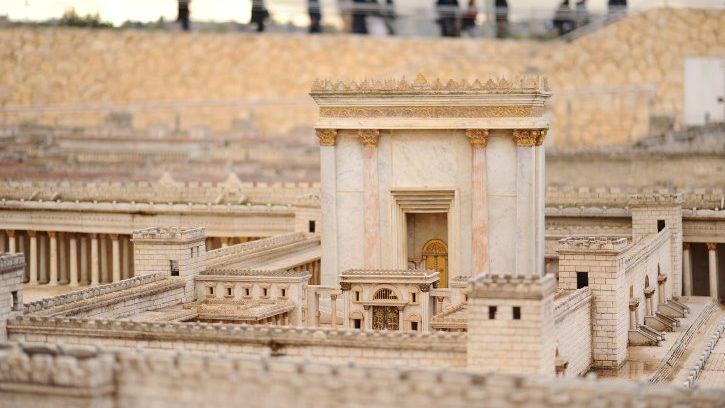
Our readings today begin with the dedication of the temple. All Israel gathers as the chest, tabernacle, and holy items are brought up to the temple. As the chest is placed in the holy place, this praise is lifted to God: “Yes, God is good! Yes, God’s faithful love lasts forever!” These words of David, originally spoken when the chest first came into Jerusalem, will be repeated again and again.

Solomon offers a long and beautiful prayer. In many ways he asks God to be with them and to hear and answer their prayers. Prophetically he even included an acknowledgement of sin that will lead to exile. Solomon prays that even then and there, God will hear the prayers of their changed hearts. Fire falls from heaven as God’s initial response to Solomon’s prayer. A great amount of sacrifices and a huge celebration follow. These two things are connected – a holy BBQ!

God visits Solomon again, reiterating God’s covenant loyalty and a deep willingness to listen to Israel’s prayers – if they are obedient, humble, seeking God, and turning from their evil ways. It is as if this last part were a given. Solomon’s reign and legacy will last forever if he and his descendants also walk in these ways.

The last two chapters testify to Solomon’s wealth, wisdom, and fame. He builds and builds. He receives the Queen of Sheba and other foreign powers, adding to both his fame and wealth. He is far and away the greatest king ever. Here ends the chronicler’s report on Solomon as he dies after ruling Israel for 40 years. Solomon has been portrayed as the ideal Davidic king. The chronicler returns to reality as the story continues with Rehoboam.

Prayer: Lord God, as we read and celebrate this part of Solomon’s reign, may we also remember his shadow side as well. Yes, the mountains are magnificent. But the valleys are there too. The valleys are the proving grounds, the refineries, the places of formation and shaping. May we value both, O Lord. Amen.


Leave a comment

Fully Poured Out

Readings: 2nd Kings 22, 2nd Kings 23, 2nd Kings 24, 2nd Kings 25

2nd Kings 25:21 – “So Judah was exiled from its land.”

Photo credit: Mukund Nair

Today’s reading begins with Josiah. While repairing the temple, the instruction scroll is found. Hearing its words, Josiah rips his clothing in anguish and sends folks to inquire of the Lord. He recognizes how far Judah (and Israel) had wandered from the Lord. Disaster is coming soon, says the Lord. And yet Josiah sets out to love God with all his heart, being, and strength. The covenant is restored. All of the shrines, altars, temples, poles… are removed. They celebrate the Passover. And Josiah dies in a battle with Pharaoh Neco.

Jehoahaz’s short reign in followed by Jehoachin. Fulfilling God’s word to Josiah… King Nebuchadnezzar and Babylon’s army arrives. In addition, raiding parties from many local tribes damage Judah. After three months, Jehoachin surrenders. All of the temple and palace treasures are hauled off, the temple items are cut up, and most of the people are taken into exile. A handful plus the poor are left behind to manage the crops. Newly renamed Zedekiah is left to rule. After 11 years, he rebels against Babylon. A new siege leads to a severe famine in Jerusalem. Zedekiah tries to escape but is caught. He watched his sons die and then is blinded, chained, and hauled off to exile in Babylon.

Guard commander Nebuzaradan oversees the burning of the temple, palace, and homes of Jerusalem. He oversees the Chaldeans tearing down the entire wall. The poor are left to farm the land. In 25:21 we read, “So Judah was exiled from its land.” All is in ruins. God’s anger has been fully poured out.

2nd Kings closes with a small happy note. After 37 years in prison in exile, Jehoachin is paroled by new king Awil-merodach. He allows Jehoachin to eat at his table.

Prayer: Lord God, perhaps the high point in Judah since the days of David and Solomon are followed by the great fall of Judah and the ruin of Jerusalem. This brings with it feelings associated with Holy Saturday. Today is a solemn day of final introspection and reflection as we close the season of Lent. It is much like the time in exile will be. Lead and guide us, O Lord, meld and mold us, remake us even, so that we can walk faithfully in ways. Amen.