pastorjohnb

Thoughts and musings on faith and our mighty God!


Leave a comment

Rock of Refuge

Reading: Psalm 71:1-6

Verse 3: “Be my rock of refuge, to which I can always go.”

Psalm 71 speaks of our dependence on and connection to God. My relationship is one that has ebbs and flows. There are times when I am more dependent on God than at other times. These tend to be seasons of doubt and those times walking through the valleys. Pain or grief or suffering drives me towards God, strengthening our connection to one another. This is where the Psalm begins. God is the psalmist’s refuge. The author asks God to rescue and deliver, to hear the pleas and to save him or her. Verse 3 declares, “Be my rock of refuge, to which I can always go.” God is everlasting. We can always turn to our rock, to our refuge.

There are times too when I feel less dependent and therefore less connected. Things at church and in life seem to be going good. It is not that my faith has lessened or changed. God is still present; I just feel less needy. The lack of need for rescue and deliverance lessens the intensity. Yet I know that God is still right there. The everlasting God remains my rock and refuge. If I cry out, I know God is right there.

Verses 5 and 6 explain this trust, this knowledge. What is true for the psalmist is true for many. God has always been our hope. It feels like faith has always been a part of our lives. For as long as we can remember – “from birth” – we have relied upon God. Again, we create or allow ebb and flow, but looking back we see and know a God who is ever steadfast and true, who has always been there. God is our rock of refuge – always. Thanks be to God.

Prayer: Lord God, no matter the degree of my engagement, you are always fully present. In those seasons when I feel like I need you less, you are never away. You are always right there, walking with me. Thank you for your unwavering faithfulness. Amen.


Leave a comment

Fire and Division

Reading: Luke 12:49-53

Verse 51: “Do you think I came to bring peace on earth? No, I tell you, but division.”

Photo credit: Ricardo Gomez Angel

Jesus begins this teaching by declaring that he came to “bring fire on earth.” This reminds me of an expression once used to describe enthusiastic Jesus followers: they are “on fire” for Jesus. This phrase was used to paint a picture of someone who was super eager to share Jesus with everyone they met. Oh, wait. Isn’t that what Jesus is talking about here? And does this describe you and me?

The fire Jesus refers to next is the fire of the Holy Spirit. The baptism that he had to undergo was the baptism of his death. Here Jesus is longing for the day when he returns in Spirit, dwelling in each believer’s heart. Leading and guiding, the Spirit empowers all believers to be “little Christs” in the world. Sadly, this often looks more like poking and prodding. “On fire” isn’t exactly the best description, is it?

One reason for this might be what Jesus touches on in verse 51-53. In verse 51 he says, “Do you think I came to bring peace on earth? No, I tell you, but division.” Peace to our lives? Yes, Jesus! Peace to our world and to our relationships? Well, no. Living out our faith will cause division. It will create rifts in all of our relationships – family, friends, coworkers, classmates. Living for Christ will inherently push against living for the world. Selfish versus selfless, greedy versus generous, authority versus service – these and many more are places of division, places where we will pay a relationship cost for walking in Jesus’ footsteps. May we tread faithfully, assured of Christ’s Holy Spirit presence within our hearts.

Prayer: Lord God, grant me the courage and strength to always choose you. Empower me to walk the path that you set before me, no matter the cost, being light and love and hope for the world. When the desires of the flesh rise up in me, make greater the fire of the Holy Spirit. Refine me then to be more like Jesus. Amen.


Leave a comment

Ask, Seek, Knock

Reading: Luke 11:5-13

Verse 9: “Ask and it will be given to you; seek and you will find; knock and the door will be opened to you.”

Today’s second portion of this week’s passage from Luke 11 begins with an illustration. A man has an unexpected guest. He has no bread so he goes to a neighbor, asking for bread. At first he is denied – “I can’t get up and give you anything” – but the neighbor relents because the friend at the door was so persistent. He was bold in his asking.

Continuing on, Jesus says, “So I say to you, ‘Ask and it will be given to you; seek and you will find; knock and the door will be opened to you.‘” Jesus is encouraging us to be bold and persistent. Begin with prayer. Ask God. Tell God the desires of your heart and the needs of your life. Ask God where you can be used today. Then turn to scripture. Seek encouragement if that’s what is needed. Maybe it’s assurance or direction or guidance that you need. They’re all in God’s word. Seek holy input. Lastly, take action. Knock on a door, send a note or a text, serve at a local organization, mow a neighbor’s lawn. Allow the asking and seeking to guide your doing. Be bold and live out what you’ve prayer for and found scriptural support for. Be persistent and trust in God. God is faithful.

This pattern applies to this week’s theme of reconciliation. Whether it is the hard work of personal transformation (reconciling oneself to God) or the challenging work of forgiveness (reconciling ourselves to another or to God) or the difficult work of social reconciliation (fixing or creating new and just systems), we begin with prayer, turn to scripture, and then take action. Rooting and founding our efforts in our relationship with God is essential to building the kingdom here on earth. Day by day, may we work to make it so.

Prayer: Lord God, I ask that you would daily guide my life. As I turn to your word and particularly to Jesus Christ, the living word, show me the way to live and be your light and love in the world. Then put me to doing. Use me as you desire as we seek to build your kingdom here on earth. Amen.


1 Comment

As Faithful

Reading: Acts 2:1-13

Verse 6: “A crowd came together in bewilderment, because each one heard them speaking in his [or her] own language.”

Photo credit: Pablo Heimplatz

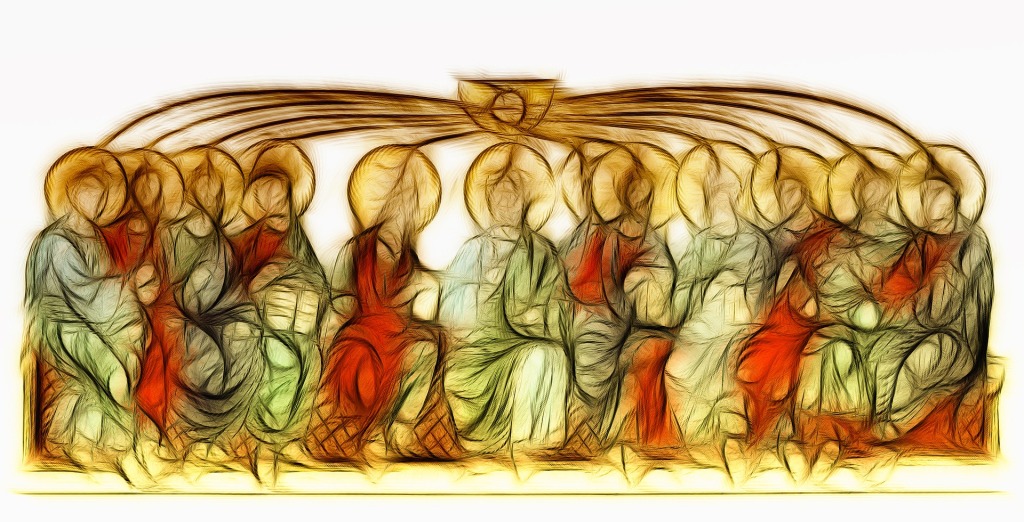
Acts 2 tells the story of God’s word branching out. A small group of Jesus followers are gathered for worship in Jerusalem, a city teeming with people there to celebrate Pentecost or Shavuot, in Judaism. It is a yearly festival to celebrate the first fruits of the wheat harvest. On this day a loud wind draws people from all over the world to the house where the followers were gathered. Upon each follower was the flame of the Holy Spirit – just as Jesus has promised.

As the worldly crowd gathers, the Spirit enables the followers to speak the good news of Jesus Christ in a diverse array of languages. People from all over the known world hear these Galileans speaking in their own native tongues. Many are amazed by this act of God. They know that something extraordinary is happening here. Many listen and are drawn into Jesus.

When have you had a similar experience? Maybe for you it was when the Spirit prompted you to go and offer reconciliation. Maybe for you it was a nudge to go visit a shut-in or someone who was ill. Maybe it was a whisper to engage that stranger. Maybe it was a random thought to pray for someone you know. This same Holy Spirit continues to speak and to empower followers of Jesus Christ to witness to the good news. May we be as faithful as this first Pentecost crowd, drawing others to know our Jesus.

Prayer: Lord God, this day is full of opportunities. Use me as you see fit to be a sharer of the good news of Jesus Christ. Amen.


Leave a comment

Humble Service, Faithful Love

Reading: Revelation 1: 5 and 7

Verse 7: “All the peoples of the earth will mourn because of him. So shall it be!”

Returning to Revelation 1 today we focus on the “is to come” that we touched on yesterday. In verse 5 John refers to Jesus as “the ruler of the kings of the earth.” Jesus does have power over all of us. But just as you and I have the ability to fall to temptation and to choose to sin, so too do the kings and ruler of this world. Just because Jesus is Lord doesn’t mean that it always look like he’s 100% in charge.

It has been said in the scripture and by the world that those with power and authority should be held to higher standards. I believe it should be so. It was this way with Jesus. He modeled what he preached. No one has had more power or greater authority than Jesus. Yet he sought to be a humble servant, to love others above self. When we strive to live this model ourselves, we are are recognizing Jesus as Lord. That is the path we are called to walk. Is it possible for these two worlds to align today? Can those with power and authority lead with humility and love for the other? I believe so.

In verse 7 John writes of Jesus’ return – of the day when Jesus will “come with the clouds,” of the day when “every eye will see him.” No one will miss out on his return. All will know the time has come. John continues, writing, “All the peoples of the earth will mourn because of him. So shall it be!” Note the “of the earth” part. Those who have chased after and used their power and authority for selfish ends – those will mourn. Those who have walked the path of humble service and faithful love – they will rejoice. May it be so for you and for me.

Prayer: Lord God, help me to be faithful in my service to you and your coming kingdom. Use me in humble service and faithful love today. Amen.


Leave a comment

Pray a Prayer!

Reading: Psalm 126

Verse 3 and 4: “The Lord has done great things for us… Restore our fortunes, O Lord.”

Psalm 126 is a passage that makes a great prayer. Many of the Psalms work this way. That is how and why many were written. In ancient times this song was a sung prayer, often used when going to worship or when traveling to Jerusalem for one of the yearly festivals. For the Israelites these sung prayers functioned like the early hymns of our faith. Both contained truths about God and our relationship with God. I think of songs like Amazing Grace, How Great Thou Art, Great Are You Lord, and All Who Are Thirsty as ‘modern’ versions of the Psalms.

Psalm 126 is a great example of God’s love and care, both past and present. This is illustrated well in verses 3 and 4. Verse 3 recognizes God’s past work on behalf of God’s people and verse 4 asks for God to continue to work amongst the faithful. The first three verses of the Psalm are reminders of God’s faithfulness and the last three call for God’s faithfulness to work in and among the people as they move forward.

The Psalm is a good one for us to pray too. We can pray it as it is. Or we can use the basic structure to personalize a prayer. To do this we can substitute in a time when God rescued or redeemed or saved us (in place of being brought back from captivity) and we can insert actions or outcomes that we desire in place of sowing, seeds, and sheaves. In doing so we are reminded of God’s faithfulness in our past and we are naming our need for God’s work in our present and future. With this in mind, pray a prayer today!

Prayer: Lord God, I rejoiced in my heart when you called me to Grace. I ask that you would continue to grow my faith as I seek to serve you and this community of faith. Amen.


Leave a comment

Blessed Are…

Reading: Psalm 32:1-5

Verse 5: “Then I acknowledged my sin to you and did not cover up my iniquity… and you forgave the guilt of my sins.”

Our passage begins with two beatitudes or blessing statements – “Blessed are…” the one whose sins are forgiven and the one with no deceit in their spirit. To be blessed, to live in right relationship with God and with one another, we must be people of forgiveness and people of honesty and integrity. We must be willing both to receive and to offer forgiveness. We must live an upright life before God and with each other.

In verses 3 and 4 we see the impact of remaining in our sin. David writes, “my bones wasted away” as his “strength was sapped.” To live in sin is life-taking, joy-stealing, and energy-consuming. In those seasons when I have strayed and lived a sinful life, I was always worried about being found out and about how my actions were hurting myself and others. When one knows of the better way, it is hard to live in sin. At other times I have lived with or overlooked iniquities – prejudice, bias, racism, sexism, classism. My silence or inaction was my sin. Worse yet, at times I used these unjust systems to my advantage. There are other ways, of course, that I have fallen short. These failures, when left unconfessed, become “heavy” upon us.

God is faithful. God offers a remedy. In verse 5 we read, “Then I acknowledged my sin to you and did not cover up my iniquity.” David came clean and was honest with himself and with God. He laid bare his sins and iniquities before God. God is faithful. God did not condemn him. No, “and you forgave the guilt of my sins.” God pardoned him. God wiped away the guilt and restored David to right relationship. God once again brought David to a place of blessing. Blessed are we when we confess our sins and iniquities. God is faithful. God will cleanse and restore and redeem us. Thanks be to God.

Prayer: Lord God, temptation is ever before me. The ways of the world and the lies of Satan ever seek to draw me in, to trap me. Fill me with your Spirit, guide me by your will, conform me to Christ. Strengthen me this day and each day so that I may walk as a faithful disciple. Amen.


Leave a comment

Trust in God Alone

Reading: 1st Corinthians 10:1-13

Verse 12: “So, if you think you are standing firm, be careful that you do not fall.”

As Paul works with the Corinthian church, trying to compel them to a more faithful witness, he tells them of the struggles of the Israelites in the desert. Being former Gentiles, they wouldn’t be terribly familiar with the exodus stories. But as we all know too well, the sins of idolatry and sexual immortality and the sins of grumbling against and testing God remain present even to this day. Even though the Israelites were all alone in the desert, God’s people found ways to sin. Even if we went off and lived as a hermit, we’d find ways to sin. Temptation and sin are ever present dangers. Paul reminds the Corinthians of this often. It is only when we are aware of our natural tendency to be drawn towards self and the lures of the flesh that are all around us that we begin to be on guard against such sin.

Paul reminds the Corinthians of all that was in favor of the Israelites remaining faithful: together they passed through the sea and were led by the cloud and by Moses. Together they ate the manna and quail and drank from the rock. And yet they sinned. The church in Corinth was all baptized into the one Christ and they were all indwelled by the same Holy Spirit. Yet they too sinned. To trust in our past or to rely on being a ‘Christian’ is not proof or guarantee against that we will be free of temptation or sin. Paul warns, “So, if you think you are standing firm, be careful that you do not fall.” Faith is not about the past or the future. It is about the present. Just as Jesus called on God the moment that temptation presented itself when he was in the wilderness, so too must we call on God in our present temptation. Right then.

Paul concludes by reminding us that “God is faithful.” When we too choose faith, God will “provide a way out so that you can stand.” In our moment of great need, may we trust in God alone. God is faithful. God is mighty to save.

Prayer: Lord God, turn me always to you and not to my own understanding or will power. Alone I will continue to fail. With you may I stand. Amen.


Leave a comment

Faithful and Steadfast

Reading: Psalm 37:1-11

Verse 5: “Commit your way to the Lord; trust in God.”

Psalm 37, like many of the Psalms, is an acrostic poem. The original text would have used the pattern and rhythm in the alphabet or in the letters of a specially chosen word to draw readers in. Even though we lose this aspect in translation to English, we can still see how each pair of verses build upon each other as one reads through the poem. In the first pair David encourages us not to be jealous of what evil men accumulate: “they will soon die away.” In the next stanza we are encouraged to trust and delight in the Lord (instead of earthly stuff) because “God will give you the desires of your heart.”

The pattern continues as we read on. In verse five David tells us, “Commit your way to the Lord; trust in God.” Walk faithfully and steadily and God will “make your righteousness shine like the dawn.” The Psalm continues to build, encouraging us to be still before the Lord and to refrain from evil and wrath. David reminds us in verse 11 that the meek will be blessed and will “enjoy great peace.” Faithful living leads to a joyful life. Steadily walking with God brings peace.

A little fun activity I tried was writing an acrostic for God. I used the word “gracious.” Can you guess what each letter stood for as I described who and what God is to me? What word would you choose to describe God or Jesus? What does each letter represent?

Prayer: Lord God, thank you for the reminder of how and why we walk faithfully and steadily with you. It’s a blessing to be encouraged so. Help me to live into your gracious character and each piece within. Thank you, Lord. Amen.


Leave a comment

Faithful Ministers

Reading: Luke 4:21-30

Verse 28: “All the people in the synagogue were furious when they heard this.”

As we turn again to Luke 4, it seems things were going well with Jesus and the people of Nazareth. He teaches in the synagogue; they are impressed. Some there question. We usually assume their questioning was caused by doubt or skepticism. But maybe it was out of greed – imagine what Jesus could do for us, those of his own hometown! Maybe it was from a place of pride – how important we’ll be if Jesus stays here with us! Whatever was motivating their thoughts, it must’ve been evil or selfish. Jesus himself challenges their limited or errant thinking.

Jesus reminds the people of two Old Testament stories. One is of Elijah and the widow of Zarephath and the other is of Naaman the Syrian. Both stories were about God’s miraculous work in the lives of strangers, of pagans, of outsiders. Standing in his hometown, taking square aim at whatever evil thoughts were stirring inside of these folks, Jesus challenges them to see outside of themselves, to see beyond their own needs. They get what Jesus is saying. They become angry, even to the point of wanting to kill him.

When has the word of God or the example of Jesus or the nudge of the Holy Spirit or the voice of a pastor or friend challenged your understanding of who is worthy of God’s love or your willingness to see how all people are inside the circle of God’s love? In these moments sometimes our response is anger too. We can feel like circling the wagons instead of opening the circle for those people. We can try and ingore the voice telling us to reach out beyond the comfortable, working instead to maintain the status quo. Yet the feeling remains. The compassion, the empathy, the desire to love – it remains because God is there within us. As one of today’s devotionals reminded me: “Faithful ministry always looks for the outsider, the neglected, the oppressed.” Looking is an active, love filled, intentional effort. May we each be faithful ministers of the good news of Jesus Christ.

Prayer: Lord God, when I want to look down and pretend that they are not there, lift my eyes to see. When I want to keep them in that bubble, set apart and isolated, guide me to step within that place of isolation, bringing community. Once there, once present, move me to action, use me to love as Christ loves. Amen.