pastorjohnb

Thoughts and musings on faith and our mighty God!


Leave a comment

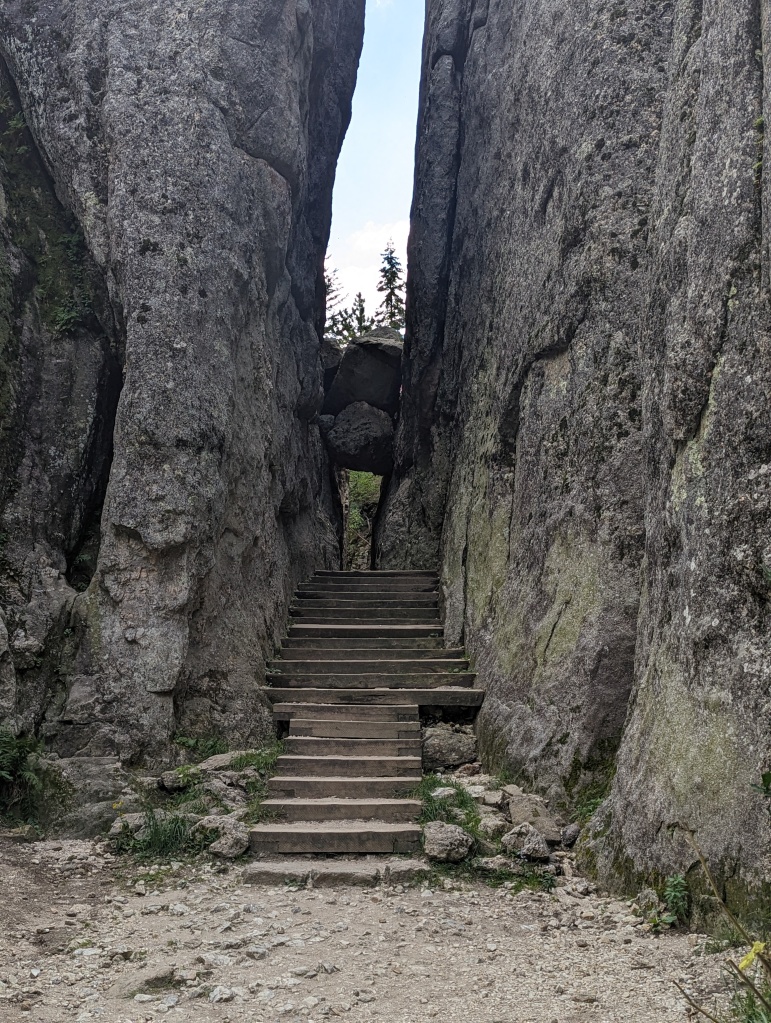
Narrow and High

Reading: Luke 13-14

Luke 13:24 – “Make every effort to enter through the narrow gate. Many, I tell you, will try to enter and won’t be able to.”

Today we largely center on Jesus’ call to “change your hearts and lives.” He begins by describing God’s patience. An owner wants to cut down an unproductive fig tree. The gardener asks for one more year – to tend to and fertilize the tree. The tree might produce fruit the next year. Faith is like a mustard seed or some yeast. It grows or spreads almost without notice. Patience is required. Yet the walk of faith is not easy or for the half-hearted. In 13:24 Jesus says, “Make every effort to enter through the narrow gate. Many, I tell you, will try to enter and won’t be able to.” Then, in 14:33, he adds, “None of you who are unwilling to give up all your possessions can be my disciple.” The gate is narrow because the requirement is hard. God must be #1 in all aspects of our life.

Twice Jesus demonstrates that love and compassion trump the rules established by man. He heals two people in the Sabbath. We too will be asked to disregard man-made rules or expectations at times if we are to keep God #1 in our life. This “cost” – like the tower project – is necessary to keep in mind as one chooses Jesus as Lord and Savior and as one continues to walk as his disciple.

Jesus drills down on the superficial “faith” of the religious leaders. They jostle for the best seats at the table. Jesus preaches humility. They invite people just like themselves to their own parties. Jesus preaches inviting the lost and broken. Jesus laments over those who refuse to come to him. The hand, the invitation, it is always open, always extended. Until the door is closed. At that point our fate is decided.

Yes, the road is narrow and the expectation or requirement is high. For those who carry their cross daily, keeping God as their only priority, “Happy are those who will feast in God’s kingdom.” This is true now and in the kingdom to come. May it all be so for you and for me.

Prayer: Lord God, what do you require of us? It’s simple: keep you as the only occupant of the throne of our hearts. It’s also very difficult: keep you as the only occupant of the throne of our hearts. Lord, guide and encourage us daily as we seek to walk “the narrow way.” It is only possible with your presence. Amen.


Leave a comment

Faith, Trust, and Seeds

Reading: Mark 4-5

Mark 4:20 – “The seed scattered on good soil are those who hear the word and embrace it. They bear fruit.”

A farmer goes out to scatter seed. Not sow, not plant – scatter. Some seeds fall on the path and are eaten by birds. Some falls on rocky soil. It sprouts quickly but does in the heat – no roots. Some seeds fall among the thorny soil. They sprout and grow but are soon choked out by the weeds. Other seed falls on good soil. “The seed scattered on good soil are those who hear the word and embrace it. They bear fruit.” For others, faith is short-term, cancelled out by distress, fear and doubt, by the cares of this world. Faith is like a lamp – we let it shine and it reveals what was hidden. Faith comes to those seeking. This is one way we bear fruit. We don’t know how it takes root or how it grows, but the tiniest seed can grow and grow, helping others. This too bears fruit.

Jesus crosses the lake, going to Gerasenes, a Gentile community. There is a storm along the way. Frightened, the disciples awaken Jesus, who calms the storm. He chastises them for their rocky soil faith. Once there, Jesus encounters a demon possessed man named Legion. The thousands of demons are cast into the nearby pigs. The uncontrollable madman is found “fully dressed and completely sane.” The townspeople ask Jesus to leave. Their thorny soil prevents them from accepting Jesus. The man asks to go with Jesus. He is told to go home to tell his people what Jesus did for him. He is good soil ready to produce a crop.

Our reading closes with two healings. Both involve risky faith. Jairus, a synagogue leader, risks by coming publicly, asking Jesus to heal his daughter. The woman with a bleeding disorder sneaks up through the crowd and touches Jesus’ clothes. She is healed. In the midst of a great crowd, Jesus asks “Who…” and she risks coming forward. She confesses and Jesus blesses her faith that healed her. News then comes of the daughter’s passing. Jesus says to Jairus, “Just keep trusting.” In the end, Jairus’ trust and faith is honored too. Jesus heals the daughter. Faith and trust bring healing.

Prayer: Lord God, you have power over all things – wind and waves, fear and doubt, mental and physical illness, even death. That power is available to those who believe in you as Lord and Savior. Lord, grow these seeds of faith that have been planted in each of us. Encourage and empower us to scatter these seeds, bearing fruit for your kingdom. Amen.


Leave a comment

Happy Are…

Reading: Matthew 13

Matthew 13:16 – “Happy are your eyes because they see. Happy are your ears because they hear.”

Today’s reading holds seven parables all aimed at showing how God is at work in our world and in our lives. In these teachings, Matthew shows that God is engaged in daily life and desires to be in connection with us. In the first parable a farmer scatters seed. In a day when every seed mattered, “scatter” would draw people’s attention. Most seeds do not bear fruit. The many cares of this world are too much. The seed that does fall on good soil produces a great crop. Hearts that receive and nurture God’s word leads others to do the same, creating more disciples.

Matthew connects to Isaiah, using his words as a means to explain why many do not understand the parables. They have become “calloused” and refuse to “change their hearts and lives.” This was the invitation given by John the Baptist and by Jesus. It continues to be given each time the world is read or proclaimed.

Each of the remaining parables begins with the phrase, “The kingdom of heaven is like…” It is like a field with good plants and weeds, like a net with good and bad fish. One day the angels will sort out and burn the bad. The good will be saved. It is like a mustard seed or some yeast – small but powerful, able to spread and grow into something large. It is like a hidden treasure or a pearl of great worth. Once found, a person must be willing to sell all else, investing everything they have into their faith.

As Jesus teaches in parables he asks his disciples if they understand. They do. In response, Jesus says, “Happy are your eyes because they see. Happy are your ears because they hear.” May our eyes and ears be happy as well.

Prayer: Lord God, thank you for opening our eyes and ears to your word. We don’t always get it 100% but as we keep at it, reading, studying, seeking to understand, your Spirit works in us, giving us more insight and understanding. Each time we encounter that word, the connection grows stronger, deeper. Thank you for your continuing work in us. Amen.


Leave a comment

Inner Strength

Readings: Psalms 137-140

‭Psalm 138:3 – “On the day I cried out, you answered me. You encouraged me with inner strength.”

Psalms 137 and 138 offer lament and then raise up thanks and trust. These two represent much of what we find in the Psalms and in all of life – highs and lows. In Psalm 137 the psalmist laments a hard experience in exile. Their “tormentors” wanted them to sing a joyful song. How could they sing joyfully in exile? The response, instead, is a plea for Babylon’s (and Edom’s) downfall. In Psalm 138 we see a better choice. The psalmist turns towards Jerusalem and the temple. Here we read, “On the day I cried out, you answered me. You encouraged me with inner strength.” God is faithful. God hears and responds. The Psalm closes with this plea to God: “don’t let go.”

Psalm 139 expresses a deep connection with God. The psalmist recognizes that God knows them inside out. This is at first overwhelming, “too much for me.” There is nowhere the psalmist could go to avoid this overwhelming knowing. Even darkness would be no relief. In verse 13 there is a shift. The psalmist realizes that God knit them together and that God has good plans for them. After a brief dive into hating evil and seeking their destruction, the psalmist returns to self, inviting God to know him or her even more.

Psalm 140 is a plea for protection. For those who plot evil,“spider poison is on their lips.” The psalmist cries out to God for help, hoping for evil’s downfall. In the end, the psalmist knows deep down in his or her heart, “those who do right will live in your presence.” Through all of the highs and lows, for all in between, may this too be our daily choice: to live right, to be in God’s presence.

Prayer: Lord God, through all of life’s ebbs and flows, you are there. Walk with us daily, keeping us from evil and defending us when it arises in our lives. Grow in us a trust in you as our knowledge of you grows in us. Grant us an inner strength in the trials and sufferings, a strength that clings to you. Amen.


Leave a comment

The Initial Journey

Reading: Psalm 119:1-88

‭Psalm 119:32 – “I run the same path as your commandments because you give my heart insight.”

Today and tomorrow we delve into Psalm 119. It is the longest chapter in the Bible, with 176 verses and just over 2,400 words. Although lost in translation, the Psalm’s original structure was amazing. It is an acrostic poem. Each stanza begins with one of the 22 letters in the Hebrew alphabet. What’s amazing is that they go in order. What’s really amazing is that in its original form, all eight lines in each stanza all started with that same letter. One last nerdy note: the psalmist used eight different words for the “Law.” This is the focus of Psalm 119.

Alef and Bet begin the Psalm. Their common theme is faith in youth. There is a longing to know God’s ways better. This only comes with time and experience. Gimel and Dalet introduce some lament or suffering. The psalmist’s young faith is “worn out” by studying the Law. Perhaps this feeling arises because challenges have arisen to test their faith. Some are within and some are without. We too experience these situations as we seek to grow in our faith, trust, assurance…

In He and Waw it feels like the psalmist has turned the corner, has gotten through the initial season of testing. The response comes in pleas to help them keep the Law. There is a knowledge that testing will come. Zayin and Khet return to suffering and trial. The psalmist recognizes God’s comfort and mercy. In Tet and Yod the words turn personal. Their maturing faith acknowledges that the suffering was just and that it led them to repentance. The lessons were good for their faith growth. We too learn much in the valleys.

Today’s portion of Psalm 119 closes with Kaf, the 11th letter. The psalmist’s life has returned to a time of testing. They now yearn for God’s help. They ask “How long?” Growth has occurred, though. Instead of the defeated attitude of a young faith, like we see in Gimel and Dalet, there is now a confidence that God will come through again. The psalmist is resolute about walking in faith. May it be so for us as well.

Prayer: Lord God, thank you for the encouragement and for the reminder that faith is a journey. We do not begin and find ourselves at perfection. Faith is a long and slow and steady walk into a deeper and deeper relationship with you. Give us strength for the journey. Bless us with grace when we stray. Grant us perseverance. Walk with us. Amen.


Leave a comment

Obedience and Faith

Readings: Exodus 1, Exodus 2, Exodus 3, and Exodus 4

Genesis 2:24-25 – “God heard their cry… God remembered his covenant… God looked at the Israelites, and God understood.”

Today we begin the story of the Exodus! It is the story of God’s deliverance from oppression and it is the story of the formation of God’s people. The story begins with the fulfillment of part of the covenant – Abraham’s descendants become numerous. Seventy quickly grows to be thousands upon thousands. Pharaoh fears them then enslaves the Hebrews. Growth continues. Faith is demonstrated by Shiphrah and Puah, thwarting plan A. Plan B is to drown all Hebrew baby boys in the Nile River. Moses is born and goes into the Nile – in a tarred basket. Providence has him rescued by Pharaoh’s daughter. He grows up largely as an Egyptian.

Turning to adulthood, Moses defends a slave, killing an Egyptian. Moses then flees to Midian where his rescue of some shepherdesses connects him to Jethro and family. Moses marries, settles down. The Israelites cry out. At the end of chapter 2 we read, “God heard their cry… God remembered his covenant… God looked at the Israelites, and God understood.”

Out tending the flock on Mount Horeb/Sinai, Moses is drawn to a burning bush. It is holy ground – God is present. God asks Moses to rescue the Hebrews. Moses has lots of excuses. Sound familiar?! The excuses: Who am I? Who are you? How will they know you sent me? But I can’t talk well! Can’t you just send someone else?! Only the last one angers God. Yet God relents and sends a long Aaron to help. Pharaoh’s stubbornness is foreshadowed, as is the final plague.

Obediently, Moses goes. Yet obedience must be complete. On the way, God appears and tries to kill “him.” Is Moses or his son Gershom? Either way this is about circumcision – the symbolic act that identities the Israelites as God’s people. Zipporah reads the scene correctly and she acts quickly. The chapter closes with Moses and Aaron’s initial meeting with the Hebrew elders. They believe and then they worship the Lord their God.

Prayer: Lord God, oh how we are like Moses! Raised in two worlds – yours and this place we call home. We too can be confused about who and whose we are. And when you come to us, we can make excuses with the best of them. Yet, in love you lead and guide us. You desire relationship. You are not a tyrant. You invite us to be co-creators with you, loving and caring for your intended world. Thank you for the invitation. May we respond with both obedience and faith. Amen.


Leave a comment

Be Ready

Reading: Mark 13:24-37

Verse 33: “Beware, keep alert; for you do not know when the time will come.”

Photo credit: Nathan Dumlao

In this week’s gospel text Jesus calls us to a constant state of preparedness. He is talking about being ready for the time when we will be judged. Being “ready” would lead to being found worthy of entry into the kingdom of heaven. Trouble is, we do not know when his return (or our final breath) will be. Even so, we are told, “Beware, keep alert; for you do not know when the time will come.” In verse 36 Jesus reiterates our need to be prepared as he warns, “do not let him find you sleeping.” To be asleep would be to live with a dormant faith.

Time feels like a key element in our passage. The passage is set in God’s time and we tend to live in our understanding of time. Jesus is calling us to live in the intersection of these two ways to see time. The calls to being on guard and alert and awake are calls to live out our faith in the here and now, every day. We are to guard our hearts from the lies and temptations of the evil one and the world. We are to be alert to both God’s work in our lives and to the places and ways that God is calling us to bring love, compassion, justice… to bear in the world. We are to be awake to God’s presence, guidance, conviction, direction… in our lives.

Overall the call is to be faithful and obedient to God all of the time. Then, no matter when that day comes, whether for our lives or for our world, we will be ready to meet Jesus. May it be so.

Prayer: Lord God, it is easy to become lazy, to become complacent, to become self-absorbed. It is hard to always walk the walk, to always live out our faith. Help us to do the hard things. Help us to walk the narrow way that leads to life abundant and everlasting. Amen.


Leave a comment

Aligned

Reading: Exodus 33:17-23

Verse 17: “I will do the very thing you have asked, because I am pleased with you and I know you by name.”

Today we continue in the conversation between God and Moses that we began on Monday. Just a quick review – in verses 12-16 Moses seeks for God’s presence to be with him and with the Israelites. Today God responds, saying, “I will do the very thing you have asked, because I am pleased with you and I know you by name.” There are two pieces that drive God’s positive response. First, God is pleased with Moses. Although far from perfect – like us – Moses has sought out and grown in his personal relationship with God. In this process, Moses has revealed himself to God. This is the second reason that God agrees to share God’s presence with Moses and with the people. Who and what Moses is and does is pleasing to God. It opens the door for God to be more present in his life.

Moses next asks for even more of this presence. Presumably Moses is in the “tent of meeting” talking to God. Moses wants more. He wants to see God’s glory. He is asking to see God live and in person. God responds positively again. God will allow Moses to see as much of God as is humanly possible. This response is first because Moses asked and, second, because Moses is pleasing to and known by God.

The first question that comes to mind today is this: Do I want to see God’s glory? And, if so, two more questions: Is my life pleasing to God? And, am I fully known by God? God is all-knowing. So the last question is more a question of whether or not I am revealing myself to God humbly and honestly?

Heart and will aligned with God, may we see God’s glory.

Prayer: Lord God, I say I want to know you and to be known by you. Lord, move me from these easy words to tangible action. Work in me, Holy Spirit, to bring me closer to God, to stand more fully in the divine and holy presence. There, empty me of myself and then fill me up with God’s glorious presence. From there, use me to reflect God’s glory out into the world. Amen.


Leave a comment

Go with Us, O God

Reading: Exodus 33:12-16

Verse 15: “If your presence does not go with us, do not send us up from here.”

Photo credit: Ruthson Zimmerman

In our Old Testament text this week we once again find Moses interceding on behalf of the people. The golden calf incident has just occurred and God is upset with this “stiff-necked people.” God’s words about potential punishment and destruction have gotten the people’s attention and Moses’ attention. Moses’ intercession focuses in on God continuing to be with him and with the people.

Moses begins by reminding God that God once said, “I know you by name and you have found favor with me.” Moses wants to re-establish their relationship as the starting point for the continuing conversation. It is like saying, “Since we’re good friends…” before getting to the heart of the conversation. Moses begins by asking God to continue to teach him God’s ways so that he can know God and find favor moving forward. Moses wants the relationship to grow and develop. And then Moses reminds God that “this nation” (yes, this stiff-necked people) is (are) God’s people. This nation that God has asked Moses to lead? Yes, God, they are your people. The implied question remains this: Will you go with us, God?

God affirms their relationship, saying, “My presence will go with you.” Moses is relieved. Making sure that this is the promise, Moses says, “If your presence does not go with us, do not send us up from here.” Don’t send us on if you’re not going with us God. Moses knows that without God, the Israelites are just like all the other people. The same is true for us, for you and for me.

Prayer: Lord God, just as you went with Moses and the Israelites, be present to us and go with us. Through your presence, distinguish us from all the other people of this world. Going with us, help us to be different in the best ways possible. Use us to be love amidst the hate, to be peace amongst the violence, to be healing for the broken and suffering. Go with us, O God, as we seek to live as your light and love in this world. Amen.


Leave a comment

Room to Grow

Reading: Exodus 16:1-5

Verse 3b: “There we sat around pots of meat and ate all the food we wanted.”

Just 3 days after witnessing the amazing miracle at the Red Sea, the grumbling begins. The first instance is because the water is bitter and they’re thirsty. Through yet another miracle, their thirst is quenched. A short while later, in today’s passage, the grumbling returns. This time they are in the Desert of Sin. I wonder if that is an actual physical place or if it is just a metaphor.

The Israelites are hungry. They are without food in the desert. They grumble to Moses: “If only we had died by the Lord’s hand in Egypt!” Are they longing to live once again under heavy oppression? Do they want to return to slavery? No, no, and no! When there is a want gnawing at us, we too can grumble. Yet the Israelites still say to Moses (and to God), “There we sat around pots of meat and ate all the food we wanted.” When we look at that shiny new car next to our 2021 model or when we long for the good old days when the pews were full, we too can grumble in ways that don’t really make a lot of sense.

God doesn’t smite us down. God doesn’t say to the Israelites, ‘Fine, then, just go ahead and die out there in the desert.’ Just the opposite! God says, “I will rain down bread from heaven.” It’s not just a morsel. It’s not just enough to tide them over. God rains down bread. It is God’s loving and generous response to the peoples’ grumbling. There are some instructions too – a “test.” God has been faithful. Now that they have been provided for, will they too be faithful? This too is a question that we frequently wrestle with. The Israelites aren’t the only ones with room to grow.

Prayer: Lord God, in my heart of hearts I know that you are faithful. And loving and generous. Yet in my mind, I can go where the Israelites went. Wants and desires can creep in and I find myself grumbling – or complaining. My inner Eeyore rises up – woe is me! In these moments, whisper into my heart how much you love me. With these whispers, lead me back to a place of faith and trust. Amen.