pastorjohnb

Thoughts and musings on faith and our mighty God!


Leave a comment

Doing “What Is Right”

Reading: 2nd Thessalonians 3:11-13

2nd Thessalonians 3:13 – “We command and encourage such people to work quietly and put their own food on the table.”
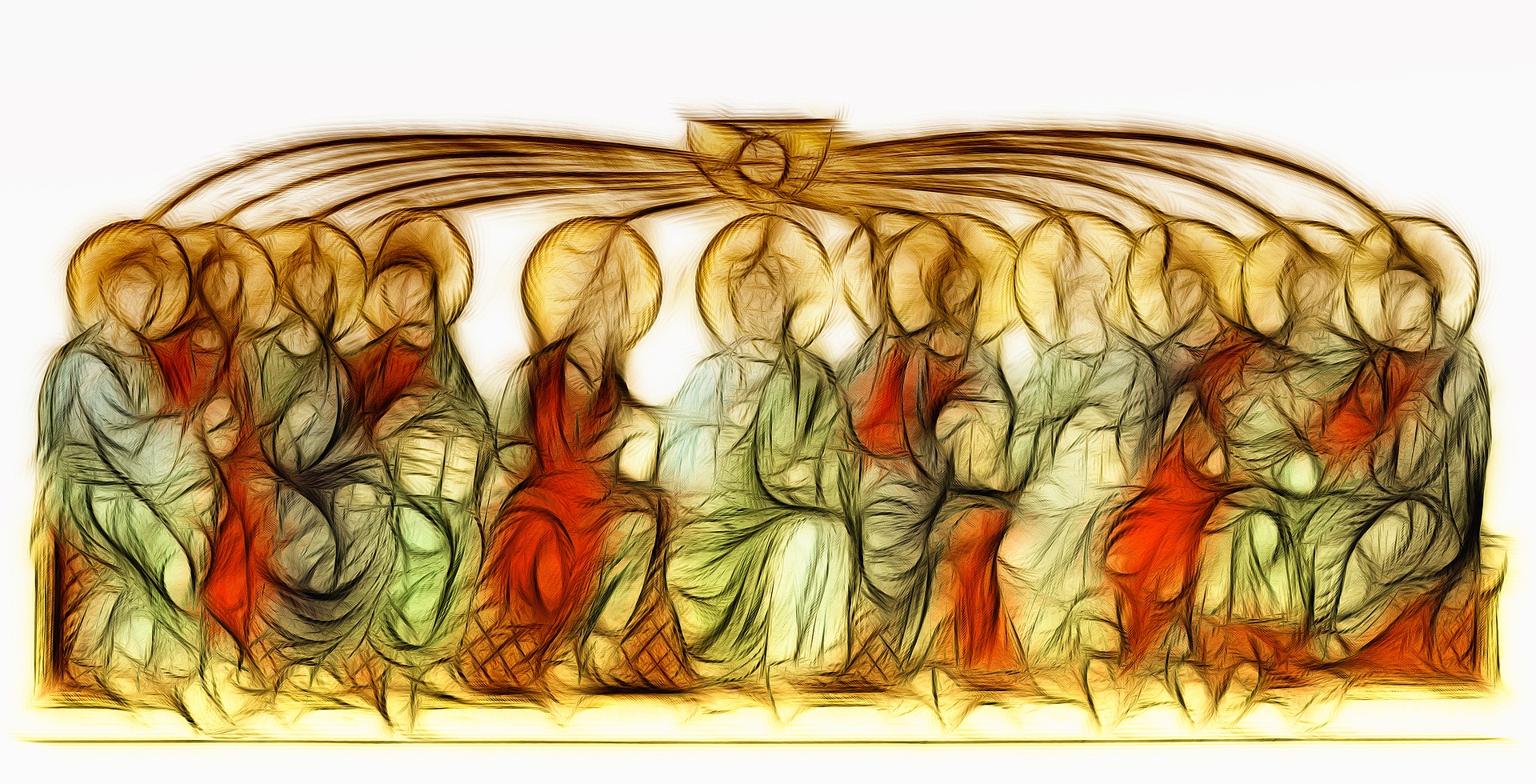
As we add a few more verses to yesterday’s reading we continue with Paul’s charge to live a disciplined life. Some in these churches are not doing so. This is frustrating those who are doing so. This scenario is present in our churches today. At this time, some who are fully able to work are choosing not to. Paul is not addressing those who are incapable of working, those with physical and/or mental limitations. This becomes clear as we press on.

In the second part of verse 11 Paul identifies “meddling” as a key issue. Other translations use the term “busybody.” Because these folks are choosing not to work, instead only taking from the community’s pool of resources, they have lots of time to get into other people’s business. This is not healthy for the individual or for the faith community. Gossip is likely the key form of meddling. Paul then states, “We command and encourage such people to work quietly and put their own food on the table.” Stay in your lane, don’t meddle in other people’s lives, help put food on the common table. The apostle encourages them all to do “what is right.”

There might be another layer to Paul’s words. There often is in scripture. Paul might also be talking about faith practices. In this arena, to be disciplined would include daily study and prayer, regular communal worship, fasting… Maybe some in the churches aren’t “working” at these practices. Maybe then the food they are lacking is spiritual food for their souls. Maybe some are dabbling in pagan worship or other forms of idolatry. And, maybe like some today, maybe some are just showing up now and then on a Sunday morning, tapping into the gifts of community occasionally instead of regularly. In each of these cases, they are treating their faith to a starvation diet. This is not healthy either.

Prayer: Lord God, lead and guide us to encourage one another – in living life and in practicing our faith. Through words and acts of love, use us to draw others back into community, back to faith. And keep us disciplined ourselves, Lord, ever growing closer to you and to one another. Amen.



Leave a comment

Present in the People

Reading: Haggai 1:15b-2:5

Haggai 2:5b – “My spirit stands in your midst. Don’t fear.”

Photo credit: Joel Muniz

Fear is an emotion we often feel. When in a dangerous situation, when enemies are all around, when stepping into the unknown – these are but a few of the things that cause fear to rise up in us. The prophet Haggai speaks to a small remnant that has returned from exile in Babylon who is dealing with these three fear-inducing situations. Zerubbabel, the governor, led the remnant back and started to rebuild the temple, but threats from the groups who inhabited the land during exile derailed the building project.

Chapter 1 of Haggai isn’t exactly encouraging. The prophet challenges the people. They are living in nicely built homes while God’s house lies in ruins. Their return has been difficult. For example, they’ve planted crops but are hungry. The harvest has been meager. Haggai informs them that this is because they’ve been neglecting God. This pronouncement induces more fear in the people. But it is a good fear – a healthy respect, a reverent awareness, a motivator.

As the people return to working on the temple, Haggai addresses them in chapter 2. After speaking into their present reality, he speaks words of encouragement, “Be strong,” three times. Through him God encourages them to work, because “I am with you.” Then, in verse 5, God says, “My spirit stands in your midst. Don’t fear.” These words of Haggai remind the people that God is present – building or no building. God is present in the people of God doing the work of God. The same will be true for us. May it be so.

Prayer: Lord God, gathering to worship and to do other churchy things is wonderful. But you clearly call us beyond the walls of our churches. Like Jesus, who spent the vast majority of his time and energy ministering and teaching outside of the temple and synagogues, move us to be your hands and feet out there in the world. Amen.


Leave a comment

A Healthy Fear

Reading: Proverbs 14

‭Proverbs 14:22 – “Don’t those who plan evil go astray? Those who plan good receive loyalty and faithfulness.”

Today’s key verse summarizes the overarching idea of Proverbs. The goal of Solomon and other sages who contributed to this book was to teach naive young men how to walk faithfully with God. To ignore this wisdom is to turn away from God, to “go astray,” to choose death.

The naive have and will always exist. Therefore Proverbs will be ever relevant. The naive think they know it all but can also fall prey to believing anything. Their sphere of thinking is fairly small, usually centered on self. Common sense is in short supply. All of this can lead to lurching forward in awkward ways. The inward focus can lead to things like “despising” those with needs. With wisdom and maturity brings a thoughtfulness to one’s steps, words, and actions. One begins to see beyond self. Care and concern for others becomes a new reality.

As one gains wisdom and maturity, one also begins to understand the heart. Wisdom brings an understanding of our own heart and of the hearts of others. One grasps and grapples with joy and sorrow, happiness and distress. Empathy develops. We read, “Wisdom resides in an understanding heart.” One moves from considering to prioritizing other over self.

Wisdom eventually leads to a revrent fear of the Lord. This guides one’s choices, words, actions. One chooses integrity over the “crooked path.” One develops a strong confidence and trust in God’s care for us and for our families. Wisdom and a healthy fear of the Lord draws us close to the “fountain of life.” There we are guided to seek a continual walk in God’s will and way. May this be our path and our choice.

Prayer: Lord God, on this journey of life we mature in many ways: physically, emotionally, relationally, vocationally, spiritually. All tend to come with age and experience. We can be a part of the process or we can just go with the flow of life. As your disciples, guide us to engage the process, to invest in our lives, especially in our faith. Rooted deeply in you we find strength, compassion, empathy, love. In you we find meaning and purpose. Draw us deeper and deeper into you, fountain of life. Amen.


Leave a comment

Purpose

Reading: Proverbs 31: 10-31

Verses 15, 17, and 18: “She gets up while it is still dark… she sets about her work vigorously… her lamp does not go out at night.”

Photo credit: Lina Trochez

As we return to Proverbs 31 today, we look at these words as a pattern for the whole church, not just for one seeking to be the perfect woman of faith. The exemplary example set in this passage would be impossible for one person. Just look again at the quoted verses above. How could anyone work vigorously both day and night? It is impossible. But if we consider instead that these words are a collective pattern for the whole church, then it becomes possible for the body of Christ as a whole to do all things at all times.

All active, successful, and effective churches are build around the idea of each person having gifts and talents that are being used for the glory of God. In each healthy congregation there are ones who “work with eager hands.” This includes meals, projects, mission work, VBS, and much more. In all active churches there are some folks who get up early and some who work into the night. Some are reading and praying, some are leading a class or small group, some are arriving early so that all is ready, and some are staying late so that all is put away and tidy. In thriving communities of faith there are many different people filling many different roles. Such places of faith are thriving because collectively we accomplish more than we ever could individually.

Communities of faith, like all volunteer-based organizations, must help folks understand what their gifts are and to see how they can be used for the glory of God and for the making of disciples. Each individual must discover their purpose in the community of believers. Maybe you are active in the life of your church. If so, where have you found your fit? Please share this with us – you might inspire someone! If you haven’t found your purpose and place, what gifts or talents has God blessed you with? And, how can you take one step today to begin living into who and what God created you to be in the body of Christ?

Prayer: Lord God, together the body of Christ has so much to say offer to a world in need. Each of us have been blessed in so many ways. Open all of our eyes to see how we each elevate the whole. Turn our hearts towards generous service to you and to others. Use us as you designed us. Amen.


Leave a comment

Faith Over Fear

Reading: Mark 4: 35-41

Verse 40: “Why are you so afraid? Do you still have no faith”?

Our passage today comes after many days of healing, teaching, and traveling. Jesus decides to cross the lake. In a boat with several others, they set out. Being tired, Jesus rests. It is natural for the fishermen among them to navigate the waters. A “furious squall” comes up and soon Jesus’ companions are fearing for their lives. They wake Jesus and say, “Teacher, don’t you care if we drown?” Their faith and trust is gone. Fear has set in. They question if Jesus even cares.

Back in my teaching days and even as a pastor, I would come home upset or bothered by something at work. At home, where I was comfortable, I would let out the emotion, usually not in a healthy or good way. The fear or anger or whatever other emotion I was struggling with would cloud my heart; it would affect how I treated my wife or kids. I would not take it to the Lord in prayer. I would not read my Bible for divine wisdom. I would unload on someone who had nothing to do with the situation.

The disciples turn to Jesus and say, don’t you care?! Turning to him and blaming him, they allow fear to speak. Jesus quickly addresses the source of their fear and then turns to the root of the problem, saying, “Why are you so afraid? Do you still have no faith”? I have been here. I’ve allowed fear and other negative emotions to seize the day, even though I knew Jesus was right there. I’ve let it build up until I’m at the point of crying out. When I could not go any longer and finally cried out to God, I too heard these questions. Later, after some time, like the disciples I too realized that I should have turned to my faith long before my fear won out. It is a moment of growth, a reminder to pray sooner, to delve into my Bible quicker, to lean into the one who is always present, right there in my little boat. May this be the choice made each time: faith over fear. May it be so for you and for me.

Prayer: Lord God, when fear or worry or stress or anger or… begin to arise in me, remind me of the depth of your love, of the wideness of your grace. Remind me that you are always right there – close as a whispered prayer, nearby in the words of life that I can read. Turn me ever to you. Amen.


Leave a comment

Fringes and Edges

Reading: Matthew 9: 9-13

Verse 11: “Why does your teacher eat with tax collectors and sinners”?

Photo credit: Marten Newhall

Our passage today opens with Jesus calling another disciple as he walks along the road. The man he calls us named Matthew. He was sitting in his tax collector’s booth when Jesus said, “Follow me”. It’s hard to say what an equivalent calling would be today. Tax collectors were almost universally disliked and hated. They worked for the occupying force, the Romans, collecting taxes to pay for the enemy to stay in power. Most tax collectors gathered well above and beyond what the Romans required. Becoming rich was a side perk of this government job. Being wealthy was nice but the occupation limited one’s circle of friends. Matthew’s crowd would be limited to other tax collectors and others who took advantage of others. Money lenders, prostitutes, slave traders… would have been among the crowd at Matthew’s house as Jesus joined them for dinner.

Upon seeing the crowd that Jesus has chosen to become a part of, the Pharisees ask, “Why does your teacher eat with tax collectors and sinners”? Why would Jesus call one of these to discipleship, to following him? Why would Jesus sit amongst this crowd of sinners? I suppose some people today think the same thing when they see their pastor emerging from the hymn sing at the local brewpub or when they see members of the outreach team exiting the local strip club. In response Jesus says, “It is not the healthy who need a doctor, but the sick”. Jesus did not come to just sit around the temple or local synagogues chatting with the faithful about the scriptures. Yes, Jesus did this and this habit continues to be a very important part of our faith journey. But Jesus also spent the majority of his time doing ministry out in the world – among the tax collectors and sinners, among the hurting and broken, among the Gentiles and others who were marginalized by the religious establishment. These are the ones in need of a “doctor”. These are the ones in need of healing, wholeness, love, a sense of community.

Who are the tax collectors of your neighborhood or community? Who are those on the fringes and edges? How can you minister to these that Jesus surely would have?

Prayer: Lord God, make my heart and will more like yours. Guide my feet to those in need of your love and care. Bring me past the barriers and fears in my mind, trusting more fully in your guidance and direction. Amen.


Leave a comment

Opening the Commandments

Reading: Exodus 20: 12-20

Verse 13: “You shall not…”

Today we continue with the Ten Commandments. We read the last six today. These govern our relationships with others. The commandment to honor our father and mother is like a connector. The fourth commandment, to keep the Sabbath holy, calls us to honor God, our creator and heavenly parent. The fifth call us to do the same for our earthly parents. Just as honoring the Sabbath will bless our faith and life, so too will honoring our parents bless us and lead to a good, long life.

The last five commandments all begin with the familiar phrase, “you shall not”. These five come in the form of prohibitions. God, through Moses, tells the people not to murder, commit adultery, steal, give false testimony, or covet. For most folks, keeping the first of these five is relatively easy compared to the last couple. Yet even this one can be a thought that crosses our mind in a flash of extreme anger or in a moment of deep hurt. In fact, when one looks at the heart level, at the private thoughts we all have, each of these “you shall not” commandments have and/or will be challenges for us. When one opens up each one just a bit, this truth hits home. For example, Jesus taught that when we look lustfully at another we have committed adultery in our hearts. If one takes more than one should or if one unfairly uses their employees or if one buys from a company known to do so, haven’t we stolen? Gossip, white lies, half truths – all forms of false testimony. And who hasn’t looked at a neighbor’s new car or boat or… and wished longingly that it could be ours? Coveting! On these levels, all of the interpersonal commandments can be hard to keep, just as are the four dealing with our relationship with God.

In our passage the power and glory of God present on the mountain causes the people to fear God. They fear dying. But Moses sees the fear as a good thing. In verse twenty he explains: “the fear of God will be with you to keep you from sinning”. This fear is not a fear of spiders or heights, for example, but a fear that brings awe and reverence. It is a healthy thing. Knowing the power and glory of our loving and omnipresent and omnipotent God, may we too have a healthy awe and deep reverence for the Lord our God. From that place of love, may we ever seek to walk faithfully all of our days.

Prayer: Lord God, thank you for your guidance and direction in my life. Your will and ways both hem me in and give me freedom. So great is your love! Bless me today with the presence of the Holy Spirit, leading me to walk your road today. Amen.


Leave a comment

Generously and Joyfully

Reading: Deuteronomy 26: 1-11

Verse 10: “I will bring the first fruits of the soil that you, O Lord, have given me”.

Being thankful or grateful is such an important part of our faith. It was so important to God that this practice is one of the key tenets of the chosen people’s faith. Every year it was celebrated. Today we read, “I will bring the first fruits of the soil that you, O Lord, have given me”. By bringing the first fruits we act in faith and trust. Abel brought the first lambs of his flock trusting that God would give him more. In faith Abraham offered his only son Isaac on the altar trusting that God would provide.

In our passage today, the first fruits are being offered as a “thank” offering. The first grapes or wheat or olive oil or lamb or goat or… was brought and sacrificed to God along with prayers of thanksgiving for the blessings in their lives. It was a time of joy. Our passage closes with, “rejoice in all the good things the Lord your God has given you”. These offerings also acknowledged that it is God alone who provides. This is still an important perspective for us to keep.

These two practices remain essential to healthy faith. Our first fruit is often referred to as a tithe in the church. We usually think of it as money but it can also be our time or our talents too. Either way, God still calls for it to be the first fruits. In practice that means we write the check or give the gift at the start of the month. This demonstrates trust and faith in God. It requires much less to wait until the end of the month to give what is left. No one wants leftovers. To give thankfully and joyfully is also an essential. To give willingly with a heart that rejoices in all that God has done is pleasing to God. Remember cleaning your room grudgingly because you had to? Don’t give that way.

Lest we think it too easy, we must remember that God calls us to this thankful giving so that we learn to always live with a generous and giving heart. In the day to day of life we are also called to give of ourselves when opportunity arises. It may be time for a lonely friend, it may be a meal for a hungry person, it may be watching a young mom’s kids so she can go to the grocery store. In all we do may we be thankful to God and may we share richly with others.

Prayer: Lord, may I hold loosely to all you bless me with so that it may freely go to those in need. Amen.


Leave a comment

Fear the Lord

Reading: Psalm 111:10

Verse 10: “The fear of the Lord is the beginning of wisdom”.

To a degree we are all guided by fear. Fear helps us make many of our decisions. Sometimes fear is healthy. If I see a bear off in the distance when I am hiking, I will choose another path. If I fear high places, maybe I keep myself a little safer. If I fear failing my classes, I will make the choice to do my work and to study. In these cases, fear helps us avoid bad or harmful consequences. Fear can also do the opposite. Memories of my parents saying, “If your friend jumped off a bridge…”. Peer pressure is often driven by fears of rejection or being left out.

Verse ten reads, “The fear of the Lord is the beginning of wisdom”. On the surface level, it seems odd to tie fearing God to gaining wisdom. The fear of God is not like a fear of spiders, where we avoid them at all costs. A fear of God is a healthy thing. Often in life we choose to face our fears because of our faith in God. For example, I can choose to do the right thing and possibly lose a friend or a client because I fear denying my faith when I cheat or lie or when I avoid speaking a difficult truth. I may choose to risk loving the other even though I fear being hurt or getting into a relationship that requires much energy and time. I do so because I fear what life would be like without love. Or I fear what will happen to that marginalized person if I remain silent more than I fear the consequences of speaking out against injustice or abuse. In each case, my fear of denying the nudges and whispers of God’s Spirit outweigh or override my personal fears.

The fear of God can help us correctly prioritize our lives. In our first fear is denying God, then our life will look robustly faithful. Our words and actions will be on the side of love and mercy and compassion and justice and forgiveness and the like. Understanding that God and the witness to our faith is our purpose in life is the beginning of wisdom. This day may we decide for God and His love. Amen.


2 Comments

The Vine…

Reading: John 15: 1-8

Verse Four: “Remain in me, and I will remain in you. No branch can bear fruit by itself”.

Today’s vine, branches, and gardener example is a great illustration of our relationships of faith. The illustration could have used a fruit tree or a blueberry bush or any number of other plants and still been a good illustration. But a grape vine is best, so that’s what God chose!

Jesus is the vine. The vine begins in the ground, with lots of roots soaking up water and nutrients needed for the branches to be healthy and to bear much fruit. The vine is the thickest and strongest part of the plant. Jesus’ words and the rest of the Bible are the life blood of our faith and our growth. They provide what we need to grow and be healthy in our faith.

You and I are the branches. We are connected to the vine and get all we need through the root – Jesus. Whereas the vine is stable and rooted, we the branches can grow this way and that. We often intertwine with other branches. In our faith journey we live and grow in community. Like a branch, as we grow and mature, we begin to produce fruit. Fruit is acts like loving our neighbor, helping those in need, offering forgiveness and mercy…

God is the gardener. He tends the soil and cares for the plant. Sometimes the gardener must add support to a new branch so that it can grow well. In our faith journey, at times we come alongside each other offering support and encouragement. At times God also prunes the branches, removing things that inhibit the production of fruit. As a branch, at times I can get going a lot of different directions. In those times, I need God to prune away some things so that more of my energy goes into producing fruit.

In order for this to “work”, for us to continue to grow in our faith and to produce fruit for the glory of God, we must stay connected to Jesus. In verse four we read, “Remain in me, and I will remain in you. No branch can bear fruit by itself”. In this passage we see what happens when we disconnect from Jesus: we wither and are thrown into the fire. This cannot be! My fellow branches, stay connected to life, to Jesus. In doing so, may you bear much fruit!