pastorjohnb

Thoughts and musings on faith and our mighty God!


Leave a comment

Drawing Close

Reading: Psalm 121

Psalm 121:2 – “My help comes from the Lord, the maker of heaven and earth.”

We live in a world that is busy and noisy. Information flows at an unprecedented rate and volume. And it is at our fingertips. While this makes it easy to find the right recipe or the needed product, it also feeds us unwanted suggestions and brings other voices into our minds. There are often times when we intentionally shut the world out, turning off the TVs and laptops, silencing the phones. Often, in these intentional moments, we are reminded of God’s continuing presence and power.

Psalm 121 is a scripture that can bring us to that place. The psalmist frames their thoughts with a familiar question: Where will my help come from? The author answers this question about God in the next verses. Here we are first reminded that our help comes from the maker of heaven and earth.” Help comes in the form of protection – from slipping up, from the elements of nature, from the evils of this world. This helper is always present too, because God “never sleeps or rests.” Our God will protect us and will help us “whether coming or going” and will do so “from now until forever from now.” That, my friend, is eternity.

Sometimes, though, it can be hard or challenging to feel or even to enter into God’s presence. Sometimes it takes an intentional effort. For me, one place that I can usually “find” God’s presence is in the creation. To be physically present in the hills or at the ocean or under the stars, these are places where the world becomes still so that I can draw close to the creator. How and where do you draw close to God?

Prayer: Dear maker of all creation, draw me close today – close to you, close to the earth, close to those created in your image. In and through these gifts that you made, help me to know and love you even more. Fill me with your love and send me into your world, sharing that love in all ways possible. Amen.



Leave a comment

Fire and Water

Reading: Psalm 66:5-12

Psalm 66:10 and 12 – “But you, God, have tested us – you’ve refined us like silver… we’ve been through fire and water.”

In today’s verses from Psalm 66, the author invites the reader to remember how “awesome” God’s works have been. The specific event remembered is the crossing of the sea. With Pharaoh’s army in hot pursuit, God “turned the sea into dry land” so that Israel could pass through the waters. The nation rejoiced in God’s power as the water closed back in on the Egyptians, freeing Israel. The rebellious leader (and his army) that had exulted self over God was no more. Israel took this as a word of warning against exulting self over God.

The third step in the Examen is “review” – the practice of looking back over the past day. While the corporate review of a major act of God is good for Israel and for our faith, it is the daily reflection that will shape and form us more intentionally. In reviewing the past day we ask ourselves questions like these: When did my words, actions, and thoughts bring healing or hope or light into another’s life? When did my words, actions, or thoughts bring harm to another or to myself? Where was God present? When did I miss or ignore God’s presence? How was I blessed? When did I bless others? When and how did I sin or otherwise fall short?

While the psalmist first celebrates God’s saving acts (relish), the second part of our reading reveals thoughts on these kinds of “review” questions. In verses 10 and 12 we read, “But you, God, have tested us – you’ve refined us like silver… we’ve been through fire and water.” The movement of review reminds us of the waters and fires of our previous day. Both the blessings and the struggles have things to teach us – most profoundly when we are very intentional in our time of reflection. May it be so for us each day as we practice this deep spiritual discipline.

Prayer: Lord God, be with us in Spirit as we pause to reflect on our past day. Help us to be honest – both with the good and with the bad of the day. Guide us to be truthful with ourselves and with you. Lead us to see where change and faith can be applied in order to deepen our walk with you and with one another. Amen.


Leave a comment

Diligent and Intentional

Reading: 1st Timothy 4:7b-12

1st Timothy 4:10 – “We work and struggle for this: our hope is set on the living God, who is the savior of all people.”

Today’s reading comes from a section where Paul is instructing Timothy about spiritual leadership. In today’s verses and throughout this section Paul consistently connects the message and the messenger. For Paul, this life of faith was 24/7. The character of the message and of the messenger were integrally connected. This is why Paul exhorted Timothy to “Train yourself for a holy life.” To ‘train’ is to give focus and attention, to be diligent and Intentional about the condition of one’s soul.

Paul then focuses in on the mission: “We work and struggle for this: our hope is set on the living God, who is the savior of all people.” The work, the mission, the example Paul and Timothy set – it is to reveal their own hope and faith AND it is to help others to come to know Jesus Christ, the Savior, the source of our living hope. Paul encourages Timothy to “Command these things. Teach them.” This happens two ways. First, in his role as church leader. Second, in his daily living of a holy life. Again, these two sides of Timothy are inseparable. It is the same for you and me.

The apostle then addresses Timothy’s age. Paul reminds him and is that it is not about how old or how young you are. It is not about how much or how little religious education you have. It is not about your wealth or your poverty, you family history or lack thereof… To witness to our living hope, it is simply about your faith and living a holy life. For each of us, we know that God has chosen us and equipped us to share Jesus, our hope and our salvation. Knowing this, may we be diligent and intentional about sharing our faith with others.

Prayer: Lord God, please lead and guide us, strengthen and encourage us today to live a holy life, bearing witness always to our Lord and Savior, Jesus Christ. In all we do and in all we say, may our lives draw others towards the hope and saving grace that we find in you, our living God. Amen.


Leave a comment

Not My Will

Reading: Luke 22:39-46

Luke 22:42 – “Not my will but your will must be done.”

We are on the verge of the season of Lent. The 40 days leading up to Easter begin this week with services on Ash Wednesday. The service focuses on our need to be reconciled to God. The ashes remind us of our mortality. They are imposed in the shape of a cross as a reminder of our commitment to Christ. The season of Lent is one of prayer and repentance, preparing ourselves for Easter.

Intentional preparation is part of our faith. We read, study, and meditate on scripture to prepare ourselves for our day to day living. We pray to prepare ourselves for a meeting, an event, a hard conversation. In our passage today Jesus did as he often did. He went to the garden to spend intentional time in prayer. He sought to prepare himself for what lay just ahead: arrest, trial, rejection, suffering…

Jesus invites the disciples to pray too. He knows that they will soon face testing. As Jesus prays he admits his own human struggle, asking God to “take this cup of suffering away.” The divine Jesus knows full well what’s about to befall the human Jesus. Recognizing the necessity of what is about to unfold, Jesus adds, “Not my will but your will must be done.” Strengthened, Jesus prays even more earnestly.

The disciples have fallen asleep, “overcome by grief.” The crowd is on the way to arrest Jesus. The disciples have not prepared themselves. One disciple will act impulsively. Then all of the disciples will flee the scene. Jesus will move forward, empowered by prayer. As we ready ourselves to enter this season of Lent, may we too be empowered by prayer, frequently praying, “Not my will…”

Prayer: Lord God, lead and guide us to be intentional as we enter this season of Lent. May it be a time of earnest prayer, committed study, honest introspection, and whole-hearted repentance. Day by day, may our walk with you prepare us to celebrate Easter resurrection. Amen.


Leave a comment

Living as Immigrants and Strangers

Reading: 1st Peter 1-2

1st Peter 1:3 – “On account of his vast mercy, he has given us a new birth… born anew into a living hope through the resurrection of Jesus Christ.”

Written by the apostle Peter, 1st Peter was originally written to house churches scattered across the Roman empire. They were experiencing conflict and persecution because their faith often ran counter to the norms of the culture. Peter encourages the believers to persevere, even in their suffering. Luke Christ, through this they too will accomplish their mission to witness to God’s love and mercy.

Peter begins his letter with a wonderful statement of faith: “On account of his vast mercy, he has given us a new birth… born anew into a living hope through the resurrection of Jesus Christ.” This living hope is our inheritance, “kept safe in heaven.” He calls these in diaspora to rejoice in this hope, even if distressed now by these trials. Their “genuine faith” in the one they’ve never seen yet love and trust will result in their “praise, glory, and honor” one day. Instead of being conformed to their former desires, Peter declares, “You must be Holy in every aspect of your lives, just as the one who called you is holy.” Be like Jesus, the one who liberated you by his blood.

Peter calls the faithful to “set yourselves apart” because they’ve been given this new birth. According to John Wesley, this new birth was “the commitment to a daily journey of intentional, painful, and sacrificial work of character formation.” This echoes Christ’s call to die to self – again and again and again… This results in believers becoming “living stones… a royal priesthood.” Built upon the capstone that others stumble over, believers have become “God’s possession.” As such, living as “immigrants and strangers,” Peter urges them to avoid worldly desires and to live faithfully, even in suffering. Endure in faith, just like Christ. Be healed by his wounds and walk with “the shepherd and guardian of your lives.” May it be so.

Prayer: Lord God, thank you for your love and mercy, that which calls us to your living hope, Jesus Christ. In the highs and lows, in the trials and in the joys, build up in us a genuine faith and an endurance that yields fruit for your kingdom. Empower us to be conformed into the image and example of Christ. Equip us to walk faithfully, inviting others to join us on the journey to salvation. Amen.


Leave a comment

Giving Thanks

Reading: Psalm 100:1-3

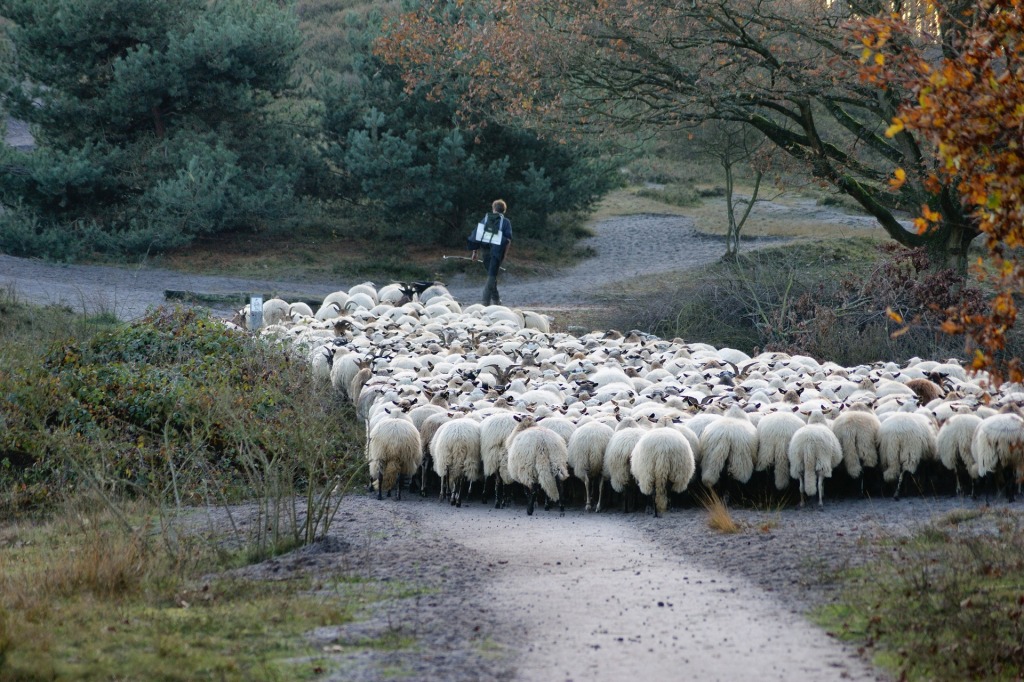
Verse 3b: “It is God who made us, and we are God’s; we are God’s people, the sheep of God’s pasture.”

Psalm 100 is subtitled “A Psalm. For Giving Thanks.” in my home Bible. It is a fitting passage for today and tomorrow, for collectively offering our thanks for God’s blessings and presence in our lives and in our world. The psalmist begins by encouraging us to “shout for joy” and to “worship the Lord with gladness.” This is an encouragement that we need often.

We need to be reminded because life often happens in ways that can derail our joy and that can dampen our gratitude. Those unexpected twists and unwanted turns can leave us anything but thankful. It is precisely in these times that we need the words of Psalm 100 – especially verse 3.

Verse 3 begins with a reminder and a call: “Know that the Lord is God.” In all and through all and over all, God is God. God does not cause our hardship or difficult situation or unwanted change – these are part of life – but God does desire to be with us in all of life. By making the intentional choice to walk with God, we make our journey lighter, our road less rocky, our valley less challenging… because we are not alone.

The verse continues with these words: “It is God who made us, and we are God’s; we are God’s people, the sheep of God’s pasture.” This verse speaks of the deep connection and foundational relationship that we have with God. We are God’s and God is ours. We are the sheep of God’s pasture. God is our good and loving shepherd. In all and through all and over all, God is with us and we are with God. Thanks be to God!

Prayer: Lord God, I rejoice in your love for us, your family. With joy and with thanksgiving I praise you for your presence in all of life. You chose us before our lives even began. You desire to walk with us every day. May we choose you always. Amen.


Leave a comment

Transformed Not Conformed

Reading: Romans 12:1-2

Verse 2a: “Do not conform to the pattern of this world, but be transformed by the renewing of your mind.”

Paul shifts gears as we turn to chapter 12. The last 4 verses of chapter 11 are a doxology. This closing prayer of praise to God wraps up the focus of the last few chapters and shifts our thinking to the “how” of living as a believer. Paul begins chapter 12 urging us to “offer your bodies as a living sacrifice.” Paul, as Jesus often did, is using an old word in a new way. To the Jews a sacrifice was the lamb or dove or grain or oil that was brought to the altar in the temple. Often blood was spilled and life was lost. In other sacrifices the offering was poured out or burnt upon the altar. There was a finality to each particular sacrifice.

Paul’s call is to be “living sacrifices.” This is an ongoing giving of self to God and to others. In Jesus’ language it is dying to self again and again in order to truly love God and neighbor. So, how do we place ourselves in a position to do this? We make the intentional choice to live according to God’s will and way. It’s not easy. The world is always tugging at us. For the daily battle, Paul offers this advice: “Do not conform to the pattern of this world, but be transformed by the renewing of your mind.” Winning this battle requires an intentional choice to say “NO” to the ways and norms of the world. Saying “no” to the world allows us to say “YES” to God’s transformation of our minds. This renewing of our mind is an ongoing process. Day by day it shapes us more and more into God’s image. It brings us closer and closer to understanding and then living out God’s “good, pleasing, and perfect will.” May it be so for us all each day.

Prayer: Lord God, we need you so much in this battle to transform ourselves into who and what you call us to be. The voice of the world is so loud and so convincing at times. Elevate the voice of the Spirit over this constant buzz. Hearing the Spirit more clearly, lead us to be transformed more and more into the image and example of Christ. Amen.


Leave a comment

Time and Space to Mourn

Reading: Matthew 14:22-23

Verse 23: “He went up on a mountainside by himself to pray.”

The first two verses of this week’s gospel lesson are a microcosm, a snapshot. Most often they are verses that we read and understand, but do not sit with. These two verses give a wonderful insight into Jesus’ humanity – and into ours.

After healing all day and then feeding the 5,000 Jesus sends the disciples off in the boat and then he dismisses the crowd. He is making time for what he needed to do before the huge crowd arrived. Jesus makes time to mourn the loss of his cousin and fellow prophet. In verse 23 we read, “He went up on a mountainside by himself to pray.” Going up the mountain is God-speak for finding time alone with God. For Jesus, going up the mountain is time to connect with God, just as it was for Moses and Elijah.

Caring for immediate needs can defer grieving. It happens to many of us when we lose a loved one. The immediate and necessary tasks of writing an obituary, of planning and attending a funeral… they consume our attention and energy, much as the healing and feeding of the crowd did for Jesus. This was the divine Jesus in action. Then the human Jesus needed care. He needed time and space to mourn and to be with God in that grieving. Jesus honored his grief. In our times of loss may we follow this example too.

Prayer: Lord God, it can be tempting to defer or ignore our grief. The initial days of autopilot, of getting necessary things done, they can trick us. When that flurry passes, remind us of the intentional choice that Jesus made. Draw us into your peace and consolation, for there we begin to find real healing. Amen.


2 Comments

Personal, Intimate, Intentional

Reading: Psalm 95:1-7

Verse 6: “Come, let us bow down in worship, let us kneel before the Lord our maker.”

Psalm 95 is an invitation to sing and shout, to offer thanksgiving and praise to the Lord our God. The psalmist encourages us to take time to connect with our God, the one who formed and is a part of all of creation. In verse 6 we read, “Come, let us bow down in worship, let us kneel before the Lord our maker.” To me, this passage calls us to prayer. Prayer is the act of spending personal, intimate, intentional time with God. We can and should ‘pray on the fly’ – short prayers for the one in the ambulance, quick prayers for the parent struggling with a child, a fast shout-out for the person whose name pops into your mind. But to cultivate our relationship with God, it requires a deeper, more intense time of prayer.

Our relationship with God is like all of our relationships. If all we ever share with a person is a passing ‘Hello’ at the start of the work day, then that relationship will never go beyond the surface level of ‘acquaintance.’ Some treat God this way all the time. All of us can, actually, at times – when life gets overly busy or really stressed. This is why a consistent, highly prioritized prayer practice is essential to our faith and to our relationship with God. If it is haphazard – in the morning one day, at night a couple days, on the ride to work one day – then it is so much easier to ‘forget’ or to simply let it slip for a day. Or two. Or ten.

When my kids were young – 25 or so years ago – I began the habit of rising early to carve out quiet time with God. It was not easy. It was hard. Yet whether at home or on a mission trip or on vacation, whether healthy or sick, my early morning discipline is something I’ve held fast to. It has become essential to both my daily living and in keeping me closely connected to the Lord. One of two questions for you: What is your prayer discipline? Or… How and when will you develop a daily prayer discipline?

Prayer: Lord God, it is hard to imagine life and faith without our morning quiet time. It feels to me like water or air – something I couldn’t live without. Thank you for this gift of intimacy, honesty, connection. Amen.


Leave a comment

It Begins Small

Reading: Jeremiah 2:4-9

Verse 7: “I brought you to a fertile land… but you came and defiled my land.”

In the second half of Jeremiah 1, the section between last week’s and this week’s readings, God brings Jeremiah a vision. He sees a pot that is tilting from the north. It is boiling. God tells him that it will boil over and pour out over all who live in the land. Surely the Assyrian army is coming.

Our passage today begins with a question from God: “What fault did your fathers find in me, that they strayed so far from me?” They turned to worthless idols and began following a worthless religion. God reminds them, “I brought you to a fertile land… but you came and defiled my land.” The priests and prophets have also been a part of the defilement. They have worshipped and prophesied by Baal, a “worthless idol.” Through Jeremiah the prophet, God declares that there are charged pending. The pot will boil over.

The situation in Jeremiah’s day was not and is not unique to his time. It was and is an oft-repeated cycle: walk with God, sin and stray from God, repent and return to God. Because we are a stubborn and selfish lot, there is usually some significant event that leads us to a place of repentance. Using the language of our Biblical context, our pot boils over. When we can’t go any lower, we look up and see that the Assyrian invasion is under way.

How can this pattern be interrupted? It begins small. We are faithful in the small daily tasks: reading our Bible, meditating on God’s word, giving time in prayer and thanksgiving, denying self and the lures of the world, finding ways to humbly serve others. When we are intentional about cultivating our relationship with God, filling ourselves with God’s ways, walking out God’s will, then we repent right away. Then we do not stray far. We remain close. May it be so for you and for me.

Prayer: Lord God, lead me to draw close again and again, over and over, moment by moment. Build such intimacy between you and me that I always turn back quickly, repenting and knowing your forgiveness and redemption once again. Amen.