pastorjohnb

Thoughts and musings on faith and our mighty God!


Leave a comment

So Welcome ____

Reading: Romans 15:7-13

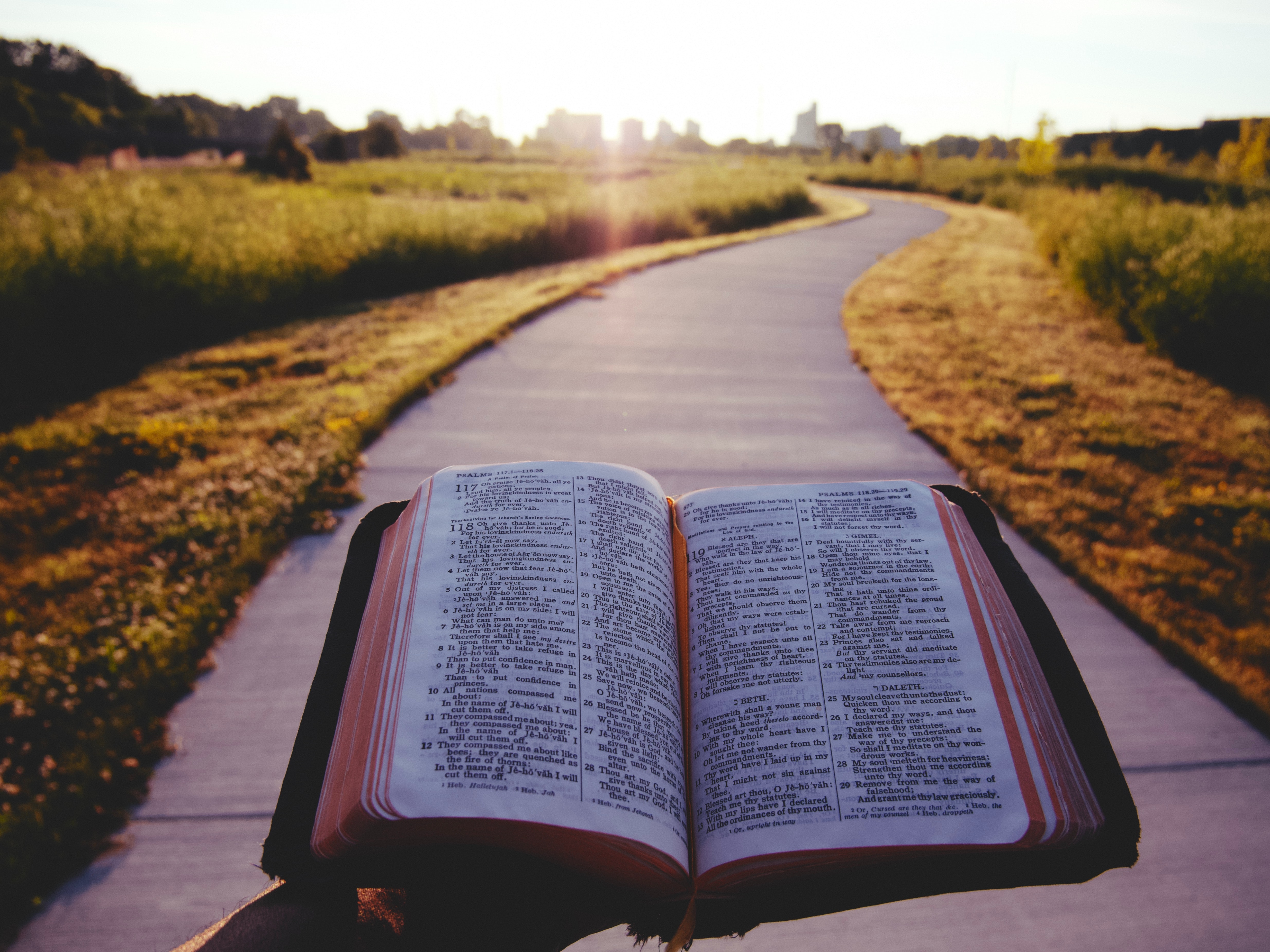
Romans 15:7 – “So welcome each other, in the same way that Christ welcomed you, for God’s glory.”

Photo credit: James A. Molnar

A leper, a tax collector, a prostitute, a demon-possessed man, a blind man, a foreigner, a crippled man, a criminal. A homeless person, a recovering alcoholic, a single mom, an ex-con, a transgender person, a refugee, an immigrant. Which list would be welcomed by Jesus into his presence? Which list would Jesus offer grace, love, mercy, welcome to? “Both” would be the answer for the Jesus that we see and read about in the gospels. Is it the same for you and for me?

In Romans 14 and 15 Paul is addressing how the church should welcome each other as Christ would. Since the beginning of the Christian movement the call has been to be like Jesus. Love like Jesus, forgive like Jesus, welcome like Jesus, extend grace, mercy, hope, peace… like Jesus. Fighting this call is the whole “we’re God’s chosen people” thing. This implies “you are not” to many people. Now, Paul, he was once a Pharisee amongst Pharisees. Back then, he drew the in/out line thick and with permanent marker. Through his conversion experience Paul knows that Jesus removed the line. Jesus welcomed Paul. That line? Seeing through Jesus’ eyes, you can’t even tell that there ever was a line.

Our reading today begins with “So welcome each other, in the same way that Christ welcomed you, for God’s glory.” Pretty clear. But the church still sees the line. So Paul quotes from four Hebrew scriptures that show that the Gentiles (all people outside the old line) are included in God’s plan of salvation. All people. All people.

Go back to the two lists at the start of this devotional. Which one(s) made you pause? Now, insert that name into verse 7. For example ,”So welcome the immigrant in the same way…” Repeat this line again and again for any name that you paused at. Again and again. Do so until “the God of hope” fills you with “all peace and joy” through “the power of the Holy Spirit.”

Prayer: Lord God, help me to understand that Jesus welcomes one and all just like he once welcomed me. Whatever lines I’ve been taught, whatever in/out ideas I’ve derived – erase them, obliterate them. Fill me to overflowing with your hope, love, peace, and joy. Then, by the power of the Holy Spirit in my heart, guide me to welcome all people into your family. Amen.


Leave a comment

A Long Line

Reading: Ephesians 1:11-23

Ephesians 1:13 – “You too heard the word of truth in Christ, which is the good news of your salvation.”

Photo credit: Anne Nygard

Paul first reminds us in today’s passage that we who believe have “received an inheritance in Christ.” Paul sees this outcome as a part of God’s plan for all people. If God were to have God’s way, all people would be disciples of Jesus Christ. That is God’s plan for all people as we are created in the womb. But we do have a choice in the outcome. Sometimes people choose to live by their own way and not God’s way.

For those who have chosen God’s way, choosing to follow Christ, we are called to bring God glory through the living out of our faith. We do this by living as Christ lived. In this living we take our place in a long line of disciples who have shared the faith with others. On this All Saints’ Day we recall those who have lived as Christ, teaching and modeling for us what living a life of faith looks and feels like. In turn, we teach it to and we model it for others – in our homes, in our church, in our workplace, in our community…

We can do so because we have “heard the word of truth in Christ, which is the good news of your salvation.” Accepting this good news we are indwelled by the Holy Spirit. Paul describes this constant presence of the Spirit as a “down payment on our inheritance.” This is a foretaste of being in glory in eternity. The Spirit in us keeps us connected to God. Deposited in our hearts, we are empowered by God. Through this power at work in and through us, we can pass on the faith to others, to the next generation of saints. May it be so!

Prayer: Lord God, today we pray for one another as Paul prayed for the church in Ephesus. Lord, give us “a spirit of wisdom” so that we can know you more and more. Open the “eyes of our heart” so that we can live out the hope that we find in Christ Jesus. Lead us to spiritually kneel before Christ, the head of all things. Amen.


Leave a comment

Because You Obeyed

Reading: Genesis 22:15-18

Genesis 22:18 – “All the nations of the earth will be blessed because of your descendants, because you obeyed me.”

Photo credit: Aaron Burden

As we pick up the story from yesterday, a lot has happened in the text. Abraham and Isaac arrived at the place. Abraham built an altar and arranged the wood. He then tied up Isaac and laid him on the wood. Abraham prepared to sacrifice his son – his only son, the son he loved – raising the knife. It was then that the Lord’s messenger called out, acknowledging Abraham’s reverence for God. Looking up, he saw a ram stuck in the dense underbrush. God indeed provided the offering for the sacrifice.

Turning to today’s reading, the messenger speaks again. Because Abraham did not hold back his son, his only son, God will bless Abraham “richly” and will give him “countless descendants.” In addition, these descendants will “conquer their enemies’ cities.” With these words the messenger is reiterating the promises that God has already made to Abraham. Because Abraham was faithful, the promises remain in effect.

The same is true for us concerning God’s promises to us. The promises of presence and guidance, of comfort and strength, of hope and salvation – they remain our promises as long as we walk faithfully with God. But these promises are not ours alone. The saints before us laid claim to them and lived faithfully as they walked their journeys of faith. God speaks about the next step in Abraham’s story. In verse 18, God’s messenger says, “All the nations of the earth will be blessed because of your descendants, because you obeyed me.” There is a through line here. Because Abraham was obedient and faithful, his descendants will be obedient and faithful. Because they were obedient and faithful, all the people of the earth will be blessed. We are part of this through line. One day, may the Lord say to each of us, “Because you obeyed…”

Prayer: Lord God, we are thankful and we celebrate Abraham and the many other saints – some in the scriptures, some in our lives – who have given us examples of obedient and faithful living. Lord, use us in turn to pass along the faith to others, blessing the world. Amen.


Leave a comment

Rule and Cleanse

Reading: Psalm 18:7-8 and 12-13a

Psalm 19:13a – “Save your servant from willful sins.”

Psalm 19 celebrates who and what God is. The psalmist speaks of God’s order and power. The writer acknowledges, by contrast, our disorder and powerlessness. In verses 7-8 we focus in on the Law. God’s “rules” for living out our faith are “perfect… faithful… right… pure.” God’s Law reflects God’s character. If we follow God’s will for how we are to live and be in the world, then we are “revived… gladdened… made wise… given light.” This is all in alignment with this understanding amongst God’s people: live according to the Law, experience goodness and blessing. People of faith today hold to this basic understanding. And, for the most part, this extends to our relationship with civil law too. There are times, though, when our faith will call us to hold God’s Law above common law.

In verses 12-13 the psalmist acknowledges and addresses those times when we do break God’s Law. Because of our human nature, we will sin, hurting or harming ourselves and/or other(s). At times these are “accidental.” Some of the time we become aware of these sins. Someone will let us know or the Holy Spirit will bring conviction into our hearts. And sometimes we don’t know; we won’t ever know. In these cases the psalmist asks God to “clear” him of sins. General confession is good for us to practice periodically too.

Our reading today closes with this petition: “Save your servant from willful sins.” At times we will know what we’re about to do or say or think, we’ll know it is sinful, and we will proceed forward anyway. We’ll cross the line. We’ll cause harm. We’ll damage a relationship. The psalmist asks God to not allow these sins to “rule me.” May this be our prayer as well.

Prayer: Lord God, we admit that it is not always easy to be faithful. Our human nature comes out at times, eclipsing the divine within. But even then your Holy Spirit whispers and nudges, calling us to faithfulness, calling us to walk once again with you. Welcome our confession, O God, cleanse us through your grace. Bring healing and wholeness to our lives and to our relationships. Rule in our hearts. Amen.


Leave a comment

People of Grace and Love

Reading: Philemon

Philemon 1:15 – “Maybe… Onesimus was separated from you for a while so that you might have him back forever.”

Today we turn to Paul’s letter to Philemon. He is appealing to Philemon to receive Onesimus back not as a slave but as a brother in Christ. Paul walks the fine line between coercion and appeal, at least twice crossing this line. Paul writes this letter not just to Philemon but also to the church that Philemon is a part of. What Paul asks of Philemon extends to the whole community of faith.

As I read this story today my mind went to the parable of the prodigal son. It also reminds me of estrangements that I’ve heard of in families I know well. We’re familiar with and maybe even have been involved in stories of separation, in experiences where one party somehow hurt or offended the other, making reconciliation difficult. In the story of the prodigal son we see how grace and love overcome the harm done to welcome the younger son back into the family. We are left hanging concerning the younger son’s estrangement from the older brother. We hope that they are reconciled. In situations we’ve experienced (or are still experiencing), love and grace are the keys to reconciliation.

Just as the younger brother and perhaps that family member or friend changed for the better to open the door for reconciling, so too has Onesimus changed. As a brother in Christ he has become useful to Paul. To Philemon he writes, “Maybe… Onesimus was separated from you for a while so that you might have him back forever.” Maybe the younger son had to experience the bottom of the pit to change. Maybe that estranged family member or friend had to experience something really hard to be changed. When change occurs, though, the ball is in our court. We hope that Philemon received Onesimus back as a brother in Christ. May we too be people of grace and love.

Prayer: Lord God, reconciliation is not easy. At times we are deeply wronged. Perhaps we’ve also suffered financially or physically. When the hurt and pain are deep, Lord, may your love and grace be deeper still. Through these, heal the hurt and pain in our hearts. Lead us then to be as you are, generous and abundant in our love and grace. Amen.


Leave a comment

That Line

Reading: Nahum 1-3

Nahum 1:12-13 – “I won’t afflict you further, Zion. Now I will break off his yoke from you and tear off your chains.”

Photo credit: Nadine Shaabana

Nahum walks a fine line. The historical content of the book covers Assyria’s fall. The capital city, Nineveh, is the focus. In Jonah we saw a mighty God who was rich in mercy. In Nahum we read of a mighty God who pours out divine wrath on the Assyrians. In the long game, God will not tolerate any form of human pride or the existence of injustice. Here is where we get near that line. It can be tempting to rejoice in the downfall of an enemy. Is this not another form of pride?

Nahum describes God as “jealous… vengeful… strong in wrath… very patient… great in power.” The prophet declares that the world and all who dwell on it cannot stand before God’s indignation and fury. And he declares that God is “good, a haven in a day of distress.” In this spirit, Nahum assures God’s people. Though in exile now, God says, “I won’t afflict you further, Zion. Now I will break off his yoke from you and tear off your chains.” Hope is just around the corner.

From 1:14 through the end of the book, Nahum describes the great fall of Nineveh. God is against the city. The enemy’s sword will devour just as Assyria once devoured others. Assyria will become a spectacle. God declares there is “no remedy… your wound is grievous.” At the end we again come to the line. Nahum shares that all who had suffered under Assyria’s cruelty will “clap their hands over you.” To be relieved, even happy, when the yoke is broken,when the bully gets his or her due, – nearing the line. To be joyful and to celebrate someone’s utter destruction? Where did that line go?

Prayer: Lord God, we can sense your power and might today. We can feel your sense of justice and righteousness. You alone are the judge and the giver of just consequences. Help us to hold these things in holy awe. Curb in us the human tendency to find joy in another’s defeat. Keep us in our own lane. Focus us on our walk with you. Amen.


Leave a comment

Lines Drawn

Readings: 1st Samuel 18, 1st Samuel 19, 1st Samuel 20

1st Samuel 18:3 – “Jonathan and David made a covenant together because Jonathan loved David as much as himself.”

Photo credit: Nadine Shaabana

Jonathan and David become bound together, making a covenant because Jonathan loved David as much as himself.” He gives David his robe, sword, bow… – this symbolizes the passing on of the right to the throne. Jonathan is committed to David, and vice versa. Next, Saul’s anger rises as the woman sing of David’s greater victories. As the evil spirit returns to Saul, he tries to kill David – twice. David spends time away at war. The Lord gives him great success.

Saul then tried marriage as a means to control David. But David feels unworthy. A second attempt leads to a plot by Saul. God continues to be with David and he provides the wedding bounty. He married Michal, Saul’s youngest. After more success in battle, Saul orders David’s death. Jonathan defends David, placating Saul temporarily. But again the evil spirit rises up. David escapes a second spear and then Michal helps him to escape.

David flees to Ramah, where Samuel is. Saul sends three sets of messengers to retrieve David. All three sets fall into a prophetic frenzy and return empty handed. Saul himself goes and he suffers the same fate. Clearly the Spirit of the Lord is protecting David. These episodes lead David back to Jonathan. They devise a plan to see if Saul really wants to kill David. Yes, he certainly does. Jonathan and David renew their covenant and part ways for now. The lines have been drawn between Saul and David. Jonathan must now walk the difficult line between son and covenant friend.

Prayer: Lord God, in our moments of testing, may we be as faithful to you as David and Jonathan were. No matter what evil swirls around us, lead and guide us to walk in the way that is right and holy and true. Be a shield about us, O God, keeping us from harm. Amen.


Leave a comment

Clearly at Work

Readings: Ruth 3 and Ruth 4

Ruth 3:10 – “May you be blessed by the LORD, my daughter! You have acted even more faithfully than you did at first.”

Today’s passage begins with Naomi caring for Ruth. It is a bit of a role reversal but she is the one from this culture. Naomi lays out a plan for Ruth to find a husband and Boaz is the ideal choice. He has been generous and righteous, kind and protective. He has not taken advantage of this situation. Ruth receives instructions and works the plan. This is very risky. Women don’t go to the threshing floor – especially in the middle of the night. And women certainly don’t ask men about things like marriage. But that’s the plan. All goes well. Then the waiting begins.

Boaz goes that morning to the city gate. It is where transactions are made. He is intent on talking with the closer relative. Gathering ten elders as witnesses, Boaz explains the situation – mostly. The closest of kin is willing to buy the land to preserve the family inheritance. Next, Boaz says, you also get Ruth the Moabite too – to preserve the family name too. This is one step too far for the next of kin. They make a formal agreement – sandal and all – Boaz will redeem the land and he will marry Ruth.

The sticking point for the next of kin is marrying a foreign woman. Strictly speaking, he is adhering to the Law. Yet God is clearly at work in a new way here in the book of Ruth. Naomi, Ruth, and Boaz are a part of it. The women in town declare that Ruth is “better for you than seven sons.” In that time and culture ,what a statement! The child born to Boaz and Ruth is named Obed – “the one who serves God.” Our reading closes with some genealogy. It goes like this: Obed -> Jesse -> David. That line eventually ends with -> Jesus. If the line of David and Jesus includes a Moabite woman, then maybe we, as people of faith, should likewise welcome “the other.”

Prayer: Lord God, thank you for this beautiful story. It is living faith as it is meant to be lived – caring for one another, honoring you in all that is said and done, elevating righteousness and faithfulness as our guiding lights. Lead us day by day to walk in these ways. Amen.


Leave a comment

Interceding

Reading: Exodus 32:11-14

Verse 13: “Remember your servants Abraham, Isaac, and Israel…”

Photo credit: Shane Rounce

As we continue in the Exodus passage for this week Moses seeks God’s favor, interceding on behalf of the people. This is not the first or last time that Moses will do this. Nor is he the first prophet to do this. This practice is not limited to prophets either. The practice of interceding on behalf of one another is at the core of the community of faith.

Using the same language as God, Moses doubles down, asking, “Why should your anger burn against your people?” Moses reminds God that it was actually God who brought the people out of Egypt. This is a type of prayer that we pray too. We remind God of what God has done in the belief that God will do it again. Moses wants God to rescue them not from Egypt but from their sin this time. Moses also reminds God of the relationship and its foundations. First, Moses says, “Remember your servants Abraham, Isaac, and Israel…” Moses then reminds God of the promises. Yes, we too pray both of these prayer types too. We invoke our relationship (or another’s relationship with God) and we recall the promises found in the scriptures both as a reminder to ourselves and to God as well.

Can we change God’s mind with our prayers? Perhaps? Is God just using such prayers to reinforce our faith and trust? Maybe? While we do not know the answers to these questions, we do know that we are brought before God regularly and divinely. The Spirit interceded for us, often in groans and always in ways aligned with God’s will (Romans 8:26.) Christ himself also intercedes for us as he sits at the right hand of God (Romans 8:34.) I believe the content of these prayers comes from his time on earth.

May we too choose to stand in this long line of faith, interceding for one another, lifting one another before the throne of God.

Prayer: Lord God, thank you for being for us. Thank you for the ways that you, the three-in-one, intercede on our behalf – evidence of your great love for us. We know that you have good plans for us and that you seek to work these out. Help us to be a part of this today. Empower us to be a part of this great prayer effort today, both for ourselves and for one another. Amen.


Leave a comment

Revival

Reading: Romans 9:1-5

Verses 4b and 5a: “Theirs is the adoption… Theirs are the patriarchs…”

Paul himself had a very radical and powerful conversion experience. He encountered the living Christ and was struck blind. Three days later he experienced a miraculous restoration of his sight. His life changed forever as he now saw with fresh eyes. Most of us do not have a “lightning” type conversion experience. For most of us, faith comes slowly, over time, with many small steps leading to our intentional choice to follow Jesus as Lord and Savior.

In the last two verses of our Epistle reading Paul speaks of his people, of “the people of Israel.” He lists the many things that they have that could lead them to also accept Jesus as Messiah: adopted as God’s chosen people, receivers of the Law and covenants and promises, worshippers in the temple. He adds that they also have the patriarchs. These are the greats of the faith – Abraham, Moses, Elijah… From Paul’s perspective and new understanding all of this points to Jesus as the Messiah. It all adds up for Paul. But for most of the Jews, it does not. They do not have an encounter or experience that has moved them across the line of belief.

Today there are many people who were raised in the church as children and youth but are not part of a church anymore. This is not to say that they don’t believe in Jesus Christ. Many do. Yet active participation in a church community does not add up for a lot of people. They have the Bible, they know Jesus’ teachings and promises… Just as it did for Paul, my heart and soul aches for these folks. We long for a revival in our communities and in our nation. May it begin with you and me as we seek to minister to our brothers and sisters in Christ.

Prayer: Lord, use my hunger and hurt for the disconnected, for the hurt, for the disenfranchised to rebuild connections, to rekindle fires for you. In love use me to help folks re-cross the line of active belief. Show me the way to rebuild this part of your kingdom here on earth. Amen.