pastorjohnb

Thoughts and musings on faith and our mighty God!


Leave a comment

A Model of Faith

Reading: Deuteronomy 34:1-4

Verse 1: “Then Moses climbed Mount Nebo… There the Lord showed him the whole land.”

We begin this week with a text that closes out Moses’ story. Here, at the very end of Deuteronomy, Moses dies and passes on the leadership of Israel to Joshua. Today there is one last tender exchange between God and Moses.

Our text begins, “Then Moses climbed Mount Nebo… There the Lord showed him the whole land.” This does not sound like a man near to death. Back in chapter 32 God reminded Moses that he would only see the Promised Land. In this same section, God commanded Moses to make this trek. As Moses hiked up this arid mountain, he has time to ponder and think, to consider the scope of his life. This is common as one enters that end-of-life season. As Moses hikes and reflects, I wonder what his highs and lows were.

On top of Pisgah, the highest point, God shows Moses all of the land that he will not get to enter. It is a land “flowing with milk and honey.” Relative to the desert that they have been trekking through for 40 years, this land is lush and green. God reminds Moses that this is the land “promised on oath to Abraham, Isaac, and Jacob.”

Moses could’ve been disappointed or even angry that he’s led these people for so long or that he’s come this close only to be denied entry. Disappointment could’ve welled up and put him in a deep funk. Perhaps it would do so to me if I stood in his shoes. It is not so with Moses. He has faithfully walked the path that God has placed him on. He has been obedient and steadfast to the Lord. And he is grateful for his time and place with Israel. Moses is content and at peace because of his relationship with God. Moses is a model of faithful servant leadership. Thanks be to God for his example.

Prayer: Lord God, thank you for helping me today to better understand my role in service to you. Help me to keep this right perspective. This is your plan, your will, your way. I am but a humble servant. Continue to lead and guide me. Use me as you will. Amen.


Leave a comment

Interceding

Reading: Exodus 32:11-14

Verse 13: “Remember your servants Abraham, Isaac, and Israel…”

Photo credit: Shane Rounce

As we continue in the Exodus passage for this week Moses seeks God’s favor, interceding on behalf of the people. This is not the first or last time that Moses will do this. Nor is he the first prophet to do this. This practice is not limited to prophets either. The practice of interceding on behalf of one another is at the core of the community of faith.

Using the same language as God, Moses doubles down, asking, “Why should your anger burn against your people?” Moses reminds God that it was actually God who brought the people out of Egypt. This is a type of prayer that we pray too. We remind God of what God has done in the belief that God will do it again. Moses wants God to rescue them not from Egypt but from their sin this time. Moses also reminds God of the relationship and its foundations. First, Moses says, “Remember your servants Abraham, Isaac, and Israel…” Moses then reminds God of the promises. Yes, we too pray both of these prayer types too. We invoke our relationship (or another’s relationship with God) and we recall the promises found in the scriptures both as a reminder to ourselves and to God as well.

Can we change God’s mind with our prayers? Perhaps? Is God just using such prayers to reinforce our faith and trust? Maybe? While we do not know the answers to these questions, we do know that we are brought before God regularly and divinely. The Spirit interceded for us, often in groans and always in ways aligned with God’s will (Romans 8:26.) Christ himself also intercedes for us as he sits at the right hand of God (Romans 8:34.) I believe the content of these prayers comes from his time on earth.

May we too choose to stand in this long line of faith, interceding for one another, lifting one another before the throne of God.

Prayer: Lord God, thank you for being for us. Thank you for the ways that you, the three-in-one, intercede on our behalf – evidence of your great love for us. We know that you have good plans for us and that you seek to work these out. Help us to be a part of this today. Empower us to be a part of this great prayer effort today, both for ourselves and for one another. Amen.


Leave a comment

Resisting the Urge

Reading: Exodus 32:1-10

Verse 7: “Go down, because your people, whom you brought up out of Egypt, have become corrupt.”

Moses was the Israelite’s connection to God. God spoke to Moses and he spoke to the people. The people spoke to Moses and he spoke to God. The speaking sometimes was crying out; it was sometimes grumbling; it was sometimes quarreling. The relationships between God and Moses, between Moses and the people, and between God and the people all had their ups and downs.

Way back in chapter 24 God calls Moses up the mountain after leaving Aaron and Hur in charge. Moses spends 40 days on the mountain, receiving instructions and the Ten Commandments from God. In today’s passage the people approach Aaron. They wonder what has happened to Moses. He has been gone a really long time. Without Moses, the people’s relationship with God has a missing part. So they take matters into their own hands, saying to Aaron, “Come, make us gods who will go before us.” Aaron collects jewelry and makes an idol shaped like a calf. The people worship this idol. Looking down upon the scene, God says to Moses, “Go down, because your people, whom you brought up out of Egypt, have become corrupt.” The Israelites are now “your people.” If they were truly God’s people, there would be no idol, right?

When I’ve gone to God asking for some guidance on a project or for relief from some situation or for healing for a loved one and the answer seems like a long time coming, I want to take matters into my own hands. I want to just fashion my own solution. I can be tempted to think that I know best. I can ponder becoming my own person, not God’s person. In these moments, may we remember today’s lesson. Even though it may not feel like it, God is right there. May we hold onto the relationship, resisting the urge to quickly abandon our God. And may we trust into our relationship with God, leaning even deeper into God’s love and care.

Prayer: Lord God, when I am tempted to elevate self or some other idol above you, remind me of the lesson learned in this Exodus story. Use that to remind me of your constant love and your sure care. Guide me to turn once again to you. Amen.


Leave a comment

In Moses’ Place

Reading: Exodus 17:4-7

Verse 4: “What should I do with this people? They are getting ready to stone me.”

Photo credit: Clay Banks

Continuing in Exodus 17 we see that the Israelites continue their grumbling. They ask Moses if he really led them into the wilderness just to die of thirst. Did they really think that this was the plan? They are frustrated. Step after step has required going to God for some kind of intervention. And that step requires working through Moses. The people aren’t the only ones frustrated – and afraid and unsure. Moses cries out to God, saying, “What should I do with this people? They are getting ready to stone me.”

God responds but doesn’t directly address any of the frustration. There isn’t any reaction to the grumbling, quarreling, or crying out. God simply meets the need, this time for water. In doing so God also provides reassurance and evidence that God is with Moses, the chosen leader, and that God is with the Israelites. With elders along in witness roles, Moses strikes the rock at Horeb with his staff, providing water for all to drink. In this action, God gives answer to the question, “Is the Lord among us or not?”

At times we find ourselves in the place of Moses, responsible for making a decision or for taking action. Many will be looking to us. Our choice will affect others – maybe many others. In these places may we follow Moses’ example: go to God, gather trusted leaders, lead as God directs. Following these steps we too will show that, yes, God is among us.

Prayer: Lord God, lead and guide me in the decisions, actions, and choices that come before me. Draw me first to you, seeking your wisdom and direction, wanting to know your will and way. Bring around me good and trustworthy leaders, people who also have a heart for you. Together lead us forward in faith. Amen.


Leave a comment

Without These Things

Reading: Exodus 17:1-3

Verse 2: “So they quarreled with Moses and said, ‘Give us water to drink.’”

Photo credit: Mukund Nair

As the Israelites wilderness journey continues they come to a place with no water. You’d think that after witnessing the 10 plagued – oh the Passover! – and the parting of the sea – oh the Egyptian army! – after all this you’d think they knew a God who could provide water. But wait – God did that at Marah and again at Elim. And… God provided manna and quail when they ran out of food and became hungry. After all of this, you’d think they’d trust God and Moses at least a little bit. But have you ever lived in scarcity?

The Israelites are living with a scarcity mindset. They have no crops, no place to call home, no money in the bank. They are relying on God and Moses for absolutely everything. It’s a lot of faith and trust to hold in just one source. When you’re wondering if you’ll ever eat again, when you’re worried about where you’ll sleep that night, when you are dying of thirst – it’s hard to see anything but that one thing. Logic often goes out the window. Faith and trust usually aren’t far behind. So the people quarrel with Moses (and they test God), demanding, “Give us water to drink.” In such moments of want and desperation it can be hard to see or to believe that God has a plan.

For the Israelites, their relationship with God runs through Moses. He is their one intermediary. We have a personal relationship with God. We have the constant indwelling presence of the Holy Spirit. We can turn to the Bible and remind ourselves of God’s love and promises. Imagine trying to live out your faith without any of these things. That’s where the Israelites were. That’s where people without faith are today.

Prayer: Lord God, I cannot imagine life without you. You’ve provided so many ways to connect, to lean in, to hold on. Thank you. And, Lord, take my gratitude and turn it into fuel to lead others into a saving relationship with you, into faith and trust and hope. Use me today to build your kingdom here on earth. Amen.


Leave a comment

Holy Ground

Reading: Exodus 3:1-9

Verse 5: “Take off your sandals, for the place where you are standing is holy ground.”

Moses is living in a foreign land. He is an exile. Something is stirring in Moses so he travels with his flock to a place known for God’s presence. Moses is definitely not the first person to go to Mount Horeb. At times perhaps this has happened to you. Maybe that unease drove you to delve into the Bible. Maybe that unsettling circumstance brought you to a place of prayer – perhaps the sanctuary or chapel at your church. Or maybe it was a special place at the beach, in the woods…

When he arrives, Moses is alert, seeking, and probably a bit anxious. How and where will God show up? What will be the outcome of this encounter? It feels like Moses expects God to show up. In those times and places that I have earnestly sought God, the presence has come. Has that been your experience too?

God uses a burning bush to draw Moses closer. It is burning but not being consumed. God calls out to Moses. Here is his response: “Here I am.” There is purpose in these words – I came seeking you, you showed up, here I am. I love God’s first instruction: “Take off your sandals, for the place where you are standing is holy ground.” Yes, Moses, God is here to meet you. But God is still God. This is holy ground.

God speaks to Moses about connection: “I am the God of your father…” God speaks about relationship: “I have indeed seen the misery… heard them crying.” And then God speaks of mission: “So now go. I am sending you…” And if we read on a bit further, as Moses questions and frets, we meet the God who goes with us: “I will be with you.”

As we seek God, may we seek the God who met Moses. As we enter that holy or sacred place, may we expect God to meet us there, to connect with us personally, to understand the need, and to go with us as we are sent out to minister to others. May it be so.

Prayer: God, may we enter these sacred and holy places and spaces confident of your arrival. As we seek you out, may you be found. Give us the courage and strength not only to seek you, but to leave these encounters with willing hands and hearts. Amen.


Leave a comment

Roles

Reading: Exodus 2:1-10

Verse 3: “But when she could hide him no longer, she got a papyrus basket for him and coated it with tar and pitch.”

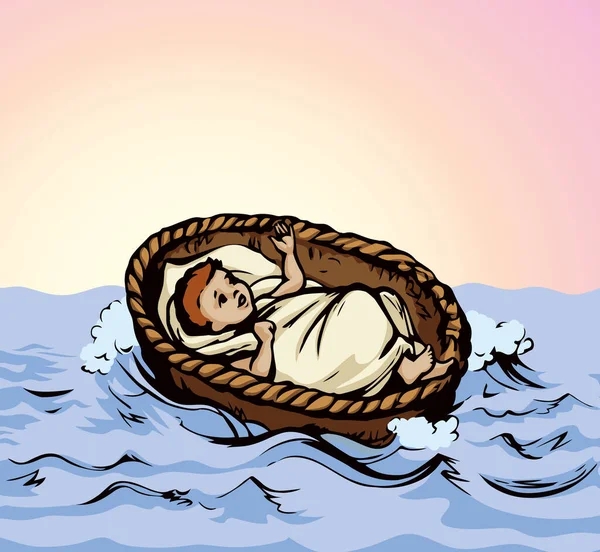
Today we continue in the exodus story. We are yet many years from Pharaoh letting the people go. In today’s passage, though, God begins to work that plan. A Hebrew baby is born and the mother cannot bring herself to obey Pharaoh’s law that says to kill the baby boy. After 3 months she is led to a plan: “But when she could hide him no longer, she got a papyrus basket for him and coated it with tar and pitch.” The basket is strategically placed in the reeds right by where the Egyptian women bathe. The older sister keeps watch from a distance. As the basket and baby are found, she swoops in to offer to find a Hebrew woman to nurse the baby. Just like that the baby is back at home, where he will remain until weaned. At that time he is given to Pharaoh’s daughter to raise as her own. She names the baby Moses. He will grow up and one day liberate his people from slavery.

The three main women in this story all play important roles. Each follows their hearts and allows love to guide their actions. The prompting of their hearts is God at work. Moses is a pretty big name in the storyline of the Bible. Yes, the three women play a much smaller role in comparison to Moses. But without any of their roles we wouldn’t have a Moses. We all can also play relatively small roles in God’s unfolding plan. Like these three women, what we do and say also impacts the kingdom of God. We too have the power to change lives. Following God’s promptings, may we choose to love as we are led out into the world and into people’s lives.

Prayer: Lord God, guide me today to step into the plans that you have for me. Give me a confidence to go where you lead. Help me to trust into your plans for building a kingdom here on earth. Amen.


Leave a comment

Patience, Love, Mercy

Reading: Exodus 17:3-7

Verse 6: “I will stand there before you… Strike the rock, and water will come out of it for the people to drink.”

Continuing in Exodus 17 today, the people are thirsty – parched. They grumble at Moses who grumbles to God. At this point, God demonstrates patience, love, and mercy. I imagine God first drawing a deep breath and then counting to 10. As God exhales slowly, I imagine God looking down in love upon this quarrelsome, doubting lot. As God looks upon these children panicking in the desert, God’s heart is once again moved to mercy. We don’t have to imagine this part. In verses 6 God tells Moses, “I will stand there before you… Strike the rock, and water will come out of it for the people to drink.” God goes before Moses, leading the way to water, to life, to joy.

First, a lesson from Moses: lead using the example you want others to follow. After receiving the peoples’ complaint, Moses should’ve gone to God in prayer. Moses should’ve first sought God’s direction, strength, guidance – and patience, love, and mercy. This is how God led. That’s our second lesson, this one from God. When seeking to help or care for someone in distress, practice patience, love, and mercy. See the person as they are, try to understand where they are, feel what it is like to be in their shoes. Then allow first love and then mercy to guide your efforts and your response.

We are now in our own season in the wilderness. We are journeying towards the cross during Lent. This season of introspection invites us to look within, to honestly see ourselves as we are. Maybe we’ll find some grumbling and a bit of quarreling. Maybe we’ll find anger or lust or pride or doubt or something else that needs to go. As we seek to root out these sinful behaviors as we prepare ourselves to stand at the foot of the cross in the presence of the one who surrendered all for us, may we too practice patience, love, and mercy with ourselves. The roots of our sin are deep and the journey is long and difficult. May God be with us.

Prayer: Lord God, today I ask that you pour out your patience, love, and mercy. Fill me with these so that I too can be generous with them – both with myself and with others. Lead me to look deeply within this day; guide me to that which I need to surrender to your will and way. Amen.


2 Comments

Today’s Wrestle

Reading: John 3:11-17

Verse 16: “For God so loved the world …”

Photo credit: Hans Zatzka

Continuing today in John 3 we again enter the conversation between Jesus and Nicodemus. Because of Nicodemus’ confusion, Jesus draws upon an example that Nicodemus would know well. Jesus was a good teacher. He reminds Nicodemus of an event early in Israel’s time in the wilderness experience. Sin had brought death once again. The people grumbled and tested God and Moses. God sent poisonous snakes into camp. Many died. Lesson learned. Yet some snakes remained. God directed that a golden snake be made and placed upon a pole. Looking at this image would save those who were bitten.

In verse 16 Jesus says, “For God so loved the world that he gave his one and only Son, that whoever believes in him shall not perish but have eternal life.” God came in the flesh to be that which would save us from sin and death. To look to Jesus as Savior will lead to life – and not just to life here but also to eternal life. Further connecting to the Old Testament story, Jesus tells Nicodemus that God sent his son to save the world, not to condemn it. No poisonous snakes this time. The price for our sin will be paid by Jesus on the cross.

Funny thing about the snake. Eventually it became an idol and had to be destroyed. In our churches and in our faith we too can have idols. And we can try and shape Jesus into the image that we prefer. Unwritten rules and expectations that people be and act like us can make people feel unwelcome. As an example of how these two ideas can combine, ever since the first artwork of Jesus was created we’ve known that Jesus was from the Middle East. We still know it today. Yet Jesus was made into the dominant group’s image. Today I am wrestling with the images of Jesus in our church. I don’t want them to be a stumbling block to anyone. Here’s the question I’m wrestling with: What would a person of color think and feel as they walk in and see blonde-haired, blue-eyed Jesus?

Prayer: Lord, Lent is a season of wrestling. Today you’ve brought the wrestle to my heart. Lead me and guide me, O Great Jehovah, even if it’s uncomfortable, even if it’s unpopular. Amen.

Very truly I tell you, we speak of what we know, and we testify to what we have seen, but still you people do not accept our testimony. I have spoken to you of earthly things and you do not believe; how then will you believe if I speak of heavenly things? No one has ever gone into heaven except the one who came from heaven—the Son of Man. Just as Moses lifted up the snake in the wilderness, so the Son of Man must be lifted up, that everyone who believes may have eternal life in him.” For God so loved the world that he gave his one and only Son, that whoever believes in him shall not perish but have eternal life. For God did not send his Son into the world to condemn the world, but to save the world through him. John 3:11‭-‬17 NIV https://bible.com/bible/111/jhn.3.11-17.NIV


Leave a comment

Resurrection Life

Reading: Luke 20:27-38

Verses 35-36: “Those who are considered worthy of taking part in the resurrection… are God’s children… are children of the resurrection.”

Photo credit: Greg Rakozy

In our gospel lesson this week the Sadducees come to Jesus and pose what they believe to be an impossible scenario. We read that they do not even believe in the resurrection. Yet they ask to solve a riddle about the resurrection. Their question is really about legacy and power – two things that they think are in their hands, not God’s. Jesus, as he often did, answers the impossible question as well as the real but unasked question.

Jewish law required a brother to marry a dead brother’s wife if they had no children. There were two factors behind this law. First, the family name would be carried on (legacy.) Second, children were produced to provide needed labor (which equals power.) In their wild scenario, 7 brothers marry the woman and none produce children. They all die. The Sadducees want to know whose wife she’d be in this resurrection thing. Again, this is a question of power for these religious leaders. Who would have full authority over this woman in your imaginary place, Jesus?

Jesus explains that the resurrection life isn’t like our earthly life. He begins by clarifying who will experience resurrection: those who are “worthy.” Jesus tells them that in the resurrection all are alive in God, all there are God’s children – not yours or mine or anyone else’s. Then Jesus turns to the unasked question. Yes, gentleman, there is a resurrection. He quotes from Moses, the one in whom the Sadducees place all authority, pointing out that Moses himself speaks of resurrection, naming God as the God of Abraham, Isaac, and Jacob. Moses did not say God was their God, but the God IS their God. Gentlemen, the soul, the spirit, our essence – who we are at our core – this remains alive in God.

In verses 39-40, the non-Sadducee religious leaders score one for Jesus. Debate over. Jesus 1, Sadducees 0.

Prayer: Lord God, to stand one day in your presence, a day without equal. It is so without equal that we can only begin to imagine how awesome it will be. We’re at maybe a 1 or 2 out of a million in our understanding. Yet we trust absolutely in the promise of life eternal. Day by day may we live worthy of the resurrection. Amen.