pastorjohnb

Thoughts and musings on faith and our mighty God!


Leave a comment

Images

Reading: Matthew 22:41-46

Matthew 22:42 – “What do you think about the Messiah?”
.

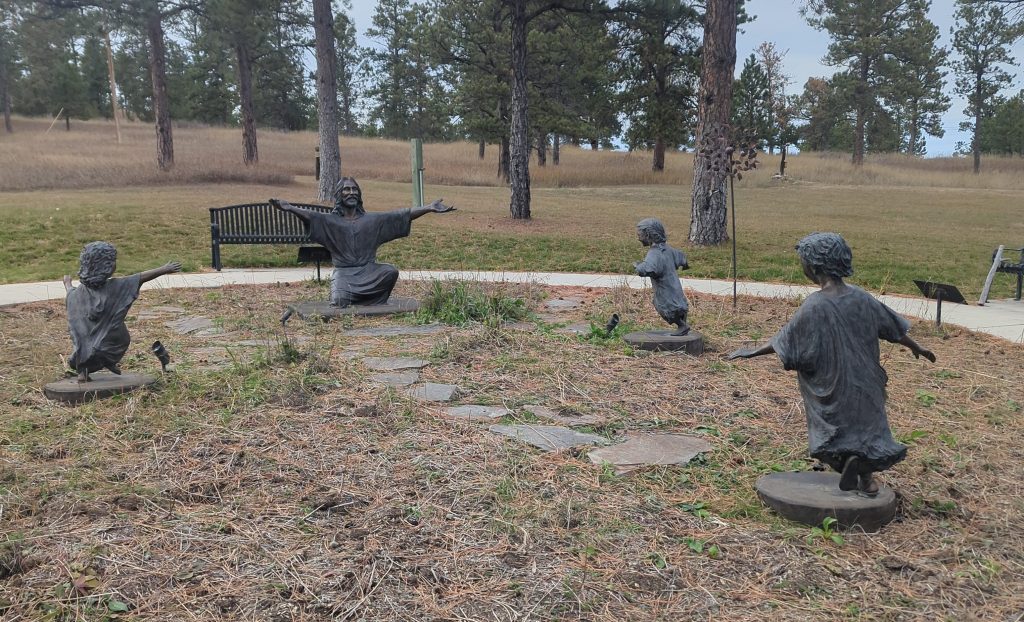
After answering the Pharisees’ question about the greatest commandment, Jesus asks them a question. It is interesting to note the phrase “surrounded by the Pharisees.” Matthew implies that every single Pharisee is there that day. In your mind’s eye, can you picture Jesus standing there, surrounded by a large group of men in religious robes? And a second question: in the picture you created in your mind, what did Jesus look like?

Jesus asks the Pharisees, “What do you think about the Messiah? Whose son is he?” They know the answer given in the scriptures. The Messiah will come from the line of David, their greatest king. They know that the Messiah will be born in Bethlehem, the city of David. They know… And they know that this man standing in their midst cannot be the Messiah. The Romans are still there. Israel hasn’t been restored to greatness and glory.

Correcting them, Jesus quotes from Psalm 110, verse 1. The Messiah, the one David called “my Lord,” will be greater than David. But Jesus, what could be greater than restoring Israel to greatness and power? That is the Messiah that the Pharisees have in their mind’s eye as they image a time in the near future. Do you think they saw a blonde-haired, blue-eyed Jesus standing triumphantly? This image is likely what most of us saw in our mind’s eye as we pictured Jesus amongst the Pharisees.

Returning to Jesus’ question, “What do you think about the Messiah?,” how would we answer this question? The temptation is to shape Jesus into something or someone that meets our needs, our wants, and our expectations. This Jesus really loves us. But yesterday we were reminded that the call is to love God with all that we are and to love our neighbors more than ourselves. This is the Messiah that laid down his life in humble obedience, loving us enough to suffer and die for us. This is the model and example that we are to follow. May it be so.

Prayer: Lord God, our images of Jesus tend to make him into our image. Remind us that the reverse is true: we are made in your image and therefore in his image. Guide us to live with the correct order. Lead us to hold Jesus as the Lord of our lives. Amen.



1 Comment

God Knows

Reading: 1st Thessalonians 2:1-4

1st Thessalonians 2:4b – “Our purpose is to please God, not people. He alone examines the motives of our hearts.”

Who we really are tends to rise to the surface when we are tested. It is easy to create a certain image on Facebook or TikTok or even on a television channel. We can report only what we want to report, doing so in ways that paint the picture that we want to reveal. And yet at our core we know who and what we are. God knows too. We can pretend. We can “believe” the lies that we tell ourselves. We can be different people in different settings. Deep down we know who and what we are – if we’re honest with ourselves. God always knows.

Paul’s first letter to the Thessalonians shifts in chapter 2. The first chapter was all about the faithfulness of this new community of believers. In chapter 2 Paul reminds them of his visit. It was successful. The fruit of their faith is both evident and well-known. (See chapter 1.) Paul then reminds them of the courage it took to continue preaching the good news of Jesus Christ. He and Silas had been put to the test. They were persecuted and put into prison in Philippi. Released, they did not retreat. No, they moved forward, on to Thessalonica, where they preached boldly. There was no deceit or trickery. Even those in the church today can paint the picture or tell the story in ways that cater to a certain audience or soften the red letters in the Bible, making Jesus something he’s not.

Not Paul. He has been tested. He has suffered. And still he proclaims the good news of Jesus Christ. Why? The reason is found in verse 4b. Here we read, “Our purpose is to please God, not people. He alone examines the motives of our hearts.” God knows why Paul preaches. God knows Paul’s heart. Paul always keeps the first thing first: Jesus. May it be so for you and for me.

Prayer: Lord God, help us to be real – mostly real with ourselves because then we are more likely to be real with others. You know us inside out. You wove us together in the womb. You designed us with certain purposes in mind. Examine our hearts and shape our motives so that who and what we are aligns with your plans and purposes for our lives. Give us courage and strengthen us for the day ahead. Amen.


Leave a comment

Our Truth Too

Reading: Hosea 11-14

Hosea 14:7 – “They will again live beneath my shadow, they will flourish like a garden; they will blossom like the vine.”

Hosea closes with hope. There are still moments where God recognizes and is angered by Israel’s sin, but words of hope dominate our reading today. This is the truth of our lives too. We are sinful by nature. God is merciful, loving, and forgiving by nature. We walk with hope because God’s love is greater than our sin.

Chapter 11 begins with parent-child imagery. God recalls raising Israel, as a loving parent. But Israel turned away, as most children do at some point. So they will return to Assyria and Egypt. Tough love will reign. Yet love will abide. God will gather the children home one day.

Charges come in chapter 12. Israel multiplies lies and violence, makes treaties with Assyria and Egypt. God recalls Jacob, the younger brother. God recalls wrestling with Jacob at Bethel, where Jacob came to truly know God. God calls Israel back to that relationship. But Ephraim is too proud. They thought themselves sinless. This is a bitter offense to God. We too do this to God when we become proud, when we think ourselves righteous.

Their pride and self-sufficiency was also compounded by their idolatry. Israel turned to these metal images. They are reminded that God alone can save. This will be reinforced when God falls upon them like a lion. God will come in the east wind, making Samaria desolate. Even the babies and pregnant women will fall before the Assyrians.

Hope rises again in chapter 14. God implores Israel to return and even gives them the words to speak: “Forgive all wickedness and receive the good.” God responds with promises to heal and love, to plant and raise up, to protect and provide: “They will again live beneath my shadow, they will flourish like a garden; they will blossom like the vine.” What a beautiful picture of grace and restoration, of wholeness and life. This picture can be ours too. This truth is our truth. Sinful as we are, sin will never define us. God always offers this gift of grace and restoration, of wholeness and life. With repentant hearts and a faithful Spirit, may we step into the truth of God’s love.

Prayer: Lord God, lead and guide us to walk daily and to trust eternally into your promises of love and grace, of forgiveness and restoration. You are our God, the only one who can save. Thank you, Lord. Amen.


Leave a comment

The Ebb and Flow

Reading: Psalm 119:89-176

‭Psalm 119:159 – “Look at how much I love your precepts. Make me live again, LORD!”

The first half of Psalm 119 painted a picture of a new and growing faith. In verses 89-176 we find a more mature faith, one that quickly turns to God, one that expects God to act on behalf of the faithful. The overarching theme of these 11 sections can be summed up in today’s key verse: “Look at how much I love your precepts. Make me live again, LORD!” Much like Job, the psalmist wrestles with the good/reward, bad/punish framework of the ancient faith. We wrestle with this too.

This wrestling can be found in verses 126-127 and in 165-166. In the first the psalmist almost demands God’s actions because others have “broken” God’s law and because he or she loves the law more than gold. In verse 165 the statement is made that the faithful enjoy peace and do not stumble. Then in 166 the psalmist says, “Lord, I want your saving help.” I’m good, God. You should save me!

Throughout these sections we also find a consistent theme of loving God’s law and being angry at or hating those who don’t love God’s law. We see this played out in the New Testament too as the religious leaders clashed with Jesus and then with his followers. They couldn’t stomach how Jesus ate with and touched sinners. We too can be a bit like this. We can look down our noses at those who aren’t acting or believing like we act and believe. We can struggle with brothers and sisters in Christ who seek to minister to “those” people.

Overall these sections of Psalm 119 paint an accurate picture of our faith – for good and for bad. We sincerely want to know, understand, and live out God’s will and ways. We can judge and demand. And we can find ourselves as the psalmist did in verse 176: “I’ve wandered off like a sheep, lost.” And we can pray as the psalmist prayer: “Find your servant because I haven’t forgotten your commandments!” No, likely they’re just conveniently misplaced. Lord, help us.

Prayer: Lord God, the ebb and flow is part of the journey. The call to love the least wrestles with our inclinations towards judgment and condemnation. How fickle we are too. So, yes, help us Lord to know you more, to love you more completely, to serve more steadfastly. Continue to gather us back in. Shepherd us on your path. Amen.


Leave a comment

Painting a Picture

Readings: Ruth 1, Ruth 2

Ruth 1:16 – “Wherever you go, I will go; and wherever you stay, I will stay. Your people will be my people, and your God will be my God.”

The book of Ruth is a book of faithfulness and righteousness, of love and loyalty, and of compassion and inclusion. It centers on a deep commitment to family that mirrors God’s commitment to humanity. The book of Ruth calls us, no, challenges us to consider how our daily lives and choices might reflect these qualities and practices so that we too might join in God’s ongoing effort to bring heaven to earth.

The story begins with tragedy and hardship. Famine forces a family to move to Moab, a foreign land. Soon the husband does but the sons find Moabite wives. After ten years the sons die, leaving three widows. Recognizing their tenuous situation, Naomi tells Orpah and Ruth to go home, to find husbands, to start over. In this critical moment, Naomi sets aside her grief, her fear, her hopelessness. She places the other first. Eventually Oprah goes home but Ruth refuses. In response to Naomi’s last heartfelt plea to go home, Ruth responds, “Wherever you go, I will go; and wherever you stay, I will stay. Your people will be my people, and your God will be my God.” To me, these are some of the most beautiful words in the Bible.

Returning to Bethlehem, Naomi’s words betray their dire situation. Reflecting on the reality that she “went away full” but “came home empty,” she asks to now be called ‘Mara.’ This translates ‘bitter.’ Ruth, undeterred by their situation and filled with love for Naomi, goes to glean in the fields. The connection to Boaz is soon made and he provides safe and generous gleaning conditions. Ruth notices and asks why. He responds that he has heard the story of her love, faithfulness, and commitment to Naomi. When Ruth comes home with a bountiful harvest and the even more gracious story of the day, Naomi finds hope. She knows that Boaz is family and is possibly one to redeem their situation.

Love and compassion drive the story – both of their care for one another and of the care given to Naomi and Ruth. Faithful and righteous living draws others into the story and inspires them to be a part of it. The story paints a picture of how we are to live and be in the world. How may we do so today?

Prayer: Lord God, today we are reminded that doing the right thing is always the right thing – even when it is hard. Love, commitment, loyalty, family – these matter deeply. Guide us to mirror these things in our relationships, in our communities, and in our world. Amen.


Leave a comment

More Outside Than Inside

Reading: Psalm 66:8-20

Verses 8-9: “Praise our God, all peoples… God has preserved our lives and kept our feet from slipping.”

Psalm 66 is a song of praise for what God has done. The first part of the Psalm focuses on the corporate or communal perspective. This is an important perspective to keep. It helps us see, live in, and recognize the bigger picture. While God undoubtedly works in each of our lives, we can see God’s plan unfolding in a different way when we get outside of ourselves and outside of our own story. Imagine if the parting of the sea story or the feeding of the 5,000 story were told from a single perspective and as if that person was the only one there! When we focus only on ourselves then we can miss out on the fuller story of God’s power and might.

In verses 8-9 the psalmist writes, “Praise our God, all peoples… God has preserved our lives and kept our feet from slipping.” This is a call to public and corporate thanksgiving in response to God’s work in the life of the community of faith. The psalmist then recognizes the difficult times in their past and recalls how God led them through. Our temptation can be to withdraw or isolate when we are going through a hard time. We can tend to focus only on ourselves. If, during their time in slavery in Egypt, the Israelites each adopted an “every man or woman for themselves” mentality, then where would’ve they been? They could not have marched out of Egypt one at a time. The collective, the group – it mattered. It still matters.

So the invitation today is to see the larger picture, to live in a space more outside of yourself than inside yourself. May we all realize the power we receive from others and the power we give to others.

Prayer: Lord God, open my eyes to the bigger picture around me. Open my heart to love all those around me. Shrink the selfishness in heart and make more room to love others more fully. Amen.


Leave a comment

Presence

Reading: Luke 24:13-27

Verse 15: “As they talked and discussed these things with each other, Jesus himself came up and walked along with them.”

Today and tomorrow we take a walk with a couple friends and with Jesus. On the first Easter Sunday 2 friends are walking home to Emmaus. They are talking about all that has happened to and with Jesus in Jerusalem. The news of an empty tomb and Mary Magdalene’s report that “He has risen!” must’ve dominated their conversation as they made this 7-mile journey. Somewhere along the journey a third man joins them. Luke tells us that it was Jesus but in verse 16 we read, “they were kept from recognizing him.”

Today this question is rattling around in my head: How often am I walking through life when Jesus joins me on the journey, yet I don’t recognize him? At times I get so caught up in this conversation or in that thing on my to-do list that I do miss the moment that Jesus draws near. When I do so, I hope he is as patient with me as he was with Cleopas and friend.

Joining in their conversation, Jesus finds out what they’ve been talking about. He hears their story and then he fits into it as he begins to unpack the scriptures, connecting it to what had occupied their walk so far. “Beginning with Moses,” Jesus walks them through all the prophecies, psalms, and other verses that foretold the Messiah and all of the events of Jesus’ life, death, and resurrection. He paints a picture for them that details the whole story.

At times we are called upon or nudged to share the good news. It may come in the form of telling our own story of what Jesus has done in our lives. It may come as it did for Jesus, unpacking the scriptures for another person. Either way, may we begin by first hearing their story or questions. From there may we join the conversation, bringing the presence of Christ into that moment, opening the path to share the good news of Jesus Christ with another.

Prayer: Lord God, first and foremost, help me to realize these holy opportunities. Whether it is Jesus walking alongside me or Jesus inviting me to walk alongside another, open my eyes and heart so that I can be in that moment. Use me, lead me, guide me to be a part of the opportunity to be Jesus’ hands, feet, and heart. Amen.


Leave a comment

The Beloved Community

Reading: Matthew 5:1-12

Verses 1-2: “His disciples came to him, and he began to teach them.”

Photo credit: Clay Banks

Today we begin in the Beatitudes. These “blessed are” statements start off the longest teaching of Jesus recorded in the scriptures. While each statement certainly has meaning and value yet today, we will focus on the whole. Much of Jesus’ teaching pointed to a bigger picture. That is part of what he is doing with the Beatitudes. As a whole these statements paint a vision for the beloved community, for the church. A kingdom-living community of faith will reflect and live out these ideals.

Much of what Jesus said was counter-cultural and it remains so today. To be a peacemaker or to be humble, to be willing to face persecution, to openly desire God – these marks of the Christian are not the norm in the world. To comfort the mourning, to be pure in heart – these are also not the norms of our world. Yet we, as followers of Christ, are called to stand out from the world and to stand up against much of what the world values and pursues. Living out these ideals we will come to stand alongside those that the world devalues and marginalizes. In humble service we will minister to those close to the heart of God. May it be so.

Prayer: Lord God, lead me past self and closer to your heart. Open me to the folks and situations that break your heart. Use me to build up your vision for the world. Amen.


1 Comment

Listen and Learn

Reading: 1st Samuel 3: 1-20

Verse 8: “Then Eli realized that the Lord was calling the boy”.

On Monday I focused in on the call part of this passage. Just like Samuel, we all have a story of how God calls us. Samuel might not have known his call story if not for Eli. At this point, Eli is like Samuel’s father figure. Eli has raised Samuel since he was weaned from Hannah. Eli has been serving God a long time and has taught Samuel much, but “Samuel did not yet know the Lord”. Samuel knows who God is and knows a lot about God, but he does not know God. The head knowledge has not yet become heart wisdom. It is Eli that perceives that God is calling Samuel. Eli’s willingness to allow God to speak through another is a testament to his trust in God and to the love and trust that he has in Samuel. It is an example of humble servant leadership.

When Samuel does invite God to speak, the words are difficult to hear. Destruction will fall upon Eli’s household because Eli’s sons are “contemptible” and because Eli failed to “restrain them”. In the morning Eli presses Samuel, wanting to know what God said, probably sensing the bad news. Samuel speaks truth to Eli. Eli accepts the words, humbly acknowledging God’s goodness. I cannot imagine how hard it was for Samuel to say these words to Eli. Yet Samuel loves and trusts Eli enough to tell him.

Both Eli and Samuel understood that there was something bigger than themselves. Both Eli and Samuel loved and trusted God, as well as each other, enough to listen and to learn from each other. To listen and learn from each other. To understand the bigger picture. How our land needs these skills today! Both sides are so polarized that they cannot even hear each other, never mind listening to one another. Listening is essential. It is the only way to discern a good and right way forward. Yes, we can continue to plod down the road we are on, filled with self and contempt and half truths and rancor. We can walk the road of Eli’s household. Or we can choose a better way, one covered in love and peace and trust. These things will not come easy. Surrender never does. Elevating other over self, walking the path of unity and compromise, fighting for our way not my way – all are the work of a humble servant. May it be so Lord. Heal our land.

Prayer: Lord, the wind is howling here in South Dakota. Things are shaking and groaning. It reminds me of our nation right now. The winds can fan the flames or they can usher in something new. Bring a new sense of humble servant leadership to the land, blowing away the chaff. Bless us, O God. Amen.


Leave a comment

Faithful Too

Reading: Psalm 126

Verse 3: “The Lord has done great things for us, and we are filled with joy”.

In our Isaiah 61 passage for this week God speaks hope to the people living in exile. In today’s Psalm, the people have returned home, they have experienced that joy. The psalmist recalls, “We were like men who dreamed”. They had heard the words of hope and it felt like a distant future. And then God moved and they were back home. They were filled with laughter and joy when they reflected on what the Lord has done for them. If we pause and give thought to our own journeys of faith, we too will recall times when God rescued us in an amazing or unexpected way. The God of Israel remains active in our lives.

Just as the psalmist writes “The Lord has done great things for us, and we are filled with joy” we too can say. Our experiences with a faithful God fill us with joy. It also builds up our faith and trust in God. Life will happen again. And again. Each time, if we turn to God, we will find that God is still faithful. The end or the result might not immediately be what we wanted or desired – that is not what the psalmist is saying. In God’s big picture, in God’s plan, God is in control, looking our for our good. Sometimes it takes years to see how that thing was good, but eventually we will if we continue to remain faithful too.

We can read into the Psalm that something has happened again. Whatever life has brought, the psalmist asks, “Restore our fortunes, O Lord”. There is sadness or perhaps hunger in the family of God. There is also hope and faith and trust in God. From past experiences with God, the psalmist knows there will once again be joy. He knows this because he knows God is faithful. If you are in the midst of trial or suffering, remember that the God of Israel remains active and alive. Turn to the Lord your God. God is faithful.

Prayer: Lord God, I lift up all who are struggling these days. Fill them with your presence, reassure them of your love and care. Bring them joy. In the power of the Holy Spirit may they know you are near. Amen.