pastorjohnb

Thoughts and musings on faith and our mighty God!


Leave a comment

Avoid, Yes… But…

Reading: 1st Timothy 3:1-5

1st Timothy 3:5 – “They will look like they are religious but deny God’s power. Avoid people like this.”

Chapter 3 of Paul’s first letter to Timothy begins with the heading, “Avoid people like this.” Reading that brought my mind back to my days of parenting and to my work with church youth. As a parent you too probably had at least an idea of who or what kind of a person you hoped your son or daughter did not hang out with. The sad truth, though, is that the same reason that we hoped this for our kids also applies to us as people. Who we choose to spend our time with greatly influences who we are.

Paul’s advice to Timothy echoes the feel of what we read yesterday in Galatians 5. Paul references the “last days” in verse 1. The early church believed that Jesus’ return was imminent. The reality is that Christians have been living in the last days ever since Jesus’ death. Those to avoid will be money-lovers. They will be selfish and prideful. They will be without self-control. They will choose love of pleasure over love of God. We all know people like this. But, in at least some of these ways, we were and can be people like this. Yes, truth be told, some of these ways of unholy living remain dangers to our walk of faith.

Because of this last part, because of our ongoing struggles with some sins, verse 5 hits home. Here Paul writes, “They will look like they are religious but deny God’s power. Avoid people like this.” While we’ve all sat and will sit in church while we’re wrestling with some sin, Paul is talking about folks who try really hard to appear all religious but are far from God and from holy living. We know and/or know of people like this. And, yes, we should avoid them in the general sense. But should we do more?

Prayer: Lord God, walk with us daily. Whisper your guidance, conviction, and correction into our hearts through the indwelling presence of the Holy Spirit. Move us to offer prophetic voice to speak against false religiosity. Use us to call it out, yes, but also use us to model true faith to the world. Amen.


Leave a comment

God Who Is Near

Reading: Acts 17:22-28

Acts 17:27-28 – “In fact, God isn’t far away from any of us. In God we live, move, and exist.”

In Acts 17 Paul acclimates himself to Athens, walking around, observing, listening. Eventually he engages in conversation. Unfortunately his speaking leads to being taken into custody. Paul is brought before the council. Fortunately these men are part of the crowd who “spend their time doing nothing but talking about or listening to the newest thing.” Taking his opportunity, Paul addresses the council and those gathered on Mars Hill.

Paul begin by acknowledging their very religious nature, commending them for this. He then notes that while walking around, looking at all of their objects of worship (idols,) he found one that read, “To an unknown god.” Because he is connecting to who and what the Athenians are and believe in, he can then speak words that might resonate. Establishing this positive connection, Paul introduces his “new thing.”

This “unknown god” Paul says, let me tell you about him. Paul says this to the council just as we could say it to anyone seeking God, whether they know it or not. Paul declares his God to be the maker of all creation. Countering their idolatry indirectly, he states that his God doesn’t live in temples and isn’t made by human hands. His God is far above humans in this sense but this God also created people to reach out, to seek and find him. Paul’s God is a God of relationship. Continuing this line of thinking, Paul adds, “In fact, God isn’t far away from any of us. In God we live, move, and exist.” Paul’s God – and our God – wants to know us and to be known by us. This God who dwells in our hearts, this God of relationship, this God loves us and all of creation. May this be the God that we know and follow, that we reflect to the world.

Prayer: Lord God, give us eyes to observe, minds to consider, ears to listen, and lips to speak. Use us as you used Paul, to meet folks where they are at, to connect to them personally, just as you seek to do with us. Use us to connect seekers to you, the one true God. Amen.


Leave a comment

Trustworthy and Good

Reading: Daniel 6:1-10

Daniel 6:5 – “We won’t find any fault in Daniel, unless we can find something to use against him from his religious practices.”

As our reading begins King Darius appoints three gifted men to rule over his kingdom. Daniel is one of the three who are in charge of 120 chief administrators spread throughout the kingdom. Daniel excels, soon riding above the other two. The king is ready to reorganize, making Daniel the one in charge. Jealousy and envy kick in the other two main officers. They want to maintain their power and status. But instead of working harder… they choose to try to take Daniel down. We see this kind of behavior practiced all the time in our world.

As these men begin to plot and scheme, they soon discover a problem. They can’t find any dirt on Daniel. All he does is trustworthy and good. So they turn to the thing that makes him different. They say to one another, “We won’t find any fault in Daniel, unless we can find something to use against him from his religious practices.” It’s not that Daniel’s religion is wrong or illicit or anything else bad. It’s just different. So these two men, along with the 120 administrators, go to the king and trick him into writing a law that makes Daniel’s faith practices illegal. We also see this done today. Someone or a group of someones is different than “us.” Maybe “they” work harder than we want to or maybe “they” don’t believe or live or act like “we” do. So “we” label “them” and try to find ways to be rid of or to oppress or to extradite “them” from our presence.

The law is signed by the king and Daniel knows it. Despite it now being illegal, Daniel goes to his upper room and prays, as he always did. What leads Daniel to choose to honor God over the king’s law? Daniel is trustworthy and good. His priorities match his commitment. God and his faith are the most important things in Daniel’s life. May it be so for you and for me.

Prayer: Lord God, we can do relate to this story – maybe too often from the wrong side. We can be quick to judge and label others, leading to mistreatment, marginalization, or worse. When we are tempted to do these evils, remind us what absolute faith and trust in you looks like. Guide us to keep you on the throne of our hearts, no matter what. Lead us to live lives that are trustworthy and good. Amen.


Leave a comment

A Heart Tuned

Reading: Micah 6:6-8

Micah 6:7 – “Will the Lord be pleased with thousands of rams, with many torrents of oil?”

“What does the Lord require?” That is the title for the section of scripture that we read today. We learned yesterday, from Luke 10, that a good answer is to love your neighbor. It becomes a great answer when we understand that our “neighbor” is anyone in need. Loving God with all that we are was the other part of the legal expert’s “correct” answer to the same basic question. Today we read Micah’s thoughts on this question. The prophet focuses on both sides of the love God, love neighbor concept.

Micah begins with the “religiously correct” answer. Sacrificial offerings were the culturally acceptable response to your God/god, whether you were Hebrew or Moabite or Canaanite. Although Israel’s understanding was not quite as transactional as this process was with pagan gods, there was certainly an element of checking the box at this point in Israel’s history. Their going through the motions disgusted God. That is why Micah, tongue-in-cheek, asks, “Will the Lord be pleased with thousands of rams, with many torrents of oil?” Speaking to the pagan practices and to the point he is making, he next asks, “Well, then, how about my oldest child instead?”

The real answer to the title question comes in verse 8. It is a heart tuned fully to God. That is what is “good.” That is what God “requires.” This is because a heart tuned to God will naturally be a heart tuned to our neighbors. In the last part of verse 8 the prophet reveals what this heart looks like: “to do justice, embrace faithful love, and walk humbly with your God.” To work to make things right, to be faithful in our relationships with God and with one another, to humbly allow God to transform us, day by day, more fully into God’s image. May it be so.

Prayer: Lord God, we are much like the people of Micah’s day. Just tell me when I have to show up for church, just take my offering, just let me check the box. We want the easy. That leaves more for us. Yet you want so much more. Yes, worship and giving are important. But you want our heart, not our things. You want our unconditional love, not our passing attention. Lord, tune our hearts to yours. Lord, teach us what humility and justice and faithful love truly look like. Remind us of Jesus. Amen.


Leave a comment

The Narrow Road

Reading: Luke 10:25-37

Luke 10:36 – “What do you think? Which one of the three was a neighbor to the man?”

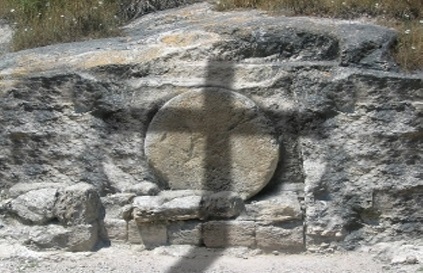
Photo credit: Jan Huber

Today we turn to the parable of the Good Samaritan. This is very familiar ground. The lessons Jesus taught remain as relevant today as they were the day that he told the story. The religious continue to try and limit who is acceptable and worthy. We continue to see and define others by arbitrary things like ethnicity, race, gender, religion, education…

As the passage opens, a legal expert tests Jesus. The opening question is just to set up the second question. Any 5-year-old Jew could’ve answered the opening question. It’d be like asking a 5-year-old in one of our churches, ‘Who died on the cross for our sins?’ The second question has the meat on the bone. Jesus has been preaching that God’s kingdom and the salvation that he brings is for all people. He’s been eating with tax collectors and touching lepers. Clearly Jesus’ understanding of who a good Jew’s neighbor is needs some correcting.

The story unfolds and Jesus picks a most unlikely hero. A Samaritan would be about as far from a Jew’s neighbor as anyone could be. And he does not just stop and help. Maybe the legal expert could’ve tolerated that. Like, it might’ve been okay to stop and talk to Zacchaeus, but to go to his house and to eat with him? The Good Samaritan goes way above and beyond too. He shows mercy to the one in need. He is the one who sets for us an example.

Of this story, John Wesley writes, “Let us renounce that bigotry and party zeal which could contract our hearts into an insensitivity for all the human race, but for a small number whose sentiments and practices are so much our own.” From about 31 AD to the late 1700s to today. May it be so.

Prayer: Lord God, encourage and empower us to walk the narrow road. It is narrow. Our faith is assaulted on both sides – culture on the one side, “religion” on the other. The path of Jesus, the way of love, is a narrow lane. As you held back the waters of the Jordan, hold back these evils, O Lord. Be with us each moment as we seek to build your upside-down kingdom of love in this thin space. Amen.


Leave a comment

Not Far?

Reading: Mark 12:28-34

Mark 12:34 – “You aren’t far from the kingdom of heaven.”

Today’s interaction between Jesus and the legal expert comes amidst clashes between Jesus and the temple leaders, the Pharisees, and the Sadducees. These various religious groups are trying to test and trap Jesus with their questions. The legal expert has been present for at least the last interaction with the Sadducees.

Our reading today is a good, practical reminder: not all religious leaders were against Jesus. We tend to cast out the blanket statement that ALL religions leaders were opposed to Jesus. Impressed with Jesus’ answer to the Sadducees, the legal expert asks Jesus’ opinion on the most important commandment. Jesus gives the “correct” answer. Any nominal Jew would give this answer. These commands from Deuteronomy 6 and Leviticus 19 form the core belief in the Jewish faith. Simply put: love God, love neighbor.

The legal expert compliments Jesus’ answer then rephrases these commands using his own words. The words “a full understanding” are an interesting choice. Perhaps this reflects his openness to Jesus and his teachings. Most of the religious leaders rejected the idea that Jesus was God’s son. Perhaps the legal expert is considering if Jesus is indeed the fuller revelation, the deeper understanding, of who and what God is.

This openness continues as the legal expert adds a thought to his paraphrase. He elevates these two commands far above all the sacrifices and offerings required by the Jewish system. Today we might say, “If you check all the boxes but do not love…” Jesus responds beautifully to the legal expert: “You aren’t far from the kingdom of heaven.” May love also be our only guide in all we say, do, and think.

Prayer: Lord God, when we pass by that hungry person and tell ourselves that we went to church on Sunday or when we ignore that nudge to reach out to that elderly neighbor and tell ourselves that we read our Bible that morning or when we harshly judge that struggling single parent and tell ourselves that we’ve been praying for them, Lord have mercy. Lord, have mercy. Amen.


Leave a comment

The Long Walk of Faith

Reading: 2nd Timothy 3-4

2nd Timothy 4:7 – “I have fought the good fight, finished the race, and kept the faith.”

As I read Paul’s words to Timothy today, they seem very relevant to our current time. Many are selfish and love money, power, status. They “collect” or tune into only those who tell them what they want to hear. Many slander others, being critical and conceited. Others are reckless and seek only pleasure. When it suits them, “they will look religious.” But does the relevance end here? In verse 9 we read, “They won’t get very far. Their foolishness will become obvious.” While absolutely true in God’s kingdom, is it so here on earth?

Paul then presents his example, standing in sharp contrast to this earthly example. He invites Timothy and us to pay attention to his “teaching, conduct, purpose, faithfulness, patience, love, and endurance.” He makes us all aware of the cost of discipleship: “Anyone who wants to lead a holy life will be harassed.” Because of this reality, Paul encourages Timothy and us to stay rooted in the scriptures – what we’ve learned and been taught. Scripture is useful for “teaching… showing mistakes… correcting… training character.” Scripture equips the faithful to “do everything that is good.” What a sharp contrast to the way of the world!

In chapter 4 Paul commissions Timothy. This commission applies to us too. Paul charges Timothy with preaching the word always – whether convenient or inconvenient – and with correcting, confronting, and encouraging with patience and instruction. Paul encourages self-control, an essential for the long walk of faith. Giving his own example, Paul writes, “I have fought the good fight, finished the race, and kept the faith.” Paul knows heaven awaits. Yet he walks forward, trusting that the God who has stood by him will continue to do so until he wears that “champion’s wreath.” May this too be our walk of faith.

Prayer: Lord God, the walk is not always easy or smooth. It can be tempting to just look religious instead of being truly faithful. The outside voices can be loud and the coming suffering is scary. In those moments, remind us of your truths and promises in scripture and help us to feel your Spirit presence in our hearts. With these, lead and guide us to “preach the word” always, using words when needed. Amen.


Leave a comment

One Last Act of Love

Reading: Luke 23

Luke 23:34: “Father, forgive them, for they don’t know what they’re doing.”

The trial, the false accusations, the giving in, the death and resurrection – it all feels so fast. It feels like Luke moves quickly through these events, his “carefully ordered account” presenting little more than the facts. Yet, as we read carefully, certain lines and actions stand out.

Both Pilate and Herod find no basis for legal action against Jesus. Pilate offers to whip Jesus, trying to placate the religious leaders and their crowd. The mob mentality that drives shouts of “Crucify!” finally forces Pilate to give in to their will. On the way to “The Skull,” Jesus pauses and addresses the grieving women, telling them not to cry for him but to cry for the days of suffering soon to come.

As he is being crucified between two criminals, Jesus prays, “Father, forgive them, for they don’t know what they’re doing.” Those there – the religious leaders and the soldiers – they mock Jesus. One criminal defends this innocent man. Jesus tells him, “I assure you that today you’ll be with me in paradise.” As Jesus dies, a centurion praises God, recognizing Jesus as “a righteous man.” The crowd goes home beating their chests. Luke notes, “Everyone who knew him… stood at a distance observing these things.”

Joseph of Arimathea acts, asking Pilate for Jesus’ body. He was a member of the Jewish council – one that “hadn’t agreed with the plan” that has just been accomplished. The women watch him hastily wrap and lay Jesus’ body in a new tomb. The women go home and prepare spices and oils to properly care for his body. They wait as the Sabbath passes. They wait to offer one last act of love.

Prayer: Lord God, through it all, Jesus does not change. Love, grace, forgiveness, commitment – they continue to flow out from Jesus. His steadfastness to you and to us does not waver a bit. Signs of his love for you and for us are sprinkled throughout this text. Thank you for the example Jesus set, right to the end. This too was one last act of love. Amen.


Leave a comment

Was, Is, Will Be

Reading: Luke 20-21

Luke 21:36 – “Stay alert at all times, praying that you are strong enough to escape everything that is about to happen and to stand before the Human One.”

We begin today with the religious leaders questioning Jesus’ authority. He responds with a question for them, asking about John the Baptist’s authority. Trapped, they refuse to answer. Jesus then tells them a parable that reveals his authority. The tenants are greedy. They abuse those sent to collect fruit owed to the owner. Finally they kill the son whom the owner dearly loves. In response the owner destroys the tenants. Jesus then quotes from the Psalms, referencing the stone rejected. It becomes the cornerstone. The religious leaders recognize that the parable is about them. They want to arrest Jesus but fear the people.

In an attempt to orchestrate a charge, the religious leaders take turns trying to trap Jesus with questions about paying taxes and marriage in the resurrection. Pay taxes? Yes, but more importantly give to God what belongs to God. Marriage? Yes, here and now, but not in the age to come. We will all be God’s children in the resurrection. There, God is as here: the God of the living. In response to their falsehood, Jesus condemns the religious leaders for their longing for recognition and honor and for the unfair burdens placed upon the people. He tells them that they’ll be “judged most harshly.” The widow’s gift is then lifted up as both a great example of trust in God and of how the religious leaders’ greed leads people into vulnerability as they struggle to meet the religious leaders’ expectations.

Verses 5-28 of chapter 21 deal with three events. Two sections reference the actual destruction of the temple and city. One part references the time of persecution that will soon occur. And one part references Jesus’ return. Two of three will unfold just as Jesus says. We await his return. Our reading closes by addressing how we are to wait. We are to be aware of the signs and we are to “Stay alert at all times, praying that you are strong enough to escape everything that is about to happen and to stand before the Human One.” May it be so for you and for me.

Prayer: Lord God, today we’re reminded that there’s always been a plan. Since the beginning you were spoken of and destined to come in human form. You came and revealed love lived out. You called us to follow your example. You spoke of a future that we eagerly await. You call us to be love lived out as we wait. Empower, encourage, and strengthen us to daily follow your example. Amen.


Leave a comment

Not Far

Reading: Mark 10:46-12:34

Mark 12:14 – “Teacher, we know that you’re genuine and you don’t worry about what people think. You don’t show favoritism but teach God’s way as it really is.”

Blind Bartimaeus sits beside the road as Jesus passes by. He shouts, “Jesus, Son of David, show me mercy!” Shushed by the crowd, he shouts louder. Today, who is crying out to Jesus that we are trying to shush? Seeing him as worthy, Jesus heals him. Going on, Jesus enters Jerusalem, triumphally riding on a colt as people shout, “Hosanna”! In Mark, Jesus looks around the temple and goes to Bethany.

On the way back to the temple, Jesus curses a fruitless fig tree – symbolic of the temple. Returning to the temple, Jesus clears it of all connected to their fruitless sacrifices. These rituals are not reflected in changed hearts and lives. Coming back into the city Jesus had encouraged the disciples to have faith in God. He told them, “Whatever you pray and ask for, believe that you will receive it, and it will be so for you.” Faith and belief leads to fruit.

The religious leaders question Jesus’ authority. He traps them in a question about John the Baptist’s authority, revealing their lack of faith in God. Jesus then tells the parable of the tenants, taking full aim at these religious leaders. The vineyard represents Israel and they are the tenants. These tenants abused and/or killed this sent to collect fruit. Soon the son was sent. They kill him, claiming the inheritance. Prophet after prophet and then finally Jesus was sent to Israel. Destruction is promised for these tenants. The stone rejected will become the cornerstone.

After a couple of attempts to trap Jesus using the hot topics of paying taxes, divorce, and resurrection, a legal expert asks Jesus a real question. He recognizes truth in the flattering words spoken earlier: “Teacher, we know that you’re genuine and you don’t worry about what people think. You don’t show favoritism but teach God’s way as it really is.” He deeply appreciates Jesus’ answer about loving God with all our being and loving our neighbors as self. The expert correctly deems these two commands “much more important than all kinds of… offerings and sacrifices.” Yes, faith in God demonstrated through love lived out – these matter more than anything. With a faith like this, we too won’t be far from God’s kingdom.

Prayer: Lord God, you call us to a faith that is alive and active, bearing fruit for your kingdom as we seek to bring your love to bear upon our world. Open our ears to the cries of those in need. Open our hearts to respond as Jesus would’ve. Draw us closer and closer to your kingdom – here and now, one day in your divine presence. Amen.