pastorjohnb

Thoughts and musings on faith and our mighty God!


Leave a comment

Hell? Heaven?

Readings: Psalm 92:5-8, Malachi 4:1-3, Daniel 4:9-11, and 12:1-3

Malachi 4:2 – “The sun of righteousness will rise on those revering my name; healing will be in its wings.”

This week we wrestle with the question of heaven or hell. We begin today in the Old Testament. The rest of the week will be in the New Testament. This “imbalance” is because there is no direct mention of hell in the Hebrew scriptures. There are references to a place we would call “hell,” but this concept did not have a place in Hebrew thought prior to Jesus’ days.

Psalm 92:5-8 is representative of Hebrew thought in the Old Testament. God is awesome. The ignorant, the wicked, the evildoers – while they “seem to blossom,” in the end they will be destroyed. Running throughout the Old Testament is the idea that the good will be rewarded and the evil will be punished.

This idea is echoed in Malachi 4. The prophet writes that the day is coming when the arrogant and evildoers will burn like straw, consuming them. But for those doing good? “The sun of righteousness will rise on those revering my name; healing will be in its wings.” The wicked will be crushed like dust, but the righteous, the godly, they will be filled with joy.

Even foreign kings experience this cycle of punishment and redemption. In Daniel 4, Babylon’s King Nebuchadnezzar calls upon Daniel, the one who has “the breath of the holy gods” in him, to interpret his dream. Daniel, with God’s help, explains the dream. All unfolds exactly as Daniel foretold. In the end, redeemed by God, Nebuchadnezzar worships, magnifies, and glorifies the goodness of God.

Turning to Daniel 12 we find the Old Testament passage that best connects to our understanding of heaven and hell. Speaking of the end times, Daniel writes that those whose names are in the scroll (of life) will be rescued, entering “eternal life,” shining like stars forever. Others – those not in the scroll – they will go to “shame and eternal disgrace.” So it will be.

Prayer: Lord God, lead us today to be people who do good and who seek to live holy and righteous lives that bring you honor and glory. Guard us from the temptations of this world, keeping evil and arrogance far away. In all that we do and say and think may our lives magnify and glorify your name. Amen.


Leave a comment

Worthy is the Lamb

Reading: Revelation 3-5

Revelation 5:5 – “Don’t weep. Look! The Lion of the tribe of Judah, the Root of David, has emerged victorious so that he can open the scroll.”

Chapter 3 concludes the messages to the seven churches. The church in Sardis looks good on the surface but is really dead. They need to remember what they first learned, changing hearts and lives. If so, their names will be declared in heaven. The church in Philadelphia has little power but they have stood strong. They will be pillars in heaven, names written there. And Laodicea… neither hot nor cold, just lukewarm. This church is perhaps most relevant today. Jesus is about to “spit them out.” They are “miserable, pathetic, poor, blind, naked.” Yet Jesus stands at the door and knocks. If they hear and open the door, he will come in and be with them. If they emerge victorious, they will sit with Jesus on his throne in heaven.

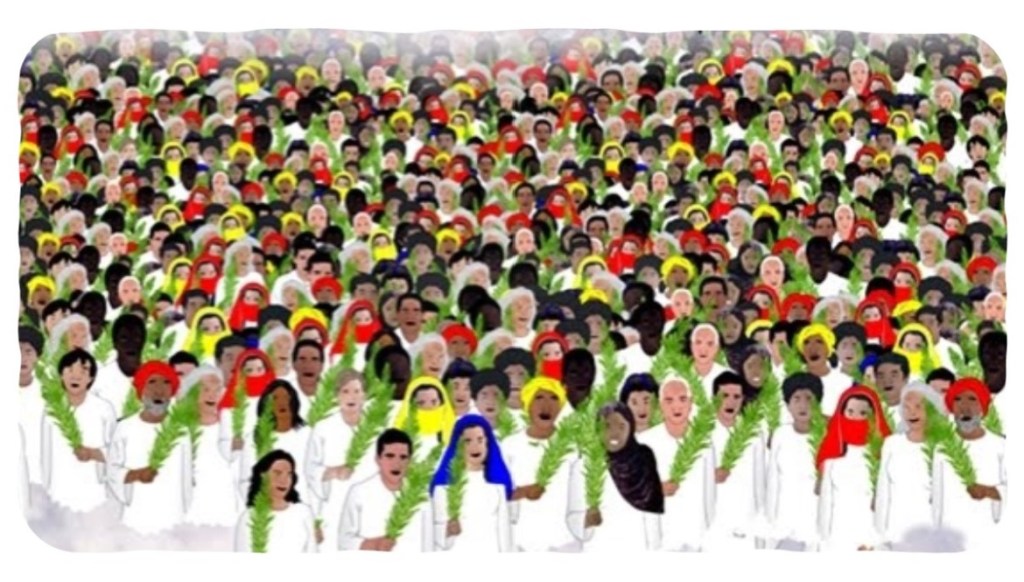
Chapters 4 and 5 shift to heaven as John enters his second Spirit-led trance. At the center God sits on the throne. 24 elders on thrones surround God. There are seven torches and four living creatures before the throne of God. The creatures have six wings and are covered all over with eyes. They never rest but praise God, saying, “Holy, holy, holy is the Lord God Almighty.” The elders join in the praise, declaring God to be the one worthy of glory, honor, and power.

John then noticed that there is a scroll in the hand of God. He weeps because no one is worthy to open it. Then an elder says, “Don’t weep. Look! The Lion of the tribe of Judah, the Root of David, has emerged victorious so that he can open the scroll.” The Lamb, Jesus Christ, comes and takes the scroll. The elders, the living creatures, millions of angels, and all of creation praises and worships the Lamb, the one who was slain. What a glorious day it will be!

Prayer: Lord God, thank you for the reality check as we began today. Draw us out of the comfy middle ground. Empower us to stand boldly for you. And thank you for the peak into heaven, for the reminder of your majesty and power, for the reminder of who and what the Christ child will be and become. All praise and honor and glory are yours! Amen.


Leave a comment

Surrender and Live

Reading: Jeremiah 34-38

Jeremiah 36:3 – “Perhaps when the people of Judah hear about every disaster I intend to bring upon them, they will turn from their evil ways, and I will forgive their wrongdoing and sins.”

Photo credit: Einar Storsul

Our reading opens with King Zedekiah inquiring about the future. Jeremiah tells him that Jerusalem will fall but that he’ll live. He’ll be taken to Babylon where he will die in peace. Zedekiah then makes a covenant to release all Hebrew slaves. This is done but is quickly reversed. God declares that Judah will be freed instead: free to “die by the sword, famine, and disease!” Judah will become a wasteland.

In chapter 35 we find a great contrast. God sends Jeremiah to the Rechabites. They are a nomadic family group that has long kept the commands given to their ancestor. God asks Judah, “Can’t you learn a lesson?” No, they can’t, won’t, don’t. God will bring disaster on Judah, blessing in the Rechabites.

God directs Jeremiah to record all of his words in chapter 36. Perhaps Judah will hear them and turn from their evil ways. Baruch is the scribe. Because Jeremiah is in confinement, Baruch reads the scroll in the temple. It’s then read to some officials, who tell Baruch to hide with Jeremiah. The scroll is read to King Jehoiakin, who burns the scroll piece by piece as it is read. God directs Jeremiah to make a new scroll. Jehoiakin will die without heirs.

In chapter 37 Judah gets false hope. Egypt marches our. Babylon withdraws from the siege on Jerusalem to face this threat. Egypt will return home. But Jeremiah takes the opportunity to try and see his new land. He is arrested as he exits the city and is accused of defecting. He’s beaten and imprisoned. He repeats Zedekiah’s fate to him. It provided an opportunity to ask for a prison upgrade. But there he continues to call for surrender. This leads him to be put in a muddy cistern, where he sinks. Ebed-Melech rescues him from this. The message remains the same: surrender and live, refuse and die. The message remains the same today. May we choose to surrender to God and live.

Prayer: Lord God, surrender – such a hard thing. We like control, power… We think we’re the master of our own destinies. How wrong and sinful we are. Help us to hear anew today the call to surrender to your will and way. There we find true life. Loosen our grips, open our hands to you. Amen.


Leave a comment

More and More God’s People

Readings: Nehemiah 8, Nehemiah 9, Nehemiah 10

Nehemiah 9:33 – “You have been just in all that has happened to us; you have acted faithfully, and we have done wrong.”

The people gather to have Ezra read the instruction scroll to them. Men, women, and children old enough to understand gathered. There is a real sense that this represents the whole community. Ezra reads for about six hours and then the Levites go out amongst the people to explain the reading. The people begin to weep. But Nehemiah, Ezra, and the Levites tell them not to weep – this day is holy. It is a day of great celebration.

The next day they gather again. Ezra reads about the Feast of Booths. The people make booths, remembering Israel’s time in the wilderness. This hasn’t been celebrated since the days of Joshua. Ezra reads for seven days. The Levites interpret. On the eighth day they put on “funeral clothes” and they fast. They confess their sins and the past sins of Israel. Then they worship God.

Most of chapter 9 is a beautiful retelling of the highlights of Israel’s history. The Levites go from creation to Abram and the covenant to the plagues… and right up to their own time. The cycle of sin, punishment, crying out occurs several times. Each time is followed by God’s mercy, patience, and faithfulness. Verse 33 is a great summary statement: “You have been just in all that has happened to us; you have acted faithfully, and we have done wrong.”

All of Israel then makes a written and sealed agreement – a covenant – to be faithful and obedient to God. They will be holy and set apart. They will honor the Sabbath and they will support the temple. The direction is set. Israel will be God’s people once again.

Prayer: Lord God, thank you for this beautiful picture of a faithful and committed family of God. Your word penetrated hearts and transformed them. As we read and study your word may we too be transformed. Make us more and more into who and what you want us to be. Amen.


Leave a comment

Through It All

Readings: 2nd Chronicles 33, 2nd Chronicles 34, 2nd Chronicles 35, 2nd Chronicles 36

2nd Chronicles 34:2 – “He did what was right in the LORD’s eyes… not deviating from it even a bit to the right or left.”

Today we begin with Manasseh. The first part of his long reign is as evil as could be. He leads Judah to do great evil in God’s eyes. He is captured and hauled off to Babylon. There he repents and submits himself fully to God. Returned to Judah, he removes pagan worship and serves the Lord. Manasseh dies and gives way to Amon. He is so evil he’s killed by his own officials after just two years.

Josiah reigns for 31 years. Right away he has Judah purified of idol worship and he repairs the temple and its system. The priest Hilkiah finds the instruction scroll and it is read to Josiah. He tears his clothing, realizing that God must be furious. Josiah renews the covenant and celebrates the Passover. Josiah then interferes in Neco’s war, despite God sending the Egyptians to war. Josiah is injured and dies. Jehoahaz rules for three months and then is removed by the Egyptian king.

Jehoiakim and Jehoachin reign next. Both do evil in God’s eyes. The Assyrians come during Jehoiakim’s reign, conquering Judah. Hezekiah is appointed as a puppet king. He does evil. He ignores Jeremiah. He rebels against King Nebuchadnezzar. Assyria levels all of Jerusalem and hauls almost everything and everyone off into exile in Babylon.

Chronicles ends with two bright spots. Because of the exile, the land will lie fallow. This healing fulfills the words of Jeremiah. A new power emerges in the world scene: Persia. King Cyrus receives a word from God: build the temple in Jerusalem. Cyrus orders the followers of God to go back home. God is at work once again.

Prayer: Lord God, through the ups and downs, through the good and the bad, through it all – you remain present to the people of God. You do the same with us. Your love and faithfulness knows no bounds. Thank you, Lord. Amen.


Leave a comment

Wild Swings

Readings: 2nd Chronicles 17, 2nd Chronicles 18, 2nd Chronicles 19, 2nd Chronicles 20

2nd Chronicles 20:20 – “Trust the LORD your God, and you will stand firm; trust his prophets and succeed!”

Photo credit: Gabriel Valdez

Jehoshaphat is the focus of today’s readings. He succeeds Asa as king of Judah. He is faithful to God, removing the shrines and sacred poles. He sends royal officials along with Levites out into all of the cities to teach the Lord’s instruction scroll to the people. Surrounding kingdoms fear Judah. They bring tribute. Jehoshaphat builds fortresses and storage cities. God is clearly with him and with Judah. And then Jehoshaphat marries into Ahab’s family, creating an alliance.

While in Israel, Ahab invites Jehoshaphat to join him in attacking Aram. Jehoshaphat agrees but wants to consult God first. Ahab gathers his prophets who all say, “Attack!” But Jehoshaphat wants to hear from God. Reluctantly Micaiah is summoned. In the end he predicts death for Ahab. A lying spirit has filled Ahab’s prophets’ mouths. Ahab wears a disguise into battle. A random arrow hits the mark. Ahab does that day.

Returning to Judah, Jehoshaphat is confronted by Jehu. The most pointed question is this: “Why have you loved those who hate the Lord?” There is no good answer to this question. A merciful God yet finds some good in Jehoshaphat. He returns to reforms, personally encouraging the people to turn to God. He appoints judges throughout Judah, enduring that God’s justice will prevail.

The enemy comes against Judah again – a huge army. Afraid, Jehoshaphat declares a fast for all Judah. He turns to God in the temple and prays: God is powerful. This enemy is mighty. We are powerless. Help! The prophet Jahaziel tells them not to be afraid: the battle “belongs to God!” God turns the enemy upon one another. Judah arrived to find only corpses. They gather great plunder and celebrate in Jerusalem, worshipping the Lord God.

Jehoshaphat’s final act is another alliance with Israel. This too ends in disaster. In Jehoshaphat we see a deep and sure trust in God and then wild swings into disobedience. We want to shout, “WHY?” Sadly, the same question can often be asked of us.

Prayer: Lord God, yes, we too can go from “All in for you God!” to “How did I get here?!” with alarming quickness. Lord, continue to work within us, strengthening our spirit, our resolve, our stamina, our trust, our faith. Amen.


Leave a comment

Our Covenant God

Readings: Exodus 22, Exodus 23, Exodus 24

Exodus 24:7 – “They responded, ‘Everything that the LORD has said we will do, and we will obey.’”

Photo credit: Paul Pastourmatzis

The first part of today’s reading contains more of the instructions found in the covenant scroll. The first instructions cover the proper use and treatment of other’s stuff. We are still called to live by the ideals found here. If I break a tool I’m borrowing, for example, then I buy a new one and return that to the lender. Then the instructions shift to personal responsibilities, to how we are to treat and care for and interact with each other. Several verses touch on how to treat the immigrant, widow, and orphan – the vulnerable and powerless. We are to treat them well. God extends doing the right thing even to our enemies. Taken as a whole, these instructions reveal “God’s subtle yet steady work of grace.”

The Israelites are then reminded to observe three yearly festivals. The first is from the Passover – God’s great rescue of Israel. The other two center on the harvest and on giving God thanks for God’s provision. Then the text leads us into the provision of the Promised Land. A conflict in the text struck me today – “wipe out… completely destroy” and “I’ll drive them out… little by little.” There is a faith concern: mixing in with the locals will threaten Israel’s fidelity to God. And there is a practical concern: the Israelite population will not be large enough yet to properly care for the whole Promised Land.

These instructions are written into the covenant scroll and read to the people. It is sealed with burned offerings and with blood. The people declare, “Everything that the LORD has said we will do, and we will obey.” Moses and the elders are then brought into God’s presence. They worship and celebrate their covenant God. They see God and they do not die. Then Moses goes up the mountain to receive the stone tablets and many more instructions. Moses will be with God for a long time – 40 days and nights. He leaves Aaron and Hur in charge.

Prayer: Lord God, thank you for the grace and love that flows throughout your instructions. You remind us to care for the vulnerable and to treat even our enemies with love and grace. May we read these words and also declare our intent to walk in your ways as we seek to witness to your love and grace in the world. Amen.