pastorjohnb

Thoughts and musings on faith and our mighty God!


Leave a comment

May the God of…

Reading: 1st Samuel 1:9-17

1st Samuel 1:16b – “This whole time I’ve been praying out of my great worry and trouble.”

Photo credit: Rainier Ridao

Today’s scene is located in a place of worship in Shiloh. Elkanah, the husband of Hannah and Peninnah, takes his family here once a year to worship and sacrifice to the Lord. Hannah’s life is very hard emotionally. Peninnah would “make fun of her mercilessly” because Hannah was unable to conceive children. Children, especially male children, were highly valued in that culture. If Elkanah died, for example, Hannah’s survival would depend on her offspring. Bearing and raising children was Hannah’s main responsibility in life and she was unable to meet this expectation.

It is with heaviness of heart and soul that Hannah goes to the place of worship. She is “very upset” and she “couldn’t stop crying.” She pours our her heart to God, begging for a son, promising to “give him to the Lord for his entire life.” This willingness to give up a son reveals the depth of her pain and shame over being childless. While our society today doesn’t place the same premium on bearing children, what does bring shame in our culture? If you are without ____, what marginalizes people today?

Eli sees Hannah praying. The priest assumes that she is drunk. She is not. She says to Eli, “This whole time I’ve been praying out of my great worry and trouble.” She has almost assuredly prayer for a child ever since marrying Elkanah. The desperation has risen with each child Peninnah bore to him. Understanding the depth of her pain, sorrow, and shame, Eli blesses her, saying, “May the God of Israel give you what you’ve asked from him.” In our moments of great need, may it be so for us as well.

Prayer: Lord God, sometimes we feel like Hannah. Sometimes we feel marginalized and less than. For some folks, though, that is their “normal.” Lord, open our eyes and awaken our hearts to those who exist on the edges today. With your love and compassion, guide us to draw them into community, into a place where they can find meaning and worth. Through the sharing of our blessings, use us to meet their needs. Amen.


Leave a comment

The Upside-down Kingdom

Reading: Luke 16:25-26

Luke 16:25 – “Child, remember that during your lifetime you received good things.”

Photo credit: Ricardo Gomez Angel

Today we step into the middle of the parable of the rich man and Lazarus. We read two verses from the middle of the story. If unfamiliar with this parable, for greater context please read verses 19-31. Today, though, we focus on the two verses that speak to the nature of God’s upside-down kingdom.

Speaking to the rich man who is being tormented in hell, Abraham says, “Child, remember that during your lifetime you received good things.” Abraham’s referring here to the rich man’s wealth and all the fine things that entrapped the rich man, blinding him to the beggar outside his door. That beggar, Lazarus, lived a terrible life on earth. He begged for his survival. He suffered illness. Now, by Abraham’s side, Lazarus is being comforted.

Of this parable John Wesley writes, “It is no more sinful to be rich than to be poor. But it is dangerous beyond expression.” In the kingdoms of this world, wealth and extravagance are valued, sought. This can lead to greed, hoarding, selfishness. These tend to isolate one from the world right outside ones gated properties. It was easy for the rich man to ignore Lazarus and his desperate needs.

In verse 26 Jesus addresses the impassable separation between heaven and hell. There is absolutely no crossing over. Having wealth – or power or status or anything else the world values – is of no consequence in God’s upside-down kingdom. Having a heart that feels and eyes that see and hands that respond to the other – these are what matter to God. These absolutely matter in God’s kingdom – here and in the life to come.

Prayer: Lord God, so many of us are richly blessed. We have the “conveniences of life” that Wesley warned of. Lord, ever turn our hearts and eyes away from our stuff. Ever guide us to see and respond to the immediate needs right before us. Lead us to live daily as your love expressed in the world. Amen.


Leave a comment

Warning and Promise, Reality and Hope

Reading: Lamentations 1-2

Lamentations 2:19b – “Pour out your heart before my Lord like water. Lift your hands up to him for the life of your children.”

Photo credit: Shane Rounce

Today and tomorrow we read through Lamentations. These five acrostic poems lament the fall of Jerusalem and the suffering that followed. Jeremiah (and/or others writing in his voice) give a vivid and emotional account of this dark time in Israel’s history. Jews have read this book yearly during the month of Ab as a reminder of the consequences of sin and disobedience to God’s Instruction.

Chapter 1 opens with “Oh no!” This phrase evokes the wailing customary in a Hebrew funeral dirge. Jerusalem is personified as a woman, sitting alone, widowed and enslaved. There is no one to comfort her. She recalls the treasures that filled the palace and temple. She also laments the walls and gates being destroyed. She now feels “naked.” There is also the harsh reality of survival laid bare in these words. Hunger is prevalent. People sit on the ground and moan, fainting from lack of strength. As I envision this scene, my mind goes to places like Gaza and the Ukraine.

Running throughout chapters 1 and 2 is an acknowledgement. Israel and Judah have brought this upon themselves. Their sin, their disobedience, the false prophets – all led to this outcome. The nation who touted God’s presence, power, and might has been laid low by God’s almighty hand. Israel’s enemies rejoice. But even though God “ripped down, showing no compassion” and even though “the comforter who might encourage me is nowhere near,” there remains a faith and a hope in God. The writer encourages Israel and us to, “Pour out your heart before my Lord like water. Lift your hands up to him for the life of your children.” May this be our prayer when we find ourselves in times of suffering and hardship.

Prayer: Lord God, the reality of pain and suffering is right there. The cost of turning from you and walking in the ways of the world is laid bare today. May we read and feel these words, O Lord, as both warning and promise, as both reality and hope. May they work in us to yield faith and obedience to your will and way. Amen.


Leave a comment

The Bread of Life

Reading: John 6: 24-35

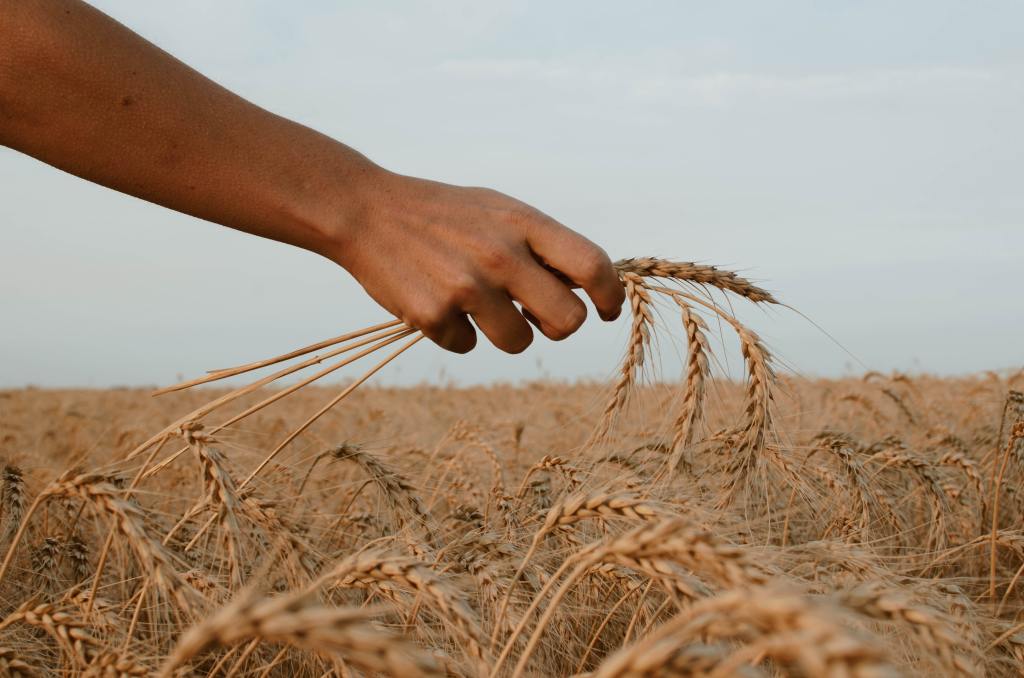
Verse 27: “Do not work for food that spoils, but for food that endures to eternal life”.

Photo credit: Paz Arando

In our passage Jesus begins his words to the crowd pointing out the real reason that they have sought him out. They have come again for more food. In a time when most were subsistence farmers or basic laborers, where many experienced hunger and other affects of poverty regularly, it is natural to seek more food. In our time many people live with this same scarcity mentality, living day to day, just trying to get by. They too are attuned to opportunities to attain resources that aid in their survival.

The crowd has exerted effort to attain more food. They have crossed the lake in hopes of another meal. In his teaching Jesus invites them to more, not once but twice. In verse 27 Jesus says, “Do not work for food that spoils, but for food that endures to eternal life”. Jesus invites the crowd past the physical food that doesn’t last and on to the eternal food that does not perish. He invites them to consider a relationship with the Son of Man, to believe in Jesus. The crowd speaks of the manna that God gave daily for years in the desert, trying to revert back to their need for food and to their scarcity mentality. Jesus again points them past the physical food that God gave their ancestors and on to the “true bread” that stands before them and offers “life to the world”. Jesus again invites them to come through him and to believe in him. He promises that those who do will never hunger or thirst again.

Physical thirst and hunger exist in all of our communities, no matter how small. As followers of Jesus Christ we are called to meet these needs. Yes, yes, yes! Today’s passage also invites us to go deeper, to also connect people to the bread of life. How will you begin to do both of these things in your community today?

Prayer: Lord God, lead and guide me to meet needs both physical and spiritual. The needs are so great. Fill the fields with workers, Lord. Amen.