pastorjohnb

Thoughts and musings on faith and our mighty God!


Leave a comment

Edges

Reading: Luke 2

Luke 2:46-47 – “He was sitting among the teachers, listening to them and putting questions to them. Everyone who heard him was amazed by his understanding and his answers.”

Luke 2 holds the stories of Jesus’ birth and childhood. We read of journeys, mangers, angels, and shepherds. We read of Simeon and Anna. And we read of young Jesus is the temple.

Luke begins chapter two with Caesar declaring a tax census. Mary and Joseph travel to Bethlehem. While there, Mary gives birth, wraps Jesus snuggly, and lays him in a manger. An angel appears to shepherds and announces “good news… wonderful, joyous news for all people.” The shepherds go and see Jesus, share their story, and return to the fields praising God.

Jesus’ birth rituals are then completed: circumcision, naming, ritual cleansing, presentation to God, and an offering is given. Simeon and Anna recognize Jesus. Simeon declares Jesus “salvation… revelation to the Gentiles… glory to Israel.” He also warns of the hard realities of Jesus’ ministry. Anna praises Jesus as “the redemption of Israel.”

We then fast-forward 12 years. The family went to Jerusalem to celebrate the Passover. Traveling home, Mary and Joseph discover Jesus is missing. They return to Jerusalem and search for three days. Finally they find him in the temple. We read, “He was sitting among the teachers, listening to them and putting questions to them. Everyone who heard him was amazed by his understanding and his answers.” After being scolded by Mary, Jesus basically says, ‘Where else would I be?’ The Spirit is upon Jesus and he finds favor with God and with people. May the Spirit be upon you and me!

Prayer: Lord God, thank you for the beautiful stories of Jesus. They read almost like a novel. Yet within the stories are edges. There is no room in a home for Mary, Joseph, and Jesus. You go to the low of the low to announce the wonderful news. In Simeon and Anna you recall the deep longing, the prolonged waiting for the Christ. You are a God of the edges. Your son Jesus is a Savior for the edges. May we be people that minister on the edges. Amen.



Leave a comment

Alert and Ready and at Work

Reading: Mark 12:35-13

Mark 13:36-37 – “Don’t let him show up when you weren’t expecting and find you sleeping. What I say to you, I say to all: Stay alert!”

We begin in the temple today as Jesus corrects the legal experts. The crowd delights in his teaching. He then condemns the religious leaders self-seeking ways: they wear long robes and say long prayers; they desire the best greetings and the best seats; and, they “cheat widows,” leaving them homeless. A sharp contrast to this arrogance comes in the next verses. A poor widow gives all that she has to live on. The rich give “out of their spare change.” This humble, faithful, trusting widow is the model.

As they leave the temple, one of the disciples points out the grandeur of the temple itself. Jesus predicts its demolition. Peter, James, John, and Andrew later ask him when this will happen… what will be the signs? Jesus warns them of deceivers. There will be wars, famines, and earthquakes. The disciples themselves will be handed over and persecuted (but the Holy Spirit will give them the words to say.) Then the war will culminate as the temple is defiled. People will flee to the mountains to escape the Romans. There will be great suffering.

Sometime after this suffering, the sun and moon will grow dark, the stars will fall, and the planets will shake. Then the “Human One” will come on the clouds in power and splendor. The angels will gather the “chosen people” from the corners of the earth. Jesus tells them that just as the fig tree’s new leaves tell them summer is near, so too will these signs tell the world that his return is near. Jesus tells them (and us), “Watch out! Stay alert!”

Jesus closes his teaching on the end times with a story. As an owner goes on a trip (perhaps back to heaven for a time?), he assigns tasks to his servants. For all disciples, the task will be to “go and make disciples of all nations.” Jesus closes with this warning: “Don’t let him show up when you weren’t expecting and find you sleeping. What I say to you, I say to all: Stay alert!” Jesus is coming soon. May we be found ready and alert, working on our task as we strive to live a daily life that seeks to make disciples for the transformation of the world.

Prayer: Lord God, please walk closely in Spirit with us. Attune us to the charge you give each of us. Defend us from our human tendency to make it all about us. Lead us to walk as humble servants, seeking to be witnesses of your love and power in this world. Amen.


Leave a comment

Not Far

Reading: Mark 10:46-12:34

Mark 12:14 – “Teacher, we know that you’re genuine and you don’t worry about what people think. You don’t show favoritism but teach God’s way as it really is.”

Blind Bartimaeus sits beside the road as Jesus passes by. He shouts, “Jesus, Son of David, show me mercy!” Shushed by the crowd, he shouts louder. Today, who is crying out to Jesus that we are trying to shush? Seeing him as worthy, Jesus heals him. Going on, Jesus enters Jerusalem, triumphally riding on a colt as people shout, “Hosanna”! In Mark, Jesus looks around the temple and goes to Bethany.

On the way back to the temple, Jesus curses a fruitless fig tree – symbolic of the temple. Returning to the temple, Jesus clears it of all connected to their fruitless sacrifices. These rituals are not reflected in changed hearts and lives. Coming back into the city Jesus had encouraged the disciples to have faith in God. He told them, “Whatever you pray and ask for, believe that you will receive it, and it will be so for you.” Faith and belief leads to fruit.

The religious leaders question Jesus’ authority. He traps them in a question about John the Baptist’s authority, revealing their lack of faith in God. Jesus then tells the parable of the tenants, taking full aim at these religious leaders. The vineyard represents Israel and they are the tenants. These tenants abused and/or killed this sent to collect fruit. Soon the son was sent. They kill him, claiming the inheritance. Prophet after prophet and then finally Jesus was sent to Israel. Destruction is promised for these tenants. The stone rejected will become the cornerstone.

After a couple of attempts to trap Jesus using the hot topics of paying taxes, divorce, and resurrection, a legal expert asks Jesus a real question. He recognizes truth in the flattering words spoken earlier: “Teacher, we know that you’re genuine and you don’t worry about what people think. You don’t show favoritism but teach God’s way as it really is.” He deeply appreciates Jesus’ answer about loving God with all our being and loving our neighbors as self. The expert correctly deems these two commands “much more important than all kinds of… offerings and sacrifices.” Yes, faith in God demonstrated through love lived out – these matter more than anything. With a faith like this, we too won’t be far from God’s kingdom.

Prayer: Lord God, you call us to a faith that is alive and active, bearing fruit for your kingdom as we seek to bring your love to bear upon our world. Open our ears to the cries of those in need. Open our hearts to respond as Jesus would’ve. Draw us closer and closer to your kingdom – here and now, one day in your divine presence. Amen.


Leave a comment

So It Will Be with Us

Reading: Matthew 24-25

Matthew 24:46 – “Happy are those servants whom the master finds fulfilling their responsibilities when he comes.”

Chapter 24 is almost all about the signs of Jesus’ return. The end of chapter 24 and most of chapter 25 is about being ready or prepared for that day. Chapter 25 closes with the consequences of our decisions and actions leading up to that day. The conversation begins outside the temple, where Jesus predicts its destruction. This leads the disciples to ask about the end times when Jesus will return in glory.

Jesus says there will be many things that will happen. There will be false prophets and false christs. There will be war, famine, earthquakes, great suffering, and persecution. Many will fall away. Then the sun and moon will go dark and the planets will shake. Christ will come on the clouds in great splendor and power. The angels will gather the chosen ones. Jesus then reminds us that no one knows the day or hour. It will come upon the earth just as the flood came upon the people of Noah’s day. The message is clear: stay alert, always be prepared for the day.

From 24:45 through 25:30 we find three parables that describe what it looks like to be alert and prepared. In the first parable we read, “Happy are those servants whom the master finds fulfilling their responsibilities when he comes.” The bad or unfaithful servants will be cut to pieces and thrown into hell when the master returns unexpectedly. In the second parable the wise bridesmaids had plenty of oil (faith.) They will enter the wedding (heaven) when the late groom (Christ) arrives. The door will be closed. The foolish or unprepared will hear, “I don’t know you” when they try to get in. In the third parable the faithful who have put their gifts to work will hear, “Come, celebrate with me.” The lazy and evil will be thrown into the “furthest darkness.”

We close with the parable of the sheep and the goats. This summarizes the results of how one lived. The sheep lived for others, feeding the hungry, visiting the prisoners, welcoming the strangers. They did so in the name of Christ. Eternal life is their final reward. The goats ignored the hungry… Their final reward is eternal punishment. So it will be with us.

Prayer: Lord God, how we live day by day matters. Keep us faithful in the small things, attending to all that you place before us, using the gifts and blessings you have given us to bring your kingdom to fruition. Amen.


Leave a comment

May Blessings Flow

Reading: Ezekiel 53-48

Ezekiel 47:9 – “Wherever the river flows, every living thing that moves will thrive.”

Photo credit: Kazuend

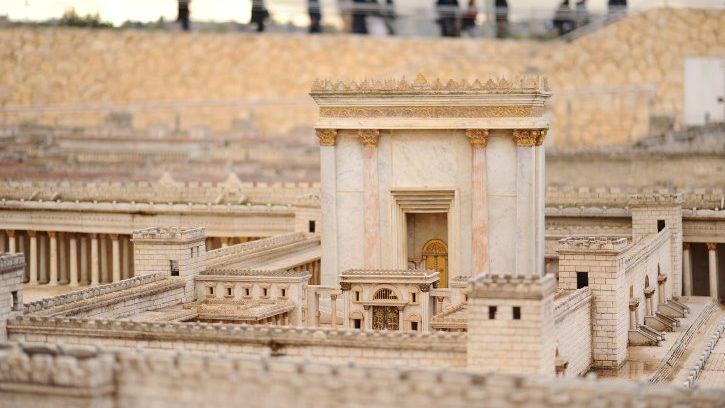
The majority of today’s reading focuses on God’s presence re-entering the new temple and on the ordering of all aspects of worship and temple life. God’s glory fills the temple, leading Ezekiel to fall in worship. God then instructs him to listen carefully and to write down these new instructions. The central focus is on holy versus unholy or clean versus unclean. Building and purifying the altar, proper worship on the Sabbath and during the two festivals (used to be three), honoring the east gate, setting aside sacred spaces, regular offerings – all were aimed at maintaining the holy. To keep and hold these spiritual practices in the highest ways would work against a return to the “detestable practices” of old, to the unholy.

In chapter 47 there is a river that flows from the temple, out the east gate – the gate that God’s holiness entered through. The trickle grows to a vast river that brings life and abundance to the people of God. As God’s presence is brought out into the world, blessings flow with it. This remains true today.

Ezekiel closes by defining Israel’s borders and by allotting land to the tribes. These boundaries connect back to what God originally laid out for Moses back in Numbers 35. Land is allotted, beginning in the north, to Dan, Asher, Naphtali, Manasseh, Ephraim, Reuben, and Judah. Next comes the Holy portion, with the temple at its center. The city and Prince are allotted land here in this central section. Moving to the south, land is allotted to Benjamin, Simeon, Issachar, Zebulun, and Gad. Benjamin and Judah remain central, just flipped from their pre-exile locations. Similarly, the tribes furthest out are the children of the maidservants. Each tribe received an equal portion of the land. This time the Levites are included. The twelve city gates are named after the original sons of Jacob. Joseph’s sons are combined to make space for Levi. God’s new kingdom envisioned here will one day be established here on earth. We await the day!

Prayer: Lord God, what a vision for what will be at the end of this present age. You will be the center, the focus, the life source. Yes, we do await the day. Yet, as we wait, Lord God, use us to draw this world closer to this vision. Use us as the life-giving river that flows out into the world, bringing blessings and abundance into people’s lives. Amen.


Leave a comment

Live Amongst Us

Reading: Ezekiel 38-43

Ezekiel 38:23 – “I will display my greatness, show my holiness, and make myself known in the sight of many nations.”

Chapters 38-39 deal with Gog, a representation of the evil empires. Coming from the north, Gog could represent Nebuchadnezzar. Gog gathers many nations to his side. This mighty army comes to Israel, intent on conquering and looting God’s children. God’s anger is aroused and God unleashes nature on them, followed by turning their swords upon one another. God calls on the birds and animals of prey to feast on the horde’s bodies. So vast was the army, it took Israel seven years to bury the bodies. In the end God promises to pour out “my Spirit” upon Israel. With this Spirit within them, God will never again hide God’s face.

Chapters 40-42 contain the first part of Ezekiel’s temple vision. He is told to pay close attention so he can tell all to Israel. The temple described has some commonalities with Solomon’s temple, but much is different. While a temple will be rebuilt, this temple is never realized in the Bible. Ezekiel’s temple compound is 750 feet by 750 feet. It has three gates, courtyards, chambers, holy places and equipment. The Zadokite clan is set apart as the only Levites to “draw near” to God – to offer sacrifices on the altar. The temple is adorned with winged creatures and palm trees. There are holy chambers, places to store holy things.

The temple is at the center of God’s restoration of Israel, both physically and spiritually. It is a part of the sanctifying process, making Israel into the holy people of God. For Ezekiel and his audience, the temple represented God’s presence with the people. These words and vision bring hope and encouragement to the people living in exile. God longed to live amongst the people of God. God still longs to live amongst us today. May it be so.

Prayer: Lord God, your power and might extend over all things: over Gog and his allies, over today’s idols and temptations, over our selfish hearts. Ezekiel’s temple vision reflects your power and might. But it is still just a building. Just as your presence will fill this visionary temple, fill our hearts with your indwelling spirit, transforming our lives and our hearts. Amen.


Leave a comment

Ends with Hope

Reading: Ezekiel 6-11

Ezekiel 11:19a – “I will give them a single heart, and I will put a new spirit in them.”

Chapter 6 addresses the consequences of Judah’s idolatry outside the temple. God will slay most of these idol worshippers. Some will escape and go into exile. God was “crushed” by the people’s “roving hearts.” They will fall by sword, famine, and plague. Chapter 7 continues this story line. God will judge Judah according to her ways. God won’t shed a tear, won’t show any pity. Those outside Jerusalem will die by the sword. Those inside will die by plague and famine. “Violent intruders” will defile the temple. Then Judah “will know that I am the Lord,” declares God.

Chapters 8-11 contain Ezekiel’s “Temple Vision.” God’s glory is in the temple as his virtual tour begins. Ezekiel is shown “terribly detestable practices” – a huge idol, 70 elders worshipping engravings on the wall, women worshipping a Babylonian god, men bowing to the sun. God then calls the “guardians of the city.” One of the six, the one in linen, is sent out to mark the foreheads of the faithful. The others follow along behind, killing all without the mark. They begin in the sanctuary and move outward from there. Ezekiel questions the depth of the violence. God is holding them accountable.

The guardian in linen is then sent out with fire from the temple chariot. He scatters fire about, burning down the city. The chariot rises up and moves to the threshold of the temple. God’s glory is on the chariot throne. There is a final confrontation with some evil and wicked men. God declares that they will die by the sword. And then God offers hope.

The exiles will be gathered back. God says, “I will give them a single heart, and I will put a new spirit in them.” Israel will be obedient. God will be their God. Then the chariot leaves, flying east towards Babylon. The vision ends and Ezekiel tells the exiles all that God has shown him. The story ends with hope. Our story does too. Thanks be to God.

Prayer: Lord God, you are almighty and all-powerful. You are just and righteous. Just as you held Judah accountable, so too do you hold us accountable. So God, create in each of us a single heart, a heart fully aligned with you. Pour your Spirit into our hearts, leading and guiding us to walk faithfully with you. Be our God. Make us into your people. Amen.


Leave a comment

Good Plans

Reading: Jeremiah 25-29

Jeremiah 29:11 – “I know the plans I have in mind for you, declares the LORD; they are plans for peace, not disaster, to give you a future filled with hope.”

We begin with a summary. For 23 years Jeremiah has spoken God’s word. The people wouldn’t listen or pay attention. God is mustering Babylon. For seventy years, Judah will serve Babylon. Jeremiah takes the cup of God’s wrath and forces many nations to drink of it. Disaster is coming to many nations.

We rewind in chapter 26. Jeremiah revisits his temple sermon of chapter 7, adding some more detail. The priests and prophets wanted to kill him because of the words he spoke. The officials and people stand up for Jeremiah, saving his life. Chapter 27 moves forward to king Zedekiah. Jeremiah makes a wooden yoke, symbolizing the new relationship that Judah will have under Nebuchadnezzar. He warns against listening to the false prophets. The remaining temple equipment will go to Babylon, until God is ready to bring it home. We get examples of these false prophets here and at the end of chapter 29. The false prophet Hananiah says the exile will only last two years. He is confronted by Jeremiah. Hananiah breaks the wooden yoke. It will become a yoke of iron, says God. Three more false prophets are dealt with in chapter 29. As always, the word of God prevails.

Chapter 29 begins with a word of great hope. In a letter to the exiles in Babylon, Jeremiah tells them to settle down, to build houses, to marry and have children, to pray for their cities of exile. As they prosper so will Judah prosper. In 70 years God will bring them home. In verse 11 we read, “I know the plans I have in mind for you, declares the LORD; they are plans for peace, not disaster, to give you a future filled with hope.” What words of hope!

Prayer: Lord God, you reign over all the earth. Your word is ever true. Cut through the lies of this world, drawing us to the good plans that you have for those who love you. Amen.


Leave a comment

A Fire in the Heart

Reading: Jeremiah 17-20

Jeremiah 17:10 – “I, the LORD, probe the heart and discern hidden motives, to give everyone what they deserve, the consequences of their deeds.”

Chapter 17 begins with a condemnation of the sinful. Judah’s sin is “engraved” on their hearts. God will give their land, wealth, and “all that you treasure” to their enemies. They are cursed because they have trusted in human strength. Contrasted to these are the people who trust in and rely on God. They will be like trees planted by the water – ever fruitful. Verse 10 cuts to the heart of the outcome of Judah’s and our choices: “I, the LORD, probe the heart and discern hidden motives, to give everyone what they deserve, the consequences of their deeds.”

In today’s readings we find a few laments from Jeremiah. Often he expresses trust in God and asks for his tormentors to be punished. In chapter 20 his despair is deeper. He regrets being called by God. He ponders quitting. Yet there is “an intense fire in my heart, trapped in my bones.” He knows well his love of God. Yet he is also weary of the abuse, ridicule… He closes this lament cursing the day he was born. It has led to much “suffering and misery.”

We also have two great visuals in today’s readings: the potter and the clay and the clay jar. At the potter’s house, Jeremiah watches the piece become flawed. The potter smashed it down and starts over. God proclaims the power to “dig up, pull down, and destroy”sinful nations. God also claims the power to “build and plant” new nations. It is the people’s choice which they will be. God responds for them rhetorically, saying, “What’s the use?” They have hardened, willful, evil hearts.

God then uses the clay jar as reinforcement. Jeremiah again speaks of their sins and the coming disaster. The siege will be horrific. In desperation they will eat one another’s flesh. He smashes the jar, saying this is what God will do to Judah. He then repeats these words in the temple. The high priest beats and then imprisons Jeremiah. The life of a prophet is not easy.

Prayer: Lord God, we too are called to speak your word and to offer hard truths at times. It is not easy. We can expect to face trials as Jeremiah did. May you become a fire in our hearts, a passion trapped in our bones. Lead us to stand for you and to be a part of your building the kingdom here on earth. Amen.


Leave a comment

“All is well…”

Reading: Jeremiah 5:1-8:16

Jeremiah 6:19 – “I’m bringing disaster upon my people, the fruit of their own devices, because they have ignored my words… rejected my teaching.”

Chapter 5 begins with a search for one just person. None can be found. Judah has forsaken God, they are “utterly faithless.” Incorrectly they think God won’t really punish their sins. But God proclaims that a distant army is coming. They will devour everything. Because God’s people have abandoned God, they will soon “serve strangers in a land not your own.” Exile is coming.

In chapter 6 God notes that all are eager for profits and notes that the prophets and priests “trade in dishonesty.” They tell themselves “All is well” but nothing is well. God invites them to turn to the ancient paths as they stand at this crossroads, to choose to walk “the good way.” Judah rejects the invitation. Therefore God says, “I’m bringing disaster upon my people, the fruit of their own devices, because they have ignored my words… rejected my teaching.” Judah is invited to put on funeral clothes, to wail and weep. Disaster is coming.

The scene shifts to the temple for chapter 7. Judah falsely believes that the temple will stand forever – it is God’s house. God longs to dwell with the people in the temple. But to be present with them, they need to radically change their ways. Only then will God dwell with them in the temple. A warning is given: don’t change your ways and God will make the temple like the tabernacle at Shiloh. It was totally destroyed by Israel’s enemy. This leads God to a lament. God recalls bringing the people out of Egypt, leading them in the wilderness, teaching them God’s ways, hoping for obedience. They too were stubborn and hard-hearted.

In chapter 8 God wonders why the people “persistently turn away.” God laments that “everyone turns to their own course.” This selfish, stubborn, rebellious, hard-hearted people are drawing closer to disaster. And they continue to tell themselves, “All is well.”

Lord God, just as you lament Judah’s ongoing patterns of selfishness, greed, lust, dishonesty, and oppression, so too do you lament these things in our day. We have changed very little. Yet a small remnant remains. Strengthen and encourage us, guide us to faithfully walk in your ancient ways. Empower us to be speakers of truth and to be bearers of love and hope, of grace and mercy. Amen.