pastorjohnb

Thoughts and musings on faith and our mighty God!


Leave a comment

Marks of Faithful Discipleship

Reading: 2nd Thessalonians 1:1-4

2nd Thessalonians 1:3 – “Brothers and sisters, we must always thank God for you.”

2nd Thessalonians is Paul’s second letter to the churches in and around Thessalonica, a city in what is now Greece. This second letter is not Paul’s second interaction with these believers. Paul visited here on his second missionary journey, likely establishing these churches. He returned on his third journey, likely bringing encouragement and more teaching. Paul’s letters were continuing education and encouragement. It is believed that this second letter is written in response to a letter from these churches. Amidst the persecution that has ramped up, they seek assurance and more encouragement in their battle against fear and doubt.

Paul opens the letter in typical fashion, with a greeting followed by a blessing. The blessing is also a reminder: grace and peace are already yours. These gifts from God and Jesus will remain present in their communities of faith as long as Jesus remains their focus, their centering presence. Next Paul writes, “Brothers and sisters, we must always thank God for you.” Although struggling under some heavy persecution, these churches remain models for other Christian communities. Paul wants to elevate and celebrate their faithfulness and love.

In verses 3 and 4 Paul lifts up three ways that these churches are living out their faith. First, their faithfulness is “growing by leaps and bounds.” They are maturing in faith, growing closer to Christ. Second, their love for one another is increasing. They are becoming more intimately connected. And third, they are faithfully enduring the “harassments and trouble.” As the world beats against their faith, their are holding fast to their faith as they stand firmly on the rock of Jesus Christ. These three markers identify faithful discipleship. May these be the daily marks of our lives too!

Prayer: Lord God, in this world we will have trouble. In this walk of faith, it will get difficult. Challenges will arise. Doubt and fear will creep in. By the power of your Holy Spirit in us, lifted by your grace and peace, strengthen and encourage our daily walk with you. Thank you, Lord Jesus. Amen.


Leave a comment

Finding Hope and Strength

Reading: Psalm 137

Psalm 137:5 – “Jerusalem! If I forget you, let my strong hand wither!”

Photo credit: Wylly Suhendra

Psalm 137 wrestles with holding onto faith during a time of deep grief. This is a struggle we’ve all faced or will face at some point in life. The emotions of the Psalm are real and honest, especially in verses 7-9. If grief we feel these emotions too, but usually choose not to give them voice. The psalmist and fellow Israelites find themselves in Babylonian exile, grieving alongside a river. They have put away their musical instruments, thinking, who could sing at a time like this? In grief we too can set aside certain practices or activities that we used to do with the departed loved one. It feels too painful for these things in the midst of grief. The departed loved one for Israel is God, personified in Jerusalem. While God is still present, it doesn’t feel like it for Israel. When their “tormentors” mockingly call for a song, the Israelites wonder, “How could we sing a joyful song at a time like this?!”

Yet there is something in the psalmist that knows they must maintain a connection with God. In verse 5 we read, “Jerusalem! If I forget you, let my strong hand wither!” Verse 6 offers a similar pledge. For the psalmist, hard as it might be, music is a way to remember and to honor and to be connected to God. Music brings the Israelites into the presence of God and it brings them into community. In times of grief, we often just want to be alone. It feels like that would just be easier. Frankly, it is. But healing comes most often in community, in being with others, in being reminded of God’s presence with us. Here one finds the beginnings of those seeds of hope and the strength to ponder next steps. In their grief, with the gifts of hope and strength, the Israelites began to step forward in faith. May it be so for you and for me in our times of grief.

Prayer: Lord God, sometimes life is hard and it rains down grief, feelings of disorientation, moments of withdrawal. When this happens to those we know, send us into their lives, being your light and love, your hope and strength. And when we find ourselves in this hard place, guide us into community – with you and with our brothers and sisters in Christ. Amen.


Leave a comment

God Who Is Near

Reading: Acts 17:22-28

Acts 17:27-28 – “In fact, God isn’t far away from any of us. In God we live, move, and exist.”

In Acts 17 Paul acclimates himself to Athens, walking around, observing, listening. Eventually he engages in conversation. Unfortunately his speaking leads to being taken into custody. Paul is brought before the council. Fortunately these men are part of the crowd who “spend their time doing nothing but talking about or listening to the newest thing.” Taking his opportunity, Paul addresses the council and those gathered on Mars Hill.

Paul begin by acknowledging their very religious nature, commending them for this. He then notes that while walking around, looking at all of their objects of worship (idols,) he found one that read, “To an unknown god.” Because he is connecting to who and what the Athenians are and believe in, he can then speak words that might resonate. Establishing this positive connection, Paul introduces his “new thing.”

This “unknown god” Paul says, let me tell you about him. Paul says this to the council just as we could say it to anyone seeking God, whether they know it or not. Paul declares his God to be the maker of all creation. Countering their idolatry indirectly, he states that his God doesn’t live in temples and isn’t made by human hands. His God is far above humans in this sense but this God also created people to reach out, to seek and find him. Paul’s God is a God of relationship. Continuing this line of thinking, Paul adds, “In fact, God isn’t far away from any of us. In God we live, move, and exist.” Paul’s God – and our God – wants to know us and to be known by us. This God who dwells in our hearts, this God of relationship, this God loves us and all of creation. May this be the God that we know and follow, that we reflect to the world.

Prayer: Lord God, give us eyes to observe, minds to consider, ears to listen, and lips to speak. Use us as you used Paul, to meet folks where they are at, to connect to them personally, just as you seek to do with us. Use us to connect seekers to you, the one true God. Amen.


Leave a comment

Followers and Practicers

Reading: Matthew 5:1-12

Matthew 5:5 – “Happy are people who are humble, because they will inherit the earth.”

The Beatitudes are our focus today. This list mostly of “Happy are…” sayings lay out Jesus’ desires for his followers. As I read this list over and over, trying to settle on a key verse, to be honest, it was hard to pick one. In our current world, there is not only a great need for humility but also for righteousness, mercy, peace, hope.

Jesus begins with spiritual matters. Happy are those who are without hope and who recognize their need for Jesus. Also very likely poor economically, trusting in God will bring a joy or happiness to their lives. Those who grieve the spiritual condition of the nation, they will be made glad (or will be comforted) as they come to recognize that God is in control.

Happy are the humble because they are part of the kingdom now and will one day be part of the new creation. Those who seek and long for righteousness will be filled with faith. Yes, God is faithful and true! Living with a pure heart, one will be closely and intimately connected to God.

Those who practice mercy will receive mercy. Those who are makers of peace will be known as children of God. Definitely happy places to be. But all will not be “easy.” In verses 10-12 Jesus acknowledges a reality. Living in these ways are counter-cultural. Therefore, followers and practicers of the way of Jesus will be harassed, insulted, slandered… here on earth. Take heart though! In the end, the kingdom of heaven will be yours. Hallelujah!

Prayer: Lord God, thank you for the joy and blessing we receive walking faithfully with you. In all ways, help us to be obedient and steadfast, even in the trials and sufferings. Fill us with your word and Spirit. Fill us with your peace, mercy, and love. Guide us to walk in the humble servant’s footsteps of Jesus Christ, our Lord and Savior. Amen.


Leave a comment

The King of…

Reading: John 12:12-19

John 12:13 – “They took palm branches and went out to meet him. They shouted, ‘Hosanna!'”

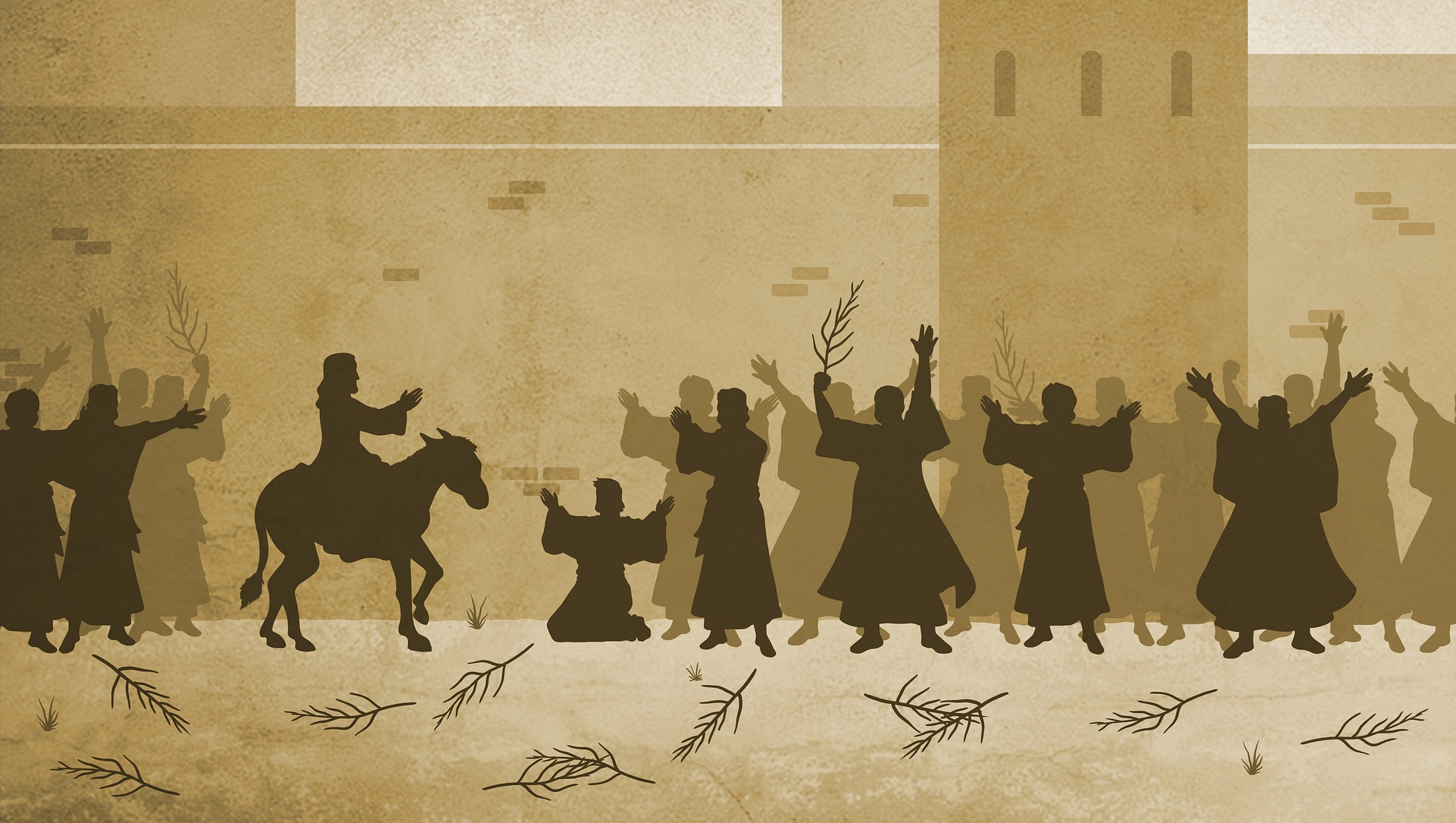
Entering into Holy Week in the gospel of John, we begin the passion of the Christ with Jesus’ triumphal entry into Jerusalem. Unique to his gospel, John gives a reason for the large crowd that celebrates Jesus. People were buzzing over Jesus calling Lazarus out of the tomb after being dead for four days. In 12:10 we read of the jealousy caused by this miracle: “The chief priests decided that they would kill Lazarus too.” This jealousy shows out in verse 19 too, where the Pharisees pettily says, “Look! The whole world is following him!”

In verse 12 we read that the “great crowd” in town for the Passover festival heard that Jesus was coming. So, “They took palm branches and went out to meet him. They shouted, ‘Hosanna!'” The word “hosanna” translates to “save us, we pray!” Also from the Psalms, the crowd offers blessings to “the one who comes in the name of the Lord.” The crowd identifies Jesus as “the king of Israel.” Mid-story Jesus finds a young donkey and begins riding it. He too claims the title of “king,” quoting from the prophet Zechariah.

John admits, in verse 16, that the disciples didn’t connect the dots at first. John and his fellow disciples wouldn’t understand the meaning and connections until after Jesus died and rose. The indwelling presence of the Holy Spirit would help with this. In the same way, the Holy Spirit leads and guides is in our faith if we are willing to listen and obey.

Prayer: Lord God, we see a crowd caught up in the miracle Jesus offered. They cheer and shout. We too can do these things. We can come to Easter and shout “He is risen!” Then the Monday after is like any other Monday. Lord, may it not be so. Draw us deeper into our faith. Through the power and presence of the Holy Spirit, bring us understanding and obedience too. Lead and guide us to see and follow Jesus as the one who sits on the throne of our hearts. Amen.


Leave a comment

Hearts Turned

Reading: Mark 9:11-13

Mark 9:13 – “Elijah has come, but they did to him whatever they wanted.”

Following the transfiguration (when Peter, James, and John saw Jesus changed into a more divine form who chatted with Moses’ and Elijah’s spirits) the “inner three” ask Jesus about the second coming of Elijah. Here they are connecting with their Jewish upbringing. In Malachi 4 the prophet writes about Elijah coming back “before the great and terrifying day of the Lord.” The understood purpose of his return? To “turn the hearts of the children to their parents” and vice versa.

Experiencing this moment on the mountaintop, hearing talk about Messiah and death and resurrection, it is natural for the disciples to try and make some sense of all of this. They do the natural thing: they try to connect this new information to what they already knew. To help do this, they ask about the second coming of Elijah. The understanding was that Elijah would return to “restore all things.” Jesus pushed back a bit. If one held to the fullest way that this could happen, he asks, then why would he have to suffer and die? This is Jesus’ question in verse 11. Clearly there is some disconnect or misunderstanding.

Answering their question, Jesus says, “Elijah has come, but they did to him whatever they wanted.” Preaching and baptizing in the wilderness, John the Baptist did change hearts. Through his baptism of repentance the children of God’s hearts were turned back to God’s heart and vice versa. John’s work of restoring all things was cut short, though, like many of the prophets who came before him. The pagan powers arrested and beheaded John. Not all Jewish hearts turned to God either. Many rejected John’s invitation and Jesus’ as well, “just as it is written.” In spite of humanity’s selfish and stubborn hearts, God’s plan will continue to unfold as Jesus walks the path to Jerusalem and to the cross.

Prayer: Lord God, we, like the people of Jesus’ day, know the scriptures, can see the signs unfolding, and still choose not to believe. We can cling to our selfish and evil ways, refusing to confess and repent. When our eyes are mostly closed and our hearts are pretty hard, once again empower your indwelling prophet, the Holy Spirit, to open our eyes, to soften our hearts. Bend us to your will and way. Amen.


Leave a comment

All the Glory

Reading: John 15:5-8

John 15:8 – “My Father is glorified when you produce much fruit and in this way prove that you are my disciples.”

Today’s passage bridges last week’s question of heaven’s existence and this week’s wrestling with unanswered prayer. The two topics of doubt fund answers in Jesus’ teaching about being the true vine. This image is one also used throughout the Old Testament.

In verse 5 Jesus declares the connected relationship: “I am the vine; you are the branches.” If we remain in Jesus, then we will “produce much fruit.” The main fruit aligns with the great commission: making disciples of all nations. We also produce fruit and bring heaven to earth when we bring Christ’s love, hope, mercy, grace, peace, joy, forgiveness… to those in the world. Of this good life Jesus says, “My Father is glorified when you produce much fruit and in this way prove that you are my disciples.” When we remain in Christ we produce fruit in this world, we bring God much glory.

The converse is also true. When we allow ourselves to become disconnected from Jesus, we will then fail to produce fruit for the kingdom. In that broken relationship we cannot do any good work that glorifies God. And, in the end, we will be “gathered up, thrown into a fire,” where there will be, as Jesus often said elsewhere, weeping and gnashing of teeth.

In verse 7 we begin to lean into the outcomes of our prayers. Here too is a connection. Here Jesus tells us that if we “remain in me and my words remain in you,” then what we ask for will be done. Remaining connected to Christ keeps our heart and therefore our prayers aligned with God’s heart and with God’s will and way. Praying in this way will produce good fruit that glorifies God. May it be so.

Prayer: Lord God, our connection to you is so important, so vital. As we spend time each day in prayer and study, our connection strengthens. Then, as we go out into life and into the world, your words, your Spirit, your will and way go with us, guiding us. May this connection empower us to produce fruit as we strive to build your kingdom of heaven here on earth, bringing you all the glory. Amen.


Leave a comment

God Breathes Life!

Readings: Genesis 2:7-8 and John 20:19-22

John 20:22 – “Then he [Jesus] breathed on them and said, ‘Receive the Holy Spirit.'”

We begin in Genesis 2, when God created man. Gathering up soil, shaping it into a form that resembled God, breathing breath into man’s nostrils, life was created and given. In the creating, man is connected to the earth and to God. Next God creates the garden and sends the man there, to care for and to nurture what comes from the earth.

In our John 20 passage, Jesus has come from the ground – out of the grave after three days to stand amongst the disciples. The human-divine one first offers peace to these men. Jesus then shows them his scars, connecting to their human nature. Joy fills the disciples. Again offering peace, Jesus next tells the disciples that he is sending them into the world. While not the garden in Eden, their task is essentially the same: go and care for and nurture this growing community of faith. Jesus then breathes life into them, saying, “Receive the Holy Spirit.” The disciples receive the divine breath of the Spirit. This gives life and power to their spiritual life, connecting them to God and Jesus.

We too experience both of these births. Created in the image of God like Adam, God breathes physical life into our bodies as we draw our first breath. As we commit our lives to Jesus – to bring sent into the world to love God and neighbor – we receive the gift of the Holy Spirit. This indwelling presence gives life to our faith, empowering us to witness to the world. This day and every day may we draw upon this breath of life.

Prayer: Lord God, thank you for the gifts of life. You plant the spark of the divine in us when you form us in the womb. You bring this to life as you draw us into relationship, into faith in Christ. Embolden us each day to be your light and love in the world. Amen.


Leave a comment

Happy Are…

Reading: Matthew 13

Matthew 13:16 – “Happy are your eyes because they see. Happy are your ears because they hear.”

Today’s reading holds seven parables all aimed at showing how God is at work in our world and in our lives. In these teachings, Matthew shows that God is engaged in daily life and desires to be in connection with us. In the first parable a farmer scatters seed. In a day when every seed mattered, “scatter” would draw people’s attention. Most seeds do not bear fruit. The many cares of this world are too much. The seed that does fall on good soil produces a great crop. Hearts that receive and nurture God’s word leads others to do the same, creating more disciples.

Matthew connects to Isaiah, using his words as a means to explain why many do not understand the parables. They have become “calloused” and refuse to “change their hearts and lives.” This was the invitation given by John the Baptist and by Jesus. It continues to be given each time the world is read or proclaimed.

Each of the remaining parables begins with the phrase, “The kingdom of heaven is like…” It is like a field with good plants and weeds, like a net with good and bad fish. One day the angels will sort out and burn the bad. The good will be saved. It is like a mustard seed or some yeast – small but powerful, able to spread and grow into something large. It is like a hidden treasure or a pearl of great worth. Once found, a person must be willing to sell all else, investing everything they have into their faith.

As Jesus teaches in parables he asks his disciples if they understand. They do. In response, Jesus says, “Happy are your eyes because they see. Happy are your ears because they hear.” May our eyes and ears be happy as well.

Prayer: Lord God, thank you for opening our eyes and ears to your word. We don’t always get it 100% but as we keep at it, reading, studying, seeking to understand, your Spirit works in us, giving us more insight and understanding. Each time we encounter that word, the connection grows stronger, deeper. Thank you for your continuing work in us. Amen.


Leave a comment

Set Apart

Readings: Numbers 5, Numbers 6, Numbers 7

Numbers 6:24-25 – “The LORD make his face shine on you and be gracious to you. The LORD lift up his face to you and grant you peace.”

Chapter 5 begins with how to keep the camp from becoming unclean and with how to restore relationships in the camp. These simple provisions hold them accountable to one another. The jealous husband case found in verses 11-31 is hard to relate to our world today. John Wesley saw the purpose of this law as twofold. First, it was a deterrent to a woman tempted by adultery. Second, it offered wives protection from the jealousy of hard-hearted husbands. No provision is made anywhere in the Law for a woman who suspected her husband of adultery.

Chapter 6 gives instructions for nazarites. These were non-Levites who wanted to commit a portion of their lives to serving the Lord. Because they were not Levites they could not perform tabernacle duties. They were set apart by following a strict behavioral code. Samson and Samuel are two examples of nazarites who served for life. Most nazarites would serve for a designated period of time. At the end of their service they would offer the standard cycle of offerings to the Lord.

Chapter 7 is a flashback. It recounts the gifts brought to the dedication of the tabernacle written about in Exodus 40. Oxen and wagons are given to enable the Levites to transport the structure of the tabernacle. Then one representative from each tribe brings the same set of gifts to dedicate the altar. The gifts are brought in the order established in Numbers 2.

Our reading closes with Moses entering the tent of meeting to talk with God. This scene connects back to God’s promise made in Exodus 25. Tucked in at the end of chapter 6 is a priestly blessing. We close with a portion today: “The LORD make his face shine on you and be gracious to you. The LORD lift up his face to you and grant you peace.”

Prayer: Lord God, we, like the nazarites, are called to be set apart from the world. Instead of physical practices we are called to spiritual practices that reflect your love, grace, mercy… thereby setting ourselves apart from the world. Empower us to live in your ways. Grant us peace as we seek to live as your disciples. Amen.