pastorjohnb

Thoughts and musings on faith and our mighty God!


Leave a comment

Effort Matters

Reading: Ecclesiastes 9-12

‭Ecclesiastes 10:10 – “If an ax is dull and one doesn’t sharpen it first, then one must exert more force.”
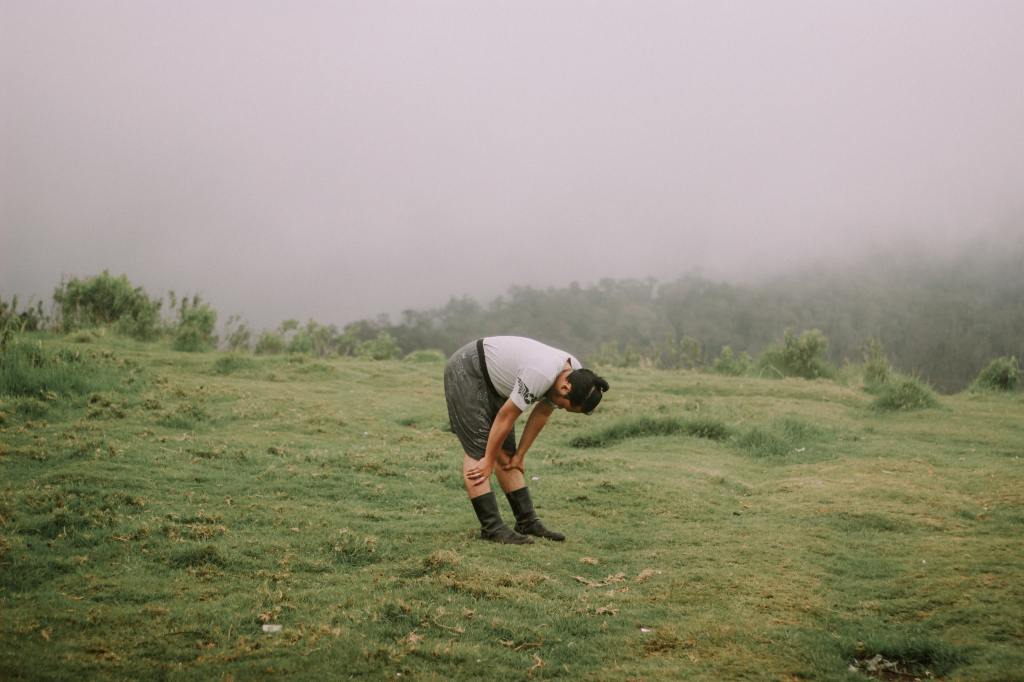
Photo credit: Falaq Lazuardi

As we conclude Ecclesiastes today we begin with the remainder that the deeds of the righteous and wise are in God’s hands. Even so, death awaits us all. Chapter 12 alludes to our general decline as we age. The sun and light grow dark, people become afraid, and then “the human goes to the eternal abode.” The Teacher recognizes that there is a finality to this life.

But during our lives, the advice is to eat joyfully, to drink happily, to have oil for our heads, and to enjoy our “dearly loved spouse.” Even though all of our days are pointless, it is our part to play. So whenever we can, we should do these things with “all your might.”

The Teacher also recognizes that much is out of our control. The swift don’t always win the race. “Accidents can happen to anyone,” says the sage. When tragedy suddenly befalls us, we are like “fish caught in a net.”

Even so, we are encouraged to take pleasure in all of our years. Yes, there will be dark days. Yes, one day we’ll be called into account by God. And, yes, our deeds matter. The lazy – the cloud and wind watchers – won’t sow or harvest. Effort matters. In 10:10 we read, “If an ax is dull and one doesn’t sharpen it first, then one must exert more force.” Seek wisdom and knowledge and skill. Life will be better. Maybe, says the Teacher.

Ecclesiastes closes with a reminder to worship God and to obey the commands. It is what everyone must do, because, remember, judgment is coming. May it be so for you and for me.

Prayer: Lord God, in the grand scope of life, lead us day by day to enjoy life and all it has to offer. Put joy into the work of our hands and obedience into our hearts of faith. Amen.



Leave a comment

Place of Rest, Strength, and Refuge

Readings: Psalms 60-63

‭Psalm 63:3 – “My lips praise you because your faithful love is better than life itself!”

Today’s Psalms provide a great and familiar pattern. Psalms 60 and 61 are prayers for God’s help. Psalm 62 confesses that God alone is the source of the strength that we need. Psalm 63 is a song of confidence in God. We often experience this movement in our lives. We cry out in the storm, God’s strength gives us a way through, we praise God.

Psalm 60 is a communal plea for help. Israel feels rejected – even though God once claimed Gilead, Manasseh… David asks God for a “flag” to rally around – a champion who will lead Israel to defeat the enemy. He closes with a plea for help against Moab, Edom, and Philistia because “human help is worthless.” How true. Yet how often do we try to win the battle on our own?

We enter a more personal plea in Psalm 61. The lament begins “When my heart is weak”… then God can be the rock, refuge, and tower of strength. The author longs to be in God’s “tent” (tabernacle.) The Psalm closes with a prayer for the king to live long and to be “enthroned forever before God.” Thoughts of dynasty echo here.

A shift comes in Psalm 62. God is the psalmist’s place of rest. God is his or her rock, salvation, stronghold. Then there is a reflection on life beginning in verse 9. Life is but a breath. So don’t trust in violence or in wealth. Trust in God’s faithful love and strength because God “will repay everyone according to their deeds.”

Most of Psalm 63 focuses on God’s power… David searches for, thirsts for God. David recalls encountering God in the sanctuary. With rejoicing he declares, “My lips praise you because your faithful love is better than life itself!” He finds joy when he meditates on God’s word. Then there’s a hard right at the end – destroy my enemies! Alas David.

Prayer: Lord God, be with us all of our days. When we or our community is suffering, be our strength and our place of rest and refuge. Guide us to place our trust fully in you alone. Only you can bring us through. Draw us into your presence and guard our hearts from evil thoughts. Justice is yours alone to hand out. Walk with us, O God, our rock and our stronghold. Amen.


Leave a comment

The Path of God and Salvation

Readings: Psalms 50-53

‭Psalm 50:3 – “Our God is coming; he won’t keep quiet. A devouring fire is before him.”

Today’s first two Psalms focus on divine judgment and forgiveness. The second two focus on wickedness and unbelief. Asaph begins with God’s voice and presence. He warns: “Our God is coming; he won’t keep quiet. A devouring fire is before him.” The fire devours evil and it devours the sin in our lives. In Israel’s life one sin is going through the motions. God desires that their sacrifices come from the heart, not from the routine. The Psalm closes by addressing the behavior of the wicked. They hate both discipline and God’s word. They are given a choice: choose the correct path of God’s salvation or “I’ll rip you to pieces.” This is their choice. We too face this choice: life or death?

David chooses the path of salvation in Psalm 51. He has walked about as far from God as one can: lust, adultery, murder. In the opening verses he begs for God to wash him of his sin. He admits his guilt and asks God to purify him, to allow him to “hear joy and celebration again.” David asks God to “create a clean heart… a faithful spirit” within him. From this place of brokenness and contrition David will once again praise the Lord. It is a good and honest and right place to go. It is part of choosing the path of salvation.

Psalms 52 and 53 paint evil for what it is: bragging, deceptive, destructive, corrupt, selfish. It comes from both the words of the tongue and from the deeds of the hands. Evil words and deeds result in shame and in being uprooted by God. This sounds bad. Really bad. Yet at times we do make the choice to sin. When we do, may we remember David’s acts of confession and repentance and may we offer his words of prayer: “wash me… whiter than snow.” Then God’s love and mercy will purify us once again. May it be so.

Prayer: Lord God, the right path is clear. The poor choices are obvious. Yet we stray and sin and fall. Lord, remember your great love, that which is far greater than our sin. Restore us as we confess and repent. Consume the sin in our hearts, leaving us with clean hearts and hands. Amen.


Leave a comment

Words of Teaching and Instruction

Reading: Psalm 78:1-4

Verses 2-3: “I will utter dark sayings from of old, things that we have heard and known, that our ancestors have told us.”

Telling a story, have you ever omitted parts or embellished parts to either gloss over something “bad” or to make a particular point? In telling stories it can be tempting to amend them to suit our purposes. We might even tell an altered version to this person or group of people if it best suits our agenda. There are, of course, inherent dangers in modifying our stories. These dangers magnify when we begin altering our communal history. Psalm 78 was written to be used in worship as a teaching tool. Today’s passage sets the stage for the rest of the Psalm. In the body of the Psalm, Asaph tells the whole story of God’s redemptive work. He includes the reasons for why God had to redeem again and again: the people were often unfaithful and disobedient to God’s leading and guiding.

It can be difficult or hard to “tell the whole truth and nothing but the truth.” As individuals, as churches, as denominations, as communities, as states and nations, we can shy away from the practice of honest truth-telling. Asaph writes, “I will utter dark sayings from of old, things that we have heard and known, that our ancestors have told us.” In the rest of the Psalm he does indeed tell all – the good, the bad, the beautiful, the ugly. Each of these aspects of our stories and of our histories has something to offer both to us and to future generations. We learn from our mistakes; we build upon our successes.

As we offer words of teaching and instruction to our children (and to one another), may we “tell the next generation” of the “deeds of the Lord” in honest and full detail, empowering them for the best future possible. In this way, they too will come to know “the powers and wonders” of God for themselves.

Prayer: Lord God, my past is scattered with bad decisions, failures, hurtful words and actions – both in my life and in the churches that I’ve been a part of. Some were my own doing, some were not. All of these have shaped and formed me into who I am in you. There are hard lessons and some painful moments. All were instructive; all led to growth and maturity. Guide me to use these experiences to mentor and to guide others, to shape a better future. Amen.


Leave a comment

Day by Day

Reading: Hebrews 10: 11-25

Verses 21-22: “Since we have a great high priest over the house of God, let us draw near to God with a sincere heart in full assurance of faith.”

In the first part of our passage from Hebrews we see a contrast between earthly priests and Jesus Christ. The writer notes that day after day the temple priests offer the same sacrifices. It is noted that these “can never take away sin.” Jesus “offered for all time one sacrifice” when he himself went to the cross as our sacrifice for sin. This provided for the “new and living way” spoken of in verse 20. The physical curtain that has separated people from the Holy of Holies was torn in two when Jesus breathed his last. This opening of the access to God symbolizes the new personal, intimate, direct relationship that we can have with God. Our confession and repentance of sin can be brought straight to God; no earthly priest is necessary.

In verses 21 and 22 we read, “Since we have a great high priest over the house of God, let us draw near to God with a sincere heart in full assurance of faith.” We can draw near to God because we know that Jesus paid the price for our sins. We have assurance that our sins will be forgiven and forgotten by God. We no longer carry any guilt or shame. Cleansed from a “guilty conscience” we can boldly approach the throne of God anytime, anyplace. This total access to God is made possible through Jesus Christ.

In the last few verses the writer addresses the community of faith created through the ministry and life of Jesus. During his earthly ministry Jesus modeled what the church should be: a place that values all people, ministers to one and all – just as he did through his sacrifice on the cross. With hope and in faithfulness we “spur one another on toward love and good deeds.” Encouraged by our own personal relationship with Jesus Christ, we can encourage one another as well. In doing so we grow in our faith together. Walking together in Jesus Christ, we are ever made more and more into his image. Day by day may we walk together in faith, building the kingdom of God here on earth.

Prayer: Lord God, you call us personally and corporately to a walk of faith. You love me intimately and you love the community of faith intimately. Use me today to encourage my brothers and sisters in Christ, just as they encourage me. Doing so may I grow in faith. Amen.


Leave a comment

The Next Generation

Reading: Psalm 78: 1-7

Verse 4: “We will tell the next generation the praise-worthy deeds of the Lord, his power, and the wonders he has done”.

The Psalm for today opens with a plea to “hear my teaching, listen to my words”. The psalmist knows the importance, the value, the impact of knowing the stories of faith. These stories teach or pass along the faith. Asaph has heard the stories, he has learned the faith and has taken it for his own. Now he wants the next generation to do the same. The psalmist promises to tell “what our fathers told us”. For faith to continue into the next generation, we must each tell them of “the praise-worthy deeds of the Lord, his power, and the wonders he has done”, just as Asaph did for his children and for generations to come through his Psalms.

This method is still how faith is passed on today. We teach and model faith for our children, planting seeds in them just as our parents, grandparents, and others planted seeds in us. Then we pray that the Holy Spirit Will nurture these seeds and that a young faith will begin to take root and grow in our children, grandchildren, neighbors… This is the pattern that we experienced, it is the pattern we must pass on generation after generation. The call to do so us so important that it is found in Jesus’ final words in Matthew 28. The task of making disciples is our main task.

The Israelites began this task at home, as we must. But it cannot end there. The making of disciples extends out into the world – “to all nations”, to use Jesus’ words. By helping our families and others to know the stories of faith, we are trusting in God that “they would put their trust in God”. We must teach and model what we want others to learn and take for their own. May it be so for all we meet.

Prayer: Lord God, the stories of faith fueled my love for you. As I watched and learned from others, I accepted faith for myself. Remind me of the best story to tell each time I meet one who is needing you, whether they know it or not. Through me, help others to know you, O Lord. Amen.


Leave a comment

Aware and Attuned

Reading: Psalm 90: 13-17

Verse 16: “May your deeds be shown to your servants, your splendor to their children”.

The Israelites have always been good historians. But unlike our study of history, which includes kings and wars, victories and achievements… the history of the Israelites centers on God and how God’s hand has been at work in their past. Seeing one’s history as the unfolding hand of God at work in our lives and in our world frames our understanding in a very different perspective. It shifts us from the great things that we or humankind has done (while avoiding or skipping past the failures and ugly things), to looking at the great things that God has done. In the Bible, the history contains the failures and defeats as well as the successes and victories.

Verse thirteen opens with a cry of “Relent, O Lord”! The psalmist next wonders how long it will be. How long will we suffer for our sins? That is really the question being asked. The psalmist begs for God’s compassion and the dawning of a new day when God’s unfolding love will fall upon them. This is a reality that we experience in our own relationship with God. When we sin we cause separation. In that time we are distant from God. The Holy Spirit’s conviction makes us aware of our failure and through repentance God restores our relationship. Once again we feel God’s mercy and love. Like the psalmist and like the Israelites, we long to sing for joy and to know gladness all of our days.

In verse sixteen we read, “May your deeds be shown to your servants, your splendor to their children”. To know and hear about the deeds of God over and over is to be reminded of God’s best qualities and of our role in bringing those to our own awareness. The more we seek to be aware of and in tune with God, the more we come to be aware of and in tune with God. When we are intentional about seeking God’s “deeds” we become aware of God in the smallest of ways – in a descant added to a song of worship, in the heart of a youth reaching out with love and compassion, in the kindness and generosity shared in a card. Each day may we seek the Lord. In doing so, “may the favor of the Lord rest upon us”.

Prayer: Loving God, thank you for revealing yourself in so many ways. I am an imperfect and sinful creature. Thank you for the whispers of conviction and the nudges back into the path of faith. Thank you for the small ways you reveal yourself, always reminding me of your constant presence in my life and in our world. Amen.


2 Comments

Do I Reflect Christ?

Reading: Romans 13: 11-14

Verse 12: “So let us put aside the deeds of darkness and put on the armor of light”.

Paul’s overarching theme in Romans 13 is loving our neighbors. In today’s verses he focused on how our behaviors and choices impact our ability to love others. Paul begins by encouraging us to love others “understanding the present time”. He goes on to explain that Jesus’ return is closer today than it ever was. This remains true for us too. But there is also another angle to understanding the present times. We live in a much different world than Paul lived in. For example, words we leak out on Facebook or Twitter or Tik Tok or… can fly around the globe in seconds. Our words or video might not go viral, but they do color how everyone who knows us sees us from then on. If we do not understand that every one of us can influence others – for good and for bad – then we do not understand the present time.

In verse twelve we read, “So let us put aside the deeds of darkness and put on the armor of light”. There are two parts to this admonition, both equally important to our ability to love others. The first part is to put aside evil thoughts and deeds. Paul lists sexual immorality and drunkenness right along with quarreling and jealousy. If we are promiscuous or abuse drugs or alcohol, if we are always disagreeable and argumentative, if we are always longing for what others have or just for more and more, then we have diminished our ability to even be able to love others. When we practice such evil deeds and selfish behaviors, others do not see us as people who are able to truly love. They see us as people working angles, as people only doing good for some selfish purpose. That is if they are even willing to be around us. Being a hypocrite – doing this thing and then trying to say another thing – is a relationship killer. The ability to love always begins with a relationship.

Instead of this, the second part of verse twelve calls us to “put on the armor of light”, which is Jesus Christ. The desires of the flesh have a strong pull. Jesus is stronger. By putting on Christ, by filling ourselves daily with his love, we are better able to be his love in the world. We are what we allow into our hearts. By filling ourselves with Christ instead of worldly thoughts and desires, Christ is what we reflect out into the world. If this is all people see in our words and actions, then we begin to have the opportunity to be love in the world. So, today, let us consider how we live. May we focus in on this simple question: Do I reflect Jesus Christ in all I say and do or do others see less in me?

Prayer: Lord God, help me to live more fully as your witness in the world. When evil thoughts rise up, shove them aside with a gentle nudge from the Holy Spirit. When I am tempted by the things of this world, blow out the flames of desire with the quiet whisper of the Holy Spirit. Empower me today to be light and love in the world. Amen.


Leave a comment

Merciful Forever

Reading: Luke 1: 46-55

Verses 48-49: “All generations will call me blessed, for the Mighty One has done great things for me”.

Mary’s song is so full of joy and faith. The opening line, “my soul glorifies the Lord”, sets the tone for the rest of the song. Mary is both elated and humbled that God has chosen her for this special task. As she sings “All generations will call me blessed, for the Mighty One has done great things for me” she shows that she understands the magnitude of what is happening. As the song unfolds she shares God’s character from the point of view that comes from the bottom looking up. Mary feels blessed to be a part of God’s family.

As Jesus’ life would unfold, and especially in its culmination, I wonder if Mary would continue to sing the same song. Would she still sing this song as a teenage Jesus claimed the temple as his true home and later as he said his real family were those who were a part of his ministry? Would the song’s words echo in her mind as she stood in the courtyard and then at the foot of the cross? I think Mary would still sing this song even then.

Mary’s words about God would be lived out by her son. Jesus would give mercy and offer mighty deeds as a witness to God’s love and power. Jesus would scatter the proud and lift up the humble. He would feed the hungry… Mary understood her role in all of this coming to be. She also would grow to understand who and what Jesus was. Mary would know that the cross was the only way that her son could be the Savior of the world. It is the way that Jesus would be “merciful to Abraham’s descendants forever”. As one of those descendants, I say thanks be to God his mercy.

Prayer: Heavenly Father, thank you for the gift of Jesus. In him you were more fully revealed. Most of all, thank you for being willing to die for my life. What a wonderful gift. Your love never ceases to amaze me. I praise your holy name! Amen.


Leave a comment

Come and See

Reading: Psalm 66: 1-12

Verse 5: “Come and see what God has done, how awesome his works on man’s behalf”.

Psalm 66 speaks of God’s love for the faithful. The psalmist encourages us to shout with joy and to sing the glory of his name. When we consider the deeds of God, they are very awesome. Verse five invited us into praise and into these deeds, saying, “Come and see what God has done, how awesome his works on man’s behalf”. Rejoice in what the Lord has done!

Yesterday I had the privilege of leading worship at the two assisted living facilities in town. The message I shared was based on 2nd Timothy 4. In this passage, Paul encourages Timothy to preach the good news with patience. As I was working on the message earlier in the week, it occurred to me that the second half of the passage, verses six through eight, spoke not only of how Paul had “fought the good fight” but of how many who would gather in those rooms had done so as well. I shared with them how it brought me great joy and how it encouraged me as I thought of the witness to the faith that they have lived out their 70, 80, and even 90+ years. With slightly teary eyes I thanked them for their examples of faith.

In Psalm 66 the writer first focuses in on when God led the people through the waters on dry land. Whether this refers to the parting of the sea or of the Jordan River or both does not matter. Either way it recalls the story of when God acted on behalf of the people. A little later, in verses ten through twelve, the psalmist recalls another time when God acted. It could refer to the exodus from Egypt or the return from exile in Babylon. Again, in either case, these were seasons of difficulty that ended with God’s action and in the long run increased their faith.

In our faith journeys we have these experiences too. We have all been rescued by God. We have all come through a trial with a stronger faith. We too have “come and see” stories of the awesome things that God has done in our lives. Like the psalmist, may we also share the story of our God who reigns forever.

Prayer: O God of all the earth, how wonderful are the works of your hands. I rejoice in the words of the Bible when I read of your actions. I also rejoice in the ways you have been and are at work in my life. Thank you for your abiding presence and for your constant love. Amen.