pastorjohnb

Thoughts and musings on faith and our mighty God!


Leave a comment

Service and Sacrifice

Reading: Mark 9-10

Mark 10:24 – “Children, how hard it is to enter the kingdom of God!”

Photo credit: Shane Rounce

The transfiguration of Jesus begins today’s readings. On a mountain top with Peter, James, and John, Jesus becomes “amazingly bright.” Elijah and Moses come and talk with Jesus. God speaks, saying, “This is my Son, whom I dearly love. Listen to him!” These words echo God’s words at Jesus’ baptism. Coming down the mountain Jesus finds a hubbub. The disciples were unable to cast out a demon. Jesus laments the lack of faith. The father begs Jesus for his son’s healing and admits his own lack of faith. Jesus casts out the demon. How do you think this affected the father’s lack of faith?

Jesus tells the disciples once again of his coming death. They, in turn, argue about who is the greatest among them. Jesus gathers the disciples and reminds them that the first will be the least, the servant. He explains that there is a cost to being a follower. It might cost a hand or foot or eye if that leads one into sin. Jesus is telling them to do anything to avoid sin and disobedience to God.

A rich man comes and asks about obtaining eternal life. He has kept the commands faithfully. After Jesus “looked at him carefully and loved him,” he is instructed to sell all that he has. The man goes away sad. Jesus goes on to say, “Children, how hard it is to enter the kingdom of God!” Much can get between us and Jesus. It’s not just our wealth or our possessions. When Jesus looks carefully at our hearts, what does he see that vies for the throne of our hearts?

Once again Jesus tells of his death. This time he is very clear. James and John come with a request: to sit at Jesus’ left and right in heaven. Power is their struggle. Jesus, with great patience, again tells the 12 that the greatest will be the servant and the first will be slave to all. Jesus again reminds them – and us – that he came not to be served but to serve and to give his life “to liberate many people.” May we too choose service and sacrifice.

Prayer: Lord God, humble servant, slave to all, keeping you #1 in our hearts – no, discipleship is not easy. We must first die to self – the greatest barrier to walking humbly and obediently. Guide us in this necessary and daily act of surrender. Grant us the faith and trust, the strength and courage to do so each day. Amen.


Leave a comment

Many Are Healed

Reading: Mark 6

Mark 6:34 – “He had compassion on them because they were like sheep without a shepherd. Then he began to teach them many things.”

Photo credit: Jennifer Araujo

Today’s readings begin in Nazareth, Jesus’ hometown. At first people were surprised by his teaching authority. But then they think, “Isn’t this [just] the carpenter? Isn’t he Mary’s son…?” These thoughts lead to a rejection of Jesus as Messiah. Their unbelief greatly limits his ability to heal. He departs and begins to minister in the surrounding villages. He sends out the 12 two by two. They teach, heal, and cast out demons. They return with excitement, with stories to share. Jesus decides to take them away to a quiet place to rest, but the crowds follow on shore. In between these two events Mark drops in the story of the death of John the Baptist. He does so to tell us that even the king has heard of Jesus.

After landing ashore we read, “He had compassion on them because they were like sheep without a shepherd. Then he began to teach them many things.” After teaching all day in a remote place, the disciples ask Jesus to send the crowd away so they can buy food. Jesus tells the disciples to feed them. The impossible becomes reality as Jesus feeds the huge crowd from five loaves and two fish. So great is the blessing there are twelve baskets full of leftovers. After sending the 12 on ahead, Jesus dismisses the crowd and goes up the mountain to pray.

In the night the winds come up and the disciples are struggling along. Jesus walks across the lake. Mark notes, “intending to pass them by.” Why, why, why?! We’re left to ponder this. At first the disciples are afraid: is it a ghost? Jesus encourages them and then climbs in the boat. The wind dies down. They are “baffled” by this Jesus.

Our reading today closes in Gennesaret, a town close to Capernaum. The locals recognize Jesus and bring their sick to Jesus. Many are healed – even those that just touch his clothes. Jesus, through the Spirit, continues to bring healing and wholeness to our lives and to our world. Thanks be to God.

Prayer: Lord God, you continue to have compassion for us, your children. We are so grateful. Yet today many are like the crowds – they know of you and your power but they don’t know you. Through the power of the Holy Spirit and through our witness, Lord, make Jesus known today. Bring healing and wholeness to our world. Amen.


Leave a comment

Faith, Trust, and Seeds

Reading: Mark 4-5

Mark 4:20 – “The seed scattered on good soil are those who hear the word and embrace it. They bear fruit.”

A farmer goes out to scatter seed. Not sow, not plant – scatter. Some seeds fall on the path and are eaten by birds. Some falls on rocky soil. It sprouts quickly but does in the heat – no roots. Some seeds fall among the thorny soil. They sprout and grow but are soon choked out by the weeds. Other seed falls on good soil. “The seed scattered on good soil are those who hear the word and embrace it. They bear fruit.” For others, faith is short-term, cancelled out by distress, fear and doubt, by the cares of this world. Faith is like a lamp – we let it shine and it reveals what was hidden. Faith comes to those seeking. This is one way we bear fruit. We don’t know how it takes root or how it grows, but the tiniest seed can grow and grow, helping others. This too bears fruit.

Jesus crosses the lake, going to Gerasenes, a Gentile community. There is a storm along the way. Frightened, the disciples awaken Jesus, who calms the storm. He chastises them for their rocky soil faith. Once there, Jesus encounters a demon possessed man named Legion. The thousands of demons are cast into the nearby pigs. The uncontrollable madman is found “fully dressed and completely sane.” The townspeople ask Jesus to leave. Their thorny soil prevents them from accepting Jesus. The man asks to go with Jesus. He is told to go home to tell his people what Jesus did for him. He is good soil ready to produce a crop.

Our reading closes with two healings. Both involve risky faith. Jairus, a synagogue leader, risks by coming publicly, asking Jesus to heal his daughter. The woman with a bleeding disorder sneaks up through the crowd and touches Jesus’ clothes. She is healed. In the midst of a great crowd, Jesus asks “Who…” and she risks coming forward. She confesses and Jesus blesses her faith that healed her. News then comes of the daughter’s passing. Jesus says to Jairus, “Just keep trusting.” In the end, Jairus’ trust and faith is honored too. Jesus heals the daughter. Faith and trust bring healing.

Prayer: Lord God, you have power over all things – wind and waves, fear and doubt, mental and physical illness, even death. That power is available to those who believe in you as Lord and Savior. Lord, grow these seeds of faith that have been planted in each of us. Encourage and empower us to scatter these seeds, bearing fruit for your kingdom. Amen.


Leave a comment

The Cornerstone

Reading: Matthew 21

Matthew 21:21 – “I assure you that if you have faith and don’t doubt… You will even say to this mountain, ‘Be lifted up and thrown into the lake.’ And it will happen.”

Photo credit: Aaron Burden

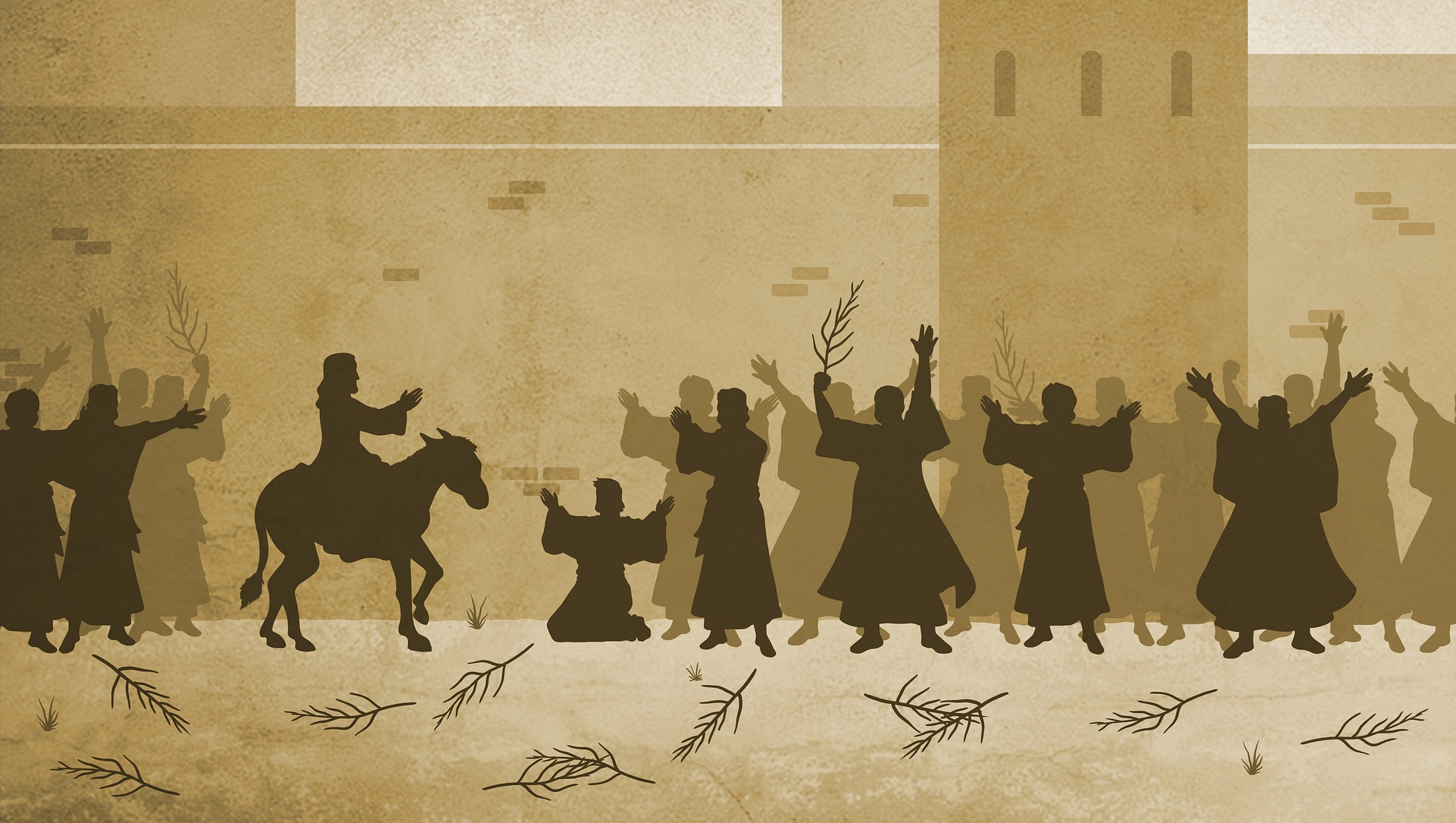
Today’s reading begins with Matthew’s version of what we know as Palm Sunday. Jesus’ triumphal entry is highlighted by praise and adoration from the crowd and from his disciples. There is a buzz in the city. Jesus rides this wave into the temple, where he overturns tables and chairs, throwing out those who have made “God’s house of prayer” into a “hideout for crooks.” He then heals the blind and lame who come into the temple – likely for the first time since becoming blind or lame. Children run around the temple shouting praises. The religious leaders are deeply offended by all of this.

Returning to the city the next morning, Jesus curses a fruitless fig tree. The disciples are amazed at his power. He says to them, “I assure you that if you have faith and don’t doubt… You will even say to this mountain, ‘Be lifted up and thrown into the lake.’ And it will happen.” Build your faith on me, he says, and be amazed at what God will do. As Jesus enters the temple again we see the opposite of this. The leaders question Jesus’ authority. His response begins with a question: Where did John the Baptist get his authority? There is no right answer for the religious leaders. So Jesus tells two parables to reveal their lack of faith and to condemn their fruitless ministry.

In the first parable the religious leaders know it is the first son who does the father’s will. He was obedient. Jesus then tells these leaders that tax collectors and prostitutes are entering the kingdom ahead of them. They heard and believed John, changing hearts and lives. Even this fruit didn’t convince the religious leaders to change. In the second parable tenants mistreat and even kill some of the servants sent to collect fruit. They then kill the son who is sent. The religious leaders tell Jesus that the owner will “totally destroy” these wicked tenants. Jesus then quotes Psalms, claiming to be the stone that the builders rejected. But he tells the leaders that this stone will become the cornerstone, the foundation of the new, coming kingdom.

Prayer: Lord God, you call us to shout “Hosanna!” with our voices and with our actions – not one day a year but every day. When things get in the way of us doing this, clear our lives like Jesus cleared the temple. Build up in us a faith without doubts, a faith that stands firmly on the cornerstone, on Jesus Christ. Amen.


Leave a comment

Worthy of the Kingdom

Reading: Matthew 9-10

Matthew 10:22 – “Everyone will hate you on account of my name. But whoever stands firm until the end will be saved.”

Photo credit: Shane Rounce

Chapter 9 is mostly about the healings that Jesus brought to people. There is the calling of Matthew too and the questioning of why Jesus ate with “tax collectors and sinners.” Chapter 10 shifts first to the calling and sending of the 12. The chapter ends with the realities of the cost of discipleship. This was and still is a reality for the followers of Jesus.

Chapter 9 begins with the healing of a paralyzed man. Jesus begins by forgiving his sins. This is just a means to draw in the “legal experts,” to prove that Jesus has the power to forgive sins and to heal sicknesses. Jesus then calls Matthew, saying, “Follow me.” Later, at dinner, the Pharisees question Jesus’ choice of table mates. He declares, “I didn’t come to call righteous people, but sinners.” As the chapter continues, Jesus heals five more people and Matthew closes with a summary of Jesus’ early ministry. Jesus taught and healed, announcing the good news of the kingdom. The chapter closes with a lament: the harvest is huge but the workers are few. Jesus encourages his disciples to “plead” with God for workers.

Chapter 10 begins with God’s response. The 12 are called and given authority to cast out demons and to heal diseases. They are then sent out to “the lost sheep… of Israel.” The disciples are to go without anything, relying on worthy people to take them in. They will bless these homes. If no one is found worthy in a place, the disciples will move on.

Starting in verse 16, Jesus begins to detail the cost of discipleship. The 12 go out as “sheep among wolves.” They will be arrested and beaten. But the Spirit will be with them and in their words. Jesus says, “Everyone will hate you on account of my name. But whoever stands firm until the end will be saved.” Families will come apart and turn on one another because Jesus did not “come to bring peace but sword.” The disciples are encouraged to “pick up their cross” as they follow Jesus. Doing so, they will be counted as worthy in the kingdom of God. May it be so for you and for me.

Prayer: Lord God, send us out as workers, fully cognizant of the cost of discipleship and fully aware of your Spirit’s presence with us. Lord, use us to bring healing and wholeness to others, encouraging them with the good news of your kingdom through us and our ministries. Strengthen and empower us as we too seek to follow in the footsteps of Jesus. Amen.


Leave a comment

Jesus’ Power

Reading: Matthew 7-8

Matthew 7:14 – “The gate that leads to life is narrow and the road difficult, so few people find it.”

Jesus first addresses our tendency to be judgemental as we begin chapter 7. He asks why we’re concerned with a splinter in our neighbor’s eye when we have a log in our own eye. It is so true. We’ve all been here – again and again and again… His advice? Take care of the log first. Then maybe, just maybe, you can help your neighbor with that splinter.

From this great challenge, Jesus next brings encouragement. Ask, search, and knock and you will receive, find, and have the door opened. God wants to give good things. In the same way, treat others as you wish to be treated. Simple words to hear and comprehend, challenging to live out daily. That’s why Jesus next says, “The gate that leads to life is narrow and the road difficult, so few people find it.” By contrast, the gate to destruction is broad and the road is wide. Many walk this path.

Jesus then teaches about false prophets and false faith. Both are evident by their bad fruit or by their lack of fruit. “Fruit” is the good done in the world. This kind of fruitful faith comes from our foundation. Are we building faith on the bedrock of Jesus Christ or on the shifting sands of the world? On the rock, our faith will not only produce good fruit, it will also withstand the storms of life.

Chapter 8 begins with many healings. Central is the healing of the centurion’s servant. He knows that he is unworthy of having Jesus in his home. He also knows authority when he sees it. He knows Jesus has it. Jesus can say a word and healing will come. Jesus declares he hasn’t seen faith like this in all of Israel. A few are drawn to follow Jesus after the healings, but they have too many worldly concerns to really be a disciple.

The chapter closes with two different reactions to Jesus’ power. After calming the storm (and admonishing the disciples for their weak faith), people are amazed at Jesus’ power. After freeing two men of their demon possession, the townspeople are afraid of his power. They plead with him to leave. Today people have the same reactions when they brush up against Jesus’ power.

Prayer: Lord God, you invite us to love well – ourselves and others. You invite us to bring your healing touch – to ourselves and to others. You offer peace in the storms and relief from worry, doubt, fear – for ourselves and for others. May we know your power today, O God – for ourselves and for others. Amen.


Leave a comment

That Line

Reading: Nahum 1-3

Nahum 1:12-13 – “I won’t afflict you further, Zion. Now I will break off his yoke from you and tear off your chains.”

Photo credit: Nadine Shaabana

Nahum walks a fine line. The historical content of the book covers Assyria’s fall. The capital city, Nineveh, is the focus. In Jonah we saw a mighty God who was rich in mercy. In Nahum we read of a mighty God who pours out divine wrath on the Assyrians. In the long game, God will not tolerate any form of human pride or the existence of injustice. Here is where we get near that line. It can be tempting to rejoice in the downfall of an enemy. Is this not another form of pride?

Nahum describes God as “jealous… vengeful… strong in wrath… very patient… great in power.” The prophet declares that the world and all who dwell on it cannot stand before God’s indignation and fury. And he declares that God is “good, a haven in a day of distress.” In this spirit, Nahum assures God’s people. Though in exile now, God says, “I won’t afflict you further, Zion. Now I will break off his yoke from you and tear off your chains.” Hope is just around the corner.

From 1:14 through the end of the book, Nahum describes the great fall of Nineveh. God is against the city. The enemy’s sword will devour just as Assyria once devoured others. Assyria will become a spectacle. God declares there is “no remedy… your wound is grievous.” At the end we again come to the line. Nahum shares that all who had suffered under Assyria’s cruelty will “clap their hands over you.” To be relieved, even happy, when the yoke is broken,when the bully gets his or her due, – nearing the line. To be joyful and to celebrate someone’s utter destruction? Where did that line go?

Prayer: Lord God, we can sense your power and might today. We can feel your sense of justice and righteousness. You alone are the judge and the giver of just consequences. Help us to hold these things in holy awe. Curb in us the human tendency to find joy in another’s defeat. Keep us in our own lane. Focus us on our walk with you. Amen.


Leave a comment

God’s Longing

Reading: Hosea 6-10

Hosea 6:6 – “I desire faithful love and not sacrifice, the knowledge of God instead of entirely burned offerings.”

Chapter 6 begins with an invitation to return to the Lord. In justice God had injured and struck down Israel. In righteousness God will heal and bind them up. The rest of chapters 6-10 detail the sins of Israel: nationalism, idolatry, false worship, and trusting in self. All are guilty. Again and again Israel has not chosen to walk in the ways of the Lord.

God begins our reading with two rhetorical questions. Hod wonders what to do with Ephraim (Israel) and Judah. God’s hope is stated in verse 6, “I desire faithful love and not sacrifice, the knowledge of God instead of entirely burned offerings.” Israel is going through the motions, doing the things. But there is no sincerity or meaning in their worship. Because of their unfaithfulness, God will “bring them down.” In chapter 8 God declares that Israel has broken the covenant, making idols of gold and silver. They will be swallowed up and will go into Assyria, “a wild ass wandering alone.”

Israel’s sacrifices do not please God. Therefore, their bread will be for “their hunger alone.” It will not come into God’s house. In 9:8-9 the priests are addressed. Even though they are supposed to be “God’s watchmen” rejection is in God’s house. They are corrupt and wicked. The priests attend to the regular sacrifice, yes, but they do not check Israel’s sins. They do not speak out and call our Israel’s sins. They too are a part of the evil. God declares, “I will drive them out of my house. I will love them no more.”

Chapter 10 closes with hope once again. God calls Israel to “sow for yourselves righteousness, reap faithful love.” It is time to seek the Lord. Then, in turn, God promises to “rain righteousness upon you.” Israel has “plowed wickedness… reaped depravity.” God longs for covenant renewal. But the people must be willing. God longs for this today. May it be so.

Prayer: Lord God, you see all of your children’s sins. You see our sin. Yes, at times we too choose selfishness, idolatry, pride. Break us of these evils, Lord. Heal and bind up our sins. Guide and lead us to be people of righteousness and justice. Rain down your power and love. Rain down justice and righteousness. Amen.


Leave a comment

Receive Your Reward

Daniel 12:1 – “At that time, every one of your people who is found written in the scroll will be rescued.”

Today we read Daniel’s visions. These difficult and challenging words carry both a historical meaning and they speak into future times as well. In the historical sense, these words deal largely with Antiochus IV, a Greek king who heavily persecuted the Israelites. His reign brought the first known attempt by a political ruler to wipe out a religion. The historical time frame is 176-164 BCE. These words come much later than Daniel 1-6, set around 400 BCE.

Daniel’s first vision is of four beasts. These kingdoms will rise and fall. All will impact God’s people. But in the end, “the holy ones of the Most High will receive the kingship.” In the end, God will triumph. The fourth, the most evil, represents Antiochus. The 3 1/2 years lines up with his actual reign, as do the wars fought with the “southern king” – Egypt.

Daniel’s second vision of the ram and he-goat are about Persia/Media and the Greeks/Alexander the Great. As strong and powerful and dominant as Alexander will be, his kingdom is divided into four smaller, weaker kingdoms. This vision is followed by Daniel’s prayer in chapter 9. His humble words of confession and repentance move heaven. Gabriel is sent. He affirms Daniel as “greatly treasured” but also confirms the persecution soon to come upon God’s faithful.

Chapter 10 offers insight into another battlefront – the heavenly conflict. Michael helped in the battle against Persia’s powers so that the messenger could get to Daniel. Chapter 11 is some review – the battles between Antiochus and Ptolemy III of Egypt. It is about the persecution the people of God will face too. They are assured that this too will end.

Chapter 12 closes the book of Daniel with words of hope, with words of resurrection and rescue. The messenger speaks of the faithful who “will shine like the stars forever and ever.” In the end, Daniel is also encouraged. He’s told that he “will rest and will stand to receive your reward.” He too will be a part of this glorious eternity. May we also persevere through the challenges, remaining humbly faithful, trusting in God’s power to rescue and redeem.

Prayer: Lord God, as we read these words that the people of God lived through, we too are reminded of the lasting nature of evil. Antiochus wasn’t the first or the last to persecute the faithful. More came. More are yet to come. Lord, lead us to walk in faith, humbling turning to you, the only one with the power to save and rescue. Amen.


Leave a comment

Live Amongst Us

Reading: Ezekiel 38-43

Ezekiel 38:23 – “I will display my greatness, show my holiness, and make myself known in the sight of many nations.”

Chapters 38-39 deal with Gog, a representation of the evil empires. Coming from the north, Gog could represent Nebuchadnezzar. Gog gathers many nations to his side. This mighty army comes to Israel, intent on conquering and looting God’s children. God’s anger is aroused and God unleashes nature on them, followed by turning their swords upon one another. God calls on the birds and animals of prey to feast on the horde’s bodies. So vast was the army, it took Israel seven years to bury the bodies. In the end God promises to pour out “my Spirit” upon Israel. With this Spirit within them, God will never again hide God’s face.

Chapters 40-42 contain the first part of Ezekiel’s temple vision. He is told to pay close attention so he can tell all to Israel. The temple described has some commonalities with Solomon’s temple, but much is different. While a temple will be rebuilt, this temple is never realized in the Bible. Ezekiel’s temple compound is 750 feet by 750 feet. It has three gates, courtyards, chambers, holy places and equipment. The Zadokite clan is set apart as the only Levites to “draw near” to God – to offer sacrifices on the altar. The temple is adorned with winged creatures and palm trees. There are holy chambers, places to store holy things.

The temple is at the center of God’s restoration of Israel, both physically and spiritually. It is a part of the sanctifying process, making Israel into the holy people of God. For Ezekiel and his audience, the temple represented God’s presence with the people. These words and vision bring hope and encouragement to the people living in exile. God longed to live amongst the people of God. God still longs to live amongst us today. May it be so.

Prayer: Lord God, your power and might extend over all things: over Gog and his allies, over today’s idols and temptations, over our selfish hearts. Ezekiel’s temple vision reflects your power and might. But it is still just a building. Just as your presence will fill this visionary temple, fill our hearts with your indwelling spirit, transforming our lives and our hearts. Amen.