pastorjohnb

Thoughts and musings on faith and our mighty God!


Leave a comment

Rejoice! Celebrate!

Readings: Psalms 90-95

‭Psalm 91:2 – “I say to the LORD, ‘You are my refuge, my stronghold! You are my God — the one I trust!'”

Photo credit: Shane Rounce

Today we begin Book 4! We begin with a Psalm attributed to Moses. The Psalm considers the fleeting nature of life. God sweeps humans away “like a dream.” We finish up our years “with a whimper.” So the author invites us to “number our days.” Doing so we learn to live with a “wise heart.” Doing so, life has meaning and purpose.

Psalm 91 petitions God for divine protection. It feels like a counter to Psalm 90. In verse 2 we read, “I say to the LORD, ‘You are my refuge, my stronghold! You are my God — the one I trust!'” The Psalm speaks of God’s protection and saving in times of sickness and trial. It proclaims that if even 1,000 fall dead, we will be ok. This is because God will “order his messengers to help you… to protect you.” While we can feel the psalmist’s trust, we must remember that this is a possibility and not necessarily a promise. The faithful are not immune from the happenings of life.

Psalms 92 and 93 compliment each other. Psalm 92 is a song of thanksgiving for victory. The wicked are like grass – they perish quickly. The righteous are like trees. They will bear fruit in old age. Psalm 93 recognizes God as the one who won’t be shaken, as the one mightier than the flood. Holiness “decorates” God’s house.

Psalm 94 is addressed to the “avenging God.” The arrogant brag and afflict widows, immigrants, and orphans. The God who hears and sees will repay the evil. This God helps the righteous, steadying slipping feet and comforting the anxious. This God is our fortress and our rock of refuge.

This leads us to Psalm 95, a call to worship God. It begins, “Let’s raise a joyful shout.” The “people of his pasture” are called to worship, to bow down, to kneel before the Lord.  A warning against hardening one’s heart closes the Psalm. It is good to offer our praise and thanksgiving to God. It counters our prideful nature and our tendency to turn inward.

Prayer: Lord God, at times we pray as the psalmists pray: steady us, comfort us, forgive us, protect us. At other times we too rejoice in your goodness and love. We celebrate your faithfulness and your justice. Today may our lives sing of your glory, power, and might. Amen.


1 Comment

God’s Faithfulness

Readings: 2nd Chronicles 10, 2nd Chronicles 11, 2nd Chronicles 12, 2nd Chronicles 13

2nd Chronicles 12:12 – “Total destruction was avoided. There were, after all, some good things still in Judah.”

Leaving behind the ideal kings David and Solomon – at least according to the chronicler – we turn today to the reigns of Rehoboam and Abijah. Jeroboam of Israel is also a minor part of the story. Rehoboam’s reign begins poorly. He allows the pride of youth to lead him to a bad decision and God’s people are split into two nations. Jeroboam rules over ten tribes in the northern kingdom. Rehoboam rules over two in the southern kingdom of Judah. In comparison, Rehoboam is a good king. Through Shemaiah the prophet, war is avoided. Rehoboam strengthens his defenses. The Levites flee the idolatry of the northern kingdom and support Rehoboam.

But Rehoboam was not faithful to God. So God sends Egypt to bring divine punishment. But God sends Shemaiah and Rehoboam and Israel’s elders submit to God. God relents – somewhat. Egypt attacks and is victorious, hauling away the treasures of the temple and the palace. We find a silver lining in verse 12:12 – “Total destruction was avoided. There were, after all, some good things still in Judah.” Warfare with Jeroboam marks the rest of Rehoboam’s monarchy.

Abijah becomes the next king of Judah. Jeroboam and 800,000 soldiers march out against Abijah and 400,000 soldiers. Abijah first calls out Israel’s unfaithfulness and reminds them of Judah’s faithfulness. He claims that God is on Judah’s side. This proves to be true as Judah wins a stunning victory, killing 500,000 soldiers from Israel. This blow weakens Jeroboam, who soon dies, struck down by the Lord.

In today’s readings we see a truth that flows throughout the scriptures: God is merciful to those who are faithful or who turn back to God with changed hearts. When we falter or doubt or sin – which we will more surely do – may we remember God’s faithfulness, turning once again to the one who is always merciful and loving.

Prayer: Lord God, thank you for the reminder of your great love and mercy. Draw us back to you again and again when we turn from you over and over. God, you are so good and so faithful. Thank you. Amen.


Leave a comment

Unrest Around Every Corner

Readings: 2nd Samuel 20, 2nd Samuel 21, 2nd Samuel 22, 2nd Samuel 23, 2nd Samuel 24

2nd Samuel 22:31 – “God! His way is perfect; the LORD’s word is tried and true. He is a shield for all who take refuge in him.”

Trouble begins our reading and makes frequent appearances throughout. Sheba tries to lead Israel away from David. Only one clan joins his revolt. In the pursuit, Joab kills Amasa, eliminating a rival. In the end, Sheba is beheaded by the people of Abel. Next a famine falls upon the land. It is connected to Saul’s treachery against the Gibeonites. David inquires of the Lord, who sends him to them. The price to fix this wrong is set at seven sons of Saul. They are offered up by the Gibeonites as the blood price for Saul’s sin. Rizpah, the mother of two of the seven, mourns day and night for months, keeping guard over their bodies. This moves David. He reburied Saul and Jonathan in the ancestral grave of Saul’s family.

War and battles with the Philistines continues to be the norm. After a close call David is told he will never go into battle again. This is one hint that chapters 21-24 were written or at least take place before Absalom’s rebellion. David offers a Psalm of praise in chapter 22. God is his rock, fortress, rescuer, salvation. God hears his cries. God rewards David’s righteousness and integrity. God shows faithful love to God’s anointed. He then offers some “last words” about covenant and dynasty.

Then there is a list of David’s warriors along with some of their feats. Then 2nd Samuel closes with another sin and its consequences. A census is ordered. Joab questions this. David overrules him. Pride is at play in David’s heart. After the census David feels guilty and he repents. The prophet Gad is sent to David with three choices of consequences. David chooses the plague, trusting God’s mercy over what human hands might do. After 70,000 die, David cries out and God relents. Gad instructs David to buy a threshing floor at the place the plague stopped. He does so, building an altar and offering sacrifices. The plague ends. Yet unrest lies just around the next corner as we turn to 1st Kings tomorrow.

Prayer: Lord God, unrest and turmoil and violence continue to be the norm. This feels like our world today. Yet here and there your love and goodness poke through – in a mother’s love, in your mercy, in David’s faithfulness. In the midst of the trials and sufferings of our world, remind us again and again of your love, mercy, and goodness. And, Lord, use us as conduits of these things in our world too, reminding others of your presence here with us. Amen.


Leave a comment

Imperfect But Usable

Readings: Joshua 6, Joshua 7, Joshua 8

Joshua 6:38 – “Don’t be angry with me… Please let me make just one more test.”

Today’s chapters focus on Gideon. In Gideon we see faithfulness to God right alongside his battles with doubt, fear, anger, and pride. We experience these things in our walks of faith. Like Gideon, we want to obey God, but often stumble over our own will and ways. More than anything, though, in these chapters we see that God can use Gideon’s flaws to ultimately work out God’s plans for Israel. God can and will do the same for you and for me.

The people have sinned and God allows the Midianites to cruelly oppress Israel. They cry out. God sends a prophet who reminds them, “You have not obeyed me.” Then God’s messenger calls Gideon. He is reluctant. He has excuses. He tries God’s patience. At one point Gideon says to God, “Don’t be angry with me… Please let me make just one more test.” God works through all of his tests. Satisfied for now, Gideon calls for an army. Yet fear persists. God allows him to overhear a dream which restored his courage. God then tests Gideon, whittling his army of 32,000 down to 300. Credit must go to God. Pride rises up in Gideon as he gives the battle cry: “For God and for Gideon.” Following a wild plan of God, similar to Jericho, victory is won. God’s plan is complete. Yet Gideon chooses to pursue the enemy kings.

In Gideon’s pursuit he asks the people of Succoth and Penuel for bread. They deny Gideon and his army any bread. He threatens them. Soon he captures these two enemy kings and executes them – revenge for killing Israelites. He returns to Succoth and Penuel, exacting violent revenge here too. Pride and anger rule in his heart. Yet when asked later to be Israel’s ruler, he states, “The Lord rules over you.” Apparently he is not part of this “you” though as he collects gold earrings and makes a priestly vest. This trap leads straight to idolatry and the continuing downward spiral of Israel. More on that tomorrow.

Prayer: Lord God, help us to learn both from the good and the bad that we see in Gideon. Help us to be faithful and to follow your plans. Help us to see, though, when it becomes about us and our plans. Keep us from the perils of sin. Guide us to walk in your ways. Amen.


Leave a comment

Total, Complete, Unfailing Love

Readings: Deuteronomy 5, Deuteronomy 6, Deuteronomy 7, Deuteronomy 8

Deuteronomy 6:5 – “Love the LORD your God with all your heart, all your being, and all your strength.”

Our readings today begin with Moses’ call to remember what God said on Mount Horeb. He then reviews this by reiterating the Ten Commandments. Moses is doing so because he will spend most of the next 20 chapters unpacking these ten rules to live by. From here Moses moves to “the great commandment” in chapter 6. In verse 5 we read it: “Love the LORD your God with all your heart, all your being, and all your strength.” In many ways this sums up the first four of the 10 Commandments. Moses goes on to show just how all-encompassing this command is to be for faithful living. Tell your children, talk about it all the time, write it on the places that you’ll see often – make this the central tenet of your faith and your life.

This is then followed up with a warning against arrogance. All the cities and houses, all the wells and orchards – you didn’t do this. God gave it to you. A similar warning comes in chapter 8 too. God must have known we’d struggle with pride, ego, vanity… Love God, not self.

Moses/God commands the Israelites to teach their children their communal history and then to teach them the Law. Begin with the why and then move to the how to live faithfully in response to God’s love and care and provision. We shift next to how to deal with foreign worship. First, don’t enter into covenants with and don’t intermarry with the Canaanites. Destroy their idols, altars, poles, and sacred stones. The Lord is the only true God. Remember and live this and God will bless them in every way possible. In every way.

Chapter 8 is a reminder chapter, a why chapter. Remember God gave you manna and taught you that you don’t live by physical bread alone. Remember that God trooped you through the desert for 40 years and that your clothes didn’t wear out. Remember all that has happened to you as you stand on the edge of the Promised Land. This remembering will allow Israel to move forward in obedience and faithfulness. May we too remember often what the Lord our God has done for us. And may it lead us forward in obedience and faithfulness.

Prayer: Lord God, what rich and deep and powerful reminders today of your total and complete and unfailing love and care for your people. At times you are the shield about us and at times you are the love that enfolds us. What an awesome God we love and serve. All the power and glory are yours! Amen.


Leave a comment

Center Stage

Readings: Genesis 9:18-39, Genesis 10, Genesis 11

Genesis 11:4 – “Come, let’s build for ourselves a city and a tower with its top in the sky, and let’s make a name for ourselves.”

Continuing in chapter 9 today we see that sin hasn’t left the world with the flood. Noah grows grapes and makes wine. He gets drunk then naked. Ham sees his father naked and instead of covering him up, he tells Shem and Japheth about it. They do the right thing and later receive Noah’s blessings. Ham, by contrast, is cursed because he did not honor his father.

Chapter 10 details the most of the descendants of Shem, Ham, and Japheth. They are listed a variety of ways – names, families, languages, lands, nations. This creates a kind of early ethnic map of the ancient world. Shem’s genealogy is found again in chapter 11. But it diverges in verse 18 as it follows Peleg’s branch of the family tree. This branch ends with Abram and family in the land of Haran. Sarai and her barrenness is also mentioned. This is a sharp contrast to the long list of children and descendants found in chapters 10-11.

In the middle of these genealogical lists we find the story of the Tower of Babel. In this story we see that the human tendency towards pride and arrogance survived the flood. At Shinar the people begin to scheme, saying to one another, Come, let’s build for ourselves a city and a tower with its top in the sky, and let’s make a name for ourselves.” They want to build a tower that reaches to heaven. It could be to connect with God or it could be to be like God. It’s likely the second as they also desire to be famous, to be recognized for their skill. As a means to counter this pride and sin, God confuses or jumbles their languages and then dispersing this prideful bunch all over the earth.

When we try to take center stage for ourselves, how does this affect our relationship with God and with one another? How does God normally respond?

Prayer: Lord God, in my thoughts, my words, my actions, may I honor you and bring all the glory to you. When I’m tempted to bring the focus to me, remind my heart of you, my audience of one. Amen.


Leave a comment

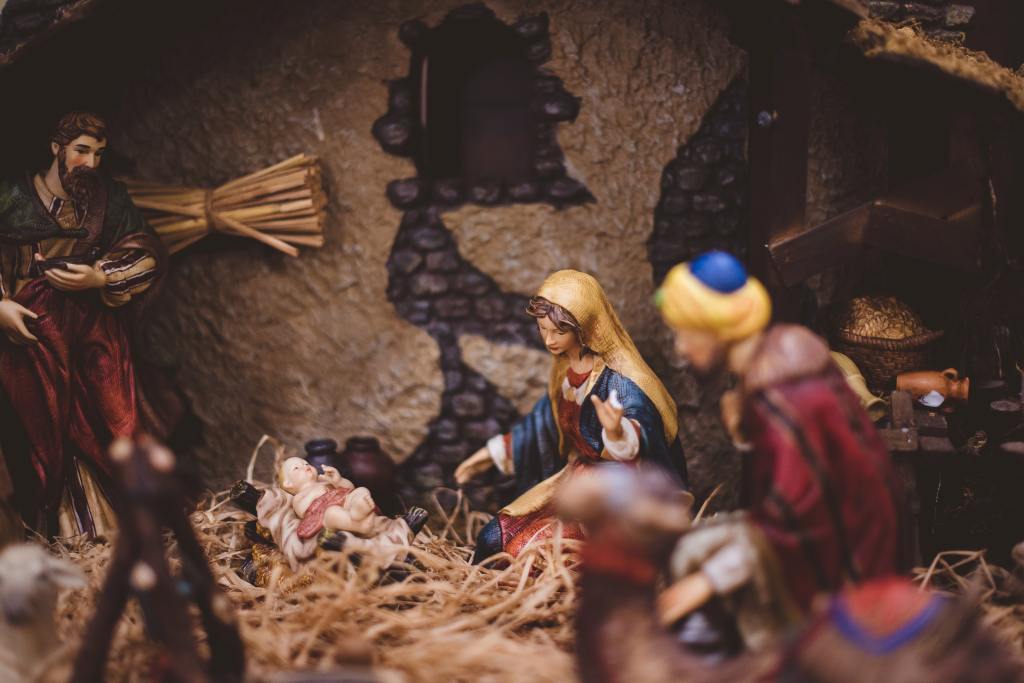
A Child Is Born

Reading: Isaiah 9:2-7

Verse 6: “For to us a child is born, to us a son is given.”

Photo credit: Ben White

Chapter 9 begins by speaking of one who will “honor Galilee of the Gentiles.” While this verse is not in today’s passage, it is important to recognize the messianic implications given in the lead-in into today’s prophecy from Isaiah. Jesus will minister to and connect to the Gentiles – which was considered anyone outside of the Jewish faith.

The prophecy begins, “The people walking in darkness have seen a great light.” There are many ways that one can walk in the darkness. The primary way is living outside of a relationship with the Lord. Living in the world and following the ways of the world provide ample opportunities to be selfish, greedy, prideful… To know Jesus is to know the light. His light exposes these evils and lights our path, drawing us into a personal relationship with him.

In verse 4 we read that “you have shattered the yoke that burdens them.” There are many ways that the Lord can do this. We often first think of Jesus breaking the chains of sin and death. He certainly does that! But Jesus shatters other yokes too – some are the lies that the world and Satan tell us about things like success, power, status, beauty… Others are struggles like loneliness, poor health, anxiety, doubt… Our friend and Savior and redeemer Jesus wants to walk with us through all of life, bringing peace, hope, joy, and love into our lives not just during Advent but all the time.

Isaiah’s prophecy states, “For to us a child is born, to us a son is given.” To us and for us, God took on flesh and came into the world. God laid aside heaven to be with us. What a gift this is. This action opened the door for a more personal and intimate relationship with God. Through dwelling with us, Christ opened the door to dwell in us in Spirit. What a friend, guide, Savior, and redeemer we have in Jesus. What a gift!

Prayer: Lord God, thank you for fulfilling these words that you long ago gave to Isaiah – for coming as a child, for being light in our darkness, for being our Wonderful Counselor, our Mighty God, our Everlasting Father, our Prince of Peace. Reign and rule in our hearts this day and forevermore. Amen.


Leave a comment

Change IS Necessary

Reading: Mark 1:1-8

Verse 3: “Prepare the way of the Lord, make his paths straight.”

Returning to Mark 1 today we delve a little deeper into the “repent” part of John’s message. Although we tend to place the practices of introspection, confession, and repentance in the season of Lent, these practices also have a place in Advent. They are the focus of our Lenten preparation. They are part of our Advent preparation.

By our nature we are prone to sin. We are naturally selfish and this leads us to be greedy or controlling or lustful or prideful or… These emotions are enablers on our path to sin. So we need to hear the call to repent, even now in this season of hope and peace and love and joy. The call to repent makes us a bit uncomfortable. First, no one likes change, especially when it is forced. And that is what repentance is really about – forcing our naturally selfish nature to be unselfish. And, second, no one likes to hear that they are living wrong, that they are living unfaithfully. To hear this implies a need for a change. And change is necessary.

In Advent we prepare the way in our hearts for the coming of Jesus. In his birth we celebrate the light coming into the world. It is the light of Christ that shines into the darkness of injustice and inequality, poverty and want, isolation and loneliness, grief and anger, violence and war, and so much more. It is the light that beckons us into these places and spaces. This too is part of the call to repent – to help our world and one another to repent of these maladies. In these places and spaces change is also necessary. As we allow the light of Christ to shine brighter in our own hearts, may we also take that light out into the world, bringing healing and wholeness to our broken and dark world.

Prayer: Lord God, may our journey be both inward and outward. As we grow in our love for you, may that love overflow out into the world. As we seek to change within, may we also seek change in our world. In and through us may your light shine brightly, bringing healing within and without. Amen.


Leave a comment

Serve the Lord

Reading: Joshua 24:1-3a and 14-15

Verse 14a: “Now fear the Lord and serve him with all faithfulness.”

Photo credit: Einar Storsul

Having crossed the Jordan and entered into the Promised Land, Joshua gathers the leaders and the people together. They present themselves before God. It is time to decide how to move forward. As Joshua begins to speak he reminds them of their roots: of how God took Abraham and brought him to Canaan and of how God made them into a great nation. It is good to remember our roots, our foundations. Whether through a day like All-Saints’ Day or through a family gathering, whether through Sunday worship or a coffee house conversation, it is important to remember who and whose we are. That is what Joshua is doing with the Israelites. This conversation continues in verses 4-13.

Joshua reminds Israel of who and whose they have been so that he can call them to who and whose they should be moving forward. Telling stories and remembering the past is often how we decide our next steps as we consider our lives and our faith journey. It is at this point that Joshua issues this challenge: Now fear the Lord and serve him with all faithfulness.” Revere and respect the Lord. Be faithful to God alone. As he continues, Joshua challenges them to “throw away” the gods that they’ve added along the way. The call to ‘throw away’ these false gods underscores how useless they are. At the core of this challenge, in essence, is a call back to one God and to loving God with all of one’s heart, soul, mind, and strength. “One” and “all” are the key conditions here.

This challenge, this call – it is as relevant today as it was the day Joshua spoke it. It is easy to pick up false gods as we journey through life. Early on we’re taught that success, competition, beauty… are things to seek. Soon enough we’re taught that wealth, status, power… are things to seek. Pride, ego, lust, jealousy… come along with these things we chase. These false gods present a challenge to having one God and they become barriers to loving God with all that we are. Against these gods we must take a stand. In the last verse of today’s passage Joshua declares, “As for me and my household, we will serve the Lord.” May it be so for you and for me.

Prayer: Lord God, oh how many gods the world lifts up over you! The world values so much that runs counter to or becomes a barrier to fully loving you with all that we are. Turn my heart, my mind, my will, and my desires to you alone, O God. There I will have all that I need. Amen.


Leave a comment

The Way to Abundant Life

Reading: Psalm 106:1-6 and 19-23

Verse 6: “We have sinned, even as our ancestors did; we have done wrong and acted wickedly.”

Psalm 106 begins by praising and giving thanks to God because God is good and because God’s love endures forever. To praise and give thanks to God for these things is something that we should do every day. The psalmist then notes that we are blessed when we “maintain justice” and when we “do what is right.” Living in alignment with God’s will and ways is a blessed way to live. This is the experience spoken of in verses 4-5. The people of God – when living as the people of God – they enjoy prosperity and joy. What blessing!

The Psalm suddenly turns in verse 6. It gets real honest. Here the psalmist writes, “We have sinned, even as our ancestors did; we have done wrong and acted wickedly.” This is as true for us as it was for the psalmist. Humanity is prone to sin. Left unchecked by the will and way of God, we become selfish and greedy and prideful… We become the one on the throne or we try and surround ourselves with things that make us feel safe and secure. We seek to achieve and gather, these things soon growing into idols. It might not be a golden calf, but it is certainly as temporal and manmade.

We make idols and lose our way for the same reason that the Israelites did: “They forgot the God who saved them.” We do this when we fail to do what the psalmist prescribed in verses 1-6. Praising God for the love and blessings, living out God’s justice and righteousness, and frequently confessing and repenting of our sins – these are the antidotes to becoming selfish, greedy, prideful… This is the way to abundant life, both now and into eternity. May this be the way that we choose to live day by day.

Prayer: Lord God, forgive my wayward and selfish decisions and choices. Strengthen me to change, to grow less selfish and prideful. Replace these with your justice and righteousness. Open my eyes to your works, filling my heart with praise and thanksgiving – for your mighty deeds and for your gentle touches. All praise and glory to you, O God! Amen.