pastorjohnb

Thoughts and musings on faith and our mighty God!


Leave a comment

Weeping

Reading: Matthew 2:13-23

Matthew 2:13 – “Get up. Take the child and his mother and escape.”

Today we read the story of a family leaving home and country to find safety. Violence was bearing down on their community. A powerful and violent ruler sought to maintain their grip on power and control. The story from Matthew 2 played out over 2,000 years ago. Sadly, the same kind of story had been played out for thousands of years before then. Even sadder, stories like today’s play out in our world on a regular basis even now.

The wise men (or magi) had alerted King Herod to the “newborn king of the Jews.” Bearing that title himself, Herod was greatly troubled by this news. In today’s reading the angel tells Joseph, “Get up. Take the child and his mother and escape.” Joseph and family flee Israel, escaping to Egypt. Although Jesus is saved, all the children two and younger in and around Bethlehem are killed. All. Weeping and grieving are heard throughout the region.

Similar weeping is heard today in Gaza and Ukraine. In many other parts of the world affected by violent rulers, the cries ring out. In our cities and on our reservations, grief over children lost comes too frequently. Gangs and suicides disproportionately affect places with high poverty levels. We read about what happened 2,000 years ago and we weep for those families. We’re reminded today of what is happening now. Will we do more than weep, O people of God?

Prayer: Lord God, the Herods of the world are still very much alive and in power. Violence and force continue to be the means many rulers use to maintain their grip on power and control. The most vulnerable suffer the most. Raise up in us a holy fire, a fire that drives us to stand with and to speak for the least of these. Empower us to stand and speaks against violence and other evils. Guide us to be people of peace and grace, of love and community. Amen.



Leave a comment

Trusting, Confessing

Reading: Romans 8:18-10:21

Romans 10:10 – “Trusting with the heart leads to righteousness, and confessing with the mouth leads to salvation.”

Photo credit: Shane Rounce

As we continue in Romans 8 today we find great hope. First Paul reminds us that this present suffering is nothing compared to the coming glory. With hope we await being “set free” as we who have the Spirit become the “first crop.” Today these words remind me of the rapture imagery found in Revelation.

Paul then speaks of the Spirit’s role in our lives. The Spirit intercedes for us, praying for us, “consistent with God’s will.” Accordingly, God works all things – us included – towards the good. God is good. To work this process out, we are increasingly conformed to Christ’s image. In this process we become less and less like the world. Therefore nothing worldly – trouble, harassment, famine… death, rulers… – nothing can separate us from God’s love that we find in and through Jesus. Hallelujah!

The apostle shifts gears in chapter 9. Paul laments Israel’s rejection of Christ. He would give up his salvation to see Israel turn to Christ. Yet Paul also recognizes that this is God’s plan unfolding, not his. This is a good reminder to us. It is God who shows mercy and compassion to whom God chooses. This is why it is the Gentiles who came to faith that leads to righteousness. The Jews instead sought to “establish their own righteousness.” But keeping all of the Law proved impossible. The righteousness that leads to salvation comes only through faith. Paul summarizes in 10:10 – “Trusting with the heart leads to righteousness, and confessing with the mouth leads to salvation.” May it be so for you and for me.

Prayer: Lord God, faith, trust, hope, obedience, surrender – such simple concepts in many ways. In an ideal world, so easy. Yet our world is not easy or ideal. Many things can challenge or assault our faith – real things like death, harassment, famine… Lord, may your Spirit intercede for us always and may it walk with us, strengthening and encouraging us in our walk of faith. As ones who are conformed to your Son, and therefore to you, use us as love and mercy and compassion in your world. Amen.


Leave a comment

Required… Good…

Reading: Micah 5-7

Micah 6:14 – “You devour, but you aren’t satisfied; a gnawing emptiness is within you.”

Today’s reading begins with a messianic prophecy: “As for you, Bethlehem… one who is to be a ruler in Israel on my behalf will come out of you.” This ruler will “stand and shepherd his flock” – all in the strength of the Lord. Micah declares, “He will become great throughout the earth.” But first, Assyria will invade and then they too will be defeated. The few survivors, the remnant, will be “amid many peoples.”

Micah then expresses God’s judgment against Israel’s neighbors. God will “exact vengeance” on those who don’t obey. In chapter 6 God brings a “lawsuit” against Israel. God first invites them to remember all that God has done for Israel. Then a question is asked: What does God require? Is it the sacrifice of 1,000 rams or the giving of torrents of oil? Is it sacrificing a first child for one’s sins? No, Micah says, God has told you what is required and good: “to do justice, embrace faithful love, and walk humbly with your God.” Here he summarizes the whole Torah in these three simple yet difficult actions.

Israel is far from this standard. Wicked scales and bags of false weights betray their greed. Violence and dishonesty shows their true hearts. Verse 14 describes the state of their souls: “You devour, but you aren’t satisfied; a gnawing emptiness is within you.” This all sounds much like our day, where many chase after idols and pursue more and more and more.

Micah feels doomed and alone. Yet he declares that he will keep watch, that he will wait for God’s salvation. For Israel there is a price to be paid, but there is also hope. God will show Israel “wonderful things.” God will pardon their iniquity and show “faithful love.” God will have compassion on them. We, like Micah did, await the fulfilment of these words with hope and with faith. And as we wait, may we do justice, embrace faithful love, and walk humbly with the Lord our God.

Prayer: Lord God, we know well the truth of exile – the result of our attempts to satisfy our own hungers leave us far from you. We also know well the price of these decisions – a growing emptiness in our souls. You long to redeem us, to forgive our sins, to restore our relationship with you and with one another. So guide us into a humble walk, to a place of surrender – both of our sins and of our hearts. Shepherd us, your people. Amen.


Leave a comment

Love Creation

Reading: Psalm 8

Verse 4: “What is mankind that you are mindful of them, human beings that you care for them?”

Photo credit: Falaq Lazuardi

Psalm 8 is a song of praise that calls us to praise God. It begins and ends with the refrain, “O Lord, our Lord, how majestic is your name in all the earth.” In between these bookends David recognizes both the amazing creation all around us and the connection that we have to that creation.

David identifies God’s handiwork in the heavens – “the work of your fingers.” Staring up on a clear night, taking in the cast array of stars each known by name, one is awestruck, moved, amazed. This is just one way that we can and do connect to God through creation. It can also come in the intricacy of a spider web or in the beauty of a flower or waterfall or in the power of a thunderstorm or… God is present in so many ways in the creation.

Then, in verse 4, David asks an awesome question: “What is mankind that you are mindful of them, human beings that you care for them?” This question makes me pause. It brings to mind both times when I have been 1 in a crowd of a million and times when I’ve been the only 1 in a million acres – both remind me of God’s power and might, both call forth the humility of this question. It is good to ponder this question, to be humbled.

David answers this question in the next few verses. God does “crown with glory and honor” humankind. God did make us “ruler over the works” of God’s hands. Here we must be careful. If we carry the humility generated by the question with us, then we see a great responsibility and a great privilege in these roles. If not, it easily becomes all about me. May we choose to love creation as God loves creation.

Prayer: Lord God, what a world you have made and continue to make! There are so many ways that I see your fingerprints in all of creation. As I interact with your creation, may my fingerprints look like yours. Amen.


Leave a comment

This Ruler

Reading: Micah 5: 2-5a

Verses 4-5: “He will stand and shepherd his flock… And he will be their peace.”

Photo credit: Hans Heiner Buhr

Micah writes in chapter five of the promised ruler that will come from Bethlehem. Even though “small among the clans,” one who will rule over Israel will be born here. This will be no ordinary king. No, this ruler will be one “whose origins are from old, from days of eternity.” This ruler will be one who was present before time began and who will reign forever.

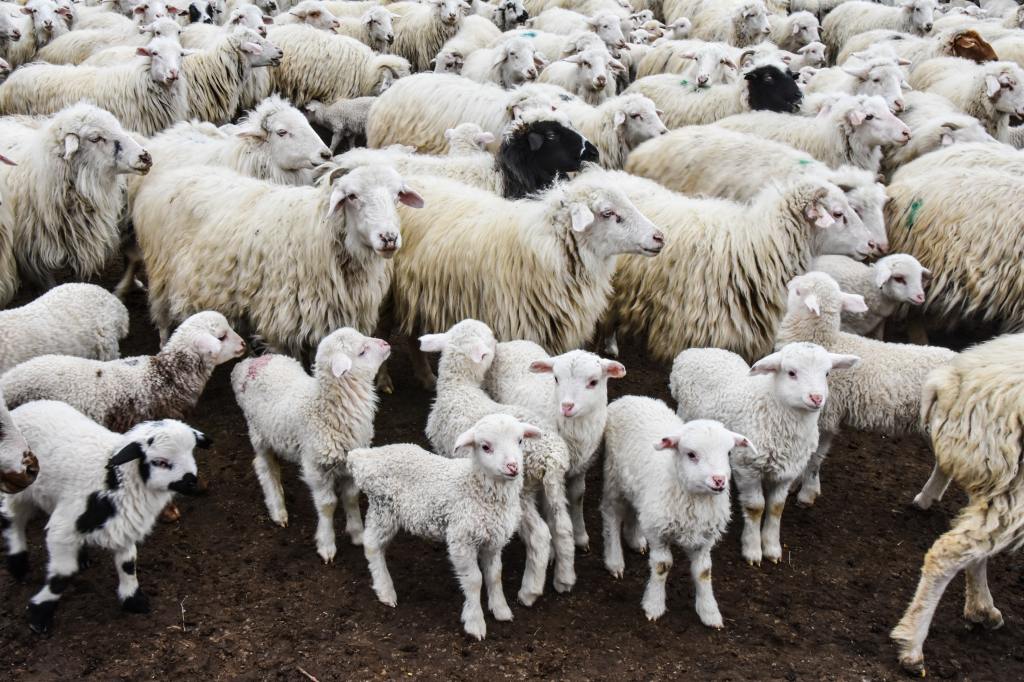
Micah also describes this ruler’s reign: “He will stand and shepherd his flock.” This king will be like a shepherd, like one who tends the flock. This will not be a ruler who reigns from the throne in the palace. This ruler will be right there with the people – spending cold nights out in the fields, seeking shelter under trees and in caves when the rains come. This ruler will do anything to protect, to lead, to guide the flock. This ruler will know what it is like to be one of the flock, so personal and intimate will their connection be.

Because of this ruler’s great love, the flock will be secure. This ruler’s greatness will “reach the ends of the earth.” There are parts of the kingdom present all around the world. In every nation are followers who bow at the mention of his great name. In the last verse we read, “And he will be their peace.” No, this ruler does not shield the flock from all of the dangers and difficulties of the world. This ruler does not lock the flock up behind impregnable walls, insulating them from the world. Just the opposite: this ruler sends the flock out into the world to engage it, to interact with it, to live among the pain, the brokenness, the hurting – just as he did when he walked the earth. It is sometimes scary or dangerous or uncomfortable. But this ruler sends the flock our covered in his peace.

The Good Shepherd continues to send us, the flock, out into the world, bringing his peace and great love with us. As we go forth today may we seek to bring the peace and love of Christ to all we meet, connecting them to the one born in a manger in little Bethlehem. May it be so for us all.

Prayer: Lord God, under your gentle guidance and strong protection, lead me out today. Help me to see all people as potential members of the flock. Use my words and actions to draw others inside the circle of your love and peace. Amen.


Leave a comment

Live Up

Reading: Psalm 8

Verse 5: “You made him a little lower than heavenly beings and crowned him with glory and honor”.

The psalmist begins and ends with the same line: “O Lord, our God, how majestic is your name in all the earth”! It is a good reminder of who God is and of our proper response – to praise God. In accordance, as the Psalm unfolds, the writer marvels at God’s handiwork that is evident in the heavens, stars, and moon. It leads him to questioning God being mindful of humanity. Compared to the vastness and immensity of creation, mankind can seem insignificant. We are but one small piece of the created order.

Humanity is one small but very important piece of the creation. In verse 5 we read, “You made him a little lower than heavenly beings and crowned him with glory and honor”. We are each made in the image of God. We are the “closest” to God in all of the created order. In the next verses we are reminded that God made humanity the “ruler” over the works of his hand. This idea of being a little lower than God can be both good and bad.

The idea is good when we read “ruler” as steward or caretaker of the earth and creation. The image we get of God is one of loving father, doing what is best for his children, even if it is sometimes hard. When God created, all was good. This remains God’s bent, for good to reign. But at times we can read “ruler” and think we can do or say anything we want. Our will and our desires can become the only thing that matter and the results are usually not for good.

When we consider this awesome responsibility, our place in the created order, we must remember that we are not God but are made in the image of God. Yes, we are called to be like him, but not to be him. When we see ourselves as “a little lower” than God we are less likely to be prideful and arrogant and self-serving. It does say “a little lower” so we must also seek to live up to that concept. In living up we remember our sacred worth and to live that out so that the Lord our God delights in us. The psalmist calls us to a high standard, one guided by love and care for the created world. May we live in a way that is pleasing to God.

Prayer: Lord God, you call us to a great standard – living in your image. Jesus lived that image well. He modeled a life filled with grace and mercy and love and service. May I follow him well this day, caring well for all that you place in my hands today. Amen.


1 Comment

The King

Reading: John 18: 33-37

Verse 36: “Jesus said, ‘My kingdom is not of this world'”.

Today is the last Sunday in the Christian calendar. Advent begins next week. Today’s passage speaks of Jesus as king. This Sunday is known in many denominations as “Reign of Christ Sunday”. This morning I read about the history of this special day.

In the 1920s, nationalism was on the rise again. Europe was recovering from World War I and a “narrow nationalism” was on the rise. To both combat this and to recognize and affirm the place of Christ, Pope Pius XI decided to use the last Sunday of the Christian year to honor the reign of Christ. The aim is to declare that, as Christians, our primary loyalty belongs to Jesus Christ.

When Jesus ended up before a political ruler, Pilate did not know quite what to do with Him. Pilate could only understand Jesus and n political terms. As Pilate questioned Jesus, He said, “My kingdom is not of this world”. Yes, Jesus is a king but not in earthly terms. Yes, Jesus does have a kingdom but it is not defined by geographical or political boundaries. Its strength is not based upon the land mass or size of the armies. Jesus’ kingdom derives its power from love.

Today, may we each take a moment to recognize Jesus as the king of both heaven and earth. In our own hearts may we acknowledge Jesus as Lord. In the world, may we live to bring glory and honor to the one true King.

Prayer: Lord, I invite you to be the King of my heart. Rule in me and through me. Amen.