pastorjohnb

Thoughts and musings on faith and our mighty God!


Leave a comment

Sing, O Israel

Readings: Psalms 64-68

‭Psalm 68:9 – “You showered down abundant rain, God; when your inheritance grew weary, you restored it yourself.”

Psalm 64 begins with a prayer for protection and finishes with a celebration of God’s acts. Psalms 65-67 join in the celebration of God’s mighty acts. We close with Psalm 68, mostly more praise but with some petitions for God to act. As we draw close to the end of Book 2, we see the shift towards more praise and less lament.

Psalm 64 begins with prayer of protection against the evil doers’ words or “arrows.” What an appropriate descriptor. The psalmist trusts that God will respond with an arrow too. Then the righteous will rejoice in the Lord. The rejoicing continues in Psalm 65, where David is grateful for God’s listening ear and forgiving heart. David also celebrates how God can “calm the roaring sea.” How we too are grateful for this gift! The Psalm closes with thanksgiving for God’s provision of abundant flocks and grains. Yes, God is good.

Psalm 66 focuses on God’s deeds and power. This power has tested and refined them – a good process. A good one for us too. Not always enjoyable but always fruitful. The psalmist’s response? Offerings given and promises kept, a joyful response! The thanksgiving extends in Psalm 67 to include the gift of salvation. It is to be made known to the nations. Then the nations of the world will better understand the fair judgments that God renders and will better receive the guidance that God desires to give to all of the nations of the world.

Closing today with Psalm 68, the Psalm begins with a grand sweep of God’s acts: scatters the enemy, cares for orphans and widows, sets prisoners free. The psalmist celebrates God’s provision and love: “You showered down abundant rain, God; when your inheritance grew weary, you restored it yourself.” The Psalm closes by remembering God’s past victories, grand worship, and shows of strength. The psalmist longs for these to return. Remind yourselves through song. Sing, O Israel, sing to the God who gives you strength!

Prayer: Lord God, we too thank you for the many ways that you move in our lives and in our world. We offer you our praise and worship! And we too count on your continued presence. Without you, O Lord, we’d be in trouble. Shower us with your abundant love and provision. Go with us day by day. Amen.


Leave a comment

The Path of God and Salvation

Readings: Psalms 50-53

‭Psalm 50:3 – “Our God is coming; he won’t keep quiet. A devouring fire is before him.”

Today’s first two Psalms focus on divine judgment and forgiveness. The second two focus on wickedness and unbelief. Asaph begins with God’s voice and presence. He warns: “Our God is coming; he won’t keep quiet. A devouring fire is before him.” The fire devours evil and it devours the sin in our lives. In Israel’s life one sin is going through the motions. God desires that their sacrifices come from the heart, not from the routine. The Psalm closes by addressing the behavior of the wicked. They hate both discipline and God’s word. They are given a choice: choose the correct path of God’s salvation or “I’ll rip you to pieces.” This is their choice. We too face this choice: life or death?

David chooses the path of salvation in Psalm 51. He has walked about as far from God as one can: lust, adultery, murder. In the opening verses he begs for God to wash him of his sin. He admits his guilt and asks God to purify him, to allow him to “hear joy and celebration again.” David asks God to “create a clean heart… a faithful spirit” within him. From this place of brokenness and contrition David will once again praise the Lord. It is a good and honest and right place to go. It is part of choosing the path of salvation.

Psalms 52 and 53 paint evil for what it is: bragging, deceptive, destructive, corrupt, selfish. It comes from both the words of the tongue and from the deeds of the hands. Evil words and deeds result in shame and in being uprooted by God. This sounds bad. Really bad. Yet at times we do make the choice to sin. When we do, may we remember David’s acts of confession and repentance and may we offer his words of prayer: “wash me… whiter than snow.” Then God’s love and mercy will purify us once again. May it be so.

Prayer: Lord God, the right path is clear. The poor choices are obvious. Yet we stray and sin and fall. Lord, remember your great love, that which is far greater than our sin. Restore us as we confess and repent. Consume the sin in our hearts, leaving us with clean hearts and hands. Amen.


Leave a comment

Foundational Truths… Practices… Disciplines

Readings: Psalms 13-16

‭Psalm 16:8 – “I always put the LORD in front of me; I will not stumble because he is on my right side.”

Psalm 13 begins with a series of questions that all ask “How long?” This pattern of repetition for emphasis is found in many Psalms and throughout the Bible. To these questions the psalmist adds, “Look at me! Answer me, Lord my God!” When we are in a “how long?” experience or season, these thoughts are on our minds too. The feel shifts in verse 5, where God’s faithful love, salvation, and goodness become the rock on which the psalmist will stand during this present storm. May we too claim these foundational truths.

Psalms 14 and 15 wrestle with what it means to live for God and what it means to live for the world. These Psalms invite us to reflect on which person we are. Are we the fool, the wicked, the sinful… OR… are we the righteous, the blameless, the thankful? In reality we are mostly one or the other. The goal is to be “the person who lives free of blame, does what is right, and speaks the truth sincerely… who does no harm.” This worthy life is mirrored in two of John Wesley’s “3 Simple Rules.” May we too live these foundational practices.

Psalm 16 is a song of faith in God. God is the psalmist’s refuge and protector. God is the psalmist’s portion, cup, and provider of good things. In turn, this is the psalmist’s commitment to God: “I always put the LORD in front of me; I will not stumble because he is on my right side.” Instruction from God’s word coupled with God’s daily presence prevents stumbling as we seek to “walk in the way of life.” May we too strive to live out these foundational faith disciplines.

Prayer: Lord God, you are the way, the truth, and the life. Lead and guide us to choose you and your ways over the selfish and sinful ways of worldly living. Help us to focus on and to live out your faithful love, your goodness, your truth. Be our sure foundation and our eternal hope. Amen.


Leave a comment

Act(s) of Salvation

Readings: Exodus 7:14-25, Exodus 8, Exodus 9, Exodus 10, Exodus 11, Exodus 12:1-30

Exodus 12:14 – “This day will be a day of remembering for you. You will observe it as a festival to the LORD… for all time.”

Photo credit: RebeccaB Designs

As the plagues begin, the Lord turns the Nile to blood and then brings frogs upon all the land. Pharaoh’s religious experts duplicate these acts of God. Pharaoh is stubborn, refusing to let the Israelites go to worship God. Next comes the plague of lice. The experts are unable to do this. They tell Pharaoh, “This is something only God could do!” Pharaoh remains stubborn. Next comes a swarm of insects. Pharaoh says he’ll let Israel go worship but changes his mind after God removes the insects.

Chapter 9 brings the plague of sores and blisters. This time we read that God made Pharaoh stubborn. The animals that die are only the ones belonging to the Egyptians. This plague begins to build to a climax in chapter 12. Hail then pounds the land next – but not in Goshen. Pharaoh admits his sin and asks for prayer, saying he’ll let them go. Moses will make it stop but also states that he knows Pharaoh and his officials do not take God seriously. Again Pharaoh gets stubborn, refusing to let Israel go.

The plague of locust and the plague of darkness come in chapter 10. Again God differentiates between Egypt and Israel. Again Pharaoh almost budges but then turns stubborn. The chapter closes with Pharaoh threatening Moses. We see a shift in chapter 11. God gives very specific instructions to the Israelites. This prioritizes reenactment and remembering over the actual event. The Passover is about shaping and forming each generation to come. This is why God says, “This day will be a day of remembering for you. You will observe it as a festival to the LORD… for all time.” The lamb, its slaughter, the blood, the meal – it will be reenacted each year to remember and to be shaped by this act of salvation. This festival remains the high point of the Jewish religious year. For us, it connects to the blood of the Lamb that spread on the cross, again a mighty act of salvation for the people of God. For this event that we reenact every year, for this act of grace that shapes and forms us, we too say thanks be to God.

Prayer: Lord God, thank you for the gifts of salvation – for both the one in Egypt and for the one on Calvary. Thank you for the love that will stop at nothing to rescue, save, and redeem us. Amen.


Leave a comment

In Love and in Grace

Readings: Genesis 6, Genesis 7, Genesis 8, Genesis 9:1-17

Genesis 6:9b: “Noah was a moral and exemplary man; he walked with God.”

Today’s readings center on the great flood. God sees that humanity has become “thoroughly evil.” Every thought was “completely evil.” The world was so bad that God even regrets making human beings. This situation leaves God “heartbroken.” Things are almost as bad as they can get. Almost. There is Noah. In Genesis 6:9b we read, “Noah was a moral and exemplary man; he walked with God.” At least there is Noah. At least there is one person that is worth saving.

Today our world is not perfect. It is far from it. Noah was an Old Testament example of piety. I wonder, as God looks down on the earth today, who are the Noahs? Specifically, are you and I modern day examples of an exemplary relationship with God?

In obedience to God, Noah builds an ark and gathers up his family and the animals – a pair of some, seven pairs of others. This gathering up insures not just Noah’s salvation, but the salvation of all of creation. God then shuts the hatch and the rains come down and the “springs of the deep sea” open up. In 7:22 we read, “Everything on dry land with life’s breath in its nostrils died.” The loss of all life is catastrophic, horrific, complete.

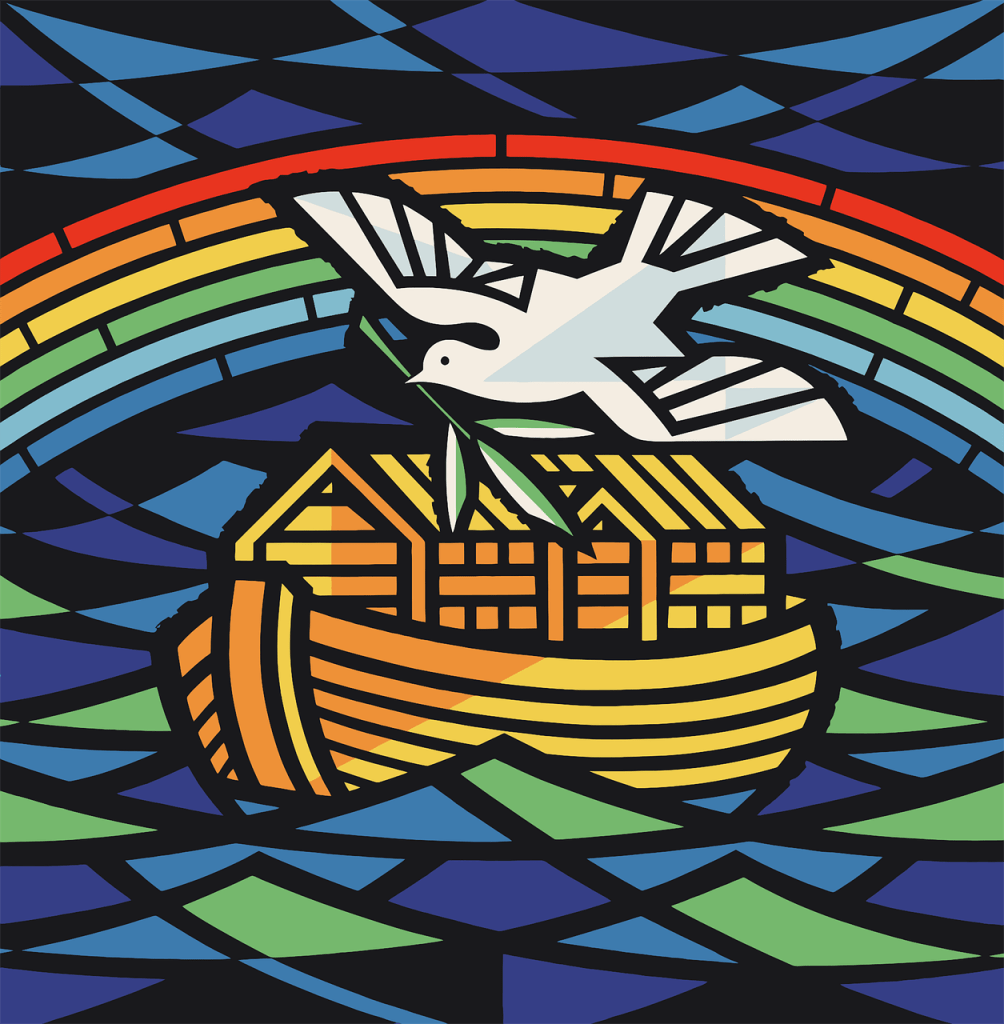
Eventually the waters recede. Noah sends out a dove to test the earth’s readiness for life. The third time the dove does not return. God tells Noah to exit the ark. Noah’s first acts on dry land are to build an altar and then to offer a sacrifice to God. This pleases God and moves God to make a covenant. There will never be another flood “to destroy the earth.” God placed “his bow” in the sky – it will be a frequent reminder to God of God’s commitment to stay in relationship with humanity. This is a gift that we rejoice in yet today.

Prayer: Lord God, what a horrible place the world became. Humanity broke your heart. Things deteriorated to the point that your justice required action. Thanks be to you, O God, that we had Noah – an example of faithful living. In your love you provided a way for the world to continue. In your grace you committed to us and to creation forever. Thank you, God. Amen.


Leave a comment

In All of Life

Reading: Psalm 98

Verse 1: “Sing to the Lord a new song, for he has done marvelous things.”

Photo credit: Rainier Ridao

Psalm 98 is a song of praise and worship. The psalmist lifts up salvation and God’s righteousness and faithfulness as reasons to sing praises to the Lord. In our lives, we certainly can offer lots of praise and thanksgiving to God when we are experiencing these and other blessings in our lives. In the good days it is easy and natural to praise God and to lift our worship heavenward.

It is not always easy, though, to praise the Lord. When we experience unwanted change or loss, when we receive that sobering diagnosis, when we feel isolated or lonely – it can be hard to find joy and to have praise on our lips. Today I am reminded that worship or praise doesn’t always have to be loud or joyous or exuberant. It can be prayerful or quiet or meditative. It can be centered on our understanding that as a child of God, God loves us and has plans to prosper us and wants to bring good into our lives.

Yes, I am sure that God enjoys listening in on a good old hymn or a communal prayer. But our faith is also personal and intimate. A quiet moment, a heartfelt prayer, a stillness simply resting in God’s presence – these too are deeply pleasing to God. In and through all things, we know that God is in control. Praise and worship is sometimes simply reflecting this truth back to God. May our praise and worship reflect this in all of life.

Prayer: Lord God, in the days of sunshine and beauty, in the days of darkness and despair, in the days of intermittent clouds and the everyday of life – may I ever praise and worship your holy name. You are my constant in all of life. For that I can always rejoice. Amen.


Leave a comment

Bringing the Good News

Reading: Isaiah 52:7-10

Verse 7: “How beautiful on the mountains are the feet of those who bring good news, who proclaim peace… who proclaim salvation.”

Photo credit: Gary Butterfield

Our Isaiah 52 passed is viewed through our New Testament lens as a passage about Jesus. These words certainly “fit” Jesus and the ministry that he offered to his world. The good news of Jesus Christ brought peace to the afflicted and troubled. It brought salvation from those things that kept people bound up and outside of community and wholeness. As disciples and followers of Jesus Christ, we are called to share this same good news with our world.

In today’s Disciplines devotional Cherisna Jean-Marie writes this: “Peace is a human right that comes only when justice is realized” (page 428.) In the devo she shares many injustices – police brutality and violence, immoral elected officials, the inequity of pay for the same job. I could add hunger and poverty, discrimination, and unequal health care and education to her list. You could probably add to the list too. None of these things are things that Jesus would’ve tolerated.

In our status quo world we mistakenly think peace is the absence of unrest or other disturbance. At school a few years ago some of my classmates and I were walking to get frozen custard. Suddenly sirens blared and tires screeched and two officers jumped out of their car in pursuit of two teenage skateboarders. All but one of us craned our necks to watch the pursuit. A bit later, as we ate our custard, one of the white, middle class students began to push back against the BLM movement prevalent at the time and on campus. To help him and most of us understand, my friend Will shared that while we were craning our necks, his first instinct was to run. Although a straight-A student who had never had a run-in with the police, “run!” was his first instinct. He grew up in the city. My eyes were opened.

This is just one example that helped me to realize that many injustices exist, even though they are outside of my little world. Just because there are currently no major protests in our cities – it doesn’t mean many people’s first instinct isn’t to run. Again, this is just one example of many ways that our world is unjust. Without total justice there can be no true peace. Without justice there is a need for salvation. May we be the hands and feet and voices that bring the good news to all people.

Prayer: Lord God, open my eyes to the injustices in my neighborhood and community. Help me to see and feel where there is no peace. Move me, O God of justice, to be your voice, your hands, your feet, your heart in bringing about a world where all people experience your salvation and fullness of life. Amen.


1 Comment

The Gift We Live For

Reading: Titus 2:11-14

Verse 11: “For the grace of God has appeared, bringing salvation for all people.”

We begin this week in Paul’s letter to Titus. It is a short letter of instruction and encouragement. Titus was a co-worker of Paul’s who was left on Crete to work with the newly forming church. Today’s passage comes from the section titled “What Must Be Taught to Various Groups.” Our small portion of this section comes as something to teach to all people and groups.

In verse 11 Paul writes, “For the grace of God has appeared, bringing salvation for all people.” The starting place of this passage is in the past. Jesus Christ has come, bringing grace that leads to salvation to all people. This is what we will celebrate in six days – the coming of Immanuel, God with us! In the next verse Paul shifts to the present, to what the gift means now. Paul encourages Titus to teach the believers to live Christ-like lives. Say “no” to the things of this world, living upright, godly, self-controlled lives now. The next verse looks to the future – “while we wait for the blessed hope” – waiting for the return of Jesus Christ.

These words fit so well in the Advent season and in the week in which we turn to Mary and then to Christmas Eve. Mary was a humble servant who obediently received God’s call. She bore the gift that Paul lives for and encourages Titus and all the believers in Crete to live for. May this too be the gift that we live for – Jesus Christ, who was and is and always will be.

Prayer: Lord God, thank you for coming to us, revealing the depth of your love and grace for all people. We rejoice in the salvation that you bring to all who call on the name of Jesus Christ as Lord and Savior. Guide us to turn that rejoicing into living each day so that others can receive the gift of your son. Amen.


Leave a comment

A People the Lord Has Blessed

Reading: Isaiah 61:8-11

Verse 11: “The LORD God will grow righteousness and praise before all the nations.”

In the second half of this week’s Isaiah 61 passage God declares a love for justice and a corresponding hate of robbery and iniquity. In all things God loves good and hated evil. This is because God is good and in God there is no evil whatsoever. Created in God’s image, God’s intent is for us to mirror the character of God. In verse 8 God promises an everlasting covenant. Through this covenant the people of the Lord will be blessed.

Beginning in verse 10, Isaiah responds. The promises of God bring delight and joy to his soul. The prophet noted that God has “clothed me with garments of salvation… in a robe of righteousness.” Covered in these figurative garments, Isaiah is empowered to practice and to reflect the character of God. The living out of a deeply rooted faith will be a witness to the people of God and to the world. This connects back to verse 9b, where we read, “‭All who see them will recognize that they are a people blessed by the LORD.”

Our passage also connects with an analogy that I’ve touched on the last two Sundays. In these words of hope and of a promise of new life, Isaiah draws on the image of a garden. The soil and the seed are essential. Good tending is necessary. And then God gets involved as the seed sprouts, grows, and eventually bears a crop. The same concepts are true in our faith. Time in the Bible tolls the soil of our hearts. Worship and study and prayer plant seeds that we must tend to and nourish. Then God’s Holy Spirit gets involved, leading and guiding our growth, causing our faith to grow deeper, allowing it to be witnessed by all, leading others to seek out the One in whom we delight and find joy, the One who leads us in righteousness and into salvation. May this be so for you and for me today and every day.

Prayer: Lord God, your covenant remains true today – you are our God and we are your people. Clothe us in righteousness, fill us with the joy and delight of salvation through Jesus Christ. Then set us out into the world, Lord, drawing others into a saving faith. Amen.


Leave a comment

A Holy Kiss

Reading: Psalm 85:8-13

Verse 10: “Faithful love and truth have met; righteousness and peace have kissed.”

Our second half of Psalm 85 with promises of peace, salvation, and the glory of the Lord. What wonderful words for the people to hear. God has felt absent for a while now. To beg for God’s presence and to hear these words in response – what hope! Embedded in these words are also things that the people must live out. They must return to being God’s people, fearing the Lord by living lives that honor and adhere to God’s will and ways. The relationship is not one-way.

The Psalm pivots in verse 10. Here we read, “Faithful love and truth have met; righteousness and peace have kissed.” The coming together of these four qualities of God are sealed with a kiss. In our time, this is no longer a common practice or gesture. This kiss, one gentle expression of friendship, love, and peace, was a greeting between close friends and family. This kiss was tender and vulnerable. This kiss expressed genuine affection and it welcomed both parties back into intimate relationship.

Today’s equivalent may be the handshake and the hug. My wife and I went to a reunion of sorts last night. It was folks who had taught and worked together at a school that closed at the end of 2012. There were some folks I waved to and smiled at from across the room. Some I shook hands with and then we shared in small talk. A side hug was the greeting that was used. We shared in a bit deeper conversation about our lives. For many, the hug was embracing and lasted a few seconds. The conversation thereafter was genuine and deep, bringing us right back to 2012 and then up to last night. In today’s text, that is the holy kiss shared between God and God’s people. May that be how we greet God as we open our Bibles, as we bow our heads, as we worship, and as we engage God’s world.

Prayer: Lord God, each time that we draw near to you, may it be filled with genuine affection and deep love, faithfulness, righteousness, and peace. And as we go from our time together, may these be the fragrance and outpouring of our lives, drawing others towards you. Amen.