pastorjohnb

Thoughts and musings on faith and our mighty God!


Leave a comment

God’s Light and Imprint

Reading: Hebrews 1:1-12

Hebrews 1:3 – “The Son is the light of God’s glory and the imprint of God’s being.”

The title of this opening section of Hebrews in my home Bible is “The Son is God’s Ultimate Messenger.” The author of Hebrews raises Jesus up far above the prophets and the angels. Most of our passage today contains quotes from the Hebrew scriptures, known to us as the Old Testament. Using these seven quotes, the author roots Jesus in Judaism’s sacred scriptures and holy traditions. Together these quotes establish Jesus as God’s son, as creator of the world, as justice and righteousness personified, as controller of the angels, and as eternally reigning.

The heart of today’s reading, though, is found in the opening verses. It is Jesus who “in these final days” spoke as God’s prophet. Through the message that Jesus gave, he “maintains everything.” Jesus’ words and power hold all things together under him. The one who created the world is the one who holds it all together. In verse 3 we read about how this is possible: “The Son is the light of God’s glory and the imprint of God’s being.” Here the author gets at the core of the incarnation, of Emmanuel, God with us. In Jesus we see the light of God and we see the character of God. Jesus is God in the flesh.

In word and deed Jesus reveals God’s love, mercy, grace, hope… lived out on earth. And when Jesus was done setting the example for us to follow in this life, “he carried out the cleansing of people from their sins.” Jesus became our atoning sacrifice so that we could continue to follow his perfect example after falling short. Providing a way for us imperfect creatures to be made right again with God, Jesus then “sat down at the right hand” of God, awaiting our arrival in heaven. There we will forever worship the Lord. Thanks be to God!

Prayer: Lord God, we praise you today for your word and example that endures forever. We thank you for showing us the way to love unconditionally, to forgive without count, to dwell in beloved community, to walk together in faith. Be with us now and always. Amen.


Leave a comment

God with Us

Reading: Matthew 1:20-25

Matthew 1:21 – “She will give birth to a son, and you will name him Jesus, because he will save his people from their sins.”

As the story continues in Matthew 1, Joseph has a dream in which an angel visits him. At first I wondered, did Joseph first have to decide if an angel really visited him or if it was just a dream? But as I thought about it, I came to realize that when the divine is present, you just know it – like when Jesus called the first disciples. They left everything, just like that, and followed him. His divine presence led to their response. The same is true of Joseph. He wakes up and does as God commanded him to do.

The angel tells Joseph not to fear. God is at work. The angel then says, “She will give birth to a son, and you will name him Jesus, because he will save his people from their sins.” This extraordinary birth will produce the Savior of Israel, the long-awaited Messiah. Being a righteous man, Joseph surely knew the Hebrew scriptures and the prophesies of a coming Messiah. And like all of Israel, Joseph longer for the one who would redeem Israel.

Matthew’s voice reenters the story in verse 22. Perhaps he is giving voice to Joseph’s inner thoughts or perhaps he is reminding his Jewish audience of the connections between Jesus and the scriptures. As we read these words of Isaiah, we are reminded that in Jesus, God chose to be with us, to come and dwell among us. For this blessed gift we say, thanks be to God!

Prayer: Lord God, just as Joseph was faithfully obedient, lead us to be the same. When your continual, constant presence whispers to us or nudges us, may we know the divine is once again present and may we hear and respond faithfully. As we are obedient to your call and direction, use us to make the long-awaited Savior known to all the world. Amen.


Leave a comment

Alive and Connected

Reading: Luke 20:27-38

Luke 20:38 – “He [God] isn’t the God of the dead but of the living.”

The Sadducees come to Jesus with a question. The Sadducees were a group of religious scholars who were committed to a literal interpretation of the Law and to then applying this understanding to life. This group enjoyed challenging one another’s interpretation of the Law. What they are doing with Jesus was partly this practice. But it is also partly a power play. Because they interpret so literally, the Sadducees cannot make room for concepts like resurrection from the dead. In this interaction with Jesus, the Sadducees want to prove that their interpretation is correct, that their understanding is right. We too can be guilty of wanting scripture to fit our needs or to feel that our reading of this or that passage is the correct reading. We can, at times, want scripture to conform to our way instead of allowing scripture to conform us to God’s way.

In today’s interaction with Jesus, the Sadducees take a Mosaic Law and they run it out to the extreme. In Jewish culture, the oldest male in a family was privileged. For example, they received a double portion of the inheritance. They usually married first. If the oldest brother died without a male heir, the next brother would marry the widow to continue the oldest brother’s family name. So Jesus, in heaven, does the woman belong to the seventh brother or what? Well, Jesus tells them, in heaven there is no marriage. Like the angels, all who are worthy of this resurrection life are simply God’s children. That relationship will be all that we care about in the age to come.

As the interaction closes, Jesus brings the idea of being God’s children into this age too. He tells the Sadducees that God “isn’t the God of the dead but of the living.” This age matters. How we live in this age matters. Our relationship with God is paramount here too. Jesus adds, “To God they are all alive.” Living or dead as we see it is not how God sees us. Living or dead, our spirit, our connection to God, that is always alive. For this unchanging relationship, for this unending love, we say thanks be to God.

Prayer: Lord God, thank you for being our God, our Father, both in this age and in the age to come. Your love for us never changes. When we want to get a bit like the Sadducees, wanting our way to be the right way or the only way, remind us that your ways are far above our ways. Turning to the Spirit within, guide us to seek your voice, to discern your purposes. Help us to walk in faith each day in this life so that one day we can see you as you truly are. Amen.


Leave a comment

Sweeter Than Honey

Reading: Psalm 119:97-104

Psalm 119:103 – “Your word is so pleasing to my taste buds – it’s sweeter than honey in my mouth!”

Today’s reading is the thirteenth section of Psalm 119. This longest Psalm is an acrostic, each section using a letter of the Hebrew alphabet. The 22 sections of this Psalm use that letter as the first letter in each verse in that section. Sadly, this is lost in translation.

What is not lost in translation is the psalmist’s love for God’s instruction. As we read these eight verses we can feel how in love the writer is with God and with God’s word. The scriptures are ever on the psalmist’s mind, bringing wisdom and understanding, insight and guidance. Because of this steadfast commitment to God’s word, the psalmist does not walk on “evil paths” and does not deviate from following the Law. This deep and faithful attention to God’s word brings great joy and contentment to the psalmist.

In verse 103 we read, “Your word is so pleasing to my taste buds – it’s sweeter than honey in my mouth!” While one cannot literally taste words – any words – we can relate to how the psalmist feels. At some point we’ve all received a note or a text or a card that has touched our heart, making us smile really big inside or making us feel like we were wrapped in love. Scripture holds this same power. We can read a passage and feel joy or assurance or peace. We can feel God’s love and grace in the words we read. As we daily turn to God’s word, may it richly bless us as it does the psalmist. May it be so!

Prayer: Lord God, thank you for your power and grace and love that flows throughout the Bible. We rejoice in the ways that your word touches our lives, carrying us through a struggle, comforting us in our pain, encouraging us in our steady walk of faith. We praise you for your living and active word. Amen.


Leave a comment

“Preach” Always

Reading: 2nd Timothy 3:14-4:5

2nd Timothy 4:2 – “Preach the word. Be ready to do it whether convenient or inconvenient. Correct, confront, and encourage with patience and instruction.”

Paul’s encouragement to Timothy begins with an invitation to stay focused on the word of God. Timothy began learning the word as a young child and has grown in his understanding of the scriptures. Paul reminds him that all scripture is useful – sometimes for teaching, other times for correcting, sometimes for training, other times for showing mistakes. As our guide to faith, scripture will equip the faithful “to do everything that is good.”

Shifting to chapter 4, Paul commissions Timothy “in the presence of God and if Jesus Christ.” The heart of his commission falls mostly in verse 3, where we read, “Preach the word. Be ready to do it whether convenient or inconvenient. Correct, confront, and encourage with patience and instruction.” While the formal preaching most often happens on Sunday morning, the most impactful sharing of the good news occurs outside of that 15-20 minutes. The bold and powerful witness, the sure and steady faith – this is how we “preach” our faith. Putting heart, voice, hands, and feet to service in the kingdom of God is the best possible way to preach the good news.

Paul warns Timothy that there will be challenges and suffering. He speaks of a time when people will “collect teachers who say what they want to hear.” Truth will be sacrificed for personal comfort and personal gain. In the midst of this, Paul emphasizes the importance of Timothy’s choices, advising him to “keep control of yourself in all circumstances.” Don’t engage in the ugly, don’t get caught up in the division. Prudent advice for our day too!

The apostle’s closing advice to Timothy is complete: endure suffering, do the work of sharing the good news, serve fully. Give God all that you are and all that you have. May this be our daily goal.

Prayer: Lord God, you ask for all of us – our energy, our resources, our time, our gifts and talents, our prayers, our love – given in witness to the good news of salvation found in Jesus Christ. Guide us, Lord, to preach always. Strengthen us when we’re weak. Encourage us when we’re challenged. Comfort us when we’re suffering. In all ways and at all times, use us to build the kingdom of God. Amen.


Leave a comment

Blessings and Peace

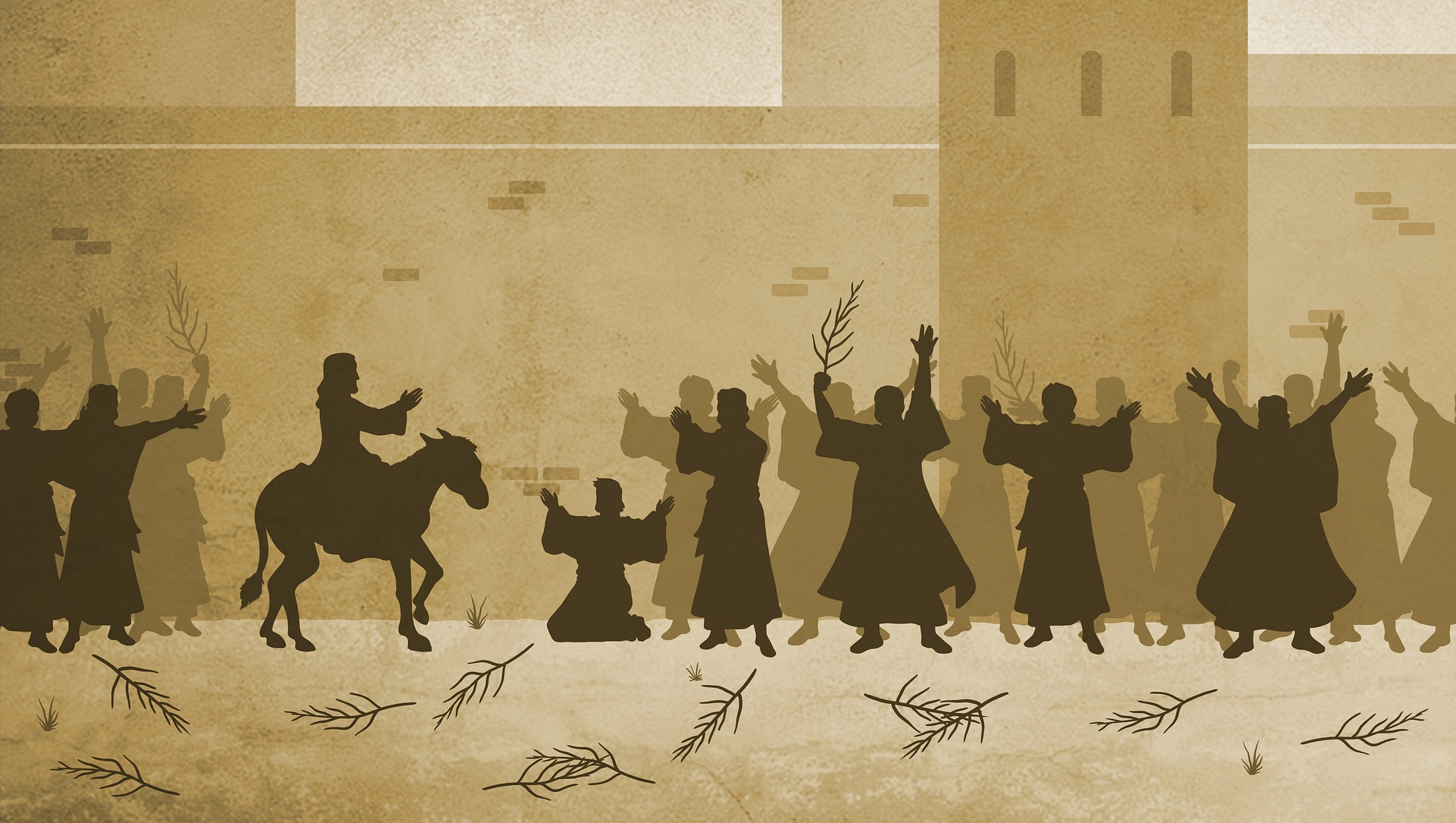
Reading: Luke 19:28-39

Luke 19:38 – “Blessings on the king who comes in the name of the Lord.”

As our passage begins, Jesus prepares to enter Jerusalem. He is just east of the city itself. He gives instructions to two disciples to go and get a colt. Following Jesus’ directions, all unfolds just as Jesus said it would. Even this is a demonstration of his power.

In verses 35-38 we see the actions of others taking over. It is the disciples who place their coats and then Jesus on the colt. It is the disciples who place clothes on the road and rejoice as they near Jerusalem. The crowd begins to praise God because of the “mighty things they had seen” Jesus do. They begin to shout, “Blessings on the king who comes in the name of the Lord.” Why do they do and say all of these things?!

The disciples, the crowd, the Pharisees, and even Jesus – they knew the scriptures, the words of Isaiah, the Psalms written for such a day as this. Prophecy was being fulfilled. Their actions, their words – they were following the script. These events, this fulfillment brought joy and excitement to the people.

Another entry also occurred, on the other side of the city. Each year, at the Passover and other major festivals, Herod would ride into Jerusalem. He would ride in on a mighty warhorse with an entourage of Roman soldiers. This demonstration of force was a reminder to Jerusalem and its leaders: Rome is the power. The counterpoint is Jesus. He brings blessings and peace. What a contrast between the ways of the world and the way of Christ.

Prayer: Lord God, thank you for the way of Jesus – the way of joy and blessing, of humility and peace. This stands in such stark contrast to the ways of the world: force and power and might. This divide continues today. O God, give us the courage and the faith to go into places of darkness and evil, empowered by the light of Christ, challenging these harmful and destructive ways. May our light be fueled by love, bringing blessing and peace. Amen.


Leave a comment

Not My Will

Reading: Luke 22:39-46

Luke 22:42 – “Not my will but your will must be done.”

We are on the verge of the season of Lent. The 40 days leading up to Easter begin this week with services on Ash Wednesday. The service focuses on our need to be reconciled to God. The ashes remind us of our mortality. They are imposed in the shape of a cross as a reminder of our commitment to Christ. The season of Lent is one of prayer and repentance, preparing ourselves for Easter.

Intentional preparation is part of our faith. We read, study, and meditate on scripture to prepare ourselves for our day to day living. We pray to prepare ourselves for a meeting, an event, a hard conversation. In our passage today Jesus did as he often did. He went to the garden to spend intentional time in prayer. He sought to prepare himself for what lay just ahead: arrest, trial, rejection, suffering…

Jesus invites the disciples to pray too. He knows that they will soon face testing. As Jesus prays he admits his own human struggle, asking God to “take this cup of suffering away.” The divine Jesus knows full well what’s about to befall the human Jesus. Recognizing the necessity of what is about to unfold, Jesus adds, “Not my will but your will must be done.” Strengthened, Jesus prays even more earnestly.

The disciples have fallen asleep, “overcome by grief.” The crowd is on the way to arrest Jesus. The disciples have not prepared themselves. One disciple will act impulsively. Then all of the disciples will flee the scene. Jesus will move forward, empowered by prayer. As we ready ourselves to enter this season of Lent, may we too be empowered by prayer, frequently praying, “Not my will…”

Prayer: Lord God, lead and guide us to be intentional as we enter this season of Lent. May it be a time of earnest prayer, committed study, honest introspection, and whole-hearted repentance. Day by day, may our walk with you prepare us to celebrate Easter resurrection. Amen.


Leave a comment

Hell? Heaven?

Readings: Psalm 92:5-8, Malachi 4:1-3, Daniel 4:9-11, and 12:1-3

Malachi 4:2 – “The sun of righteousness will rise on those revering my name; healing will be in its wings.”

This week we wrestle with the question of heaven or hell. We begin today in the Old Testament. The rest of the week will be in the New Testament. This “imbalance” is because there is no direct mention of hell in the Hebrew scriptures. There are references to a place we would call “hell,” but this concept did not have a place in Hebrew thought prior to Jesus’ days.

Psalm 92:5-8 is representative of Hebrew thought in the Old Testament. God is awesome. The ignorant, the wicked, the evildoers – while they “seem to blossom,” in the end they will be destroyed. Running throughout the Old Testament is the idea that the good will be rewarded and the evil will be punished.

This idea is echoed in Malachi 4. The prophet writes that the day is coming when the arrogant and evildoers will burn like straw, consuming them. But for those doing good? “The sun of righteousness will rise on those revering my name; healing will be in its wings.” The wicked will be crushed like dust, but the righteous, the godly, they will be filled with joy.

Even foreign kings experience this cycle of punishment and redemption. In Daniel 4, Babylon’s King Nebuchadnezzar calls upon Daniel, the one who has “the breath of the holy gods” in him, to interpret his dream. Daniel, with God’s help, explains the dream. All unfolds exactly as Daniel foretold. In the end, redeemed by God, Nebuchadnezzar worships, magnifies, and glorifies the goodness of God.

Turning to Daniel 12 we find the Old Testament passage that best connects to our understanding of heaven and hell. Speaking of the end times, Daniel writes that those whose names are in the scroll (of life) will be rescued, entering “eternal life,” shining like stars forever. Others – those not in the scroll – they will go to “shame and eternal disgrace.” So it will be.

Prayer: Lord God, lead us today to be people who do good and who seek to live holy and righteous lives that bring you honor and glory. Guard us from the temptations of this world, keeping evil and arrogance far away. In all that we do and say and think may our lives magnify and glorify your name. Amen.


Leave a comment

All Are One

Readings: 1st Timothy 2:11-12, 1st Corinthians 14:32-35, Ephesians 5:22-25, Galatians 3:26-28

Galatians 3:27 – “All of you who were baptized into Christ have clothed yourself in Christ.”

Photo credit: Wylly Suhendra

As we wrestle with the challenging parts of the Bible this week, today we turn to Paul’s words about the place or role of women in the community of faith. As we do so, it is important to remember that these words were written in a specific context and culture, in a time different from our own. This filter can help us greatly in our understanding and application of these words.

In 1st Timothy 2:11-12 Paul begins by stating that women should “learn quietly with complete submission.” This is followed by a prohibition against a wife teaching or controlling her husband. These words are rooted in two beliefs of Paul’s day: women’s minds are weaker than men’s and it was Eve who caused the original sin to occur. Clearly the men should lead and be the decision-makers. Within this context and time.

1st Corinthians 14 echoes these themes. Women are to be quiet in church and to ask their questions at home. Most of the Ephesians 5 passage sounds similar: wives submit to your husbands in everything. These parts of these passages have been and are still quoted in patriarchal settings. Dig deeper though. In Corinthians this is Paul’s practical response to a specific issue in an individual church: the women are curious, they are asking questions as they seek to grow in their faith. The questions, however, are disrupting worship. In Ephesians Paul is talking about submitting to Christ. These verses today apply this to marriage too. The overall theme: submit to one another as you submit to Christ. Don’t miss or skip verse 25: Husbands love your wives as Christ loved the church, giving yourself up for her.

In Galatians 3:26-28, Paul declares total equality between male and female in God’s church. All baptized into Christ are clothed in Christ. All means all. That’s clear as Paul goes on to remove all lines and barriers, including the statement that there is “no male and female” in Christ. All are one in Christ. May this be so in all ways – in our homes, in our churches, in our society and culture.

Prayer: Lord God, as we read, ponder, think and wrestle through these passages, help us to do so within the overarching core tenets of our faith: love, grace, peace, hope, humility, service. Guide us then to understand how culture and norms influence writing, as does context. Center us always on the calls to love you and others above self. Amen.


Leave a comment

Foundation and Guide

Reading: 2nd Timothy 3:14-17

2nd Timothy 3:16 – “Every scripture is inspired by God and useful for teaching, for showing mistakes, for correcting, and for training character.”

In today’s reading Paul is encouraging Timothy to stay connected to scripture. God’s word is the foundation of our faith and the guide in our life. This is as true for us as it was for Paul and Timothy or any other person of faith.

In verses 14 and 15 Paul reminds Timothy of this foundation. He was taught the faith by his mother and grandmother, Eunice and Lois. These two women taught him not only the words of scripture but they also lived out their faith, setting for him an example. Hearing and doing the word “leads to salvation through faith that is in Jesus Christ.” Reflecting on your own past, who was it that taught and modeled faith for you?

In verse 16 we read, “Every scripture is inspired by God and useful for teaching, for showing mistakes, for correcting, and for training character.” First, scripture is inspired by God. These words of Paul that we read today, for example, were words breathed into or given to Paul by God. These words still contain that “breath” of God. Those who read and do the words of God receive God’s life-giving breath, guidance, direction, correction, training…

In verse 17 our passage comes back around. Living in and through the word of God, one is “equipped to do everything that is good.” Just as Eunice and Lois were equipped, so will Timothy be equipped, so can we be equipped. May the word of God be our foundation, our guide, our power and strength.

Prayer: Lord God, your word has power – power to lead us to do good, to turn us back around when we stray, to cleanse us when we fail, to build us back up when we falter. Guide us daily to lean into and to stand upon your word. Use us to then be the word lived out in the world. Amen.